R E S E A R C H A N D D E V E L O P M E N T W H I T E PA P E R
PerennialRyegrassSalinityGerminationStudy
How is the germination of perennial ryegrass cultivars affected by differing levels of saline water used for irrigation.
MATERIALS AND METHODS
Thirty-Seven perennial ryegrass, two turf annual ryegrass, one
turf-intermediate ryegrass, and one forage annual ryegrass culti-
vars and experimentals were surveyed for germination under sa-
line conditions. This study was conducted to evaluate differences
in ability to germinate in high salt environments. Total germination
and germination rate were measured under three different treat-
ments: a highly saline treatment (14,000 ppm ≈40% sea water),
a moderately saline treatment (8,750 ppm ≈25% sea water) and a
distilled water treatment (0 ppm).
Fifty seeds from each entry were germinated in each of three
treatments. Round germination paper discs were placed in petri
dishes and saturated with one of three solutions; distilled water,
moderately saline water, or highly saline water. Water salinization
was achieved by adding Instant Ocean Aquarium Sea Salt Mixture
(United Pet Group, Blacksburg, VA 24060) to distilled water until
desired concentration was reached.
Germination paper was saturated in the dishes and excess water
was decanted off. Fifty seeds were selected that had adequate seed
fill from each variety were placed onto the saturated germination
paper. Each dish contained one variety and one treatment for a
total of forty-one dishes for each of the three treatments. Follow-
ing seed placement the lid was placed on the dish and sealed with
parafilm. Dishes containing seeds were placed under 24-hour light
regiment supplemented with fluorescent lights at night. Seeds were
examined each day to count the number of seeds which had ger-
minated. Germination was considered to have occurred when the
coleoptile had extended at least 1mm. Germination counts were
performed every day for each variety. Once a variety had no new
seeds germinate for three consecutive days that variety was con-
sidered fully germinated and was not counted further. The experi-
ment was conducted in two separate but identical runs.
RESULTS AND DISCUSSION
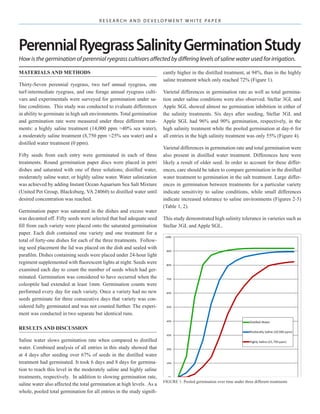
Saline water slows germination rate when compared to distilled
water. Combined analysis of all entries in this study showed that
at 4 days after seeding over 67% of seeds in the distilled water
treatment had germinated. It took 6 days and 8 days for germina-
tion to reach this level in the moderately saline and highly saline
treatments, respectively. In addition to slowing germination rate,
saline water also affected the total germination at high levels. As a
whole, pooled total germination for all entries in the study signifi-
cantly higher in the distilled treatment, at 94%, than in the highly
saline treatment which only reached 72% (Figure 1).
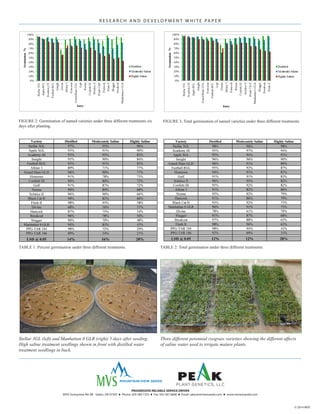
Varietal differences in germination rate as well as total germina-
tion under saline conditions were also observed. Stellar 3GL and
Apple SGL showed almost no germination inhibition in either of
the salinity treatments. Six days after seeding, Stellar 3GL and
Apple SGL had 96% and 90% germination, respectively, in the
high salinity treatment while the pooled germination at day-6 for
all entries in the high salinity treatment was only 55% (Figure 4).
Varietal differences in germination rate and total germination were
also present in distilled water treatment. Differences here were
likely a result of older seed. In order to account for these differ-
ences, care should be taken to compare germination in the distilled
water treatment to germination in the salt treatment. Large differ-
ences in germination between treatments for a particular variety
indicate sensitivity to saline conditions, while small differences
indicate increased tolerance to saline environments (Figures 2-5)
(Table 1, 2).
This study demonstrated high salinity tolerance in varieties such as
Stellar 3GL and Apple SGL.
FIGURE 1: Pooled germination over time under three different treatments
FIGURE 2: Germination of named varieties under three different treatments six
days after planting.
FIGURE 3: Total germination of named varieties under three different treatments
R E S E A R C H A N D D E V E L O P M E N T W H I T E PA P E R
Stellar 3GL (left) and Manhattan 6 GLR (right) 5 days after seeding.
High saline treatment seedlings shown in front with distilled water
treatment seedlings in back.
TABLE 1: Percent germination under three different treatments.
PROGRESSIVE-RELIABLE-SERVICE DRIVEN
8955 Sunnyview Rd. NE Salem, OR 97305 l Phone: 503 588 7333 l Fax: 503 587 8688 l Email: sales@mtviewseeds.com l www.mtviewseeds.com
© 2014 MVS
TABLE 2: Total germination under three different treatments.
Three different perennial ryegrass varieties showing the different affects
of saline water used to irrigate mature plants.

Perennial ryegrass salinity

  • 1.
    R E SE A R C H A N D D E V E L O P M E N T W H I T E PA P E R PerennialRyegrassSalinityGerminationStudy How is the germination of perennial ryegrass cultivars affected by differing levels of saline water used for irrigation. MATERIALS AND METHODS Thirty-Seven perennial ryegrass, two turf annual ryegrass, one turf-intermediate ryegrass, and one forage annual ryegrass culti- vars and experimentals were surveyed for germination under sa- line conditions. This study was conducted to evaluate differences in ability to germinate in high salt environments. Total germination and germination rate were measured under three different treat- ments: a highly saline treatment (14,000 ppm ≈40% sea water), a moderately saline treatment (8,750 ppm ≈25% sea water) and a distilled water treatment (0 ppm). Fifty seeds from each entry were germinated in each of three treatments. Round germination paper discs were placed in petri dishes and saturated with one of three solutions; distilled water, moderately saline water, or highly saline water. Water salinization was achieved by adding Instant Ocean Aquarium Sea Salt Mixture (United Pet Group, Blacksburg, VA 24060) to distilled water until desired concentration was reached. Germination paper was saturated in the dishes and excess water was decanted off. Fifty seeds were selected that had adequate seed fill from each variety were placed onto the saturated germination paper. Each dish contained one variety and one treatment for a total of forty-one dishes for each of the three treatments. Follow- ing seed placement the lid was placed on the dish and sealed with parafilm. Dishes containing seeds were placed under 24-hour light regiment supplemented with fluorescent lights at night. Seeds were examined each day to count the number of seeds which had ger- minated. Germination was considered to have occurred when the coleoptile had extended at least 1mm. Germination counts were performed every day for each variety. Once a variety had no new seeds germinate for three consecutive days that variety was con- sidered fully germinated and was not counted further. The experi- ment was conducted in two separate but identical runs. RESULTS AND DISCUSSION Saline water slows germination rate when compared to distilled water. Combined analysis of all entries in this study showed that at 4 days after seeding over 67% of seeds in the distilled water treatment had germinated. It took 6 days and 8 days for germina- tion to reach this level in the moderately saline and highly saline treatments, respectively. In addition to slowing germination rate, saline water also affected the total germination at high levels. As a whole, pooled total germination for all entries in the study signifi- cantly higher in the distilled treatment, at 94%, than in the highly saline treatment which only reached 72% (Figure 1). Varietal differences in germination rate as well as total germina- tion under saline conditions were also observed. Stellar 3GL and Apple SGL showed almost no germination inhibition in either of the salinity treatments. Six days after seeding, Stellar 3GL and Apple SGL had 96% and 90% germination, respectively, in the high salinity treatment while the pooled germination at day-6 for all entries in the high salinity treatment was only 55% (Figure 4). Varietal differences in germination rate and total germination were also present in distilled water treatment. Differences here were likely a result of older seed. In order to account for these differ- ences, care should be taken to compare germination in the distilled water treatment to germination in the salt treatment. Large differ- ences in germination between treatments for a particular variety indicate sensitivity to saline conditions, while small differences indicate increased tolerance to saline environments (Figures 2-5) (Table 1, 2). This study demonstrated high salinity tolerance in varieties such as Stellar 3GL and Apple SGL. FIGURE 1: Pooled germination over time under three different treatments
  • 2.
    FIGURE 2: Germinationof named varieties under three different treatments six days after planting. FIGURE 3: Total germination of named varieties under three different treatments R E S E A R C H A N D D E V E L O P M E N T W H I T E PA P E R Stellar 3GL (left) and Manhattan 6 GLR (right) 5 days after seeding. High saline treatment seedlings shown in front with distilled water treatment seedlings in back. TABLE 1: Percent germination under three different treatments. PROGRESSIVE-RELIABLE-SERVICE DRIVEN 8955 Sunnyview Rd. NE Salem, OR 97305 l Phone: 503 588 7333 l Fax: 503 587 8688 l Email: sales@mtviewseeds.com l www.mtviewseeds.com © 2014 MVS TABLE 2: Total germination under three different treatments. Three different perennial ryegrass varieties showing the different affects of saline water used to irrigate mature plants.