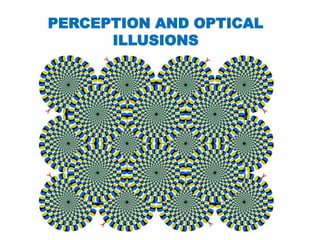
PERCEPTION AND OPTICAL 
ILLUSIONS
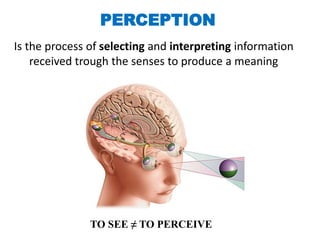
PERCEPTION 
Is the process of selecting and interpreting information 
received trough the senses to produce a meaning 
TO SEE ≠ TO PERCEIVE
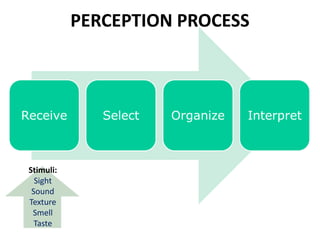
PERCEPTION PROCESS 
Stimuli: 
Sight 
Sound 
Texture 
Smell 
Taste
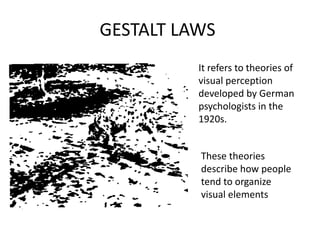
GESTALT LAWS 
It refers to theories of 
visual perception 
developed by German 
psychologists in the 
1920s. 
These theories 
describe how people 
tend to organize 
visual elements
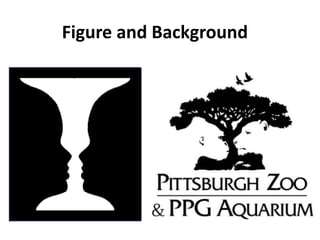
Figure and Background
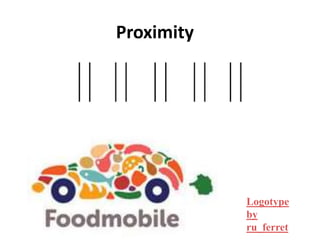
Proximity 
Logotype 
by 
ru_ferret
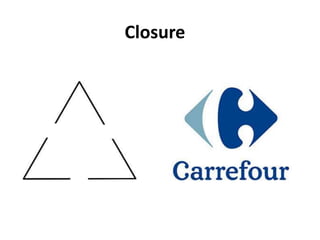
Closure
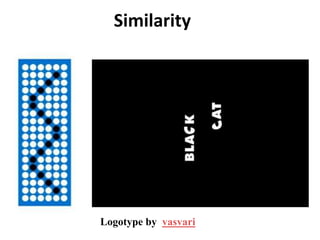
Similarity 
Logotype by vasvari
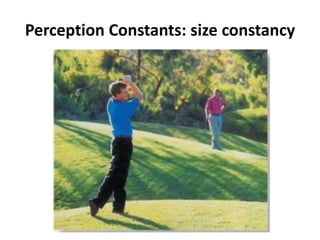
Perception Constants: size constancy
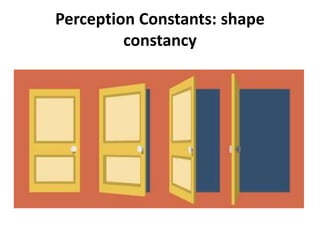
Perception Constants: shape 
constancy
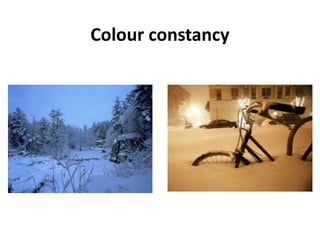
Colour constancy
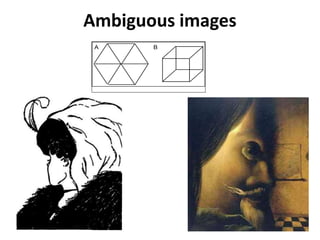
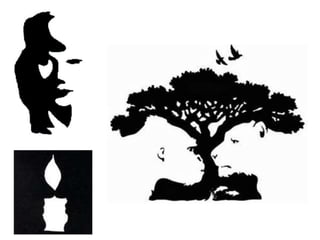
Ambiguous images 
A B
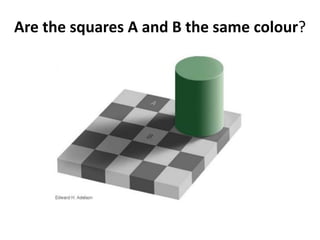
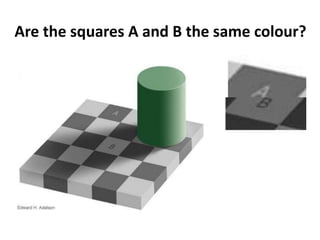
Are the squares A and B the same colour?
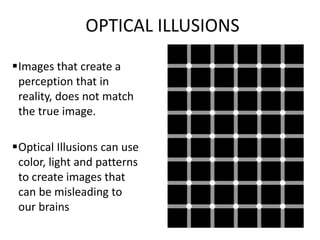
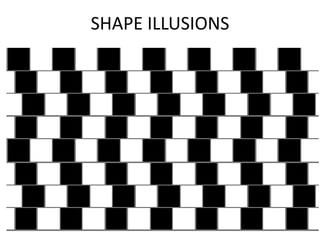
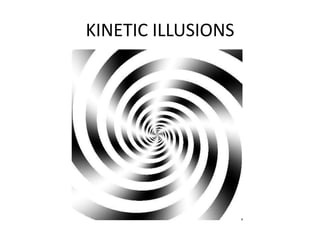
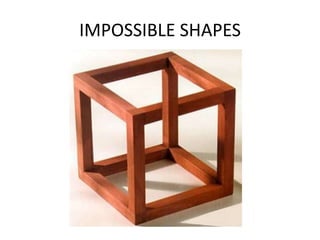
OPTICAL ILLUSIONS 
Images that create a 
perception that in 
reality, does not match 
the true image. 
Optical Illusions can use 
color, light and patterns 
to create images that 
can be misleading to 
our brains
SHAPE ILLUSIONS
KINETIC ILLUSIONS
IMPOSSIBLE SHAPES
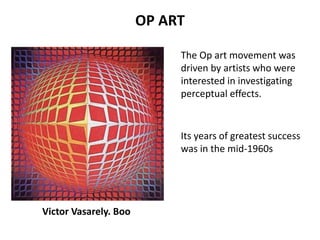
OP ART 
Victor Vasarely. Boo 
The Op art movement was 
driven by artists who were 
interested in investigating 
perceptual effects. 
Its years of greatest success 
was in the mid-1960s
http://www.educacionplastica.net/VisPer.htm 
http://www.michaelbach.de/ot/ 
http://www.opticalillusion.net/ 
22
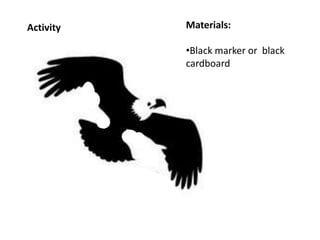
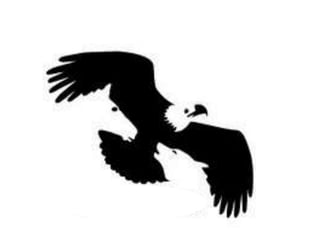
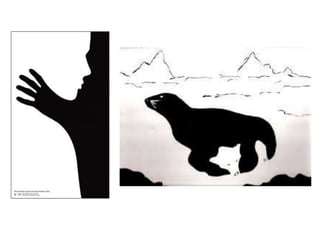
Materials: 
•Black marker or black 
cardboard 
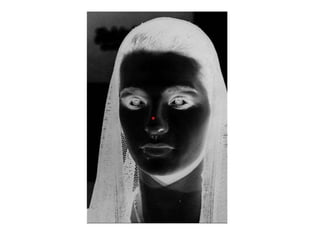
Activity
24
Perception and optical illusions

Perception and optical illusions