By
P.Uma maheswari
Department of maths
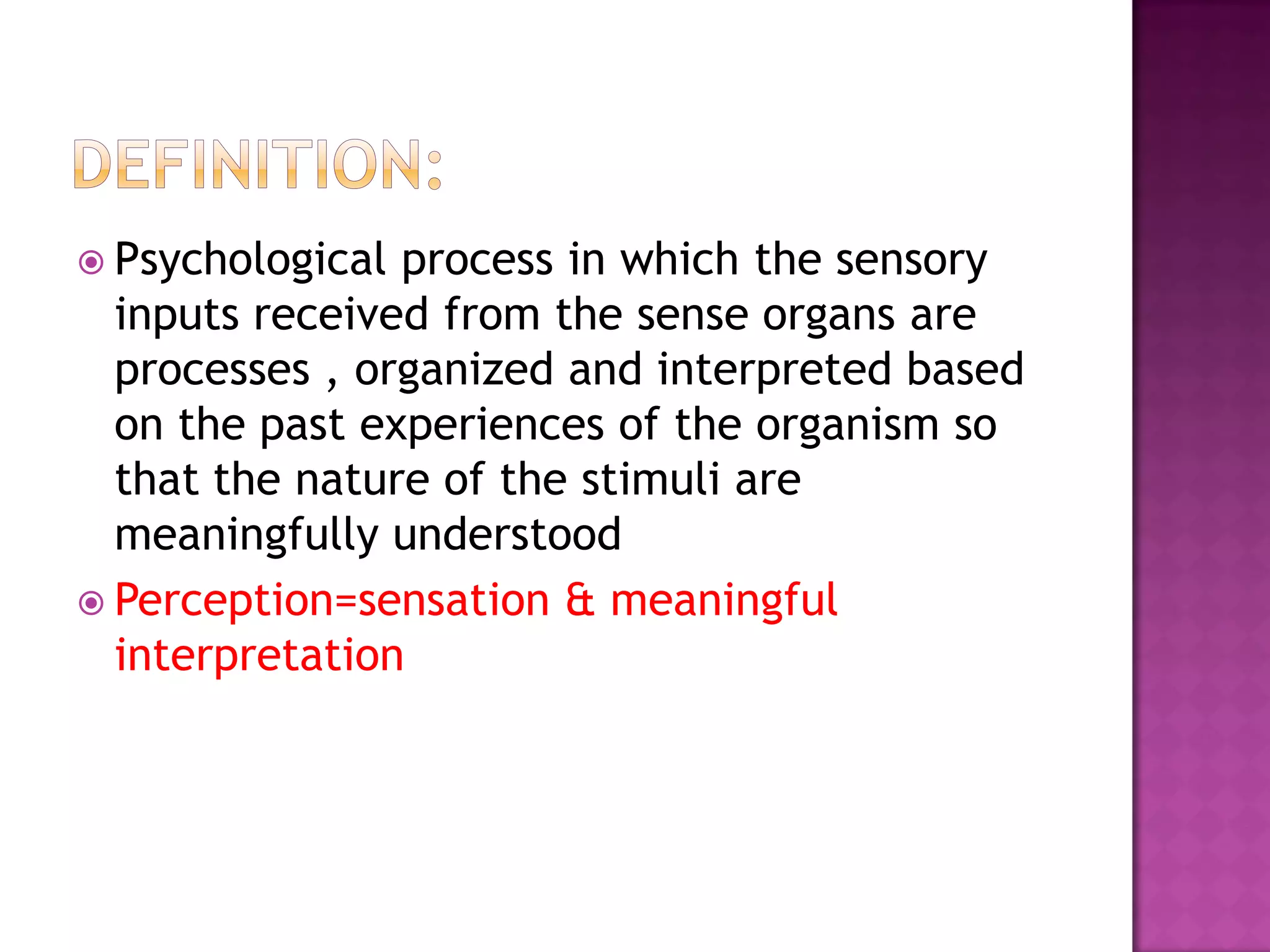
 Psychological process in which the sensory
inputs received from the sense organs are
processes , organized and interpreted based
on the past experiences of the organism so
that the nature of the stimuli are
meaningfully understood
 Perception=sensation & meaningful
interpretation
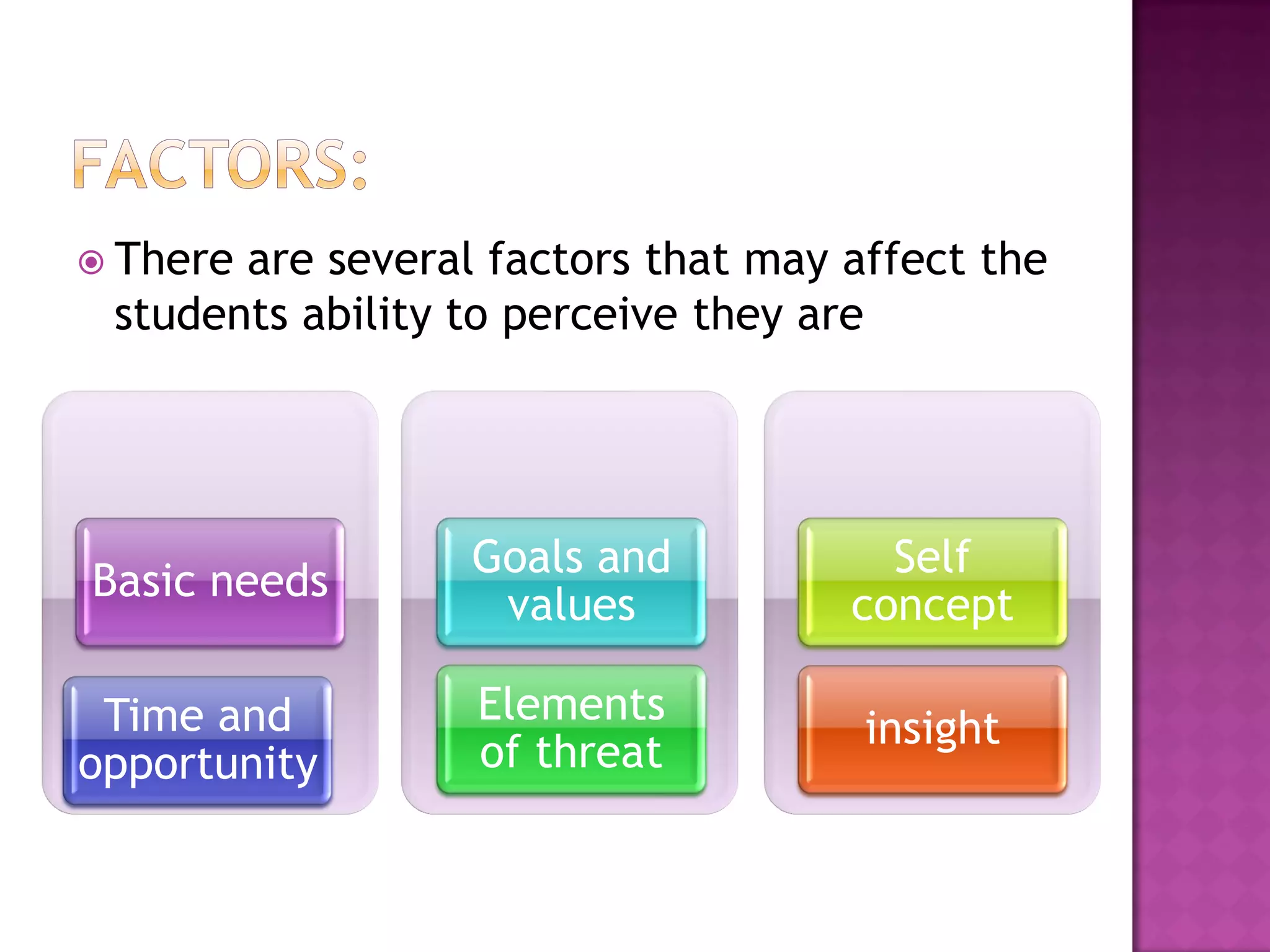
 There are several factors that may affect the
students ability to perceive they are
Basic needs
Time and
opportunity
Goals and
values
Elements
of threat
Self
concept
insight
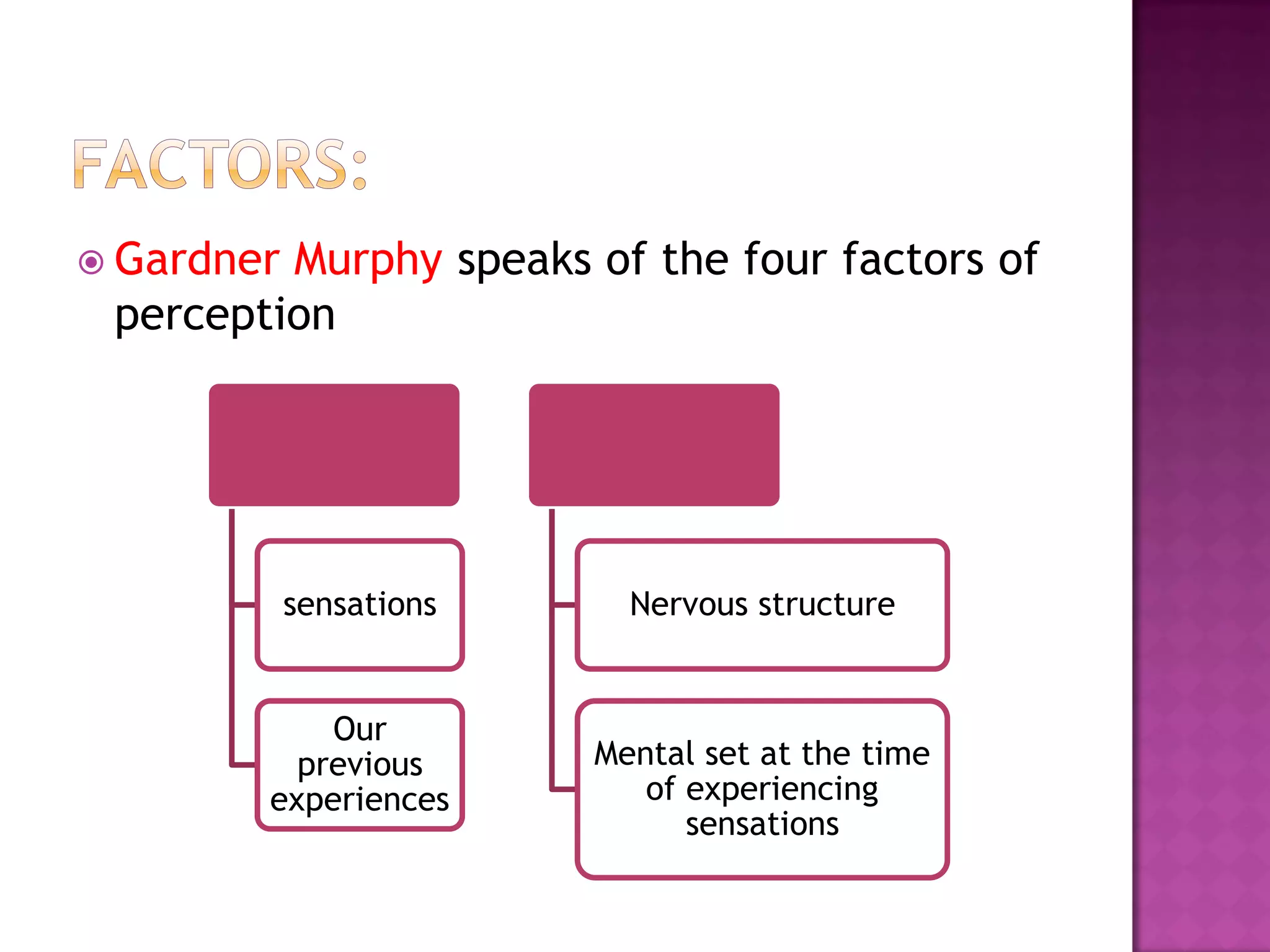
 Gardner Murphy speaks of the four factors of
perception
sensations
Our
previous
experiences
Nervous structure
Mental set at the time
of experiencing
sensations
 Without perception , imagery and
imagination are not possible.
 Related to attending and observing.
 Perceive only those stimuli that we attend to
 Helps to understand the different objects
and events in our environment and learn to
adapt our reactions , towards them.
 Process of selection is involved
 Perception is largely determined by our past
experiences
 Process of integration takes place in
perception
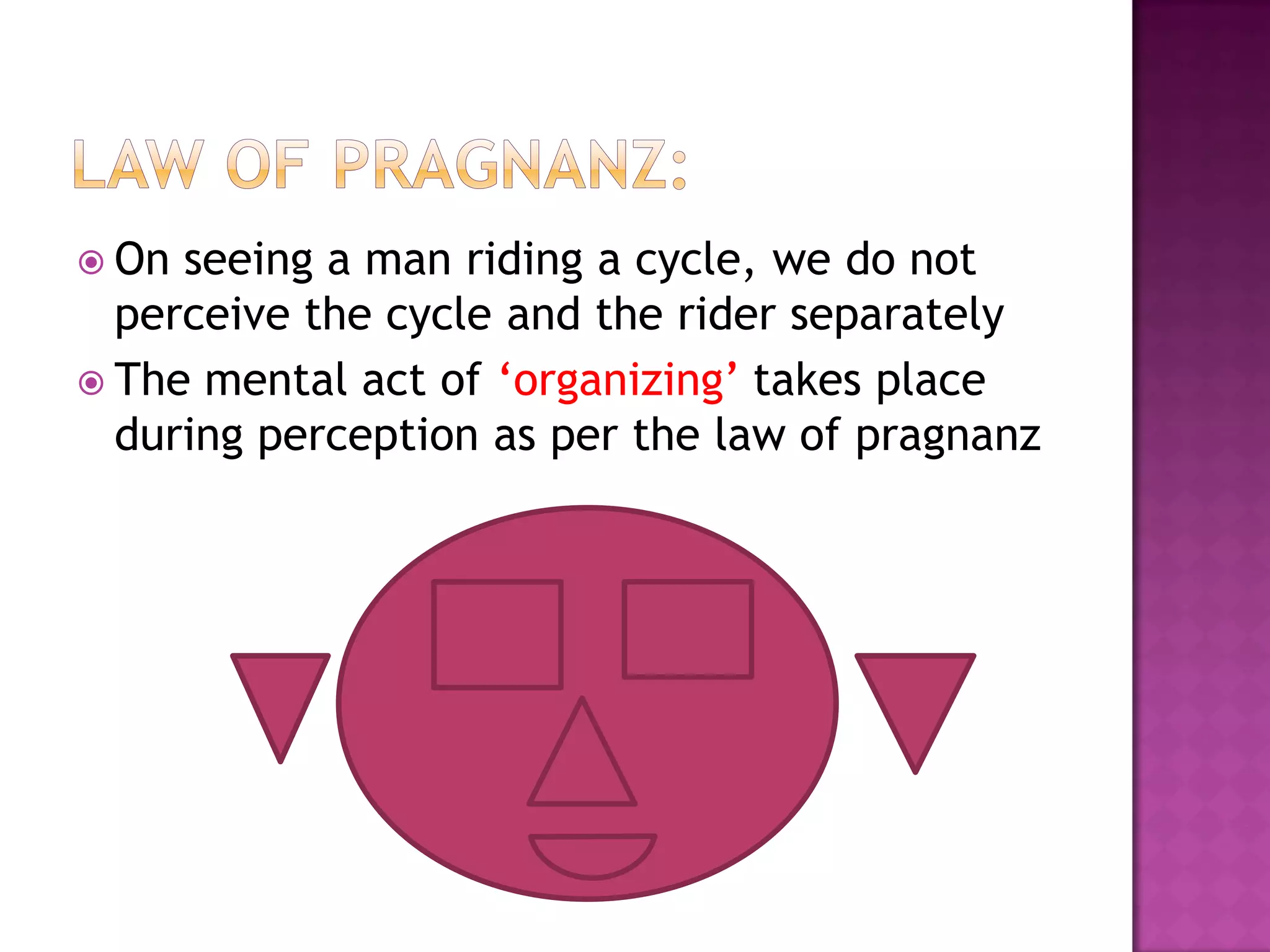
 On seeing a man riding a cycle, we do not
perceive the cycle and the rider separately
 The mental act of ‘organizing’ takes place
during perception as per the law of pragnanz
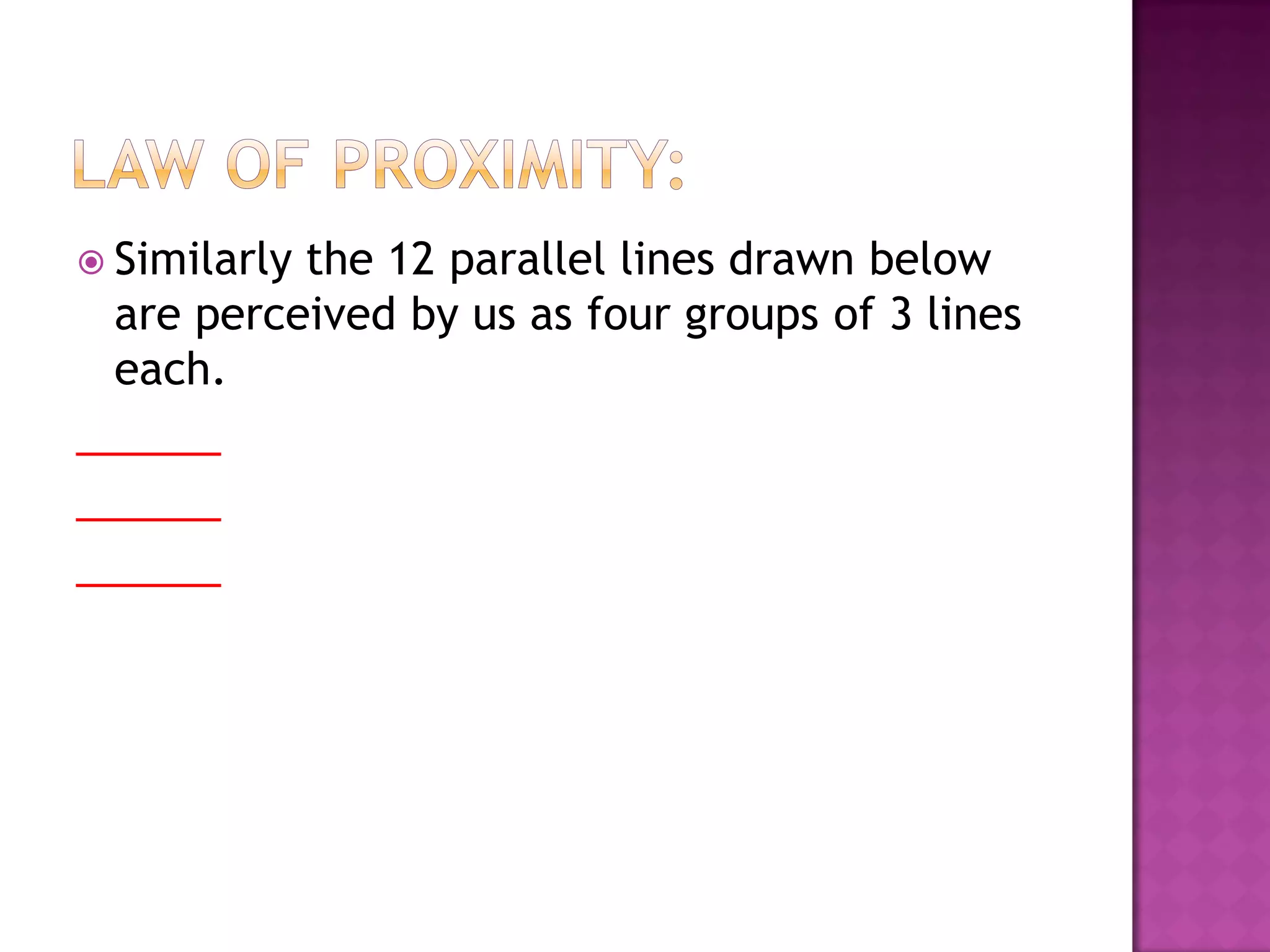
 Similarly the 12 parallel lines drawn below
are perceived by us as four groups of 3 lines
each.
______
______
______
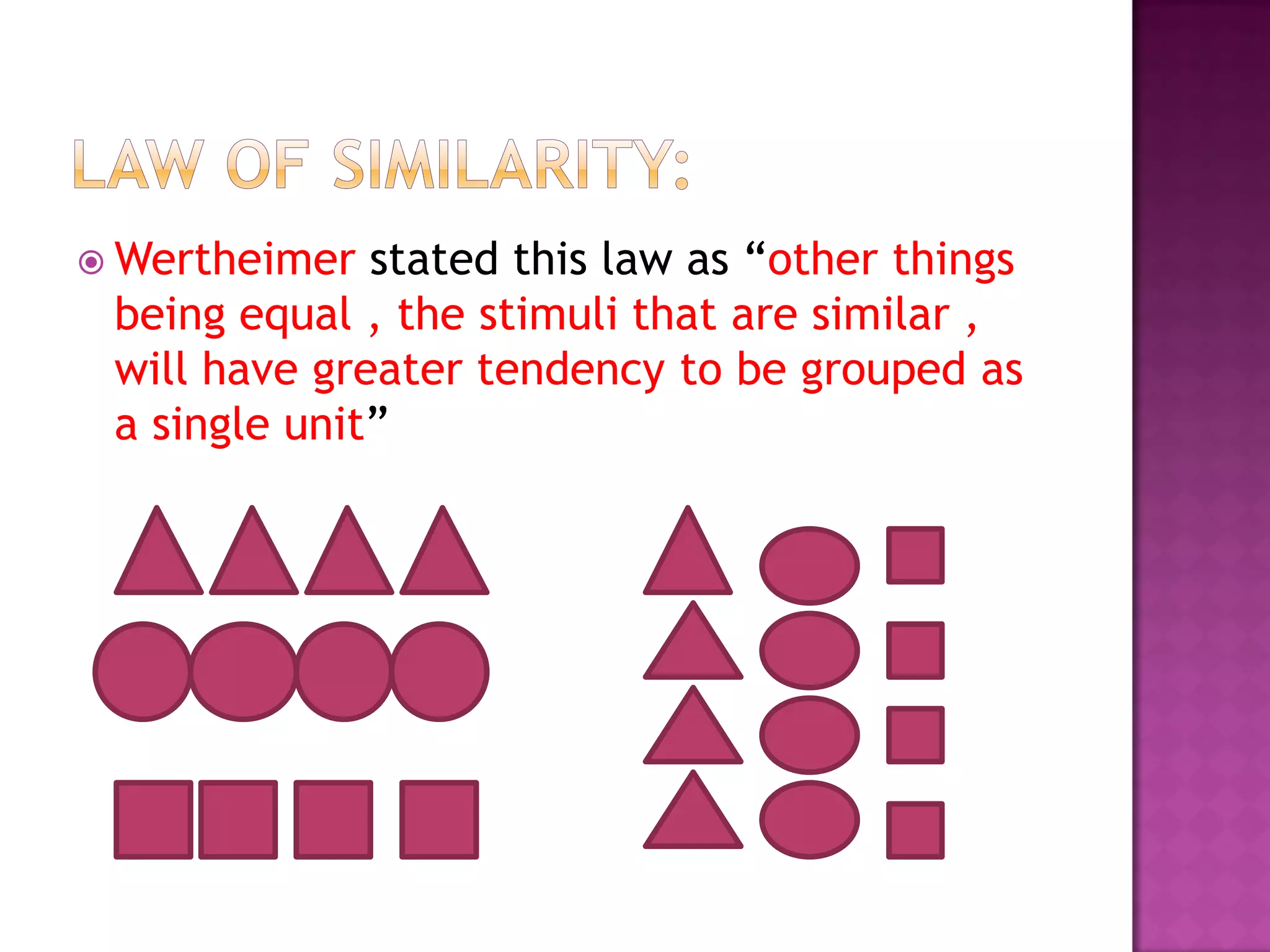
 Wertheimer stated this law as “other things
being equal , the stimuli that are similar ,
will have greater tendency to be grouped as
a single unit”
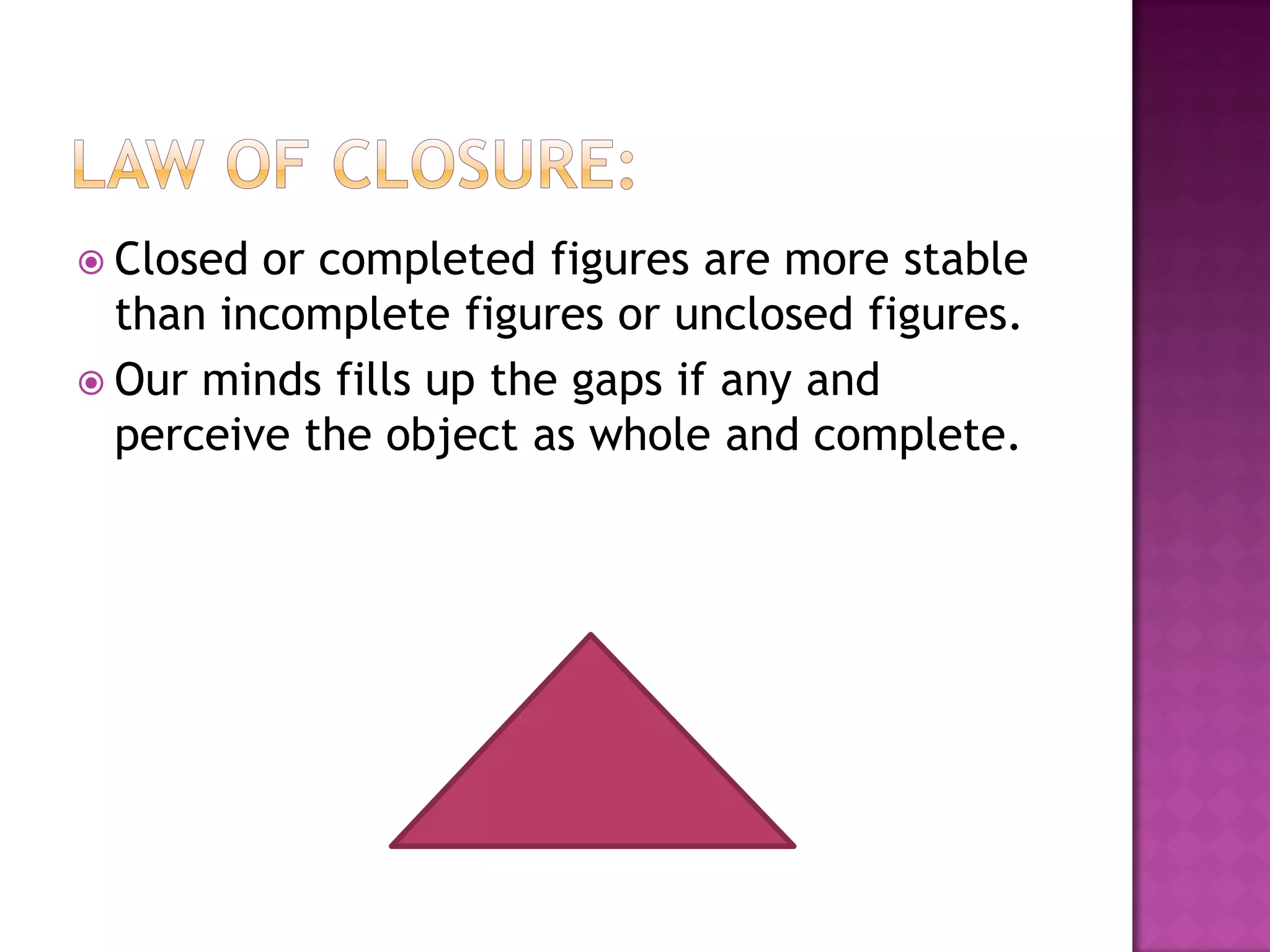
 Closed or completed figures are more stable
than incomplete figures or unclosed figures.
 Our minds fills up the gaps if any and
perceive the object as whole and complete.
 Organization on perception appears to be
going infinitely in the same direction
 Tendency for factors to give direction ,
movement and continuation.
 That is why the following series of dots
………………………….. Appear to be in a straight
line.
 Arises either because of the ambiguous
qualities of what is perceived or the state of
the perceiving person or both
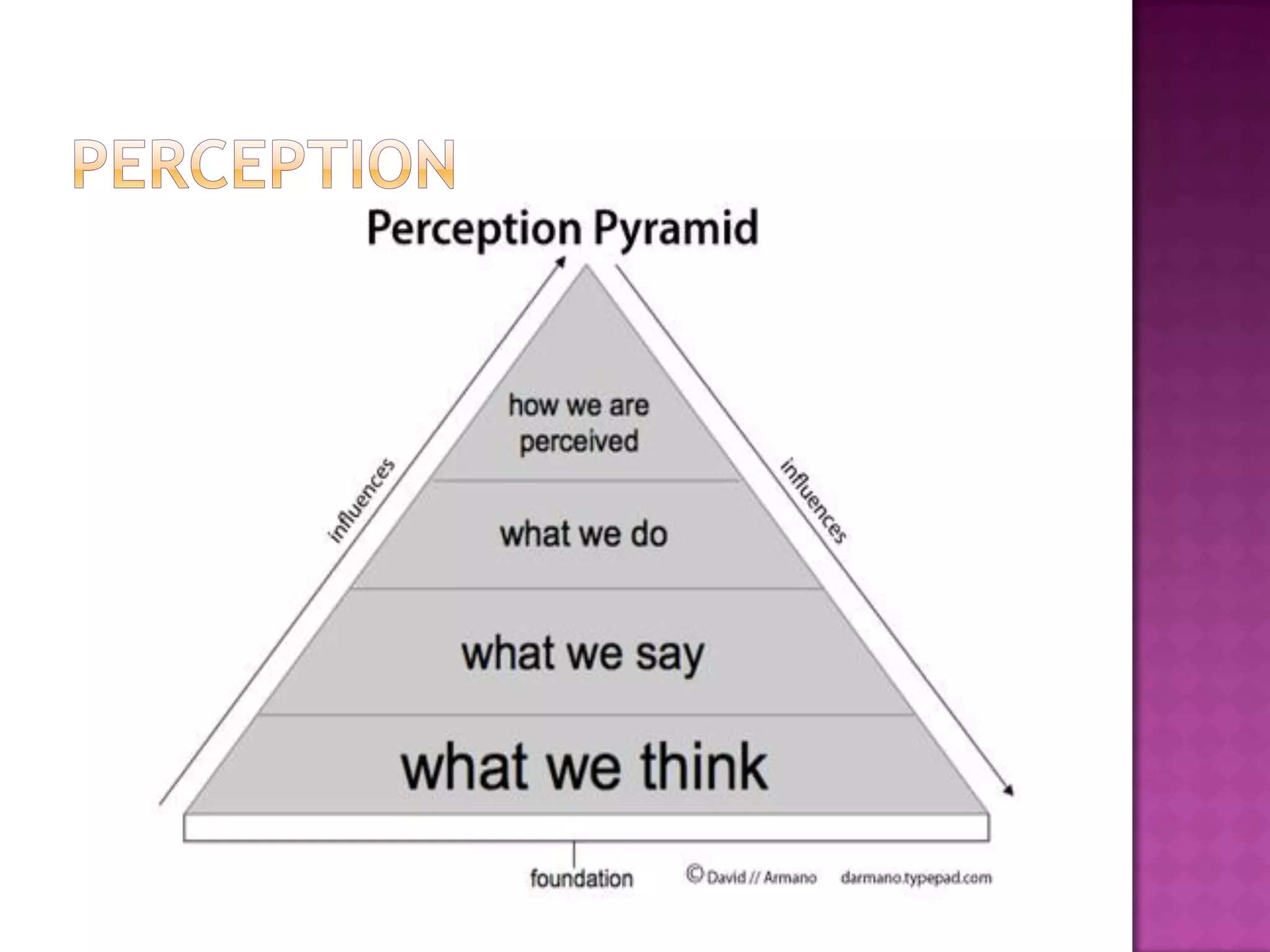
Perception uma

Perception uma

  • 1.
  • 3.
     Psychological processin which the sensory inputs received from the sense organs are processes , organized and interpreted based on the past experiences of the organism so that the nature of the stimuli are meaningfully understood  Perception=sensation & meaningful interpretation
  • 4.
     There areseveral factors that may affect the students ability to perceive they are Basic needs Time and opportunity Goals and values Elements of threat Self concept insight
  • 5.
     Gardner Murphyspeaks of the four factors of perception sensations Our previous experiences Nervous structure Mental set at the time of experiencing sensations
  • 6.
     Without perception, imagery and imagination are not possible.  Related to attending and observing.  Perceive only those stimuli that we attend to  Helps to understand the different objects and events in our environment and learn to adapt our reactions , towards them.
  • 7.
     Process ofselection is involved  Perception is largely determined by our past experiences  Process of integration takes place in perception
  • 8.
     On seeinga man riding a cycle, we do not perceive the cycle and the rider separately  The mental act of ‘organizing’ takes place during perception as per the law of pragnanz
  • 9.
     Similarly the12 parallel lines drawn below are perceived by us as four groups of 3 lines each. ______ ______ ______
  • 10.
     Wertheimer statedthis law as “other things being equal , the stimuli that are similar , will have greater tendency to be grouped as a single unit”
  • 11.
     Closed orcompleted figures are more stable than incomplete figures or unclosed figures.  Our minds fills up the gaps if any and perceive the object as whole and complete.
  • 12.
     Organization onperception appears to be going infinitely in the same direction  Tendency for factors to give direction , movement and continuation.  That is why the following series of dots ………………………….. Appear to be in a straight line.
  • 13.
     Arises eitherbecause of the ambiguous qualities of what is perceived or the state of the perceiving person or both