Drug dosing consideration in
patients with acute and
chronic kidney disease
Doha Rasheedy
Assistant professor of Geriatrics &
Gerontology
1. Effects of impaired kidney function on drug
disposition and response.
2. Patient assessment for drug dosing.
3. Calculating drug doses for patients with AKI ,
CKD and receiving RRT.
4. Drug removal by intermittent and continuous
renal replacement therapies
WHAT IS THE MOST ACCURATE AND
RELIABLE INDEX OF ‘KIDNEY
FUNCTION’ FOR DRUG DOSING?
• The standard measure of kidney function for decades has
been the glomerular filtration rate (GFR).
• Urinary clearance of inulin, which is the gold standard, is
rarely performed except for research purposes.
• Modifications to this procedure include the use of other
exogenous agents such as iothalamate, iohexol, and (99
m)Tc/c- diethylene triamine penta acetic acid, and plasma
clearance to replace the need for urine collections.
• The determination of GFR based on the administration of
exogenous substances is not practical for routine individual
drug dose calculations.
• The determination of GFR utilizing an endogenous substance
has therefore been used.
• the use of the urinary clearance of creatinine (CLcr) derived
from a 24 h urine collection can’t be used for drug dosing
due to late results, difficult collection
• Therefore, GFR is predominantly estimated in
clinical practice from the measurement of
endogenous substances such as serum creatinine
(Scr) and then combined with patient factors to
estimate the GFR using estimating equations.
• There are limitations to Scr. In particular, because
Scr is generated from muscle mass and diet,
individuals at the extremes of these factors (for
example, amputee or conversely body builders, or
those on a vegan diet) will have substantially
different values of creatinine than expected.
CKD-EPI
• This CKD-EPI equation calculator should be used when Scr reported in
mg/dL. This equation is recommended when eGFR values above 60
mL/min/1.73 m2 are desired.
• GFR = 141 × min (Scr /κ, 1)α × max(Scr /κ, 1)-1.209 × 0.993Age × 1.018 [if
female] × 1.159 [if black]
• where:
• Scr is serum creatinine in mg/dL,
• κ is 0.7 for females and 0.9 for males,
• α is -0.329 for females and -0.411 for males,
• min indicates the minimum of Scr /κ or 1, and
• max indicates the maximum of Scr /κ or 1.
Calculator at:
https://www.niddk.nih.gov/health-information/health-communication-
programs/nkdep/lab-evaluation/gfr-calculators/adults-conventional-unit-ckd-
epi/Pages/default.aspx
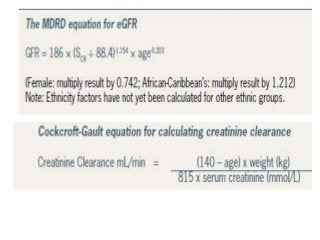
Cockcroft and Gault (CG) equation
• This equation provides an estimate of measured CLcr and
has been widely used as an estimate of GFR as well,
despite the fact that creatinine also undergoes tubular
secretion.
• The CG equation is reported in units not adjusted for body
surface area, which is appropriate for drug dosage
adjustment.
• The CG equation has been shown to overestimate GFR
with the use of standardized creatinine assays.
• Many have considered that an advantage of the CG
equation for individual drug dose adjustment is that the
body weight is considered; however, this has not been
validated.
• The MDRD Study equation has been shown to
overestimate measured GFR in those with values
>60 ml/min per 1.73m2,and hence specific values
are only reported for values <60 ml/min per
1.73m2.
• The CKD-Epidemiology Collaboration (CKD-EPI)
equation was recently developed specifically to
overcome this limitation. It is more accurate than
the MDRD Study equation, particularly at higher
levels GFR
which one of the many GFR
estimation equations should be used
for assessment of an individual
patient’s GFR as the guide to the
degree of adjustment of their drug
dosage regimens?
• The National Kidney Disease Education Program
(NDKEP) in the United States recommends that the
GFR estimated from the MDRD Study or CLcr
estimates from the CG equation for adults or the
Schwartz equation for children can be used for
drug dosing.
• For very large or very small people, they
recommend adjustment of the estimated GFR
(eGFR) from the MDRD Study equation to account
for patient’s body surface area (BSA)
• (eGFR MDRD*(BSA per 1.73m2)) to yield eGFR IND
in units of ml/min
• Currently, the CKD-EPI method is the most
accurate method for estimation of GFR, and it
appears to be emerging as the method of choice
for the staging of CKD. Although documentation
of is utility for drug dosing is limited.
• When creatinine-based estimation equation is
not likely to provide a good estimate of GFR,
measured creatinine clearance or measured GFR
using exogenous markers should be considered
• Serum creatinine is the most commonly used
analyte in the evaluation of renal function, and
equations using serum creatinine concentration
are the basis of most estimates of GFR .
• Estimated GFR (eGFR) has the units
mL/min/1.73m2, whereas creatinine clearance and
drug clearance are both measured in mL/min. To
avoid confusion, units should be carefully noted
and their implications considered.
• creatinine-based estimates of renal function are
not reliable in pregnancy
NARROW THERAPEUTIC INDEX
• a 20% change in dose is usually impractical or
unnecessary.
• However there are several drugs for which small
changes in dose or concentration may have an
important effect, commonly known as a narrow
therapeutic index.
• The therapeutic index =
minimum toxic dose
minimum effective dose
• Narrow therapeutic index drugs should be dosed
using robust biomarkers, as estimates or
empirical calculations of dose are not reliable
enough to be safe.
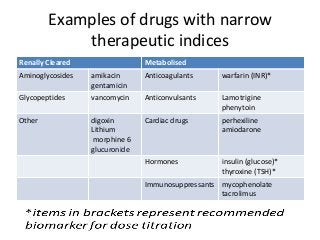
Examples of drugs with narrow
therapeutic indices
Renally Cleared Metabolised
Aminoglycosides amikacin
gentamicin
Anticoagulants warfarin (INR)*
Glycopeptides vancomycin Anticonvulsants Lamotrigine
phenytoin
Other digoxin
Lithium
morphine 6
glucuronide
Cardiac drugs perhexiline
amiodarone
Hormones insulin (glucose)*
thyroxine (TSH)*
Immunosuppressants mycophenolate
tacrolimus
DRUG CLEARANCE
• Drug clearance (CL) and bioavailability (F) (the
fraction of the drug dose that reaches the systemic
circulation) determine the steady state plasma
concentration (Cp) at a given dose
• Dose= CPX
𝐶𝐿
𝐹
• CL has the units of volume/time and F is
dimensionless (%).
• if CL is halved, drug dose should be halved to keep
the drug concentration the same. Thus, if a drug is
100% renally cleared and renal function is half-
normal, the drug dose should be halved, all other
things being equal.
• However, many drugs are inactivated by metabolism
(in the liver predominantly), and hence doses of
metabolised drugs do not usually require changing in
renal disease.
• There are some drugs that are partially cleared by
the kidneys and partially metabolised (e.g. low
molecular weight heparins). For these drugs the dose
reduction needed in renal disease is less than that
for drugs that are 100% renally cleared. For example,
in a patient with half-normal renal function, the dose
of a drug that is half renally cleared and half
metabolised would typically need to be reduced by a
quarter.
Fraction Excreted Unchanged
• The fraction excreted unchanged (fe) is the
proportion of the active drug cleared renally
in an average healthy person.
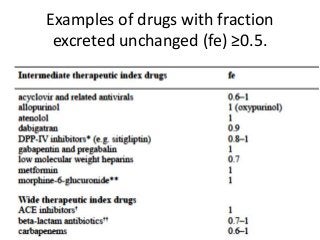
• The doses of drugs with fe ≥0.5 (50% or more
renally cleared) should usually be reduced in
patients with renal disease.
• patient dose =usual dose X
[(1-fe)+ fe X
𝑒𝑠𝑡𝑖𝑚𝑎𝑡𝑒𝑑 𝑝𝑎𝑡𝑖𝑒𝑛𝑡 𝑟𝑒𝑛𝑎𝑙 𝑓𝑢𝑛𝑐𝑡𝑖𝑜𝑛
𝑛𝑜𝑟𝑚𝑎𝑙 𝑟𝑒𝑛𝑎𝑙 𝑓𝑢𝑛𝑐𝑡𝑖𝑜𝑛)
]
Examples of drugs with fraction
excreted unchanged (fe) ≥0.5.
CKD
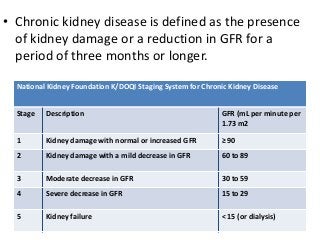
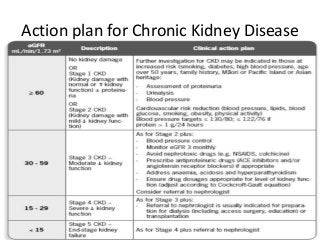
• Chronic kidney disease is defined as the presence
of kidney damage or a reduction in GFR for a
period of three months or longer.
National Kidney Foundation K/DOQI Staging System for Chronic Kidney Disease
Stage Description GFR (mL per minute per
1.73 m2
1 Kidney damage with normal or increased GFR ≥ 90
2 Kidney damage with a mild decrease in GFR 60 to 89
3 Moderate decrease in GFR 30 to 59
4 Severe decrease in GFR 15 to 29
5 Kidney failure < 15 (or dialysis)
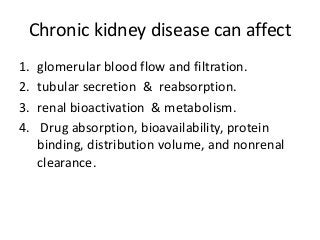
Chronic kidney disease can affect
1. glomerular blood flow and filtration.
2. tubular secretion & reabsorption.
3. renal bioactivation & metabolism.
4. Drug absorption, bioavailability, protein
binding, distribution volume, and nonrenal
clearance.
THE EFFECT OF CKD ON THE PK OR PD
1. The volume of distribution (VD) of many drugs is
increased in patients with moderate to severe
CKD as well as in those with preexisting CKD who
develop AKI. Due to decreased protein binding,
increased tissue binding, or alterations in body
composition (for example, fluid overload).
2. CKD may lead to alterations in nonrenal clearance
of many medications as the result of alterations in
the activities of uptake and efflux transporters as
well as cytochrome P450 (CYP enzymes) in the
liver and other organs.
3. Patients with CKD may experience accumulation
of metabolite(s) as well as the parent compound
Parameters guide therapy
• Loading dose
• Maintenance dose
• Measurement of therapeutic drug levels
Loading dose:
Patient’s loading dose = Usual loading dose X (Patient’s VDÞ/Normal
VDÞ).
• Most published guidelines do not recommend a loading dose,
despite the well-documented evidence of altered VD of several
drugs in CKD patients.
• Loading doses may be required if a drug has a long half-life and
there is a need to rapidly achieve the desired steady-state
concentrations.
• Furthermore, if the VD of a drug is significantly increased in CKD
patients, a loading dose will likely be needed even if one was not
routinely recommended for those with normal renal function.
Usual Loading dose = Vd × IBW × Cp
• (Vd [L/kg]; IBW [ideal body weight; kg]; Cp [desired plasma
concentration; mg/L])
Maintenance dose
• Methods for maintenance dosing adjustments: dose
reduction, lengthening the dosing interval, or both.
• Dose reduction involves reducing each dose while
maintaining the normal dosing interval. This approach
maintains more constant drug concentrations, but it is
associated with a higher risk of toxicities if the dosing
interval is inadequate to allow for drug elimination
• In general, prolonging the dosing interval but maintaining
the same dose will result in the achievement of similar peak
and trough concentrations as well as AUC and thus may be
preferred. Lengthening the dosing interval has been
associated with a lower risk of toxicities but a higher risk of
subtherapeutic drug concentrations, especially toward the
end of the dosing interval.
Measurement of therapeutic drug
levels
• Measuring drug concentrations is one way to optimize
therapeutic regimens.
• hypoalbuminemia may influence interpretation of
drug concentrations as the total drug concentration
may be reduced even when the active unbound drug
concentration is not.
• Unbound drug concentrations are often not clinically
available, and therefore clinicians must empirically
consider the impact of hypoalbuminemia in their
interpretation of measured total drug concentrations
Action plan for Chronic Kidney Disease
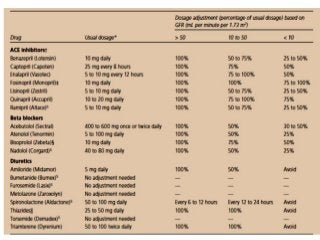
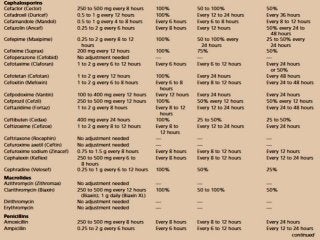
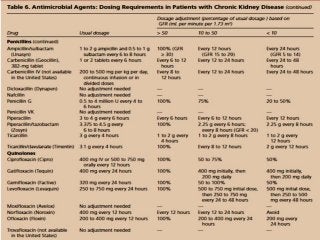
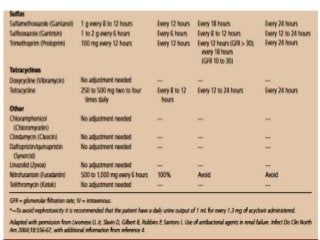
DOSE ADJUSTMENT FOR COMMON
DRUGS IN CKD
antihypertensives
• Thiazide diuretics are first-line agents for treating
uncomplicated hypertension, but they are not
recommended if the serum creatinine level is higher
than 2.5 mg per dL or if the creatinine clearance is
lower than 30 mL per minute.
• Loop diuretics are most commonly used to treat
uncomplicated hypertension in patients with chronic
kidney disease.
• potassium-sparing diuretics and aldosterone blockers
should be avoided in patients with severe chronic
kidney disease because of the rise in serum potassium
that typically accompanies renal dysfunction
• Angiotensin-converting enzyme (ACE) inhibitors and
angiotensin receptor blockers (ARBs) are first-line
hypertensive agents for patients with type 1 or 2
diabetes mellitus and proteinuria or early chronic
kidney disease. These agents reduce blood pressure
and proteinuria, slow the progression of kidney
disease, and provide long-term cardiovascular
protection.
• ACE inhibitors and ARBs inhibit the renin-angiotensin-
aldosterone system in patients with chronic kidney
disease and in patients with normal baseline serum
creatinine levels, causing efferent arteriolar dilation.
This can cause an acute decline in GFR of more than
15 % from baseline with proportional elevations in
serum creatinine within the first week of initiating
therapy
• This most commonly occurs in patients with congestive heart
failure, in patients using concomitant diuretics or nonsteroidal
anti-inflammatory drugs (NSAIDs), and in patients receiving high
doses of ACE inhibitors or ARBs.
• ACEIs in general require renal dose adjustment, whereas the
ARBs are all hepatically eliminated and no adjustment is
necessary.
• In most patients, ACE inhibitors and ARBs can be continued
safely if the rise in serum creatinine is less than 30 %. Typically,
the level will return to baseline in four to six weeks.
• A common practice is to discontinue ACE inhibitor and ARB
therapy when the serum creatinine level rises more than 30
percent or if the serum potassium level is 5.6 mEq per L or
higher.
• Because of long-term renoprotective and cardioprotective
effects, no patient should be denied an ACE-inhibitor or ARB trial
without careful evaluation. Dosages should be titrated carefully
and followed by weekly monitoring of renal function and
potassium levels until values return to baseline.
• Hydrophilic beta blockers (e.g., atenolol,
bisoprolol , nadolol, acebutolol )are eliminated
renally and dosing adjustments are needed in
patients with chronic kidney failure.
• However, metoprolol tartrate, metoprolol
succinate , propranolol , and labetalol are
metabolized by the liver and adjustments are not
required.
• Other antihypertensive agents that do not require
dosing adjustments include calcium channel
blockers, clonidine (Catapres), and alpha blockers.
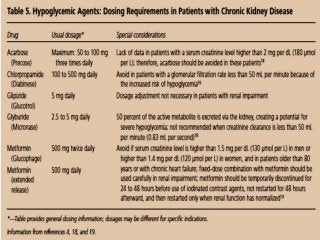
hypoglycemic agents
• metformin (Glucophage) is 90 to 100 percent
renally excreted, its use is not recommended when
the serum creatinine level is higher than 1.5 mg per
dL in men or higher than 1.4 mg per dL in women,
in patients older than 80 years, or in patients with
chronic heart failure.
• The primary concern about the use of metformin in
patients with renal insufficiency is that other
hypoxemic conditions (e.g., acute myocardial
infarction, severe infection, respiratory disease, liver
disease) increase the risk of lactic acidosis.
• Sulfonylureas (e.g., chlorpropamide, glyburide
should be avoided in patients with stages 3 to 5
chronic kidney disease. The half-life of
chlorpropamide is significantly increased in these
patients, which can cause severe hypoglycemia.
Glipizide, however, does not have an active
metabolite and is safe in these patients.
• Insulin is renally eliminated and all preparations
require dose reduction in renal failure.
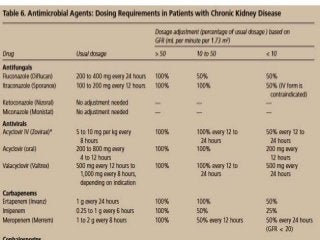
Antimicrobial
• Nitrofurantoin has a toxic metabolite that can
accumulate in patients with chronic kidney disease,
causing peripheral neuritis.
• Aminoglycosides should be avoided in patients with
chronic kidney disease when possible. If used, initial
doses should be based on an accurate GFR
estimate. Renal function and drug concentrations
should be monitored and dosages adjusted
accordingly.
Analgesic
• Patients with stage 5 kidney disease are more likely to experience
adverse effects from opioid use. Metabolites of meperidine,
dextropropoxyphene, morphine, tramadol and codeine can
accumulate in patients with chronic kidney disease, causing central
nervous system and respiratory adverse effects.
• Extended-release tramadol should be avoided in patients with
chronic kidney disease. The dosing interval of tramadol (regular
release) may need to be increased to every 12 hours in patients with
a creatinine clearance less than 30 mL per minute.
• Acetaminophen can be used safely in patients with renal impairment.
• Adverse renal effects of NSAIDs include acute renal failure;
nephrotic syndrome with interstitial nephritis; and chronic
renal failure with or without glomerulopathy, interstitial
nephritis, and papillary necrosisdecreased potassium
excretion, which can cause hyperkalemia, and decreased
sodium excretion, which can cause peripheral edema,
elevated blood pressure, and decompensation of heart
failure. NSAIDs can blunt antihypertensive treatment,
especially if beta blockers, ACE inhibitors, or ARBs are used.
• COX-2) inhibitors may cause slightly fewer adverse
gastrointestinal effects, adverse renal effects are similar to
traditional NSAIDs.
• Short-term use of NSAIDs is generally safe in patients who are
well hydrated; who have good renal function; and who do not
have heart failure, diabetes, or hypertension
AKI
DRUG DOSAGE CONSIDERATIONS FOR
PATIENTS WITH AKI (e.g. critically ill, or
MOF)
• ↓Oral absorption: due to the use of H2-
antagonists and proton pump inhibitors. Slow
gastrointestinal motility, prolonged intestinal
transit times, bacterial colonization. Thus,
intravenous administration of drugs may need to
be considered to assure appropriate absorption.
• The impact of AKI on drug metabolism (CYP 450)
is delayed in onset or minimal in the majority of
studies.
• Hypofiltration and GFR may be especially
challenging to quantify in those with rapidly
changing function.
• estimation or measurement of GFR may not
provide an accurate measure of the
contribution of the kidney to the excretion of
all drugs, especially those that are extensively
secreted and/or metabolized in the kidney or
other organs.
• Assessment of kidney function in patients with AKI is
challenging. Any endogenous filtration marker, such
as creatinine, needs to be measured at steady state
before it can provide a reliable estimate of GFR.
Hence, no estimating equations can provide an
accurate estimate of GFR in AKI.
• Another strategy to estimate GFR in AKI is to measure
creatinine clearance with incorporation of the mean
of the beginning and ending Scr value as an estimate
of GFR.
• It is near impossible to provide the best dosage
regimen for AKI or MSOF/MODS patients because of
their fluctuating kidney function, volume status, and
potentially metabolic activity
1. Loading dose: As the VD of many drugs, especially
hydrophilic antibiotics, including b-lactams,
cephalosporins, and penems, are significantly
increased in the presence of AKI, the administration
of aggressive loading doses (25–50% greater than
normal) are highly recommended.
2. Maintenance dose: Because of the preservation of
nonrenal clearance for some agents such as
vancomycin, imipenem, and ceftizoxime, as well as
the tendency to attain a positive fluid balance in the
early stages of AKI, the dosing regimen for many
drugs, especially antimicrobial agents, should be
initiated at normal or near normal dosage regimens
DRUG DOSING CONSIDERATIONS
FOR HEMODIALYSIS PATIENTS
• High-flux dialysis membranes used nowadays have the
larger pore sizes and this allows the passage of most
solutes, including drugs that have a molecular weight of
<20,000 Daltons.
• The impact of HD is not strictly limited to dialysis
clearance. There is evidence that some drugs adhere to
the dialyzer membrane, and recent findings suggest
that the nonrenal clearance (metabolism) of some
agents is altered by HD.
• A single 4-h session of HD increased the nonrenal
clearance of erythromycin in patients with end-stage
renal disease by 27% as soon as 2 h after HD. This was
presumably secondary to the removal of uremic solutes
that accumulate during the interdialytic period and
inhibited CYP450 3A4 and drug transporters.
Assessment of the impact of HD
• The most common method for assessing the
effect of HD is to calculate the dialyzer
clearance
• CLb
D= Qb[(Ab-Vb)/Ab],
• where Qb is blood flow through the dialyzer,
Ab is the concentration of drug in blood going
into the dialyzer, and Vb is the blood
concentration of drug leaving the dialyzer.
• the recovery clearance approach remains the
benchmark for the determination of dialyzer
clearance and it can be calculated as:
• CLD
r =R/AUC0-t
• where R is the total amount of drug recovered
unchanged in the dialysate and AUC0-t is the area
under the predialyzer plasma concentration–time
curve during the period of time that the dialysate was
collected.
• To determine the AUC0-t, a minimum of three to four
plasma concentrations should be obtained during
dialysis.
Assessment of the impact of CRRT and
hybrid RRT
• CRRT parameters substantially influence drug clearance.
The mode of therapy (diffusion, convection, or both) can
be influential, as both therapy modes can remove small
solutes, but convective therapies are superior at removing
larger solutes
• Filter composition can also influence drug removal, drug
adsorption occurs with many CRRT membranes
(particularly sulfonated polyacrylonitrile and
polymethylmethacrylate), although it is difficult to
quantify adsorption in both in vitro and in vivo studies.
• Dialysis dose is one of the most influential factors, with
increased dialysate/ultrafiltration/ effluent flow rates
resulting in greater drug removal
Drug dosing approaches
1. ESRD dosing recommendations should be used only as an initial guide for
the initiation of therapy in an AKI patient receiving CRRT when no other
information is available
2. The existing maintenance dosing recommendations for ESRD patients
receiving HD often result in the achievement of subtherapeutic
concentrations and treatment failures for patients with severe AKI requiring
RRT
3. The most effective dosing optimization strategy is to use therapeutic drug
monitoring for drugs like aminoglycosides and vancomycin to achieve the
desired therapeutic goals. However, very few drugs have clinically useful
(quick turnaround time, FDA/EMA approved) assays available
4. When CRRT or EDD clearance data are available, the current literature
recommendations should be the logical starting dose for therapy. Different
treatment intensities for CRRT or EDD result in marked variability in drug
removal and thus this literature may not be generalizable across the multiple
CRRT and EDD prescriptions that are used in practice
5. Another alternative is to calculate the ‘total creatinine clearance’
(CLcr) based on the addition of the patient’s residual renal clearance
and expected extracorporeal clearance. This value can then be used
to estimate a maintenance dosing regimen based on medication
dosing guidelines specified for that resultant total CLcr range. Using
this method, most drugs will fall in the CLcr 25–50 ml/min range
6. A fourth method starts with the dose and dosing interval for a
patient with a GFR<10 ml/min (anuric dose), and makes dosage
adaptations based on the drug fraction expected to be removed by
extracorporeal therapy (FrEC)
i. Maintenance dose=anuric dose/[1- FrEC]
ii. Dosing interval=anuric dosing interval x [1-FrEC]
7. A fifth method starts with a normal dose (Dn) and reduces dose
based on normal clearance (Clnorm), non-renal clearance (Clnonrenal),
effluent rate (Qeff), and sieving coefficient (SC)
b. Dose =Dosenx[Clnonrenal+(QeffxSC)]/Clnorm
8. CRRT and EDD education should be an integral part of critical care
and nephrology fellowship training programs
peritoneal dialysis
• In patients with established peritoneal dialysis, the
access to the peritoneal cavity provides an
opportunity to deliver drugs both locally and
systemically.
• Intraperitoneal drug administration is well
accepted for the treatment of peritoneal dialysis-
associated peritonitis and other infections.
• Intraperitoneal therapy appears attractive but has
several potential technical pitfalls: solubility and
stability of the compounds in peritoneal dialysis fluid
and co-administration of more than one compound
can lead to chemical interactions and changes in
solubility.
• Administration intervals depend on the half-life of
the drug, which is mainly determined by residual
renal and extrarenal metabolic clearance.
• Long-standing experience with intermittent
antibiotic administration exists for the glycopeptides
vancomycin and teicoplanin, which can be
administered at 5- to 7-day intervals, as well as for
aminoglycosides and cephalosporins, which are
suitable for once-daily dosing
GUIDE TO DRUG DOSE ADJUSTMENT IN
RENAL IMPAIRMENT
(BASED ON COCKCROFT-GAULT EQUATION, ADAPTED FROM
BNF)
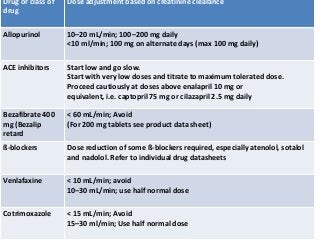
Drug or class of
drug
Dose adjustment based on creatinine clearance
Allopurinol 10–20 mL/min; 100–200 mg daily
<10 ml/min; 100 mg on alternate days (max 100 mg daily)
ACE inhibitors Start low and go slow.
Start with very low doses and titrate to maximum tolerated dose.
Proceed cautiously at doses above enalapril 10 mg or
equivalent, i.e. captopril 75 mg or cilazapril 2.5 mg daily
Bezafibrate 400
mg (Bezalip
retard
< 60 mL/min; Avoid
(For 200 mg tablets see product data sheet)
ß-blockers Dose reduction of some ß-blockers required, especially atenolol, sotalol
and nadolol. Refer to individual drug datasheets
Venlafaxine < 10 mL/min; avoid
10–30 mL/min; use half normal dose
Cotrimoxazole < 15 mL/min; Avoid
15–30 ml/min; Use half normal dose
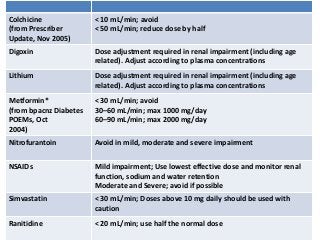
Colchicine
(from Prescriber
Update, Nov 2005)
< 10 mL/min; avoid
< 50 mL/min; reduce dose by half
Digoxin Dose adjustment required in renal impairment (including age
related). Adjust according to plasma concentrations
Lithium Dose adjustment required in renal impairment (including age
related). Adjust according to plasma concentrations
Metformin*
(from bpacnz Diabetes
POEMs, Oct
2004)
< 30 mL/min; avoid
30–60 mL/min; max 1000 mg/day
60–90 mL/min; max 2000 mg/day
Nitrofurantoin Avoid in mild, moderate and severe impairment
NSAIDs Mild impairment; Use lowest effective dose and monitor renal
function, sodium and water retention
Moderate and Severe; avoid if possible
Simvastatin < 30 mL/min; Doses above 10 mg daily should be used with
caution
Ranitidine < 20 mL/min; use half the normal dose
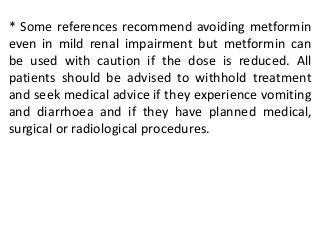
* Some references recommend avoiding metformin
even in mild renal impairment but metformin can
be used with caution if the dose is reduced. All
patients should be advised to withhold treatment
and seek medical advice if they experience vomiting
and diarrhoea and if they have planned medical,
surgical or radiological procedures.
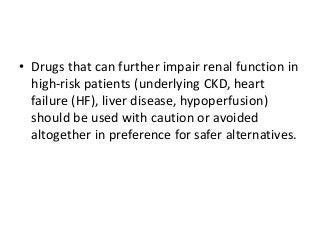
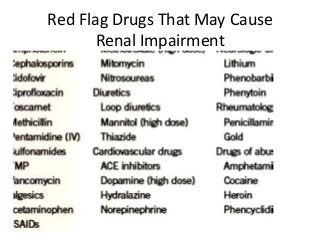
• Drugs that can further impair renal function in
high-risk patients (underlying CKD, heart
failure (HF), liver disease, hypoperfusion)
should be used with caution or avoided
altogether in preference for safer alternatives.
Red Flag Drugs That May Cause
Renal Impairment
PHARMACOKINETICS CHANGES
Absorption
• Intestinal absorption and bioavailability (the fraction of
medication that reaches systemic circulation) are influenced
by many variables and are the result of numerous
physiologic processes.
• Gastroparesis: Patients with CKD often suffer from
gastroparesis. This results in delayed gastric emptying and
prolongs the time to maximum drug concentrations (Cmax).
The overall extent of absorption is not commonly affected,
but delayed Cmax can be important when rapid onset of
action is desired.
• Gastric alkalinization: As a result of the common use of
medications, including phosphate binders, antacids, H2-
receptor antagonists, and proton pump inhibitors, the
absorption of many medications requiring an acidic
environment (e.g., furosemide and ferrous sulfate) is
reduced.
• Cationic chelation: Ingestion of cation-containing antacids
(e.g., calcium, magnesium, aluminum hydroxide, sodium
polystyrene sulfonate) decreases the absorption of many
coadministered medications because of chelation
(quinolone antibiotics, warfarin, levothyroxine, tetracycline,
and so forth).
• Alterations to intestinal first-pass metabolism and p-
glycoprotein efflux system:
• Many medications are subject to intestinal metabolism by
the cytochrome P450 enzyme system. In CKD, reductions in
metabolism occur 30% decrease in function.
• p-Glycoprotein, an efflux transport protein in the intestinal
tract, also exhibits decreased activity.
• Increased medication bioavailability occurs as a result of
both of these changes.
• Two medications with narrow therapeutic index (TI) affected
by these variations are cyclosporine and tacrolimus.
Distribution
• Drug distribution or volume of distribution (Vd) is
the total amount of drug present in the body,
divided by the plasma concentration, expressed in
liters.
• Plasma protein binding, tissue binding, active
transport, and body composition can all impact the
Vd.
• Plasma drug concentrations are representative of
both bound and unbound drug, but only free drug
is capable of crossing cellular membranes and
exerting pharmacologic effects
Altered protein binding:
• Hypoalbuminemia due to the nephrotic syndrome
often leads to an increase in the free drug fraction of
Acidic drugs (e.g., penicillins, cephalosporins,
phenytoin, furosemide, salicylates) leading to drug-
related toxicities.
• Alternatively, an increase in α1-glycoprotein (an acute
phase protein) associated with renal dysfunction will
lead to increase in protein binding Alkaline drugs (e.g.,
propranolol, morphine, oxazepam, vancomycin, and so
forth) concentrations are decreased.
Altered tissue binding:
Changes in tissue binding are most often irrelevant
except for digoxin, in which the Vd is reduced by 50% in
stage 5 CKD.
Changes in body composition:
• Fluid retention can increase the Vd of hydrophilic
drugs (e.g., pravastatin, fluvastatin, morphine,
codeine) and may cause decreased serum
concentrations; whereas increased adipose tissue
and muscle wasting would be expected to
increase serum concentrations secondary to a
reduced Vd
Metabolism
• Phase I reactions (more common) include hydrolysis,
reduction, and oxidation. These serve to increase drug
hydrophilicity to prepare for excretion or further phase II
metabolism.
• Phase II reactions or conjugation reactions include
glucuronidation, sulfation, glutathione conjugation,
acetylation, and methylation.
• Effects of renal failure
• Renal insufficiency significantly slows both phase I and phase
II reactions leading to increased serum drug concentrations.
• Accumulation of renally excreted active metabolites: Dosage
adjustments may be necessary for certain medications in
order to prevent toxicity from active metabolites
Elimination
• Elimination is typically reported as a half-life (T½),
or the time needed to reduce medication plasma
concentrations by 50%. Approximately five half-
lives are required to eliminate 97% of drug from
the body.
• The rate of renal elimination is dependent on
GFR, renal tubular secretion, and reabsorption.
• Medication-specific characteristics (e.g.,
molecular weight and protein binding) determine
glomerular filtration with filtration rate
dependent on free fraction.
• Reduced glomerular filtration: Decreased GFR
results in prolonged free drug elimination T½.
• Reduced secretion by active transport (e.g.,
ampicillin, furosemide, penicillin G, dopamine,
trimethoprim).
• Reduced passive reabsorption (e.g., aspirin,
lithium).
References
1. GR Matzke et al.: Drug dosing in kidney disease. Kidney
International (2011) 80, 1122–1137;
doi:10.1038/ki.2011.322.
2. © bpacnz
3. Matthew P Doogue, Thomas M Polasek. Drug Dosing in
Renal Disease. Clin Biochem Rev.2011. 32: 69-73.
4. MYRNA Y. MUNAR and HARLEEN SINGH. Drug Dosing
Adjustments in Patients with Chronic Kidney Disease. Am
Fam Physician 2007;75:1487-96.

Drug dosing

  • 1.
    Drug dosing considerationin patients with acute and chronic kidney disease Doha Rasheedy Assistant professor of Geriatrics & Gerontology
  • 2.
    1. Effects ofimpaired kidney function on drug disposition and response. 2. Patient assessment for drug dosing. 3. Calculating drug doses for patients with AKI , CKD and receiving RRT. 4. Drug removal by intermittent and continuous renal replacement therapies
  • 3.
    WHAT IS THEMOST ACCURATE AND RELIABLE INDEX OF ‘KIDNEY FUNCTION’ FOR DRUG DOSING?
  • 4.
    • The standardmeasure of kidney function for decades has been the glomerular filtration rate (GFR). • Urinary clearance of inulin, which is the gold standard, is rarely performed except for research purposes. • Modifications to this procedure include the use of other exogenous agents such as iothalamate, iohexol, and (99 m)Tc/c- diethylene triamine penta acetic acid, and plasma clearance to replace the need for urine collections. • The determination of GFR based on the administration of exogenous substances is not practical for routine individual drug dose calculations. • The determination of GFR utilizing an endogenous substance has therefore been used. • the use of the urinary clearance of creatinine (CLcr) derived from a 24 h urine collection can’t be used for drug dosing due to late results, difficult collection
  • 5.
    • Therefore, GFRis predominantly estimated in clinical practice from the measurement of endogenous substances such as serum creatinine (Scr) and then combined with patient factors to estimate the GFR using estimating equations. • There are limitations to Scr. In particular, because Scr is generated from muscle mass and diet, individuals at the extremes of these factors (for example, amputee or conversely body builders, or those on a vegan diet) will have substantially different values of creatinine than expected.
  • 7.
    CKD-EPI • This CKD-EPIequation calculator should be used when Scr reported in mg/dL. This equation is recommended when eGFR values above 60 mL/min/1.73 m2 are desired. • GFR = 141 × min (Scr /κ, 1)α × max(Scr /κ, 1)-1.209 × 0.993Age × 1.018 [if female] × 1.159 [if black] • where: • Scr is serum creatinine in mg/dL, • κ is 0.7 for females and 0.9 for males, • α is -0.329 for females and -0.411 for males, • min indicates the minimum of Scr /κ or 1, and • max indicates the maximum of Scr /κ or 1. Calculator at: https://www.niddk.nih.gov/health-information/health-communication- programs/nkdep/lab-evaluation/gfr-calculators/adults-conventional-unit-ckd- epi/Pages/default.aspx
  • 8.
    Cockcroft and Gault(CG) equation • This equation provides an estimate of measured CLcr and has been widely used as an estimate of GFR as well, despite the fact that creatinine also undergoes tubular secretion. • The CG equation is reported in units not adjusted for body surface area, which is appropriate for drug dosage adjustment. • The CG equation has been shown to overestimate GFR with the use of standardized creatinine assays. • Many have considered that an advantage of the CG equation for individual drug dose adjustment is that the body weight is considered; however, this has not been validated.
  • 9.
    • The MDRDStudy equation has been shown to overestimate measured GFR in those with values >60 ml/min per 1.73m2,and hence specific values are only reported for values <60 ml/min per 1.73m2. • The CKD-Epidemiology Collaboration (CKD-EPI) equation was recently developed specifically to overcome this limitation. It is more accurate than the MDRD Study equation, particularly at higher levels GFR
  • 10.
    which one ofthe many GFR estimation equations should be used for assessment of an individual patient’s GFR as the guide to the degree of adjustment of their drug dosage regimens?
  • 11.
    • The NationalKidney Disease Education Program (NDKEP) in the United States recommends that the GFR estimated from the MDRD Study or CLcr estimates from the CG equation for adults or the Schwartz equation for children can be used for drug dosing. • For very large or very small people, they recommend adjustment of the estimated GFR (eGFR) from the MDRD Study equation to account for patient’s body surface area (BSA) • (eGFR MDRD*(BSA per 1.73m2)) to yield eGFR IND in units of ml/min
  • 12.
    • Currently, theCKD-EPI method is the most accurate method for estimation of GFR, and it appears to be emerging as the method of choice for the staging of CKD. Although documentation of is utility for drug dosing is limited. • When creatinine-based estimation equation is not likely to provide a good estimate of GFR, measured creatinine clearance or measured GFR using exogenous markers should be considered
  • 13.
    • Serum creatinineis the most commonly used analyte in the evaluation of renal function, and equations using serum creatinine concentration are the basis of most estimates of GFR . • Estimated GFR (eGFR) has the units mL/min/1.73m2, whereas creatinine clearance and drug clearance are both measured in mL/min. To avoid confusion, units should be carefully noted and their implications considered. • creatinine-based estimates of renal function are not reliable in pregnancy
  • 14.
  • 15.
    • a 20%change in dose is usually impractical or unnecessary. • However there are several drugs for which small changes in dose or concentration may have an important effect, commonly known as a narrow therapeutic index. • The therapeutic index = minimum toxic dose minimum effective dose • Narrow therapeutic index drugs should be dosed using robust biomarkers, as estimates or empirical calculations of dose are not reliable enough to be safe.
  • 16.
    Examples of drugswith narrow therapeutic indices Renally Cleared Metabolised Aminoglycosides amikacin gentamicin Anticoagulants warfarin (INR)* Glycopeptides vancomycin Anticonvulsants Lamotrigine phenytoin Other digoxin Lithium morphine 6 glucuronide Cardiac drugs perhexiline amiodarone Hormones insulin (glucose)* thyroxine (TSH)* Immunosuppressants mycophenolate tacrolimus
  • 17.
  • 18.
    • Drug clearance(CL) and bioavailability (F) (the fraction of the drug dose that reaches the systemic circulation) determine the steady state plasma concentration (Cp) at a given dose • Dose= CPX 𝐶𝐿 𝐹 • CL has the units of volume/time and F is dimensionless (%). • if CL is halved, drug dose should be halved to keep the drug concentration the same. Thus, if a drug is 100% renally cleared and renal function is half- normal, the drug dose should be halved, all other things being equal.
  • 19.
    • However, manydrugs are inactivated by metabolism (in the liver predominantly), and hence doses of metabolised drugs do not usually require changing in renal disease. • There are some drugs that are partially cleared by the kidneys and partially metabolised (e.g. low molecular weight heparins). For these drugs the dose reduction needed in renal disease is less than that for drugs that are 100% renally cleared. For example, in a patient with half-normal renal function, the dose of a drug that is half renally cleared and half metabolised would typically need to be reduced by a quarter.
  • 20.
    Fraction Excreted Unchanged •The fraction excreted unchanged (fe) is the proportion of the active drug cleared renally in an average healthy person. • The doses of drugs with fe ≥0.5 (50% or more renally cleared) should usually be reduced in patients with renal disease. • patient dose =usual dose X [(1-fe)+ fe X 𝑒𝑠𝑡𝑖𝑚𝑎𝑡𝑒𝑑 𝑝𝑎𝑡𝑖𝑒𝑛𝑡 𝑟𝑒𝑛𝑎𝑙 𝑓𝑢𝑛𝑐𝑡𝑖𝑜𝑛 𝑛𝑜𝑟𝑚𝑎𝑙 𝑟𝑒𝑛𝑎𝑙 𝑓𝑢𝑛𝑐𝑡𝑖𝑜𝑛) ]
  • 21.
    Examples of drugswith fraction excreted unchanged (fe) ≥0.5.
  • 23.
  • 24.
    • Chronic kidneydisease is defined as the presence of kidney damage or a reduction in GFR for a period of three months or longer. National Kidney Foundation K/DOQI Staging System for Chronic Kidney Disease Stage Description GFR (mL per minute per 1.73 m2 1 Kidney damage with normal or increased GFR ≥ 90 2 Kidney damage with a mild decrease in GFR 60 to 89 3 Moderate decrease in GFR 30 to 59 4 Severe decrease in GFR 15 to 29 5 Kidney failure < 15 (or dialysis)
  • 25.
    Chronic kidney diseasecan affect 1. glomerular blood flow and filtration. 2. tubular secretion & reabsorption. 3. renal bioactivation & metabolism. 4. Drug absorption, bioavailability, protein binding, distribution volume, and nonrenal clearance.
  • 26.
    THE EFFECT OFCKD ON THE PK OR PD
  • 27.
    1. The volumeof distribution (VD) of many drugs is increased in patients with moderate to severe CKD as well as in those with preexisting CKD who develop AKI. Due to decreased protein binding, increased tissue binding, or alterations in body composition (for example, fluid overload). 2. CKD may lead to alterations in nonrenal clearance of many medications as the result of alterations in the activities of uptake and efflux transporters as well as cytochrome P450 (CYP enzymes) in the liver and other organs. 3. Patients with CKD may experience accumulation of metabolite(s) as well as the parent compound
  • 28.
    Parameters guide therapy •Loading dose • Maintenance dose • Measurement of therapeutic drug levels
  • 29.
    Loading dose: Patient’s loadingdose = Usual loading dose X (Patient’s VDÞ/Normal VDÞ). • Most published guidelines do not recommend a loading dose, despite the well-documented evidence of altered VD of several drugs in CKD patients. • Loading doses may be required if a drug has a long half-life and there is a need to rapidly achieve the desired steady-state concentrations. • Furthermore, if the VD of a drug is significantly increased in CKD patients, a loading dose will likely be needed even if one was not routinely recommended for those with normal renal function. Usual Loading dose = Vd × IBW × Cp • (Vd [L/kg]; IBW [ideal body weight; kg]; Cp [desired plasma concentration; mg/L])
  • 30.
    Maintenance dose • Methodsfor maintenance dosing adjustments: dose reduction, lengthening the dosing interval, or both. • Dose reduction involves reducing each dose while maintaining the normal dosing interval. This approach maintains more constant drug concentrations, but it is associated with a higher risk of toxicities if the dosing interval is inadequate to allow for drug elimination • In general, prolonging the dosing interval but maintaining the same dose will result in the achievement of similar peak and trough concentrations as well as AUC and thus may be preferred. Lengthening the dosing interval has been associated with a lower risk of toxicities but a higher risk of subtherapeutic drug concentrations, especially toward the end of the dosing interval.
  • 31.
    Measurement of therapeuticdrug levels • Measuring drug concentrations is one way to optimize therapeutic regimens. • hypoalbuminemia may influence interpretation of drug concentrations as the total drug concentration may be reduced even when the active unbound drug concentration is not. • Unbound drug concentrations are often not clinically available, and therefore clinicians must empirically consider the impact of hypoalbuminemia in their interpretation of measured total drug concentrations
  • 32.
    Action plan forChronic Kidney Disease
  • 33.
    DOSE ADJUSTMENT FORCOMMON DRUGS IN CKD
  • 43.
    antihypertensives • Thiazide diureticsare first-line agents for treating uncomplicated hypertension, but they are not recommended if the serum creatinine level is higher than 2.5 mg per dL or if the creatinine clearance is lower than 30 mL per minute. • Loop diuretics are most commonly used to treat uncomplicated hypertension in patients with chronic kidney disease. • potassium-sparing diuretics and aldosterone blockers should be avoided in patients with severe chronic kidney disease because of the rise in serum potassium that typically accompanies renal dysfunction
  • 44.
    • Angiotensin-converting enzyme(ACE) inhibitors and angiotensin receptor blockers (ARBs) are first-line hypertensive agents for patients with type 1 or 2 diabetes mellitus and proteinuria or early chronic kidney disease. These agents reduce blood pressure and proteinuria, slow the progression of kidney disease, and provide long-term cardiovascular protection. • ACE inhibitors and ARBs inhibit the renin-angiotensin- aldosterone system in patients with chronic kidney disease and in patients with normal baseline serum creatinine levels, causing efferent arteriolar dilation. This can cause an acute decline in GFR of more than 15 % from baseline with proportional elevations in serum creatinine within the first week of initiating therapy
  • 45.
    • This mostcommonly occurs in patients with congestive heart failure, in patients using concomitant diuretics or nonsteroidal anti-inflammatory drugs (NSAIDs), and in patients receiving high doses of ACE inhibitors or ARBs. • ACEIs in general require renal dose adjustment, whereas the ARBs are all hepatically eliminated and no adjustment is necessary. • In most patients, ACE inhibitors and ARBs can be continued safely if the rise in serum creatinine is less than 30 %. Typically, the level will return to baseline in four to six weeks. • A common practice is to discontinue ACE inhibitor and ARB therapy when the serum creatinine level rises more than 30 percent or if the serum potassium level is 5.6 mEq per L or higher. • Because of long-term renoprotective and cardioprotective effects, no patient should be denied an ACE-inhibitor or ARB trial without careful evaluation. Dosages should be titrated carefully and followed by weekly monitoring of renal function and potassium levels until values return to baseline.
  • 46.
    • Hydrophilic betablockers (e.g., atenolol, bisoprolol , nadolol, acebutolol )are eliminated renally and dosing adjustments are needed in patients with chronic kidney failure. • However, metoprolol tartrate, metoprolol succinate , propranolol , and labetalol are metabolized by the liver and adjustments are not required. • Other antihypertensive agents that do not require dosing adjustments include calcium channel blockers, clonidine (Catapres), and alpha blockers.
  • 47.
    hypoglycemic agents • metformin(Glucophage) is 90 to 100 percent renally excreted, its use is not recommended when the serum creatinine level is higher than 1.5 mg per dL in men or higher than 1.4 mg per dL in women, in patients older than 80 years, or in patients with chronic heart failure. • The primary concern about the use of metformin in patients with renal insufficiency is that other hypoxemic conditions (e.g., acute myocardial infarction, severe infection, respiratory disease, liver disease) increase the risk of lactic acidosis.
  • 48.
    • Sulfonylureas (e.g.,chlorpropamide, glyburide should be avoided in patients with stages 3 to 5 chronic kidney disease. The half-life of chlorpropamide is significantly increased in these patients, which can cause severe hypoglycemia. Glipizide, however, does not have an active metabolite and is safe in these patients. • Insulin is renally eliminated and all preparations require dose reduction in renal failure.
  • 49.
    Antimicrobial • Nitrofurantoin hasa toxic metabolite that can accumulate in patients with chronic kidney disease, causing peripheral neuritis. • Aminoglycosides should be avoided in patients with chronic kidney disease when possible. If used, initial doses should be based on an accurate GFR estimate. Renal function and drug concentrations should be monitored and dosages adjusted accordingly.
  • 50.
    Analgesic • Patients withstage 5 kidney disease are more likely to experience adverse effects from opioid use. Metabolites of meperidine, dextropropoxyphene, morphine, tramadol and codeine can accumulate in patients with chronic kidney disease, causing central nervous system and respiratory adverse effects. • Extended-release tramadol should be avoided in patients with chronic kidney disease. The dosing interval of tramadol (regular release) may need to be increased to every 12 hours in patients with a creatinine clearance less than 30 mL per minute. • Acetaminophen can be used safely in patients with renal impairment.
  • 51.
    • Adverse renaleffects of NSAIDs include acute renal failure; nephrotic syndrome with interstitial nephritis; and chronic renal failure with or without glomerulopathy, interstitial nephritis, and papillary necrosisdecreased potassium excretion, which can cause hyperkalemia, and decreased sodium excretion, which can cause peripheral edema, elevated blood pressure, and decompensation of heart failure. NSAIDs can blunt antihypertensive treatment, especially if beta blockers, ACE inhibitors, or ARBs are used. • COX-2) inhibitors may cause slightly fewer adverse gastrointestinal effects, adverse renal effects are similar to traditional NSAIDs. • Short-term use of NSAIDs is generally safe in patients who are well hydrated; who have good renal function; and who do not have heart failure, diabetes, or hypertension
  • 54.
  • 55.
    DRUG DOSAGE CONSIDERATIONSFOR PATIENTS WITH AKI (e.g. critically ill, or MOF) • ↓Oral absorption: due to the use of H2- antagonists and proton pump inhibitors. Slow gastrointestinal motility, prolonged intestinal transit times, bacterial colonization. Thus, intravenous administration of drugs may need to be considered to assure appropriate absorption. • The impact of AKI on drug metabolism (CYP 450) is delayed in onset or minimal in the majority of studies.
  • 56.
    • Hypofiltration andGFR may be especially challenging to quantify in those with rapidly changing function. • estimation or measurement of GFR may not provide an accurate measure of the contribution of the kidney to the excretion of all drugs, especially those that are extensively secreted and/or metabolized in the kidney or other organs.
  • 57.
    • Assessment ofkidney function in patients with AKI is challenging. Any endogenous filtration marker, such as creatinine, needs to be measured at steady state before it can provide a reliable estimate of GFR. Hence, no estimating equations can provide an accurate estimate of GFR in AKI. • Another strategy to estimate GFR in AKI is to measure creatinine clearance with incorporation of the mean of the beginning and ending Scr value as an estimate of GFR. • It is near impossible to provide the best dosage regimen for AKI or MSOF/MODS patients because of their fluctuating kidney function, volume status, and potentially metabolic activity
  • 58.
    1. Loading dose:As the VD of many drugs, especially hydrophilic antibiotics, including b-lactams, cephalosporins, and penems, are significantly increased in the presence of AKI, the administration of aggressive loading doses (25–50% greater than normal) are highly recommended. 2. Maintenance dose: Because of the preservation of nonrenal clearance for some agents such as vancomycin, imipenem, and ceftizoxime, as well as the tendency to attain a positive fluid balance in the early stages of AKI, the dosing regimen for many drugs, especially antimicrobial agents, should be initiated at normal or near normal dosage regimens
  • 59.
    DRUG DOSING CONSIDERATIONS FORHEMODIALYSIS PATIENTS
  • 60.
    • High-flux dialysismembranes used nowadays have the larger pore sizes and this allows the passage of most solutes, including drugs that have a molecular weight of <20,000 Daltons. • The impact of HD is not strictly limited to dialysis clearance. There is evidence that some drugs adhere to the dialyzer membrane, and recent findings suggest that the nonrenal clearance (metabolism) of some agents is altered by HD. • A single 4-h session of HD increased the nonrenal clearance of erythromycin in patients with end-stage renal disease by 27% as soon as 2 h after HD. This was presumably secondary to the removal of uremic solutes that accumulate during the interdialytic period and inhibited CYP450 3A4 and drug transporters.
  • 61.
    Assessment of theimpact of HD • The most common method for assessing the effect of HD is to calculate the dialyzer clearance • CLb D= Qb[(Ab-Vb)/Ab], • where Qb is blood flow through the dialyzer, Ab is the concentration of drug in blood going into the dialyzer, and Vb is the blood concentration of drug leaving the dialyzer.
  • 62.
    • the recoveryclearance approach remains the benchmark for the determination of dialyzer clearance and it can be calculated as: • CLD r =R/AUC0-t • where R is the total amount of drug recovered unchanged in the dialysate and AUC0-t is the area under the predialyzer plasma concentration–time curve during the period of time that the dialysate was collected. • To determine the AUC0-t, a minimum of three to four plasma concentrations should be obtained during dialysis.
  • 63.
    Assessment of theimpact of CRRT and hybrid RRT • CRRT parameters substantially influence drug clearance. The mode of therapy (diffusion, convection, or both) can be influential, as both therapy modes can remove small solutes, but convective therapies are superior at removing larger solutes • Filter composition can also influence drug removal, drug adsorption occurs with many CRRT membranes (particularly sulfonated polyacrylonitrile and polymethylmethacrylate), although it is difficult to quantify adsorption in both in vitro and in vivo studies. • Dialysis dose is one of the most influential factors, with increased dialysate/ultrafiltration/ effluent flow rates resulting in greater drug removal
  • 64.
    Drug dosing approaches 1.ESRD dosing recommendations should be used only as an initial guide for the initiation of therapy in an AKI patient receiving CRRT when no other information is available 2. The existing maintenance dosing recommendations for ESRD patients receiving HD often result in the achievement of subtherapeutic concentrations and treatment failures for patients with severe AKI requiring RRT 3. The most effective dosing optimization strategy is to use therapeutic drug monitoring for drugs like aminoglycosides and vancomycin to achieve the desired therapeutic goals. However, very few drugs have clinically useful (quick turnaround time, FDA/EMA approved) assays available 4. When CRRT or EDD clearance data are available, the current literature recommendations should be the logical starting dose for therapy. Different treatment intensities for CRRT or EDD result in marked variability in drug removal and thus this literature may not be generalizable across the multiple CRRT and EDD prescriptions that are used in practice
  • 65.
    5. Another alternativeis to calculate the ‘total creatinine clearance’ (CLcr) based on the addition of the patient’s residual renal clearance and expected extracorporeal clearance. This value can then be used to estimate a maintenance dosing regimen based on medication dosing guidelines specified for that resultant total CLcr range. Using this method, most drugs will fall in the CLcr 25–50 ml/min range 6. A fourth method starts with the dose and dosing interval for a patient with a GFR<10 ml/min (anuric dose), and makes dosage adaptations based on the drug fraction expected to be removed by extracorporeal therapy (FrEC) i. Maintenance dose=anuric dose/[1- FrEC] ii. Dosing interval=anuric dosing interval x [1-FrEC] 7. A fifth method starts with a normal dose (Dn) and reduces dose based on normal clearance (Clnorm), non-renal clearance (Clnonrenal), effluent rate (Qeff), and sieving coefficient (SC) b. Dose =Dosenx[Clnonrenal+(QeffxSC)]/Clnorm 8. CRRT and EDD education should be an integral part of critical care and nephrology fellowship training programs
  • 66.
    peritoneal dialysis • Inpatients with established peritoneal dialysis, the access to the peritoneal cavity provides an opportunity to deliver drugs both locally and systemically. • Intraperitoneal drug administration is well accepted for the treatment of peritoneal dialysis- associated peritonitis and other infections.
  • 67.
    • Intraperitoneal therapyappears attractive but has several potential technical pitfalls: solubility and stability of the compounds in peritoneal dialysis fluid and co-administration of more than one compound can lead to chemical interactions and changes in solubility. • Administration intervals depend on the half-life of the drug, which is mainly determined by residual renal and extrarenal metabolic clearance. • Long-standing experience with intermittent antibiotic administration exists for the glycopeptides vancomycin and teicoplanin, which can be administered at 5- to 7-day intervals, as well as for aminoglycosides and cephalosporins, which are suitable for once-daily dosing
  • 68.
    GUIDE TO DRUGDOSE ADJUSTMENT IN RENAL IMPAIRMENT (BASED ON COCKCROFT-GAULT EQUATION, ADAPTED FROM BNF)
  • 69.
    Drug or classof drug Dose adjustment based on creatinine clearance Allopurinol 10–20 mL/min; 100–200 mg daily <10 ml/min; 100 mg on alternate days (max 100 mg daily) ACE inhibitors Start low and go slow. Start with very low doses and titrate to maximum tolerated dose. Proceed cautiously at doses above enalapril 10 mg or equivalent, i.e. captopril 75 mg or cilazapril 2.5 mg daily Bezafibrate 400 mg (Bezalip retard < 60 mL/min; Avoid (For 200 mg tablets see product data sheet) ß-blockers Dose reduction of some ß-blockers required, especially atenolol, sotalol and nadolol. Refer to individual drug datasheets Venlafaxine < 10 mL/min; avoid 10–30 mL/min; use half normal dose Cotrimoxazole < 15 mL/min; Avoid 15–30 ml/min; Use half normal dose
  • 70.
    Colchicine (from Prescriber Update, Nov2005) < 10 mL/min; avoid < 50 mL/min; reduce dose by half Digoxin Dose adjustment required in renal impairment (including age related). Adjust according to plasma concentrations Lithium Dose adjustment required in renal impairment (including age related). Adjust according to plasma concentrations Metformin* (from bpacnz Diabetes POEMs, Oct 2004) < 30 mL/min; avoid 30–60 mL/min; max 1000 mg/day 60–90 mL/min; max 2000 mg/day Nitrofurantoin Avoid in mild, moderate and severe impairment NSAIDs Mild impairment; Use lowest effective dose and monitor renal function, sodium and water retention Moderate and Severe; avoid if possible Simvastatin < 30 mL/min; Doses above 10 mg daily should be used with caution Ranitidine < 20 mL/min; use half the normal dose
  • 71.
    * Some referencesrecommend avoiding metformin even in mild renal impairment but metformin can be used with caution if the dose is reduced. All patients should be advised to withhold treatment and seek medical advice if they experience vomiting and diarrhoea and if they have planned medical, surgical or radiological procedures.
  • 72.
    • Drugs thatcan further impair renal function in high-risk patients (underlying CKD, heart failure (HF), liver disease, hypoperfusion) should be used with caution or avoided altogether in preference for safer alternatives.
  • 73.
    Red Flag DrugsThat May Cause Renal Impairment
  • 74.
  • 75.
    Absorption • Intestinal absorptionand bioavailability (the fraction of medication that reaches systemic circulation) are influenced by many variables and are the result of numerous physiologic processes. • Gastroparesis: Patients with CKD often suffer from gastroparesis. This results in delayed gastric emptying and prolongs the time to maximum drug concentrations (Cmax). The overall extent of absorption is not commonly affected, but delayed Cmax can be important when rapid onset of action is desired. • Gastric alkalinization: As a result of the common use of medications, including phosphate binders, antacids, H2- receptor antagonists, and proton pump inhibitors, the absorption of many medications requiring an acidic environment (e.g., furosemide and ferrous sulfate) is reduced.
  • 76.
    • Cationic chelation:Ingestion of cation-containing antacids (e.g., calcium, magnesium, aluminum hydroxide, sodium polystyrene sulfonate) decreases the absorption of many coadministered medications because of chelation (quinolone antibiotics, warfarin, levothyroxine, tetracycline, and so forth). • Alterations to intestinal first-pass metabolism and p- glycoprotein efflux system: • Many medications are subject to intestinal metabolism by the cytochrome P450 enzyme system. In CKD, reductions in metabolism occur 30% decrease in function. • p-Glycoprotein, an efflux transport protein in the intestinal tract, also exhibits decreased activity. • Increased medication bioavailability occurs as a result of both of these changes. • Two medications with narrow therapeutic index (TI) affected by these variations are cyclosporine and tacrolimus.
  • 77.
    Distribution • Drug distributionor volume of distribution (Vd) is the total amount of drug present in the body, divided by the plasma concentration, expressed in liters. • Plasma protein binding, tissue binding, active transport, and body composition can all impact the Vd. • Plasma drug concentrations are representative of both bound and unbound drug, but only free drug is capable of crossing cellular membranes and exerting pharmacologic effects
  • 78.
    Altered protein binding: •Hypoalbuminemia due to the nephrotic syndrome often leads to an increase in the free drug fraction of Acidic drugs (e.g., penicillins, cephalosporins, phenytoin, furosemide, salicylates) leading to drug- related toxicities. • Alternatively, an increase in α1-glycoprotein (an acute phase protein) associated with renal dysfunction will lead to increase in protein binding Alkaline drugs (e.g., propranolol, morphine, oxazepam, vancomycin, and so forth) concentrations are decreased. Altered tissue binding: Changes in tissue binding are most often irrelevant except for digoxin, in which the Vd is reduced by 50% in stage 5 CKD.
  • 79.
    Changes in bodycomposition: • Fluid retention can increase the Vd of hydrophilic drugs (e.g., pravastatin, fluvastatin, morphine, codeine) and may cause decreased serum concentrations; whereas increased adipose tissue and muscle wasting would be expected to increase serum concentrations secondary to a reduced Vd
  • 80.
    Metabolism • Phase Ireactions (more common) include hydrolysis, reduction, and oxidation. These serve to increase drug hydrophilicity to prepare for excretion or further phase II metabolism. • Phase II reactions or conjugation reactions include glucuronidation, sulfation, glutathione conjugation, acetylation, and methylation. • Effects of renal failure • Renal insufficiency significantly slows both phase I and phase II reactions leading to increased serum drug concentrations. • Accumulation of renally excreted active metabolites: Dosage adjustments may be necessary for certain medications in order to prevent toxicity from active metabolites
  • 81.
    Elimination • Elimination istypically reported as a half-life (T½), or the time needed to reduce medication plasma concentrations by 50%. Approximately five half- lives are required to eliminate 97% of drug from the body. • The rate of renal elimination is dependent on GFR, renal tubular secretion, and reabsorption. • Medication-specific characteristics (e.g., molecular weight and protein binding) determine glomerular filtration with filtration rate dependent on free fraction.
  • 82.
    • Reduced glomerularfiltration: Decreased GFR results in prolonged free drug elimination T½. • Reduced secretion by active transport (e.g., ampicillin, furosemide, penicillin G, dopamine, trimethoprim). • Reduced passive reabsorption (e.g., aspirin, lithium).
  • 83.
    References 1. GR Matzkeet al.: Drug dosing in kidney disease. Kidney International (2011) 80, 1122–1137; doi:10.1038/ki.2011.322. 2. © bpacnz 3. Matthew P Doogue, Thomas M Polasek. Drug Dosing in Renal Disease. Clin Biochem Rev.2011. 32: 69-73. 4. MYRNA Y. MUNAR and HARLEEN SINGH. Drug Dosing Adjustments in Patients with Chronic Kidney Disease. Am Fam Physician 2007;75:1487-96.