By : ISHIKA CHOUDHARY
ARKA JAIN UNIVERSITY ,
JAMSHEDPUR
 It is a lesion in the lining {mucosa} of the
digestive tract , typically in the duodenum , or
stomach , caused by the digestive action of
pepsin and stomach acid.
 Lesion may subsequently occur into the
lamina propria and submucosa to cause
bleeding.
 Most of the peptic ulcer occur either in the
duodenum, or in the stomach.
 Life style: smoking, medications.
 H. Pylori infection: 90%have this bacterium;
passed from person to person(fecal-oral-
routeoral-oral-route)
 Age: duodenum(30-40) and gastric (over 50)
 Gender: more in older women.
 Genetic factor
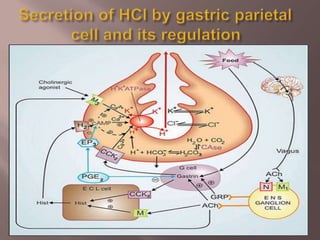
 Under normal condition , a physiologic
balance exists between gastric acid secretions
and gastroduodenal mucosal defence.
 Peptic ulcer occur when balance between
aggressive factors and defensive mechanism
is disrupted.
 Aggressive factors such as NSAIDS, H. pylori
infection , can alter mucosal defence by
allowing back diffusion of H+ and
subsequent epithelial cell injury.
 Stool examination for fecal occult
blood.
 Complete blood count (CBC) for
decrease in blood cells.
 Esophago gastro deuodenoscopy (EGD)
 Upper gastrointestinal series
 Urea breath testing
 In all patients with ‘’alarming symptoms’’
endoscopy is required : anorexia ,
hematemesismelena , dysphagia .
 Hemmorrhage : blood vessels damaged as
ulcer erodes into the muscles of stomach wall.
 coffee ground vomiting (presence of
coagulated blood ) occult blood in tarry
stools.
 Perforation: an ulcer can erode through the
entire wall
 Narrowing and obstructions (pyloric )
 Epigastric pain
 Nausea
 Vomiting
 Significant weight loss
 Feeling of fullness
 Bloodydark tarry stools
 Life style modifications
 Hyposecretory drug therapy
 H . Pylori eradication therapy
 Surgery
peptic ulcer

peptic ulcer

  • 1.
    By : ISHIKACHOUDHARY ARKA JAIN UNIVERSITY , JAMSHEDPUR
  • 2.
     It isa lesion in the lining {mucosa} of the digestive tract , typically in the duodenum , or stomach , caused by the digestive action of pepsin and stomach acid.  Lesion may subsequently occur into the lamina propria and submucosa to cause bleeding.  Most of the peptic ulcer occur either in the duodenum, or in the stomach.
  • 3.
     Life style:smoking, medications.  H. Pylori infection: 90%have this bacterium; passed from person to person(fecal-oral- routeoral-oral-route)  Age: duodenum(30-40) and gastric (over 50)  Gender: more in older women.  Genetic factor
  • 4.
     Under normalcondition , a physiologic balance exists between gastric acid secretions and gastroduodenal mucosal defence.  Peptic ulcer occur when balance between aggressive factors and defensive mechanism is disrupted.  Aggressive factors such as NSAIDS, H. pylori infection , can alter mucosal defence by allowing back diffusion of H+ and subsequent epithelial cell injury.
  • 7.
     Stool examinationfor fecal occult blood.  Complete blood count (CBC) for decrease in blood cells.
  • 8.
     Esophago gastrodeuodenoscopy (EGD)  Upper gastrointestinal series  Urea breath testing  In all patients with ‘’alarming symptoms’’ endoscopy is required : anorexia , hematemesismelena , dysphagia .
  • 9.
     Hemmorrhage :blood vessels damaged as ulcer erodes into the muscles of stomach wall.  coffee ground vomiting (presence of coagulated blood ) occult blood in tarry stools.  Perforation: an ulcer can erode through the entire wall  Narrowing and obstructions (pyloric )
  • 10.
     Epigastric pain Nausea  Vomiting  Significant weight loss  Feeling of fullness  Bloodydark tarry stools
  • 11.
     Life stylemodifications  Hyposecretory drug therapy  H . Pylori eradication therapy  Surgery