INTRODUCTION
 Pepsi is a world leader in convenient snacks, foods and beverages with revenues of more
than $60 billion and over 285, 000 employees. Pepsi is produced and manufactured by
PepsiCo. Created and developed in 1898 and introduced as “Brad’s Drink”, it was later
renamed as Pepsi-Cola on June 16, 1903, then to Pepsi in 1961. Pepsi Cola is one of the
largest soft drinks industries which operate in Australia. The main products of the
company comprises of different soft drinks brand including Pepsi, Pepsi Light, Pepsi Max,
7UP, Diet 7UP, Caffeine Free Pepsi Light, Mountain Dew and etc. Based on Pepsi
company vision is “Pepsi responsibility is to continually improve all aspects of the world
which we operate based on environment, social, economic by creating a better
tomorrow than today”. The company mission is to be the world’s premier consumer
Products Company focused on convenient foods and beverages.
It is different than Coca Cola which is already been in the beverage business for 125 years, employs 139, 600 people,
and sells 1.6 billion beverages each day in more than 200 countries. Coca Cola Company is the world’s largest
beverage company with almost 500 brands ranging from the actual Coca Cola to products such as Sprite, Fanta,
POWERADE, Minute Maid and many mores. Coca Cola mission is to refresh the world, inspire moments of
optimism and happiness and create value that make a difference along with their vision is to serve as the framework
for their roadmap and guides every aspect of their business by describing what they need to accomplish in order to
continue achieving sustainable quality growth.
BACKGROUND & HISTORY
Pepsi background & History
 Established in 1890
 Focus on beverage drink
 The first product are ; Pepsi-Cola (formulated in 1898), Diet Pepsi
(1964) and Mountain Dew (1948).
BACKGROUND & HISTORY
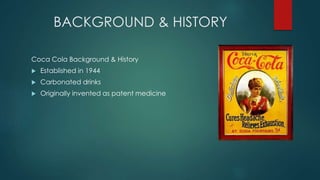
Coca Cola Background & History
 Established in 1944
 Carbonated drinks
 Originally invented as patent medicine
SWOT ANALYSIS
PEPSI
 Strength
High level of customer loyalty for most of the brands within product portfolio
 Weakness
High level of dependence on large supermarkets such as Wal-Mart
 Opportunities
Increasing presence in emerging markets such as China and India
 Threats
High amounts of sugar or salt in products being criticized by government and non-
government health organizations
SWOT ANALYSIS
Coca-Cola
 Strength
World’s largest market share in beverage
 Weakness
Significant focus on carbonated drinks
 Opportunities
Bottled water consumption growth
 Threats
Changes in consumer preferences
PEST ANALYSIS
Political (Pepsi)
 Changes in regulations and laws
 Political Conditions
 Ability to enter developing markets
 Changes in the non-alcoholic
industry environment
Economical (Pepsi)
 Global Recession
 Interest Rate
 Fear for inflation
PEST ANALYSIS
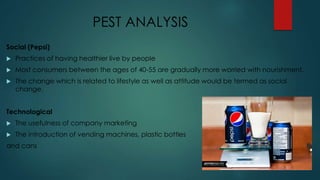
Social (Pepsi)
 Practices of having healthier live by people
 Most consumers between the ages of 40-55 are gradually more worried with nourishment.
 The change which is related to lifestyle as well as attitude would be termed as social
change.
Technological
 The usefulness of company marketing
 The introduction of vending machines, plastic bottles
and cans
PEST ANALYSIS
Political (Coca cola)
 Law related changes
 The business related environment changes
 The market changes
Economical
 Interest rates
 Economic condition
PEST ANALYSIS
Social
 The shift to a health centered lifestyle
 The middle aged consumers are getting very nutrition conscious
 World sensitivity about war
Technological
 Promotional techniques
 New machinery for production
 Supplying cans very fast and efficiently
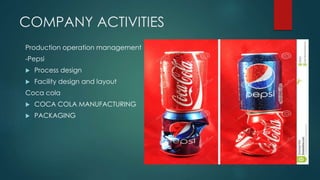
COMPANY ACTIVITIES
Production operation management
-Pepsi
 Process design
 Facility design and layout
Coca cola
 COCA COLA MANUFACTURING
 PACKAGING
COMPANY ACTIVITIES
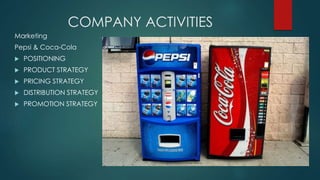
Marketing
Pepsi & Coca-Cola
 POSITIONING
 PRODUCT STRATEGY
 PRICING STRATEGY
 DISTRIBUTION STRATEGY
 PROMOTION STRATEGY
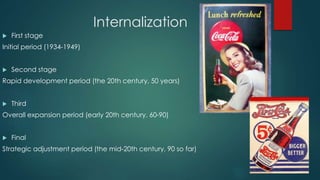
Internalization
 First stage
Initial period (1934-1949)
 Second stage
Rapid development period (the 20th century, 50 years)
 Third
Overall expansion period (early 20th century, 60-90)
 Final
Strategic adjustment period (the mid-20th century, 90 so far)
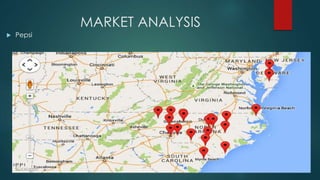
MARKET ANALYSIS
 Pepsi
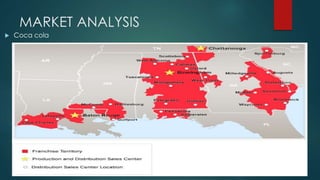
MARKET ANALYSIS
 Coca cola
Conclusion
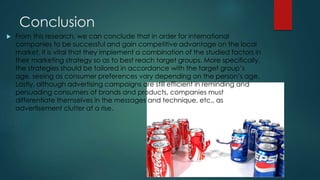
 From this research, we can conclude that in order for international
companies to be successful and gain competitive advantage on the local
market, it is vital that they implement a combination of the studied factors in
their marketing strategy so as to best reach target groups. More specifically,
the strategies should be tailored in accordance with the target group’s
age, seeing as consumer preferences vary depending on the person’s age.
Lastly, although advertising campaigns are still efficient in reminding and
persuading consumers of brands and products, companies must
differentiate themselves in the messages and technique, etc., as
advertisement clutter at a rise.

Pepsi vs coca cola

  • 1.
    INTRODUCTION  Pepsi isa world leader in convenient snacks, foods and beverages with revenues of more than $60 billion and over 285, 000 employees. Pepsi is produced and manufactured by PepsiCo. Created and developed in 1898 and introduced as “Brad’s Drink”, it was later renamed as Pepsi-Cola on June 16, 1903, then to Pepsi in 1961. Pepsi Cola is one of the largest soft drinks industries which operate in Australia. The main products of the company comprises of different soft drinks brand including Pepsi, Pepsi Light, Pepsi Max, 7UP, Diet 7UP, Caffeine Free Pepsi Light, Mountain Dew and etc. Based on Pepsi company vision is “Pepsi responsibility is to continually improve all aspects of the world which we operate based on environment, social, economic by creating a better tomorrow than today”. The company mission is to be the world’s premier consumer Products Company focused on convenient foods and beverages.
  • 2.
    It is differentthan Coca Cola which is already been in the beverage business for 125 years, employs 139, 600 people, and sells 1.6 billion beverages each day in more than 200 countries. Coca Cola Company is the world’s largest beverage company with almost 500 brands ranging from the actual Coca Cola to products such as Sprite, Fanta, POWERADE, Minute Maid and many mores. Coca Cola mission is to refresh the world, inspire moments of optimism and happiness and create value that make a difference along with their vision is to serve as the framework for their roadmap and guides every aspect of their business by describing what they need to accomplish in order to continue achieving sustainable quality growth.
  • 3.
    BACKGROUND & HISTORY Pepsibackground & History  Established in 1890  Focus on beverage drink  The first product are ; Pepsi-Cola (formulated in 1898), Diet Pepsi (1964) and Mountain Dew (1948).
  • 4.
    BACKGROUND & HISTORY CocaCola Background & History  Established in 1944  Carbonated drinks  Originally invented as patent medicine
  • 5.
    SWOT ANALYSIS PEPSI  Strength Highlevel of customer loyalty for most of the brands within product portfolio  Weakness High level of dependence on large supermarkets such as Wal-Mart  Opportunities Increasing presence in emerging markets such as China and India  Threats High amounts of sugar or salt in products being criticized by government and non- government health organizations
  • 6.
    SWOT ANALYSIS Coca-Cola  Strength World’slargest market share in beverage  Weakness Significant focus on carbonated drinks  Opportunities Bottled water consumption growth  Threats Changes in consumer preferences
  • 7.
    PEST ANALYSIS Political (Pepsi) Changes in regulations and laws  Political Conditions  Ability to enter developing markets  Changes in the non-alcoholic industry environment Economical (Pepsi)  Global Recession  Interest Rate  Fear for inflation
  • 8.
    PEST ANALYSIS Social (Pepsi) Practices of having healthier live by people  Most consumers between the ages of 40-55 are gradually more worried with nourishment.  The change which is related to lifestyle as well as attitude would be termed as social change. Technological  The usefulness of company marketing  The introduction of vending machines, plastic bottles and cans
  • 9.
    PEST ANALYSIS Political (Cocacola)  Law related changes  The business related environment changes  The market changes Economical  Interest rates  Economic condition
  • 10.
    PEST ANALYSIS Social  Theshift to a health centered lifestyle  The middle aged consumers are getting very nutrition conscious  World sensitivity about war Technological  Promotional techniques  New machinery for production  Supplying cans very fast and efficiently
  • 11.
    COMPANY ACTIVITIES Production operationmanagement -Pepsi  Process design  Facility design and layout Coca cola  COCA COLA MANUFACTURING  PACKAGING
  • 12.
    COMPANY ACTIVITIES Marketing Pepsi &Coca-Cola  POSITIONING  PRODUCT STRATEGY  PRICING STRATEGY  DISTRIBUTION STRATEGY  PROMOTION STRATEGY
  • 13.
    Internalization  First stage Initialperiod (1934-1949)  Second stage Rapid development period (the 20th century, 50 years)  Third Overall expansion period (early 20th century, 60-90)  Final Strategic adjustment period (the mid-20th century, 90 so far)
  • 14.
  • 15.
  • 16.
    Conclusion  From thisresearch, we can conclude that in order for international companies to be successful and gain competitive advantage on the local market, it is vital that they implement a combination of the studied factors in their marketing strategy so as to best reach target groups. More specifically, the strategies should be tailored in accordance with the target group’s age, seeing as consumer preferences vary depending on the person’s age. Lastly, although advertising campaigns are still efficient in reminding and persuading consumers of brands and products, companies must differentiate themselves in the messages and technique, etc., as advertisement clutter at a rise.