What could we learn
from children as digital
storytellers?
Johanna Penttilä, CICERO Learning, University of Helsinki
Anne Kuokkanen, DiSEL21 Ltd
Background –
Where do we
come from?
 FINNABLE2020 and SAVI projects (2010-2015)
 Experimenting with digital storytelling in school context
 From kindergarten to upper comprehensive school
 Variety of subjects and topics
 Developing a digital storytelling platform for educational use
Digital
storytelling for
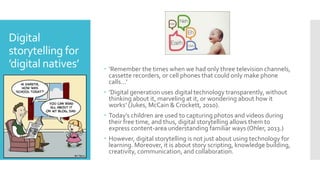
’digital natives’  ‘Remember the times when we had only three television channels,
cassette recorders, or cell phones that could only make phone
calls…’
 ’Digital generation uses digital technology transparently, without
thinking about it, marveling at it, or wondering about how it
works’ (Jukes, McCain & Crockett, 2010).
 Today’s children are used to capturing photos and videos during
their free time, and thus, digital storytelling allows them to
express content-area understanding familiar ways (Ohler, 2013.)
 However, digital storytelling is not just about using technology for
learning. Moreover, it is about story scripting, knowledge building,
creativity, communication, and collaboration.
(Pedagogical)
digital story
 Short duration (1-4 minutes)
 Multimedia production that contains video clips, photos, music,
animation, and written or narrated content
 Multiple shapes and forms: autobiographies, portfolios,
documentaries, informative and instructive narratives…
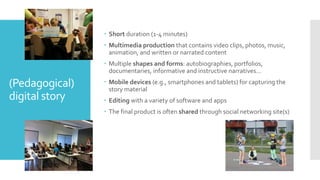
 Mobile devices (e.g., smartphones and tablets) for capturing the
story material
 Editing with a variety of software and apps
 The final product is often shared through social networking site(s)
Tool for
creating digital
stories
• An Internet based video service developed atTampere
University ofTechnology and University of Helsinki
• Open for users having an user ID for the system, but closed
from outsiders
• Enables easy-to-use video editing tools, collaboration, and
global sharing
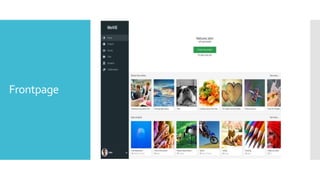
Frontpage
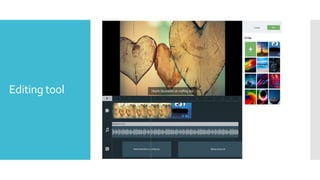
Editing tool
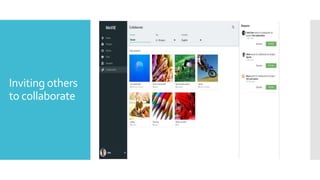
Inviting others
to collaborate
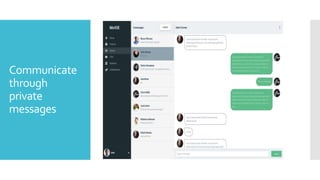
Communicate
through
private
messages
Features of
children’s
digital stories
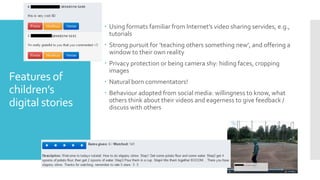
 Using formats familiar from Internet’s video sharing servides, e.g.,
tutorials
 Strong pursuit for ’teaching others something new’, and offering a
window to their own reality
 Privacy protection or being camera shy: hiding faces, cropping
images
 Natural born commentators!
 Behaviour adopted from social media: willingness to know, what
others think about their videos and eagerness to give feedback /
discuss with others
Example
stories
 Slippery slime
 http://cicero-movie.edu.helsinki.fi/?l=0&c=1&g=145&d=mnstge&ms=0&mx=0&a=wtch&vw=1&med=4875&stg=2
 What does the surface tension do?
 http://cicero-movie.edu.helsinki.fi/?l=0&c=1&g=0&d=frntpg&ms=0&mx=280&a=wtch&vw=1&med=7050&stg=0
 Bio bag
 http://cicero-movie.edu.helsinki.fi/?l=0&c=1&g=145&d=frntpg&sw=bio%20bag&ss=3&a=wtch&vw=1&med=1855&stg=0
Key take
aways
 Story comes first – scripting is important
 Give room to your own voice and personality
 Define your purposes, and find a right kind of technology
 Curious and experimental attitude towards technology
Kiitos!
johanna.penttila@helsinki.fi
anne.kuokkanen@helsinki.fi

What could we learn from children as digital storytellers? (AHEAD final seminar presentation)

  • 1.
    What could welearn from children as digital storytellers? Johanna Penttilä, CICERO Learning, University of Helsinki Anne Kuokkanen, DiSEL21 Ltd
  • 2.
    Background – Where dowe come from?  FINNABLE2020 and SAVI projects (2010-2015)  Experimenting with digital storytelling in school context  From kindergarten to upper comprehensive school  Variety of subjects and topics  Developing a digital storytelling platform for educational use
  • 3.
    Digital storytelling for ’digital natives’ ‘Remember the times when we had only three television channels, cassette recorders, or cell phones that could only make phone calls…’  ’Digital generation uses digital technology transparently, without thinking about it, marveling at it, or wondering about how it works’ (Jukes, McCain & Crockett, 2010).  Today’s children are used to capturing photos and videos during their free time, and thus, digital storytelling allows them to express content-area understanding familiar ways (Ohler, 2013.)  However, digital storytelling is not just about using technology for learning. Moreover, it is about story scripting, knowledge building, creativity, communication, and collaboration.
  • 4.
    (Pedagogical) digital story  Shortduration (1-4 minutes)  Multimedia production that contains video clips, photos, music, animation, and written or narrated content  Multiple shapes and forms: autobiographies, portfolios, documentaries, informative and instructive narratives…  Mobile devices (e.g., smartphones and tablets) for capturing the story material  Editing with a variety of software and apps  The final product is often shared through social networking site(s)
  • 5.
    Tool for creating digital stories •An Internet based video service developed atTampere University ofTechnology and University of Helsinki • Open for users having an user ID for the system, but closed from outsiders • Enables easy-to-use video editing tools, collaboration, and global sharing
  • 6.
  • 7.
  • 8.
  • 9.
  • 10.
    Features of children’s digital stories Using formats familiar from Internet’s video sharing servides, e.g., tutorials  Strong pursuit for ’teaching others something new’, and offering a window to their own reality  Privacy protection or being camera shy: hiding faces, cropping images  Natural born commentators!  Behaviour adopted from social media: willingness to know, what others think about their videos and eagerness to give feedback / discuss with others
  • 11.
    Example stories  Slippery slime http://cicero-movie.edu.helsinki.fi/?l=0&c=1&g=145&d=mnstge&ms=0&mx=0&a=wtch&vw=1&med=4875&stg=2  What does the surface tension do?  http://cicero-movie.edu.helsinki.fi/?l=0&c=1&g=0&d=frntpg&ms=0&mx=280&a=wtch&vw=1&med=7050&stg=0  Bio bag  http://cicero-movie.edu.helsinki.fi/?l=0&c=1&g=145&d=frntpg&sw=bio%20bag&ss=3&a=wtch&vw=1&med=1855&stg=0
  • 12.
    Key take aways  Storycomes first – scripting is important  Give room to your own voice and personality  Define your purposes, and find a right kind of technology  Curious and experimental attitude towards technology
  • 13.

Editor's Notes

  • #7 This is the overview page once you’re logged into the platform. Here we see stories from others and open projects that we can join, if we want to collaborate with other schools and countries.