PEN-TESTING WEB
SERVICES IN 2012
Ishan Girdhar
Why Attack Web Services?
 Secondary Attack

Vector
 Ability to pass controls in the application
 Many developers don’t implement proper controls
 Installed outside the protection within the web
application
 Assumed that only client for a web service is
another application.
Web Services and OSI layers






Implemented by adding XML into layer 7
Applications (HTTP)
SOAP – Simple Object Access Protocol
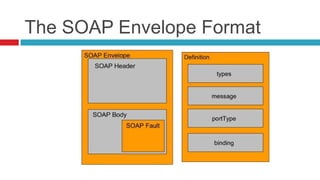
Think of SOAP like you would think of SMTP.
It’s a message envelope and you need to get a
response.
Differences in Web Service
Standards






Some Developer departure from XML based SOAP to
RESTful Services like JSON
REST (Representational State Transfer) use HTTP
Methods (GET,POST,PUT, DELETE)
However:





Soap based services are complex for a reason!
Many custom applications use them in enterprise
applications

Large Services still use SOAP:


Amazon EC2, PayPal, Microsoft Azure are few example.
The Web Service Threat Model










Web Service in Transit
Is data being protected in transit?
SSL
What type of authentication is used?
Basic Authentication != Secure
Web Service Engine
Web Service Deployment
Web Service User Code
Web Services State of the Union


There are issues with











Scoping
Tools
Testing Process
Methodology
Testing Techniques
Education
Testing Environment

Basically, It’s all broken
Penetration testers don’t know what
to do with web services





How do you scope?
Do you even ask the right scoping questions?
Where do you begin?
How Do I test thing?
 Automated

v/s Manual Testing ?
 Black v/s Grey v/s white box testing?
Why is the testing methodology
broken?


OWASP Web Service Testing Guide v3






It’s good for Web Application Testing “in general”
It’s the “Gold Standard”
It’s outdated in regards to web service testing
Missing full coverage based on a complete threat model




Testing focused on old technology




Examples: MiTM, Client Side Storage, Host Based Authentication
Example: No Mention of WCF Services, how to test multiple protocol.

Most Testing Standard uses Grey Box Techniques, Fails to
address unique web service requirements.
Current Tools



They Suck 
Mostly Commercial Tools Available. (For Developers, very little security
focus)




Very Little Automation





soupUI, WCF Storm, SOA Cleaner
Tester’s time spend in configuring tool and getting them running, less hacking.
Minimal Amount of re-usability.

Multiple tools built from ground up




Missing features
Missing functionality (payloads)
Community Support?
Current Tools






What happened to Webscarab ?
WS-Digger? No SSL?
There are other tools but many are hard to
configure or just don’t work properly.
SOAP Messages written by Hand (THIS
REALLY SUCKS!)
~

14 Modules in Metasploit for web services
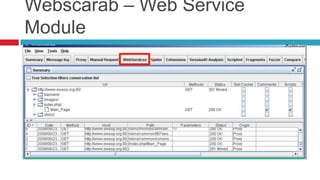
Webscarab – Web Service
Module
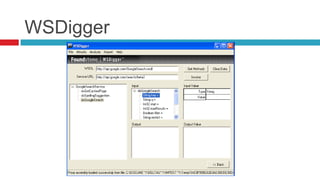
WSDigger
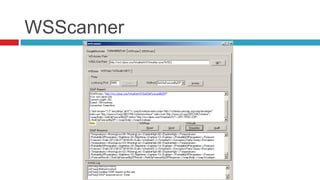
WSScanner
What are we using?


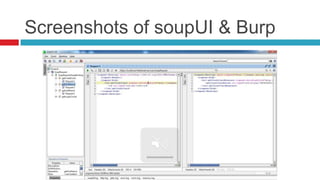
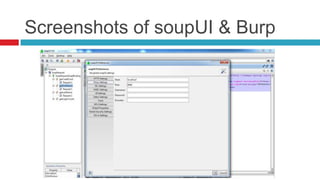
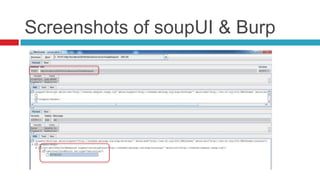
SoupUI combined with Burp Suite are Bomb.
 Still





Could be better

There are very good Burp Suite Plugins by
Ken Johnson as well:
http://resources.infosecinstitute.com/soapattack-1/
Screenshots of soupUI & Burp
Lack of testing Environment





Ok. Fine. I have understood how to test Web
Services, but where can I test it?
On Production Systems … wait, what?
I’ll build my own testing environment .. Wait,
what?
The SOAP Envelope Format
Web Services Fingerprinting


Google Hacking for exposed WSDLs
 Filetype:

asmx
 Filetype:Jws
 Filetype:WSDL



Searches for Microsoft Silverlight XAP Files
Shodan search for exposed web service
management Interfaces
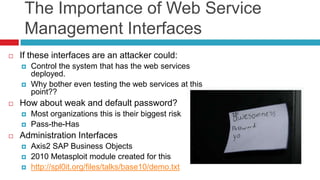
The Importance of Web Service
Management Interfaces


If these interfaces are an attacker could:





How about weak and default password?





Control the system that has the web services
deployed.
Why bother even testing the web services at this
point??

Most organizations this is their biggest risk
Pass-the-Has

Administration Interfaces




Axis2 SAP Business Objects
2010 Metasploit module created for this
http://spl0it.org/files/talks/base10/demo.txt
Web Services Threat









Microsoft Silverlight
Client Side Applications that can use web services
SOAP or REST
Can we WCF (Windows Communication
Foundation) Services
Attacker can directly interface with the web
services.. Really no need for the client
Security Depends on the configuration of the
services!
New Web Service Attacks







Ws-Attacks.org by Andreas Flakenberg
Catalogs most (if not all) attacks for modern
SOAP and BPEL web services
SOAP request to web services that provide
content to the web app
AJAx, Flash and Microsoft Silverlight add to
the complexity.
New Advancements








Client Side applications like Microsoft
Silverlight.
Increased complexity with AJAX and flash
implementations
Multiple Web services being used within
applications
Organization exposing web services for mobile
applications.
BPEL







WS-BPEL
Web Service Business Execution Language
(BPEL)r
Separates the business process from the
implementation logic
Usually a white box approach is required to
understand the business login fully.
Scoping a Web Service Pentest





Pre-Engagement Scoping is CRITICAL!
Not only for pricing but for proper testing
Question such as:








What type of framework bieng used? (WCF, Apache Axis, Zend)
Types of services (SOAP , REST)
What type of data do the web service use?
SOAP Attachment support?
Can you provide multiple SOAP request that show full
functionality?

There Are MANY more questions. Our White has full list. 
Tools





soupUI
Burp
Ws-Attacker
For dotnet web services:
 WsKnight
 Ws-digger
Further Resources


Real world web services testing for web
hackers
 By



Web Service Security Testing Framework
 By



Joshua, Tom and Kevin (Blackhat USA 2011)
Colin Wong and Daniel Grzelk

Web Services Hacking And Hardening
 Adam Vincent, Sr. Federal Solutions Architect
Questions …

Presented by:
Ishan Girdhar
Infosec Consultant
Twitter: ishan_girdhar

Pentesting With Web Services in 2012

  • 1.
    PEN-TESTING WEB SERVICES IN2012 Ishan Girdhar
  • 2.
    Why Attack WebServices?  Secondary Attack Vector  Ability to pass controls in the application  Many developers don’t implement proper controls  Installed outside the protection within the web application  Assumed that only client for a web service is another application.
  • 3.
    Web Services andOSI layers     Implemented by adding XML into layer 7 Applications (HTTP) SOAP – Simple Object Access Protocol Think of SOAP like you would think of SMTP. It’s a message envelope and you need to get a response.
  • 4.
    Differences in WebService Standards    Some Developer departure from XML based SOAP to RESTful Services like JSON REST (Representational State Transfer) use HTTP Methods (GET,POST,PUT, DELETE) However:    Soap based services are complex for a reason! Many custom applications use them in enterprise applications Large Services still use SOAP:  Amazon EC2, PayPal, Microsoft Azure are few example.
  • 5.
    The Web ServiceThreat Model         Web Service in Transit Is data being protected in transit? SSL What type of authentication is used? Basic Authentication != Secure Web Service Engine Web Service Deployment Web Service User Code
  • 6.
    Web Services Stateof the Union  There are issues with         Scoping Tools Testing Process Methodology Testing Techniques Education Testing Environment Basically, It’s all broken
  • 7.
    Penetration testers don’tknow what to do with web services     How do you scope? Do you even ask the right scoping questions? Where do you begin? How Do I test thing?  Automated v/s Manual Testing ?  Black v/s Grey v/s white box testing?
  • 8.
    Why is thetesting methodology broken?  OWASP Web Service Testing Guide v3     It’s good for Web Application Testing “in general” It’s the “Gold Standard” It’s outdated in regards to web service testing Missing full coverage based on a complete threat model   Testing focused on old technology   Examples: MiTM, Client Side Storage, Host Based Authentication Example: No Mention of WCF Services, how to test multiple protocol. Most Testing Standard uses Grey Box Techniques, Fails to address unique web service requirements.
  • 9.
    Current Tools   They Suck Mostly Commercial Tools Available. (For Developers, very little security focus)   Very Little Automation    soupUI, WCF Storm, SOA Cleaner Tester’s time spend in configuring tool and getting them running, less hacking. Minimal Amount of re-usability. Multiple tools built from ground up    Missing features Missing functionality (payloads) Community Support?
  • 10.
    Current Tools     What happenedto Webscarab ? WS-Digger? No SSL? There are other tools but many are hard to configure or just don’t work properly. SOAP Messages written by Hand (THIS REALLY SUCKS!) ~ 14 Modules in Metasploit for web services
  • 11.
    Webscarab – WebService Module
  • 12.
  • 13.
  • 14.
    What are weusing?  SoupUI combined with Burp Suite are Bomb.  Still   Could be better There are very good Burp Suite Plugins by Ken Johnson as well: http://resources.infosecinstitute.com/soapattack-1/
  • 15.
  • 16.
  • 17.
  • 18.
    Lack of testingEnvironment    Ok. Fine. I have understood how to test Web Services, but where can I test it? On Production Systems … wait, what? I’ll build my own testing environment .. Wait, what?
  • 19.
  • 20.
    Web Services Fingerprinting  GoogleHacking for exposed WSDLs  Filetype: asmx  Filetype:Jws  Filetype:WSDL   Searches for Microsoft Silverlight XAP Files Shodan search for exposed web service management Interfaces
  • 21.
    The Importance ofWeb Service Management Interfaces  If these interfaces are an attacker could:    How about weak and default password?    Control the system that has the web services deployed. Why bother even testing the web services at this point?? Most organizations this is their biggest risk Pass-the-Has Administration Interfaces    Axis2 SAP Business Objects 2010 Metasploit module created for this http://spl0it.org/files/talks/base10/demo.txt
  • 22.
    Web Services Threat       MicrosoftSilverlight Client Side Applications that can use web services SOAP or REST Can we WCF (Windows Communication Foundation) Services Attacker can directly interface with the web services.. Really no need for the client Security Depends on the configuration of the services!
  • 23.
    New Web ServiceAttacks     Ws-Attacks.org by Andreas Flakenberg Catalogs most (if not all) attacks for modern SOAP and BPEL web services SOAP request to web services that provide content to the web app AJAx, Flash and Microsoft Silverlight add to the complexity.
  • 24.
    New Advancements     Client Sideapplications like Microsoft Silverlight. Increased complexity with AJAX and flash implementations Multiple Web services being used within applications Organization exposing web services for mobile applications.
  • 25.
    BPEL     WS-BPEL Web Service BusinessExecution Language (BPEL)r Separates the business process from the implementation logic Usually a white box approach is required to understand the business login fully.
  • 26.
    Scoping a WebService Pentest    Pre-Engagement Scoping is CRITICAL! Not only for pricing but for proper testing Question such as:       What type of framework bieng used? (WCF, Apache Axis, Zend) Types of services (SOAP , REST) What type of data do the web service use? SOAP Attachment support? Can you provide multiple SOAP request that show full functionality? There Are MANY more questions. Our White has full list. 
  • 27.
  • 28.
    Further Resources  Real worldweb services testing for web hackers  By  Web Service Security Testing Framework  By  Joshua, Tom and Kevin (Blackhat USA 2011) Colin Wong and Daniel Grzelk Web Services Hacking And Hardening  Adam Vincent, Sr. Federal Solutions Architect
  • 29.
    Questions … Presented by: IshanGirdhar Infosec Consultant Twitter: ishan_girdhar