BY
Sheshadri mishra
AGENDA
 Introduction to Web Service
 Classication
 Why Testing the services
 How to test web services
Test Approach
Test Tool
 Comparison
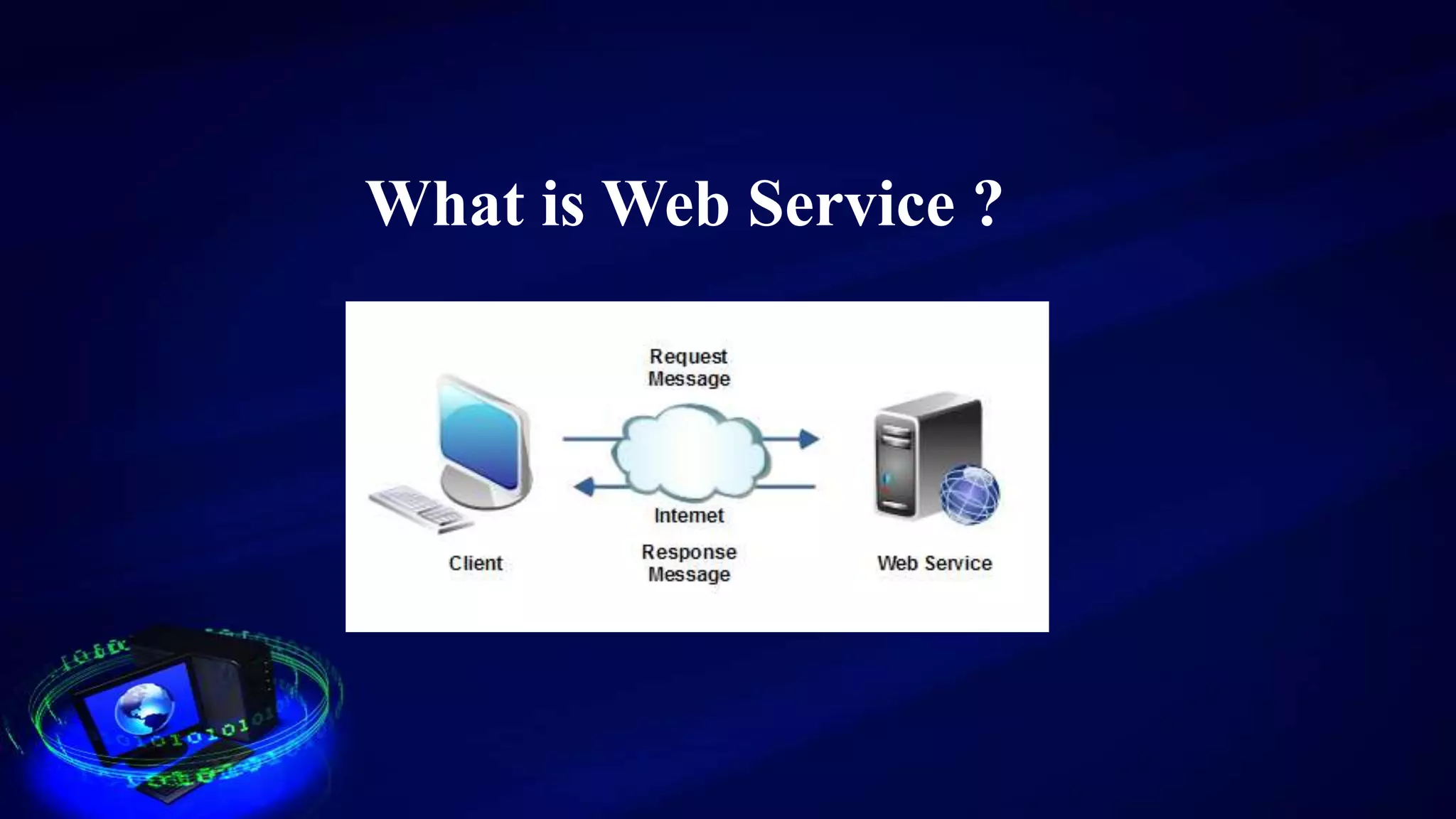
What is Web Service ?
• The term web service describes a standard way of web based
applications using 4 internet protocol backbone:
XML is used to tag data.
SOAP is used to transfer data.
WSDL is used for describing the services.
UDDI lists what services are available.
XML
• “EXTENSIBLE MARKUP LANGUAGE”.
• Tagging data such that it can be exchanged between applications and
platforms.
• XML describes only data.
• Web Services use xml file for communication.
WSDL
• “ WEB SERVICE DESCRIPTION LANGUAGE”.
• WSDL is a XML based interface description language that is used
for describing the functionality offered by a web service.
• WSDL is meant to be read by applications not humans.
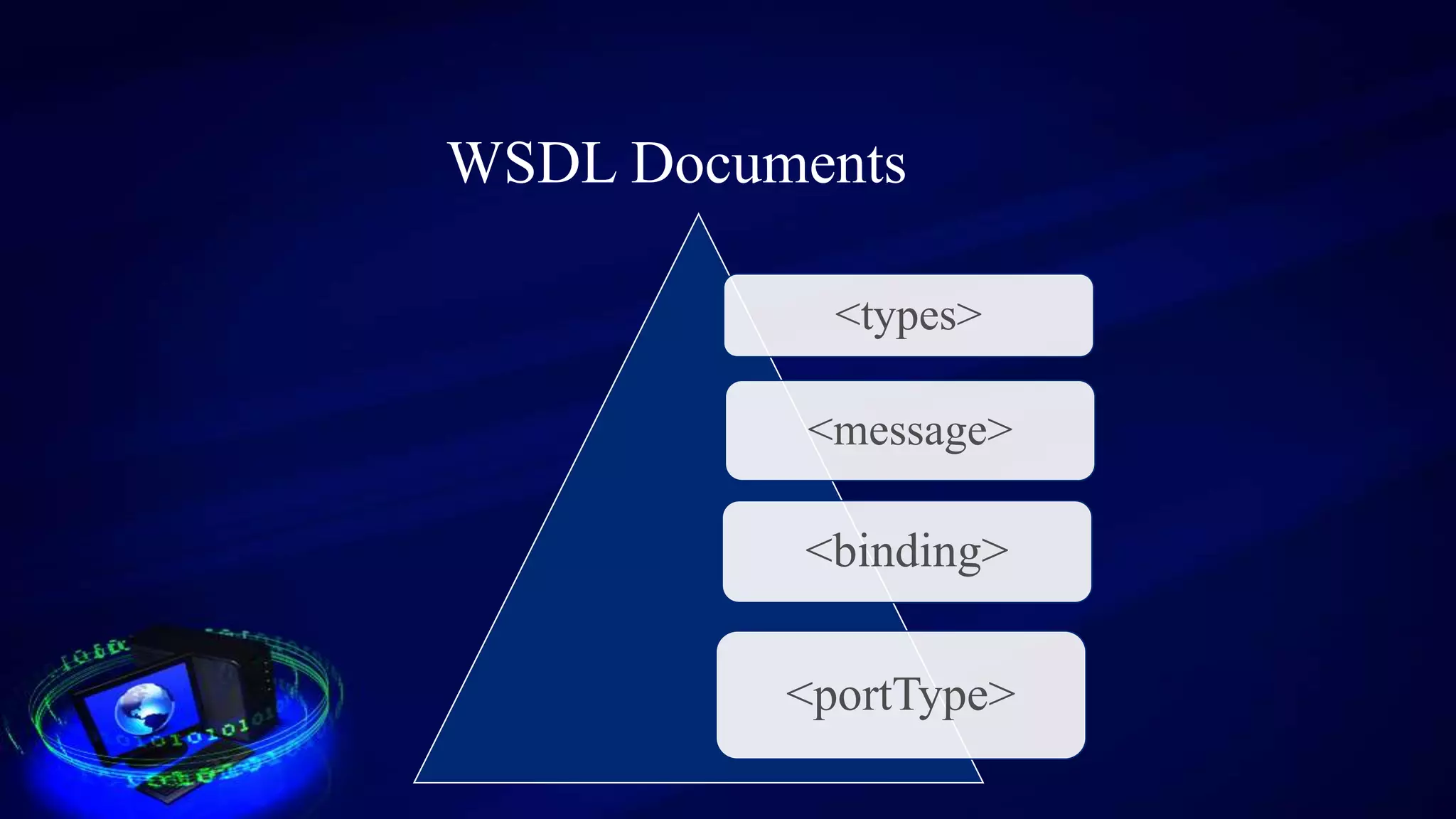
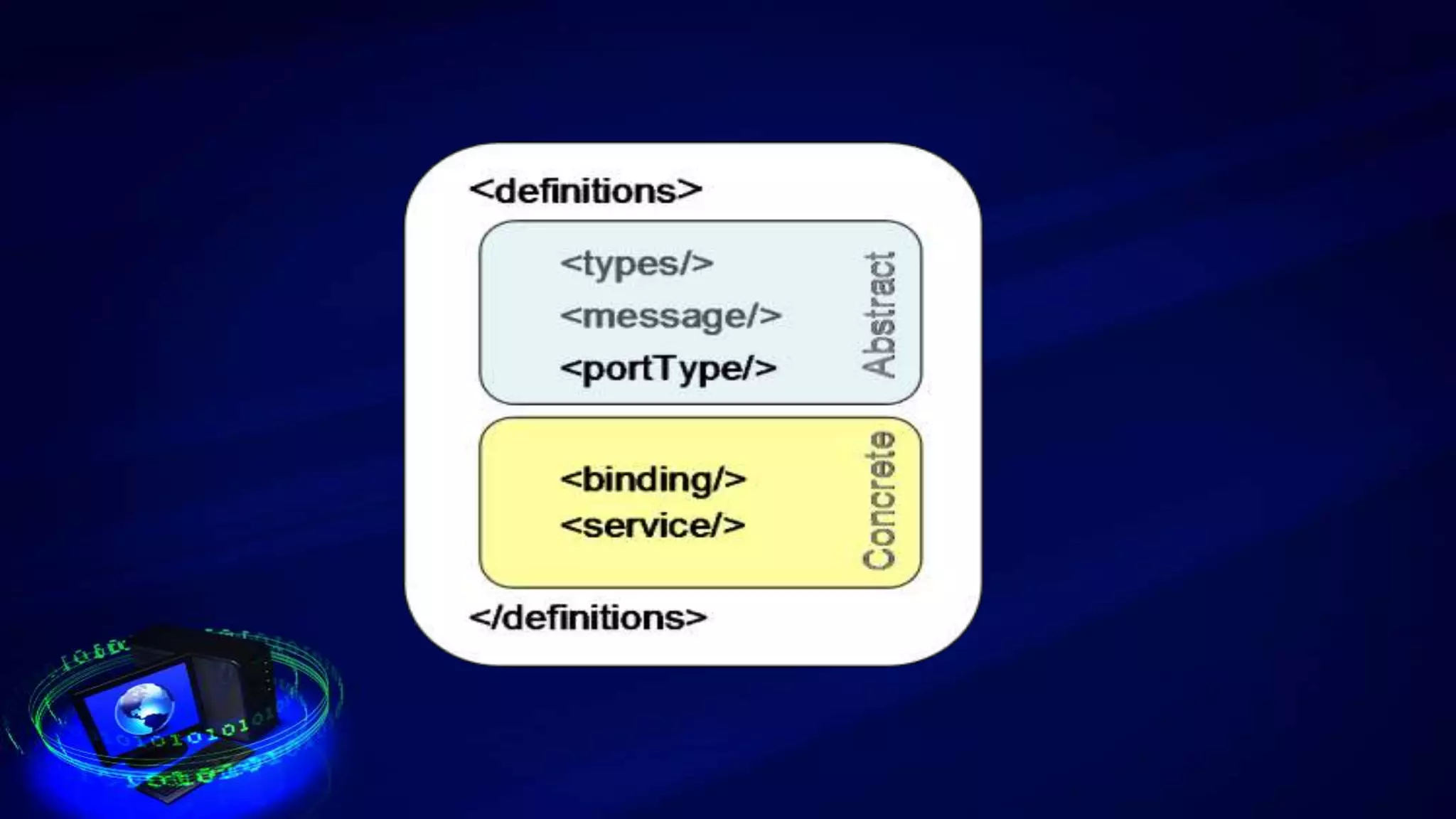
WSDL Documents
<types>
<message>
<binding>
<portType>
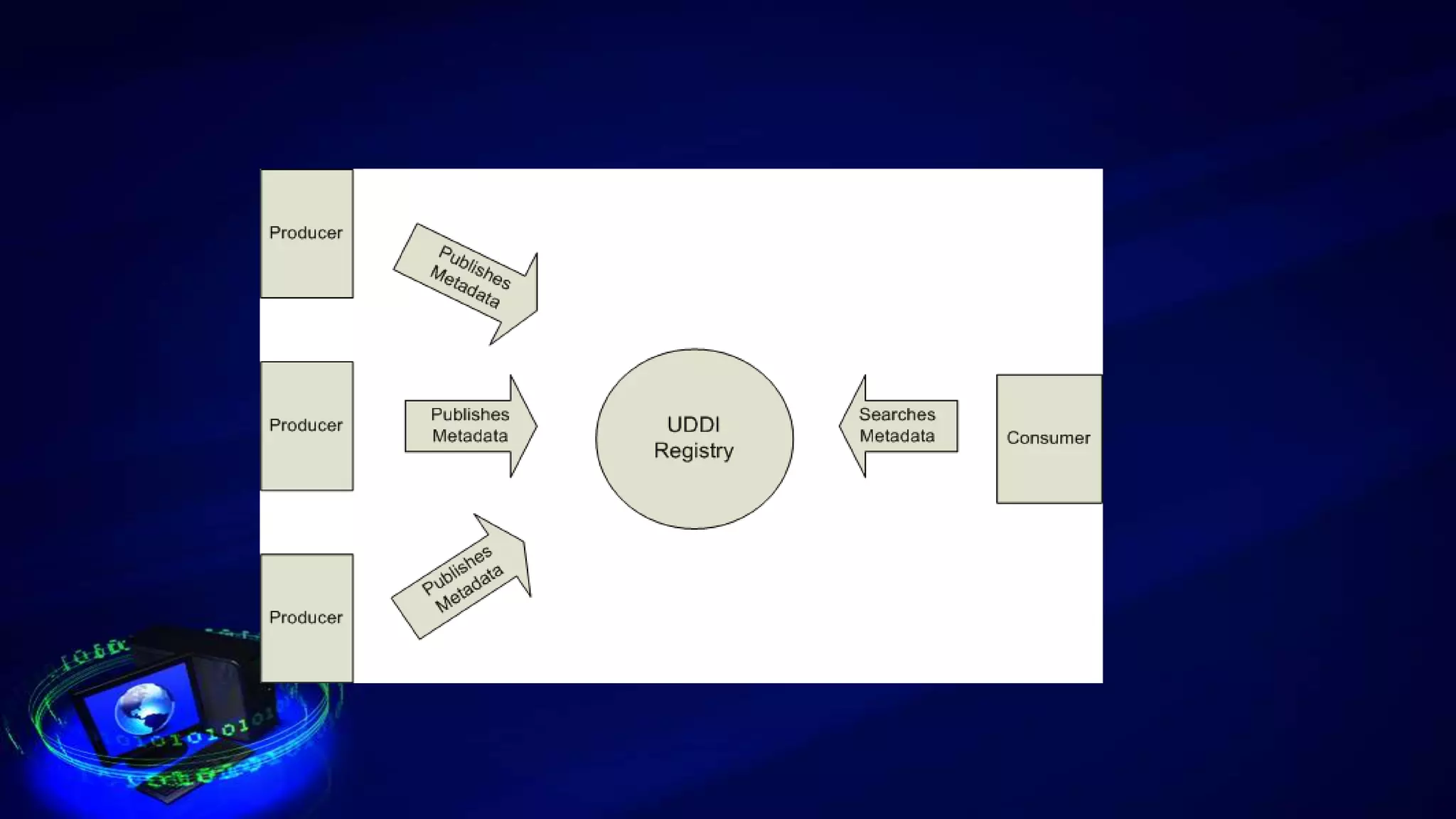
UDDI
• “ UNIVERSAL DESCRIPTION DISCOVERY AND
INTEGRATION “.
• It is XML based format that describes electronic capabilities and
business processes.
• Platform independent and open framework.
“SOA”
• SOA is “Service Oriented Architecture” heavily depends on web
service.
• In which application components provide services to other
components via a communication protocol , over a network.
• A service-oriented architecture is essentially a collection of services.
Classification
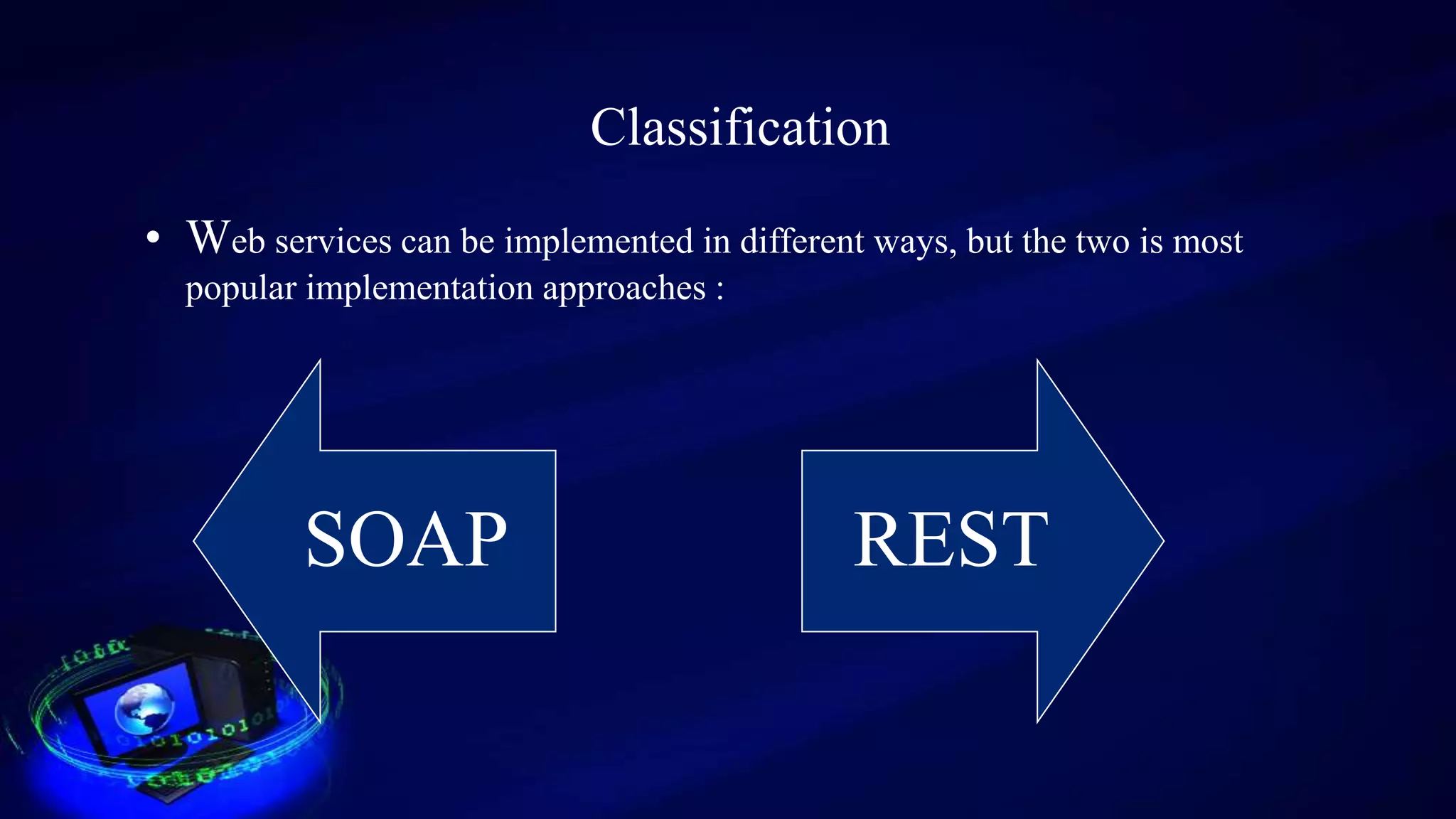
• Web services can be implemented in different ways, but the two is most
popular implementation approaches :
SOAP REST
SOAP
• “ SIMPLE OBJECT ACCESS PROTOCOL”.
• Soap contains envelop, header and body.
• Soap uses XML format to send and receive the request.
• It uses WSDL for description and it works with operation.
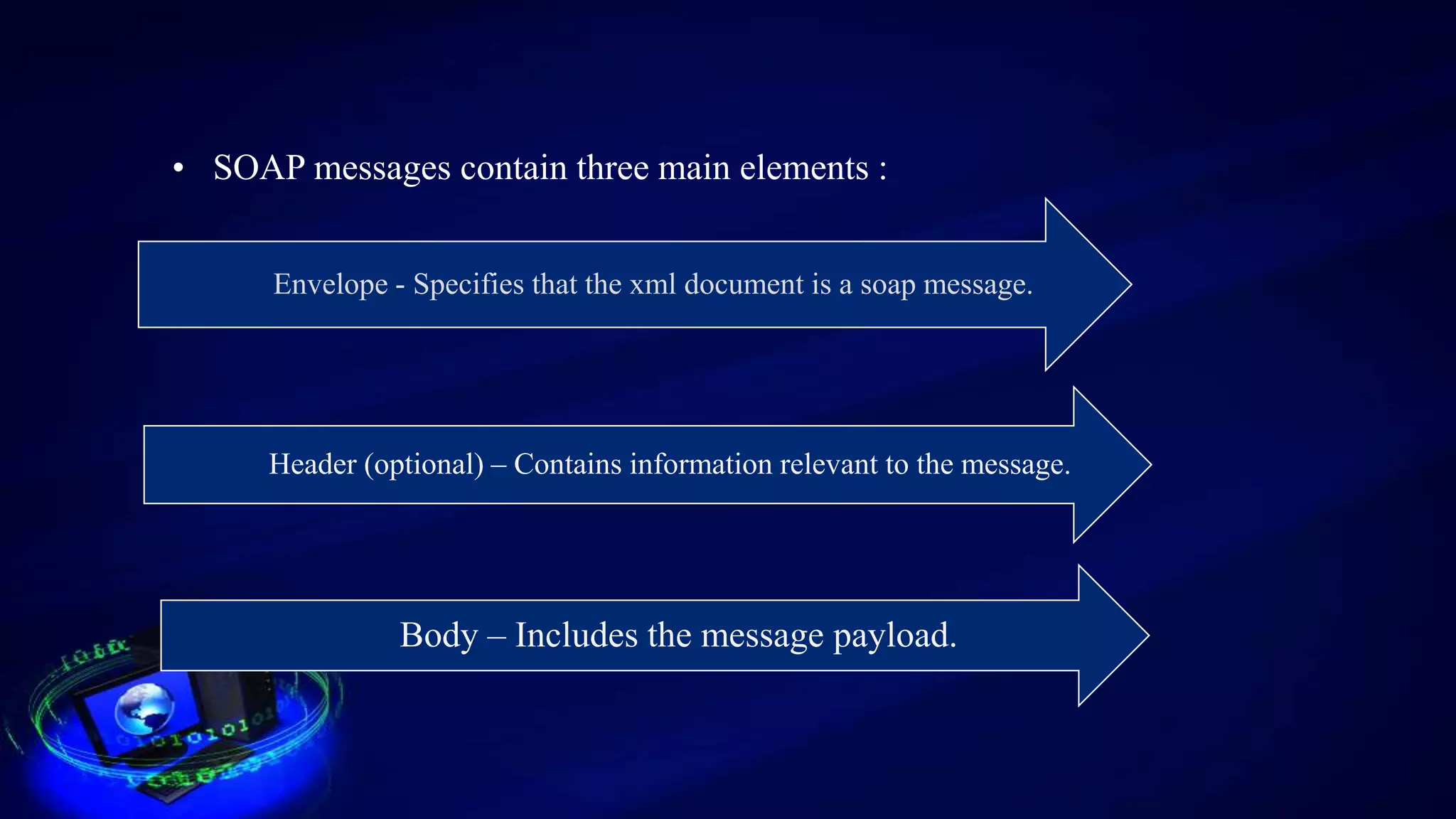
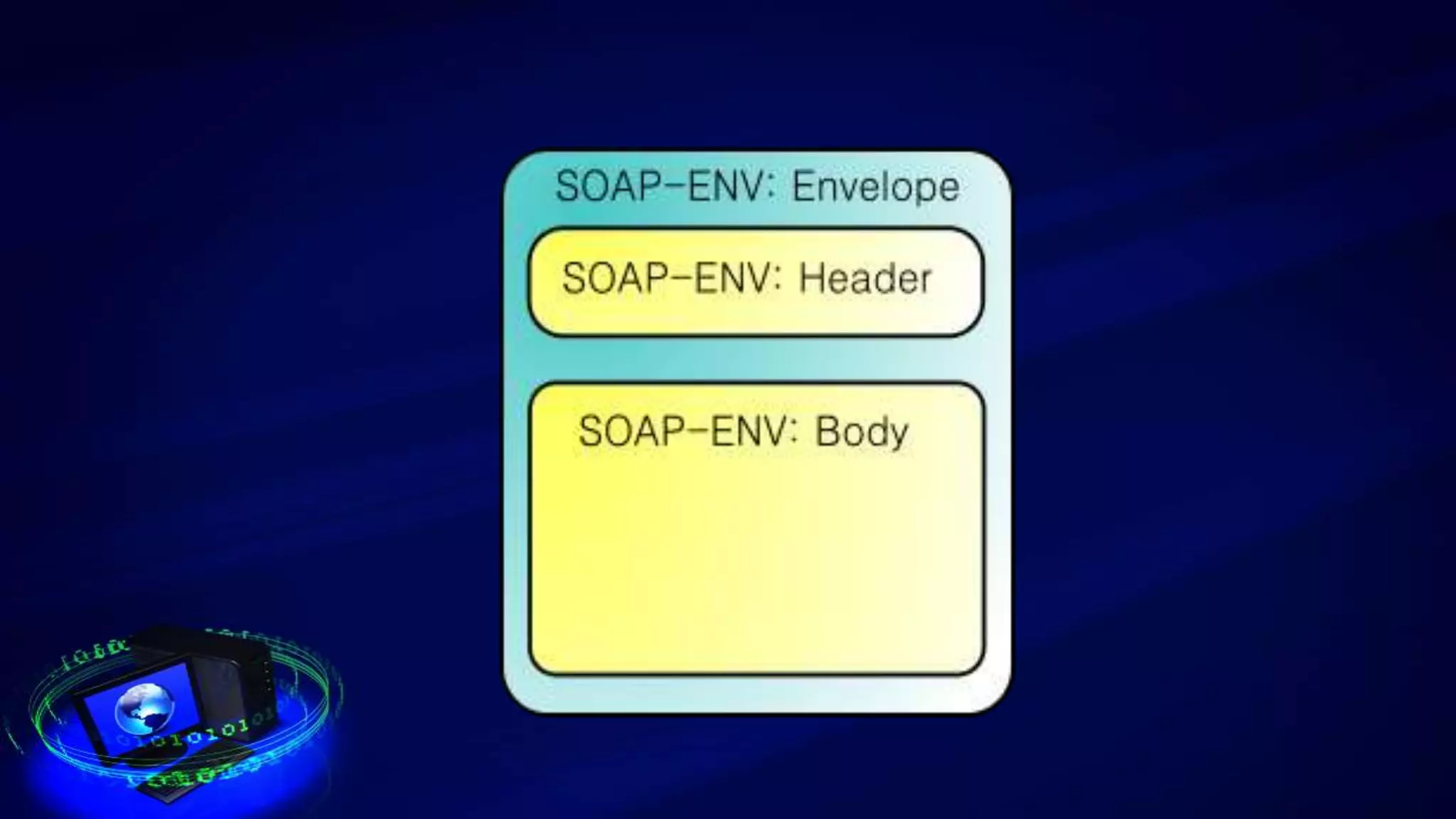
• SOAP messages contain three main elements :
Envelope - Specifies that the xml document is a soap message.
Header (optional) – Contains information relevant to the message.
Body – Includes the message payload.
• There are two types of SOAP request :
– RPC Style.
 “ REMOTE PROCEDURE CALL “
 This is usually synchronous
– Document Style.
 A full xml document is passed from client to server inside
the soap message.
REST
• “REPRESENTATIONAL STATE TRANSFER”.
• REST is an architectural style not a protocol.
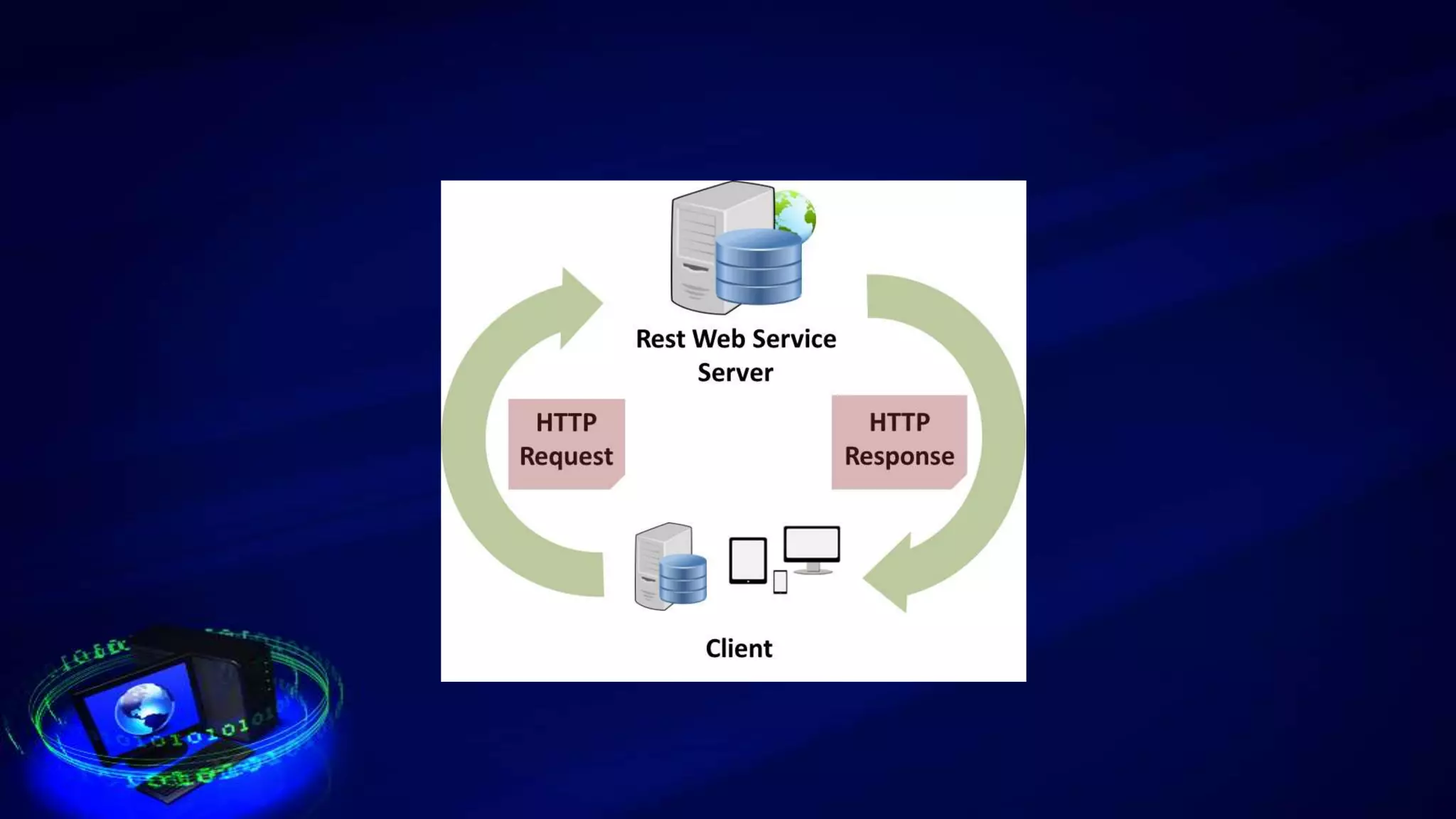
• Interactions are based on the transfer of resource state
representation.
• A services based on REST architecture is known as RESTful
service.
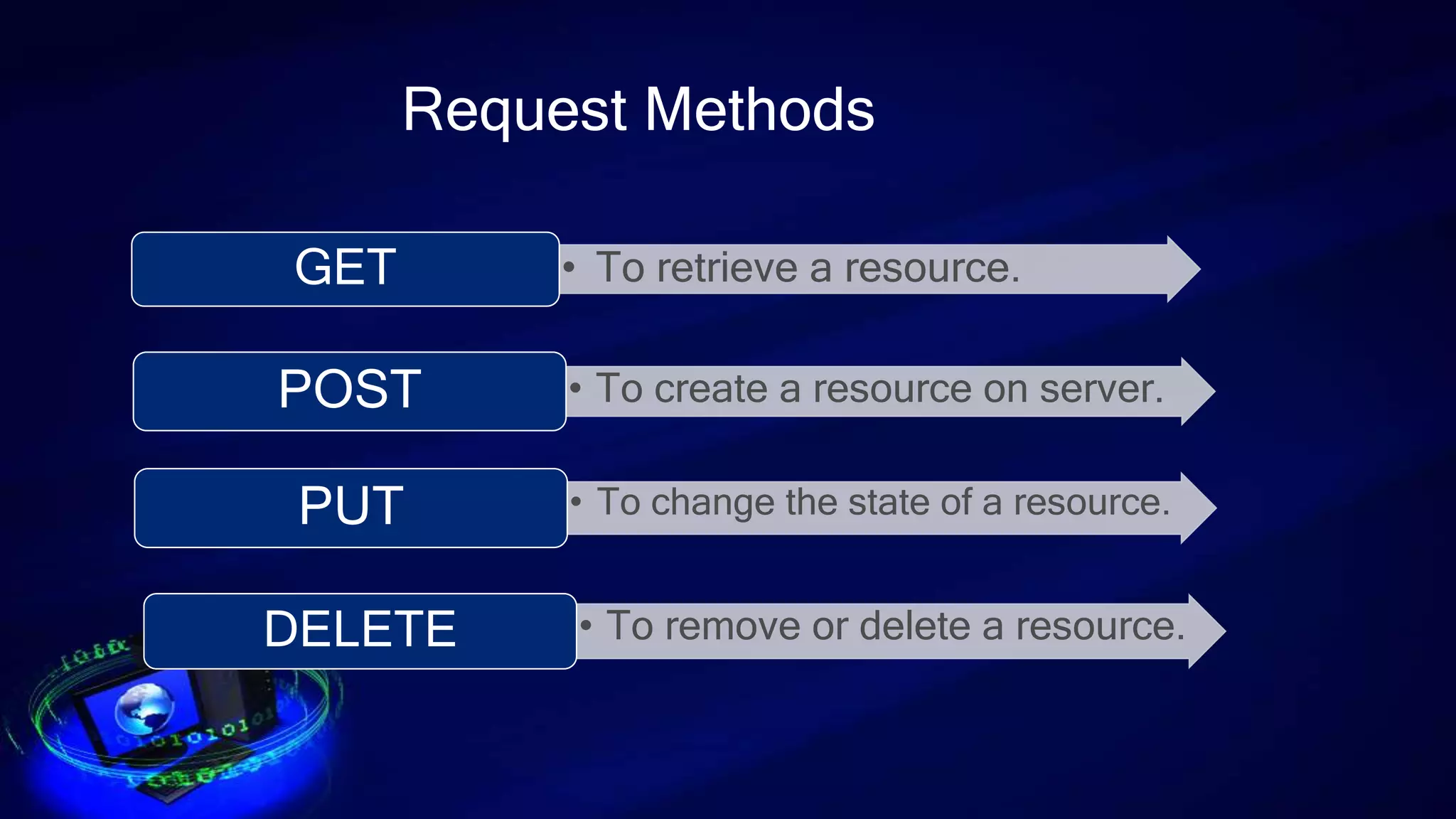
Request Methods
• To retrieve a resource.GET
• To create a resource on server.POST
• To change the state of a resource.PUT
• To remove or delete a resource.DELETE
Why Testing the Services
 It remove the dependency.
 It can reduce the cost.
 It also allows how many systems consume the service.
 Reduce issues in system integration testing.
Challenges in Testing Web Services
• Scalability
• Security
• Performance.
• Absences of User Interface.
• Distributed Across network.
Testing the Services
 Functional Testing.
 Performance Testing.
 Security Testing.
 Regression Testing.
 Load & Stress Testing.
 Penetration Testing.
How To Test Service
• Test Approach
When testing web services we can use same approach as for
any other testing project :
Identify Requirements.
Prepare High Level Test Cases.
Document Detailed Test Cases, etc.
Test Tools
 SoapUI
 Jmeter
 SilkPerformer
 XmlSpy 5
 SOAPtest
 ANTS
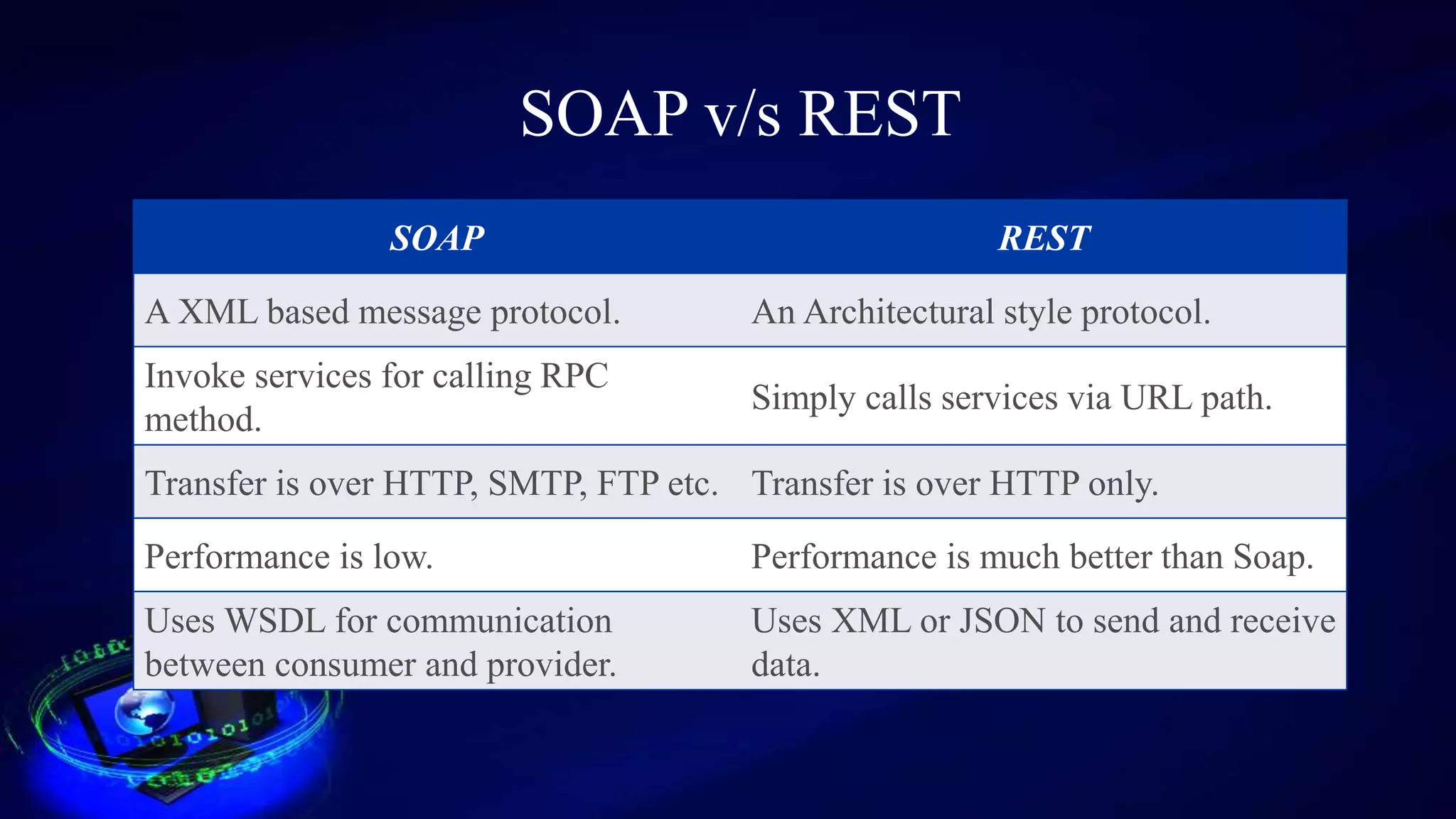
SOAP v/s REST
SOAP REST
A XML based message protocol. An Architectural style protocol.
Invoke services for calling RPC
method.
Simply calls services via URL path.
Transfer is over HTTP, SMTP, FTP etc. Transfer is over HTTP only.
Performance is low. Performance is much better than Soap.
Uses WSDL for communication
between consumer and provider.
Uses XML or JSON to send and receive
data.
THANK YOU

Web Service Testing By Sheshadri Mishra

  • 1.
  • 2.
    AGENDA  Introduction toWeb Service  Classication  Why Testing the services  How to test web services Test Approach Test Tool  Comparison
  • 3.
    What is WebService ?
  • 4.
    • The termweb service describes a standard way of web based applications using 4 internet protocol backbone: XML is used to tag data. SOAP is used to transfer data. WSDL is used for describing the services. UDDI lists what services are available.
  • 5.
    XML • “EXTENSIBLE MARKUPLANGUAGE”. • Tagging data such that it can be exchanged between applications and platforms. • XML describes only data. • Web Services use xml file for communication.
  • 6.
    WSDL • “ WEBSERVICE DESCRIPTION LANGUAGE”. • WSDL is a XML based interface description language that is used for describing the functionality offered by a web service. • WSDL is meant to be read by applications not humans.
  • 7.
  • 9.
    UDDI • “ UNIVERSALDESCRIPTION DISCOVERY AND INTEGRATION “. • It is XML based format that describes electronic capabilities and business processes. • Platform independent and open framework.
  • 11.
    “SOA” • SOA is“Service Oriented Architecture” heavily depends on web service. • In which application components provide services to other components via a communication protocol , over a network. • A service-oriented architecture is essentially a collection of services.
  • 12.
    Classification • Web servicescan be implemented in different ways, but the two is most popular implementation approaches : SOAP REST
  • 13.
    SOAP • “ SIMPLEOBJECT ACCESS PROTOCOL”. • Soap contains envelop, header and body. • Soap uses XML format to send and receive the request. • It uses WSDL for description and it works with operation.
  • 14.
    • SOAP messagescontain three main elements : Envelope - Specifies that the xml document is a soap message. Header (optional) – Contains information relevant to the message. Body – Includes the message payload.
  • 16.
    • There aretwo types of SOAP request : – RPC Style.  “ REMOTE PROCEDURE CALL “  This is usually synchronous – Document Style.  A full xml document is passed from client to server inside the soap message.
  • 17.
    REST • “REPRESENTATIONAL STATETRANSFER”. • REST is an architectural style not a protocol. • Interactions are based on the transfer of resource state representation. • A services based on REST architecture is known as RESTful service.
  • 19.
    Request Methods • Toretrieve a resource.GET • To create a resource on server.POST • To change the state of a resource.PUT • To remove or delete a resource.DELETE
  • 20.
  • 21.
     It removethe dependency.  It can reduce the cost.  It also allows how many systems consume the service.  Reduce issues in system integration testing.
  • 22.
    Challenges in TestingWeb Services • Scalability • Security • Performance. • Absences of User Interface. • Distributed Across network.
  • 23.
    Testing the Services Functional Testing.  Performance Testing.  Security Testing.  Regression Testing.  Load & Stress Testing.  Penetration Testing.
  • 24.
    How To TestService • Test Approach When testing web services we can use same approach as for any other testing project : Identify Requirements. Prepare High Level Test Cases. Document Detailed Test Cases, etc.
  • 25.
    Test Tools  SoapUI Jmeter  SilkPerformer  XmlSpy 5  SOAPtest  ANTS
  • 26.
    SOAP v/s REST SOAPREST A XML based message protocol. An Architectural style protocol. Invoke services for calling RPC method. Simply calls services via URL path. Transfer is over HTTP, SMTP, FTP etc. Transfer is over HTTP only. Performance is low. Performance is much better than Soap. Uses WSDL for communication between consumer and provider. Uses XML or JSON to send and receive data.
  • 27.