Distributed SystemDistributed System
IntroductionIntroduction
Distributed System
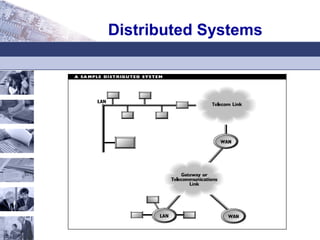
A distributed system consists of multiple
autonomousautonomous computers that are linked
and that can—through software—give the
appearance of being a single, integrated
computer system. The individual computers
may be parts of a local, wide, or global area
network.
Distributed System
Examples of distributed systems abound,
including the Internet, various University
computing centres, and ATM (automatic
teller machine) networks.
Distributed Systems
Several features and capabilities are
considered desirable for distributed
systems include:
- Resource sharingResource sharing. This refers to
the ability for users to share hardware
(e.g. peripherals), application software
(e.g., groupware), or data (e.g., reference
materials).
Features of Distributed Systems
-ConcurrencyConcurrency
Refers to the fact that multiple users may be
requesting or accessing system resources at
the same time. Ideally, processors should be
able to deal with multiple users simultaneous
Distributed system automatically demonstrate
concurrency each time two or more users do
things at the same time on their own machine
Features of Distributed Systems
-OpennessOpenness
An open system is one for which
specifications and interfaces have been
made public, so that developers can create
products for the system.
An open system can easily handle new
hardware or software configurations
because there are officially accepted
specifications.
Features of Distributed Systems
-TransparencyTransparency
Refers to the fact that a user doesn’t need to
know that different resources being used may
be scattered all around the world.
For the user, there should be no significant
difference between requesting a local
resource and one at some remote location.
Features of Distributed Systems
- Scalability- Scalability
Refers to the ability of the system to grow—
for example, through the addition of new
computers or by the creation of
internetworks.
When a distributed system grows, certain
information may need to be duplicated at
multiple locations in order to maintain the
efficiency of the original, smaller system.
Features of Distributed Systems
- Fault toleranceFault tolerance
Refers to the system’s ability to continue
functioning after one or more components
become unavailable because of either
hardware or software failure.
Features of Distributed Systems
In a fault tolerant system, a software
failure will affect only the process or
processes that failed.
Features of Distributed Systems
……Thank You…Thank You…
ConclusionConclusion

Distributed network

  • 1.
  • 2.
    Distributed System A distributedsystem consists of multiple autonomousautonomous computers that are linked and that can—through software—give the appearance of being a single, integrated computer system. The individual computers may be parts of a local, wide, or global area network. Distributed System
  • 3.
    Examples of distributedsystems abound, including the Internet, various University computing centres, and ATM (automatic teller machine) networks.
  • 4.
  • 5.
    Several features andcapabilities are considered desirable for distributed systems include: - Resource sharingResource sharing. This refers to the ability for users to share hardware (e.g. peripherals), application software (e.g., groupware), or data (e.g., reference materials). Features of Distributed Systems
  • 6.
    -ConcurrencyConcurrency Refers to thefact that multiple users may be requesting or accessing system resources at the same time. Ideally, processors should be able to deal with multiple users simultaneous Distributed system automatically demonstrate concurrency each time two or more users do things at the same time on their own machine Features of Distributed Systems
  • 7.
    -OpennessOpenness An open systemis one for which specifications and interfaces have been made public, so that developers can create products for the system. An open system can easily handle new hardware or software configurations because there are officially accepted specifications. Features of Distributed Systems
  • 8.
    -TransparencyTransparency Refers to thefact that a user doesn’t need to know that different resources being used may be scattered all around the world. For the user, there should be no significant difference between requesting a local resource and one at some remote location. Features of Distributed Systems
  • 9.
    - Scalability- Scalability Refersto the ability of the system to grow— for example, through the addition of new computers or by the creation of internetworks. When a distributed system grows, certain information may need to be duplicated at multiple locations in order to maintain the efficiency of the original, smaller system. Features of Distributed Systems
  • 10.
    - Fault toleranceFaulttolerance Refers to the system’s ability to continue functioning after one or more components become unavailable because of either hardware or software failure. Features of Distributed Systems
  • 11.
    In a faulttolerant system, a software failure will affect only the process or processes that failed. Features of Distributed Systems
  • 12.