Hypertension in
Children and
Adolescents
Panko N.
Department of Pediatrics
V.N.Karain Kharkiv
National University
Blood Pressure
measurement
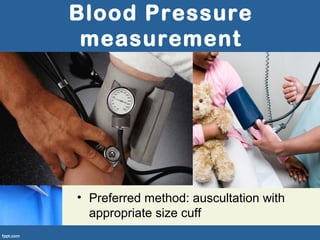
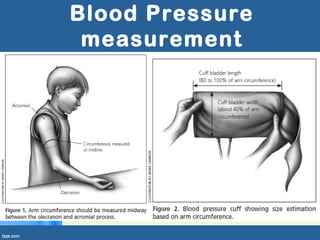
• Preferred method: auscultation with
appropriate size cuff
Blood Pressure
measurement
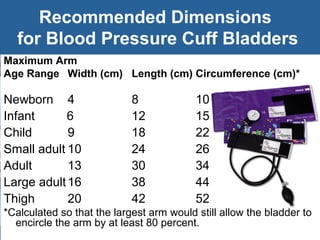
Recommended Dimensions
for Blood Pressure Cuff Bladders
Maximum Arm
Age Range Width (cm) Length (cm) Circumference (cm)*
Newborn 4 8 10
Infant 6 12 15
Child 9 18 22
Small adult 10 24 26
Adult 13 30 34
Large adult16 38 44
Thigh 20 42 52
*Calculated so that the largest arm would still allow the bladder to
encircle the arm by at least 80 percent.
Blood Pressure
Measurement
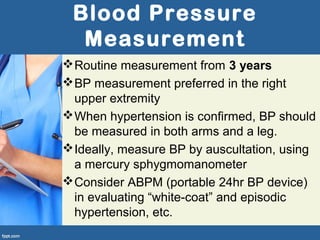
Routine measurement from 3 years
BP measurement preferred in the right
upper extremity
When hypertension is confirmed, BP should
be measured in both arms and a leg.
Ideally, measure BP by auscultation, using
a mercury sphygmomanometer
Consider ABPM (portable 24hr BP device)
in evaluating “white-coat” and episodic
hypertension, etc.
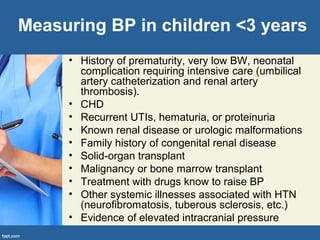
Measuring BP in children <3 years
• History of prematurity, very low BW, neonatal
complication requiring intensive care (umbilical
artery catheterization and renal artery
thrombosis).
• CHD
• Recurrent UTIs, hematuria, or proteinuria
• Known renal disease or urologic malformations
• Family history of congenital renal disease
• Solid-organ transplant
• Malignancy or bone marrow transplant
• Treatment with drugs know to raise BP
• Other systemic illnesses associated with HTN
(neurofibromatosis, tuberous sclerosis, etc.)
• Evidence of elevated intracranial pressure
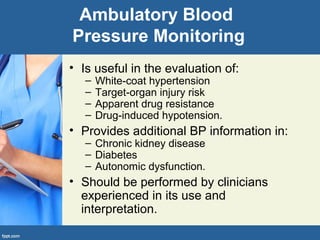
Ambulatory Blood
Pressure Monitoring
• Is useful in the evaluation of:
– White-coat hypertension
– Target-organ injury risk
– Apparent drug resistance
– Drug-induced hypotension.
• Provides additional BP information in:
– Chronic kidney disease
– Diabetes
– Autonomic dysfunction.
• Should be performed by clinicians
experienced in its use and
interpretation.
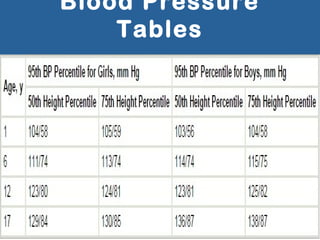
Blood Pressure in Children
and Adolescents
• Normal range of blood pressure
determined by body size and age
• BP tables based on healthy population
and include 50-th, 90-th, 95-th, and 99-th
percentiles by sex, age, and height.
• Confirm an elevated BP on at least 2
additional visits
Blood Pressure
Tables
Definition of Hypertension
“Normal Blood Pressure”: < 90th
percentile for age, gender and height.
“Prehypertension”
(“prehypertensive”) : Average SBP and/or
DBP that are greater than or equal to the
90th percentile, but less than the 95th
percentile.
* For age >12years, BP levels greater than or equal
to 120/80 mmHg should be considered
prehypertensive.
Classification
“Hypertension”: Average SBP
and/or DBP that is greater than or equal to
the 95th percentile for sex, age, and
height on 3 or more occasions.
Stage 1: 95th
– 99th
percentile + 5 mHg
Stage 2: > 99th
percentile + 5 mmHg
Definitions
“White Coat Hypertension”:
BP > 95th
percentile in the physician’s
office, normotensive in outside
environment
(Ambulatory BP monitoring is usually
required to make this diagnosis.)
Etiology of
Hypertension
“Primary” (essential)
When no identifiable cause can be
found, it is referred to as primary
(essential) hypertension.
“Secondary”
When hypertension is the result of
another disease process, it is referred
to as secondary hypertension.
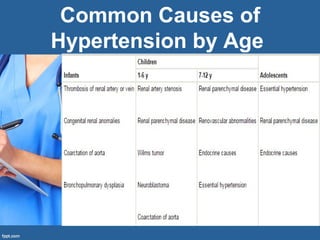
Common Causes of
Hypertension by Age
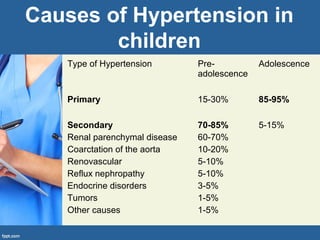
Causes of Hypertension in
children
Type of Hypertension Pre-
adolescence
Adolescence
Primary 15-30% 85-95%
Secondary
Renal parenchymal disease
Coarctation of the aorta
Renovascular
Reflux nephropathy
Endocrine disorders
Tumors
Other causes
70-85%
60-70%
10-20%
5-10%
5-10%
3-5%
1-5%
1-5%
5-15%
Primary Hypertension
• Usually characterized by mild or stage 1
Hypertension
• Children frequently overweight
(~30% of obese with HTN)
• Often associated
with family history
of HTN and
cardiovascular
disease
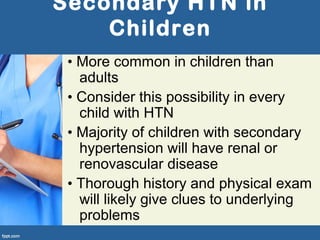
Secondary HTN in
Children
• More common in children than
adults
• Consider this possibility in every
child with HTN
• Majority of children with secondary
hypertension will have renal or
renovascular disease
• Thorough history and physical exam
will likely give clues to underlying
problems
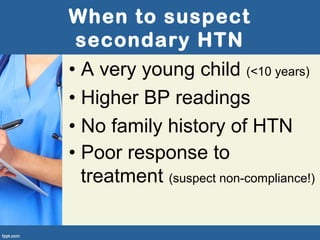
When to suspect
secondary HTN
• A very young child (<10 years)
• Higher BP readings
• No family history of HTN
• Poor response to
treatment (suspect non-compliance!)
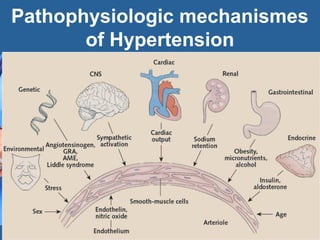
Pathophysiologic mechanismes
of Hypertension
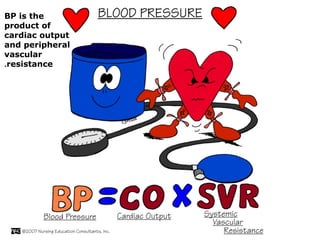
BP is the
product of
cardiac output
and peripheral
vascular
resistance.
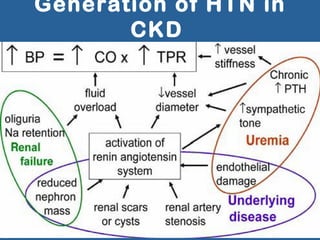
Generation of HTN in
CKD
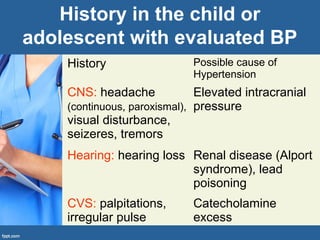
History in the child or
adolescent with evaluated BP
History Possible cause of
Hypertension
CNS: headache
(continuous, paroxismal),
visual disturbance,
seizeres, tremors
Elevated intracranial
pressure
Hearing: hearing loss Renal disease (Alport
syndrome), lead
poisoning
CVS: palpitations,
irregular pulse
Catecholamine
excess
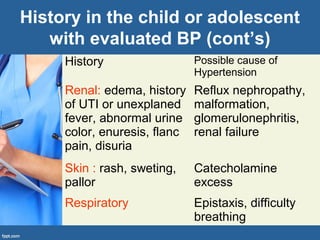
History in the child or adolescent
with evaluated BP (cont’s)
History Possible cause of
Hypertension
Renal: edema, history
of UTI or unexplaned
fever, abnormal urine
color, enuresis, flanc
pain, disuria
Reflux nephropathy,
malformation,
glomerulonephritis,
renal failure
Skin : rash, sweting,
pallor
Catecholamine
excess
Respiratory Epistaxis, difficulty
breathing
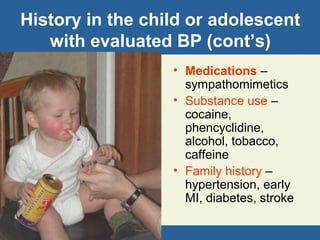
History in the child or adolescent
with evaluated BP (cont’s)
• Medications –
sympathomimetics
• Substance use –
cocaine,
phencyclidine,
alcohol, tobacco,
caffeine
• Family history –
hypertension, early
MI, diabetes, stroke
History in the child or adolescent
with evaluated BP (cont’s)
• Neonatal history – use of umbilical
artery catheters
• Sexual history – pregnancy
• Growth history – excessive weight
gain or loss
• Dietary history – types and amount of
food ingested; salt craving
• Social history – stress factors at
home and school
Clinical Evaluation of
Hypertension in
ChildhoodMust begin with:
 History, including sleep history,
 family history,
 risk factors,
 diet, and habits such as smoking and drinking
alcohol;
 physical examination
 Body Mass Index (BMI) should be calculated as
part of the physical examination.
Assessment of cardiovascular risk factors:
 overweight
 low plasma HDL cholesterol
 high plasma triglycerides
 abnormal glucose tolerance
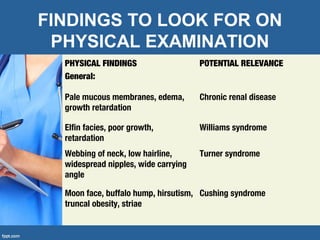
FINDINGS TO LOOK FOR ON
PHYSICAL EXAMINATION
PHYSICAL FINDINGS
General:
POTENTIAL RELEVANCE
Pale mucous membranes, edema,
growth retardation
Chronic renal disease
Elfin facies, poor growth,
retardation
Williams syndrome
Webbing of neck, low hairline,
widespread nipples, wide carrying
angle
Turner syndrome
Moon face, buffalo hump, hirsutism,
truncal obesity, striae
Cushing syndrome
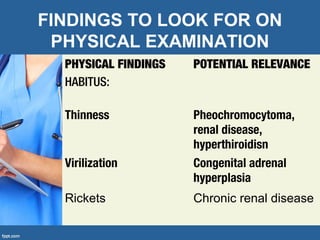
FINDINGS TO LOOK FOR ON
PHYSICAL EXAMINATION
PHYSICAL FINDINGS
HABITUS:
POTENTIAL RELEVANCE
Thinness Pheochromocytoma,
renal disease,
hyperthiroidisn
Virilization Congenital adrenal
hyperplasia
Rickets Chronic renal disease
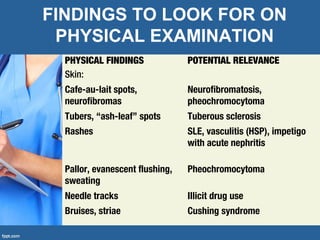
FINDINGS TO LOOK FOR ON
PHYSICAL EXAMINATION
PHYSICAL FINDINGS
Skin:
POTENTIAL RELEVANCE
Cafe-au-lait spots,
neurofibromas
Neurofibromatosis,
pheochromocytoma
Tubers, “ash-leaf” spots Tuberous sclerosis
Rashes SLE, vasculitis (HSP), impetigo
with acute nephritis
Pallor, evanescent flushing,
sweating
Pheochromocytoma
Needle tracks Illicit drug use
Bruises, striae Cushing syndrome
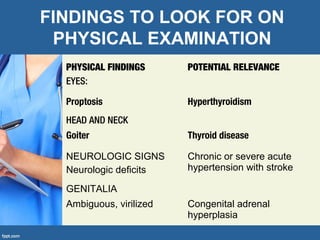
FINDINGS TO LOOK FOR ON
PHYSICAL EXAMINATION
PHYSICAL FINDINGS
EYES:
POTENTIAL RELEVANCE
Proptosis Hyperthyroidism
HEAD AND NECK
Goiter Thyroid disease
NEUROLOGIC SIGNS
Neurologic deficits
Chronic or severe acute
hypertension with stroke
GENITALIA
Ambiguous, virilized Congenital adrenal
hyperplasia
FINDINGS TO LOOK FOR ON
PHYSICAL EXAMINATION
PHYSICAL FINDINGS
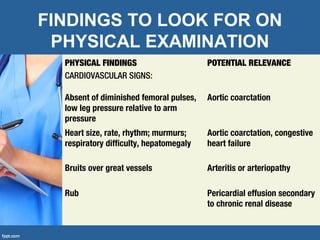
CARDIOVASCULAR SIGNS:
POTENTIAL RELEVANCE
Absent of diminished femoral pulses,
low leg pressure relative to arm
pressure
Aortic coarctation
Heart size, rate, rhythm; murmurs;
respiratory difficulty, hepatomegaly
Aortic coarctation, congestive
heart failure
Bruits over great vessels Arteritis or arteriopathy
Rub Pericardial effusion secondary
to chronic renal disease
FINDINGS TO LOOK FOR ON
PHYSICAL EXAMINATION
PHYSICAL FINDINGS
PULMONARY SIGNS:
POTENTIAL RELEVANCE
Pulmonary edema CHF, acute nephritis
Picture of bronchopulmonary
dysplasia (BPD)
BPD-associated hypertension
ABDOMEN
Epigastric bruit Primary renovascular disease or in association
with Williams syndrome, neurofibromatosis,
fibromuscular dysplasia, or arteritis
Abdominal masses, polycystic
kidneys, hydronephrosis
Wilms tumor, neuroblastoma,
pheochromocytoma
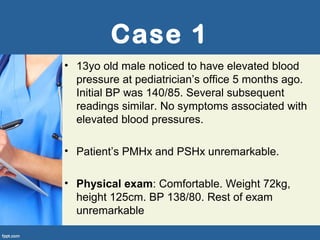
Case 1
• 13yo old male noticed to have elevated blood
pressure at pediatrician’s office 5 months ago.
Initial BP was 140/85. Several subsequent
readings similar. No symptoms associated with
elevated blood pressures.
• Patient’s PMHx and PSHx unremarkable.
• Physical exam: Comfortable. Weight 72kg,
height 125cm. BP 138/80. Rest of exam
unremarkable
of Hypertension in
Childhood
Screening tests:
• Urinalysis and Urine culture
• CBC with differential
• Serum chemistries: BUN/Cr,
electrolytes (Na, K, Ca, Ph)
• Renal ultrasound
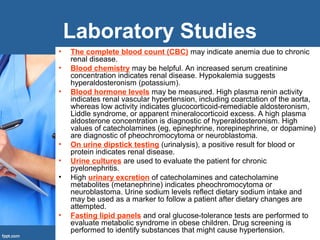
Laboratory Studies
• The complete blood count (CBC) may indicate anemia due to chronic
renal disease.
• Blood chemistry may be helpful. An increased serum creatinine
concentration indicates renal disease. Hypokalemia suggests
hyperaldosteronism (potassium).
• Blood hormone levels may be measured. High plasma renin activity
indicates renal vascular hypertension, including coarctation of the aorta,
whereas low activity indicates glucocorticoid-remediable aldosteronism,
Liddle syndrome, or apparent mineralocorticoid excess. A high plasma
aldosterone concentration is diagnostic of hyperaldosteronism. High
values of catecholamines (eg, epinephrine, norepinephrine, or dopamine)
are diagnostic of pheochromocytoma or neuroblastoma.
• On urine dipstick testing (urinalysis), a positive result for blood or
protein indicates renal disease.
• Urine cultures are used to evaluate the patient for chronic
pyelonephritis.
• High urinary excretion of catecholamines and catecholamine
metabolites (metanephrine) indicates pheochromocytoma or
neuroblastoma. Urine sodium levels reflect dietary sodium intake and
may be used as a marker to follow a patient after dietary changes are
attempted.
• Fasting lipid panels and oral glucose-tolerance tests are performed to
evaluate metabolic syndrome in obese children. Drug screening is
performed to identify substances that might cause hypertension.
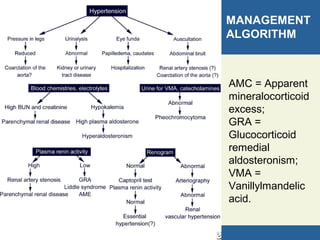
AMC = Apparent
mineralocorticoid
excess;
GRA =
Glucocorticoid
remedial
aldosteronism;
VMA =
Vanillylmandelic
acid.
MANAGEMENT
ALGORITHM
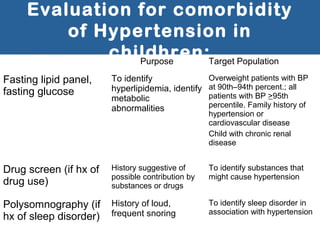
Evaluation for comorbidity
of Hypertension in
childhren:Purpose Target Population
Fasting lipid panel,
fasting glucose
To identify
hyperlipidemia, identify
metabolic
abnormalities
Overweight patients with BP
at 90th–94th percent.; all
patients with BP >95th
percentile. Family history of
hypertension or
cardiovascular disease
Child with chronic renal
disease
Drug screen (if hx of
drug use)
History suggestive of
possible contribution by
substances or drugs
To identify substances that
might cause hypertension
Polysomnography (if
hx of sleep disorder)
History of loud,
frequent snoring
To identify sleep disorder in
association with hypertension
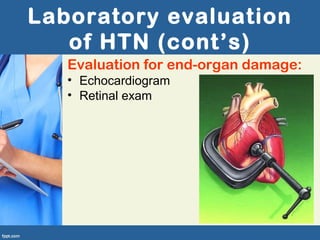
Laboratory evaluation
of HTN (cont’s)
Evaluation for end-organ damage:
• Echocardiogram
• Retinal exam
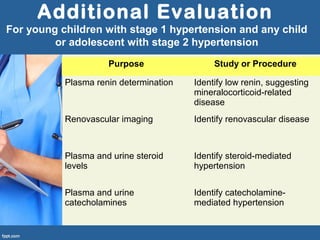
Additional Evaluation
For young children with stage 1 hypertension and any child
or adolescent with stage 2 hypertension
Purpose Study or Procedure
Plasma renin determination Identify low renin, suggesting
mineralocorticoid-related
disease
Renovascular imaging Identify renovascular disease
Plasma and urine steroid
levels
Identify steroid-mediated
hypertension
Plasma and urine
catecholamines
Identify catecholamine-
mediated hypertension
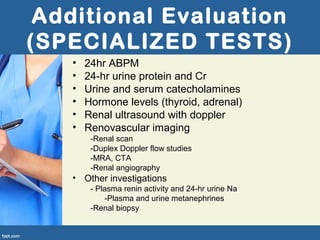
Additional Evaluation
(SPECIALIZED TESTS)
• 24hr ABPM
• 24-hr urine protein and Cr
• Urine and serum catecholamines
• Hormone levels (thyroid, adrenal)
• Renal ultrasound with doppler
• Renovascular imaging
-Renal scan
-Duplex Doppler flow studies
-MRA, CTA
-Renal angiography
• Other investigations
- Plasma renin activity and 24-hr urine Na
-Plasma and urine metanephrines
-Renal biopsy
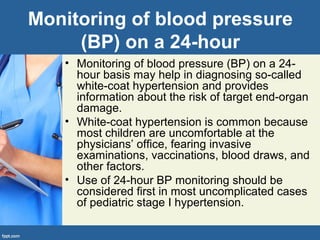
Monitoring of blood pressure
(BP) on a 24-hour
• Monitoring of blood pressure (BP) on a 24-
hour basis may help in diagnosing so-called
white-coat hypertension and provides
information about the risk of target end-organ
damage.
• White-coat hypertension is common because
most children are uncomfortable at the
physicians’ office, fearing invasive
examinations, vaccinations, blood draws, and
other factors.
• Use of 24-hour BP monitoring should be
considered first in most uncomplicated cases
of pediatric stage I hypertension.
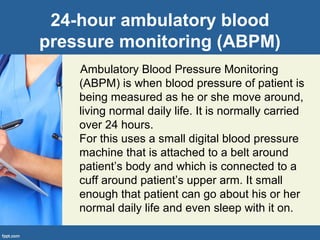
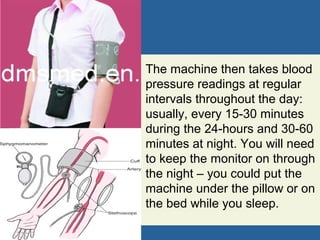
24-hour ambulatory blood
pressure monitoring (ABPM)
Ambulatory Blood Pressure Monitoring
(ABPM) is when blood pressure of patient is
being measured as he or she move around,
living normal daily life. It is normally carried
over 24 hours.
For this uses a small digital blood pressure
machine that is attached to a belt around
patient’s body and which is connected to a
cuff around patient’s upper arm. It small
enough that patient can go about his or her
normal daily life and even sleep with it on.
The machine then takes blood
pressure readings at regular
intervals throughout the day:
usually, every 15-30 minutes
during the 24-hours and 30-60
minutes at night. You will need
to keep the monitor on through
the night – you could put the
machine under the pillow or on
the bed while you sleep.
Diagnostic Evaluation of the
Hypertensive Patient.
• How high is the blood pressure?
• Why is it high?
• What is the risk?
•How should it be measured?
24 Hour Ambulatory Monitoring
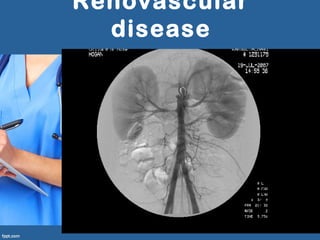
Renovascular
disease
• Renal angiogram in 7 yr old
boy with hypertension. Right
renal artery is visible with a
string-of-beads appearance
characteristic of
fibromuscular dysplasia
(arrows). The aorta and left
renal artery appear normal.
(From Tullus K, Brennan E,
Hamilton G, et al:
Renovascular hypertension
in children, Lancet
371:1453–1463, 2008; p
1454, Fig 1.)
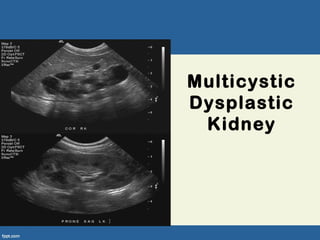
Multicystic
Dysplastic
Kidney
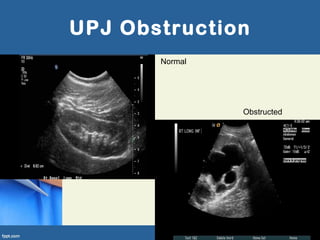
UPJ Obstruction
Normal
Obstructed
Case 2
Hem/onc Consult:
2yo male with high blood pressures.
Patient newly diagnosed with Wilm’s
tumor and admitted 2 days ago for
surgery. Most recent blood pressures
in the 130s/70s. There is no family
history of hypertension. Patient with
normal renal function and good urine
output.
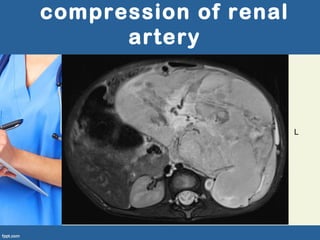
compression of renal
artery
L
Case 3
10yo female with hypertension. Most
recent blood pressures in the
130s/90s. She has a history of
recurrent febrile urinary tract
infections. Patient diagnosed with
grade 4 VUR at 3 years of age. She
is currently followed by nephrology
and urology. Energy level and
appetite are normal.
Case 4
1mo old 28 week ex-premie. In the
last one week, blood pressures have
been high, 120s/70s-80s.
What additional history would you
obtain?
BP Classification/Interpretation
• Normal BP:
=> Recheck at next scheduled physical
examination.
• Prehypertension:
=> Recheck in 6 months.
=> Begin weight management (as appropriate).
• Stage 1 HTN:
=> Recheck in 1 to 2 weeks or sooner if the patient
is symptomatic.
=> If BP remains at this level on recheck, begin
evaluation and treatment including weight management
if appropriate.
• Stage 2 HTN:
=> Begin evaluation and treatment within 1 week,
immediately if symptomatic.
Management
• Educate
• Incorporate patient AND family
• Nonpharmacolocic measures –
Therapeutic Lifestyle Changes
• Antihypertensive Meds
• Monitor for side effects and
treatment response
Therapy of HTN in
children
• Weight reduction
• Regular physical
activity
• Dietary modifications:
-consumption of
more fruits, vegetables,
fiber, nonfat diary,
reduced sodium intake
(1.2g/day in younger kids and 1.5g/day in
older kids)
Classification of Hypertension in Children
and Adolescents, With Measurement
Frequency and Therapy Recommendations
Therapeutic Lifestyle
Changes
Normal Encourage healthy diet,
sleep, and physical
activity.
Prehypertension,
Hypertension
Recommend weight
management counseling
if overweight; introduce
physical activity and diet
management.
• TO GIVE or
NOT TO GIVE
… MEDS…???
Pharmacotherapy is
indicated for patients
with secondary
hypertension and for
those who are unable
to control BP through
diet and exercise.
Indications for Antihypertensive
Drug Therapy in Children
• Symptomatic and Secondary HTN
• Stage II HTN
• Stage I hypertension refractory to
nonpharmacologic measures
• Target-organ damage (LVH, retinopathy,
microalbuminuria)
• Stage I hypertension in patient with Diabetes
(types 1 and 2)
• Consider if child has additional cardiovascular
risks – dyslipidemia, smoking, obesity, family hx,
etc.
• Goal is to reduce BP <95th
percentile (<90th
percentile if concurrent conditions or LVH
present)
Classification of Hypertension in Children
and Adolescents, With Measurement
Frequency and Therapy Recommendations
Pharmacologic
Therapy
Normal None
Prehypertension Do not initiate therapy unless
there are compelling
indications such as chronic
kidney disease (CKD),
diabetes mellitus, heart
failure, left ventricular
hypertrophy (LVH).
Classification of Hypertension in Children
and Adolescents, With Measurement
Frequency and Therapy Recommendations
Hypertension Pharmacologic Therapy
Stage 1 Initiate therapy based on
indications for
antihypertensive drug therapy
or if there are compelling
indications as above.
Stage 2 Initiate therapy.
antihypertensive agents in
children
• Start with a single drug
• Start at lowest recommended dose
• Increase dose until desired effect
• Once highest recommended dose is
reached (or side effect develops), may
introduce second agent
Acceptable
antihypertensives in
children and adolescents
• Adrenergic blockers (e.g. labetolol,
atenolol, metoprolol)
• ACEI/ARB (single or in combination)
• Vasodilators (e.g Hydralazine, minoxidil )
• Calcium channel blockers (e.g amlodipine)
• Diuretics (e.g. HCTZ)
• Central alpha blocker (clonidine)
Monitor for side effects!
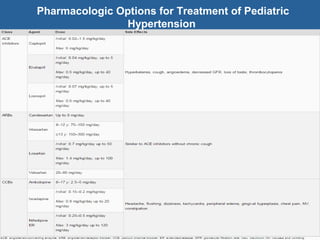
Pharmacologic Options for Treatment of Pediatric
Hypertension
Case 5
• 16yo male referred from the pediatrician’s
office to the emergency room for severe
headache and high blood pressures. No
episodes of vomiting. No visual changes. No
significant past medical history. Urine output
normal. Family history unremarkable.
Systolic blood pressure in the ER 190/105.
The rest of physical examination unremarkable.
• BB or alpha antagonist would be most beneficial
in a patient with high catecholamine levels.
• For a diabetic patient, an ACE inhibitor would be
ideal.
• Additional conditions to take into consideration
when selecting an agent are the presence of
symptomatic hypertension, secondary causes of
hypertension, target-organ damage, and
persistent hypertension despite
nonpharmacologic interventions.
• Several ACE inhibitors have been studied in
children, with captopril having the most evidence.
Enalapril, lisinopril, and ramipril have been
assessed in small trials and pharmacokinetic
studies.
What kind of drags should we
use?
What kind of drags should we
use?
• In the treatment of adult hypertension, it is
well established that this class of
medications has disparities in efficacy
according to race. A recently published
meta-analysis evaluated results from six
trials submitted to the FDA to determine
whether these differences were present
among children as well. Agents studied
included benazepril, enalapril, fosinopril,
lisinopril, quinapril, and ramipril. This
analysis found that, even with high-dose
therapy, African American children did not
respond to ACE inhibitor therapy as well as
children of other races did.
• CCBs are also commonly prescribed for pediatric patients.
Nifedipine, isradipine, amlodipine, and nicardipine have
the most evidence for use.
• Short-acting nifedipine is typically used for hypertensive
crisis. Data regarding the use of extended-release
nifedipine are limited; however, anecdotal reports show
that it has been well tolerated when given at doses less
than 120 mg/day.
• Retrospective data for isradipine are available. These
trials utilized a much higher dose than that recommended
for adults and administered the drug multiple times per
day, which may limit the usefulness of the drug.
• Amlodipine may be a more desirable alternative owing to
its longer half-life and capacity for once-daily dosing.
Additionally, an amlodipine suspension may be prepared
that has extended stability.
• Nicardipine is largely used intravenously for treatment of
severe hypertension.
What kind of drags should we
use?
• Outside of hypertension associated with renal disease, data
are extremely limited regarding the use of ARBs for the
treatment of pediatric hypertension. Since the publication of
recent guidelines, two studies have been published that
examined the use of valsartan and candesartan.
In an open-label, uncontrolled trial, candesartan 8 mg was shown to effectively lower BP
in 11 children aged 6 to 18 years. A study of 90 patients aged 1 year to 5 years found
valsartan 20 mg, 40 mg, and 80 mg to be effective. This study also evaluated valsartan's
effects on growth and development.No significant changes between valsartan and
placebo were seen for length per height for age or BMI throughout the study.
Developmental skills such as language and motor ability and social development all
progressed normally.
• Beta-blockers are used less often owing to complications with
disease states such as diabetes and asthma and the
development of lipid abnormalities after long-term use.
Consideration should be given to BBs in the presence of
severe hypertension or when combination therapy is needed.
• Additionally, the use of diuretics is often reserved for patients
with renal disease or when combination therapy is needed.
What kind of drags should we
use?
Question
How do you
manage
hypertensive
urgency/
emergency?
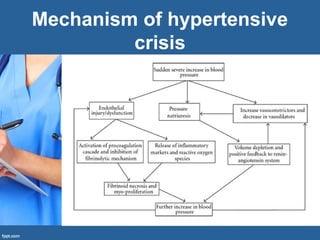
Mechanism of hypertensive
crisis
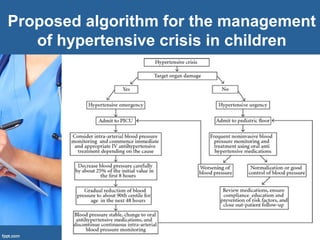
Proposed algorithm for the management
of hypertensive crisis in children
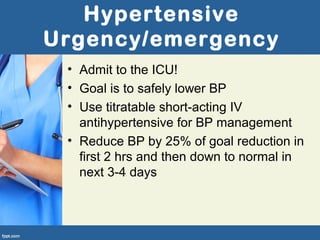
Hypertensive
Urgency/emergency
• Admit to the ICU!
• Goal is to safely lower BP
• Use titratable short-acting IV
antihypertensive for BP management
• Reduce BP by 25% of goal reduction in
first 2 hrs and then down to normal in
next 3-4 days
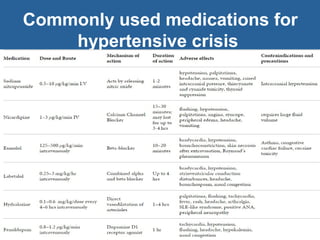
Commonly used medications for
hypertensive crisis
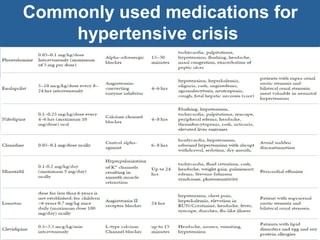
Commonly used medications for
hypertensive crisis
Hypertensive Crisis due to
Medications or Drugs
• Sudden cessation of opiates, benzodiazepines, and clonidine can also lead
to withdrawal syndrome and present with hypertensive crisis.
• Reintroduction of medications causing the withdrawal followed by gradual
weaning of the medications will result in resolution of hypertensive crisis in
most cases. Cocaine toxicity is a well-known cause of hypertensive crisis
particularly among adolescents.
• Mechanism of hypertensive crisis due to cocaine toxicity involves
potentiation of catecholamine effects by inhibition of the presynaptic uptake
of norepinephrine. Intravenous alpha-blocker like phentolamine is
treatment of choice and beta-blockers may be added if needed later in
the treatment.
• Hypertensive crisis is also known to occur when medications like
monoamine oxidase inhibitors interact with food containing tyramine and
other medications like dextromethorphan, methylene blue, selective
serotonin reuptake inhibitors, and linezolid. Hypertension due to MAOI
interaction can be treated with either an alpha blocker or sodium
nitroprusside.
• Hypertensive crisis due to amphetamine toxicity is due to
sympathomimetic and serotonergic effects of amphetamines. In addition to
decontamination, cooling, sedation, intravenous alpha-blockers, or
sodium nitroprusside is the treatment of choice. Beta-blockers alone are
absolutely contraindicated in all these toxidromes as they will worsen the
hypertensive crisis due to unopposed action on alpha receptors.
Hypertensive Crisis due to
Pheochromocytoma• Pheochromocytoma is rare tumor arising from chromaffin cells in the adrenal medulla and extra adrenal
paraganglionic tissue in children. About 80% of the pheochromocytomas arise from adrenal medulla in
children. Approximately 40% of pheochromocytomas are associated with genetic mutations and about 19–
38% are bilateral. About 1% of pediatric hypertensive patients have pheochromocytoma with a peak
incidence at around 11 years. But it is more commonly diagnosed in adults with a peak incidence between
4th and 6th decade of life.
• Multiple endocrine neoplasia type 2, Von Hippel-Lindau syndrome, neurofibromatosis type 1, and germline
mutations of succinate dehydrogenase (SDH) gene are some of the common causes of hereditary
pheochromocytomas.
• Quantification of plasma-free metanephrine and normetanephrine based on age-specific reference intervals
and 24 hr urinary-fractionated metanephrines preferably in supine position are most sensitive diagnostic tests
for pheochromocytoma. After the biochemical confirmation of the diagnosis, tumor localization studies like
magnetic resonance imaging (MRI), 123metaiodobenzylguanidine (MIBG) scintigraphy, and occasionally in
rare cases studies like [111In]-Octreotide scintigraphy, [18F]-fluorodopamine, or [18F]-fluorodeoxyglucose
positron emission tomography (FDG-PET) may be required.
• Clinical presentation of pediatric pheochromocytoma is varied and ranges from asymptomatic to sustained
hypertension in about 60–90%. Paroxysmal hypertension is less common when compared to adults and its
presence should raise a suspicion of pheochromocytoma. Children with dopamine secreting
pheochromocytomas are usually normotensive.
• Symptoms such as headache, palpitations, sweating, vomiting, pallor, weight loss, polyuria, visual
disturbances, anxiety, and attention deficit-hyperactivity are common presenting features in children.
• Surgery is the treatment of choice but good preoperative medical management of hypertension for at least
10–14 days is recommended.
• Adequate perioperative management of hypertension will result in decrease in postoperative complications.
• α2-blockade with noncompetitive α2-blocker like phenoxybenzamine is the medication of choice. For
localized tumors laparoscopic cortical-sparing adrenalectomy is the preferred surgery in children. Treatment
options for invasive and metastatic tumors include embolization, systemic therapy with 131MIBG, or
chemotherapy.
Hypertensive Crisis due to
Renovascular Disease
• Renovascular hypertension is an uncommon but important
cause of correctable hypertension in children.
• Treatment depends upon the etiology, severity, and extent of
the disease. In cases of RAS secondary to Takayasu’s
arteritis steroids, immunosuppressive therapy and
antituberculous treatment are the mainstay.
• In general it is advisable to avoid diuretic therapy as it may
increase plasma renin levels secondary to volume depletion.
In children who have RAS which is amenable to surgical
treatment, percutaneous transluminal renal angioplasty,
stenting, segmental ethanol ablation, revascularization, and
partial or total nephrectomy of the affected kidney are some
of the options.
• In selected cases with diffuse and extensive bilateral
intrarenal arterial lesions where surgical correction cannot
be performed, a trial of angiotensin converting enzyme
inhibitor or angiotensin receptor blocker has been advocated
under close supervision by an experienced specialist in a
tertiary hospital
Hypertension in Chronic Kidney
Disease (CKD)
• Hypertension is a common occurrence in CKD increasing in severity with
worsening in renal function. Both renoparenchymal diseases and
tubulointerstitial diseases lead to renal scarring and reduction in nephron
mass which results in activation of RAAS. The activation of RAAS leads to
sodium and fluid retention and sympathetic hyperactivation contributing to
hypertension. Volume overload is the most important factor leading to
hypertension and hypertension-related morbidity and mortality in patients
with CKD.
• In addition to the previous mechanism, several other factors like uremic
toxins, increased circulating endogenous NOS inhibitors like asymmetric
dimethylarginine, secondary hyperparathyroidism leading to hypercalcemia,
and increased expression of endothelin A receptors have also been
implicated in the pathogenesis of hypertension in CKD.
• Maintaining dry weight by strict volume control, dietary salt restriction, and
frequent dialysis will markedly reduce the need for antihypertensive therapy.
• RAAS antagonist like ACE inhibitors and ARB are considered as first
choice in the treatment of hypertension in this group of patients.
• RAAS antagonists not only lower transglomerular pressure and proteinuria
but also suppress cytokines and chemokine release. These effects confer
nephroprotection by reduction in glomerular hypertrophy and sclerosis and
tubulointerstitial inflammation and fibrosis.
• In addition to RAAS antagonist, calcium channel blocker and beta-
blockers are other therapeutic options
References
• National High Blood Pressure Education
Program (NHBPEP)
www.nhlbi.nih.gov/about/nhbpep/index.htm
• Pediatric Hypertension: A Review of Diagnosis
and Treatment
www.medscape.com/viewarticle/720087_1
• Constantine and Linakis (2005) The assessment
and management of Hypertensive Emergencies
and Urgencies in Children. Pediatric Emergency
Care 21:391-399
• Nelson textbook of Pediatrics 19th ed. /Kliegman
RM, Behrman RE, Jenson HB, Stanton BF.
Philadelphia, Pa: Saunders Elsevier; 2011. -
2315 p.

Pediatric hypertension

  • 1.
    Hypertension in Children and Adolescents PankoN. Department of Pediatrics V.N.Karain Kharkiv National University
  • 2.
    Blood Pressure measurement • Preferredmethod: auscultation with appropriate size cuff
  • 3.
  • 4.
    Recommended Dimensions for BloodPressure Cuff Bladders Maximum Arm Age Range Width (cm) Length (cm) Circumference (cm)* Newborn 4 8 10 Infant 6 12 15 Child 9 18 22 Small adult 10 24 26 Adult 13 30 34 Large adult16 38 44 Thigh 20 42 52 *Calculated so that the largest arm would still allow the bladder to encircle the arm by at least 80 percent.
  • 5.
    Blood Pressure Measurement Routine measurementfrom 3 years BP measurement preferred in the right upper extremity When hypertension is confirmed, BP should be measured in both arms and a leg. Ideally, measure BP by auscultation, using a mercury sphygmomanometer Consider ABPM (portable 24hr BP device) in evaluating “white-coat” and episodic hypertension, etc.
  • 6.
    Measuring BP inchildren <3 years • History of prematurity, very low BW, neonatal complication requiring intensive care (umbilical artery catheterization and renal artery thrombosis). • CHD • Recurrent UTIs, hematuria, or proteinuria • Known renal disease or urologic malformations • Family history of congenital renal disease • Solid-organ transplant • Malignancy or bone marrow transplant • Treatment with drugs know to raise BP • Other systemic illnesses associated with HTN (neurofibromatosis, tuberous sclerosis, etc.) • Evidence of elevated intracranial pressure
  • 7.
    Ambulatory Blood Pressure Monitoring •Is useful in the evaluation of: – White-coat hypertension – Target-organ injury risk – Apparent drug resistance – Drug-induced hypotension. • Provides additional BP information in: – Chronic kidney disease – Diabetes – Autonomic dysfunction. • Should be performed by clinicians experienced in its use and interpretation.
  • 8.
    Blood Pressure inChildren and Adolescents • Normal range of blood pressure determined by body size and age • BP tables based on healthy population and include 50-th, 90-th, 95-th, and 99-th percentiles by sex, age, and height. • Confirm an elevated BP on at least 2 additional visits
  • 9.
  • 10.
    Definition of Hypertension “NormalBlood Pressure”: < 90th percentile for age, gender and height. “Prehypertension” (“prehypertensive”) : Average SBP and/or DBP that are greater than or equal to the 90th percentile, but less than the 95th percentile. * For age >12years, BP levels greater than or equal to 120/80 mmHg should be considered prehypertensive.
  • 11.
    Classification “Hypertension”: Average SBP and/orDBP that is greater than or equal to the 95th percentile for sex, age, and height on 3 or more occasions. Stage 1: 95th – 99th percentile + 5 mHg Stage 2: > 99th percentile + 5 mmHg
  • 12.
    Definitions “White Coat Hypertension”: BP> 95th percentile in the physician’s office, normotensive in outside environment (Ambulatory BP monitoring is usually required to make this diagnosis.)
  • 13.
    Etiology of Hypertension “Primary” (essential) Whenno identifiable cause can be found, it is referred to as primary (essential) hypertension. “Secondary” When hypertension is the result of another disease process, it is referred to as secondary hypertension.
  • 14.
  • 15.
    Causes of Hypertensionin children Type of Hypertension Pre- adolescence Adolescence Primary 15-30% 85-95% Secondary Renal parenchymal disease Coarctation of the aorta Renovascular Reflux nephropathy Endocrine disorders Tumors Other causes 70-85% 60-70% 10-20% 5-10% 5-10% 3-5% 1-5% 1-5% 5-15%
  • 16.
    Primary Hypertension • Usuallycharacterized by mild or stage 1 Hypertension • Children frequently overweight (~30% of obese with HTN) • Often associated with family history of HTN and cardiovascular disease
  • 17.
    Secondary HTN in Children •More common in children than adults • Consider this possibility in every child with HTN • Majority of children with secondary hypertension will have renal or renovascular disease • Thorough history and physical exam will likely give clues to underlying problems
  • 18.
    When to suspect secondaryHTN • A very young child (<10 years) • Higher BP readings • No family history of HTN • Poor response to treatment (suspect non-compliance!)
  • 19.
  • 20.
    BP is the productof cardiac output and peripheral vascular resistance.
  • 22.
  • 23.
    History in thechild or adolescent with evaluated BP History Possible cause of Hypertension CNS: headache (continuous, paroxismal), visual disturbance, seizeres, tremors Elevated intracranial pressure Hearing: hearing loss Renal disease (Alport syndrome), lead poisoning CVS: palpitations, irregular pulse Catecholamine excess
  • 24.
    History in thechild or adolescent with evaluated BP (cont’s) History Possible cause of Hypertension Renal: edema, history of UTI or unexplaned fever, abnormal urine color, enuresis, flanc pain, disuria Reflux nephropathy, malformation, glomerulonephritis, renal failure Skin : rash, sweting, pallor Catecholamine excess Respiratory Epistaxis, difficulty breathing
  • 25.
    History in thechild or adolescent with evaluated BP (cont’s) • Medications – sympathomimetics • Substance use – cocaine, phencyclidine, alcohol, tobacco, caffeine • Family history – hypertension, early MI, diabetes, stroke
  • 26.
    History in thechild or adolescent with evaluated BP (cont’s) • Neonatal history – use of umbilical artery catheters • Sexual history – pregnancy • Growth history – excessive weight gain or loss • Dietary history – types and amount of food ingested; salt craving • Social history – stress factors at home and school
  • 27.
    Clinical Evaluation of Hypertensionin ChildhoodMust begin with:  History, including sleep history,  family history,  risk factors,  diet, and habits such as smoking and drinking alcohol;  physical examination  Body Mass Index (BMI) should be calculated as part of the physical examination. Assessment of cardiovascular risk factors:  overweight  low plasma HDL cholesterol  high plasma triglycerides  abnormal glucose tolerance
  • 28.
    FINDINGS TO LOOKFOR ON PHYSICAL EXAMINATION PHYSICAL FINDINGS General: POTENTIAL RELEVANCE Pale mucous membranes, edema, growth retardation Chronic renal disease Elfin facies, poor growth, retardation Williams syndrome Webbing of neck, low hairline, widespread nipples, wide carrying angle Turner syndrome Moon face, buffalo hump, hirsutism, truncal obesity, striae Cushing syndrome
  • 29.
    FINDINGS TO LOOKFOR ON PHYSICAL EXAMINATION PHYSICAL FINDINGS HABITUS: POTENTIAL RELEVANCE Thinness Pheochromocytoma, renal disease, hyperthiroidisn Virilization Congenital adrenal hyperplasia Rickets Chronic renal disease
  • 30.
    FINDINGS TO LOOKFOR ON PHYSICAL EXAMINATION PHYSICAL FINDINGS Skin: POTENTIAL RELEVANCE Cafe-au-lait spots, neurofibromas Neurofibromatosis, pheochromocytoma Tubers, “ash-leaf” spots Tuberous sclerosis Rashes SLE, vasculitis (HSP), impetigo with acute nephritis Pallor, evanescent flushing, sweating Pheochromocytoma Needle tracks Illicit drug use Bruises, striae Cushing syndrome
  • 31.
    FINDINGS TO LOOKFOR ON PHYSICAL EXAMINATION PHYSICAL FINDINGS EYES: POTENTIAL RELEVANCE Proptosis Hyperthyroidism HEAD AND NECK Goiter Thyroid disease NEUROLOGIC SIGNS Neurologic deficits Chronic or severe acute hypertension with stroke GENITALIA Ambiguous, virilized Congenital adrenal hyperplasia
  • 32.
    FINDINGS TO LOOKFOR ON PHYSICAL EXAMINATION PHYSICAL FINDINGS CARDIOVASCULAR SIGNS: POTENTIAL RELEVANCE Absent of diminished femoral pulses, low leg pressure relative to arm pressure Aortic coarctation Heart size, rate, rhythm; murmurs; respiratory difficulty, hepatomegaly Aortic coarctation, congestive heart failure Bruits over great vessels Arteritis or arteriopathy Rub Pericardial effusion secondary to chronic renal disease
  • 33.
    FINDINGS TO LOOKFOR ON PHYSICAL EXAMINATION PHYSICAL FINDINGS PULMONARY SIGNS: POTENTIAL RELEVANCE Pulmonary edema CHF, acute nephritis Picture of bronchopulmonary dysplasia (BPD) BPD-associated hypertension ABDOMEN Epigastric bruit Primary renovascular disease or in association with Williams syndrome, neurofibromatosis, fibromuscular dysplasia, or arteritis Abdominal masses, polycystic kidneys, hydronephrosis Wilms tumor, neuroblastoma, pheochromocytoma
  • 34.
    Case 1 • 13yoold male noticed to have elevated blood pressure at pediatrician’s office 5 months ago. Initial BP was 140/85. Several subsequent readings similar. No symptoms associated with elevated blood pressures. • Patient’s PMHx and PSHx unremarkable. • Physical exam: Comfortable. Weight 72kg, height 125cm. BP 138/80. Rest of exam unremarkable
  • 35.
    of Hypertension in Childhood Screeningtests: • Urinalysis and Urine culture • CBC with differential • Serum chemistries: BUN/Cr, electrolytes (Na, K, Ca, Ph) • Renal ultrasound
  • 36.
    Laboratory Studies • Thecomplete blood count (CBC) may indicate anemia due to chronic renal disease. • Blood chemistry may be helpful. An increased serum creatinine concentration indicates renal disease. Hypokalemia suggests hyperaldosteronism (potassium). • Blood hormone levels may be measured. High plasma renin activity indicates renal vascular hypertension, including coarctation of the aorta, whereas low activity indicates glucocorticoid-remediable aldosteronism, Liddle syndrome, or apparent mineralocorticoid excess. A high plasma aldosterone concentration is diagnostic of hyperaldosteronism. High values of catecholamines (eg, epinephrine, norepinephrine, or dopamine) are diagnostic of pheochromocytoma or neuroblastoma. • On urine dipstick testing (urinalysis), a positive result for blood or protein indicates renal disease. • Urine cultures are used to evaluate the patient for chronic pyelonephritis. • High urinary excretion of catecholamines and catecholamine metabolites (metanephrine) indicates pheochromocytoma or neuroblastoma. Urine sodium levels reflect dietary sodium intake and may be used as a marker to follow a patient after dietary changes are attempted. • Fasting lipid panels and oral glucose-tolerance tests are performed to evaluate metabolic syndrome in obese children. Drug screening is performed to identify substances that might cause hypertension.
  • 37.
    AMC = Apparent mineralocorticoid excess; GRA= Glucocorticoid remedial aldosteronism; VMA = Vanillylmandelic acid. MANAGEMENT ALGORITHM
  • 38.
    Evaluation for comorbidity ofHypertension in childhren:Purpose Target Population Fasting lipid panel, fasting glucose To identify hyperlipidemia, identify metabolic abnormalities Overweight patients with BP at 90th–94th percent.; all patients with BP >95th percentile. Family history of hypertension or cardiovascular disease Child with chronic renal disease Drug screen (if hx of drug use) History suggestive of possible contribution by substances or drugs To identify substances that might cause hypertension Polysomnography (if hx of sleep disorder) History of loud, frequent snoring To identify sleep disorder in association with hypertension
  • 39.
    Laboratory evaluation of HTN(cont’s) Evaluation for end-organ damage: • Echocardiogram • Retinal exam
  • 40.
    Additional Evaluation For youngchildren with stage 1 hypertension and any child or adolescent with stage 2 hypertension Purpose Study or Procedure Plasma renin determination Identify low renin, suggesting mineralocorticoid-related disease Renovascular imaging Identify renovascular disease Plasma and urine steroid levels Identify steroid-mediated hypertension Plasma and urine catecholamines Identify catecholamine- mediated hypertension
  • 41.
    Additional Evaluation (SPECIALIZED TESTS) •24hr ABPM • 24-hr urine protein and Cr • Urine and serum catecholamines • Hormone levels (thyroid, adrenal) • Renal ultrasound with doppler • Renovascular imaging -Renal scan -Duplex Doppler flow studies -MRA, CTA -Renal angiography • Other investigations - Plasma renin activity and 24-hr urine Na -Plasma and urine metanephrines -Renal biopsy
  • 42.
    Monitoring of bloodpressure (BP) on a 24-hour • Monitoring of blood pressure (BP) on a 24- hour basis may help in diagnosing so-called white-coat hypertension and provides information about the risk of target end-organ damage. • White-coat hypertension is common because most children are uncomfortable at the physicians’ office, fearing invasive examinations, vaccinations, blood draws, and other factors. • Use of 24-hour BP monitoring should be considered first in most uncomplicated cases of pediatric stage I hypertension.
  • 43.
    24-hour ambulatory blood pressuremonitoring (ABPM) Ambulatory Blood Pressure Monitoring (ABPM) is when blood pressure of patient is being measured as he or she move around, living normal daily life. It is normally carried over 24 hours. For this uses a small digital blood pressure machine that is attached to a belt around patient’s body and which is connected to a cuff around patient’s upper arm. It small enough that patient can go about his or her normal daily life and even sleep with it on.
  • 44.
    The machine thentakes blood pressure readings at regular intervals throughout the day: usually, every 15-30 minutes during the 24-hours and 30-60 minutes at night. You will need to keep the monitor on through the night – you could put the machine under the pillow or on the bed while you sleep.
  • 45.
    Diagnostic Evaluation ofthe Hypertensive Patient. • How high is the blood pressure? • Why is it high? • What is the risk? •How should it be measured?
  • 46.
  • 47.
  • 48.
    • Renal angiogramin 7 yr old boy with hypertension. Right renal artery is visible with a string-of-beads appearance characteristic of fibromuscular dysplasia (arrows). The aorta and left renal artery appear normal. (From Tullus K, Brennan E, Hamilton G, et al: Renovascular hypertension in children, Lancet 371:1453–1463, 2008; p 1454, Fig 1.)
  • 49.
  • 50.
  • 51.
    Case 2 Hem/onc Consult: 2yomale with high blood pressures. Patient newly diagnosed with Wilm’s tumor and admitted 2 days ago for surgery. Most recent blood pressures in the 130s/70s. There is no family history of hypertension. Patient with normal renal function and good urine output.
  • 52.
  • 53.
    Case 3 10yo femalewith hypertension. Most recent blood pressures in the 130s/90s. She has a history of recurrent febrile urinary tract infections. Patient diagnosed with grade 4 VUR at 3 years of age. She is currently followed by nephrology and urology. Energy level and appetite are normal.
  • 54.
    Case 4 1mo old28 week ex-premie. In the last one week, blood pressures have been high, 120s/70s-80s. What additional history would you obtain?
  • 55.
    BP Classification/Interpretation • NormalBP: => Recheck at next scheduled physical examination. • Prehypertension: => Recheck in 6 months. => Begin weight management (as appropriate). • Stage 1 HTN: => Recheck in 1 to 2 weeks or sooner if the patient is symptomatic. => If BP remains at this level on recheck, begin evaluation and treatment including weight management if appropriate. • Stage 2 HTN: => Begin evaluation and treatment within 1 week, immediately if symptomatic.
  • 56.
    Management • Educate • Incorporatepatient AND family • Nonpharmacolocic measures – Therapeutic Lifestyle Changes • Antihypertensive Meds • Monitor for side effects and treatment response
  • 57.
    Therapy of HTNin children • Weight reduction • Regular physical activity • Dietary modifications: -consumption of more fruits, vegetables, fiber, nonfat diary, reduced sodium intake (1.2g/day in younger kids and 1.5g/day in older kids)
  • 58.
    Classification of Hypertensionin Children and Adolescents, With Measurement Frequency and Therapy Recommendations Therapeutic Lifestyle Changes Normal Encourage healthy diet, sleep, and physical activity. Prehypertension, Hypertension Recommend weight management counseling if overweight; introduce physical activity and diet management.
  • 59.
    • TO GIVEor NOT TO GIVE … MEDS…???
  • 60.
    Pharmacotherapy is indicated forpatients with secondary hypertension and for those who are unable to control BP through diet and exercise.
  • 61.
    Indications for Antihypertensive DrugTherapy in Children • Symptomatic and Secondary HTN • Stage II HTN • Stage I hypertension refractory to nonpharmacologic measures • Target-organ damage (LVH, retinopathy, microalbuminuria) • Stage I hypertension in patient with Diabetes (types 1 and 2) • Consider if child has additional cardiovascular risks – dyslipidemia, smoking, obesity, family hx, etc. • Goal is to reduce BP <95th percentile (<90th percentile if concurrent conditions or LVH present)
  • 62.
    Classification of Hypertensionin Children and Adolescents, With Measurement Frequency and Therapy Recommendations Pharmacologic Therapy Normal None Prehypertension Do not initiate therapy unless there are compelling indications such as chronic kidney disease (CKD), diabetes mellitus, heart failure, left ventricular hypertrophy (LVH).
  • 63.
    Classification of Hypertensionin Children and Adolescents, With Measurement Frequency and Therapy Recommendations Hypertension Pharmacologic Therapy Stage 1 Initiate therapy based on indications for antihypertensive drug therapy or if there are compelling indications as above. Stage 2 Initiate therapy.
  • 64.
    antihypertensive agents in children •Start with a single drug • Start at lowest recommended dose • Increase dose until desired effect • Once highest recommended dose is reached (or side effect develops), may introduce second agent
  • 65.
    Acceptable antihypertensives in children andadolescents • Adrenergic blockers (e.g. labetolol, atenolol, metoprolol) • ACEI/ARB (single or in combination) • Vasodilators (e.g Hydralazine, minoxidil ) • Calcium channel blockers (e.g amlodipine) • Diuretics (e.g. HCTZ) • Central alpha blocker (clonidine) Monitor for side effects!
  • 66.
    Pharmacologic Options forTreatment of Pediatric Hypertension
  • 67.
    Case 5 • 16yomale referred from the pediatrician’s office to the emergency room for severe headache and high blood pressures. No episodes of vomiting. No visual changes. No significant past medical history. Urine output normal. Family history unremarkable. Systolic blood pressure in the ER 190/105. The rest of physical examination unremarkable.
  • 68.
    • BB oralpha antagonist would be most beneficial in a patient with high catecholamine levels. • For a diabetic patient, an ACE inhibitor would be ideal. • Additional conditions to take into consideration when selecting an agent are the presence of symptomatic hypertension, secondary causes of hypertension, target-organ damage, and persistent hypertension despite nonpharmacologic interventions. • Several ACE inhibitors have been studied in children, with captopril having the most evidence. Enalapril, lisinopril, and ramipril have been assessed in small trials and pharmacokinetic studies. What kind of drags should we use?
  • 69.
    What kind ofdrags should we use? • In the treatment of adult hypertension, it is well established that this class of medications has disparities in efficacy according to race. A recently published meta-analysis evaluated results from six trials submitted to the FDA to determine whether these differences were present among children as well. Agents studied included benazepril, enalapril, fosinopril, lisinopril, quinapril, and ramipril. This analysis found that, even with high-dose therapy, African American children did not respond to ACE inhibitor therapy as well as children of other races did.
  • 70.
    • CCBs arealso commonly prescribed for pediatric patients. Nifedipine, isradipine, amlodipine, and nicardipine have the most evidence for use. • Short-acting nifedipine is typically used for hypertensive crisis. Data regarding the use of extended-release nifedipine are limited; however, anecdotal reports show that it has been well tolerated when given at doses less than 120 mg/day. • Retrospective data for isradipine are available. These trials utilized a much higher dose than that recommended for adults and administered the drug multiple times per day, which may limit the usefulness of the drug. • Amlodipine may be a more desirable alternative owing to its longer half-life and capacity for once-daily dosing. Additionally, an amlodipine suspension may be prepared that has extended stability. • Nicardipine is largely used intravenously for treatment of severe hypertension. What kind of drags should we use?
  • 71.
    • Outside ofhypertension associated with renal disease, data are extremely limited regarding the use of ARBs for the treatment of pediatric hypertension. Since the publication of recent guidelines, two studies have been published that examined the use of valsartan and candesartan. In an open-label, uncontrolled trial, candesartan 8 mg was shown to effectively lower BP in 11 children aged 6 to 18 years. A study of 90 patients aged 1 year to 5 years found valsartan 20 mg, 40 mg, and 80 mg to be effective. This study also evaluated valsartan's effects on growth and development.No significant changes between valsartan and placebo were seen for length per height for age or BMI throughout the study. Developmental skills such as language and motor ability and social development all progressed normally. • Beta-blockers are used less often owing to complications with disease states such as diabetes and asthma and the development of lipid abnormalities after long-term use. Consideration should be given to BBs in the presence of severe hypertension or when combination therapy is needed. • Additionally, the use of diuretics is often reserved for patients with renal disease or when combination therapy is needed. What kind of drags should we use?
  • 72.
  • 73.
  • 74.
    Proposed algorithm forthe management of hypertensive crisis in children
  • 75.
    Hypertensive Urgency/emergency • Admit tothe ICU! • Goal is to safely lower BP • Use titratable short-acting IV antihypertensive for BP management • Reduce BP by 25% of goal reduction in first 2 hrs and then down to normal in next 3-4 days
  • 76.
    Commonly used medicationsfor hypertensive crisis
  • 77.
    Commonly used medicationsfor hypertensive crisis
  • 78.
    Hypertensive Crisis dueto Medications or Drugs • Sudden cessation of opiates, benzodiazepines, and clonidine can also lead to withdrawal syndrome and present with hypertensive crisis. • Reintroduction of medications causing the withdrawal followed by gradual weaning of the medications will result in resolution of hypertensive crisis in most cases. Cocaine toxicity is a well-known cause of hypertensive crisis particularly among adolescents. • Mechanism of hypertensive crisis due to cocaine toxicity involves potentiation of catecholamine effects by inhibition of the presynaptic uptake of norepinephrine. Intravenous alpha-blocker like phentolamine is treatment of choice and beta-blockers may be added if needed later in the treatment. • Hypertensive crisis is also known to occur when medications like monoamine oxidase inhibitors interact with food containing tyramine and other medications like dextromethorphan, methylene blue, selective serotonin reuptake inhibitors, and linezolid. Hypertension due to MAOI interaction can be treated with either an alpha blocker or sodium nitroprusside. • Hypertensive crisis due to amphetamine toxicity is due to sympathomimetic and serotonergic effects of amphetamines. In addition to decontamination, cooling, sedation, intravenous alpha-blockers, or sodium nitroprusside is the treatment of choice. Beta-blockers alone are absolutely contraindicated in all these toxidromes as they will worsen the hypertensive crisis due to unopposed action on alpha receptors.
  • 79.
    Hypertensive Crisis dueto Pheochromocytoma• Pheochromocytoma is rare tumor arising from chromaffin cells in the adrenal medulla and extra adrenal paraganglionic tissue in children. About 80% of the pheochromocytomas arise from adrenal medulla in children. Approximately 40% of pheochromocytomas are associated with genetic mutations and about 19– 38% are bilateral. About 1% of pediatric hypertensive patients have pheochromocytoma with a peak incidence at around 11 years. But it is more commonly diagnosed in adults with a peak incidence between 4th and 6th decade of life. • Multiple endocrine neoplasia type 2, Von Hippel-Lindau syndrome, neurofibromatosis type 1, and germline mutations of succinate dehydrogenase (SDH) gene are some of the common causes of hereditary pheochromocytomas. • Quantification of plasma-free metanephrine and normetanephrine based on age-specific reference intervals and 24 hr urinary-fractionated metanephrines preferably in supine position are most sensitive diagnostic tests for pheochromocytoma. After the biochemical confirmation of the diagnosis, tumor localization studies like magnetic resonance imaging (MRI), 123metaiodobenzylguanidine (MIBG) scintigraphy, and occasionally in rare cases studies like [111In]-Octreotide scintigraphy, [18F]-fluorodopamine, or [18F]-fluorodeoxyglucose positron emission tomography (FDG-PET) may be required. • Clinical presentation of pediatric pheochromocytoma is varied and ranges from asymptomatic to sustained hypertension in about 60–90%. Paroxysmal hypertension is less common when compared to adults and its presence should raise a suspicion of pheochromocytoma. Children with dopamine secreting pheochromocytomas are usually normotensive. • Symptoms such as headache, palpitations, sweating, vomiting, pallor, weight loss, polyuria, visual disturbances, anxiety, and attention deficit-hyperactivity are common presenting features in children. • Surgery is the treatment of choice but good preoperative medical management of hypertension for at least 10–14 days is recommended. • Adequate perioperative management of hypertension will result in decrease in postoperative complications. • α2-blockade with noncompetitive α2-blocker like phenoxybenzamine is the medication of choice. For localized tumors laparoscopic cortical-sparing adrenalectomy is the preferred surgery in children. Treatment options for invasive and metastatic tumors include embolization, systemic therapy with 131MIBG, or chemotherapy.
  • 80.
    Hypertensive Crisis dueto Renovascular Disease • Renovascular hypertension is an uncommon but important cause of correctable hypertension in children. • Treatment depends upon the etiology, severity, and extent of the disease. In cases of RAS secondary to Takayasu’s arteritis steroids, immunosuppressive therapy and antituberculous treatment are the mainstay. • In general it is advisable to avoid diuretic therapy as it may increase plasma renin levels secondary to volume depletion. In children who have RAS which is amenable to surgical treatment, percutaneous transluminal renal angioplasty, stenting, segmental ethanol ablation, revascularization, and partial or total nephrectomy of the affected kidney are some of the options. • In selected cases with diffuse and extensive bilateral intrarenal arterial lesions where surgical correction cannot be performed, a trial of angiotensin converting enzyme inhibitor or angiotensin receptor blocker has been advocated under close supervision by an experienced specialist in a tertiary hospital
  • 81.
    Hypertension in ChronicKidney Disease (CKD) • Hypertension is a common occurrence in CKD increasing in severity with worsening in renal function. Both renoparenchymal diseases and tubulointerstitial diseases lead to renal scarring and reduction in nephron mass which results in activation of RAAS. The activation of RAAS leads to sodium and fluid retention and sympathetic hyperactivation contributing to hypertension. Volume overload is the most important factor leading to hypertension and hypertension-related morbidity and mortality in patients with CKD. • In addition to the previous mechanism, several other factors like uremic toxins, increased circulating endogenous NOS inhibitors like asymmetric dimethylarginine, secondary hyperparathyroidism leading to hypercalcemia, and increased expression of endothelin A receptors have also been implicated in the pathogenesis of hypertension in CKD. • Maintaining dry weight by strict volume control, dietary salt restriction, and frequent dialysis will markedly reduce the need for antihypertensive therapy. • RAAS antagonist like ACE inhibitors and ARB are considered as first choice in the treatment of hypertension in this group of patients. • RAAS antagonists not only lower transglomerular pressure and proteinuria but also suppress cytokines and chemokine release. These effects confer nephroprotection by reduction in glomerular hypertrophy and sclerosis and tubulointerstitial inflammation and fibrosis. • In addition to RAAS antagonist, calcium channel blocker and beta- blockers are other therapeutic options
  • 82.
    References • National HighBlood Pressure Education Program (NHBPEP) www.nhlbi.nih.gov/about/nhbpep/index.htm • Pediatric Hypertension: A Review of Diagnosis and Treatment www.medscape.com/viewarticle/720087_1 • Constantine and Linakis (2005) The assessment and management of Hypertensive Emergencies and Urgencies in Children. Pediatric Emergency Care 21:391-399 • Nelson textbook of Pediatrics 19th ed. /Kliegman RM, Behrman RE, Jenson HB, Stanton BF. Philadelphia, Pa: Saunders Elsevier; 2011. - 2315 p.