PRESENTER:DR.L.NAVEEN KUMAR
MODERATOR: DR.K.SWETHA
APPROACH TO HYPERTENSION
IN CHILDREN
DEFINITION
 Hypertension is defined as systolic or diastolic
pressure levels that are greater than the 95th
percentile for age and gender on at least three
occasions.
 As in adults, adolescents with BP levels of 120/80 mm
Hg or above by auscultatory method are considered
hypertensive even if they are below the 95th
percentile.
 Prehypertension is defined as an average systolic or
diastolic pressure between the 90th and 95th
percentiles for age and gender.
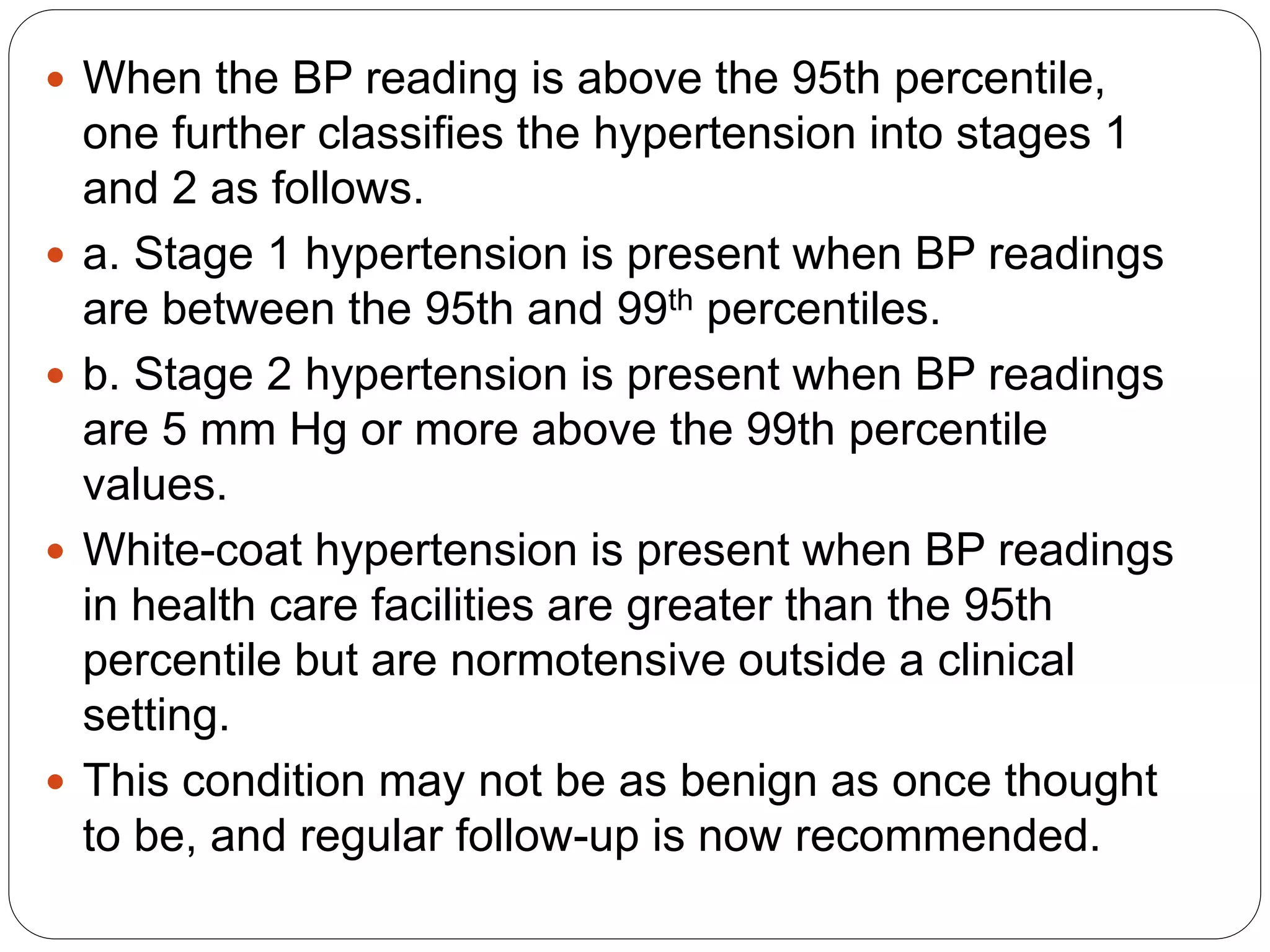
 When the BP reading is above the 95th percentile,
one further classifies the hypertension into stages 1
and 2 as follows.
 a. Stage 1 hypertension is present when BP readings
are between the 95th and 99th percentiles.
 b. Stage 2 hypertension is present when BP readings
are 5 mm Hg or more above the 99th percentile
values.
 White-coat hypertension is present when BP readings
in health care facilities are greater than the 95th
percentile but are normotensive outside a clinical
setting.
 This condition may not be as benign as once thought
to be, and regular follow-up is now recommended.
PREVALENCE OF HYPERTENSION
IN CHILDREN
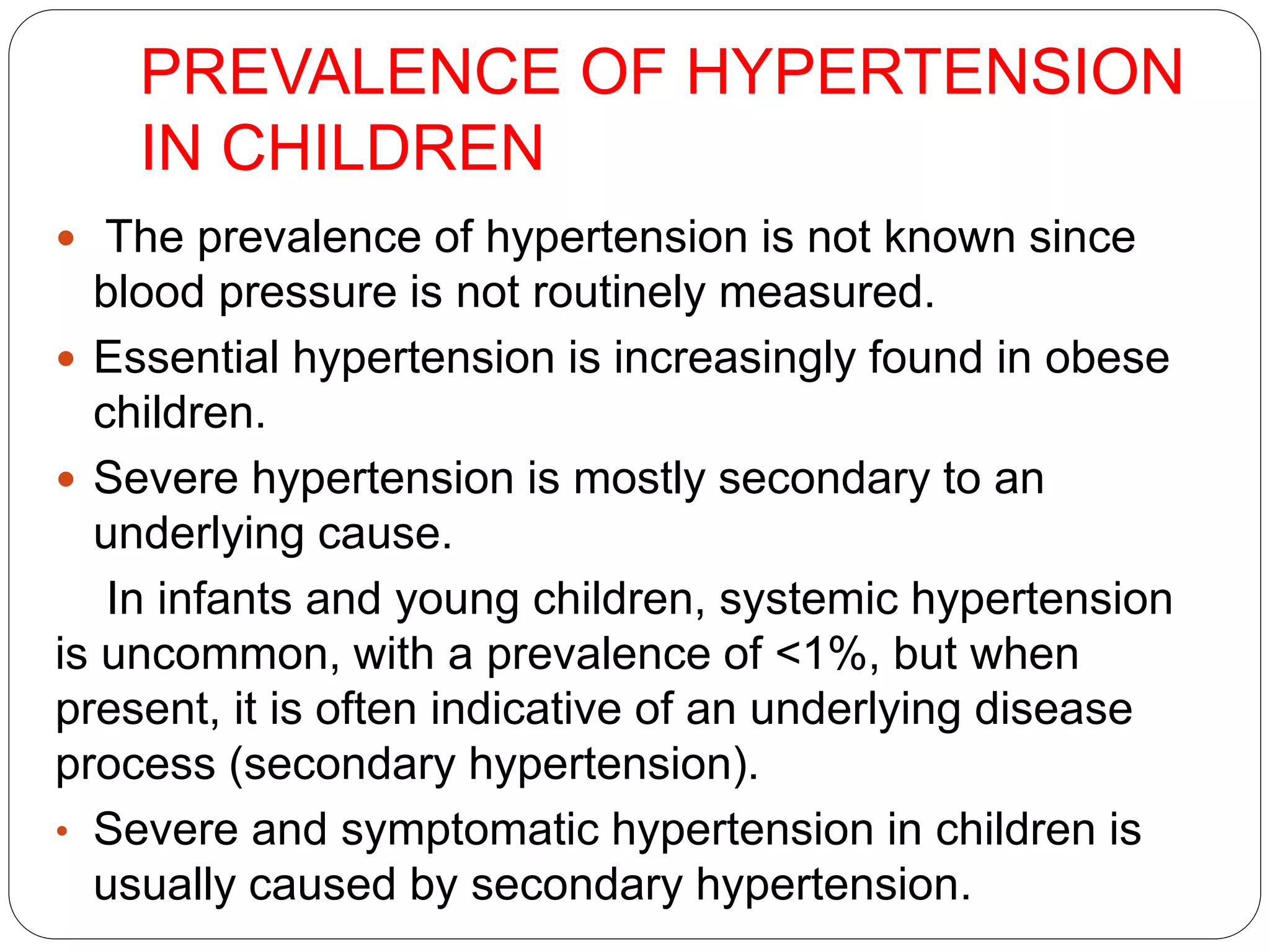
 The prevalence of hypertension is not known since
blood pressure is not routinely measured.
 Essential hypertension is increasingly found in obese
children.
 Severe hypertension is mostly secondary to an
underlying cause.
In infants and young children, systemic hypertension
is uncommon, with a prevalence of <1%, but when
present, it is often indicative of an underlying disease
process (secondary hypertension).
• Severe and symptomatic hypertension in children is
usually caused by secondary hypertension.
MEASUREMENT OF BLOOD
PRESSURE
 Blood pressure in children can be measured by
auscultation, palpation, oscillometry and Doppler
ultrasound.
 Auscultation or oscillometric determination is
preferred.
 Children and adolescents should be subjected to
blood pressure measurement only after a period of
adequate rest (5 to 10 min).
 Blood pressure should be measured at least twice on
each occasion in a child's right arm in the seated or
supine position.
 All children >3-yr-old who are seen in a medical
Recommended dimensions for blood
pressure
cuff bladders
KEY POINTS: BLOOD PRESSURE
TABLES
 Blood pressure standards based on gender, age
and height provide a precise classification of
blood pressure according to body size.
 Blood pressure levels <90th percentile are
normal.
 Blood pressure between 90-95th percentiles is
prehypertension
 Hypertension is defined as systolic or diastolic
blood pressure >95th percentile, which is
confirmed on at least two measurements
 Patients with severe hypertension need prompt
evaluation and therapy.
ETIOLOGY AND
PATHOPHYSIOLOGY
 BP is the product of cardiac output and peripheral
vascular resistance.
 An increase in either cardiac output or peripheral
resistance results in an increase in BP.
 When hypertension is the result of another disease
process, it is referred to as secondary hypertension.
 `When no identifiable cause can be found, it is
referred to as primary (essential) hypertension.
 Many factors, including heredity, diet, stress, and
obesity, may play a role in the development of primary
hypertension.
 Secondary hypertension is most common in infants
and younger children.
CAUSES OF SECONDARY
HYPERTENSION
RENAL PARENCHYMAL DISEASE :
 Glomerulonephritis, acute and chronic
 Pyelonephritis, acute and chronic
 Congenital anomalies (polycystic or dysplastic kidneys)
 Obstructive uropathies (hydronephrosis)
 Hemolytic-uremic syndrome
 Collagen disease (periarteritis, lupus)
 Renal damage from nephrotoxic medications, trauma,
or radiation
 Renovascular disease
 Renal artery disorders (e.g., stenosis, polyarteritis,
thrombosis)
 Renal vein thrombosis
 CARDIOVASCULAR :
 Coarctation of the aorta
 Conditions with large stroke volume (patent ductus
arteriosus, aortic insufficiency, systemic
arteriovenous fistula, complete heart block) (these
conditions cause only systolic hypertension).
 NEUROGENIC
 Increased intracranial pressure (any cause,
especially tumors, infections, trauma)
 Poliomyelitis
 Guillain-Barré syndrome
 Dysautonomia (Riley-Day syndrome)
ENDOCRINE :
 Hyperthyroidism (systolic hypertension)
 Excessive catecholamine levels-Pheochromocytoma,
Neuroblastoma
 Adrenal dysfunction-Congenital adrenal hyperplasia,11-β-
Hydroxylase deficiency,17-Hydroxylase deficiency,
Cushing’s syndrome
 Hyperaldosteronism
 Primary
Conn’s syndrome
Idiopathic nodular hyperplasia
Dexamethasone-suppressible
hyperaldosteronism
Secondary
Renovascular hypertension
Renin-producing tumor (juxtaglomerular cell
 DRUGS AND CHEMICALS :
 Sympathomimetic drugs (nose drops, cough
medications, cold preparations, theophylline)
 Amphetamines
 Corticosteroids
 Non steroidal anti inflammatory drugs
 Oral contraceptives
 Heavy-metal poisoning (mercury, lead)
 Cocaine, acute or chronic use
 Cyclosporine
 Thyroxine
 Tacrolimus
 MISCELLANEOUS :
 Hypervolemia and hypernatremia
 Stevens-Johnson syndrome
 Bronchopulmonary dysplasia (newborns).
CLINICAL MANIFESTATIONS
 Children and adolescents with primary hypertension
are usually asymptomatic.
 Children with secondary hypertension can have BP
elevations ranging from mild to severe.
clinical manifestations may instead reflect the underlying
disease process, such as growth failure in children with
chronic kidney disease.
• With substantial hypertension, headache, dizziness,
epistaxis, anorexia, visual changes, and seizures may
occur.
 Hypertensive encephalopathy (generalized or posterior
reversible encephalopathy syndrome) is suggested by the
presence of headache, vomiting, temperature elevation,
visual disturbances, ataxia, depressed level of
consciousness, CT abnormalities, and seizures.
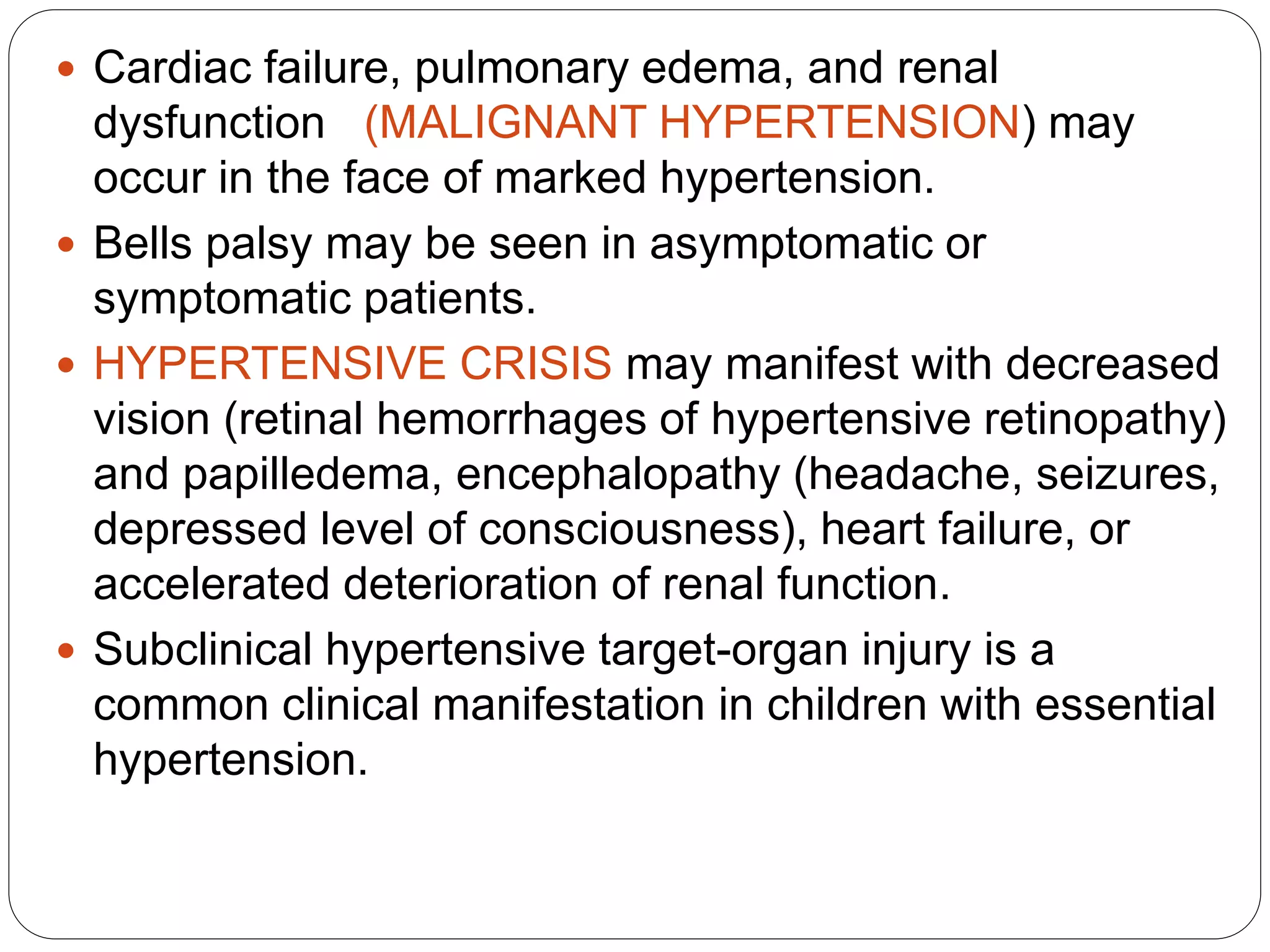
 Cardiac failure, pulmonary edema, and renal
dysfunction (MALIGNANT HYPERTENSION) may
occur in the face of marked hypertension.
 Bells palsy may be seen in asymptomatic or
symptomatic patients.
 HYPERTENSIVE CRISIS may manifest with decreased
vision (retinal hemorrhages of hypertensive retinopathy)
and papilledema, encephalopathy (headache, seizures,
depressed level of consciousness), heart failure, or
accelerated deterioration of renal function.
 Subclinical hypertensive target-organ injury is a
common clinical manifestation in children with essential
hypertension.
FINDINGS TO LOOK FOR ON GPE
DIAGNOSTIC EVALUATION
PRELIMINARY INVESTIGATIONS IN SUSTAINED
HYPERTENSION :
 Urinalysis: Cells, protein, 24-hr protein excretion
 Urine culture
 Blood urea, creatinine, electrolytes, bicarbonate, uric
acid, calcium
 Fasting cholesterol, triglycerides.
 Chest X-ray film
 Electrocardiogram, echocardiogram, fundus
examination
 Abdominal ultrasound
 99mTc-DMSA scan
ADDITIONAL INVESTIGATIONS IN CHILDREN WITH
SUSTAINED HYPERTENSION :
 GLOMERULONEPHRITIS
• Serum C3, C4, ASO
• Autoantibodies (ANA, anti-dsDNA, ANCA)
• Renal biopsy
 REFLUX NEPHROPATHY
• Micturating cystourethrogram
• Dimercaptosuccinic acid (DMSA) renal scan
• Intravenous urogram
 RENOVASCULAR DISEASE
• Doppler ultrasound
• Captopril primed isotope scans (DTPA or MAG-3)
• Renal angiography or digital subtraction
angiography
• Renin sampling from renal veins and inferior vena
cava
 PHEOCHROMOCYTOMA
• Urine and plasma catecholamines
• Plasma calcitonin, parathormone
• I123-meta-iodobenzylguanidine (MIBG) scan,
CT and MRI
• Arteriography and caval catecholamine
sampling
 OTHER ENDOCRINE CAUSES
• Urine steroid profile
• Plasma aldosterone, cortisol, DOC
• Dexamethasone/ACTH tests
 COARCTATION OF THE AORTA
• Echocardiogram, angiography
RENOVASCULAR HYPERTENSION
 CAUSES ARE :
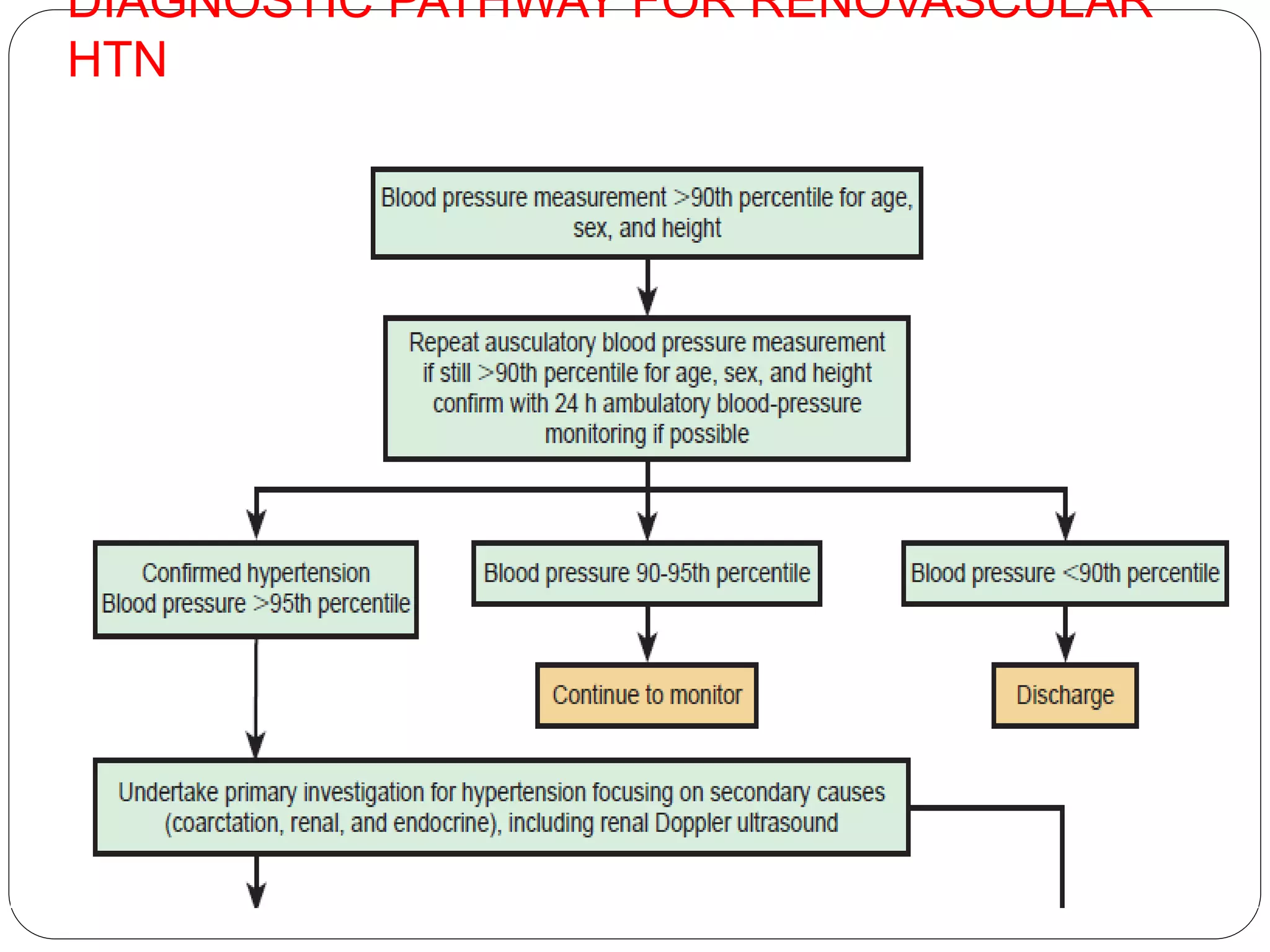
DIAGNOSTIC PATHWAY FOR RENOVASCULAR
HTN
MANAGEMENT OF ESSENTIAL HYPERTENSION
NONPHARMACOLOGIC INTERVENTION :
 Nonpharmacologic intervention should be started as an
initial treatment.
 Counseling should encourage weight reduction if the
patient is overweight or obese, healthful diets, low-salt
(and potassium-rich) foods, regular aerobic exercise,
and avoidance of smoking and oral contraceptives.
PHARMACOLOGIC INTERVENTION
INDICATIONS FOR DRUG THERAPY :
1. Severe symptomatic hypertension should be
treated with intravenous (IV) antihypertensive
medications.
2. Significant secondary hypertension, such as
caused by renovascular and renoparenchymal
diseases.
3. Persistent hypertension despite
nonpharmacologic measures.
4. Hypertensive target-organ damage: LV
hypertrophy; increased LV mass, and so on.
5. Diabetes (types 1 and 2)
6. Family history of early complications of
hypertension.
7. Child who has dyslipidemia and other coronary
THE CHOICE OF DRUG
1. ADOLESCENT BOYS :
a. ACE inhibitors or ARBs: These agents alone or
in combination with CCB are good choice in obese
children
with high glucose and triglyceride levels.
b. CCB are equally good as ACE inhibitors as the
initial antihypertensive agent. CCBs do not raise
blood glucose.
c. ACE inhibitors plus diuretics are a good
combination because diuretics enhance ACE
inhibitors’ effects.
However, this combination is not recommended in
obese
2. ADOLESCENT GIRLS :
a. CCBs (e.g., amlodipine or extended-release
nifedipine) are good choices.
b. Diuretics and beta-blockers are probably safe.
However, blood glucose levels should be checked
regularly because they raise glucose levels.
c. ACE inhibitors or ARBs should not be used in
female adolescents because they are known teratogens.
If one becomes pregnant, the drug should be
discontinued, it may be resumed at the end of the third
trimester if needed.
3. COEXISTING CONDITIONS:
The choice of initial therapy has been influenced by
other
conditions that frequently coexist with hypertension.
CLASSES OF ANTIHYPERTENSIVE AGENTS: PREFERENCES, CONTRAINDICATIONS,
AND SIDE EFFECTS
RECOMMENDED DOSES FOR SELECTED
ANTIHYPERTENSIVE AGENTS
HYPERTENSIVE CRISIS :
In hypertensive crisis, BP is rapidly rising or a high BP level is
associated with neurologic manifestations, heart failure, or
pulmonary edema.
CLASSIFICATION
1. HYPERTENSIVE EMERGENCIES :Situations in
which immediate reduction of BP (within minutes) is needed,
usually with
parenteral therapy.
2. HYPERTENSIVE URGENCIES : Situations in which
reduction of BP is needed within hours, usually with oral
agents.
3. ACCELERATED MALIGNANT HYPERTENSION
:Situations in which papilledema, hemorrhage, and exudate
are associated with a
4. HYPERTENSIVE ENCEPHALOPATHY :
Situations in which markedly elevated BP is associated with
severe headache and various alterations in consciousness.
 Hypertensive encephalopathy may be seen in a previously
normotensive patient who suddenly becomes hypertensive,
such as children with acute glomerulonephritis or young
women with eclampsia.
 Chronically hypertensive patients less commonly develop
encephalopathy and only at much higher pressures.
DRUG DOSAGE SIDE
EFFECTS
ONSET DURAION
SODIUM
NITROPRUSS
IDE
0.5-
0.8µg/kg/min iv
infusion
Nausea,muscl
e
twitching,head
ache,tachycard
ia
IMMEDIATE SHORT-HALF
LIFE
LABETALOL Infusion : 0.5-
3mg/kg/hr
Bolus : 0.2-1
mg/kg iv
Pallor,bradycar
dia,avoid in ccf
patients
2-10 minutes 2-3 hrs
NIFEDIPINE 0.25-0.5 mg/kg
oral or
sublingual
Flushing,head
ache,syncope
5-30 minutes Upto 6 hrs
NICARDIPINE 1-3µg/kg/min iv
infusion.
Reflex
tachycardia
1-2 minutes 10-15 minutes
HYDRALAZIN
E
0.1-0.5
mg/kg/dose
slow iv
Palpitations,
flushing,tachyc
ardia
5-20 minutes 4-12 hrs
THANK YOU
REFERRENCES
 NELSON TEX BOOK OF PEDIATRICS.
 PARK TEXT OF PEDIATRIC CARDIOLOGY
 ARVIND BAGGA TEXT BOOK OF PEDIATRIC
NEPHROLOGY
 IAP TEXT BOOK OF PEDIATRICS
 OP GHAI TEXT BOOK OF PEDIATICS

Hypertension in children

  • 1.
  • 2.
    DEFINITION  Hypertension isdefined as systolic or diastolic pressure levels that are greater than the 95th percentile for age and gender on at least three occasions.  As in adults, adolescents with BP levels of 120/80 mm Hg or above by auscultatory method are considered hypertensive even if they are below the 95th percentile.  Prehypertension is defined as an average systolic or diastolic pressure between the 90th and 95th percentiles for age and gender.
  • 3.
     When theBP reading is above the 95th percentile, one further classifies the hypertension into stages 1 and 2 as follows.  a. Stage 1 hypertension is present when BP readings are between the 95th and 99th percentiles.  b. Stage 2 hypertension is present when BP readings are 5 mm Hg or more above the 99th percentile values.  White-coat hypertension is present when BP readings in health care facilities are greater than the 95th percentile but are normotensive outside a clinical setting.  This condition may not be as benign as once thought to be, and regular follow-up is now recommended.
  • 4.
    PREVALENCE OF HYPERTENSION INCHILDREN  The prevalence of hypertension is not known since blood pressure is not routinely measured.  Essential hypertension is increasingly found in obese children.  Severe hypertension is mostly secondary to an underlying cause. In infants and young children, systemic hypertension is uncommon, with a prevalence of <1%, but when present, it is often indicative of an underlying disease process (secondary hypertension). • Severe and symptomatic hypertension in children is usually caused by secondary hypertension.
  • 5.
    MEASUREMENT OF BLOOD PRESSURE Blood pressure in children can be measured by auscultation, palpation, oscillometry and Doppler ultrasound.  Auscultation or oscillometric determination is preferred.  Children and adolescents should be subjected to blood pressure measurement only after a period of adequate rest (5 to 10 min).  Blood pressure should be measured at least twice on each occasion in a child's right arm in the seated or supine position.  All children >3-yr-old who are seen in a medical
  • 6.
    Recommended dimensions forblood pressure cuff bladders
  • 7.
    KEY POINTS: BLOODPRESSURE TABLES  Blood pressure standards based on gender, age and height provide a precise classification of blood pressure according to body size.  Blood pressure levels <90th percentile are normal.  Blood pressure between 90-95th percentiles is prehypertension  Hypertension is defined as systolic or diastolic blood pressure >95th percentile, which is confirmed on at least two measurements  Patients with severe hypertension need prompt evaluation and therapy.
  • 8.
    ETIOLOGY AND PATHOPHYSIOLOGY  BPis the product of cardiac output and peripheral vascular resistance.  An increase in either cardiac output or peripheral resistance results in an increase in BP.  When hypertension is the result of another disease process, it is referred to as secondary hypertension.  `When no identifiable cause can be found, it is referred to as primary (essential) hypertension.  Many factors, including heredity, diet, stress, and obesity, may play a role in the development of primary hypertension.  Secondary hypertension is most common in infants and younger children.
  • 9.
    CAUSES OF SECONDARY HYPERTENSION RENALPARENCHYMAL DISEASE :  Glomerulonephritis, acute and chronic  Pyelonephritis, acute and chronic  Congenital anomalies (polycystic or dysplastic kidneys)  Obstructive uropathies (hydronephrosis)  Hemolytic-uremic syndrome  Collagen disease (periarteritis, lupus)  Renal damage from nephrotoxic medications, trauma, or radiation  Renovascular disease  Renal artery disorders (e.g., stenosis, polyarteritis, thrombosis)  Renal vein thrombosis
  • 10.
     CARDIOVASCULAR : Coarctation of the aorta  Conditions with large stroke volume (patent ductus arteriosus, aortic insufficiency, systemic arteriovenous fistula, complete heart block) (these conditions cause only systolic hypertension).  NEUROGENIC  Increased intracranial pressure (any cause, especially tumors, infections, trauma)  Poliomyelitis  Guillain-Barré syndrome  Dysautonomia (Riley-Day syndrome)
  • 11.
    ENDOCRINE :  Hyperthyroidism(systolic hypertension)  Excessive catecholamine levels-Pheochromocytoma, Neuroblastoma  Adrenal dysfunction-Congenital adrenal hyperplasia,11-β- Hydroxylase deficiency,17-Hydroxylase deficiency, Cushing’s syndrome  Hyperaldosteronism  Primary Conn’s syndrome Idiopathic nodular hyperplasia Dexamethasone-suppressible hyperaldosteronism Secondary Renovascular hypertension Renin-producing tumor (juxtaglomerular cell
  • 12.
     DRUGS ANDCHEMICALS :  Sympathomimetic drugs (nose drops, cough medications, cold preparations, theophylline)  Amphetamines  Corticosteroids  Non steroidal anti inflammatory drugs  Oral contraceptives  Heavy-metal poisoning (mercury, lead)  Cocaine, acute or chronic use  Cyclosporine  Thyroxine  Tacrolimus
  • 13.
     MISCELLANEOUS : Hypervolemia and hypernatremia  Stevens-Johnson syndrome  Bronchopulmonary dysplasia (newborns).
  • 14.
    CLINICAL MANIFESTATIONS  Childrenand adolescents with primary hypertension are usually asymptomatic.  Children with secondary hypertension can have BP elevations ranging from mild to severe. clinical manifestations may instead reflect the underlying disease process, such as growth failure in children with chronic kidney disease. • With substantial hypertension, headache, dizziness, epistaxis, anorexia, visual changes, and seizures may occur.
  • 15.
     Hypertensive encephalopathy(generalized or posterior reversible encephalopathy syndrome) is suggested by the presence of headache, vomiting, temperature elevation, visual disturbances, ataxia, depressed level of consciousness, CT abnormalities, and seizures.
  • 16.
     Cardiac failure,pulmonary edema, and renal dysfunction (MALIGNANT HYPERTENSION) may occur in the face of marked hypertension.  Bells palsy may be seen in asymptomatic or symptomatic patients.  HYPERTENSIVE CRISIS may manifest with decreased vision (retinal hemorrhages of hypertensive retinopathy) and papilledema, encephalopathy (headache, seizures, depressed level of consciousness), heart failure, or accelerated deterioration of renal function.  Subclinical hypertensive target-organ injury is a common clinical manifestation in children with essential hypertension.
  • 17.
    FINDINGS TO LOOKFOR ON GPE
  • 19.
    DIAGNOSTIC EVALUATION PRELIMINARY INVESTIGATIONSIN SUSTAINED HYPERTENSION :  Urinalysis: Cells, protein, 24-hr protein excretion  Urine culture  Blood urea, creatinine, electrolytes, bicarbonate, uric acid, calcium  Fasting cholesterol, triglycerides.  Chest X-ray film  Electrocardiogram, echocardiogram, fundus examination  Abdominal ultrasound  99mTc-DMSA scan
  • 20.
    ADDITIONAL INVESTIGATIONS INCHILDREN WITH SUSTAINED HYPERTENSION :  GLOMERULONEPHRITIS • Serum C3, C4, ASO • Autoantibodies (ANA, anti-dsDNA, ANCA) • Renal biopsy  REFLUX NEPHROPATHY • Micturating cystourethrogram • Dimercaptosuccinic acid (DMSA) renal scan • Intravenous urogram  RENOVASCULAR DISEASE • Doppler ultrasound • Captopril primed isotope scans (DTPA or MAG-3) • Renal angiography or digital subtraction angiography • Renin sampling from renal veins and inferior vena cava
  • 21.
     PHEOCHROMOCYTOMA • Urineand plasma catecholamines • Plasma calcitonin, parathormone • I123-meta-iodobenzylguanidine (MIBG) scan, CT and MRI • Arteriography and caval catecholamine sampling  OTHER ENDOCRINE CAUSES • Urine steroid profile • Plasma aldosterone, cortisol, DOC • Dexamethasone/ACTH tests  COARCTATION OF THE AORTA • Echocardiogram, angiography
  • 23.
  • 24.
    DIAGNOSTIC PATHWAY FORRENOVASCULAR HTN
  • 26.
    MANAGEMENT OF ESSENTIALHYPERTENSION NONPHARMACOLOGIC INTERVENTION :  Nonpharmacologic intervention should be started as an initial treatment.  Counseling should encourage weight reduction if the patient is overweight or obese, healthful diets, low-salt (and potassium-rich) foods, regular aerobic exercise, and avoidance of smoking and oral contraceptives.
  • 27.
    PHARMACOLOGIC INTERVENTION INDICATIONS FORDRUG THERAPY : 1. Severe symptomatic hypertension should be treated with intravenous (IV) antihypertensive medications. 2. Significant secondary hypertension, such as caused by renovascular and renoparenchymal diseases. 3. Persistent hypertension despite nonpharmacologic measures. 4. Hypertensive target-organ damage: LV hypertrophy; increased LV mass, and so on. 5. Diabetes (types 1 and 2) 6. Family history of early complications of hypertension. 7. Child who has dyslipidemia and other coronary
  • 28.
    THE CHOICE OFDRUG 1. ADOLESCENT BOYS : a. ACE inhibitors or ARBs: These agents alone or in combination with CCB are good choice in obese children with high glucose and triglyceride levels. b. CCB are equally good as ACE inhibitors as the initial antihypertensive agent. CCBs do not raise blood glucose. c. ACE inhibitors plus diuretics are a good combination because diuretics enhance ACE inhibitors’ effects. However, this combination is not recommended in obese
  • 29.
    2. ADOLESCENT GIRLS: a. CCBs (e.g., amlodipine or extended-release nifedipine) are good choices. b. Diuretics and beta-blockers are probably safe. However, blood glucose levels should be checked regularly because they raise glucose levels. c. ACE inhibitors or ARBs should not be used in female adolescents because they are known teratogens. If one becomes pregnant, the drug should be discontinued, it may be resumed at the end of the third trimester if needed. 3. COEXISTING CONDITIONS: The choice of initial therapy has been influenced by other conditions that frequently coexist with hypertension.
  • 30.
    CLASSES OF ANTIHYPERTENSIVEAGENTS: PREFERENCES, CONTRAINDICATIONS, AND SIDE EFFECTS
  • 32.
    RECOMMENDED DOSES FORSELECTED ANTIHYPERTENSIVE AGENTS
  • 34.
    HYPERTENSIVE CRISIS : Inhypertensive crisis, BP is rapidly rising or a high BP level is associated with neurologic manifestations, heart failure, or pulmonary edema. CLASSIFICATION 1. HYPERTENSIVE EMERGENCIES :Situations in which immediate reduction of BP (within minutes) is needed, usually with parenteral therapy. 2. HYPERTENSIVE URGENCIES : Situations in which reduction of BP is needed within hours, usually with oral agents. 3. ACCELERATED MALIGNANT HYPERTENSION :Situations in which papilledema, hemorrhage, and exudate are associated with a
  • 35.
    4. HYPERTENSIVE ENCEPHALOPATHY: Situations in which markedly elevated BP is associated with severe headache and various alterations in consciousness.  Hypertensive encephalopathy may be seen in a previously normotensive patient who suddenly becomes hypertensive, such as children with acute glomerulonephritis or young women with eclampsia.  Chronically hypertensive patients less commonly develop encephalopathy and only at much higher pressures.
  • 36.
    DRUG DOSAGE SIDE EFFECTS ONSETDURAION SODIUM NITROPRUSS IDE 0.5- 0.8µg/kg/min iv infusion Nausea,muscl e twitching,head ache,tachycard ia IMMEDIATE SHORT-HALF LIFE LABETALOL Infusion : 0.5- 3mg/kg/hr Bolus : 0.2-1 mg/kg iv Pallor,bradycar dia,avoid in ccf patients 2-10 minutes 2-3 hrs NIFEDIPINE 0.25-0.5 mg/kg oral or sublingual Flushing,head ache,syncope 5-30 minutes Upto 6 hrs NICARDIPINE 1-3µg/kg/min iv infusion. Reflex tachycardia 1-2 minutes 10-15 minutes HYDRALAZIN E 0.1-0.5 mg/kg/dose slow iv Palpitations, flushing,tachyc ardia 5-20 minutes 4-12 hrs
  • 37.
  • 38.
    REFERRENCES  NELSON TEXBOOK OF PEDIATRICS.  PARK TEXT OF PEDIATRIC CARDIOLOGY  ARVIND BAGGA TEXT BOOK OF PEDIATRIC NEPHROLOGY  IAP TEXT BOOK OF PEDIATRICS  OP GHAI TEXT BOOK OF PEDIATICS