ACTIVE
RECREATION
JERALD F. FRANCISCO, LPT
RECREATIONAL ACTIVITIES
Recreational activities are activities done for
enjoyment, relaxation, or fun during free time. They are
meant to refresh the mind and body, and they can
include a wide range of hobbies, sports, games, or
leisurely pursuits that help people unwind and have
fun.
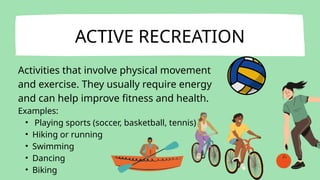
Activities that involve physical movement
and exercise. They usually require energy
and can help improve fitness and health.
Examples:
• Playing sports (soccer, basketball, tennis)
• Hiking or running
• Swimming
• Dancing
• Biking
ACTIVE RECREATION
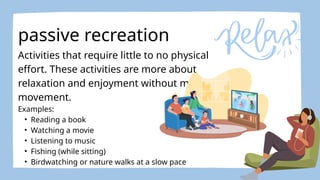
Activities that require little to no physical
effort. These activities are more about
relaxation and enjoyment without much
movement.
Examples:
• Reading a book
• Watching a movie
• Listening to music
• Fishing (while sitting)
• Birdwatching or nature walks at a slow pace
passive recreation
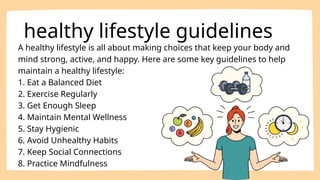
A healthy lifestyle is all about making choices that keep your body and
mind strong, active, and happy. Here are some key guidelines to help
maintain a healthy lifestyle:
1. Eat a Balanced Diet
2. Exercise Regularly
3. Get Enough Sleep
4. Maintain Mental Wellness
5. Stay Hygienic
6. Avoid Unhealthy Habits
7. Keep Social Connections
8. Practice Mindfulness
healthy lifestyle guidelines
4 categories of
recreational
activities
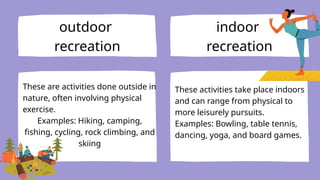
outdoor
recreation
indoor
recreation
These are activities done outside in
nature, often involving physical
exercise.
Examples: Hiking, camping,
fishing, cycling, rock climbing, and
skiing
These activities take place indoors
and can range from physical to
more leisurely pursuits.
Examples: Bowling, table tennis,
dancing, yoga, and board games.
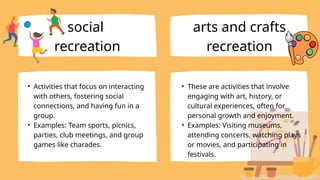
• Activities that focus on interacting
with others, fostering social
connections, and having fun in a
group.
• Examples: Team sports, picnics,
parties, club meetings, and group
games like charades.
social
recreation
arts and crafts
recreation
• These are activities that involve
engaging with art, history, or
cultural experiences, often for
personal growth and enjoyment.
• Examples: Visiting museums,
attending concerts, watching plays
or movies, and participating in
festivals.
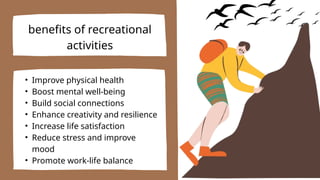
benefits of recreational
activities
• Improve physical health
• Boost mental well-being
• Build social connections
• Enhance creativity and resilience
• Increase life satisfaction
• Reduce stress and improve
mood
• Promote work-life balance
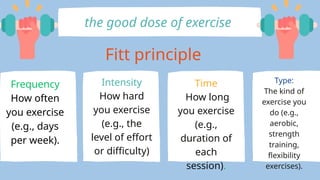
Fitt principle
Frequency
How often
you exercise
(e.g., days
per week).
Intensity
How hard
you exercise
(e.g., the
level of effort
or difficulty)
Time
How long
you exercise
(e.g.,
duration of
each
session).
Type:
The kind of
exercise you
do (e.g.,
aerobic,
strength
training,
flexibility
exercises).
the good dose of exercise
eating disorders
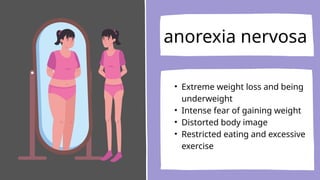
anorexia nervosa
• Extreme weight loss and being
underweight
• Intense fear of gaining weight
• Distorted body image
• Restricted eating and excessive
exercise
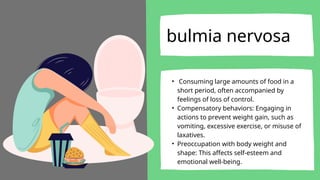
bulmia nervosa
• Consuming large amounts of food in a
short period, often accompanied by
feelings of loss of control.
• Compensatory behaviors: Engaging in
actions to prevent weight gain, such as
vomiting, excessive exercise, or misuse of
laxatives.
• Preoccupation with body weight and
shape: This affects self-esteem and
emotional well-being.
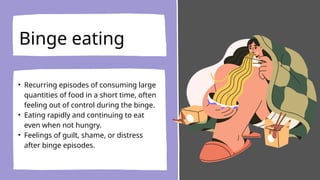
Binge eating
• Recurring episodes of consuming large
quantities of food in a short time, often
feeling out of control during the binge.
• Eating rapidly and continuing to eat
even when not hungry.
• Feelings of guilt, shame, or distress
after binge episodes.
ACTIVITY 01
1.Write down five or more different recreational activities
you enjoy or want to try.
2.Classify each activity into one of the following categories:
• Outdoor Recreation
• Indoor Recreation
• Social Recreation
• Cultural Recreation
3. In 2-3 sentences, explain why recreational activities are
important for your overall well-being.

ACTIVE RECREATION for grade 10 Pe quarter1

  • 1.
  • 2.
    RECREATIONAL ACTIVITIES Recreational activitiesare activities done for enjoyment, relaxation, or fun during free time. They are meant to refresh the mind and body, and they can include a wide range of hobbies, sports, games, or leisurely pursuits that help people unwind and have fun.
  • 3.
    Activities that involvephysical movement and exercise. They usually require energy and can help improve fitness and health. Examples: • Playing sports (soccer, basketball, tennis) • Hiking or running • Swimming • Dancing • Biking ACTIVE RECREATION
  • 4.
    Activities that requirelittle to no physical effort. These activities are more about relaxation and enjoyment without much movement. Examples: • Reading a book • Watching a movie • Listening to music • Fishing (while sitting) • Birdwatching or nature walks at a slow pace passive recreation
  • 5.
    A healthy lifestyleis all about making choices that keep your body and mind strong, active, and happy. Here are some key guidelines to help maintain a healthy lifestyle: 1. Eat a Balanced Diet 2. Exercise Regularly 3. Get Enough Sleep 4. Maintain Mental Wellness 5. Stay Hygienic 6. Avoid Unhealthy Habits 7. Keep Social Connections 8. Practice Mindfulness healthy lifestyle guidelines
  • 6.
  • 7.
    outdoor recreation indoor recreation These are activitiesdone outside in nature, often involving physical exercise. Examples: Hiking, camping, fishing, cycling, rock climbing, and skiing These activities take place indoors and can range from physical to more leisurely pursuits. Examples: Bowling, table tennis, dancing, yoga, and board games.
  • 8.
    • Activities thatfocus on interacting with others, fostering social connections, and having fun in a group. • Examples: Team sports, picnics, parties, club meetings, and group games like charades. social recreation arts and crafts recreation • These are activities that involve engaging with art, history, or cultural experiences, often for personal growth and enjoyment. • Examples: Visiting museums, attending concerts, watching plays or movies, and participating in festivals.
  • 9.
    benefits of recreational activities •Improve physical health • Boost mental well-being • Build social connections • Enhance creativity and resilience • Increase life satisfaction • Reduce stress and improve mood • Promote work-life balance
  • 10.
    Fitt principle Frequency How often youexercise (e.g., days per week). Intensity How hard you exercise (e.g., the level of effort or difficulty) Time How long you exercise (e.g., duration of each session). Type: The kind of exercise you do (e.g., aerobic, strength training, flexibility exercises). the good dose of exercise
  • 11.
  • 12.
    anorexia nervosa • Extremeweight loss and being underweight • Intense fear of gaining weight • Distorted body image • Restricted eating and excessive exercise
  • 13.
    bulmia nervosa • Consuminglarge amounts of food in a short period, often accompanied by feelings of loss of control. • Compensatory behaviors: Engaging in actions to prevent weight gain, such as vomiting, excessive exercise, or misuse of laxatives. • Preoccupation with body weight and shape: This affects self-esteem and emotional well-being.
  • 14.
    Binge eating • Recurringepisodes of consuming large quantities of food in a short time, often feeling out of control during the binge. • Eating rapidly and continuing to eat even when not hungry. • Feelings of guilt, shame, or distress after binge episodes.
  • 15.
    ACTIVITY 01 1.Write downfive or more different recreational activities you enjoy or want to try. 2.Classify each activity into one of the following categories: • Outdoor Recreation • Indoor Recreation • Social Recreation • Cultural Recreation 3. In 2-3 sentences, explain why recreational activities are important for your overall well-being.