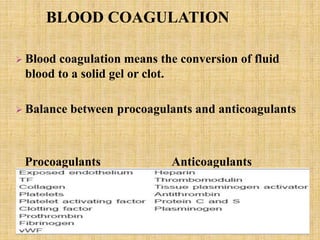
BLOOD COAGULATION
 Blood coagulation means the conversion of fluid
blood to a solid gel or clot.
 Balance between procoagulants and anticoagulants
Procoagulants Anticoagulants
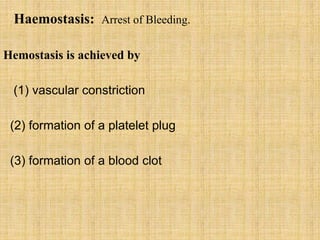
Haemostasis: Arrest of Bleeding.
Hemostasis is achieved by
(1) vascular constriction
(2) formation of a platelet plug
(3) formation of a blood clot
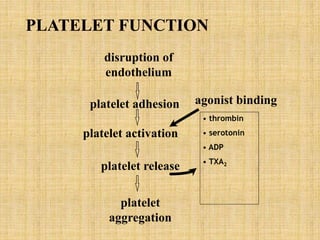
disruption of
endothelium
platelet adhesion
platelet activation
platelet release
platelet
aggregation
agonist binding
• thrombin
• serotonin
• ADP
• TXA2
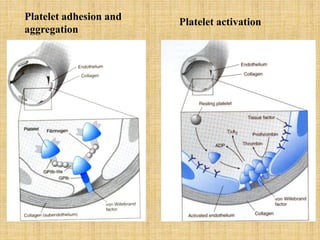
Platelet adhesion and
aggregation
Platelet activation



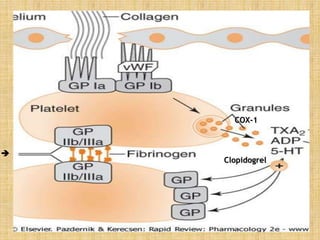
Clopidogrel
COX-1
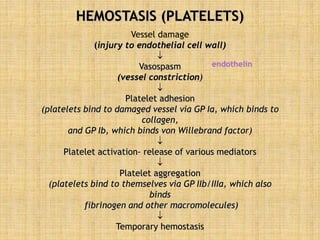
Vessel damage
(injury to endothelial cell wall)

Vasospasm
(vessel constriction)

Platelet adhesion
(platelets bind to damaged vessel via GP Ia, which binds to
collagen,
and GP Ib, which binds von Willebrand factor)

Platelet activation- release of various mediators

Platelet aggregation
(platelets bind to themselves via GP IIb/IIIa, which also
binds
fibrinogen and other macromolecules)

Temporary hemostasis
endothelin
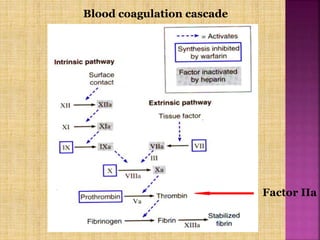
Factor IIa
Blood coagulation cascade
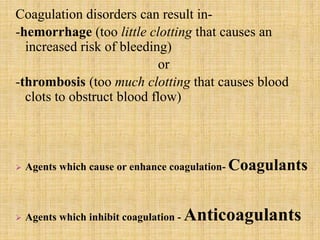
Coagulation disorders can result in-
-hemorrhage (too little clotting that causes an
increased risk of bleeding)
or
-thrombosis (too much clotting that causes blood
clots to obstruct blood flow)
 Agents which cause or enhance coagulation- Coagulants
 Agents which inhibit coagulation - Anticoagulants
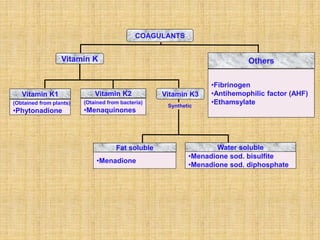
COAGULANTS
Vitamin K
•Fibrinogen
•Antihemophilic factor (AHF)
•Ethamsylate(Obtained from plants)
•Phytonadione
(Otained from bacteria)
•Menaquinones
•Menadione
•Menadione sod. bisulfite
•Menadione sod. diphosphate
Vitamin K3
Synthetic
 Daily Requirement ?
 Colonic Bacteria (menaquinone K2): 50-100 mcg/day
 MOA:
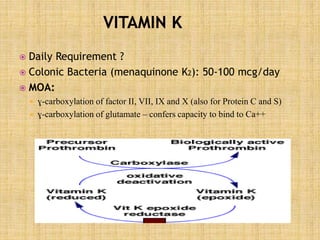
 ɣ-carboxylation of factor II, VII, IX and X (also for Protein C and S)
 ɣ-carboxylation of glutamate – confers capacity to bind to Ca++
Pharmacokinetics:
 Fat soluble – from intestine via lymph – needs bile salt
 Water soluble – directly to portal blood
 K1: by active transport
 K2 and K3 – by passive diffusion
 Metabolized in liver
 Deficiency: normally does not produce deficiency
 Bleeding – 1st sign – haematuria, git, epistaxis
 In New Born
 Heavy antibiotic
 Liver diseases
 Obstructive jaundice
 Malabsorption
 Uses: Malabsorption, Dietary deficiency, Obstructive Jaundice,
Newborn baby and Overdose of oral anticoagulants (10 mg IM – 5 mg
4 hrly)
 ADRs: Flushing, breathlessness, fall in BP and sense of constriction
in chest. Menadione K3 – haemolysis – G6PD deficiency, kernicterus
 Fibrinogen
 Obtained from human plasma
 Clinical Use: Hemophilia, Antihemophilic globulin defeciency,
Acute afibrinogenemic states
 Antihemophilic factor
 Prepared from pooled human plasma
 Clinical Use: Hemophilia & Antihemophilic globulin defeciency
 Ethamsylate
 Acts by inhibiting hyaluronidase enzyme and so increase capillary
stability
 Clinical Use: Prevention & Treatment of Capillary bleeding e.g.:
 After tooth extraction, abortion, menorrhagia, epistaxis, hematuria &
G.I.bleeding
 Adverse effects: Nausea, headache, rash & hypotension after IV
inj.
 Desmopressin- releases vWF and factor VIII
 Stop bleeding from a local or approachable site
 Never used systemically as coagulants
 These agents are:
 Thrombin
 Obtained from bovine plasma
 Applied as dry powder or as fresh solution
 Russel Viper Venom
 Acts as thromboplastin
 Clinically used in hemophiliacs on the external bleeding
surfaces
 Vasoconstrictors like Adrenaline (0.1%)
 May be used to stop bleeding from nose & other sites
 Astringents like tannic acid in 2% glycerine
 Used in bleeding gums and piles
 Sheets of fibrin or gelatin foam
 Used in surgical areas, can be left, dissolved in 1-2 months
 Calcium chelators: inhibit blood coagulation in vitro
(oxalic acid; sodium citrate; disodium edetate [EDTA])
 Heparins: accelerates the action of antithrombin III to
neutralize thrombin & other coagulation factors
 Rudins: direct thrombin inhibitors
 Coumarin derivatives: interfere with the hepatic
synthesis of functional vitamin K-dependent clotting
factors
 Source: Porcine intestinal mucosa and bovine lung
 Structure: Sulfated mucopolysaccharide (acidic
molecule)
 Formulations: Standard, unfractionated heparin (UFH)
polymer (3,000 – 30,000)
 Average = 12,000 to 15,000 g/mol
 Route of administration:
 Continuous (infusion pump)
 Intermittent (subcutaneous)
 Not oral due to lack of absorption
 Not IM due to risk of hematoma at injection site
 Onset of action: Immediate
 Endothelial cell/protein binding:
 Extensive (sticky molecule)
 Clearance is dose-dependent because plasma levels
of heparin increase considerably once binding sites
are saturated
 Dose-dependent pharmacokinetics
 Therapeutic goal: Prolong Partial
Thromboplastin time (PTT) to 1.5 to 2.5 times
normal (measured just before next dose for
intermittent therapy)
Most drugs are dose-independent
 The protease inhibitor, antithrombin III, forms a 1:1
complex with clotting factor proteases
 This interaction is slow, but is stimulated 1000 fold by
heparin, which binds to antithrombin III
 The heparin-antithrombin III complex inactivates factor IIa
(thrombin); main mechanism
 The heparin-antithrombin III complex also inactivates
factor Xa, which occurs earlier in the cascade
 During active thrombosis, the anticoagulant effect of
heparin is primarily due to inactivation of thrombin (IIa)
 With little or no thrombosis, the anticoagulant effect is
largely due to inactivation of factor Xa
 Bleeding disorders and disorders that predispose
to bleeding (e.g., hemophilia,
thrombocytopenia), hemorrhage and several
other diseases
 Patients with advanced liver or kidney disease,
severe hypertension and certain infections
(active tuberculosis, infective endocarditis)
 Preferable to other anticoagulants during
pregnancy due to lack of placental transfer
(contrast to warfarin)
 Bleeding/hemorrhage
 Bleeding is minimized with careful monitoring of PTT and platelet
counts
 Allergic reaction (heparin is an animal product)
 Osteoporosis (long-term therapy)
 Transient and occasionally severe thrombocytopenia:
 Type I = immediate, transient and reversible heparin-induced platelet
sequestration.
 Type II = delayed, severe, immune (IgG)-mediated heparin-induced
thrombocytopenia (HIT)
 Thromboembolism - a paradoxical effect related to heparin-
induced thrombocytopenia (HIT)
 Protamine sulfate
 Protamine is a basic peptide that binds to heparin
(acid/base or anion/cation interaction)
 Excessive antidote must be avoided because
protamine itself is an anticoagulant
 Administer 1 mg protamine sulfate IV for each 100
units of heparin remaining in the patient
 Protamine is much less capable of reversing the
effects of LMWH  Disadvantage of LMWH
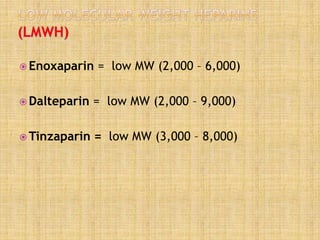
 Enoxaparin = low MW (2,000 – 6,000)
 Dalteparin = low MW (2,000 – 9,000)
 Tinzaparin = low MW (3,000 – 8,000)
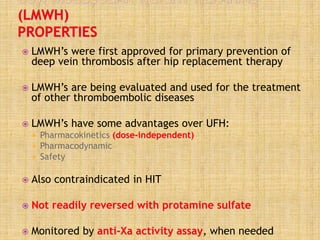
 LMWH’s were first approved for primary prevention of
deep vein thrombosis after hip replacement therapy
 LMWH’s are being evaluated and used for the treatment
of other thromboembolic diseases
 LMWH’s have some advantages over UFH:
 Pharmacokinetics (dose-independent)
 Pharmacodynamic
 Safety
 Also contraindicated in HIT
 Not readily reversed with protamine sulfate
 Monitored by anti-Xa activity assay, when needed
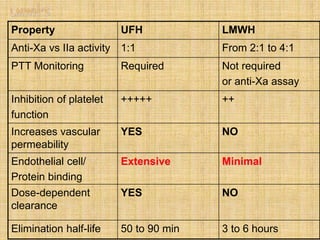
Property UFH LMWH
Anti-Xa vs IIa activity 1:1 From 2:1 to 4:1
PTT Monitoring Required Not required
or anti-Xa assay
Inhibition of platelet
function
+++++ ++
Increases vascular
permeability
YES NO
Endothelial cell/
Protein binding
Extensive Minimal
Dose-dependent
clearance
YES NO
Elimination half-life 50 to 90 min 3 to 6 hours
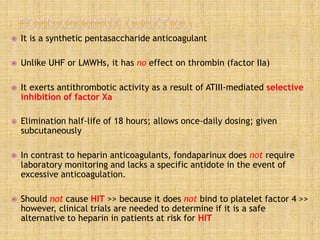
 It is a synthetic pentasaccharide anticoagulant
 Unlike UHF or LMWHs, it has no effect on thrombin (factor IIa)
 It exerts antithrombotic activity as a result of ATIII-mediated selective
inhibition of factor Xa
 Elimination half-life of 18 hours; allows once-daily dosing; given
subcutaneously
 In contrast to heparin anticoagulants, fondaparinux does not require
laboratory monitoring and lacks a specific antidote in the event of
excessive anticoagulation.
 Should not cause HIT >> because it does not bind to platelet factor 4 >>
however, clinical trials are needed to determine if it is a safe
alternative to heparin in patients at risk for HIT
 Venous thromboembolism prophylaxis
following orthopedic surgery
 Treatment of pulmonary embolism (PE)
 Treatment of deep venous thrombosis
(DVT)
 Treatment of coronary artery thromboembolism;
promising but still under study
 Hirudin: the rudin’s
 65 amino acid peptide
 This is a specific thrombin inhibitor obtained from leeches
 Lepirudin (Refludan) is a recombinant yeast-derived form of
hirudin
 It is approved for anticoagulation in patients with heparin-
induced thrombocytopenia (HIT)
 Desirudin (Ipivask) and Bivalirudin (Angiomax) are new
recombinant hirudin analogs that may be used instead of heparins
in the future
 Argatroban (Acova) is the 2nd agent (1st is lepirudin)
approved for HIT
 unlike lepirudin, it is cleared by liver and can be used in patients
with end-stage renal disease
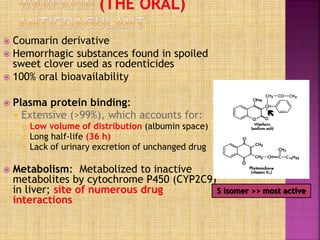
 Coumarin derivative
 Hemorrhagic substances found in spoiled
sweet clover used as rodenticides
 100% oral bioavailability
 Plasma protein binding:
 Extensive (>99%), which accounts for:
 Low volume of distribution (albumin space)
 Long half-life (36 h)
 Lack of urinary excretion of unchanged drug
 Metabolism: Metabolized to inactive
metabolites by cytochrome P450 (CYP2C9)
in liver; site of numerous drug
interactions
S isomer >> most active

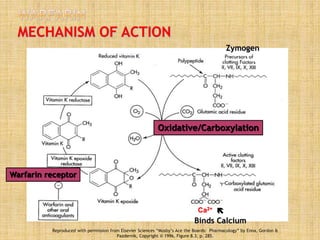
Reproduced with permission from Elsevier Sciences “Mosby’s Ace the Boards: Pharmacology” by Enna, Gordon &
Pazdernik, Copyright © 1996, Figure 8.3, p. 285.
Zymogen
Oxidative/Carboxylation

Binds Calcium
Warfarin receptor
Ca2+
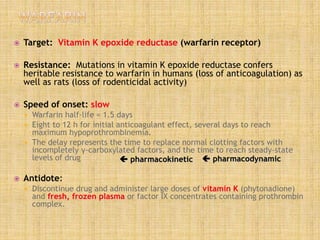
 Target: Vitamin K epoxide reductase (warfarin receptor)
 Resistance: Mutations in vitamin K epoxide reductase confers
heritable resistance to warfarin in humans (loss of anticoagulation) as
well as rats (loss of rodenticidal activity)
 Speed of onset: slow
 Warfarin half-life = 1.5 days
 Eight to 12 h for initial anticoagulant effect, several days to reach
maximum hypoprothrombinemia.
 The delay represents the time to replace normal clotting factors with
incompletely γ-carboxylated factors, and the time to reach steady-state
levels of drug
 Antidote:
 Discontinue drug and administer large doses of vitamin K (phytonadione)
and fresh, frozen plasma or factor IX concentrates containing prothrombin
complex.
 pharmacokinetic  pharmacodynamic
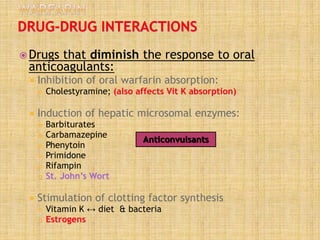
 Drugs that diminish the response to oral
anticoagulants:
 Inhibition of oral warfarin absorption:
 Cholestyramine; (also affects Vit K absorption)
 Induction of hepatic microsomal enzymes:
 Barbiturates
 Carbamazepine
 Phenytoin
 Primidone
 Rifampin
 St. John’s Wort
 Stimulation of clotting factor synthesis
 Vitamin K ↔ diet & bacteria
 Estrogens
Anticonvulsants
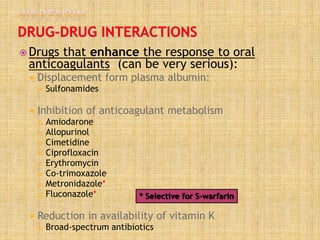
 Drugs that enhance the response to oral
anticoagulants (can be very serious):
 Displacement form plasma albumin:
 Sulfonamides
 Inhibition of anticoagulant metabolism
 Amiodarone
 Allopurinol
 Cimetidine
 Ciprofloxacin
 Erythromycin
 Co-trimoxazole
 Metronidazole*
 Fluconazole*
 Reduction in availability of vitamin K
 Broad-spectrum antibiotics
* Selective for S-warfarin
 Heparin and warfarin are both used to
treat both arterial and venous thrombi
 Heparin is used for the first 7-10 days,
with a 3-5 day overlap with warfarin,
which may be continued for up to 6
months
 Warfarin is also used to prevent blood
clots in patients with chronic atrial
fibrillation
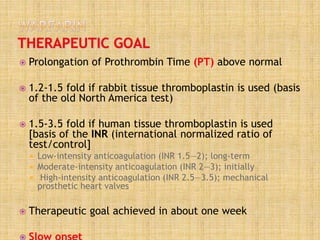
 Prolongation of Prothrombin Time (PT) above normal
 1.2-1.5 fold if rabbit tissue thromboplastin is used (basis
of the old North America test)
 1.5-3.5 fold if human tissue thromboplastin is used
[basis of the INR (international normalized ratio of
test/control]
 Low-intensity anticoagulation (INR 1.5—2); long-term
 Moderate-intensity anticoagulation (INR 2—3); initially
 High-intensity anticoagulation (INR 2.5—3.5); mechanical
prosthetic heart valves
 Therapeutic goal achieved in about one week
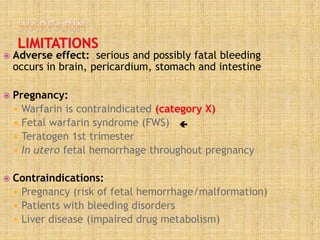
 Adverse effect: serious and possibly fatal bleeding
occurs in brain, pericardium, stomach and intestine
 Pregnancy:
 Warfarin is contraindicated (category X)
 Fetal warfarin syndrome (FWS)
 Teratogen 1st trimester
 In utero fetal hemorrhage throughout pregnancy
 Contraindications:
 Pregnancy (risk of fetal hemorrhage/malformation)
 Patients with bleeding disorders
 Liver disease (impaired drug metabolism)

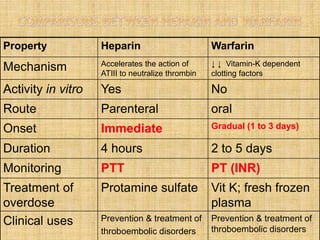
Property Heparin Warfarin
Mechanism Accelerates the action of
ATIII to neutralize thrombin
↓ ↓ Vitamin-K dependent
clotting factors
Activity in vitro Yes No
Route Parenteral oral
Onset Immediate Gradual (1 to 3 days)
Duration 4 hours 2 to 5 days
Monitoring PTT PT (INR)
Treatment of
overdose
Protamine sulfate Vit K; fresh frozen
plasma
Clinical uses Prevention & treatment of
throboembolic disorders
Prevention & treatment of
throboembolic disorders
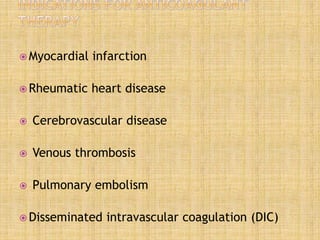
 Myocardial infarction
 Rheumatic heart disease
 Cerebrovascular disease
 Venous thrombosis
 Pulmonary embolism
 Disseminated intravascular coagulation (DIC)
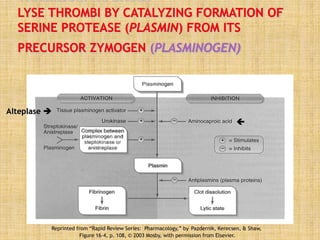
Reprinted from “Rapid Review Series: Pharmacology,” by Pazdernik, Kerecsen, & Shaw,
Figure 16-4, p. 108, © 2003 Mosby, with permission from Elsevier.

Alteplase 
 Thrombolytic therapy is directed toward the conversion of
plasminogen to plasmin, which degrades fibrin and lyses thrombi
 Circulating antiplasmins preclude the possibility of using plasmin
itself for thrombolytic therapy
 Plasma does not contain inhibitors of urokinase (human kidney
protease) or the complex formed between plasminogen and
streptokinase (streptococcal enzyme)
 These activators convert plasminogen to plasmin inside the
thrombus, where plasmin is protected from the inhibitory effects of
circulating antiplasmins
 Preferential conversion of fibrin-bound plasminogen to plasmin also
occurs with tissue plasminogen activator (t-PA)
 t-PA is more efficacious than streptokinase or anistreplase for
thrombolytic therapy in myocardial infarction, but it carries a
higher risk of hemorrhagic stroke. More expensive
 Streptokinase:
 Nonenzymatic protein produced by group C beta-
hemolytic streptococci
 Facilitates thrombolysis through formation of activator
complex with plasminogen results in formation of plasmin
 Plasmin degrades fibrin, fibrinogen, and procoagulant
factors V and VIII
 Hypersensitivity to streptokinase may occur
 No longer on USA market
 Urokinase:
 Parenteral thrombolytic agent (from human cultured
kidney cells)
 Indicated for lysis of pulmonary emboli, lysis of coronary
artery thrombi associated with evolving transmural
myocardial infarction
 Hypersensitivity reactions occur less frequently than
with streptokinase
 Alteplase: biosynthetic recombinant form of
human tissue plasminogen activator (t-PA)
 Considerably more expensive than streptokinase
 Alteplase is not associated with hypersensitivity
reactions
 Reteplase
 Recombinant plasminogen activator
 Longer half-life than alteplase
 Tenecteplase, TNK-t-PA
 Modified human t-PA
 Compared to Alteplase, it has a prolonged half-life,
increased specificity for fibrin and increased
resistance to plasminogen activator inhibitor-1
 Thrombolytic drugs were only used for deep-vein thrombosis and
serious pulmonary embolism
 Today they are used for the treatment of acute peripheral arterial
thrombosis (including myocardial infarction patients who meet
certain criteria) and emboli, and for unclogging catheters and
shunts
 In 1996, approved for treatment of acute ischemic stroke
 Rule out intracranial bleeding (CT scan)
 September 2001, approved for the restoration of function to
central venous access devices
 Thrombolytic therapy should be followed with anticoagulant
therapy with heparin (rapid onset) and then warfarin (orally
effective)
 For myocardial infarction, aspirin may be an adjuvant therapy
because of its anti-platelet effect.
 Surgery within 10 days
 Serious G.I. bleeding within 3 months
 History of hypertension (diastolic pressure > 110 mm
Hg)
 Active bleeding or hemorrhagic disorder
 Previous cerebrovascular accident or active intracranial
process
 Aortic dissection
 Acute pericarditis



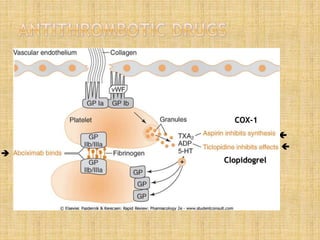
Clopidogrel
COX-1
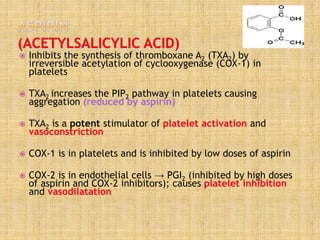
 Inhibits the synthesis of thromboxane A2 (TXA2) by
irreversible acetylation of cyclooxygenase (COX-1) in
platelets
 TXA2 increases the PIP2 pathway in platelets causing
aggregation (reduced by aspirin)
 TXA2 is a potent stimulator of platelet activation and
vasoconstriction
 COX-1 is in platelets and is inhibited by low doses of aspirin
 COX-2 is in endothelial cells → PGI2 (inhibited by high doses
of aspirin and COX-2 inhibitors); causes platelet inhibition
and vasodilatation
 Useful in preventing or reducing the risk of
myocardial infarction and recurring transient
ischemic attacks (TIAs) due to its antithrombotic
effects
 Antithrombotic effects on platelets are seen 1 to
2 days after administration and lasts for the
duration of the platelets life-span (7 to 10 days)
 Stop aspirin 1 week before surgery
 Stop other NSAIDs 2-3 days before surgery
 Interferes with ADP-induced binding of fibrinogen to
platelet membrane at specific receptor sites
 Inhibits platelet adhesion and platelet-platelet
interactions
 Indicated as alternative to aspirin to prevent an initial
or recurrent thromboembolic stroke
 Also useful for myocardial reinfarction prophylaxis
 Administered orally
 Rapidly and well (>80%) absorbed
 Extensively metabolized
ADP antagonist
 Rare cases of severe bone marrow toxicity
limits use to patients who are intolerant or
unresponsive to aspirin
 Increases liver functional enzymes
 Drug interactions
 Increased bleeding occurs when given with:
 Warfarin
 Heparin
 Other antiplatelet drugs
 NSAID drugs
 Cimetidine decreases its clearance
 It decreases the clearance of theophylline
 Usually clopidogrel is preferred over ticlodipine
Less drug-drug interactions
than clopidogrel
 Similar mechanism to ticlopidine but has a lower
incidence of adverse cutaneous, gastrointestinal, or
hematologic reactions than ticlopidine
 It is used to reduce atherosclerosis in patients with a
history of recent stroke, recent MI, or established
peripheral vascular disease
 It inhibits the activity of CYP2C9 and therefore may
increase the plasma concentrations of drugs such as:
 Fluvastatin
 Many NSAIDs
 Phenytoin
 Tamoxifen
 Tolbutamide
 Warfarin
 Ticlodipine is only preferred over clopidogrel if drug-
drug interactions are difficult to manage
Many drug-drug interactions
 A member of a class of drugs called platelet-receptor
glycoprotein inhibitors
 Given IV to high-risk patients undergoing coronary
angioplasty and patients undergoing angioplasty,
atherectomy and stent placement often with
clopidogrel
 Inhibits platelet aggregation by preventing binding of
fibrinogen, von Willebrand factor, and other adhesive
molecules to glycoprotein receptor IIb/IIIa on activated
platelets
 Bleeding is most common adverse effect
Expensive
 Tirofiban (Aggrast)
 a non-peptide
 Eptifibatide (Integrilin)
 a cyclic peptide
 These are intravenous platelet
glycoprotein IIb/IIIa inhibitors similar to
abciximab, but they are not monoclonal
antibodies
 A coronary vasodilator that also inhibits platelet
aggregation
 In combination with aspirin, reduces thrombosis in
patients with thrombotic disease
 In combination with warfarin, inhibits embolism from
prosthetic heart valves (main use)
 Mechanism not clear >>> but in part due to increase in
cAMP because of inhibition of phosphodiesterase
 Antithrombotic, antiplatelet and vasodilatory
action
 Inhibits phosphodiesterase type III, and thereby,
increases cAMP levels
 Used for intermittent claudication and
peripheral vascular disease
 Reduces elevated platelet counts in patients
with essential thrombocytosis (too many
platelets)
 Inhibits megakaryocyte development in the late
postmitotic stage
 Approved for the treatment of
thrombocytocytosis secondary to
myeloproliferative disorders, such as,
polycythemia vera and chronic myelogenous
leukemia to reduce the risk of stroke and
myocardial infarction
Inhibits formation of platelets
- Rapidly and completely absorbed after oral
administration
- 100 % bioavailability
- High plasma protein binding capacity : 99%
- Crosses placenta- teratogenic
- Drug  appears in milk  thus infants are given
Vit. K
- Slow hepatic clearance
- Metabolism : by liver, via OXIDATION and
GLUCURONIDATION
- Take 12-16 hours before effect is
observed……………..
- Drug  interferes with hepatic synthesis of
Vitamin K dependent clotting factors II, VII, IX
and X. as well as anticoagulant proteins “C” and
“S”
- Drug  depletes functional Vit.K reserves 
competitively inhibits subunit 1 of multi unit
Vitamin K epoxide reductase complex 1 (VKOR
1) Reduces synthesis of active clotting
factors………………………
- Same as that of heparin and other
anticoagulants
- Monitoring necessary, since it a low
therapeutic index drug
- Prothrombin time (PT) should be noted
(Time taken for blood to clot)
- Usually patients on heparin are shifted to
oral warfarin after 3-5
days……………………..
i. BLEEDING:
- Common ADR
- Hematuria
- GI bleeding
- Internal hemorrhages
ii. CUTANEOUS NECROSIS:
- Due to decreased activity of Protein C
iii. INFARCTION OF BREAST, FATTY TISSUES,
INTESTINE AND EXTREMITIES:
- Decreased activity of Protein C Causes venous
thrombosis causes above symptoms………….
- Stop warfarin
- Administer Vitamin K (antidote)
- The following can also be given:
a. Fresh frozen plasma
b. Prothrombin complex concentrates
c. Recombinant factor VII a
A. PREGNANCY:
- Fetal protein in bone and blood affected
- Birth defects
- Abnormal bone formation
- Bone hyperplasia
- CNS defects
- Fetal hemorrhage
- Fetal hypoprothrombinemia
- Fetal death
B. Other contraindications same as that of
heparin…………..
A. PHARMACOKINETIC DRUG INTERACTIONS:
i. Drugs, that inhibit warfarin metabolism:
- Cimetidine
- Imipramine
- Cotrimoxazole
- Chloramphenicol
- Ciprofloxacin
- Metronidazole
- Amiodarone
ii. Drugs, that increase warfarin metabolism:
- Barbiturates -Rifampin
iii. Drugs, that displace warfarin from binding sites on
plasma albumin: Chloral hydrate, NSAIDs
iv. Drugs that decrease GI absorption of warfarin :
Cholestyramine
B. PHARMACODYNAMIC DRUG
INTERACTIONS:
- Shows synergistic effect with heparin and
aspirin
- Antibiotics + warfarin  decreased bacterial
flora decreased Vitamin K synthesis 
increased warfarin effect………………
 Causes:
1. Due to decreased Vit. K:
- Malnutrition
- Debility
- Affects newborns
2. Due to decreased clotting factors:
- Liver disease
3. Due to increased degradation of clotting
factors:
- Hyperthyroidism…………………..
 Affects in pregnancy (due to increase in
clotting factors)
 Nephrotic syndrome
 Warfarin resistance
(genetic)…………………………
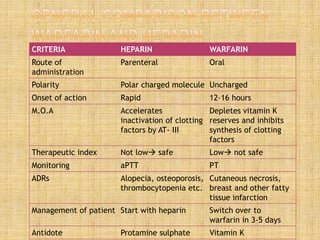
CRITERIA HEPARIN WARFARIN
Route of
administration
Parenteral Oral
Polarity Polar charged molecule Uncharged
Onset of action Rapid 12-16 hours
M.O.A Accelerates
inactivation of clotting
factors by AT- III
Depletes vitamin K
reserves and inhibits
synthesis of clotting
factors
Therapeutic index Not low safe Low not safe
Monitoring aPTT PT
ADRs Alopecia, osteoporosis,
thrombocytopenia etc.
Cutaneous necrosis,
breast and other fatty
tissue infarction
Management of patient Start with heparin Switch over to
warfarin in 3-5 days
Antidote Protamine sulphate Vitamin K
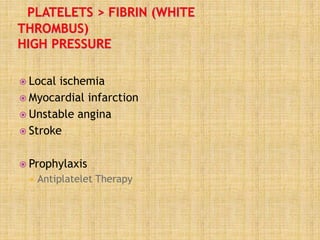
 Local ischemia
 Myocardial infarction
 Unstable angina
 Stroke
 Prophylaxis
 Antiplatelet Therapy
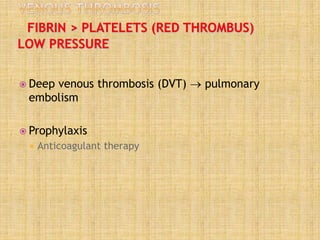
 Deep venous thrombosis (DVT)  pulmonary
embolism
 Prophylaxis
 Anticoagulant therapy
2. IN- VITRO DRUGS:
- Heparin
- Sodium citrate ( used in blood banks to store
blood)
- Sodium oxalate (used as anticoagulant in
laboratory)
- Sodium edetate (same function as that of sodium
citrate )
Inr- international normalized
ratio…………………………
- “Standardization method, that attempts to
decrease or reduce differences between
thromboplastin reagents, through a calibration
process, in which all commercial
thromboplastins are compared with an
International Reference Preparation (IRP),
maintained by WHO”
- Should only be used for patients on stable
anticoagulant therapy……………
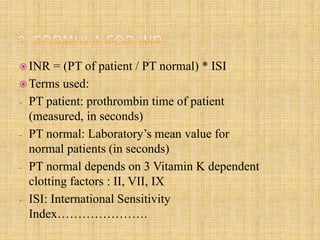
 INR = (PT of patient / PT normal) * ISI
 Terms used:
- PT patient: prothrombin time of patient
(measured, in seconds)
- PT normal: Laboratory’s mean value for
normal patients (in seconds)
- PT normal depends on 3 Vitamin K dependent
clotting factors : II, VII, IX
- ISI: International Sensitivity
Index………………….
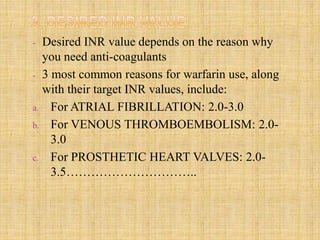
- Desired INR value depends on the reason why
you need anti-coagulants
- 3 most common reasons for warfarin use, along
with their target INR values, include:
a. For ATRIAL FIBRILLATION: 2.0-3.0
b. For VENOUS THROMBOEMBOLISM: 2.0-
3.0
c. For PROSTHETIC HEART VALVES: 2.0-
3.5…………………………..