BIOTRANSFORMATION
BY DHINESH
I M.PHARM (PHARMACOLOGY)
PSG COLLEGE OF PHARMACY 1
CONTENTS
1. Biotransformation
2. Microsomal and non-microsomal enzymes
3. Phases of biotransformation
4. Comparison of two phases
5. First pass metabolism
6. Importance of biotransformation
PSG COLLEGE OF PHARMACY 2
Pharmacokinetics
Drug at site of administration
PSG COLLEGE OF PHARMACY 3
Drug in plasma
Drug in organs
Drug metabolite Elimination
Metabolism
Distribution
Absorption
Biotransformation (Metabolism)
 It is a process of making a drug/xenobiotics to more polar.
Lipid drugs - more absorbed , less excreted
Polar drugs- less absorbed, more excreted
Hydrophilic drugs are mostly excreted unchanged eg, neostigmine,
pancuronium, streptomycin etc.
PSG COLLEGE OF PHARMACY 4
Which is responsible for
biotransformation?
“Enzymes”
These are proteins which are made up of amino acids.
Each has its unique function eg, oxidation, hydrolysis etc.
PSG COLLEGE OF PHARMACY 5
Classification of Enzymes
Enzymes are classified based on the location where it is present
Enzymes mainly present in these three cell organelles
PSG COLLEGE OF PHARMACY 6
i. Smooth endoplasmic reticulum
ii. Mitochondria
iii. Cytoplasm
Classification of enzymes
Enzymes present in smooth endoplasmic reticulum are called as microsomal
enzymes
Enzymes which are present in mitochondria and cytoplasm are called as Non-
microsomal enzymes
Main organs involved in the metabolism process- liver, kidney, intestinal
mucosa, lungs, plasma (non-microsomal enzymes)
PSG COLLEGE OF PHARMACY 7
link
Classification of enzymes
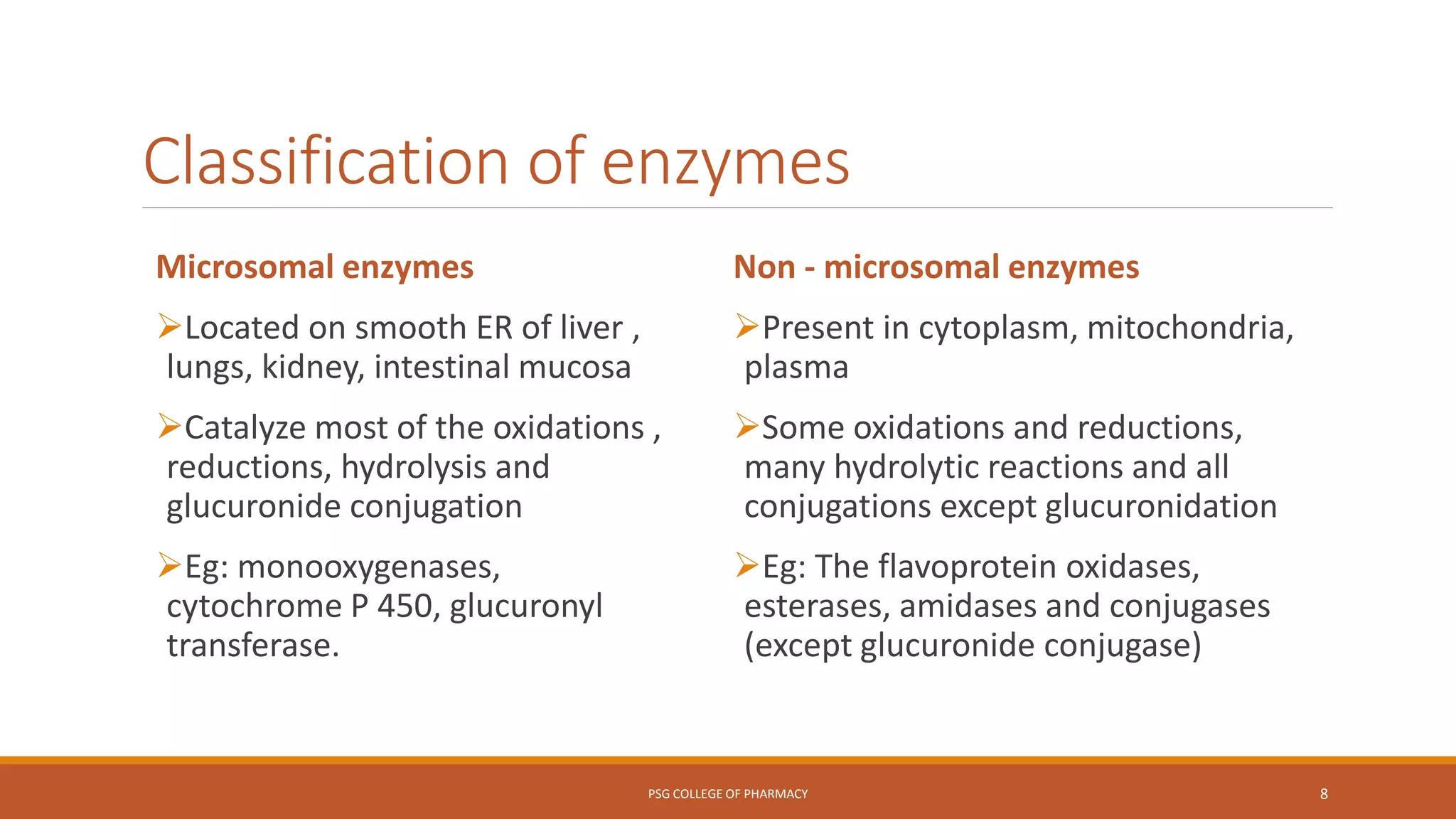
Non - microsomal enzymes
Present in cytoplasm, mitochondria,
plasma
Some oxidations and reductions,
many hydrolytic reactions and all
conjugations except glucuronidation
Eg: The flavoprotein oxidases,
esterases, amidases and conjugases
(except glucuronide conjugase)
Microsomal enzymes
Located on smooth ER of liver ,
lungs, kidney, intestinal mucosa
Catalyze most of the oxidations ,
reductions, hydrolysis and
glucuronide conjugation
Eg: monooxygenases,
cytochrome P 450, glucuronyl
transferase.
PSG COLLEGE OF PHARMACY 8
How metabolism is happening?
Through two chemical pathways
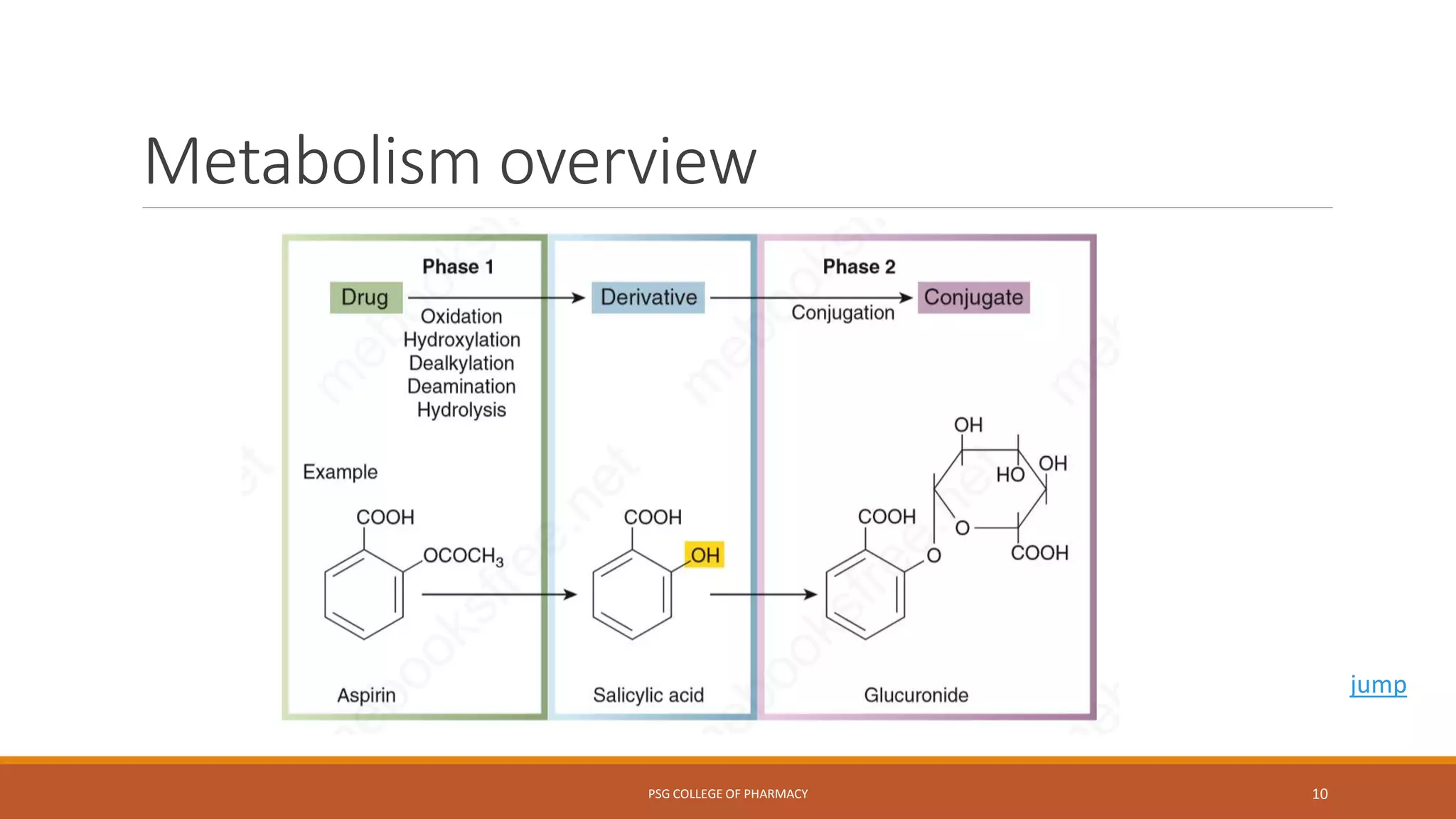
Phase 1 – functional group is exposed into the drug to make it more polar and
also susceptible for the conjugation in next phase
Phase 2 – It involves conjugation of the drug or the phase I metabolite and
make it easy to get excreted in urine or bile. Conjugation reactions have high
energy requirement
PSG COLLEGE OF PHARMACY 9
i. Phase 1 (non synthetic pathway)
ii. Phase 2 (synthetic pathway)
Metabolism overview
PSG COLLEGE OF PHARMACY 10
jump
Phase 1 Reactions
1. Oxidation
2. Reduction
3. Hydrolysis
4. Cyclization
5. Decyclization
PSG COLLEGE OF PHARMACY 11
Phase 1 Reactions
PSG COLLEGE OF PHARMACY 12
1. Oxidation
 Oxidations are most important drug metabolising reactions.
 Loss of electron is defined as oxidation.
 Enzymes involved in this oxidation process include – CYP450 enzymes,
flavin monooxygenases and non microsomal enzymes include MAO.
Phase 1 Reactions
Phase 1 oxidation process by CYP450
PSG COLLEGE OF PHARMACY 13
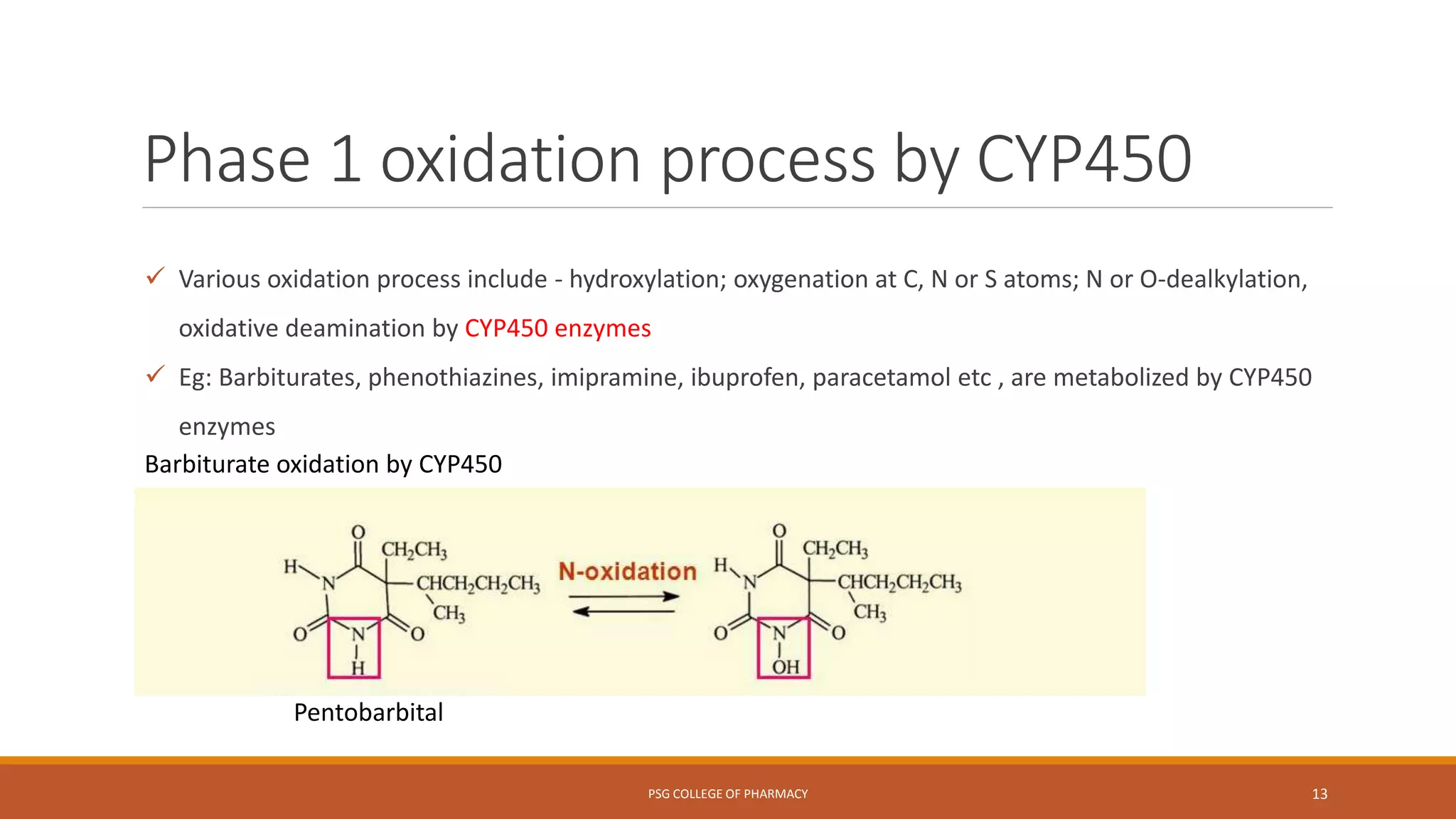
 Various oxidation process include - hydroxylation; oxygenation at C, N or S atoms; N or O-dealkylation,
oxidative deamination by CYP450 enzymes
 Eg: Barbiturates, phenothiazines, imipramine, ibuprofen, paracetamol etc , are metabolized by CYP450
enzymes
Barbiturate oxidation by CYP450
Pentobarbital
Phase 1 oxidation by Flavin
monooxygenases
Clozapine metabolism by flavin monooxygenase
PSG COLLEGE OF PHARMACY 14
N
N
N
Cl
H
N CH3
N
+
N
N
Cl
H
N CH3
OH
Flavin monooxygenase
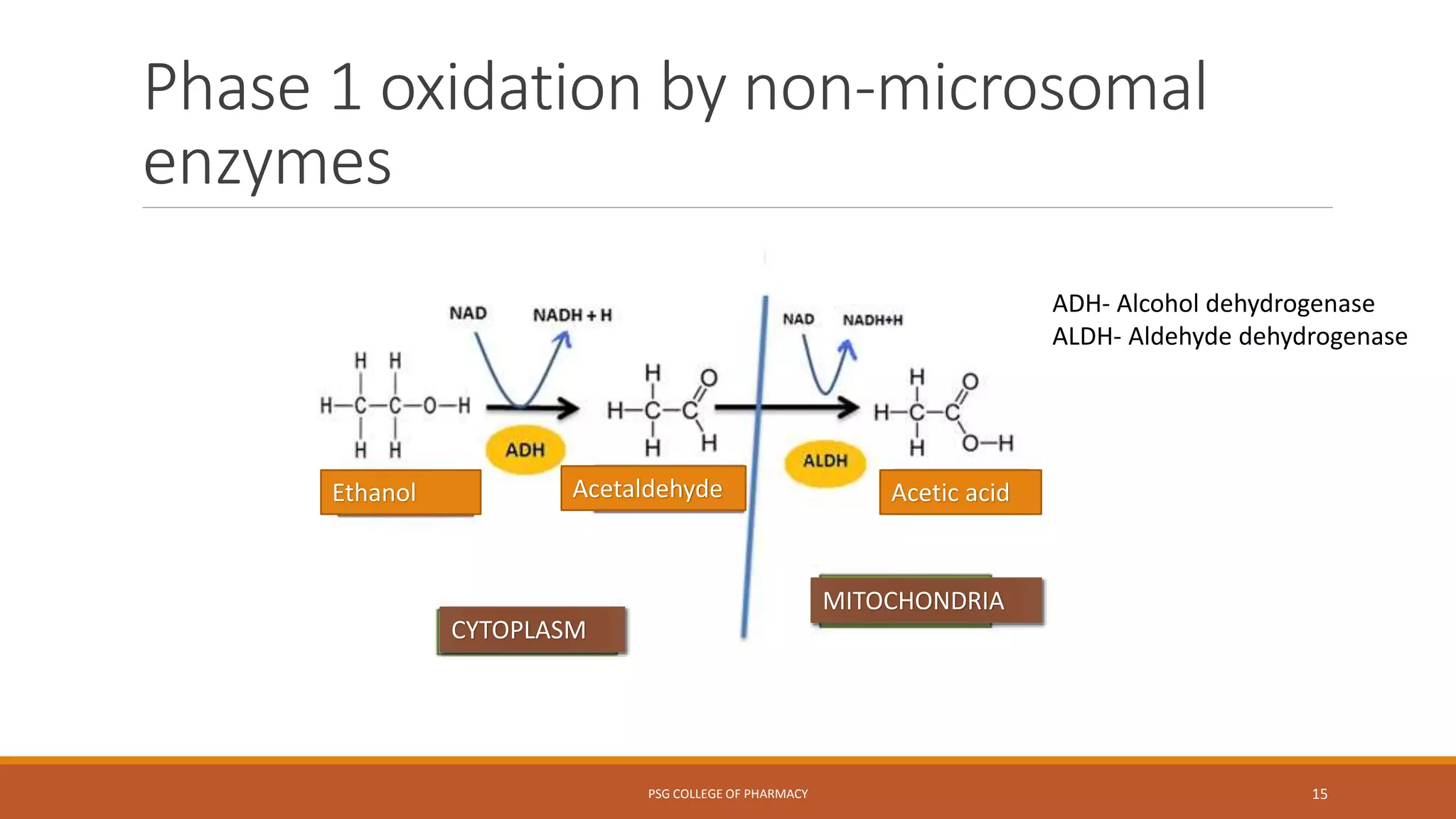
Phase 1 oxidation by non-microsomal
enzymes
PSG COLLEGE OF PHARMACY 15
Acetaldehyde Acetic acidEthanol
CYTOPLASM
MITOCHONDRIA
ADH- Alcohol dehydrogenase
ALDH- Aldehyde dehydrogenase
Phase I reactions - oxidations
Microsomal Oxidation
Aromatic hydroxylation
◦ Phenobarbitone – P-hydroxy phenobarbitone
Aliphatic hydroxylation
◦ Pentobarbitone – Hydroxy pentobarbitone
N – dealkylation
◦ Morphine – normorphine
PSG COLLEGE OF PHARMACY 16
Phase I reactions
Microsomal Oxidation
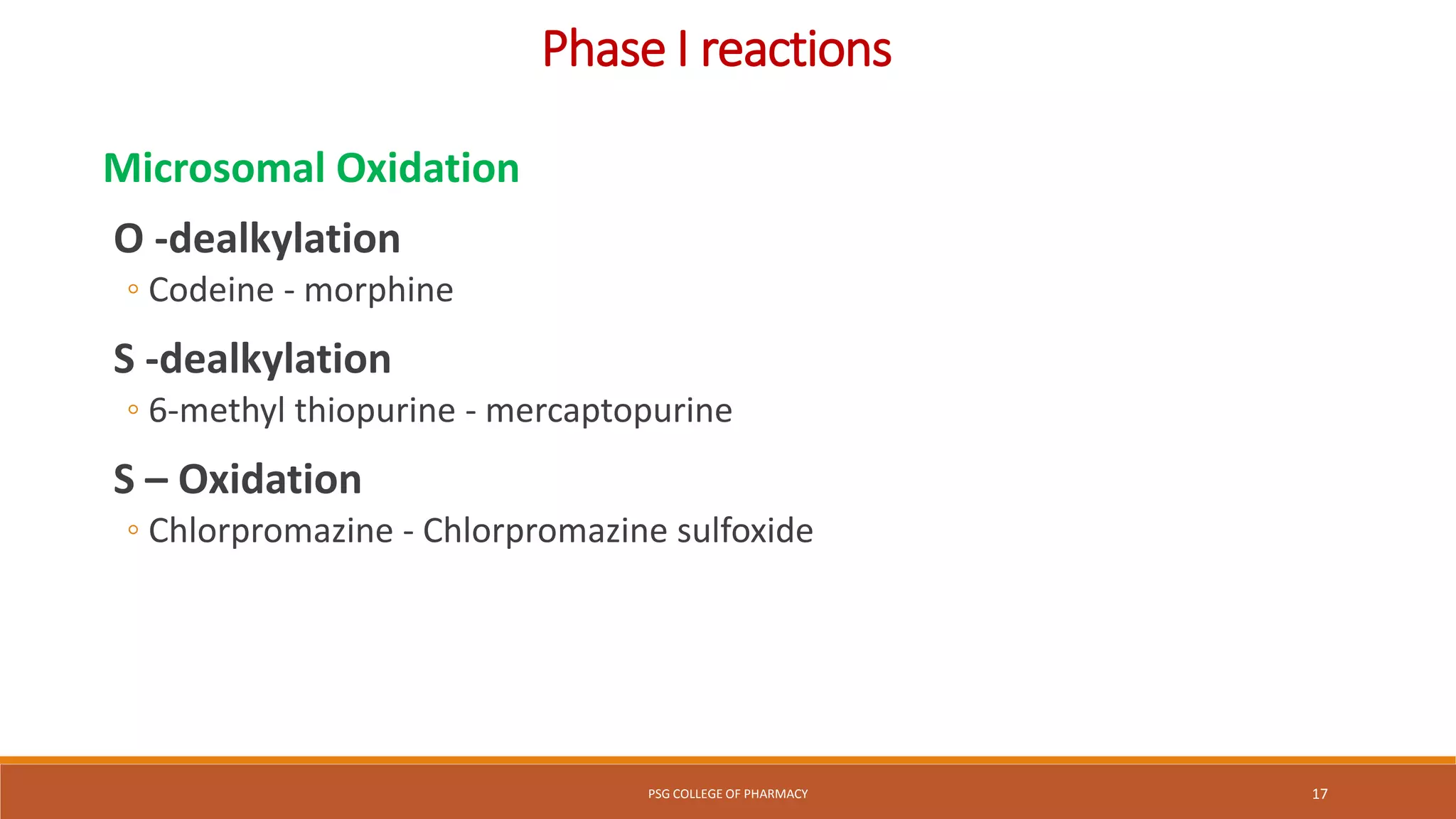
O -dealkylation
◦ Codeine - morphine
S -dealkylation
◦ 6-methyl thiopurine - mercaptopurine
S – Oxidation
◦ Chlorpromazine - Chlorpromazine sulfoxide
PSG COLLEGE OF PHARMACY 17
Phase I reactions
Microsomal Oxidation
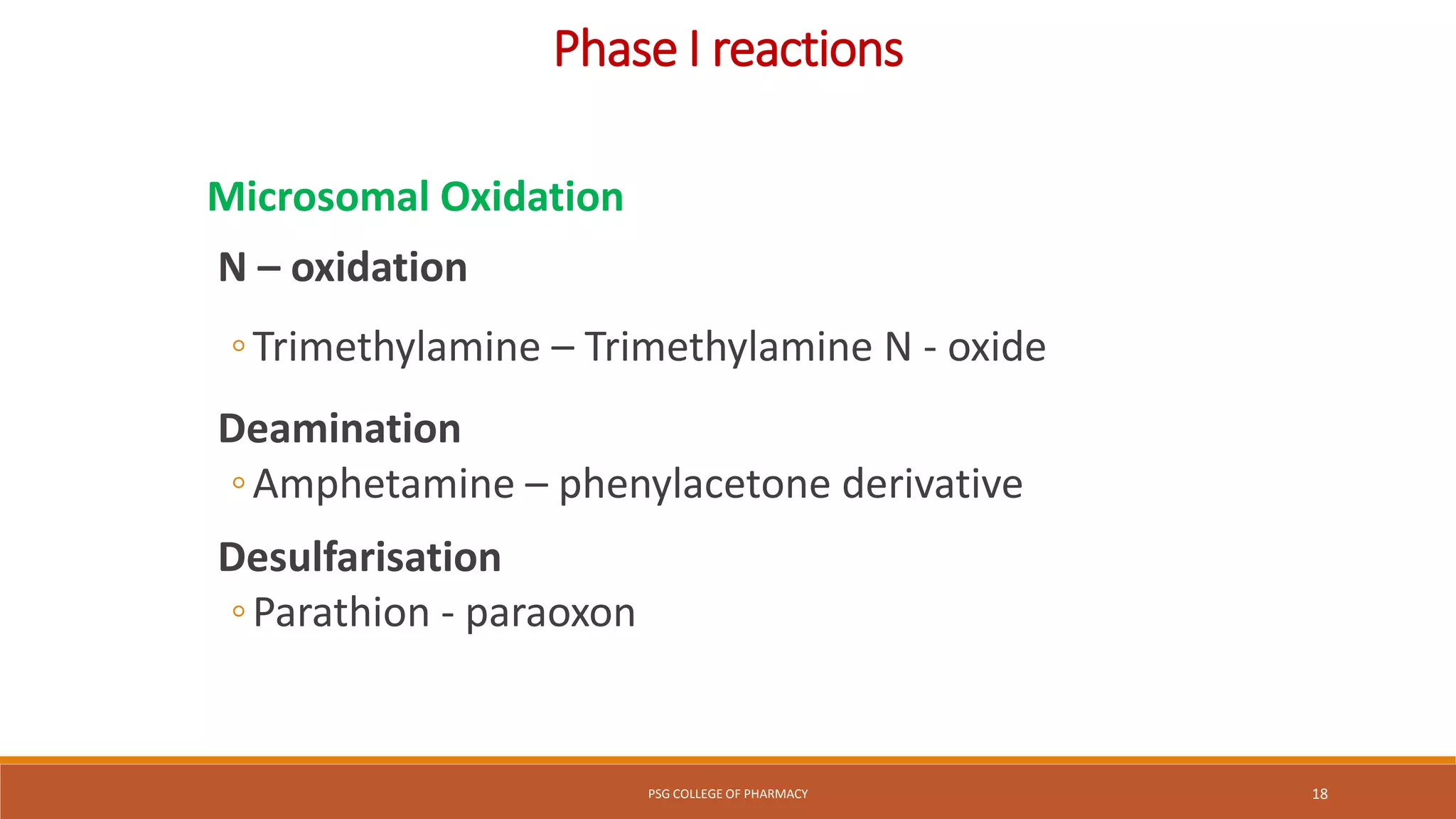
N – oxidation
◦Trimethylamine – Trimethylamine N - oxide
Deamination
◦Amphetamine – phenylacetone derivative
Desulfarisation
◦Parathion - paraoxon
PSG COLLEGE OF PHARMACY 18
Phase I reactions
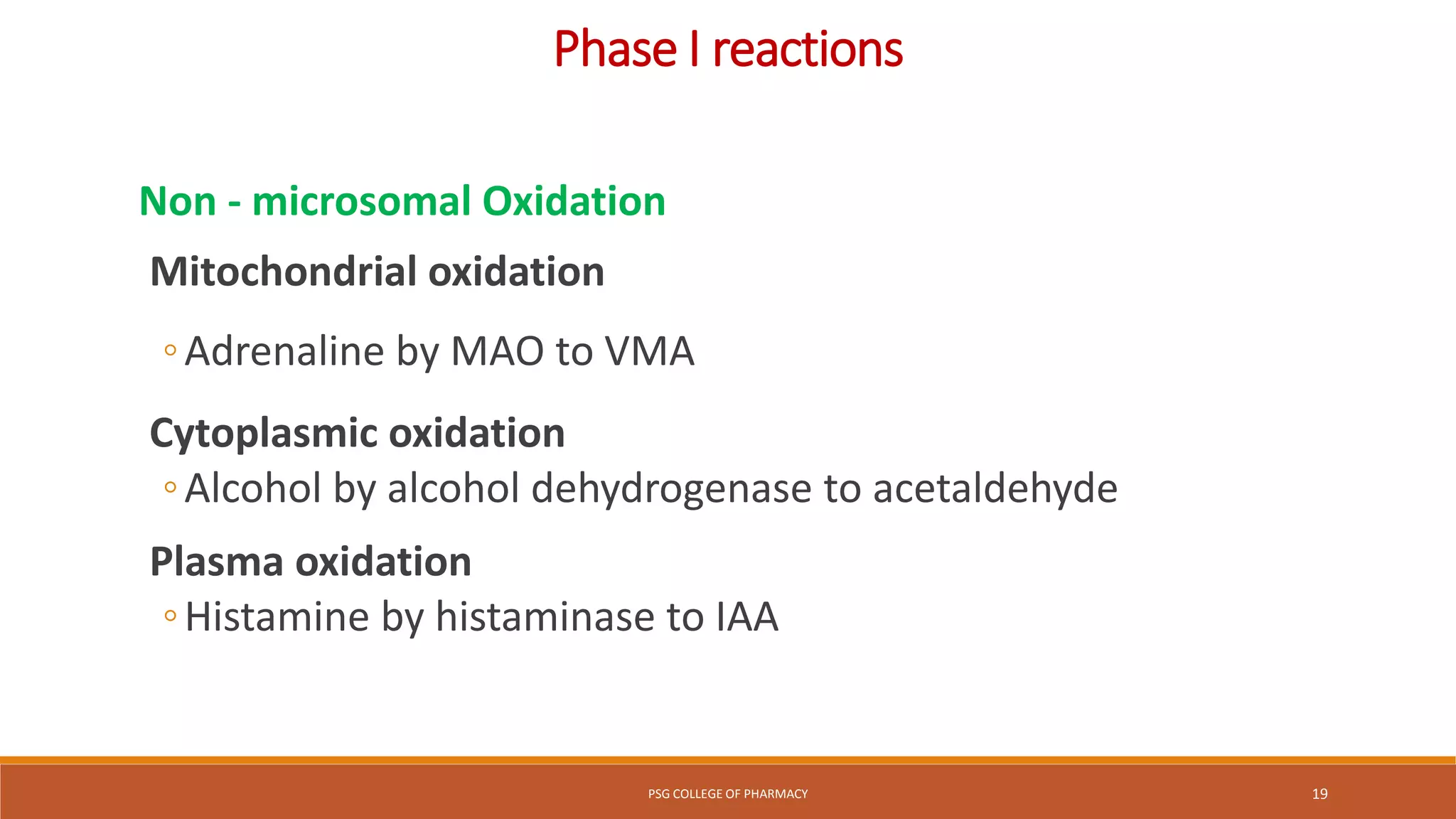
Non - microsomal Oxidation
Mitochondrial oxidation
◦Adrenaline by MAO to VMA
Cytoplasmic oxidation
◦Alcohol by alcohol dehydrogenase to acetaldehyde
Plasma oxidation
◦Histamine by histaminase to IAA
PSG COLLEGE OF PHARMACY 19
Phase I
ENZYME PERCENTAGE
CYP3A4 50%
CYP2D6 20%
CYP2C8 10%
OTHERS 20%
PSG COLLEGE OF PHARMACY 20
Phase 1 Reactions
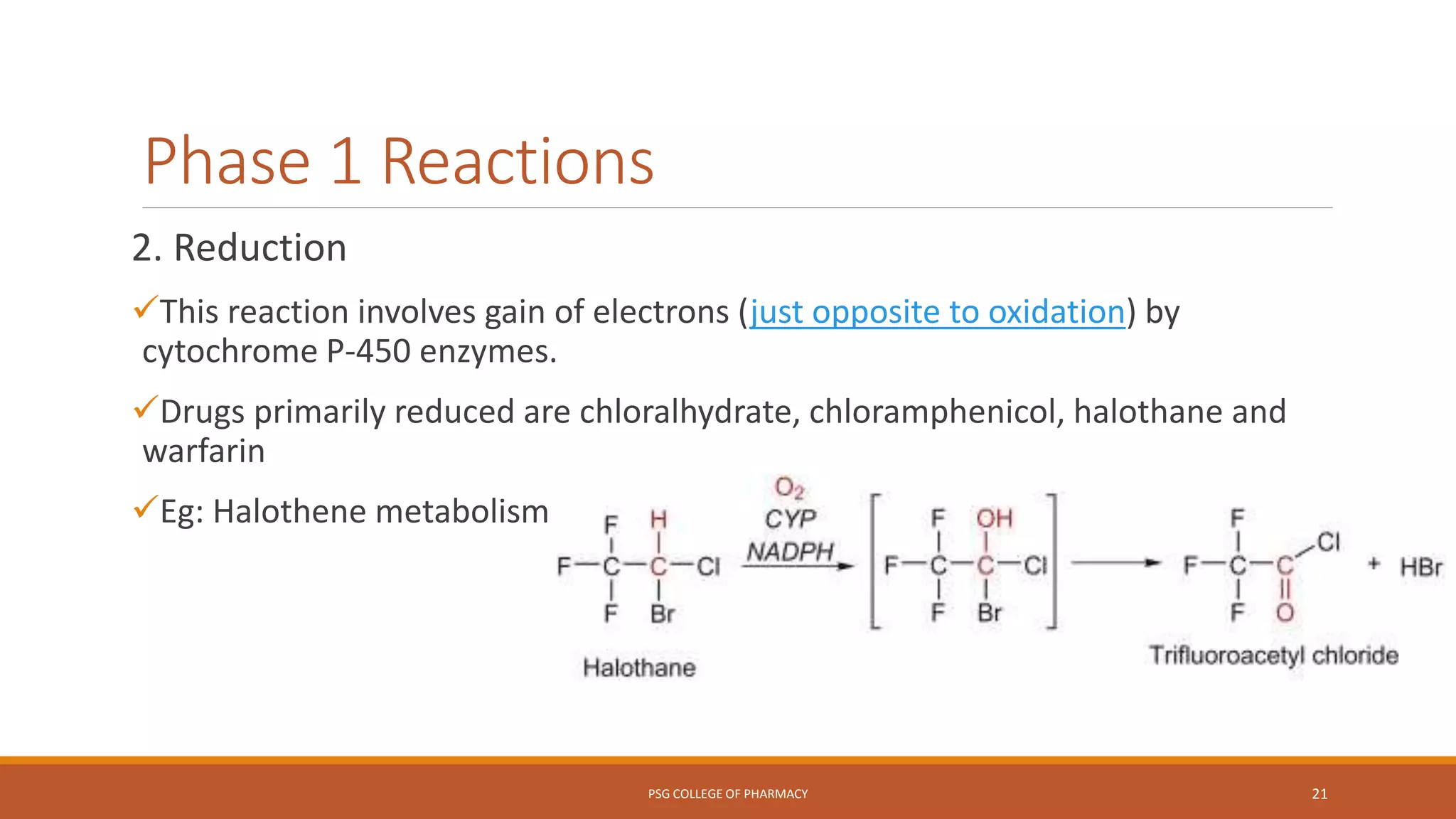
2. Reduction
This reaction involves gain of electrons (just opposite to oxidation) by
cytochrome P-450 enzymes.
Drugs primarily reduced are chloralhydrate, chloramphenicol, halothane and
warfarin
Eg: Halothene metabolism
PSG COLLEGE OF PHARMACY 21
Phase I reactions - Reductions
Microsomal reductions
Nitro reduction
◦Chloramphenicol to its arylamine metabolite
Azo reduction
◦Protonsil to sulfanilamide
Keto reduction
◦Cortisone to hydrocortisone
Non – microsomal reductions
Chloral hydrate to trichloro ethanol
PSG COLLEGE OF PHARMACY 22
Phase 1 Reactions
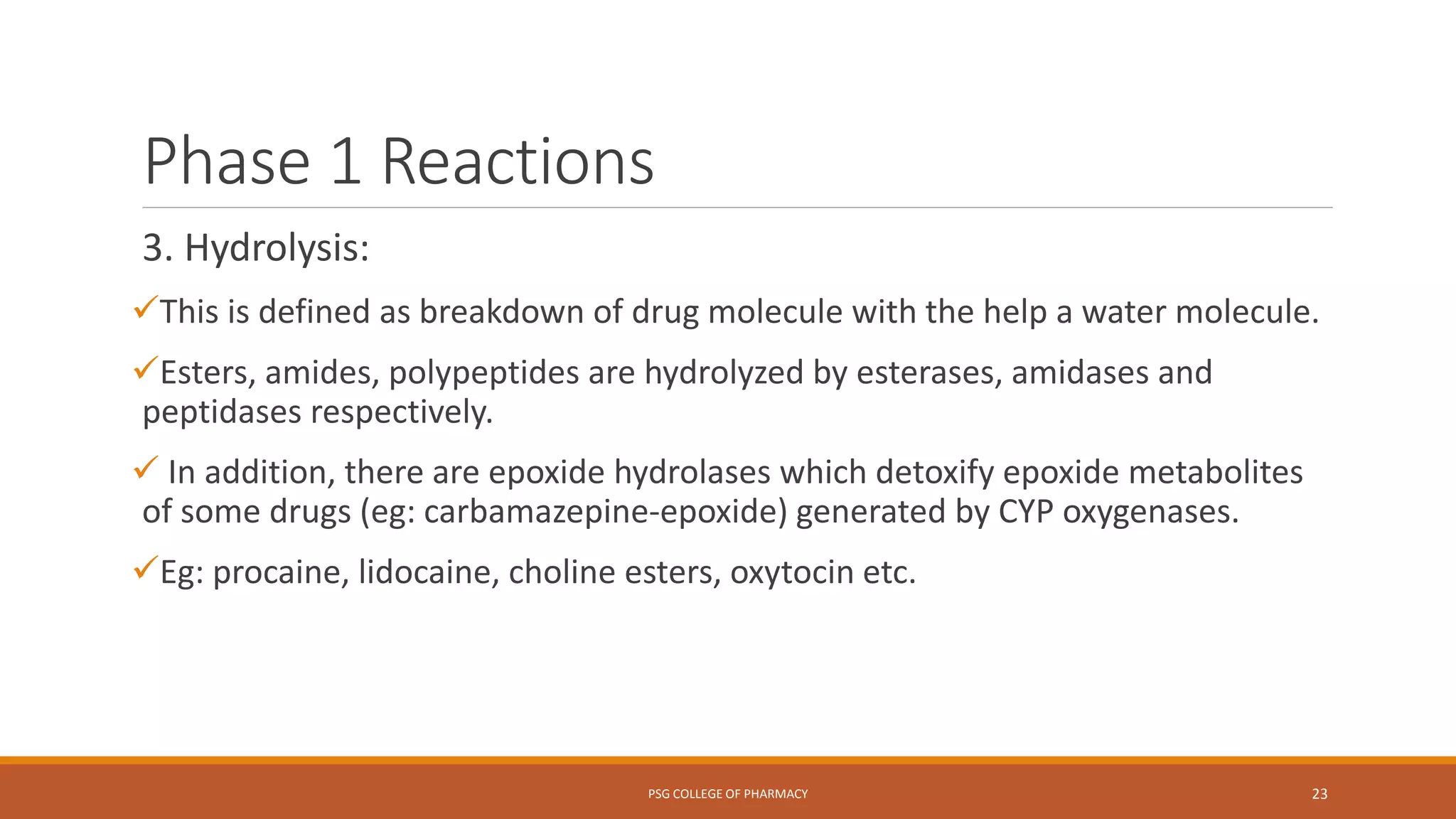
3. Hydrolysis:
This is defined as breakdown of drug molecule with the help a water molecule.
Esters, amides, polypeptides are hydrolyzed by esterases, amidases and
peptidases respectively.
 In addition, there are epoxide hydrolases which detoxify epoxide metabolites
of some drugs (eg: carbamazepine-epoxide) generated by CYP oxygenases.
Eg: procaine, lidocaine, choline esters, oxytocin etc.
PSG COLLEGE OF PHARMACY 23
Phase 1 reactions
Hydrolysis example
PSG COLLEGE OF PHARMACY 24
Phase I reactions - Hydrolysis
Microsomal hydrolysis
Pethidine to pethidinic acid by hepatic esterase
Non microsomal hydrolysis
Esterases, amidases, peptidase, protease,
phosphatase
Procaine – PABA
atropine – Tropic acid
Hydrolysis of beta lactam ring of penicillin
PSG COLLEGE OF PHARMACY 25
Phase 1 reactions
4. Cyclization
This is formation of ring structure from a straight chain compound, e.g.
proguanil.
PSG COLLEGE OF PHARMACY 26
Phase 1 Reactions
5. Decyclization:
This is opening up of ring structure of the cyclic drug molecule, Eg phenytoin.
This is generally a minor pathway.
PSG COLLEGE OF PHARMACY 27
Phase 2 Reactions
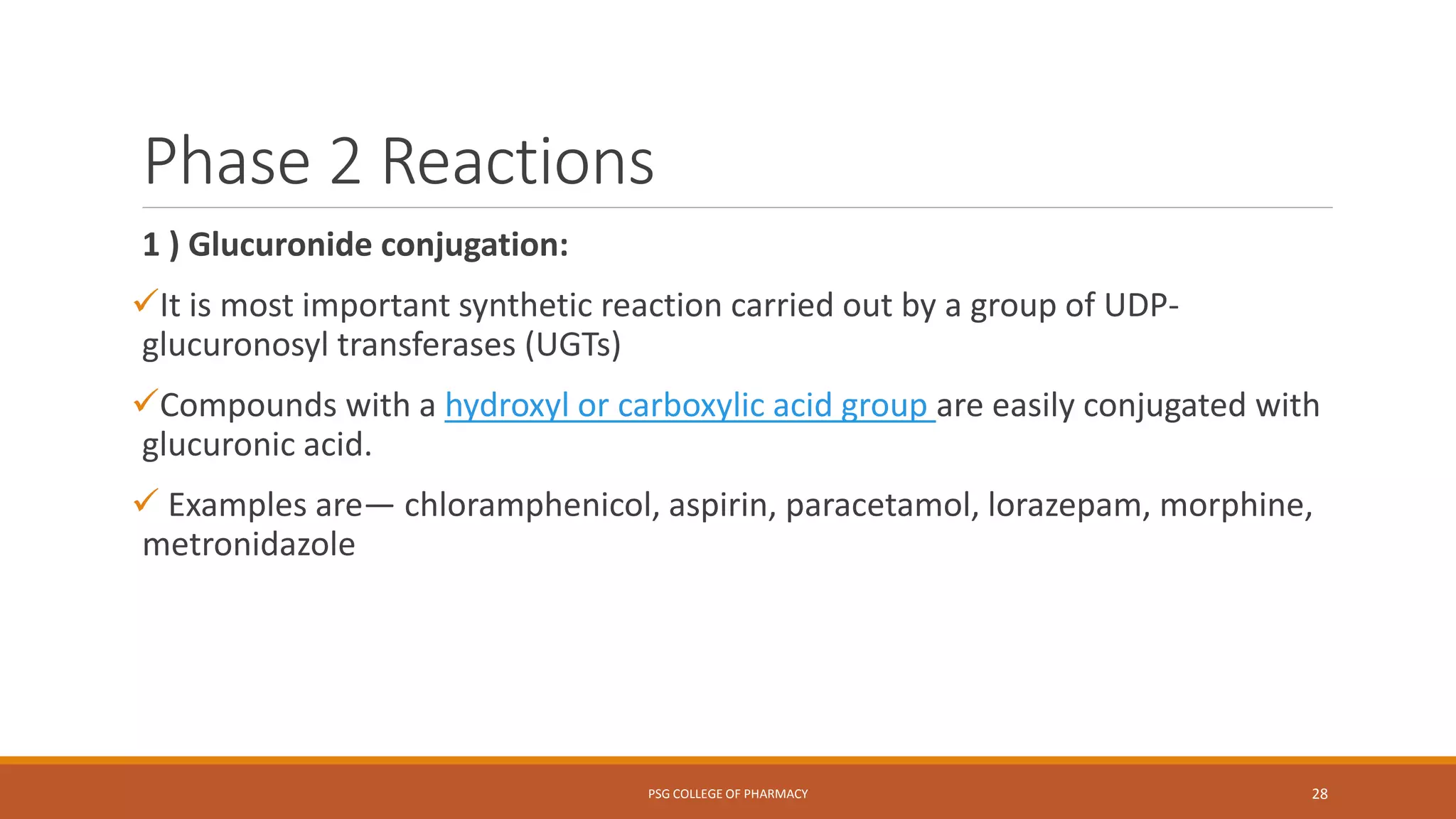
1 ) Glucuronide conjugation:
It is most important synthetic reaction carried out by a group of UDP-
glucuronosyl transferases (UGTs)
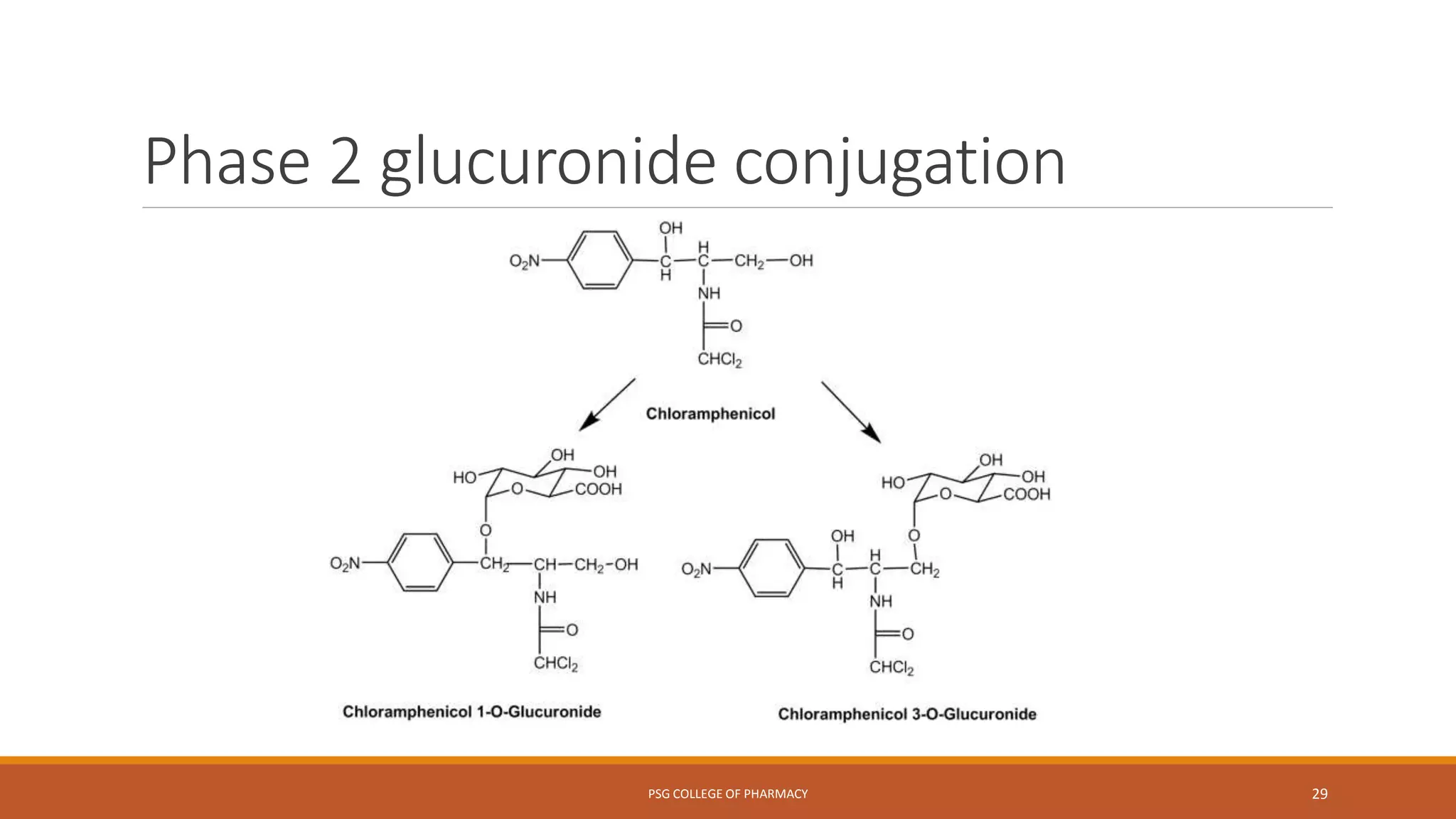
Compounds with a hydroxyl or carboxylic acid group are easily conjugated with
glucuronic acid.
 Examples are— chloramphenicol, aspirin, paracetamol, lorazepam, morphine,
metronidazole
PSG COLLEGE OF PHARMACY 28
Phase 2 glucuronide conjugation
PSG COLLEGE OF PHARMACY 29
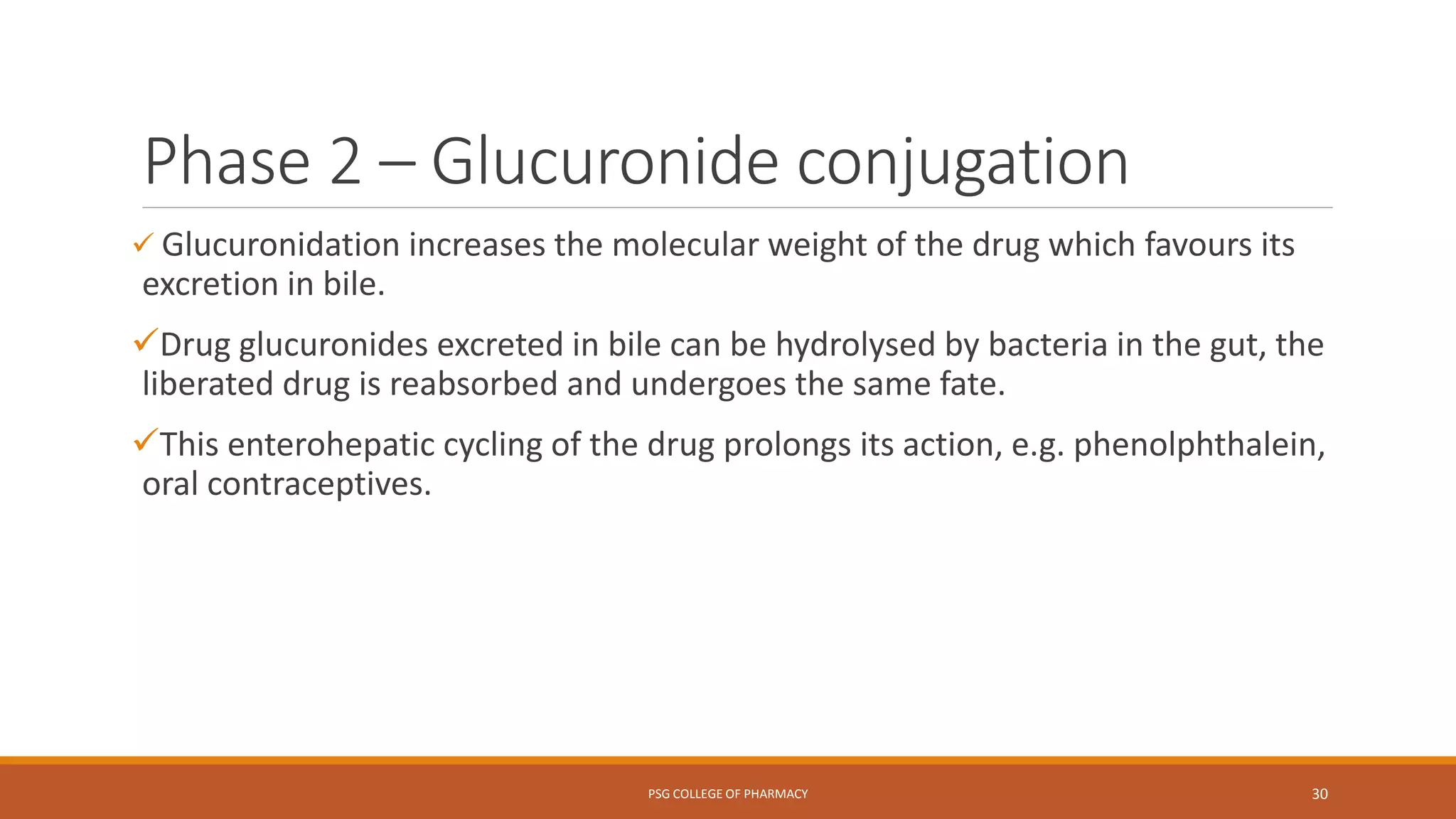
Phase 2 – Glucuronide conjugation
 Glucuronidation increases the molecular weight of the drug which favours its
excretion in bile.
Drug glucuronides excreted in bile can be hydrolysed by bacteria in the gut, the
liberated drug is reabsorbed and undergoes the same fate.
This enterohepatic cycling of the drug prolongs its action, e.g. phenolphthalein,
oral contraceptives.
PSG COLLEGE OF PHARMACY 30
Phase 2 reactions
2) Acetylation
 Compounds having amino or hydrazine residues are conjugated with the help
of acetyl coenzyme-A,
Eg. sulfonamides, isoniazid, PAS, hydralazine, clonazepam, procainamide.
PSG COLLEGE OF PHARMACY 31
Phase 2 reactions
3) Methylation
The amines and phenols can be methylated; methionine and cysteine acting as
methyl donors,
Eg. adrenaline, histamine, nicotinic acid, methyldopa, captopril,
mecarptopurine
PSG COLLEGE OF PHARMACY 32
Phase 2 Reactions
4) sulphate conjugation
 The phenolic compounds and steroids are sulfated by sulfotransferases
(SULTs), e.g. chloramphenicol, methyldopa, and sex steroids.
5) Glycine conjugation
 Salicylates and other drugs having carboxylic acid group are conjugated with
glycine, but this is not a major pathway of metabolism.
PSG COLLEGE OF PHARMACY 33
Phase 2 reactions
6) Glutathione conjugation
Forming a mercapturate is normally a minor pathway.
However, it has an important role in inactivating highly reactive quinone or
epoxide intermediates formed during metabolism of certain drugs, e.g.
paracetamol.
PSG COLLEGE OF PHARMACY 34
Phase 2 reactions
PSG COLLEGE OF PHARMACY 35
Phase 2 reactions
7) Ribonucleoside/nucleotide synthesis
 This pathway is important for the activation of many purine and pyrimidine
antimetabolites used in cancer chemotherapy.
PSG COLLEGE OF PHARMACY 36
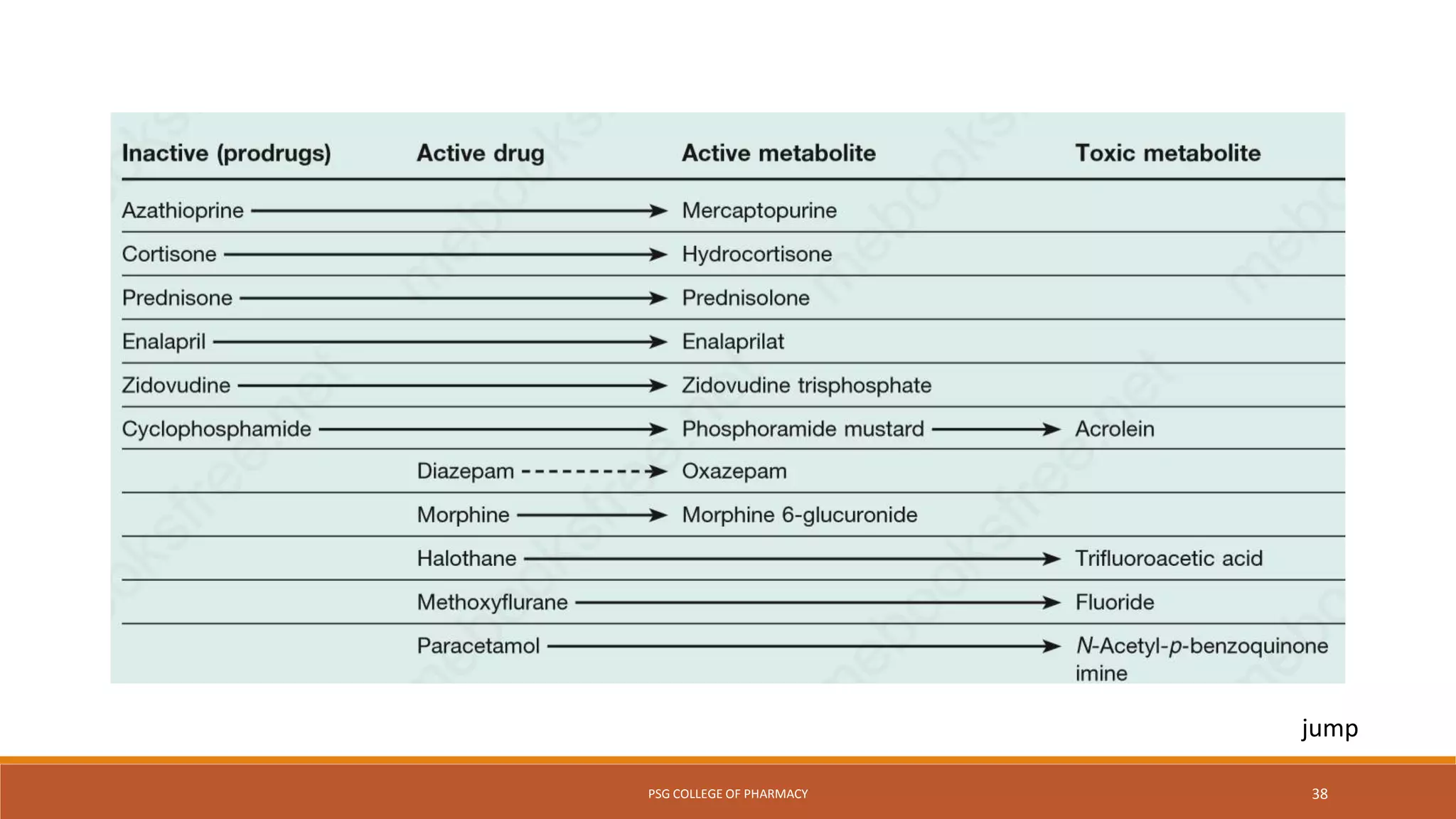
PSG COLLEGE OF PHARMACY 37
PSG COLLEGE OF PHARMACY 38
jump
First pass / pre-systemic metabolism
Defined as the metabolism of a drug before reaching the systemic circulation
All orally administered drugs are exposed to drug metabolizing enzymes in the
intestinal wall and liver (where they first reach through the portal vein).
Presystemic metabolism can also occur in the skin (transdermally administered
drug) and in lungs (for drug reaching venous blood through any route) but
limitedly
PSG COLLEGE OF PHARMACY 39
What is the importance of this
biotransformation ?
PSG COLLEGE OF PHARMACY 40
Click here
References
Tripathi, K. (2016). Essentials of medical pharmacology. 6th ed.
new Delhi: Jaypee publisher, pp.23-29.
Ritter, J., Flower, R., Henderson, G., MacEwan, D., Loke, Y. and
Rang, H. (2018). Rang and Dale's pharmacology. 8th ed.
ELSEVIER, pp.133-137.
PSG COLLEGE OF PHARMACY 41
PSG COLLEGE OF PHARMACY 42

Biotransformation-pharmacology

  • 1.
    BIOTRANSFORMATION BY DHINESH I M.PHARM(PHARMACOLOGY) PSG COLLEGE OF PHARMACY 1
  • 2.
    CONTENTS 1. Biotransformation 2. Microsomaland non-microsomal enzymes 3. Phases of biotransformation 4. Comparison of two phases 5. First pass metabolism 6. Importance of biotransformation PSG COLLEGE OF PHARMACY 2
  • 3.
    Pharmacokinetics Drug at siteof administration PSG COLLEGE OF PHARMACY 3 Drug in plasma Drug in organs Drug metabolite Elimination Metabolism Distribution Absorption
  • 4.
    Biotransformation (Metabolism)  Itis a process of making a drug/xenobiotics to more polar. Lipid drugs - more absorbed , less excreted Polar drugs- less absorbed, more excreted Hydrophilic drugs are mostly excreted unchanged eg, neostigmine, pancuronium, streptomycin etc. PSG COLLEGE OF PHARMACY 4
  • 5.
    Which is responsiblefor biotransformation? “Enzymes” These are proteins which are made up of amino acids. Each has its unique function eg, oxidation, hydrolysis etc. PSG COLLEGE OF PHARMACY 5
  • 6.
    Classification of Enzymes Enzymesare classified based on the location where it is present Enzymes mainly present in these three cell organelles PSG COLLEGE OF PHARMACY 6 i. Smooth endoplasmic reticulum ii. Mitochondria iii. Cytoplasm
  • 7.
    Classification of enzymes Enzymespresent in smooth endoplasmic reticulum are called as microsomal enzymes Enzymes which are present in mitochondria and cytoplasm are called as Non- microsomal enzymes Main organs involved in the metabolism process- liver, kidney, intestinal mucosa, lungs, plasma (non-microsomal enzymes) PSG COLLEGE OF PHARMACY 7 link
  • 8.
    Classification of enzymes Non- microsomal enzymes Present in cytoplasm, mitochondria, plasma Some oxidations and reductions, many hydrolytic reactions and all conjugations except glucuronidation Eg: The flavoprotein oxidases, esterases, amidases and conjugases (except glucuronide conjugase) Microsomal enzymes Located on smooth ER of liver , lungs, kidney, intestinal mucosa Catalyze most of the oxidations , reductions, hydrolysis and glucuronide conjugation Eg: monooxygenases, cytochrome P 450, glucuronyl transferase. PSG COLLEGE OF PHARMACY 8
  • 9.
    How metabolism ishappening? Through two chemical pathways Phase 1 – functional group is exposed into the drug to make it more polar and also susceptible for the conjugation in next phase Phase 2 – It involves conjugation of the drug or the phase I metabolite and make it easy to get excreted in urine or bile. Conjugation reactions have high energy requirement PSG COLLEGE OF PHARMACY 9 i. Phase 1 (non synthetic pathway) ii. Phase 2 (synthetic pathway)
  • 10.
  • 11.
    Phase 1 Reactions 1.Oxidation 2. Reduction 3. Hydrolysis 4. Cyclization 5. Decyclization PSG COLLEGE OF PHARMACY 11
  • 12.
    Phase 1 Reactions PSGCOLLEGE OF PHARMACY 12 1. Oxidation  Oxidations are most important drug metabolising reactions.  Loss of electron is defined as oxidation.  Enzymes involved in this oxidation process include – CYP450 enzymes, flavin monooxygenases and non microsomal enzymes include MAO. Phase 1 Reactions
  • 13.
    Phase 1 oxidationprocess by CYP450 PSG COLLEGE OF PHARMACY 13  Various oxidation process include - hydroxylation; oxygenation at C, N or S atoms; N or O-dealkylation, oxidative deamination by CYP450 enzymes  Eg: Barbiturates, phenothiazines, imipramine, ibuprofen, paracetamol etc , are metabolized by CYP450 enzymes Barbiturate oxidation by CYP450 Pentobarbital
  • 14.
    Phase 1 oxidationby Flavin monooxygenases Clozapine metabolism by flavin monooxygenase PSG COLLEGE OF PHARMACY 14 N N N Cl H N CH3 N + N N Cl H N CH3 OH Flavin monooxygenase
  • 15.
    Phase 1 oxidationby non-microsomal enzymes PSG COLLEGE OF PHARMACY 15 Acetaldehyde Acetic acidEthanol CYTOPLASM MITOCHONDRIA ADH- Alcohol dehydrogenase ALDH- Aldehyde dehydrogenase
  • 16.
    Phase I reactions- oxidations Microsomal Oxidation Aromatic hydroxylation ◦ Phenobarbitone – P-hydroxy phenobarbitone Aliphatic hydroxylation ◦ Pentobarbitone – Hydroxy pentobarbitone N – dealkylation ◦ Morphine – normorphine PSG COLLEGE OF PHARMACY 16
  • 17.
    Phase I reactions MicrosomalOxidation O -dealkylation ◦ Codeine - morphine S -dealkylation ◦ 6-methyl thiopurine - mercaptopurine S – Oxidation ◦ Chlorpromazine - Chlorpromazine sulfoxide PSG COLLEGE OF PHARMACY 17
  • 18.
    Phase I reactions MicrosomalOxidation N – oxidation ◦Trimethylamine – Trimethylamine N - oxide Deamination ◦Amphetamine – phenylacetone derivative Desulfarisation ◦Parathion - paraoxon PSG COLLEGE OF PHARMACY 18
  • 19.
    Phase I reactions Non- microsomal Oxidation Mitochondrial oxidation ◦Adrenaline by MAO to VMA Cytoplasmic oxidation ◦Alcohol by alcohol dehydrogenase to acetaldehyde Plasma oxidation ◦Histamine by histaminase to IAA PSG COLLEGE OF PHARMACY 19
  • 20.
    Phase I ENZYME PERCENTAGE CYP3A450% CYP2D6 20% CYP2C8 10% OTHERS 20% PSG COLLEGE OF PHARMACY 20
  • 21.
    Phase 1 Reactions 2.Reduction This reaction involves gain of electrons (just opposite to oxidation) by cytochrome P-450 enzymes. Drugs primarily reduced are chloralhydrate, chloramphenicol, halothane and warfarin Eg: Halothene metabolism PSG COLLEGE OF PHARMACY 21
  • 22.
    Phase I reactions- Reductions Microsomal reductions Nitro reduction ◦Chloramphenicol to its arylamine metabolite Azo reduction ◦Protonsil to sulfanilamide Keto reduction ◦Cortisone to hydrocortisone Non – microsomal reductions Chloral hydrate to trichloro ethanol PSG COLLEGE OF PHARMACY 22
  • 23.
    Phase 1 Reactions 3.Hydrolysis: This is defined as breakdown of drug molecule with the help a water molecule. Esters, amides, polypeptides are hydrolyzed by esterases, amidases and peptidases respectively.  In addition, there are epoxide hydrolases which detoxify epoxide metabolites of some drugs (eg: carbamazepine-epoxide) generated by CYP oxygenases. Eg: procaine, lidocaine, choline esters, oxytocin etc. PSG COLLEGE OF PHARMACY 23
  • 24.
    Phase 1 reactions Hydrolysisexample PSG COLLEGE OF PHARMACY 24
  • 25.
    Phase I reactions- Hydrolysis Microsomal hydrolysis Pethidine to pethidinic acid by hepatic esterase Non microsomal hydrolysis Esterases, amidases, peptidase, protease, phosphatase Procaine – PABA atropine – Tropic acid Hydrolysis of beta lactam ring of penicillin PSG COLLEGE OF PHARMACY 25
  • 26.
    Phase 1 reactions 4.Cyclization This is formation of ring structure from a straight chain compound, e.g. proguanil. PSG COLLEGE OF PHARMACY 26
  • 27.
    Phase 1 Reactions 5.Decyclization: This is opening up of ring structure of the cyclic drug molecule, Eg phenytoin. This is generally a minor pathway. PSG COLLEGE OF PHARMACY 27
  • 28.
    Phase 2 Reactions 1) Glucuronide conjugation: It is most important synthetic reaction carried out by a group of UDP- glucuronosyl transferases (UGTs) Compounds with a hydroxyl or carboxylic acid group are easily conjugated with glucuronic acid.  Examples are— chloramphenicol, aspirin, paracetamol, lorazepam, morphine, metronidazole PSG COLLEGE OF PHARMACY 28
  • 29.
    Phase 2 glucuronideconjugation PSG COLLEGE OF PHARMACY 29
  • 30.
    Phase 2 –Glucuronide conjugation  Glucuronidation increases the molecular weight of the drug which favours its excretion in bile. Drug glucuronides excreted in bile can be hydrolysed by bacteria in the gut, the liberated drug is reabsorbed and undergoes the same fate. This enterohepatic cycling of the drug prolongs its action, e.g. phenolphthalein, oral contraceptives. PSG COLLEGE OF PHARMACY 30
  • 31.
    Phase 2 reactions 2)Acetylation  Compounds having amino or hydrazine residues are conjugated with the help of acetyl coenzyme-A, Eg. sulfonamides, isoniazid, PAS, hydralazine, clonazepam, procainamide. PSG COLLEGE OF PHARMACY 31
  • 32.
    Phase 2 reactions 3)Methylation The amines and phenols can be methylated; methionine and cysteine acting as methyl donors, Eg. adrenaline, histamine, nicotinic acid, methyldopa, captopril, mecarptopurine PSG COLLEGE OF PHARMACY 32
  • 33.
    Phase 2 Reactions 4)sulphate conjugation  The phenolic compounds and steroids are sulfated by sulfotransferases (SULTs), e.g. chloramphenicol, methyldopa, and sex steroids. 5) Glycine conjugation  Salicylates and other drugs having carboxylic acid group are conjugated with glycine, but this is not a major pathway of metabolism. PSG COLLEGE OF PHARMACY 33
  • 34.
    Phase 2 reactions 6)Glutathione conjugation Forming a mercapturate is normally a minor pathway. However, it has an important role in inactivating highly reactive quinone or epoxide intermediates formed during metabolism of certain drugs, e.g. paracetamol. PSG COLLEGE OF PHARMACY 34
  • 35.
    Phase 2 reactions PSGCOLLEGE OF PHARMACY 35
  • 36.
    Phase 2 reactions 7)Ribonucleoside/nucleotide synthesis  This pathway is important for the activation of many purine and pyrimidine antimetabolites used in cancer chemotherapy. PSG COLLEGE OF PHARMACY 36
  • 37.
    PSG COLLEGE OFPHARMACY 37
  • 38.
    PSG COLLEGE OFPHARMACY 38 jump
  • 39.
    First pass /pre-systemic metabolism Defined as the metabolism of a drug before reaching the systemic circulation All orally administered drugs are exposed to drug metabolizing enzymes in the intestinal wall and liver (where they first reach through the portal vein). Presystemic metabolism can also occur in the skin (transdermally administered drug) and in lungs (for drug reaching venous blood through any route) but limitedly PSG COLLEGE OF PHARMACY 39
  • 40.
    What is theimportance of this biotransformation ? PSG COLLEGE OF PHARMACY 40 Click here
  • 41.
    References Tripathi, K. (2016).Essentials of medical pharmacology. 6th ed. new Delhi: Jaypee publisher, pp.23-29. Ritter, J., Flower, R., Henderson, G., MacEwan, D., Loke, Y. and Rang, H. (2018). Rang and Dale's pharmacology. 8th ed. ELSEVIER, pp.133-137. PSG COLLEGE OF PHARMACY 41
  • 42.
    PSG COLLEGE OFPHARMACY 42

Editor's Notes

  • #29 UDP- Uridine diphosphate
  • #37 Except glucuronide conjugation all are no microsomal enzymes