PATHOPHYSIOLOGY OF
SEQUESTRUM
S.PAVAN SAGAR
ROLL NO:173
 CLASSIFICATION OF OSTEOMYELITIS:
 Duration - Acute / Subacute / Chronic
 Mechanism - Heamatogenous(Blood)/
Exogenous (open fractures)
 Host response - Pyogenic / Granulomatous
CAUSATIVE MICROORGANISMS:
 Overall most common cause:S.aureus
 Most common cause in I.V drug abusers:Pseudomonas
 Most common cause in Sickle cell disease:Salmonella
 In Neonates:Group b streptococci
Most common route of spread:Hematogenous especially in children
Most common route in adults:Spread from contigious site,
Post Traumatic,Open fractures.
Clinical features:
 Overall most common site:Metaphysis of distal femur
 Most common site in adults:Thoracolumbar spine
 pain or tenderness, swelling,fever,
 Pseudoparalysis
 In Adults:Backache,and fever
 In Infants:Delayed growth
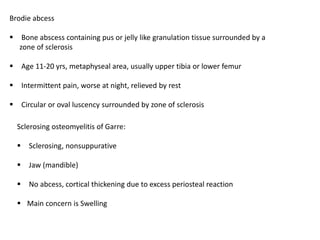
Brodie abcess
 Bone abscess containing pus or jelly like granulation tissue surrounded by a
zone of sclerosis
 Age 11-20 yrs, metaphyseal area, usually upper tibia or lower femur
 Intermittent pain, worse at night, relieved by rest
 Circular or oval luscency surrounded by zone of sclerosis
Sclerosing osteomyelitis of Garre:
 Sclerosing, nonsuppurative
 Jaw (mandible)
 No abcess, cortical thickening due to excess periosteal reaction
 Main concern is Swelling
PATHOPHYSIOLOGY OF SEQUESTRUM.pptx

PATHOPHYSIOLOGY OF SEQUESTRUM.pptx

  • 1.
  • 2.
     CLASSIFICATION OFOSTEOMYELITIS:  Duration - Acute / Subacute / Chronic  Mechanism - Heamatogenous(Blood)/ Exogenous (open fractures)  Host response - Pyogenic / Granulomatous
  • 3.
    CAUSATIVE MICROORGANISMS:  Overallmost common cause:S.aureus  Most common cause in I.V drug abusers:Pseudomonas  Most common cause in Sickle cell disease:Salmonella  In Neonates:Group b streptococci Most common route of spread:Hematogenous especially in children Most common route in adults:Spread from contigious site, Post Traumatic,Open fractures.
  • 9.
    Clinical features:  Overallmost common site:Metaphysis of distal femur  Most common site in adults:Thoracolumbar spine  pain or tenderness, swelling,fever,  Pseudoparalysis  In Adults:Backache,and fever  In Infants:Delayed growth
  • 12.
    Brodie abcess  Boneabscess containing pus or jelly like granulation tissue surrounded by a zone of sclerosis  Age 11-20 yrs, metaphyseal area, usually upper tibia or lower femur  Intermittent pain, worse at night, relieved by rest  Circular or oval luscency surrounded by zone of sclerosis Sclerosing osteomyelitis of Garre:  Sclerosing, nonsuppurative  Jaw (mandible)  No abcess, cortical thickening due to excess periosteal reaction  Main concern is Swelling