CARDIOVASCULARAND
HAEMOPOETICSYSTEM
CORRELATION SEMINAR
TOPIC: MALARIA
1
1
OBJECTIVE:
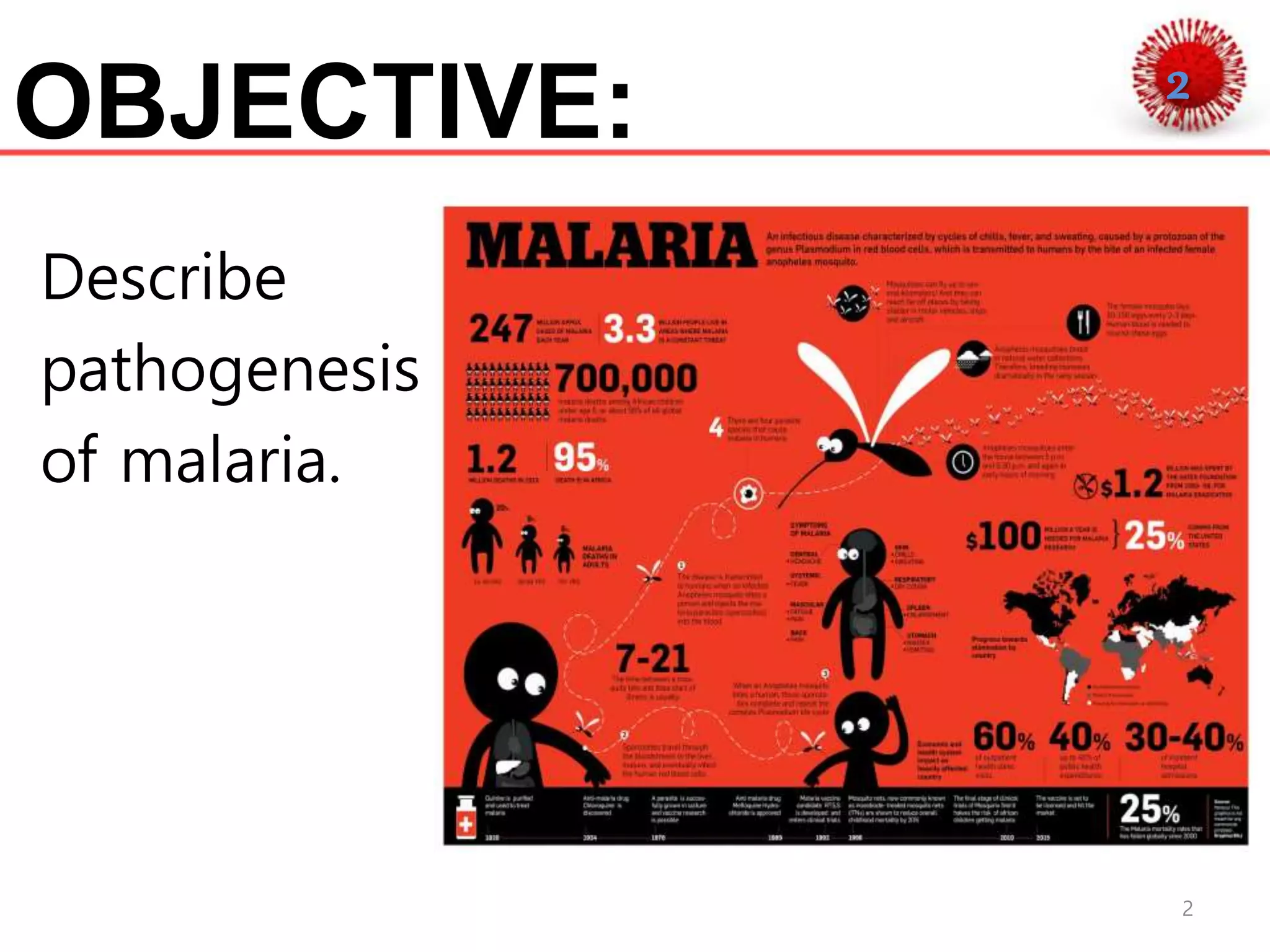
Describe
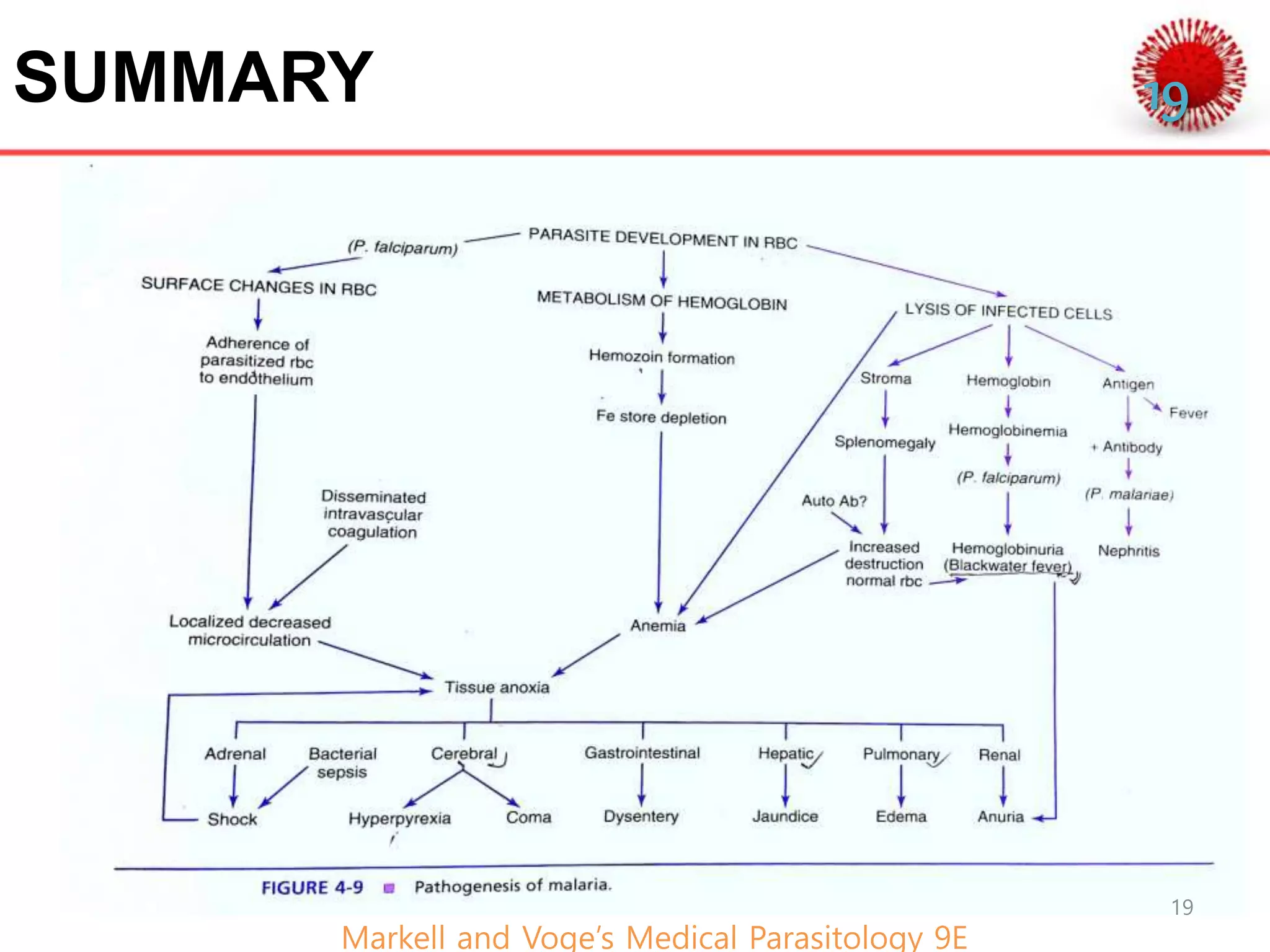
pathogenesis
of malaria.
2
2
INTRODUCTION:
WHY MALARIA?
MAL=foul ; ARIA=air
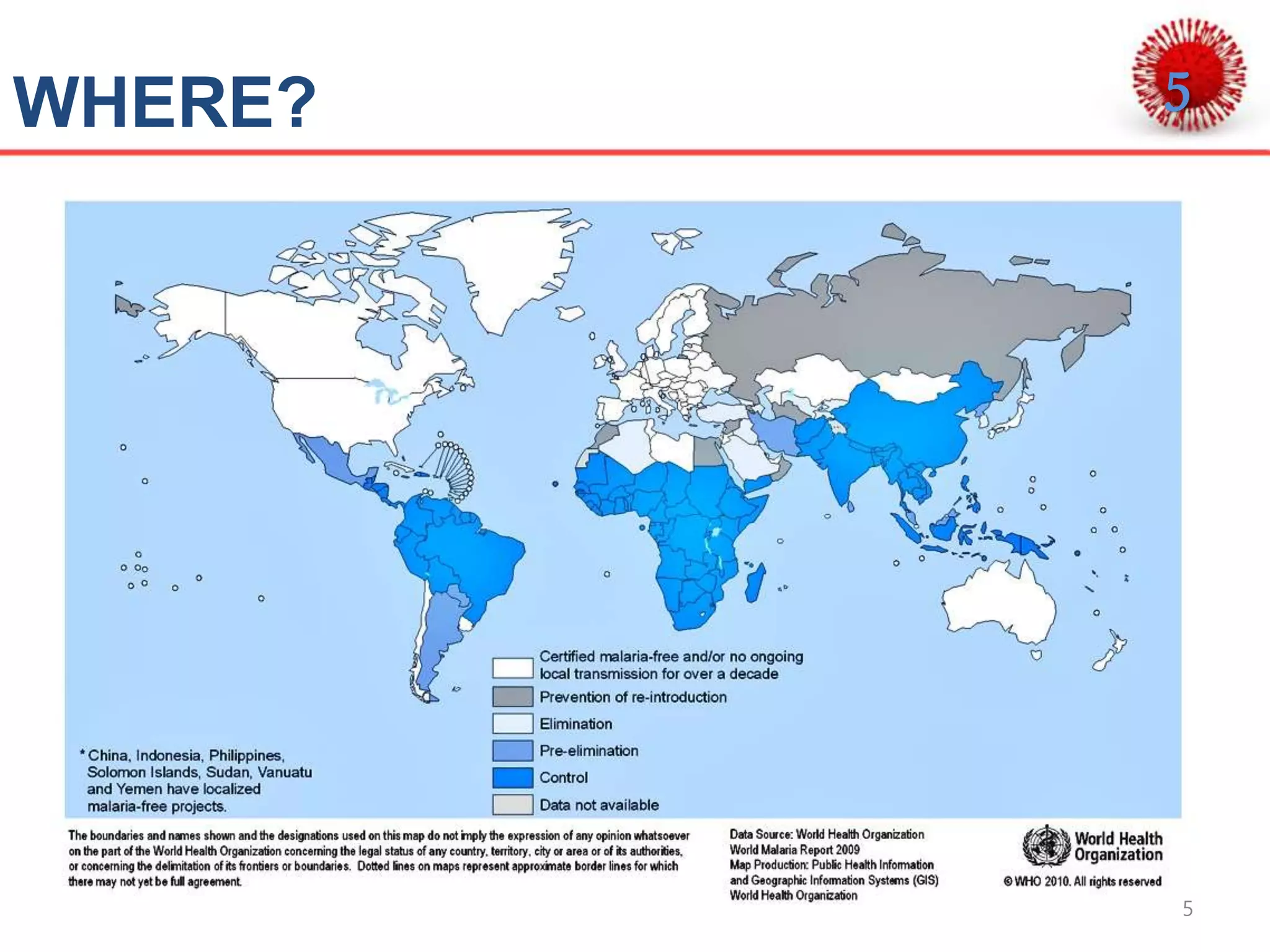
One of the most common infectious disease
and enormous health problem.
It causes disease in approximately 219
million cases of malaria in 87 countries.
4,35,000 Malarial deaths worldwide in 2017.
3
3
WHO ARE AT RISK?
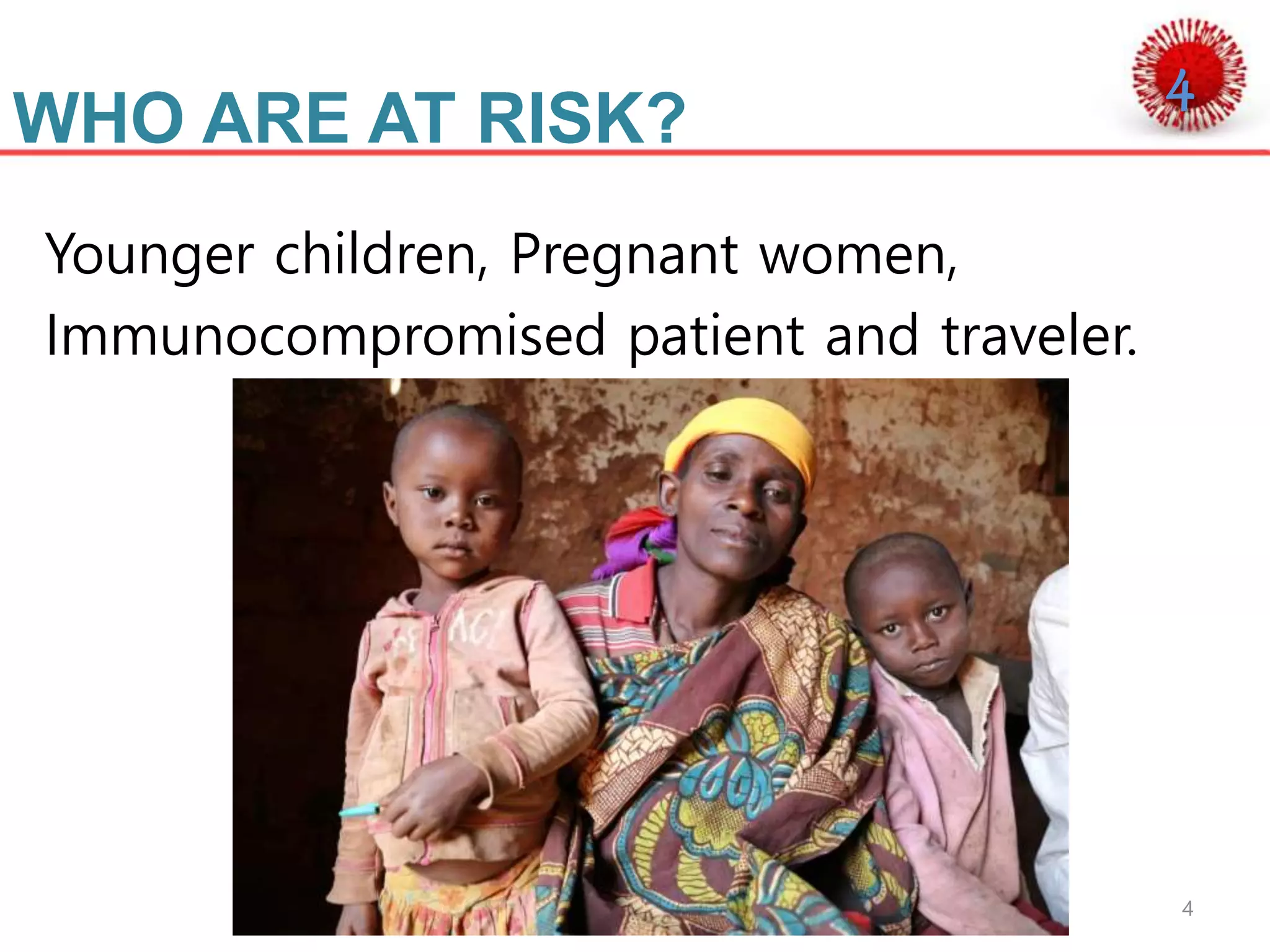
Younger children, Pregnant women,
Immunocompromised patient and traveler.
4
4
WHERE?
5
5
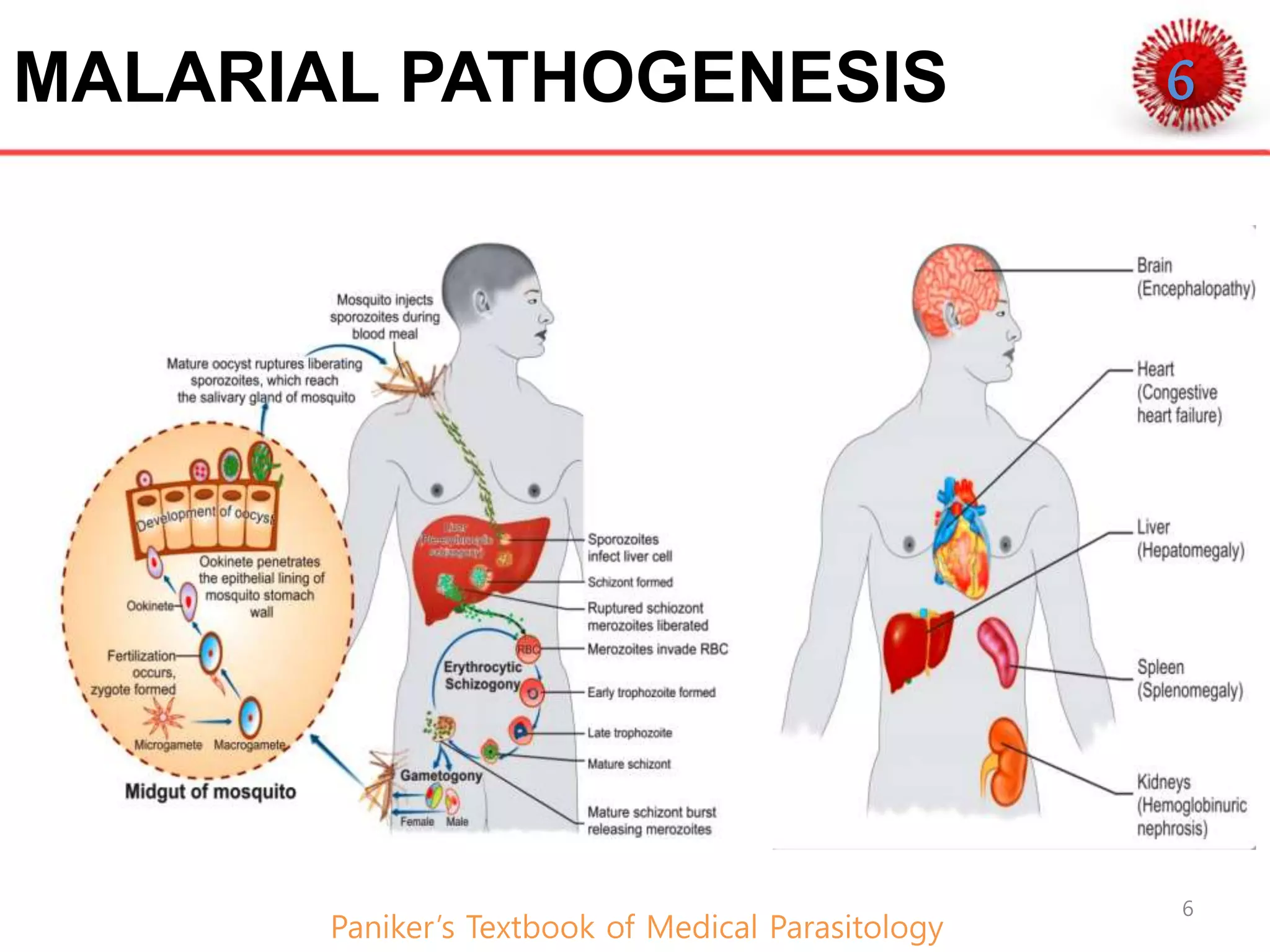
MALARIAL PATHOGENESIS
6
6
Paniker’s Textbook of Medical Parasitology
HEPATIC PHASE
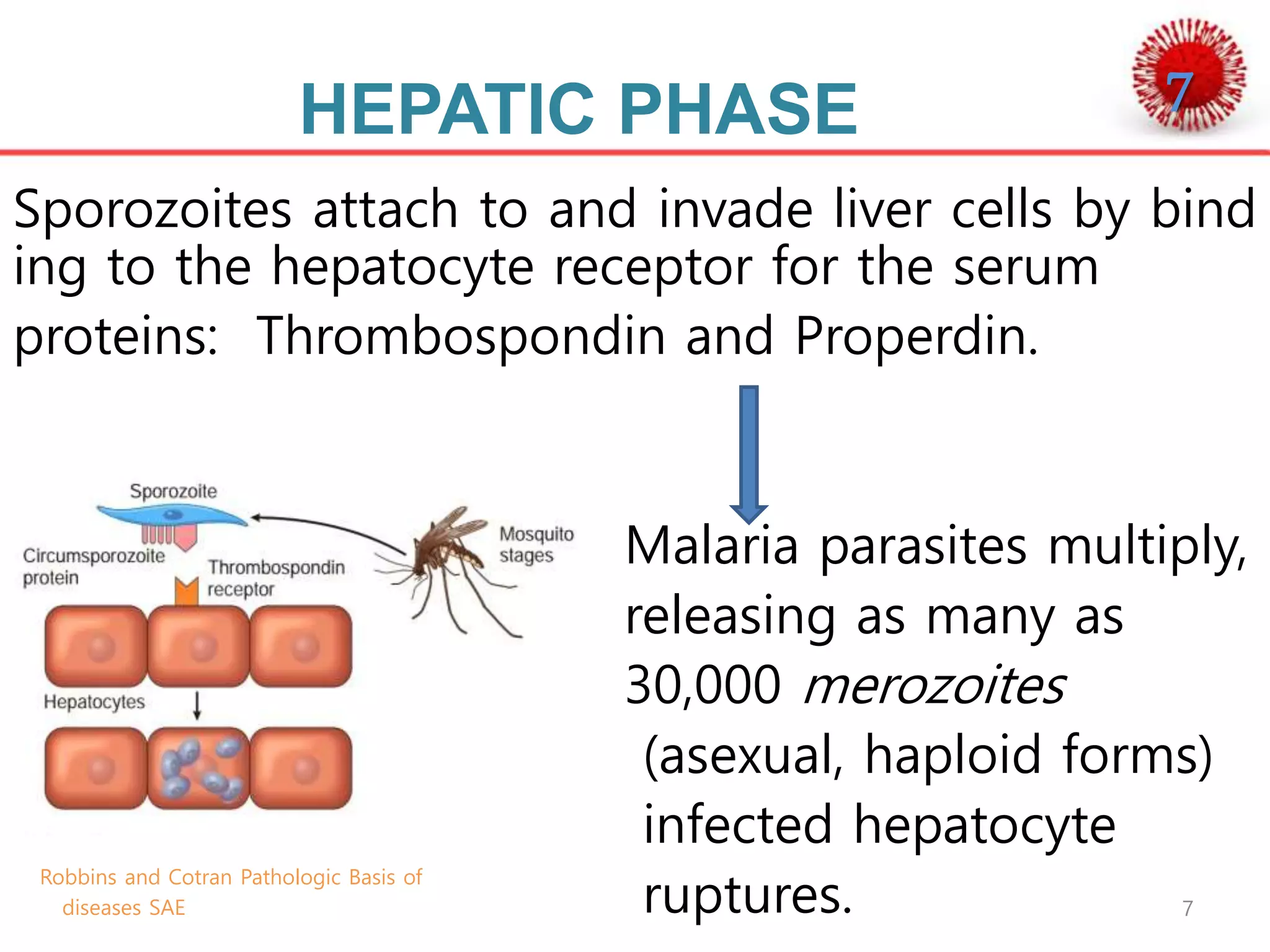
Sporozoites attach to and invade liver cells by bind
ing to the hepatocyte receptor for the serum
proteins: Thrombospondin and Properdin.
Malaria parasites multiply,
releasing as many as
30,000 merozoites
(asexual, haploid forms)
infected hepatocyte
ruptures. 7
7
Robbins and Cotran Pathologic Basis of
diseases SAE
HEPATIC PHASE
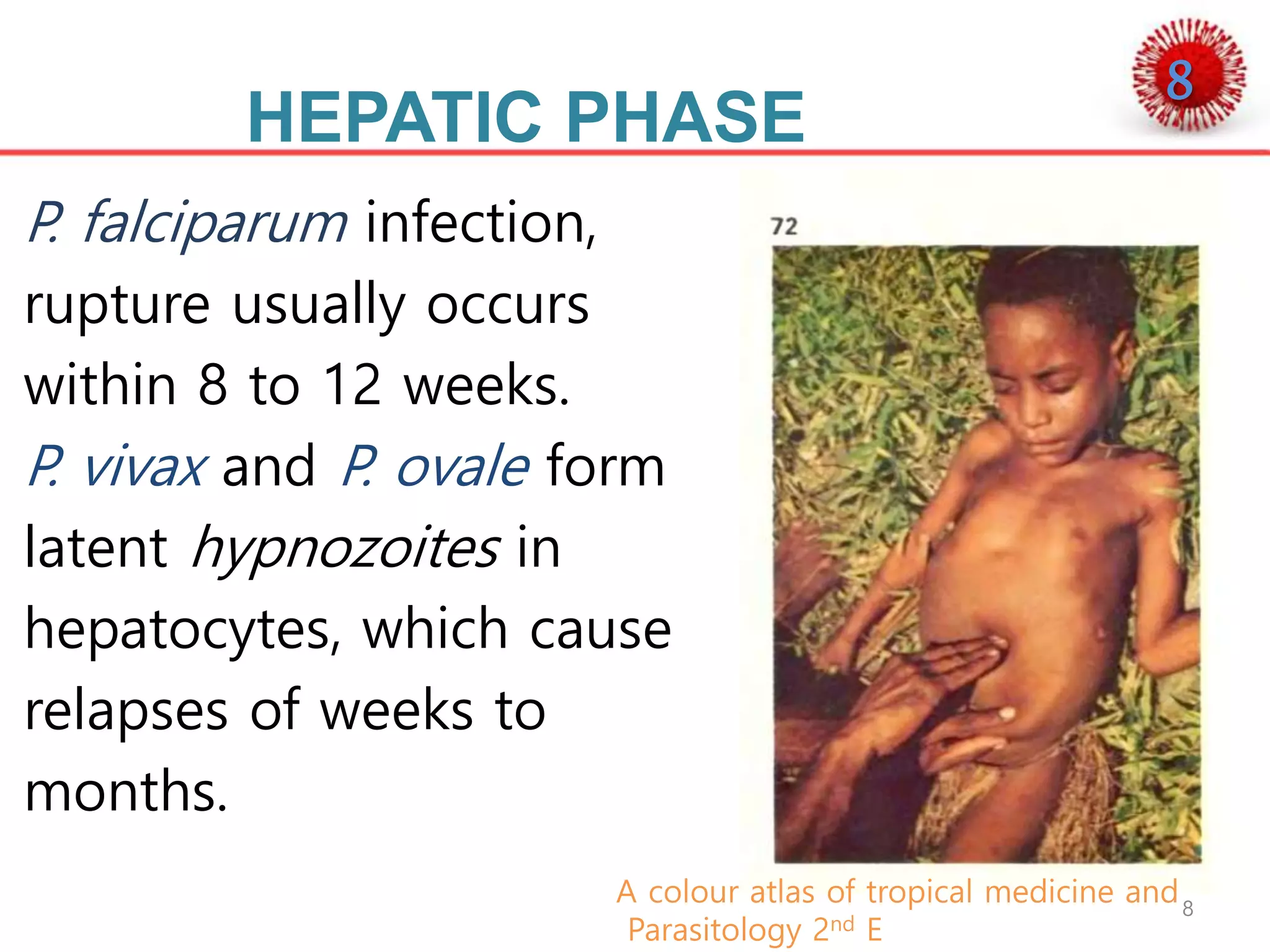
P. falciparum infection,
rupture usually occurs
within 8 to 12 weeks.
P. vivax and P. ovale form
latent hypnozoites in
hepatocytes, which cause
relapses of weeks to
months.
8
8
A colour atlas of tropical medicine and
Parasitology 2nd E
ERYTHOCYTIC PHASE
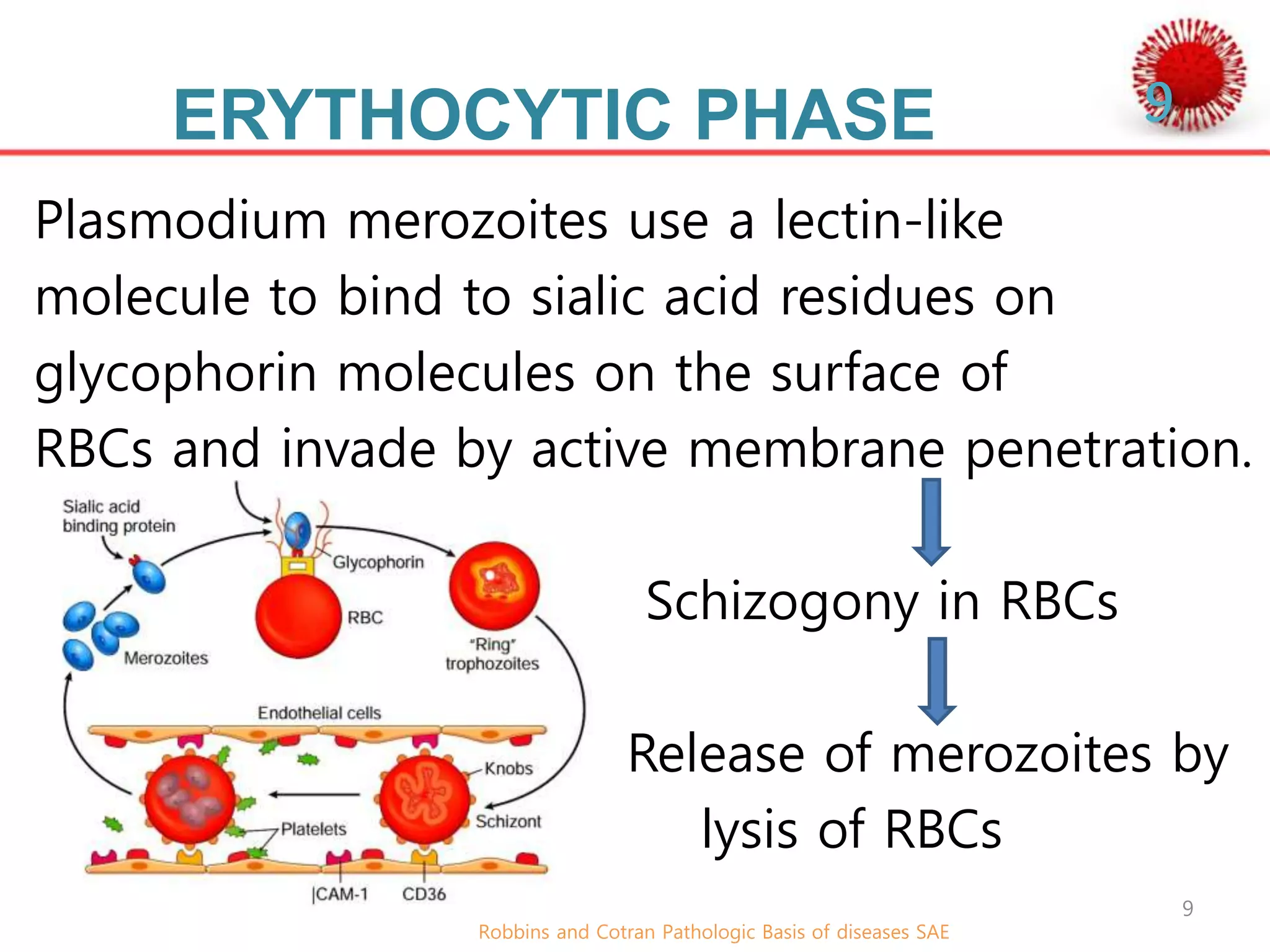
Plasmodium merozoites use a lectin-like
molecule to bind to sialic acid residues on
glycophorin molecules on the surface of
RBCs and invade by active membrane penetration.
Schizogony in RBCs
Release of merozoites by
lysis of RBCs
Robbins and Cotran Pathologic Basis of diseases SAE
9
9
ERYTHOCYTIC PHASE
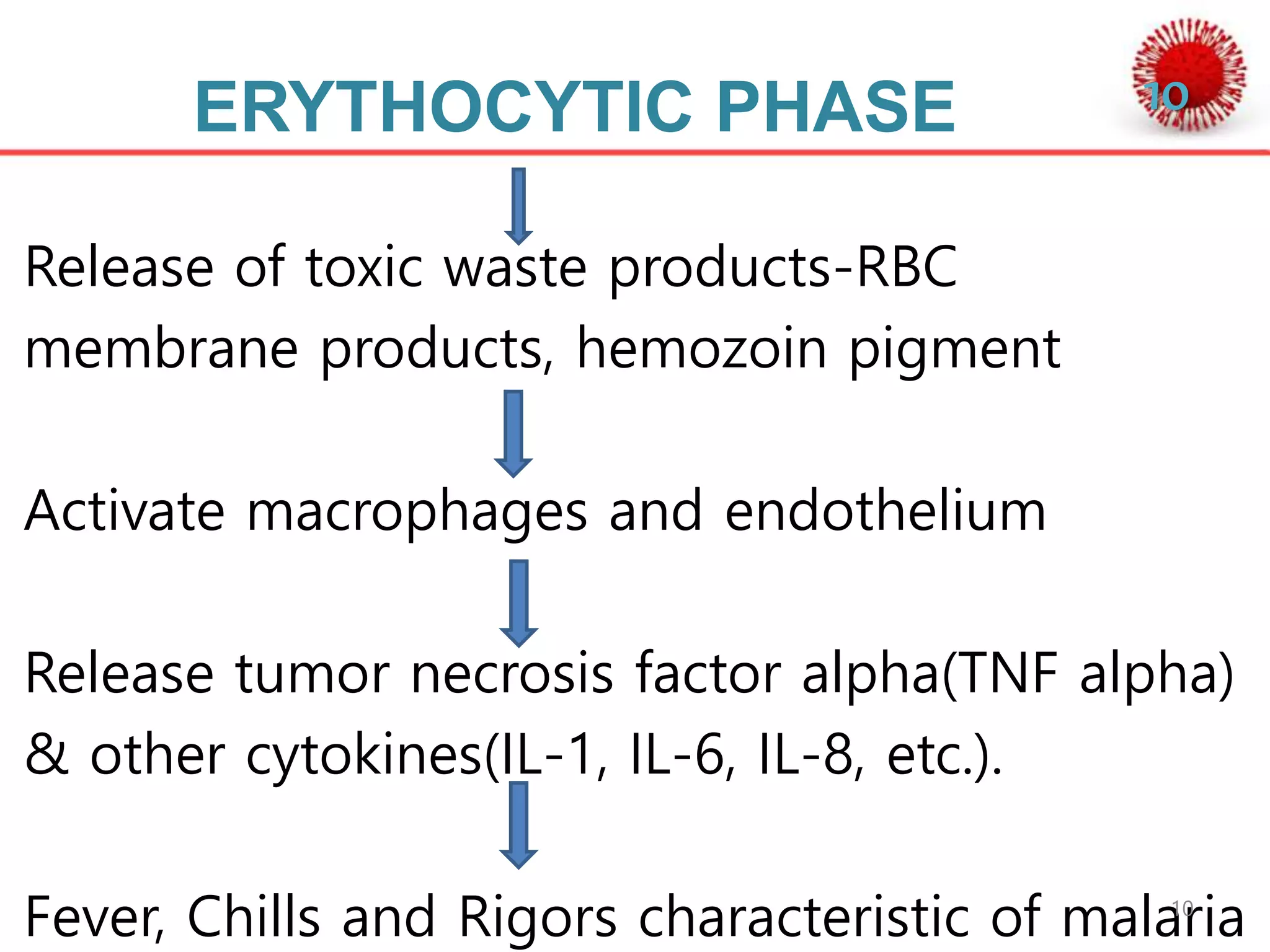
Release of toxic waste products-RBC
membrane products, hemozoin pigment
Activate macrophages and endothelium
Release tumor necrosis factor alpha(TNF alpha)
& other cytokines(IL-1, IL-6, IL-8, etc.).
Fever, Chills and Rigors characteristic of malaria10
10
HEPATIC & SPLENIC
11
11
Paniker’s Textbook of Medical Parasitology
12
12
Atlas of Medical Helminthology and Protozoology
13
13
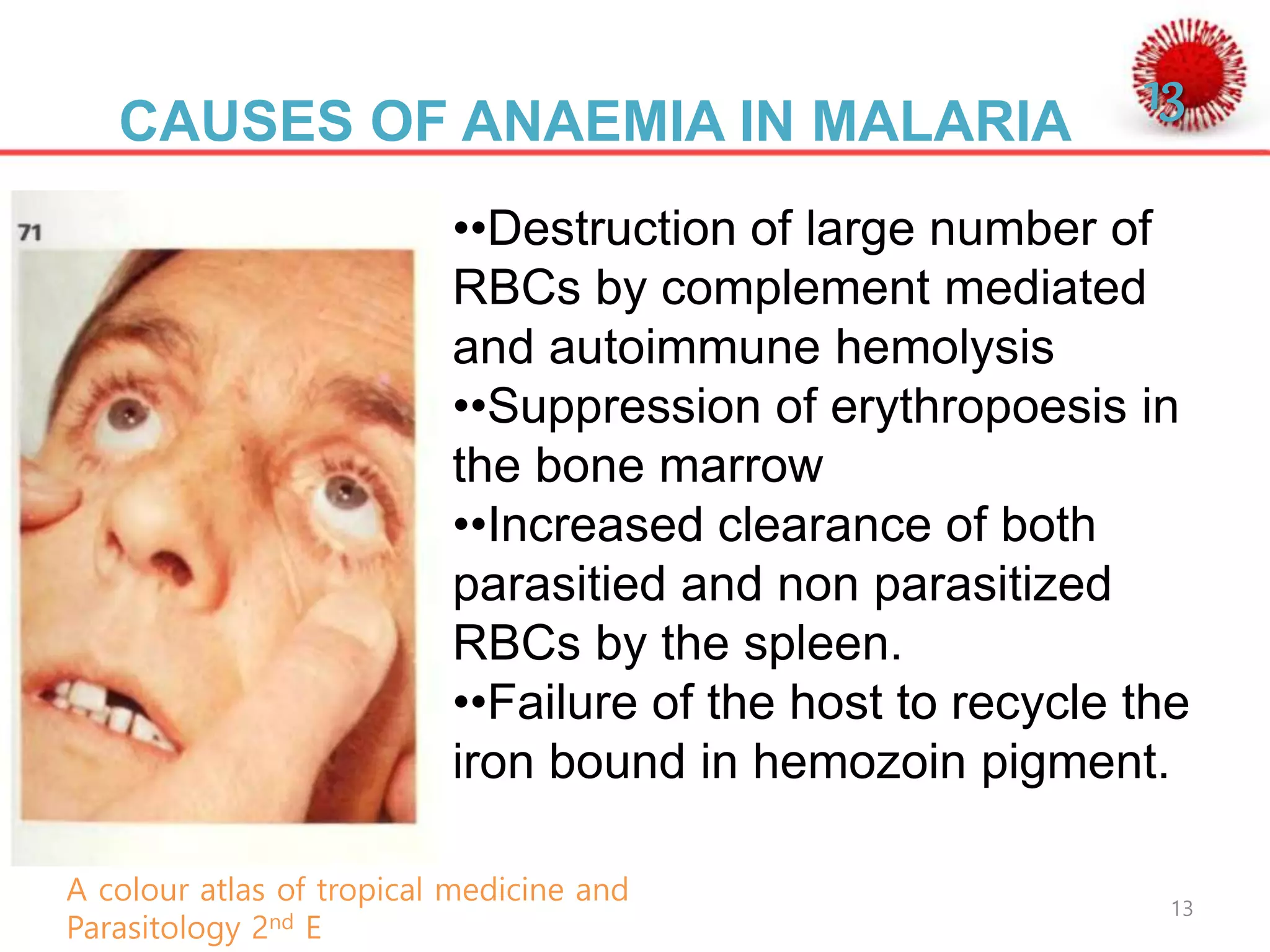
••Destruction of large number of
RBCs by complement mediated
and autoimmune hemolysis
••Suppression of erythropoesis in
the bone marrow
••Increased clearance of both
parasitied and non parasitized
RBCs by the spleen.
••Failure of the host to recycle the
iron bound in hemozoin pigment.
CAUSES OF ANAEMIA IN MALARIA
A colour atlas of tropical medicine and
Parasitology 2nd E
Plasmodium vivax,
P malariae, and P ovale
parasitemias are relatively
low grade, primarily
because the parasites favor
either young or old red
cells but not both.
14
14
Source:Internet
PATHOGENESIS OF SEVERE
MALARIA
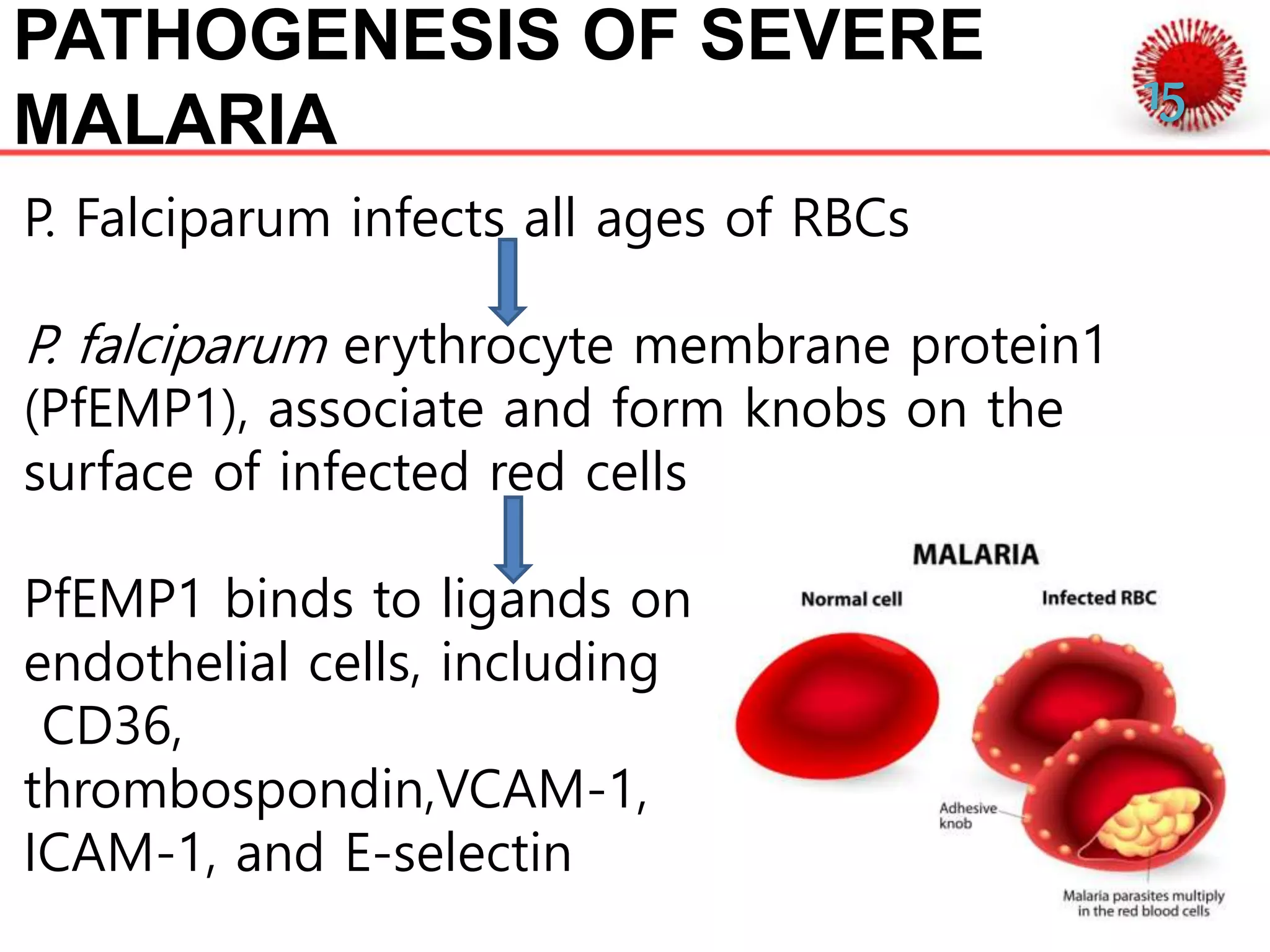
P. Falciparum infects all ages of RBCs
P. falciparum erythrocyte membrane protein1
(PfEMP1), associate and form knobs on the
surface of infected red cells
PfEMP1 binds to ligands on
endothelial cells, including
CD36,
thrombospondin,VCAM-1,
ICAM-1, and E-selectin
15
15
PATHOGENESIS OF SEVERE
MALARIA
Infected RBCs to clump
together(ROSETTE)
Stick to endothelial cell lining
of small blood vessels
(SEQUESTRATION)
Blood flow blocks which
decreases tissue perfusion
and leads to Ischemia
[Manifestation of cerebral malaria] Robbins and Cotran
Pathologic Basis of diseases
SAE
16
17
10
Atlas of Medical Helminthology and Protozoology
Robbins and Cotran Pathologic Basis of diseases SAE
18
18
Davidson’s Medicine 23rd E
SUMMARY
19
19
Markell and Voge’s Medical Parasitology 9E
CORRELATION:
20
Malaria is vector borne infectious disease
caused by protozoan parasites of genus
Plasmodium.
It can be transmitted to people of all ages,
bitten by the vector female Anopheles
mosquitoes.
It reflect multifactorial pathogenic process
affecting many different organs.
20
BIBILOGRAPHY:
 Atlas of Medical Helminthology and Protozoology
 Robbins and Cotran Pathologic Basis of
diseases SAE
 Markell and Voge’s Medical Parasitology 9E
 Paniker’s Textbook of Medical Parasitology
 Davidson’s Medicine 23rd E
 Kayser Medical Microbiology © 2005 Thieme
 A colour atlas of tropical medicine and
Parasitology 2nd E
21
21
THANK YOU !
22
22

Pathogenesis of malaria

  • 1.
  • 2.
  • 3.
    INTRODUCTION: WHY MALARIA? MAL=foul ;ARIA=air One of the most common infectious disease and enormous health problem. It causes disease in approximately 219 million cases of malaria in 87 countries. 4,35,000 Malarial deaths worldwide in 2017. 3 3
  • 4.
    WHO ARE ATRISK? Younger children, Pregnant women, Immunocompromised patient and traveler. 4 4
  • 5.
  • 6.
  • 7.
    HEPATIC PHASE Sporozoites attachto and invade liver cells by bind ing to the hepatocyte receptor for the serum proteins: Thrombospondin and Properdin. Malaria parasites multiply, releasing as many as 30,000 merozoites (asexual, haploid forms) infected hepatocyte ruptures. 7 7 Robbins and Cotran Pathologic Basis of diseases SAE
  • 8.
    HEPATIC PHASE P. falciparuminfection, rupture usually occurs within 8 to 12 weeks. P. vivax and P. ovale form latent hypnozoites in hepatocytes, which cause relapses of weeks to months. 8 8 A colour atlas of tropical medicine and Parasitology 2nd E
  • 9.
    ERYTHOCYTIC PHASE Plasmodium merozoitesuse a lectin-like molecule to bind to sialic acid residues on glycophorin molecules on the surface of RBCs and invade by active membrane penetration. Schizogony in RBCs Release of merozoites by lysis of RBCs Robbins and Cotran Pathologic Basis of diseases SAE 9 9
  • 10.
    ERYTHOCYTIC PHASE Release oftoxic waste products-RBC membrane products, hemozoin pigment Activate macrophages and endothelium Release tumor necrosis factor alpha(TNF alpha) & other cytokines(IL-1, IL-6, IL-8, etc.). Fever, Chills and Rigors characteristic of malaria10 10
  • 11.
    HEPATIC & SPLENIC 11 11 Paniker’sTextbook of Medical Parasitology
  • 12.
    12 12 Atlas of MedicalHelminthology and Protozoology
  • 13.
    13 13 ••Destruction of largenumber of RBCs by complement mediated and autoimmune hemolysis ••Suppression of erythropoesis in the bone marrow ••Increased clearance of both parasitied and non parasitized RBCs by the spleen. ••Failure of the host to recycle the iron bound in hemozoin pigment. CAUSES OF ANAEMIA IN MALARIA A colour atlas of tropical medicine and Parasitology 2nd E
  • 14.
    Plasmodium vivax, P malariae,and P ovale parasitemias are relatively low grade, primarily because the parasites favor either young or old red cells but not both. 14 14 Source:Internet
  • 15.
    PATHOGENESIS OF SEVERE MALARIA P.Falciparum infects all ages of RBCs P. falciparum erythrocyte membrane protein1 (PfEMP1), associate and form knobs on the surface of infected red cells PfEMP1 binds to ligands on endothelial cells, including CD36, thrombospondin,VCAM-1, ICAM-1, and E-selectin 15 15
  • 16.
    PATHOGENESIS OF SEVERE MALARIA InfectedRBCs to clump together(ROSETTE) Stick to endothelial cell lining of small blood vessels (SEQUESTRATION) Blood flow blocks which decreases tissue perfusion and leads to Ischemia [Manifestation of cerebral malaria] Robbins and Cotran Pathologic Basis of diseases SAE 16
  • 17.
    17 10 Atlas of MedicalHelminthology and Protozoology Robbins and Cotran Pathologic Basis of diseases SAE
  • 18.
  • 19.
    SUMMARY 19 19 Markell and Voge’sMedical Parasitology 9E
  • 20.
    CORRELATION: 20 Malaria is vectorborne infectious disease caused by protozoan parasites of genus Plasmodium. It can be transmitted to people of all ages, bitten by the vector female Anopheles mosquitoes. It reflect multifactorial pathogenic process affecting many different organs. 20
  • 21.
    BIBILOGRAPHY:  Atlas ofMedical Helminthology and Protozoology  Robbins and Cotran Pathologic Basis of diseases SAE  Markell and Voge’s Medical Parasitology 9E  Paniker’s Textbook of Medical Parasitology  Davidson’s Medicine 23rd E  Kayser Medical Microbiology © 2005 Thieme  A colour atlas of tropical medicine and Parasitology 2nd E 21 21
  • 22.

Editor's Notes

  • #15 SMALL FRACTION IN RBC POOL