Download to read offline


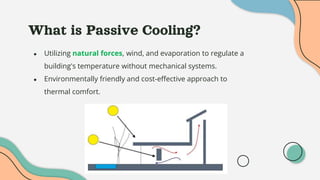
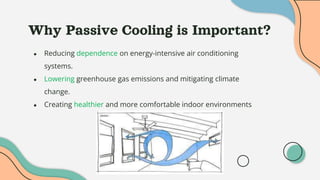
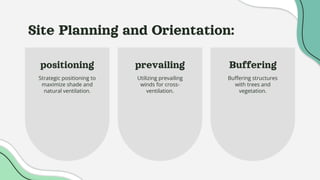
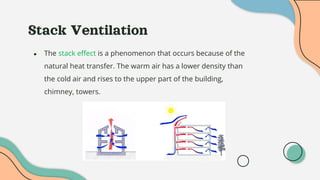
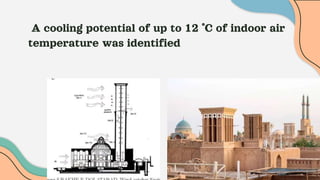
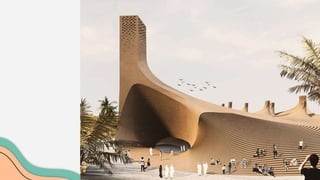
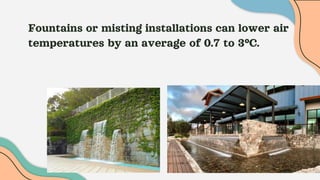
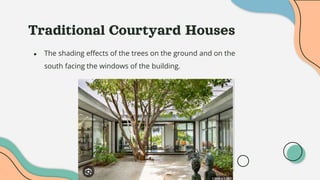
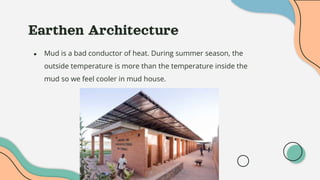

Passive cooling techniques utilize natural forces like wind and evaporation to regulate building temperatures without mechanical systems. This document discusses several passive cooling strategies like site planning and orientation to maximize shade and ventilation, buffering structures with trees, stack ventilation using natural heat transfer and chimneys, evaporative cooling with water features, and traditional courtyard houses and earthen architecture which provide natural thermal regulation. Passive cooling is important to reduce energy usage, lower emissions, and create healthier indoor spaces.


