PASSIV
E
DESIGN
GÖRKEM DİKEN
ARC252
170201005
PASSIVE DESIGN
Designers tune the thermal characteristics of buildings so
that they moderate external environmental conditions and
maintain internal conditions using the minimum
resources of materials and fuel.
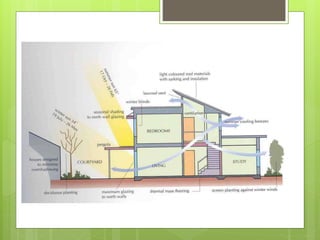
Passive design maximises the use of 'natural' sources
of heating, cooling and ventilation to create comfortable
conditions inside buildings. It harness environmental
conditions such as solar radiation, cool night air and air
pressure differences to drive the internal environment.
Passive measures do not involve mechanical or electrical
systems.
Passive design can include:
 Passive cooling.
 Passive heating.
 Passive ventilation (or natural ventilation).
 NB: Passive solar design is an aspect of passive
building design that focusses on maximising the use of
heat energy from solar radiation.
Passive design can include consideration of:
 Location.
 Landscape.
 Orientation.
 Massing.
 Shading.
 Material selection.
 Thermal mass.
 Insulation.
 Internal layout.
 The positioning of openings to allow the penetration of
solar radiation, visible light and for ventilation.
For new construction, the following passive design
strategies are typically used:
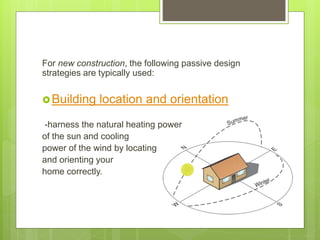
Building location and orientation
-harness the natural heating power
of the sun and cooling
power of the wind by locating
and orienting your
home correctly.
Passive solar
- heat your
home using solar
energy without any
mechanical devices.
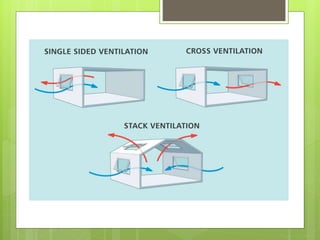
 Natural
ventilation
- use natural winds to
cool or heat your
house by
properly positioning
and sizing your
windows or exhaust
vents.
Natural lighting
- use natural
light to reduce
artificial lighting
usage.
For existing homes, the following passive design strategies are
feasible and effective:
Natural ventilation
 Windows, skylights, and roofs
- retrofit or upgrade your windows, skylights, and roofs to
reduce
energy losses
of your home.
Natural lighting
 Reduced air infiltration -
improve seals around your
windows and doors to
reduce air leaks that can
cause up to 40% of building
heat losses.
Conclusion
Passive design uses layout, fabric and form to reduce or
remove mechanical cooling, heating, ventilation and
lighting demand. Examples of passive design include
optimising spatial planning and orientation to control solar
gains and maximise daylighting, manipulating the building
form and fabric to facilitate natural ventilation strategies
and making effective use of thermal mass to help reduce
peak internal temperatures.
Resources
1. A guide on passive
houses: https://www.thebrecklife.com/passive-house-
sustainability-guide.php
2. https://www.designingbuildings.co.uk/wiki/Passive_buildi
ng_design
3. Ref Home Quality Mark One, Technical Manual
SD239, England, Scotland & Wales, published by BRE
in 2018. http://www.homequalitymark.com/standard
ENVIRONMENTAL
DESIGN SYSTEMS
GÖRKEM DİKEN
170201005

passivedesign-200404081501.pdf

  • 1.
  • 2.
    PASSIVE DESIGN Designers tunethe thermal characteristics of buildings so that they moderate external environmental conditions and maintain internal conditions using the minimum resources of materials and fuel.
  • 4.
    Passive design maximisesthe use of 'natural' sources of heating, cooling and ventilation to create comfortable conditions inside buildings. It harness environmental conditions such as solar radiation, cool night air and air pressure differences to drive the internal environment. Passive measures do not involve mechanical or electrical systems.
  • 6.
    Passive design caninclude:  Passive cooling.  Passive heating.  Passive ventilation (or natural ventilation).  NB: Passive solar design is an aspect of passive building design that focusses on maximising the use of heat energy from solar radiation.
  • 7.
    Passive design caninclude consideration of:  Location.  Landscape.  Orientation.  Massing.  Shading.  Material selection.  Thermal mass.  Insulation.  Internal layout.  The positioning of openings to allow the penetration of solar radiation, visible light and for ventilation.
  • 8.
    For new construction,the following passive design strategies are typically used: Building location and orientation -harness the natural heating power of the sun and cooling power of the wind by locating and orienting your home correctly.
  • 10.
    Passive solar - heatyour home using solar energy without any mechanical devices.
  • 12.
     Natural ventilation - usenatural winds to cool or heat your house by properly positioning and sizing your windows or exhaust vents.
  • 14.
    Natural lighting - usenatural light to reduce artificial lighting usage.
  • 16.
    For existing homes,the following passive design strategies are feasible and effective: Natural ventilation  Windows, skylights, and roofs - retrofit or upgrade your windows, skylights, and roofs to reduce energy losses of your home.
  • 17.
    Natural lighting  Reducedair infiltration - improve seals around your windows and doors to reduce air leaks that can cause up to 40% of building heat losses.
  • 19.
    Conclusion Passive design useslayout, fabric and form to reduce or remove mechanical cooling, heating, ventilation and lighting demand. Examples of passive design include optimising spatial planning and orientation to control solar gains and maximise daylighting, manipulating the building form and fabric to facilitate natural ventilation strategies and making effective use of thermal mass to help reduce peak internal temperatures.
  • 20.
    Resources 1. A guideon passive houses: https://www.thebrecklife.com/passive-house- sustainability-guide.php 2. https://www.designingbuildings.co.uk/wiki/Passive_buildi ng_design 3. Ref Home Quality Mark One, Technical Manual SD239, England, Scotland & Wales, published by BRE in 2018. http://www.homequalitymark.com/standard
  • 21.