The new interior design:
changes after pandemic
Ar.M.Tariq
Lecture for Batch 2017
• The Covid-19 pandemic has changed everything.
• The very ways in which we live, work, learn, and even play
have transformed dramatically during the days of the crisis. In many
ways, the changes are here to stay.
• These changes can be felt in every domain, from agriculture to
pharmaceuticals, apparel to aviation, travel to technology,
automobiles to architecture.
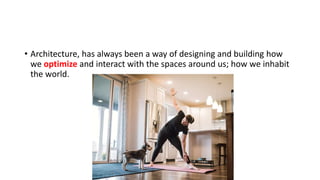
• Architecture, has always been a way of designing and building how
we optimize and interact with the spaces around us; how we inhabit
the world.
• reimagining densely-packed public spaces (like high-rise apartments,
commercial complexes, schools, hospitals, airports, railways etc.
• taking a look closer at home (for instance, how to deal with
optimising living spaces to accommodate work/study as well)
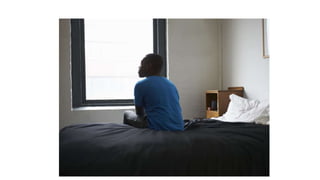
• Imagine the pre-pandemic world. For many working professionals—
the “home” was usually really lived in only during the weekends or
on holidays.
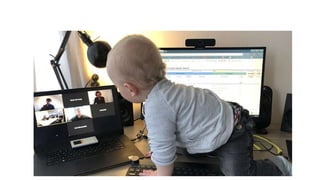
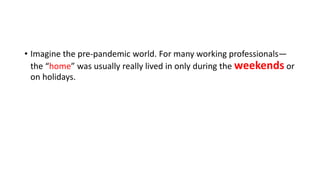
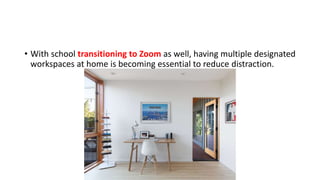
• With school transitioning to Zoom as well, having multiple designated
workspaces at home is becoming essential to reduce distraction.
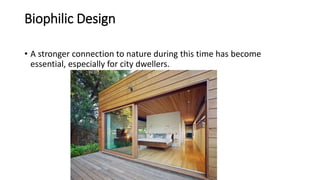
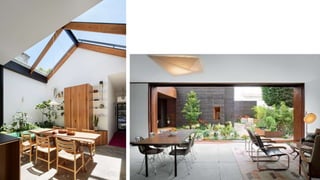
Biophilic Design
• A stronger connection to nature during this time has become
essential, especially for city dwellers.
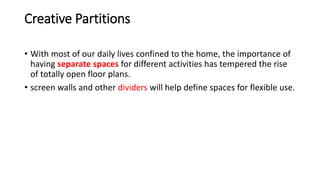
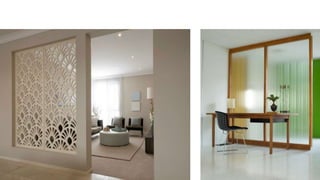
Creative Partitions
• With most of our daily lives confined to the home, the importance of
having separate spaces for different activities has tempered the rise
of totally open floor plans.
• screen walls and other dividers will help define spaces for flexible use.
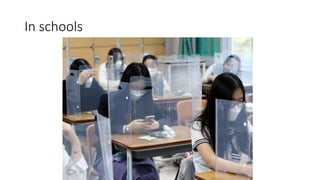
In schools
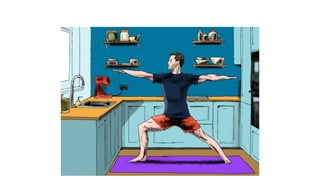
Multiuse Bonus Rooms
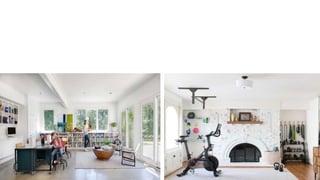
• Homeowners are taking advantage of underutilized basements,
bedrooms, and garages, recasting them as bonus spaces for working
out, watching movies, and other activities that keep the family
entertained during a pandemic.
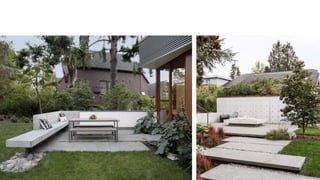
Outdoor Entertainment Areas
• With restaurants, bars, and other venues are difficult to find—our
homes and backyards have become community hubs for loved ones
to hang out at a responsible social distance.
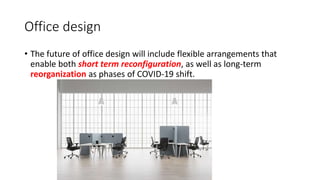
Office design
• The future of office design will include flexible arrangements that
enable both short term reconfiguration, as well as long-term
reorganization as phases of COVID-19 shift.

The new interior design: changes after pandemics

  • 1.
    The new interiordesign: changes after pandemic Ar.M.Tariq Lecture for Batch 2017
  • 6.
    • The Covid-19pandemic has changed everything. • The very ways in which we live, work, learn, and even play have transformed dramatically during the days of the crisis. In many ways, the changes are here to stay. • These changes can be felt in every domain, from agriculture to pharmaceuticals, apparel to aviation, travel to technology, automobiles to architecture.
  • 7.
    • Architecture, hasalways been a way of designing and building how we optimize and interact with the spaces around us; how we inhabit the world.
  • 8.
    • reimagining densely-packedpublic spaces (like high-rise apartments, commercial complexes, schools, hospitals, airports, railways etc. • taking a look closer at home (for instance, how to deal with optimising living spaces to accommodate work/study as well)
  • 9.
    • Imagine thepre-pandemic world. For many working professionals— the “home” was usually really lived in only during the weekends or on holidays.
  • 10.
    • With schooltransitioning to Zoom as well, having multiple designated workspaces at home is becoming essential to reduce distraction.
  • 11.
    Biophilic Design • Astronger connection to nature during this time has become essential, especially for city dwellers.
  • 13.
    Creative Partitions • Withmost of our daily lives confined to the home, the importance of having separate spaces for different activities has tempered the rise of totally open floor plans. • screen walls and other dividers will help define spaces for flexible use.
  • 15.
  • 16.
    Multiuse Bonus Rooms •Homeowners are taking advantage of underutilized basements, bedrooms, and garages, recasting them as bonus spaces for working out, watching movies, and other activities that keep the family entertained during a pandemic.
  • 18.
    Outdoor Entertainment Areas •With restaurants, bars, and other venues are difficult to find—our homes and backyards have become community hubs for loved ones to hang out at a responsible social distance.
  • 20.
    Office design • Thefuture of office design will include flexible arrangements that enable both short term reconfiguration, as well as long-term reorganization as phases of COVID-19 shift.