Presentation Title
• Shivam kumar soni
• Sandeep singh
• Garima sharma
• Tarun Kantak
• Bhanu gurjar
HISTORY OF PARLE:
 Parle products company was founded in 1929 in India
by the chauhan family of vile parle, Bombay.
 Parle Glucose and Parle monaco were the first brands
of biscuits to be introduced, which later went on to
become leading name for grants taste and quality.
 Parle name has grown in all directions, won
international fame and has been sweetening people’s
lives all over India and abroad
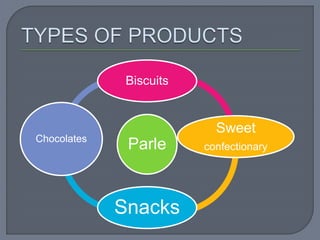
Parle
Biscuits
Sweet
confectionary
Snacks
Chocolates
 Parle-G biscuits were earlier called ‘Parle glucose’
Biscuits until the 1980s.
 Parle products has been India's largest manufactures of
biscuits and confectionery for almost 85 years.
 The “G” in the name Parle-G original stood for "Glucose",
though a later brand slogan also started “G for Genius”.
 In 2013, Parle-G became India’s first FMCG brand to
cross the Rs 5000 crore mark in retail sales.
HISTORY OF PARLE BISCUITS
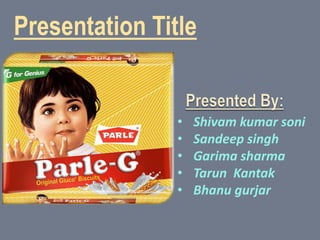
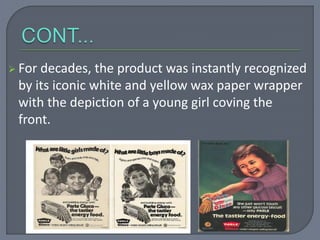
 For decades, the product was instantly recognized
by its iconic white and yellow wax paper wrapper
with the depiction of a young girl coving the
front.
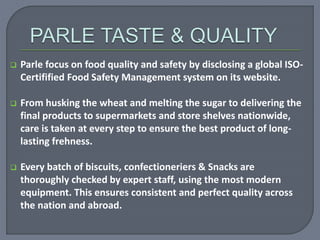
 Parle focus on food quality and safety by disclosing a global ISO-
Certifified Food Safety Management system on its website.
 From husking the wheat and melting the sugar to delivering the
final products to supermarkets and store shelves nationwide,
care is taken at every step to ensure the best product of long-
lasting frehness.
 Every batch of biscuits, confectioneriers & Snacks are
thoroughly checked by expert staff, using the most modern
equipment. This ensures consistent and perfect quality across
the nation and abroad.
The flavours are delicately balanced such
that the biscuit is well-liked by adults and
kids.
Concentrating on consumer tastes and
preferences, the parle brand has grown
from strength to strength ever since its
inception.
 The immense popularity of Parle product in india
was always a challenges to their production
capacity. Now, using more modern techniques for
capacity, expansion, they have began spreading
their wings and are going global.
 Parle biscuit and confectionaries are fast gaining
acceptance in international markets, such as, Abu
Dhabi, Africa ,Dubai, south America and Sri Lanka.
Even the more sophisticated markets like USA &
Australia, now relish Parle product.
 According to a Nielsen report released in 2011,
Parle-G is the largest selling biscuits in the world.
 It has 70% market in India in the glucose
biscuit category followed by Britannia, Tiger 17-18%
and Sun feast 8-9%.
 Last fiscal, Parle sales of Rs 3500 core (Rs 20 billion).
It also is popular across the world and is starting to
sell in Western Europe and USA.
o Parle-g has adopted the market penetration strategy i.e. low price
along with capturing of a large market.
o The values for money positioning helps generate large
sales volumes for the products. Parle-g available in rs.2, rs.5,
rs.10, rs.20, rs.40 packets. Profit margin for distributors is 4% and
for retails is 10-12%.
o Also they focus on providing good quality products at the
same time, which means it uses the values pricing method.
o Parle-g maintained its price of rs.5 for many years.
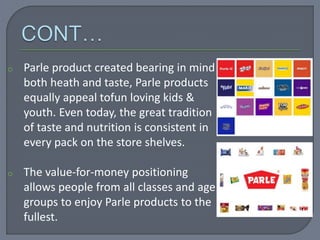
o Parle product created bearing in mind
both heath and taste, Parle products
equally appeal tofun loving kids &
youth. Even today, the great tradition
of taste and nutrition is consistent in
every pack on the store shelves.
o The value-for-money positioning
allows people from all classes and age
groups to enjoy Parle products to the
fullest.
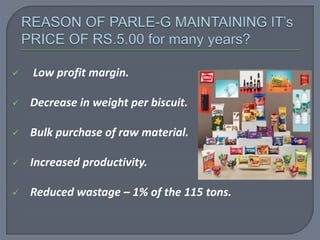
 Low profit margin.
 Decrease in weight per biscuit.
 Bulk purchase of raw material.
 Increased productivity.
 Reduced wastage – 1% of the 115 tons.
 Parle-G is consumed by the people of all ages,
from the rich to the poor, living in cities & in villages.
While some have it for breakfast, for others it is a
complete wholesome meal. For some it's the best
accompaniment for tea. While for some it’s a way
of getting charged whenever they are low on
energy.
 Parle Company practices mass market for Parle-G
which appeals to masses.
 Increasing prices of basic raw materials like sugar,
wheat, milk, and milk powder.
 This leading to increase in manufacturing cost of the biscuits.
Parle-G is a very price sansitive product.
 Small increase in price (by 50 paisa) in the past had
seen high decline in sales. Even though the parle is
market leader in the segment, others are also trying to
capture the chunk of the market share.
 Fake brands like Parle G ,Parle Jee tried to extract market
share.
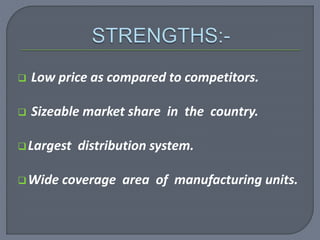
 Low price as compared to competitors.
 Sizeable market share in the country.
Largest distribution system.
Wide coverage area of manufacturing units.
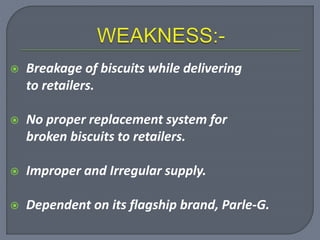
 Breakage of biscuits while delivering
to retailers.
 No proper replacement system for
broken biscuits to retailers.
 Improper and Irregular supply.
 Dependent on its flagship brand, Parle-G.
Rising demand for innovative packaging in pack
aged foods.
Retaining loyal retailers or wholesalers.
New innovative promotion techniques.
Diversify in new Markets.
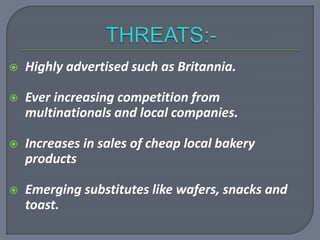
 Highly advertised such as Britannia.
 Ever increasing competition from
multinationals and local companies.
 Increases in sales of cheap local bakery
products
 Emerging substitutes like wafers, snacks and
toast.
 It was concluded that Parle is the first preference of
the both customers and retailers because of its price
and brand image. The Parle Biscuit brands, such as,
Parle-G, Monaco, krackjack, etc.
Enjoy a strong imagery and appeal amongst consum
ers across the world. Which has resulted into Parle-
G being the " world's largest selling biscuits".
 This case study of parle talks about how successful
the brand is. The consumers have immense trust in
the brand therefore it is one of the leading brands of
India. Instead of selling the same old products and
variants in the market.
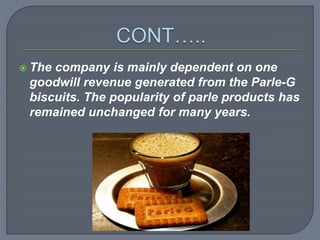
 The company is mainly dependent on one
goodwill revenue generated from the Parle-G
biscuits. The popularity of parle products has
remained unchanged for many years.
Parle-G Case Study 1.pptx

Parle-G Case Study 1.pptx

  • 1.
    Presentation Title • Shivamkumar soni • Sandeep singh • Garima sharma • Tarun Kantak • Bhanu gurjar
  • 2.
    HISTORY OF PARLE: Parle products company was founded in 1929 in India by the chauhan family of vile parle, Bombay.  Parle Glucose and Parle monaco were the first brands of biscuits to be introduced, which later went on to become leading name for grants taste and quality.  Parle name has grown in all directions, won international fame and has been sweetening people’s lives all over India and abroad
  • 3.
  • 4.
     Parle-G biscuitswere earlier called ‘Parle glucose’ Biscuits until the 1980s.  Parle products has been India's largest manufactures of biscuits and confectionery for almost 85 years.  The “G” in the name Parle-G original stood for "Glucose", though a later brand slogan also started “G for Genius”.  In 2013, Parle-G became India’s first FMCG brand to cross the Rs 5000 crore mark in retail sales. HISTORY OF PARLE BISCUITS
  • 5.
     For decades,the product was instantly recognized by its iconic white and yellow wax paper wrapper with the depiction of a young girl coving the front.
  • 6.
     Parle focuson food quality and safety by disclosing a global ISO- Certifified Food Safety Management system on its website.  From husking the wheat and melting the sugar to delivering the final products to supermarkets and store shelves nationwide, care is taken at every step to ensure the best product of long- lasting frehness.  Every batch of biscuits, confectioneriers & Snacks are thoroughly checked by expert staff, using the most modern equipment. This ensures consistent and perfect quality across the nation and abroad.
  • 7.
    The flavours aredelicately balanced such that the biscuit is well-liked by adults and kids. Concentrating on consumer tastes and preferences, the parle brand has grown from strength to strength ever since its inception.
  • 8.
     The immensepopularity of Parle product in india was always a challenges to their production capacity. Now, using more modern techniques for capacity, expansion, they have began spreading their wings and are going global.  Parle biscuit and confectionaries are fast gaining acceptance in international markets, such as, Abu Dhabi, Africa ,Dubai, south America and Sri Lanka. Even the more sophisticated markets like USA & Australia, now relish Parle product.
  • 9.
     According toa Nielsen report released in 2011, Parle-G is the largest selling biscuits in the world.  It has 70% market in India in the glucose biscuit category followed by Britannia, Tiger 17-18% and Sun feast 8-9%.  Last fiscal, Parle sales of Rs 3500 core (Rs 20 billion). It also is popular across the world and is starting to sell in Western Europe and USA.
  • 10.
    o Parle-g hasadopted the market penetration strategy i.e. low price along with capturing of a large market. o The values for money positioning helps generate large sales volumes for the products. Parle-g available in rs.2, rs.5, rs.10, rs.20, rs.40 packets. Profit margin for distributors is 4% and for retails is 10-12%. o Also they focus on providing good quality products at the same time, which means it uses the values pricing method. o Parle-g maintained its price of rs.5 for many years.
  • 11.
    o Parle productcreated bearing in mind both heath and taste, Parle products equally appeal tofun loving kids & youth. Even today, the great tradition of taste and nutrition is consistent in every pack on the store shelves. o The value-for-money positioning allows people from all classes and age groups to enjoy Parle products to the fullest.
  • 12.
     Low profitmargin.  Decrease in weight per biscuit.  Bulk purchase of raw material.  Increased productivity.  Reduced wastage – 1% of the 115 tons.
  • 13.
     Parle-G isconsumed by the people of all ages, from the rich to the poor, living in cities & in villages. While some have it for breakfast, for others it is a complete wholesome meal. For some it's the best accompaniment for tea. While for some it’s a way of getting charged whenever they are low on energy.  Parle Company practices mass market for Parle-G which appeals to masses.
  • 14.
     Increasing pricesof basic raw materials like sugar, wheat, milk, and milk powder.  This leading to increase in manufacturing cost of the biscuits. Parle-G is a very price sansitive product.  Small increase in price (by 50 paisa) in the past had seen high decline in sales. Even though the parle is market leader in the segment, others are also trying to capture the chunk of the market share.  Fake brands like Parle G ,Parle Jee tried to extract market share.
  • 16.
     Low priceas compared to competitors.  Sizeable market share in the country. Largest distribution system. Wide coverage area of manufacturing units.
  • 17.
     Breakage ofbiscuits while delivering to retailers.  No proper replacement system for broken biscuits to retailers.  Improper and Irregular supply.  Dependent on its flagship brand, Parle-G.
  • 18.
    Rising demand forinnovative packaging in pack aged foods. Retaining loyal retailers or wholesalers. New innovative promotion techniques. Diversify in new Markets.
  • 19.
     Highly advertisedsuch as Britannia.  Ever increasing competition from multinationals and local companies.  Increases in sales of cheap local bakery products  Emerging substitutes like wafers, snacks and toast.
  • 20.
     It wasconcluded that Parle is the first preference of the both customers and retailers because of its price and brand image. The Parle Biscuit brands, such as, Parle-G, Monaco, krackjack, etc. Enjoy a strong imagery and appeal amongst consum ers across the world. Which has resulted into Parle- G being the " world's largest selling biscuits".  This case study of parle talks about how successful the brand is. The consumers have immense trust in the brand therefore it is one of the leading brands of India. Instead of selling the same old products and variants in the market.
  • 21.
     The companyis mainly dependent on one goodwill revenue generated from the Parle-G biscuits. The popularity of parle products has remained unchanged for many years.