Submitted by:
Tarique Bin Aziz
BSc. (Honors) in Zoology
MSc. In Wildlife and Biodiversity Conservation
Jagannath University
Parasitic disease in wild animals
Parasite
An organism that lives within or on another organism, the
host.
Two types of parasites are-
Ectoparasite
A parasite that lives on or in the skin like Fleas and lice are
ectoparasites.
Endoparasite
Parasites that live inside the host body like Nematodes,
Coccidian are endoparasites.
Common parasites of wild animals are discussed below.
Herpetofauna
Ectoparasites:
1. Leeches (Hirudineans)
I. Host: Aquatic turtles, snakes, crocodiles and in
amphibians.
II. Symptoms: Distinctive circular lesions, redness and
inflammation.
III. Treatment: Pull off the worms with forceps and
sometime surgical removal may be required.
2. Flies (Bot fly, toad fly)
I. Host: Turtles and toads are infestated by fly larvae.
II. Symptoms: Swelling and pain. Infestation is usually
fatal.
III. Treatment: Flushing with dilute chlorhexadine
solution and treating topically and with antibiotic
therapy.
3. Mites (Ophionyssus sp.)
I. Host: Common in reptiles.
II. Symptoms: Swollen eyes, irritation and reduced
appetite.
III. Treatment: Treatment is with ivermectin or
milbemycin, warm water soaks.
4. Ticks (Ixodes sp. and Amblyomma sp.)
I. Host: Common in monitor lizards, snakes and frogs.
II. Symptoms: Anemia, weight loss, abnormal behavior,
rubbing, hemorrhages.
III. Treatment: Identification and removal with forceps.
Fig.: Leeches in turtles.Fig.: Amblyomma dissimile in snake.
Endoparasites
1. Entamoeba invadens
I. Host: Pathogenic parasite in reptiles and amphibians.
II. Symptoms: Anorexia, weight loss, blood or mucus in
the feces, vomiting, green discoloration to the urates.
III. Treatment: Antiprotozoal drugs, typically with
metronidazole.
2. Nematodes: lungworms (Rhabdias sp.) and hookworms
(Kalicephalus sp.)
I. Host: Reptiles and Rhabdias sp. is common in
amphibians.
II. Symptoms: Anorexia, weight loss, respiratory distress,
lethargy, anemia, ulceration, intestinal obstruction and
peritonitis.
I. Treatment: Anthelmentics like thiabendazole
levamisole, fenbendazole, Piperazine, ivermectin.
3. Acanthocephalans (Neoechinorhynchus)
I. Host: Common in aquatic turtles, frogs and toads.
II. Symptoms: blood or mucus in the stools, anemia,
inflammation and weight loss.
III. Treatment: Levamisole has been used.
4. Flukes: (Ochetosoma heterocoelium)
I. Host: Common in frogs and snakes.
II. Symptoms: Anorexia and profuse salivation.
III. Treatment: Praziquantel or fenbendazole repeated in
two weeks will control this.
5. Pentastomes (Raillietiella)
I. Host: Snakes and lizards, crocodilians, and
piscivorous chelonians.
II. Symptom: Lethargy, anorexia, dyspnea, and blood
tinged saliva.
III. Treatment: Levamisole and one of the avermectins
(Ivermectin or Milbemycin) are effective.
Fig.: Rhabdias sp. Fig.: Ochetosoma heterocoelium
Birds
Ectoparasites:
1. Mites: (Cnemidocoptes, Dermanyssus, Sternostoma)
I. Host: Pigeons, raptors, parrots and finches, canaries.
II. Symptoms: “scaly beak” and “tassle foot”. Bald
spots, Anemia, weakness, respiratory distress.
III. Treatment: Avian Insect Liquidator that is harmless
to birds but effective against insects.
2. Leeches (Theromyzon)
I. Host: Common in waterfowls, geese etc.
II. Symptoms: Head-shaking, scratching and bill
cleaning ‘sneezing’ movements in water, distressed
and irritated, and may be reluctant to feed.
III. Treatment: Ivermectin, orally, subcutaneous, removal
of visible leeches manually using forceps.
3. Bird louse: (suborders, Amblycera and Ischnocera)
I. Host: Common in all birds.
II. Symptoms: Constant preening, scratching, feather
ruffling, slight feather damage, discoloration, restless.
III. Treatment: Mild pet insecticide “Nuvan”. After
spraying gently ruffle the feathers.
4. Flies (blow fly)
I. Host: Found in all birds.
II. Symptoms: Sucks the blood of nestlings and can injure
or kill them, cause diarrhea or wounds.
III. Teatment: Diatomaceous Earth (D.E.) is safe and
effective killer.
Fig.: Feather lice. Fig.: Bird Mite
Fig.: Teal with a duck leech
Endoparasites:
1. Nematodes (Ascarids, Capillaria, Spiruroidea, Syngamus)
I. Host: Water fowl, cockatiels, budgies, imported
macaws, cranes etc.
II. Symptoms: Depressed and emaciated, eggs are shed
in the feces and can be seen in a fecal flotation test.
III. Treatments: Medications include Ivermectin,
fenbendazole, or piperazine.
2. Giardia: singled-celled microbes (protozoa)
I. Host: Cockatiels, budgerigars, lovebirds, macaws,
parrots, cockatoos etc.
II. Symptoms: Malnutrition, diarrhea, weight loss,
itching, feather plucking, excessive pecking,
increased vocalization.
III. Treatment: Can be treated with Metronidazole.
3. Coccidia (Atoxoplasma)
I. Host: Canaries, finches, and mynah birds etc.
II. Symptoms: Depression, anorexia, diarrhea,
hepatomegaly (liver enlargement), and visualized
dilated gut loops.
III. Treatments: Primaquine suppresses the tissue form
and sulfachlorpyridazine may decrease oocyst
shedding.
4. Flukes (Prosthogonimus)
I. Host: Falcons, raptors, chickens, turkeys, pheasants,
cockatoos, and owls etc.
II. Symptoms: Characteristic eggs in feces, inappetence,
droopiness, weight loss.
III. Treatment: Fenbendazole, Praziquantel, Ivermectin
Mammals
Ectoparasites:
1.Ticks (Ixodes sp.)
I. Host: Common in all mammals.
II. Symptoms: Discomfort, itching, inflammation, loss of
apetite.
III. Treatment: Identification and removal with forceps.
2. Lice (Sucking, chewing, biting lice)
I. Host: Common in all small and medium sized
mammals.
II. Symptoms: Itchiness, scratching, rubbing, skin
redness, irritation, dry coat, hair loss, anemia, lethargy,
III. Treatment: Pyrethroid-based pour-ons that spread
over the body via skin oil and spraying.
3. Leeches (Dinobdella ferox)
I. Host: Deer, macaque monkeys, horses, wildcats,
rodents like porcupines and rats.
II. Symptoms: Irritation, itching, distinctive circular
lesions, redness.
III. Treatment: Pull off the worms with forceps and
sometime surgical removal may be required.
4. Mites (Psoroptes ovis)
I. Host: Sheep, horses, cattles etc.
II. Symptoms: Intense itching, with lesions appearing
initially on the shoulders, head and neck.
III. Treatment: Wash with aracacide and Ivermectin may
be recommended.
Endoparasites:
1.Nematodes (Ascaris, Brugia, Capillaria Dioctophyme)
I. Host: Common in all mammals.
II. Symptoms: Weakness, diarrhea, vomiting, weight
loss, belly pain, dull coat, roundworms in poop or
vomit.
III. Treatment: Anthelmintics – injectable, by mouth
and pourons .
2. Coccidians
I. Host: Common in small mammals such as guinea
pigs, rabbits, ferrets etc.
II. Symptoms: diarrhea, lethargy, dehydration, weight
loss, inappetence.
I. Treatment: Coccidiosis should be treated with
trimethoprim-sulfadiazine once daily at 30 mg/kg for
2 weeks.
3. Flukes (Trematoda)
I. Host: Common in all mammals.
II. Symptoms: Paleness, jaundice, abdominal pain-
related nausea, vomiting, or diarrhea.
III. Treatment: Medications may include Flukare® and
Closicom.
4. Pentastomes: Linguatula serrata
I. Host: canids and vulpids
II. Symptoms: Blood discharge from nose, sneezing,
increased noise during breathing, listlessness.
III. Treatment: Levamisole, Thiabendazole
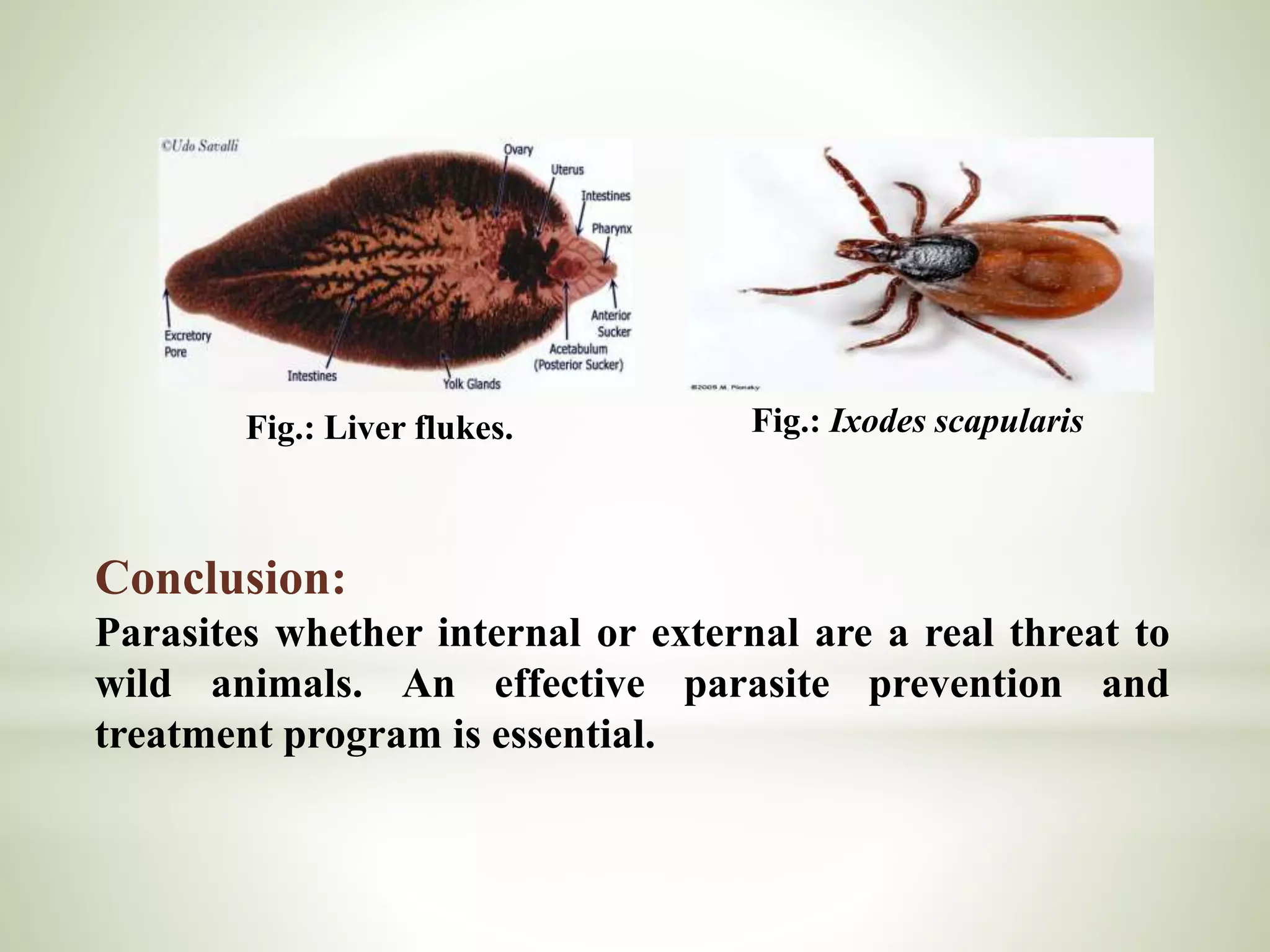
Fig.: Liver flukes.
Conclusion:
Parasites whether internal or external are a real threat to
wild animals. An effective parasite prevention and
treatment program is essential.
Fig.: Ixodes scapularis
Thank you

Parasitic disease in wild animals

  • 1.
    Submitted by: Tarique BinAziz BSc. (Honors) in Zoology MSc. In Wildlife and Biodiversity Conservation Jagannath University Parasitic disease in wild animals
  • 2.
    Parasite An organism thatlives within or on another organism, the host. Two types of parasites are- Ectoparasite A parasite that lives on or in the skin like Fleas and lice are ectoparasites. Endoparasite Parasites that live inside the host body like Nematodes, Coccidian are endoparasites.
  • 3.
    Common parasites ofwild animals are discussed below. Herpetofauna Ectoparasites: 1. Leeches (Hirudineans) I. Host: Aquatic turtles, snakes, crocodiles and in amphibians. II. Symptoms: Distinctive circular lesions, redness and inflammation. III. Treatment: Pull off the worms with forceps and sometime surgical removal may be required.
  • 4.
    2. Flies (Botfly, toad fly) I. Host: Turtles and toads are infestated by fly larvae. II. Symptoms: Swelling and pain. Infestation is usually fatal. III. Treatment: Flushing with dilute chlorhexadine solution and treating topically and with antibiotic therapy. 3. Mites (Ophionyssus sp.) I. Host: Common in reptiles. II. Symptoms: Swollen eyes, irritation and reduced appetite. III. Treatment: Treatment is with ivermectin or milbemycin, warm water soaks.
  • 5.
    4. Ticks (Ixodessp. and Amblyomma sp.) I. Host: Common in monitor lizards, snakes and frogs. II. Symptoms: Anemia, weight loss, abnormal behavior, rubbing, hemorrhages. III. Treatment: Identification and removal with forceps. Fig.: Leeches in turtles.Fig.: Amblyomma dissimile in snake.
  • 6.
    Endoparasites 1. Entamoeba invadens I.Host: Pathogenic parasite in reptiles and amphibians. II. Symptoms: Anorexia, weight loss, blood or mucus in the feces, vomiting, green discoloration to the urates. III. Treatment: Antiprotozoal drugs, typically with metronidazole. 2. Nematodes: lungworms (Rhabdias sp.) and hookworms (Kalicephalus sp.) I. Host: Reptiles and Rhabdias sp. is common in amphibians. II. Symptoms: Anorexia, weight loss, respiratory distress, lethargy, anemia, ulceration, intestinal obstruction and peritonitis.
  • 7.
    I. Treatment: Anthelmenticslike thiabendazole levamisole, fenbendazole, Piperazine, ivermectin. 3. Acanthocephalans (Neoechinorhynchus) I. Host: Common in aquatic turtles, frogs and toads. II. Symptoms: blood or mucus in the stools, anemia, inflammation and weight loss. III. Treatment: Levamisole has been used. 4. Flukes: (Ochetosoma heterocoelium) I. Host: Common in frogs and snakes. II. Symptoms: Anorexia and profuse salivation. III. Treatment: Praziquantel or fenbendazole repeated in two weeks will control this.
  • 8.
    5. Pentastomes (Raillietiella) I.Host: Snakes and lizards, crocodilians, and piscivorous chelonians. II. Symptom: Lethargy, anorexia, dyspnea, and blood tinged saliva. III. Treatment: Levamisole and one of the avermectins (Ivermectin or Milbemycin) are effective. Fig.: Rhabdias sp. Fig.: Ochetosoma heterocoelium
  • 9.
    Birds Ectoparasites: 1. Mites: (Cnemidocoptes,Dermanyssus, Sternostoma) I. Host: Pigeons, raptors, parrots and finches, canaries. II. Symptoms: “scaly beak” and “tassle foot”. Bald spots, Anemia, weakness, respiratory distress. III. Treatment: Avian Insect Liquidator that is harmless to birds but effective against insects. 2. Leeches (Theromyzon) I. Host: Common in waterfowls, geese etc. II. Symptoms: Head-shaking, scratching and bill cleaning ‘sneezing’ movements in water, distressed and irritated, and may be reluctant to feed. III. Treatment: Ivermectin, orally, subcutaneous, removal of visible leeches manually using forceps.
  • 10.
    3. Bird louse:(suborders, Amblycera and Ischnocera) I. Host: Common in all birds. II. Symptoms: Constant preening, scratching, feather ruffling, slight feather damage, discoloration, restless. III. Treatment: Mild pet insecticide “Nuvan”. After spraying gently ruffle the feathers. 4. Flies (blow fly) I. Host: Found in all birds. II. Symptoms: Sucks the blood of nestlings and can injure or kill them, cause diarrhea or wounds. III. Teatment: Diatomaceous Earth (D.E.) is safe and effective killer.
  • 11.
    Fig.: Feather lice.Fig.: Bird Mite Fig.: Teal with a duck leech
  • 12.
    Endoparasites: 1. Nematodes (Ascarids,Capillaria, Spiruroidea, Syngamus) I. Host: Water fowl, cockatiels, budgies, imported macaws, cranes etc. II. Symptoms: Depressed and emaciated, eggs are shed in the feces and can be seen in a fecal flotation test. III. Treatments: Medications include Ivermectin, fenbendazole, or piperazine. 2. Giardia: singled-celled microbes (protozoa) I. Host: Cockatiels, budgerigars, lovebirds, macaws, parrots, cockatoos etc. II. Symptoms: Malnutrition, diarrhea, weight loss, itching, feather plucking, excessive pecking, increased vocalization. III. Treatment: Can be treated with Metronidazole.
  • 13.
    3. Coccidia (Atoxoplasma) I.Host: Canaries, finches, and mynah birds etc. II. Symptoms: Depression, anorexia, diarrhea, hepatomegaly (liver enlargement), and visualized dilated gut loops. III. Treatments: Primaquine suppresses the tissue form and sulfachlorpyridazine may decrease oocyst shedding. 4. Flukes (Prosthogonimus) I. Host: Falcons, raptors, chickens, turkeys, pheasants, cockatoos, and owls etc. II. Symptoms: Characteristic eggs in feces, inappetence, droopiness, weight loss. III. Treatment: Fenbendazole, Praziquantel, Ivermectin
  • 14.
    Mammals Ectoparasites: 1.Ticks (Ixodes sp.) I.Host: Common in all mammals. II. Symptoms: Discomfort, itching, inflammation, loss of apetite. III. Treatment: Identification and removal with forceps. 2. Lice (Sucking, chewing, biting lice) I. Host: Common in all small and medium sized mammals. II. Symptoms: Itchiness, scratching, rubbing, skin redness, irritation, dry coat, hair loss, anemia, lethargy, III. Treatment: Pyrethroid-based pour-ons that spread over the body via skin oil and spraying.
  • 15.
    3. Leeches (Dinobdellaferox) I. Host: Deer, macaque monkeys, horses, wildcats, rodents like porcupines and rats. II. Symptoms: Irritation, itching, distinctive circular lesions, redness. III. Treatment: Pull off the worms with forceps and sometime surgical removal may be required. 4. Mites (Psoroptes ovis) I. Host: Sheep, horses, cattles etc. II. Symptoms: Intense itching, with lesions appearing initially on the shoulders, head and neck. III. Treatment: Wash with aracacide and Ivermectin may be recommended.
  • 16.
    Endoparasites: 1.Nematodes (Ascaris, Brugia,Capillaria Dioctophyme) I. Host: Common in all mammals. II. Symptoms: Weakness, diarrhea, vomiting, weight loss, belly pain, dull coat, roundworms in poop or vomit. III. Treatment: Anthelmintics – injectable, by mouth and pourons . 2. Coccidians I. Host: Common in small mammals such as guinea pigs, rabbits, ferrets etc. II. Symptoms: diarrhea, lethargy, dehydration, weight loss, inappetence.
  • 17.
    I. Treatment: Coccidiosisshould be treated with trimethoprim-sulfadiazine once daily at 30 mg/kg for 2 weeks. 3. Flukes (Trematoda) I. Host: Common in all mammals. II. Symptoms: Paleness, jaundice, abdominal pain- related nausea, vomiting, or diarrhea. III. Treatment: Medications may include Flukare® and Closicom. 4. Pentastomes: Linguatula serrata I. Host: canids and vulpids II. Symptoms: Blood discharge from nose, sneezing, increased noise during breathing, listlessness. III. Treatment: Levamisole, Thiabendazole
  • 18.
    Fig.: Liver flukes. Conclusion: Parasiteswhether internal or external are a real threat to wild animals. An effective parasite prevention and treatment program is essential. Fig.: Ixodes scapularis
  • 19.