Literary Theory & Criticism:
Western Poetics-1
Parmar Dipali K.
Roll No: 30
Topic: Unit 5 ‘A Glossary of selected Literary Terms’
M.A. Sem. 1
Batch: 2015-’17
Email Id: dipaliparmar247@gmail.com
Department Of English (M.K.B.U.)
Origin of the Term
 The term hamartia derives from the
Greek hamartánein, which means “to
miss the mark” or “to err”.
 It is most often associated with Greek
tragedy, although it is also used in
Christian theology.
 Hamartia as it relates to dramatic
literature was first used by Aristotle in his
Poetics.
Hamartia in Tragedy
 Hamartia is commonly understood to refer to the
protagonist’s error or flaw that leads their good fortune
to bad.
 The error or flaw can include an error resulting from
ignorance, an error of judgement, a flaw in character,
or sin.
Hamartia in Aristotle’s Poetics
 Hamartia is first described in the subject of literary
criticism by Aristotle in his Poetics.
 In his introduction to the S. H. Butcher translation of
″Poetics″, Francis Fergusson describes Hamartia as the
inner quality that initiates , in Dante's words, a
″movement of spirit″ within the protagonist to commit
actions which drive the plot towards its tragic end.
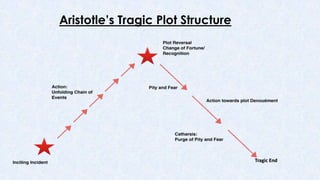
Aristotle’s Tragic Plot Structure
Tragic End
Hamartia as literary term
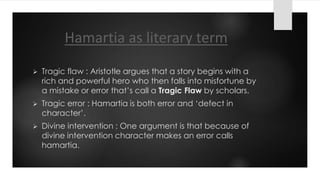
 Tragic flaw : Aristotle argues that a story begins with a
rich and powerful hero who then falls into misfortune by
a mistake or error that’s call a Tragic Flaw by scholars.
 Tragic error : Hamartia is both error and ‘defect in
character’.
 Divine intervention : One argument is that because of
divine intervention character makes an error calls
hamartia.
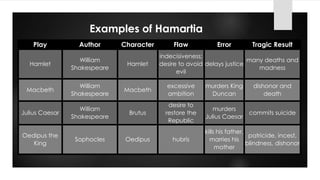
Examples of Hamartia
Play Author Character Flaw Error Tragic Result
Hamlet
William
Shakespeare
Hamlet
indecisiveness;
desire to avoid
evil
delays justice
many deaths and
madness
Macbeth
William
Shakespeare
Macbeth
excessive
ambition
murders King
Duncan
dishonor and
death
Julius Caesar
William
Shakespeare
Brutus
desire to
restore the
Republic
murders
Julius Caesar
commits suicide
Oedipus the
King
Sophocles Oedipus hubris
kills his father,
marries his
mother
patricide, incest,
blindness, dishonor
References
https://en.wikipedia.org/wiki/Hamartia
https://www.google.com/search?q=Hamartia&client=firefox-
beta&rls=org.mozilla:en-
US:official&channel=np&source=lnms&tbm=isch&sa=X&ved=0CAgQ_AUoAmoVCh
MIm4OIlLuXyAIVyx-OCh0dPwoE&biw=1024&bih=657
T
h
a
n
k
Y
o
u

Hamartia

  • 1.
    Literary Theory &Criticism: Western Poetics-1 Parmar Dipali K. Roll No: 30 Topic: Unit 5 ‘A Glossary of selected Literary Terms’ M.A. Sem. 1 Batch: 2015-’17 Email Id: dipaliparmar247@gmail.com Department Of English (M.K.B.U.)
  • 3.
    Origin of theTerm  The term hamartia derives from the Greek hamartánein, which means “to miss the mark” or “to err”.  It is most often associated with Greek tragedy, although it is also used in Christian theology.  Hamartia as it relates to dramatic literature was first used by Aristotle in his Poetics.
  • 4.
    Hamartia in Tragedy Hamartia is commonly understood to refer to the protagonist’s error or flaw that leads their good fortune to bad.  The error or flaw can include an error resulting from ignorance, an error of judgement, a flaw in character, or sin.
  • 5.
    Hamartia in Aristotle’sPoetics  Hamartia is first described in the subject of literary criticism by Aristotle in his Poetics.  In his introduction to the S. H. Butcher translation of ″Poetics″, Francis Fergusson describes Hamartia as the inner quality that initiates , in Dante's words, a ″movement of spirit″ within the protagonist to commit actions which drive the plot towards its tragic end.
  • 6.
    Aristotle’s Tragic PlotStructure Tragic End
  • 7.
    Hamartia as literaryterm  Tragic flaw : Aristotle argues that a story begins with a rich and powerful hero who then falls into misfortune by a mistake or error that’s call a Tragic Flaw by scholars.  Tragic error : Hamartia is both error and ‘defect in character’.  Divine intervention : One argument is that because of divine intervention character makes an error calls hamartia.
  • 8.
    Examples of Hamartia PlayAuthor Character Flaw Error Tragic Result Hamlet William Shakespeare Hamlet indecisiveness; desire to avoid evil delays justice many deaths and madness Macbeth William Shakespeare Macbeth excessive ambition murders King Duncan dishonor and death Julius Caesar William Shakespeare Brutus desire to restore the Republic murders Julius Caesar commits suicide Oedipus the King Sophocles Oedipus hubris kills his father, marries his mother patricide, incest, blindness, dishonor
  • 9.
  • 10.