PANDEMIC & EMERGENCY
  PREPAREDNESS FOR
  FIRST NATIONS COMMUNITIES


Chris Hylton, CG Hylton & Associates Inc.
Chris@hylton.ca
Toll Free Tel. 800 449-5866 or Tel 403 264-5288
                                                           1


                  INFONEX: 11:30-12:30 Weds Feb 9 2011 Ottawa
• People assume that in any disaster, government agencies will
            step in to save them: Hurricane Katrina Report
2
If you fail to
3
      plan…….


     You have planned
          to fail!
4


     “The only possible benefit of
    NOT planning is that disasters
       will come as a complete
    surprise and will, therefore, not
    be preceded by long periods of
      paranoia and depression!”
Global Trends in Major Disasters

                                        Source: Environment Canada


5
                  Source: 2009 SUMA CONVENTION
Why Prepare?
6


     Tornadoes         Power outage
     Severe Snow       Computer system failure
      Storms
                        Flood: External and internal
     Blackouts
     Floods
                        Fuel Leak
     Chemical Spills
                        Bomb incident
     Fire              Civil disorder
     Explosion         Workplace Violence Incident
     Water outage      Barricade / hostage incident
Duty to Act - Planning
7


       Governments & Corporations in Canada have
        “Due Diligence” obligations to plan for the
        protection/support of their
        populations, clients, and personnel:
         Moral
         Ethical

         Financial

         Legislated
Disaster Planning
8


     What is it?
     Why do it?

     What is the end product?
Your employees:
9


    1.   How many employees will show up? Remember
         they have their own families to take care of and
         their own issues
    2.   Where do they live?
    3.   Are they affected directly by the event?
    4.   Do you have a plan to evacuate responding
         employees should the situation worsen?
    5.   Do you have a plan to compensate those who do
         respond?
Essential Services
10


        Can you maintain them and how?
          Gas

          Electricity

          Water

          Communications


          (Remember you are dependant upon others to provide
            certain services)
Expect:
11


        Emergency Services will be busy and/or possibly
         overwhelmed, and you may not see them for some
         time
        More then one Emergency Situation may be present
        Panic and chaos
        Criminals attempting to take advantage of the
         situation
Where to Start?
12


        Form a committee
        Find previous plans, if available
        Know legal and other requirements
        Perform risk assessment
        Collect information
        Develop procedures
        Write the plan
        Distribute plan
        Train staff
        Continue to modify plan
Form a Committee
13


        Establish authority
        Leadership buy-in
        Make the committee membership representative
         of the entire organization
        Appoint one person to head the committee
        Give each committee member specific
         assignments
        Ensure all committee members understand their
         purpose and responsibilities
Find Previous Plans, if any
14

        Save time by starting with previous plans
        Review previous plans for accuracy
        Use plans to determine what needs work
        Keep plans (especially electronic versions) for use
         when writing the updated plan
        If there is no previous plan, look at a plan from
         another agency or institution
Collect Information
15


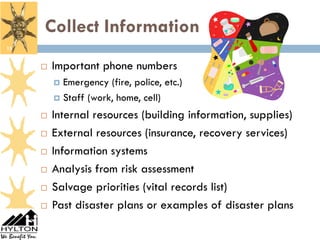
        Important phone numbers
          Emergency (fire, police, etc.)
          Staff (work, home, cell)

        Internal resources (building information, supplies)
        External resources (insurance, recovery services)
        Information systems
        Analysis from risk assessment
        Salvage priorities (vital records list)
        Past disaster plans or examples of disaster plans
Develop Procedures
16

        Evacuation procedures (with maps)
        Emergency procedures
        Disaster procedures
        Recovery procedures
        Other incident procedures
        Shut down procedures / security check lists
        Who will talk to media, families, children
Write the Plan
17


        A disaster plan is actually a set of plans
          List of key personnel (with contact information)
          Building information (emergency systems, etc.)

          Emergency services (with contact information)

          Salvage priorities (vital records)

          Procedures
           (evacuation, emergency, disaster, recovery, other
           incidents, shut down/security check)
          Information systems (with backup information)

          List of supplies
Use centralized control by one
          person for the plan
18


        Role of Manager
        Planners
        Coordinators
        Know who to call
        Training
Train Staff
19


        A disaster plan will not function without a
         trained staff to follow the plan
        Training could include:
          Reading  the plan
          Lecture / Discussion

          Demonstration / Simulation

        Training could cover:
          Use of fire extinguishers
          Evacuation routes

          Other specific procedures
Telephone fan out
20


        One calls five
        Each of five calls five
        Message gets out immediately
        What system do you have in place?
Have emergency maps handy
21


       At home at work
      Details of escape route

      Practise escape

      Have alternative escape route

      Practise alternative

      Have resource materials on

     hand for others, books on death
     for kids
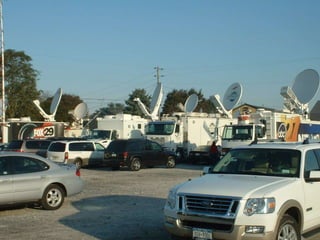
Who will talk to media
22
Lockdown
24


        Dangerous person in your midst
        Practise lockdown in the facility
        Locking doors
        Secure area
        Safety of children, clients
25


     Used with permission of Bob Thaves
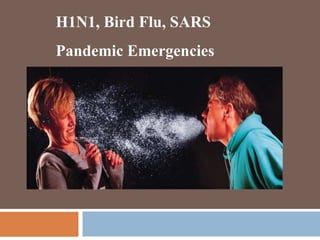
H1N1, Bird Flu, SARS
Pandemic Emergencies
PANDEMIC PREPAREDNESS
27
            AND RESPONSE
     First, to minimize serious illness
     and overall deaths and
     second, to minimize societal
     disruption among Canadians as a
     result of an influenza pandemic.
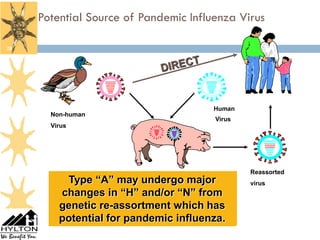
Potential Source of Pandemic Influenza Virus

28


                                       Human
       Non-human
                                       Virus
       Virus


                                               Reassorted
          Type “A” may undergo major
        Viruses are PROLIFIC and               virus
         changes in “H” and/or “N” from
        very PROMISCUOUS little
        genetic re-assortment which has
                    beggars!
        potential for pandemic influenza.
Timeline of Emergence of
     Influenza A Viruses in Humans
29

                                       Avian
                                     Influenza

                                H9     H7
                               H5      H5
                        H1
                   H3
              H2
     H1

     1918     1957 1968 1977   1997 2003
                                 1998/9
Pandemics occur 3-4 times each
                century!
30


              Unpredictable!

      A constantly mutating virus!

       If the H1N1 virus doesn’t cause a
            pandemic, another one will!
History
31

     10 Pandemics in Last 300 years
     1918-1919: Spanish Flu (H1N1)
        Attack Rate 25% (High mortality in the young)
        40 million deaths in less than 1 year
     1957-1958: Asian Flu (H2N2)
        Attack Rate 25% - 30%
        1 million deaths (High elder mortality)
     1968-1969: Hong Kong Flu (H3N2)
        Attack Rate 20% - 25% (High elder and higher
         adult mortality)
        1 million deaths

        Swine Flu deaths - 26 per 100,000
32
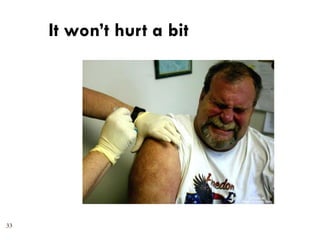
It won’t hurt a bit


33
Diverse location of Aboriginal
 Communities
    Federal MOH needs jurisdiction and legal powers
     to access information in order to conduct efficient
     surveillance (vigilance) and
    To implement efficient control measures
     (intervention)


34
35
Possibility of « designated authority » from provincial Public
     Health Acts to federal Regional Medical Officers (RMOs) in
     the Provinces


36   Source : Jean-François Savard, Office of Community Medicine, 2007
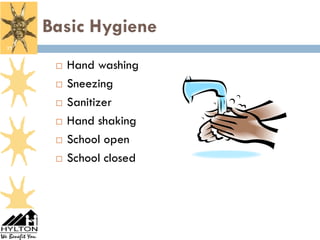
Basic Hygiene
37


         Hand washing
         Sneezing
         Sanitizer
         Hand shaking
         School open
         School closed
Mental Health


      “EVEN HEROES NEED TO
      TALK.”
     Role of Employee Assistance Plan
     (EAP)

     One of the marketing slogans for Project
     Liberty, New York’s post-9/11 Crisis Counseling
     Program
Physical Reactions
39


        Fatigue, exhaustion
        Gastrointestinal distress
        Appetite change
        Tightening in throat, chest, or stomach
        Worsening of existing medical conditions
        Somatic complaints
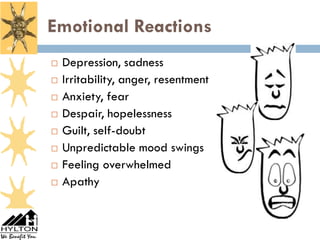
Emotional Reactions
40


        Depression, sadness
        Irritability, anger, resentment
        Anxiety, fear
        Despair, hopelessness
        Guilt, self-doubt
        Unpredictable mood swings
        Feeling overwhelmed
        Apathy
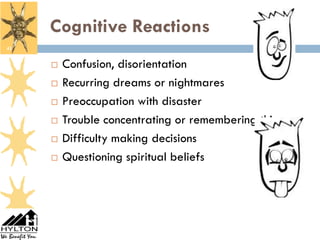
Cognitive Reactions
41


        Confusion, disorientation
        Recurring dreams or nightmares
        Preoccupation with disaster
        Trouble concentrating or remembering things
        Difficulty making decisions
        Questioning spiritual beliefs
Behavioral Reactions
42

        Sleep problems
        Crying easily
        Avoiding reminders
        Excessive activity level
        Increased conflicts with family
        Hyper-vigilance, startle reactions
        Isolation or social withdrawal
        Changes in appetite
Chronic Stressors
43


      Family disruption
      Work overload

      Gender differences

      Bureaucratic hassles

      Financial constraints
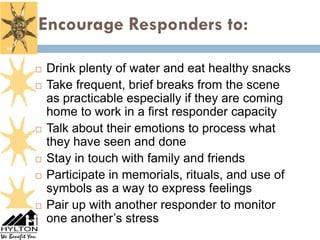
Encourage Responders to:
44


        Drink plenty of water and eat healthy snacks
        Take frequent, brief breaks from the scene
         as practicable especially if they are coming
         home to work in a first responder capacity
        Talk about their emotions to process what
         they have seen and done
        Stay in touch with family and friends
        Participate in memorials, rituals, and use of
         symbols as a way to express feelings
        Pair up with another responder to monitor
         one another’s stress
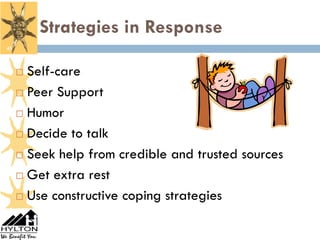
Strategies in Response
45


      Self-care
      Peer Support

      Humor

      Decide to talk

      Seek help from credible and trusted sources

      Get extra rest

      Use constructive coping strategies
Strategies in Recovery
46


      Long term assessment for risk
      Journaling

      Practice “relapse prevention”

      Lifestyle and health promotion

      Role models/partnering/mentoring
Our offer to you
47


        Please call if you have any HR, or workplace issue
         that you are overwhelmed with
        We can help you

        We also are pleased to do Free Workshops for
         your organization (some limits apply) Let us know
         what your needs are and we will make it happen!
CG Hylton - Services
   HR Consulting                Benefits, Pensions,
   Job Descriptions              EAP
                                Strategic Planning
   Salary Grids
                                Drug and Alcohol
   Wellness at Work
                                  programs
   Staff Morale
                                Dept re-orgs
   Training and Workshops
                                Leadership

                                  compensation
                 Tel 403 264 5288
                 chris@hylton.ca
                                                    48
Do you have any:
49


        Comments?

        Questions?

        Feedback?

               Chris Hylton
               800 449 5866
               chris@hylton.ca

Pandemic & emergency preparedness

  • 1.
    PANDEMIC & EMERGENCY PREPAREDNESS FOR FIRST NATIONS COMMUNITIES Chris Hylton, CG Hylton & Associates Inc. Chris@hylton.ca Toll Free Tel. 800 449-5866 or Tel 403 264-5288 1 INFONEX: 11:30-12:30 Weds Feb 9 2011 Ottawa
  • 2.
    • People assumethat in any disaster, government agencies will step in to save them: Hurricane Katrina Report 2
  • 3.
    If you failto 3 plan……. You have planned to fail!
  • 4.
    4 “The only possible benefit of NOT planning is that disasters will come as a complete surprise and will, therefore, not be preceded by long periods of paranoia and depression!”
  • 5.
    Global Trends inMajor Disasters Source: Environment Canada 5 Source: 2009 SUMA CONVENTION
  • 6.
    Why Prepare? 6  Tornadoes Power outage  Severe Snow Computer system failure Storms Flood: External and internal  Blackouts  Floods Fuel Leak  Chemical Spills Bomb incident  Fire Civil disorder  Explosion Workplace Violence Incident  Water outage Barricade / hostage incident
  • 7.
    Duty to Act- Planning 7  Governments & Corporations in Canada have “Due Diligence” obligations to plan for the protection/support of their populations, clients, and personnel:  Moral  Ethical  Financial  Legislated
  • 8.
    Disaster Planning 8  What is it?  Why do it?  What is the end product?
  • 9.
    Your employees: 9 1. How many employees will show up? Remember they have their own families to take care of and their own issues 2. Where do they live? 3. Are they affected directly by the event? 4. Do you have a plan to evacuate responding employees should the situation worsen? 5. Do you have a plan to compensate those who do respond?
  • 10.
    Essential Services 10  Can you maintain them and how? Gas Electricity Water Communications (Remember you are dependant upon others to provide certain services)
  • 11.
    Expect: 11  Emergency Services will be busy and/or possibly overwhelmed, and you may not see them for some time  More then one Emergency Situation may be present  Panic and chaos  Criminals attempting to take advantage of the situation
  • 12.
    Where to Start? 12  Form a committee  Find previous plans, if available  Know legal and other requirements  Perform risk assessment  Collect information  Develop procedures  Write the plan  Distribute plan  Train staff  Continue to modify plan
  • 13.
    Form a Committee 13  Establish authority  Leadership buy-in  Make the committee membership representative of the entire organization  Appoint one person to head the committee  Give each committee member specific assignments  Ensure all committee members understand their purpose and responsibilities
  • 14.
    Find Previous Plans,if any 14  Save time by starting with previous plans  Review previous plans for accuracy  Use plans to determine what needs work  Keep plans (especially electronic versions) for use when writing the updated plan  If there is no previous plan, look at a plan from another agency or institution
  • 15.
    Collect Information 15  Important phone numbers  Emergency (fire, police, etc.)  Staff (work, home, cell)  Internal resources (building information, supplies)  External resources (insurance, recovery services)  Information systems  Analysis from risk assessment  Salvage priorities (vital records list)  Past disaster plans or examples of disaster plans
  • 16.
    Develop Procedures 16  Evacuation procedures (with maps)  Emergency procedures  Disaster procedures  Recovery procedures  Other incident procedures  Shut down procedures / security check lists  Who will talk to media, families, children
  • 17.
    Write the Plan 17  A disaster plan is actually a set of plans  List of key personnel (with contact information)  Building information (emergency systems, etc.)  Emergency services (with contact information)  Salvage priorities (vital records)  Procedures (evacuation, emergency, disaster, recovery, other incidents, shut down/security check)  Information systems (with backup information)  List of supplies
  • 18.
    Use centralized controlby one person for the plan 18  Role of Manager  Planners  Coordinators  Know who to call  Training
  • 19.
    Train Staff 19  A disaster plan will not function without a trained staff to follow the plan  Training could include:  Reading the plan  Lecture / Discussion  Demonstration / Simulation  Training could cover:  Use of fire extinguishers  Evacuation routes  Other specific procedures
  • 20.
    Telephone fan out 20  One calls five  Each of five calls five  Message gets out immediately  What system do you have in place?
  • 21.
    Have emergency mapshandy 21  At home at work  Details of escape route  Practise escape  Have alternative escape route  Practise alternative  Have resource materials on hand for others, books on death for kids
  • 22.
    Who will talkto media 22
  • 24.
    Lockdown 24  Dangerous person in your midst  Practise lockdown in the facility  Locking doors  Secure area  Safety of children, clients
  • 25.
    25 Used with permission of Bob Thaves
  • 26.
    H1N1, Bird Flu,SARS Pandemic Emergencies
  • 27.
    PANDEMIC PREPAREDNESS 27 AND RESPONSE First, to minimize serious illness and overall deaths and second, to minimize societal disruption among Canadians as a result of an influenza pandemic.
  • 28.
    Potential Source ofPandemic Influenza Virus 28 Human Non-human Virus Virus Reassorted Type “A” may undergo major Viruses are PROLIFIC and virus changes in “H” and/or “N” from very PROMISCUOUS little genetic re-assortment which has beggars! potential for pandemic influenza.
  • 29.
    Timeline of Emergenceof Influenza A Viruses in Humans 29 Avian Influenza H9 H7 H5 H5 H1 H3 H2 H1 1918 1957 1968 1977 1997 2003 1998/9
  • 30.
    Pandemics occur 3-4times each century! 30 Unpredictable! A constantly mutating virus! If the H1N1 virus doesn’t cause a pandemic, another one will!
  • 31.
    History 31 10 Pandemics in Last 300 years 1918-1919: Spanish Flu (H1N1)  Attack Rate 25% (High mortality in the young)  40 million deaths in less than 1 year 1957-1958: Asian Flu (H2N2)  Attack Rate 25% - 30%  1 million deaths (High elder mortality) 1968-1969: Hong Kong Flu (H3N2)  Attack Rate 20% - 25% (High elder and higher adult mortality)  1 million deaths  Swine Flu deaths - 26 per 100,000
  • 32.
  • 33.
  • 34.
    Diverse location ofAboriginal Communities  Federal MOH needs jurisdiction and legal powers to access information in order to conduct efficient surveillance (vigilance) and  To implement efficient control measures (intervention) 34
  • 35.
  • 36.
    Possibility of «designated authority » from provincial Public Health Acts to federal Regional Medical Officers (RMOs) in the Provinces 36 Source : Jean-François Savard, Office of Community Medicine, 2007
  • 37.
    Basic Hygiene 37  Hand washing  Sneezing  Sanitizer  Hand shaking  School open  School closed
  • 38.
    Mental Health “EVEN HEROES NEED TO TALK.” Role of Employee Assistance Plan (EAP) One of the marketing slogans for Project Liberty, New York’s post-9/11 Crisis Counseling Program
  • 39.
    Physical Reactions 39  Fatigue, exhaustion  Gastrointestinal distress  Appetite change  Tightening in throat, chest, or stomach  Worsening of existing medical conditions  Somatic complaints
  • 40.
    Emotional Reactions 40  Depression, sadness  Irritability, anger, resentment  Anxiety, fear  Despair, hopelessness  Guilt, self-doubt  Unpredictable mood swings  Feeling overwhelmed  Apathy
  • 41.
    Cognitive Reactions 41  Confusion, disorientation  Recurring dreams or nightmares  Preoccupation with disaster  Trouble concentrating or remembering things  Difficulty making decisions  Questioning spiritual beliefs
  • 42.
    Behavioral Reactions 42  Sleep problems  Crying easily  Avoiding reminders  Excessive activity level  Increased conflicts with family  Hyper-vigilance, startle reactions  Isolation or social withdrawal  Changes in appetite
  • 43.
    Chronic Stressors 43  Family disruption  Work overload  Gender differences  Bureaucratic hassles  Financial constraints
  • 44.
    Encourage Responders to: 44  Drink plenty of water and eat healthy snacks  Take frequent, brief breaks from the scene as practicable especially if they are coming home to work in a first responder capacity  Talk about their emotions to process what they have seen and done  Stay in touch with family and friends  Participate in memorials, rituals, and use of symbols as a way to express feelings  Pair up with another responder to monitor one another’s stress
  • 45.
    Strategies in Response 45  Self-care  Peer Support  Humor  Decide to talk  Seek help from credible and trusted sources  Get extra rest  Use constructive coping strategies
  • 46.
    Strategies in Recovery 46  Long term assessment for risk  Journaling  Practice “relapse prevention”  Lifestyle and health promotion  Role models/partnering/mentoring
  • 47.
    Our offer toyou 47  Please call if you have any HR, or workplace issue that you are overwhelmed with  We can help you  We also are pleased to do Free Workshops for your organization (some limits apply) Let us know what your needs are and we will make it happen!
  • 48.
    CG Hylton -Services  HR Consulting  Benefits, Pensions,  Job Descriptions EAP  Strategic Planning  Salary Grids  Drug and Alcohol  Wellness at Work programs  Staff Morale  Dept re-orgs  Training and Workshops  Leadership compensation Tel 403 264 5288 chris@hylton.ca 48
  • 49.
    Do you haveany: 49  Comments?  Questions?  Feedback? Chris Hylton 800 449 5866 chris@hylton.ca