PALSI Leaders Workshop I
Peer Assisted Learning and Supplemental Instruction (PALSI)
Hokling Cheung
Office of Education Development and Gateway Education (EDGE)
10 January, 2012
Why are you here?
What is PALSI or peer
assisted learning? Why?


                          PALSI Leaders?
At the end of this workshop, you should
be able to
Effective PALSI Sessions
    Identify the PALSI scheme’s intended learning outcomes
    Describe the expectation of a PALSI Leader
    Develop a systematic approach to manage each PALSI session

Online Learning Community (OLC)
    discuss the preferred arrangement for an Online Learning
     Community

Logistics
    identify the deadlines for monthly claim form
    use the electronic venue booking system
PALSI is a peer-assisted learning scheme using Supplemental
Instruction (SI) model. PALSI aims at enhancing students'
understanding in course materials and improve students’ overall
learning and reasoning skills.


                                       Regularly scheduled, out-of-class
                                       and peer-facilitated review
                                       sessions are open to all students
                                       taking the PALSI courses.
?


     Peer                 Assisted                   Learning
Senior year students      No spoon feeding!          How does learning happen?
who have performed        PALSI Leaders should       What is effective learning?
well in the department    design and arrange the     Consider
core courses. Not         sessions to encourage        Content knowledge
necessary experts. They   active, collaborative        Intellectual thinking skills
should possess            and reflective learning.     Learning needs & attitude
 • content knowledge                                   Learning strategies and skills
 • positive attitude                                   Deep learning
 • effective learning
   strategies
                                                            Maricopa Community Colleges (1997)
                                                                          V. Miller et al (2006)
Intended Learning Outcomes
Through the peer assisted learning scheme, PALSI students are expected to be
able to

•   identify their own learning needs &
    interests
• apply effective learning attitude,
  strategies and skills
• collaborate with other learning
  partners to learn more actively and
  reflectively
• explain the expectations and outcomes
  of your own programme and courses
• identify opportunities for discovery               How well have you
  and innovation                                     achieved these ?
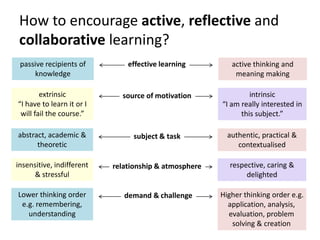
How to encourage active, reflective and
 collaborative learning?
 passive recipients of         effective learning         active thinking and
     knowledge                                             meaning making

        extrinsic            source of motivation               intrinsic
“I have to learn it or I                               “I am really interested in
 will fail the course.”                                      this subject.”

abstract, academic &            subject & task           authentic, practical &
      theoretic                                             contextualised

insensitive, indifferent   relationship & atmosphere     respective, caring &
      & stressful                                             delighted

Lower thinking order          demand & challenge       Higher thinking order e.g.
 e.g. remembering,                                       application, analysis,
   understanding                                         evaluation, problem
                                                          solving & creation
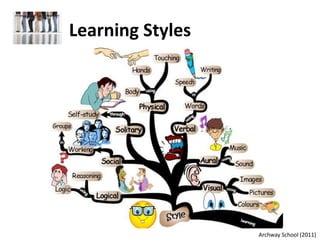
Learning Styles


                  Archway School (2011)
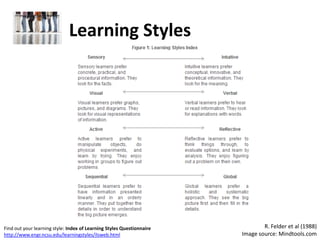
Learning Styles


Find out your learning style: Index of Learning Styles Questionnaire           R. Felder et al (1988)
http://www.engr.ncsu.edu/learningstyles/ilsweb.html                    Image source: Mindtools.com
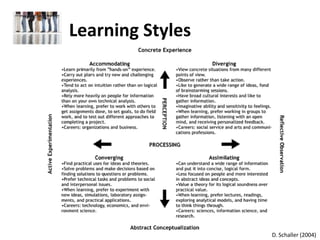
Learning Styles


                  D. Schaller (2004)
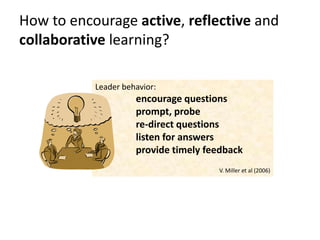
How to encourage active, reflective and
collaborative learning?

           Leader behavior:
                     encourage questions
                     prompt, probe
                     re-direct questions
                     listen for answers
                     provide timely feedback
                                      V. Miller et al (2006)
PALSI sessions??   ?

PALSI Students??   ?
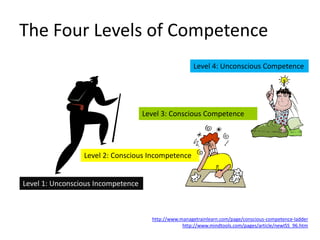
The Four Levels of Competence
                                                      Level 4: Unconscious Competence


                                    Level 3: Conscious Competence


                 Level 2: Conscious Incompetence


Level 1: Unconscious Incompetence


                                      http://www.managetrainlearn.com/page/conscious-competence-ladder
                                                  http://www.mindtools.com/pages/article/newISS_96.htm
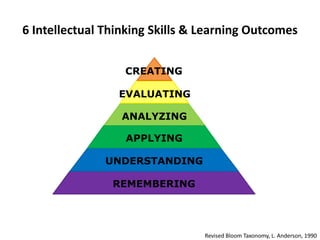
6 Intellectual Thinking Skills & Learning Outcomes


                  CREATING

                 EVALUATING

                  ANALYZING

                  APPLYING

               UNDERSTANDING

                REMEMBERING


                                 Revised Bloom Taxonomy, L. Anderson, 1990
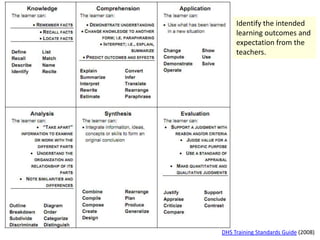
Identify the intended
     learning outcomes and
     expectation from the
     teachers.


DHS Training Standards Guide (2008)
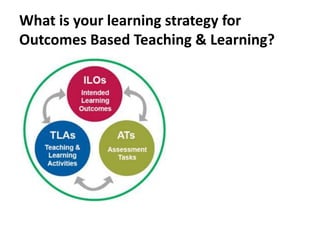
What is your learning strategy for
Outcomes Based Teaching & Learning?
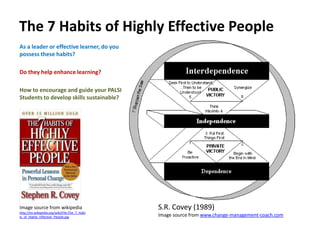
The 7 Habits of Highly Effective People
As a leader or effective learner, do you
possess these habits?

Do they help enhance learning?

How to encourage and guide your PALSI
Students to develop skills sustainable?


Image source from wikipedia                    S.R. Covey (1989)
http://en.wikipedia.org/wiki/File:The_7_Habi
ts_of_Highly_Effective_People.jpg              Image source from www.change-management-coach.com
It is a knowledge hub where you can
                                        collaborate with a lot of masters, peers
                                        and friends through different activities
                                        and make use of resources and services
                                        to facilitate your own journey of
                                        knowledge, discovery and innovation.


World rankings
129 QS World University Rankings 2010
15 QS Asian University Rankings 2011
Tips for effective PALSI sessions
      Fold the paper and
      make it a small book
      with 8 pages
Content: at least 5 tips/reminders for
new PALSI Leaders from the
experienced ones.
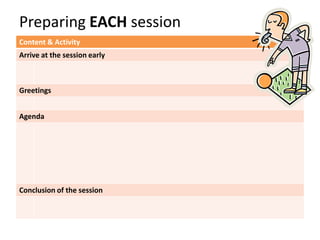
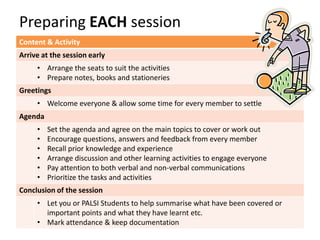
Preparing EACH session
Content & Activity
Arrive at the session early


Greetings


Agenda


Conclusion of the session
Preparing EACH session
Content & Activity
Arrive at the session early
     • Arrange the seats to suit the activities
     • Prepare notes, books and stationeries
Greetings
     • Welcome everyone & allow some time for every member to settle
Agenda
     •   Set the agenda and agree on the main topics to cover or work out
     •   Encourage questions, answers and feedback from every member
     •   Recall prior knowledge and experience
     •   Arrange discussion and other learning activities to engage everyone
     •   Pay attention to both verbal and non-verbal communications
     •   Prioritize the tasks and activities
Conclusion of the session
     • Let you or PALSI Students to help summarise what have been covered or
       important points and what they have learnt etc.
     • Mark attendance & keep documentation
Preparing the 1st session
Content & Activity
About me & you


Learning


PALSI scheme and sessions


Conclusion
Preparing the 1st session
Content & Activity
About me & you
     Introduce yourself & know each other
     First year experience
Learning
     Identify each other’s learning styles & needs
     Discuss effective learning strategies
     My goals and plans for University study
PALSI scheme and sessions
     Discuss the outcomes & understand each other’s expectation
     Talk about the nature of the course and discuss effective learning approaches
     Reach consensus on the topics and formats of the sessions
     State some rules or principles for the group
Conclusion
     Let you or PALSI Students to help summarise what have been covered or
     important points and what they have learnt etc.
     Plan for the next session: Agenda
     Mark attendance & keep documentation
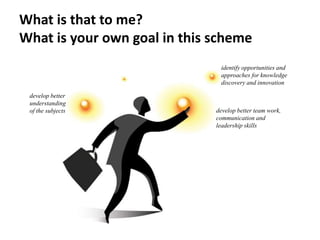
What is that to me?
What is your own goal in this scheme
                               identify opportunities and
                               approaches for knowledge
                               discovery and innovation

 develop better
 understanding
 of the subjects              develop better team work,
                              communication and
                              leadership skills
See you again in the next PALSI
Leader Workshops!

Should you have any query, please
contact us and your teachers.

http://www.cityu.edu.hk/edge/palsi
Electronic Systems


• Electronic Venue
  Booking System
• Monthly Claim Form
  Submission Deadlines

Mr Raymond CHAN
References
Anderson, L. W., & Krathwohl, D. R. (Eds.). (2001). A taxonomy for learning, teaching and assessing: A revision of
          Bloom's Taxonomy of educational objectives: Complete edition, New York : Longman.

Covey, S. R. (1989). The seven habits of highly effective people. New York: Simon & Schuster.

Felder, R.M. and Silverman, L.K. (1988) "Learning and Teaching Styles in Engineering Education“, Engr. Education, 78(7),
           674-681 (1988). Retrieved on August 26, 2011, from
           http://www4.ncsu.edu/unity/lockers/users/f/felder/public/Papers/LS-1988.pdf

Miller, V. , Oldfield E. , Murtagh Y. (2006). “Leader Development Handbook”, Peer Assisted Study Sessions, The
             University of Queensland. Retrieved on 24 August 2011, from
             http://www.science.uq.edu.au/pass/index.html?page=138152

Maricopa Community Colleges. (1997). “learning@maricopa.edu”. Retrieved on 24 August 2011, from
          http://www.mcli.dist.maricopa.edu/learning/pubs/oct97/li_multi.html

Mindtools.com. (2011) Learning Styles, Understanding your learning preference
          http://www.mindtools.com/mnemlsty.html

Oregon Department of Human Services. (2008). DHS Training Standards Guide – Version 1.0. Retrieved on 24 August
         2011, from http://www.dhs.state.or.us/training/ssp/docs/TrainingStandards05-1408.pdf

Schaller, D. (2004) Practicing What We Teach: how learning theory can guide development of online educational
            activities. Eduweb. Retrieved from August 26, 2011, from http://www.eduweb.com/practice_teach_full.html

PALSI Leader Training (Semester B, 2011/12)

  • 1.
    PALSI Leaders WorkshopI Peer Assisted Learning and Supplemental Instruction (PALSI) Hokling Cheung Office of Education Development and Gateway Education (EDGE) 10 January, 2012
  • 2.
    Why are youhere? What is PALSI or peer assisted learning? Why? PALSI Leaders?
  • 3.
    At the endof this workshop, you should be able to Effective PALSI Sessions  Identify the PALSI scheme’s intended learning outcomes  Describe the expectation of a PALSI Leader  Develop a systematic approach to manage each PALSI session Online Learning Community (OLC)  discuss the preferred arrangement for an Online Learning Community Logistics  identify the deadlines for monthly claim form  use the electronic venue booking system
  • 4.
    PALSI is apeer-assisted learning scheme using Supplemental Instruction (SI) model. PALSI aims at enhancing students' understanding in course materials and improve students’ overall learning and reasoning skills. Regularly scheduled, out-of-class and peer-facilitated review sessions are open to all students taking the PALSI courses.
  • 5.
    ? Peer Assisted Learning Senior year students No spoon feeding! How does learning happen? who have performed PALSI Leaders should What is effective learning? well in the department design and arrange the Consider core courses. Not sessions to encourage Content knowledge necessary experts. They active, collaborative Intellectual thinking skills should possess and reflective learning. Learning needs & attitude • content knowledge Learning strategies and skills • positive attitude Deep learning • effective learning strategies Maricopa Community Colleges (1997) V. Miller et al (2006)
  • 6.
    Intended Learning Outcomes Throughthe peer assisted learning scheme, PALSI students are expected to be able to • identify their own learning needs & interests • apply effective learning attitude, strategies and skills • collaborate with other learning partners to learn more actively and reflectively • explain the expectations and outcomes of your own programme and courses • identify opportunities for discovery How well have you and innovation achieved these ?
  • 7.
    How to encourageactive, reflective and collaborative learning? passive recipients of effective learning active thinking and knowledge meaning making extrinsic source of motivation intrinsic “I have to learn it or I “I am really interested in will fail the course.” this subject.” abstract, academic & subject & task authentic, practical & theoretic contextualised insensitive, indifferent relationship & atmosphere respective, caring & & stressful delighted Lower thinking order demand & challenge Higher thinking order e.g. e.g. remembering, application, analysis, understanding evaluation, problem solving & creation
  • 8.
    Learning Styles Archway School (2011)
  • 9.
    Learning Styles Find outyour learning style: Index of Learning Styles Questionnaire R. Felder et al (1988) http://www.engr.ncsu.edu/learningstyles/ilsweb.html Image source: Mindtools.com
  • 10.
    Learning Styles D. Schaller (2004)
  • 11.
    How to encourageactive, reflective and collaborative learning? Leader behavior: encourage questions prompt, probe re-direct questions listen for answers provide timely feedback V. Miller et al (2006)
  • 12.
    PALSI sessions?? ? PALSI Students?? ?
  • 15.
    The Four Levelsof Competence Level 4: Unconscious Competence Level 3: Conscious Competence Level 2: Conscious Incompetence Level 1: Unconscious Incompetence http://www.managetrainlearn.com/page/conscious-competence-ladder http://www.mindtools.com/pages/article/newISS_96.htm
  • 16.
    6 Intellectual ThinkingSkills & Learning Outcomes CREATING EVALUATING ANALYZING APPLYING UNDERSTANDING REMEMBERING Revised Bloom Taxonomy, L. Anderson, 1990
  • 17.
    Identify the intended learning outcomes and expectation from the teachers. DHS Training Standards Guide (2008)
  • 18.
    What is yourlearning strategy for Outcomes Based Teaching & Learning?
  • 19.
    The 7 Habitsof Highly Effective People As a leader or effective learner, do you possess these habits? Do they help enhance learning? How to encourage and guide your PALSI Students to develop skills sustainable? Image source from wikipedia S.R. Covey (1989) http://en.wikipedia.org/wiki/File:The_7_Habi ts_of_Highly_Effective_People.jpg Image source from www.change-management-coach.com
  • 20.
    It is aknowledge hub where you can collaborate with a lot of masters, peers and friends through different activities and make use of resources and services to facilitate your own journey of knowledge, discovery and innovation. World rankings 129 QS World University Rankings 2010 15 QS Asian University Rankings 2011
  • 21.
    Tips for effectivePALSI sessions Fold the paper and make it a small book with 8 pages Content: at least 5 tips/reminders for new PALSI Leaders from the experienced ones.
  • 22.
    Preparing EACH session Content& Activity Arrive at the session early Greetings Agenda Conclusion of the session
  • 23.
    Preparing EACH session Content& Activity Arrive at the session early • Arrange the seats to suit the activities • Prepare notes, books and stationeries Greetings • Welcome everyone & allow some time for every member to settle Agenda • Set the agenda and agree on the main topics to cover or work out • Encourage questions, answers and feedback from every member • Recall prior knowledge and experience • Arrange discussion and other learning activities to engage everyone • Pay attention to both verbal and non-verbal communications • Prioritize the tasks and activities Conclusion of the session • Let you or PALSI Students to help summarise what have been covered or important points and what they have learnt etc. • Mark attendance & keep documentation
  • 24.
    Preparing the 1stsession Content & Activity About me & you Learning PALSI scheme and sessions Conclusion
  • 25.
    Preparing the 1stsession Content & Activity About me & you Introduce yourself & know each other First year experience Learning Identify each other’s learning styles & needs Discuss effective learning strategies My goals and plans for University study PALSI scheme and sessions Discuss the outcomes & understand each other’s expectation Talk about the nature of the course and discuss effective learning approaches Reach consensus on the topics and formats of the sessions State some rules or principles for the group Conclusion Let you or PALSI Students to help summarise what have been covered or important points and what they have learnt etc. Plan for the next session: Agenda Mark attendance & keep documentation
  • 26.
    What is thatto me? What is your own goal in this scheme identify opportunities and approaches for knowledge discovery and innovation develop better understanding of the subjects develop better team work, communication and leadership skills
  • 27.
    See you againin the next PALSI Leader Workshops! Should you have any query, please contact us and your teachers. http://www.cityu.edu.hk/edge/palsi
  • 28.
    Electronic Systems • ElectronicVenue Booking System • Monthly Claim Form Submission Deadlines Mr Raymond CHAN
  • 29.
    References Anderson, L. W.,& Krathwohl, D. R. (Eds.). (2001). A taxonomy for learning, teaching and assessing: A revision of Bloom's Taxonomy of educational objectives: Complete edition, New York : Longman. Covey, S. R. (1989). The seven habits of highly effective people. New York: Simon & Schuster. Felder, R.M. and Silverman, L.K. (1988) "Learning and Teaching Styles in Engineering Education“, Engr. Education, 78(7), 674-681 (1988). Retrieved on August 26, 2011, from http://www4.ncsu.edu/unity/lockers/users/f/felder/public/Papers/LS-1988.pdf Miller, V. , Oldfield E. , Murtagh Y. (2006). “Leader Development Handbook”, Peer Assisted Study Sessions, The University of Queensland. Retrieved on 24 August 2011, from http://www.science.uq.edu.au/pass/index.html?page=138152 Maricopa Community Colleges. (1997). “learning@maricopa.edu”. Retrieved on 24 August 2011, from http://www.mcli.dist.maricopa.edu/learning/pubs/oct97/li_multi.html Mindtools.com. (2011) Learning Styles, Understanding your learning preference http://www.mindtools.com/mnemlsty.html Oregon Department of Human Services. (2008). DHS Training Standards Guide – Version 1.0. Retrieved on 24 August 2011, from http://www.dhs.state.or.us/training/ssp/docs/TrainingStandards05-1408.pdf Schaller, D. (2004) Practicing What We Teach: how learning theory can guide development of online educational activities. Eduweb. Retrieved from August 26, 2011, from http://www.eduweb.com/practice_teach_full.html

Editor's Notes

  • #16 Consider this as a ref to PALSI LeadersSource:http://www.managetrainlearn.com/page/conscious-competence-ladder“Applications of the Conscious-Competence LadderHere are some of the ways for trainers to apply the principles of the Conscious-Competence Ladder.i. at the first stage, Unconscious Incompetence, focus on the benefits of learning the skill not on the process of learningii. at the second stage, Conscious Incompetence, help people through the arid plain of learning when more goes wrong than rightiii. at the third stage, Conscious Competence, give people lots of tips, tricks, and techniques to help them achieve some successesiv. at the fourth stage, Unconscious Competence, praise the learner and reinforce the learning.”The GILS Model: Leader Perspectivehttp://www.gilsmodel.com/index.php?id=10Accelerated Learninghttp://www.alcenter.com/what_is.phpOther notes:Presentationhttp://theelearningcoach.com/media/graphics/alternatives-to-bullets/
  • #21 You will not stay here forever. It will be hopefully one of the critical stages of your life.