Palatal and Buccal Root
Torquing Springs
www.indiandentalacademy.com
This article shows how customized springs
can apply local root torque in the palatal or
buccal direction to solve specific orthodontic
problems
www.indiandentalacademy.com
 The twin roots of maxillary first bicuspids have a greater
combined width in the buccolingual dimension than in the
mesiodistal dimension
www.indiandentalacademy.com
 When a maxillary bicuspid erupts in a rotated fashion however,
the narrower, mesiodistal side of the roots will develop alveolar
bone in the mesiodistal direction
 Such a rotation could thus reduce the normal deposition of
bone,to the extent that a depression in the buccal alveolus may
be observed
www.indiandentalacademy.com
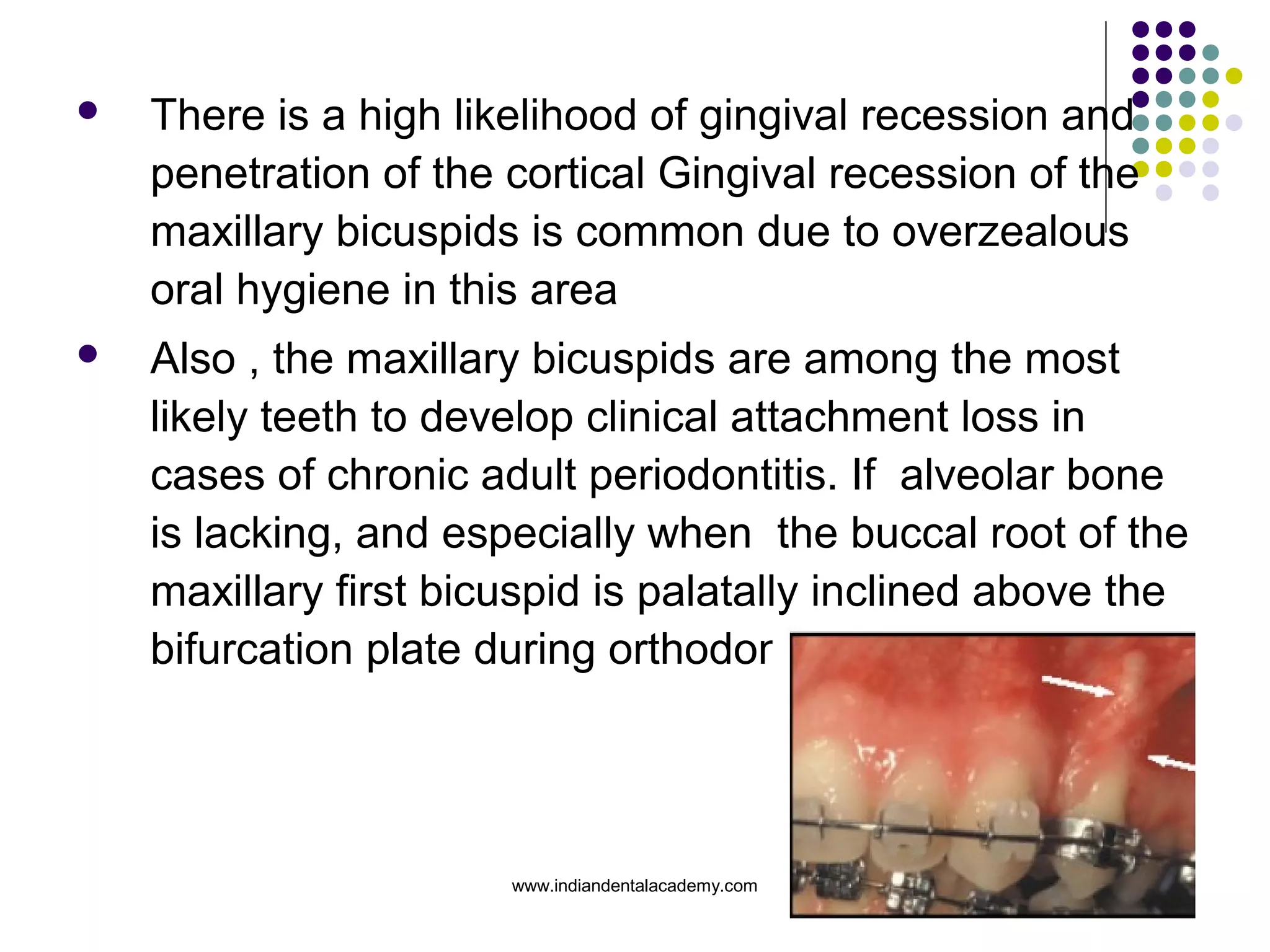
 There is a high likelihood of gingival recession and
penetration of the cortical Gingival recession of the
maxillary bicuspids is common due to overzealous
oral hygiene in this area
 Also , the maxillary bicuspids are among the most
likely teeth to develop clinical attachment loss in
cases of chronic adult periodontitis. If alveolar bone
is lacking, and especially when the buccal root of the
maxillary first bicuspid is palatally inclined above the
bifurcation plate during orthodontic rotation
www.indiandentalacademy.com
 To control these periodontal problems,
orthodontists have several treatment options:
1. Leave the tooth in the rotated position.
2. Prescribe periodontal treatment before,
during, or after orthodontic rotation.
3. Follow orthodontic rotation with root torquing
in the palatal direction.
www.indiandentalacademy.com
Generally rectangular wires is used to
apply torque, but a rectangular wire also
produces an opposite torque on the adjacent
teeth. Thus, while torquing a bicuspid in the
palatal direction, one risks fenestration of the
cortical plate of the neighboring teeth
www.indiandentalacademy.com
Palatal Root Torquing Spring
 An .018" torquing spring is usually soldered to an .
018" or .020“ round main archwire so that it applies
torque only to the desired tooth
www.indiandentalacademy.com
 By modifying the angle of the torquing spring,
the orthodontist can customize the amount of
torque for each situation. A force of 125g is
generally recommended for torquing
bicuspids. This can be accurately measured
in the mouth using a gauge; with rectangular
wires, on the other hand, the force
www.indiandentalacademy.com
 A. Patient with rotated maxillary right first bicuspid.
 B. After orthodontic rotation, note buccal root prominence
 C. After four months of palatal root torquing, note reduction of
buccal root prominence
www.indiandentalacademy.com
Palatally Impacted Maxillary Canines
 When the crowns of palatally impacted canines are moved into
the arch, the roots sometimes remain palatally inclined.
www.indiandentalacademy.com
 an unattractive smile may result due to patally inclined roots of
premolars .
www.indiandentalacademy.com
 In such a case, a customized spring can be used to
apply buccal root torque.
 Prior to surgical exposure of a palatally impacted
canine, a palatal expander or a palatal arch that
incorporates the first bicuspids should be placed. The
maxillary anterior teeth should not normally be used
for anchorage to avoid excessive forces on the
delicate roots of the lateral incisors.
www.indiandentalacademy.com
Buccal Root Torquing Spring
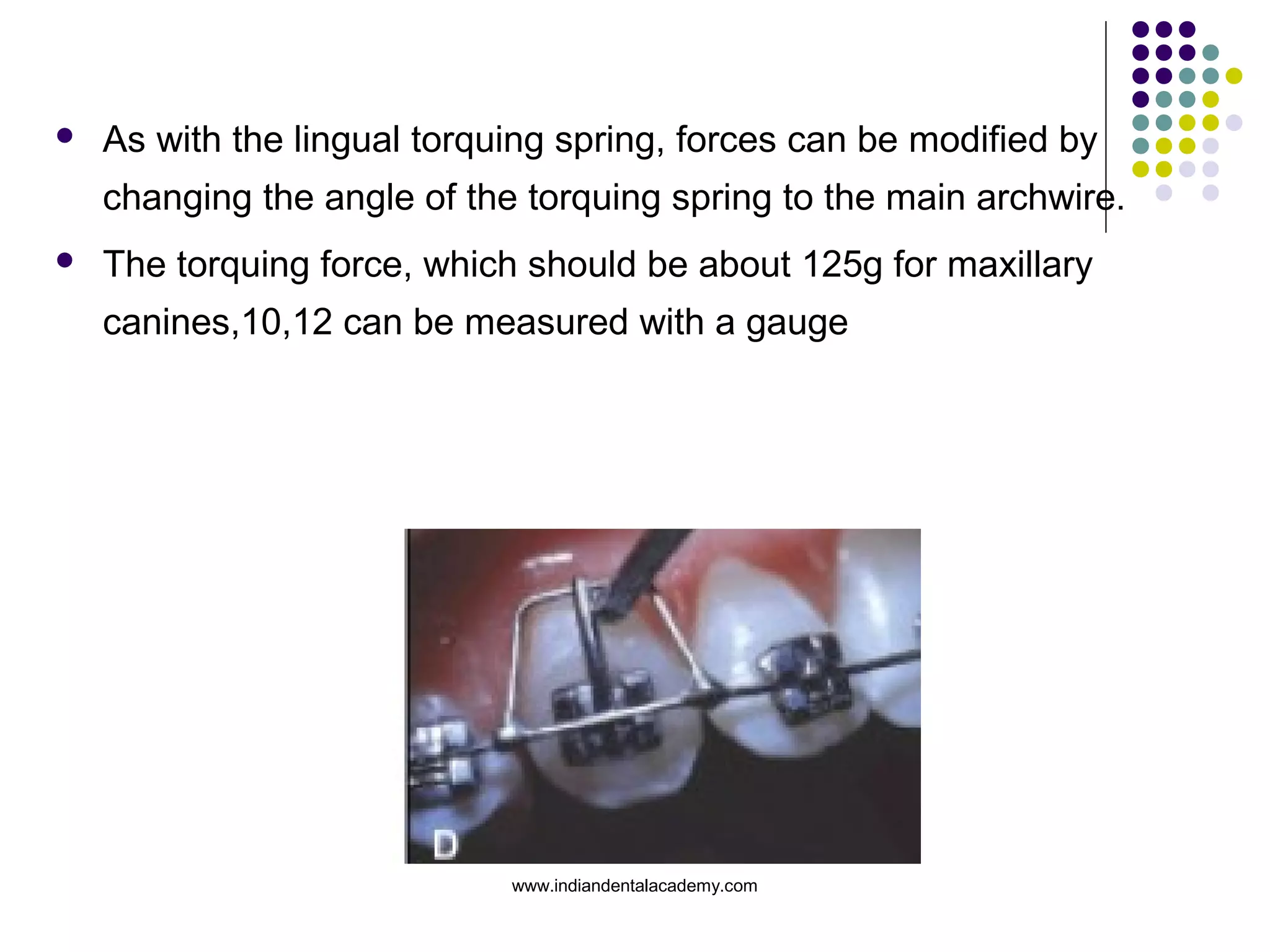
 The torquing spring, made of .018" Australian wire, is soldered to
the main archwire (.020“ Australian wire) at an angle of 30° in the
buccal direction . The torquing spring is activated by hooking it
beneath the power arm
www.indiandentalacademy.com
 As with the lingual torquing spring, forces can be modified by
changing the angle of the torquing spring to the main archwire.
 The torquing force, which should be about 125g for maxillary
canines,10,12 can be measured with a gauge
www.indiandentalacademy.com
A. Patient after extrusion of two impacted maxillary canines.
B. After crowns have been brought into arch, canine roots remain
palatally inclined (arrows).
C Application of buccal root torquing springs.
D. After three months of torquing, canine roots have moved considerably in
buccal direction (arrows).
www.indiandentalacademy.com
Conclusion
Root torquing springs have the following advantages:
 They are simple to activate and more efficient than
stainless steel rectangular wires.
 No opposite torquing forces are delivered to the
adjacent teeth.
 Torquing forces can be easily measured with a gauge.
www.indiandentalacademy.com
 Because tooth movement is continuous, patients can usually be
seen at five-week intervals. Keeping appointments is critical,
however, because the continuous force of the torquing spring
could easily produce excessive root torque. The torquing force
should be checked at each visit and modified, if necessary, by
changing the angle of the spring to the main archwire. •
www.indiandentalacademy.com
Thank you
www.indiandentalacademy.com

Palatal and buccal root torquing springs

  • 1.
    Palatal and BuccalRoot Torquing Springs www.indiandentalacademy.com
  • 2.
    This article showshow customized springs can apply local root torque in the palatal or buccal direction to solve specific orthodontic problems www.indiandentalacademy.com
  • 3.
     The twinroots of maxillary first bicuspids have a greater combined width in the buccolingual dimension than in the mesiodistal dimension www.indiandentalacademy.com
  • 4.
     When amaxillary bicuspid erupts in a rotated fashion however, the narrower, mesiodistal side of the roots will develop alveolar bone in the mesiodistal direction  Such a rotation could thus reduce the normal deposition of bone,to the extent that a depression in the buccal alveolus may be observed www.indiandentalacademy.com
  • 5.
     There isa high likelihood of gingival recession and penetration of the cortical Gingival recession of the maxillary bicuspids is common due to overzealous oral hygiene in this area  Also , the maxillary bicuspids are among the most likely teeth to develop clinical attachment loss in cases of chronic adult periodontitis. If alveolar bone is lacking, and especially when the buccal root of the maxillary first bicuspid is palatally inclined above the bifurcation plate during orthodontic rotation www.indiandentalacademy.com
  • 6.
     To controlthese periodontal problems, orthodontists have several treatment options: 1. Leave the tooth in the rotated position. 2. Prescribe periodontal treatment before, during, or after orthodontic rotation. 3. Follow orthodontic rotation with root torquing in the palatal direction. www.indiandentalacademy.com
  • 7.
    Generally rectangular wiresis used to apply torque, but a rectangular wire also produces an opposite torque on the adjacent teeth. Thus, while torquing a bicuspid in the palatal direction, one risks fenestration of the cortical plate of the neighboring teeth www.indiandentalacademy.com
  • 8.
    Palatal Root TorquingSpring  An .018" torquing spring is usually soldered to an . 018" or .020“ round main archwire so that it applies torque only to the desired tooth www.indiandentalacademy.com
  • 9.
     By modifyingthe angle of the torquing spring, the orthodontist can customize the amount of torque for each situation. A force of 125g is generally recommended for torquing bicuspids. This can be accurately measured in the mouth using a gauge; with rectangular wires, on the other hand, the force www.indiandentalacademy.com
  • 10.
     A. Patientwith rotated maxillary right first bicuspid.  B. After orthodontic rotation, note buccal root prominence  C. After four months of palatal root torquing, note reduction of buccal root prominence www.indiandentalacademy.com
  • 11.
    Palatally Impacted MaxillaryCanines  When the crowns of palatally impacted canines are moved into the arch, the roots sometimes remain palatally inclined. www.indiandentalacademy.com
  • 12.
     an unattractivesmile may result due to patally inclined roots of premolars . www.indiandentalacademy.com
  • 13.
     In sucha case, a customized spring can be used to apply buccal root torque.  Prior to surgical exposure of a palatally impacted canine, a palatal expander or a palatal arch that incorporates the first bicuspids should be placed. The maxillary anterior teeth should not normally be used for anchorage to avoid excessive forces on the delicate roots of the lateral incisors. www.indiandentalacademy.com
  • 14.
    Buccal Root TorquingSpring  The torquing spring, made of .018" Australian wire, is soldered to the main archwire (.020“ Australian wire) at an angle of 30° in the buccal direction . The torquing spring is activated by hooking it beneath the power arm www.indiandentalacademy.com
  • 15.
     As withthe lingual torquing spring, forces can be modified by changing the angle of the torquing spring to the main archwire.  The torquing force, which should be about 125g for maxillary canines,10,12 can be measured with a gauge www.indiandentalacademy.com
  • 16.
    A. Patient afterextrusion of two impacted maxillary canines. B. After crowns have been brought into arch, canine roots remain palatally inclined (arrows). C Application of buccal root torquing springs. D. After three months of torquing, canine roots have moved considerably in buccal direction (arrows). www.indiandentalacademy.com
  • 17.
    Conclusion Root torquing springshave the following advantages:  They are simple to activate and more efficient than stainless steel rectangular wires.  No opposite torquing forces are delivered to the adjacent teeth.  Torquing forces can be easily measured with a gauge. www.indiandentalacademy.com
  • 18.
     Because toothmovement is continuous, patients can usually be seen at five-week intervals. Keeping appointments is critical, however, because the continuous force of the torquing spring could easily produce excessive root torque. The torquing force should be checked at each visit and modified, if necessary, by changing the angle of the spring to the main archwire. • www.indiandentalacademy.com
  • 19.