Theater is a very important source of entertainment to ancient Japan. There was 3 different types of theater; Noh theater, Kabuki theater, and Bunraku theater. All types of theater had a different class.
Noh theater was started in the early 1300’s It reached its popular point in the 1600’s Only samurai were allowed to perform in the plays Only upper-class was allowed to come to the plays Plays were traditionally about Folk tales, legends, or Gods.
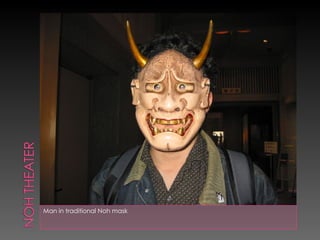
Music was traditionally a big part of the play. During the plays, the actors wore the finest clothing. The masks the actors used in the plays were passed down from father to son.
Man in traditional Noh mask
Started in 1600’s  It was meant for lower classes  Audience members could bring food to the plays, and were allowed to yell and voice their opinion during the play The plays usually lasted around 6 hours Only older men were allowed to perform in the plays
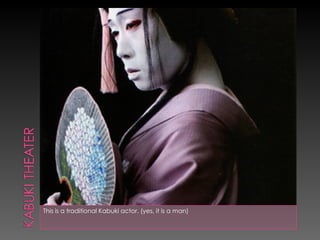
The costumes would be colorful and elaborate  The actors would also wear wigs and heavy make-up Kabuki-to get freaked out
This is a traditional Kabuki actor. (yes, it is a man)
Started in in 1864 Was meant for adults of any class There were no actors, only life sized puppets It took 3 men just to operate 1 puppet: One for the body and right arm One for the left arm One for the feet There would be a narrator ( tayu)  who would say the puppets lines and tell the story Bunraku-puppets and story telling
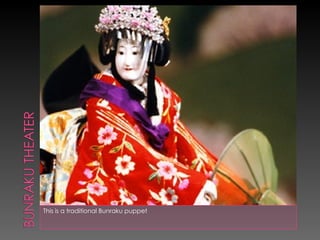
This is a traditional Bunraku puppet

P2

  • 1.
  • 2.
    Theater is avery important source of entertainment to ancient Japan. There was 3 different types of theater; Noh theater, Kabuki theater, and Bunraku theater. All types of theater had a different class.
  • 3.
    Noh theater wasstarted in the early 1300’s It reached its popular point in the 1600’s Only samurai were allowed to perform in the plays Only upper-class was allowed to come to the plays Plays were traditionally about Folk tales, legends, or Gods.
  • 4.
    Music was traditionallya big part of the play. During the plays, the actors wore the finest clothing. The masks the actors used in the plays were passed down from father to son.
  • 5.
  • 6.
    Started in 1600’s It was meant for lower classes Audience members could bring food to the plays, and were allowed to yell and voice their opinion during the play The plays usually lasted around 6 hours Only older men were allowed to perform in the plays
  • 7.
    The costumes wouldbe colorful and elaborate The actors would also wear wigs and heavy make-up Kabuki-to get freaked out
  • 8.
    This is atraditional Kabuki actor. (yes, it is a man)
  • 9.
    Started in in1864 Was meant for adults of any class There were no actors, only life sized puppets It took 3 men just to operate 1 puppet: One for the body and right arm One for the left arm One for the feet There would be a narrator ( tayu) who would say the puppets lines and tell the story Bunraku-puppets and story telling
  • 10.
    This is atraditional Bunraku puppet