By: Robert R, Amara K, Jake B
3 forms: No, Kabuki, and Bunraku No theatre uses no music.  It just uses masks. No theatre was popular for the samurai class. Kabuki was popular for townspeople Bunraku was a life sized puppet theatre. Bunraku was also popular for townspeople
Appealed to higher classes including samurai- had complicated use of language and reference to Japanese history Actors were samurai Involved chanting, measured movements, slow dancing Music involved drums, flutes, chanting poetry Began in Ashikaga period from court music and dance Issued as artistic tradition by 4 th  Ashikaga shogun, Yoshmochi Ideas revolved around gods, spirit world, and other religious aspects Originated in Shinto Shrines as religious acts Also feature ghosts, demons, and spirits Plays were historical drama
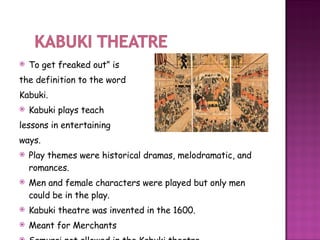
To get freaked out” is the definition to the word Kabuki. Kabuki plays teach  lessons in entertaining  ways. Play themes were historical dramas, melodramatic, and romances. Men and female characters were played but only men could be in the play.  Kabuki theatre was invented in the 1600. Meant for Merchants Samurai not allowed in the Kabuki theatre.
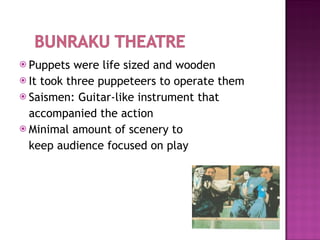
Puppets were life sized and wooden It took three puppeteers to operate them Saismen: Guitar-like instrument that  accompanied the action Minimal amount of scenery to  keep audience focused on play
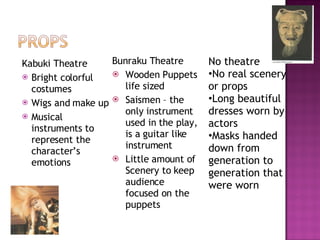
Kabuki Theatre Bright colorful costumes Wigs and make up Musical instruments to represent the character’s emotions Bunraku Theatre Wooden Puppets life sized Saismen – the only instrument used in the play, is a guitar like instrument Little amount of Scenery to keep audience focused on the puppets No theatre No real scenery or props Long beautiful dresses worn by actors Masks handed down from generation to generation that were worn
Many relations between theatre and religions; shinto, zen. No originated in Shinto shrines as religious performance, ideas revolve around gods an spirit world-relations to shinto No theatre only theatre samurai permitted to enter-relation to samurai Kabuki theatre ideas revolved around demons, spirits, etc.-relation to Shinto. All theatre important to religions Great entertainment for the Japanese people Has huge importance on Japanese culture

P1

  • 1.
    By: Robert R,Amara K, Jake B
  • 2.
    3 forms: No,Kabuki, and Bunraku No theatre uses no music. It just uses masks. No theatre was popular for the samurai class. Kabuki was popular for townspeople Bunraku was a life sized puppet theatre. Bunraku was also popular for townspeople
  • 3.
    Appealed to higherclasses including samurai- had complicated use of language and reference to Japanese history Actors were samurai Involved chanting, measured movements, slow dancing Music involved drums, flutes, chanting poetry Began in Ashikaga period from court music and dance Issued as artistic tradition by 4 th Ashikaga shogun, Yoshmochi Ideas revolved around gods, spirit world, and other religious aspects Originated in Shinto Shrines as religious acts Also feature ghosts, demons, and spirits Plays were historical drama
  • 4.
    To get freakedout” is the definition to the word Kabuki. Kabuki plays teach lessons in entertaining ways. Play themes were historical dramas, melodramatic, and romances. Men and female characters were played but only men could be in the play. Kabuki theatre was invented in the 1600. Meant for Merchants Samurai not allowed in the Kabuki theatre.
  • 5.
    Puppets were lifesized and wooden It took three puppeteers to operate them Saismen: Guitar-like instrument that accompanied the action Minimal amount of scenery to keep audience focused on play
  • 6.
    Kabuki Theatre Brightcolorful costumes Wigs and make up Musical instruments to represent the character’s emotions Bunraku Theatre Wooden Puppets life sized Saismen – the only instrument used in the play, is a guitar like instrument Little amount of Scenery to keep audience focused on the puppets No theatre No real scenery or props Long beautiful dresses worn by actors Masks handed down from generation to generation that were worn
  • 7.
    Many relations betweentheatre and religions; shinto, zen. No originated in Shinto shrines as religious performance, ideas revolve around gods an spirit world-relations to shinto No theatre only theatre samurai permitted to enter-relation to samurai Kabuki theatre ideas revolved around demons, spirits, etc.-relation to Shinto. All theatre important to religions Great entertainment for the Japanese people Has huge importance on Japanese culture