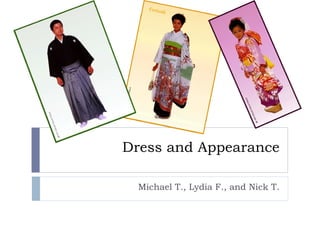
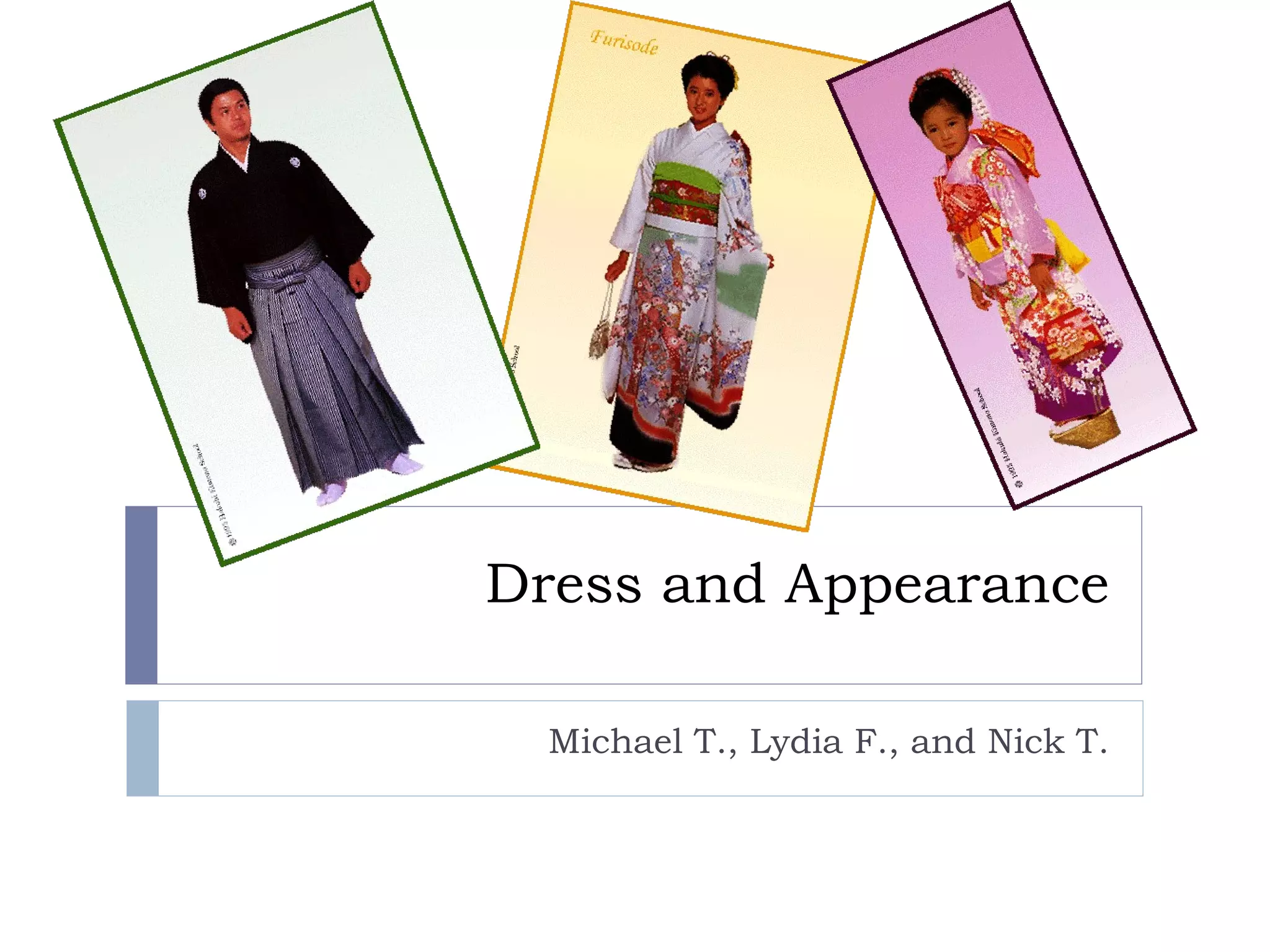
Dress and Appearance Michael T., Lydia F., and Nick T.
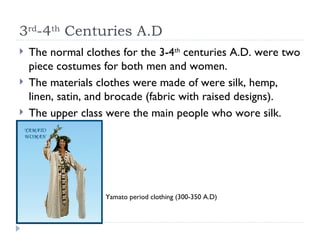
3 rd -4 th  Centuries A.D The normal clothes for the 3-4 th  centuries A.D. were two piece costumes for both men and women.  The materials clothes were made of were silk, hemp, linen, satin, and brocade (fabric with raised designs). The upper class were the main people who wore silk. Yamato period clothing (300-350 A.D)
8 th  Century A.D 8 th  century is when the strong Chinese influence began. Upper class clothes began to reflect Chinese styles.  Silk had become a lot more popular rather than hemp, linen, brocade or satin. Nara period clothing (710-792 A.D.)
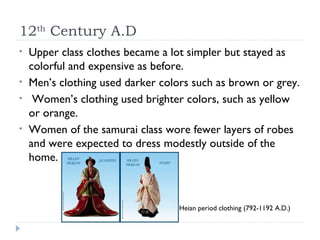
12 th  Century A.D Upper class clothes became a lot simpler but stayed as colorful and expensive as before. Men’s clothing used darker colors such as brown or grey.  Women’s clothing used brighter colors, such as yellow or orange.  Women of the samurai class wore fewer layers of robes and were expected to dress modestly outside of the home. Heian period clothing (792-1192 A.D.)
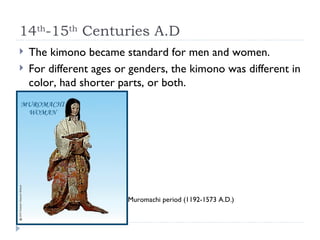
14 th -15 th  Centuries A.D The kimono became standard for men and women. For different ages or genders, the kimono was different in color, had shorter parts, or both. Muromachi period (1192-1573 A.D.)
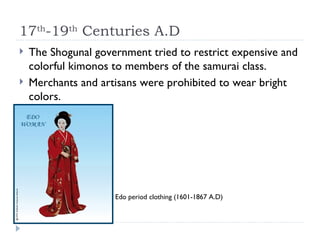
17 th -19 th  Centuries A.D The Shogunal government tried to restrict expensive and colorful kimonos to members of the samurai class.  Merchants and artisans were prohibited to wear bright colors.  Edo period clothing (1601-1867 A.D)

09 P6.The Kimono

  • 1.
    Dress and AppearanceMichael T., Lydia F., and Nick T.
  • 2.
    3 rd -4th Centuries A.D The normal clothes for the 3-4 th centuries A.D. were two piece costumes for both men and women. The materials clothes were made of were silk, hemp, linen, satin, and brocade (fabric with raised designs). The upper class were the main people who wore silk. Yamato period clothing (300-350 A.D)
  • 3.
    8 th Century A.D 8 th century is when the strong Chinese influence began. Upper class clothes began to reflect Chinese styles. Silk had become a lot more popular rather than hemp, linen, brocade or satin. Nara period clothing (710-792 A.D.)
  • 4.
    12 th Century A.D Upper class clothes became a lot simpler but stayed as colorful and expensive as before. Men’s clothing used darker colors such as brown or grey. Women’s clothing used brighter colors, such as yellow or orange. Women of the samurai class wore fewer layers of robes and were expected to dress modestly outside of the home. Heian period clothing (792-1192 A.D.)
  • 5.
    14 th -15th Centuries A.D The kimono became standard for men and women. For different ages or genders, the kimono was different in color, had shorter parts, or both. Muromachi period (1192-1573 A.D.)
  • 6.
    17 th -19th Centuries A.D The Shogunal government tried to restrict expensive and colorful kimonos to members of the samurai class. Merchants and artisans were prohibited to wear bright colors. Edo period clothing (1601-1867 A.D)