ENGLISH 2:
JAPANESE DRAMA
Prepared by:
MS. JENIFER B. MARIGZA
Philippine Science High School
CAR Campus
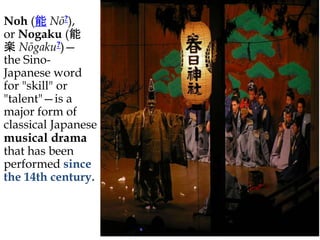
Noh (能 Nō?),
or Nogaku (能
楽 Nōgaku?)—
the Sino-
Japanese word
for "skill" or
"talent"—is a
major form of
classical Japanese
musical drama
that has been
performed since
the 14th century.
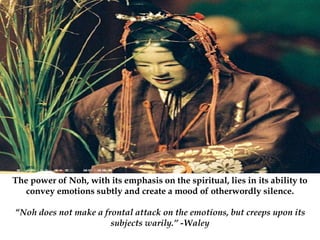
The power of Noh, with its emphasis on the spiritual, lies in its ability to
convey emotions subtly and create a mood of otherwordly silence.
“Noh does not make a frontal attack on the emotions, but creeps upon its
subjects warily.” -Waley
Noh plays have religious sources. They are
strongly influenced by Zen, the meditative
Buddhist religion.
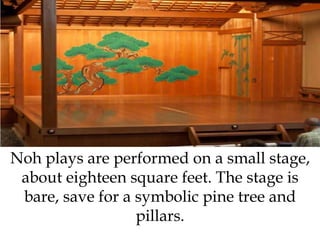
Noh plays are performed on a small stage,
about eighteen square feet. The stage is
bare, save for a symbolic pine tree and
pillars.
ACTORS
-must be talented mimes
-must be talented dancers
-must be skilled interpreters of character
-must be able to convey a mood or feeling
with a single gesture
The actors are few,
and they are always
male. Most of them
wear heavy robes
and hand-painted
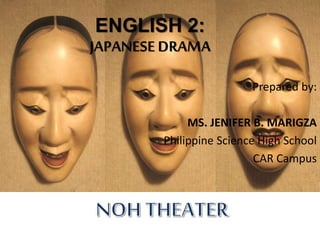
wooden masks that
represent a particular
character or emotion:
a vengeful ghost, a
holy man, a beautiful
girl, a warrior, a
wrathful serpent-
woman.
TWO MAJOR
CHARACTERS IN
NOH THEATER
shite – a restless spirit who has
assumed the form of an ordinary
person.
waki- a bystander, often a wandering
priest
The waki poses some questions to the
spirit, who is typically plagued by
disturbing memories of passion or
injustice from his or her past life.
The waki’s questions inspire the shite to unburden his soul and
reveal his true identity. One of the most common themes in
Noh drama involves the shite’s release from the suffering he or
she is feeling in death.
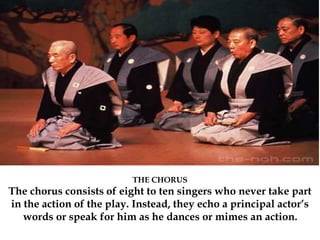
THE CHORUS
The chorus consists of eight to ten singers who never take part
in the action of the play. Instead, they echo a principal actor’s
words or speak for him as he dances or mimes an action.
POSITIONS OF CHARACTERS ON STAGE
SEAMI MOTOKIYO
1363-1443
-had acting in his blood. His father,
Kanami, a priest, was one of the
finest performers of his day. At the
time of Seami’s birth in 1363, Noh
was an unrefined art – more chants
and dances than true drama.
-Under the patronage of the shogun
Ashikaga Yoshimitsu, this began to
change. Ashikaga, a Zen convert and
passionate devotee of the arts,
brought various performers,
including Seami’s father, to live at his
place in Kyoto. He was particularly
fond of young Seami and personally
supervised the boy’s education.
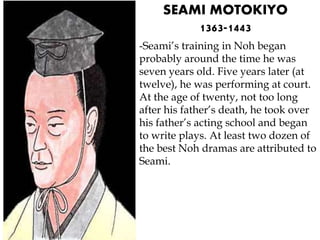
SEAMI MOTOKIYO
1363-1443
-Seami’s training in Noh began
probably around the time he was
seven years old. Five years later (at
twelve), he was performing at court.
At the age of twenty, not too long
after his father’s death, he took over
his father’s acting school and began
to write plays. At least two dozen of
the best Noh dramas are attributed to
Seami.
SEAMI MOTOKIYO
1363-1443
By all accounts, Seami, like his father,
was a brilliant actor. His
performances were said to be
graceful, restrained, and mysterious.
He strove to invest in his students
the same qualities, encouraging them
to act purely for the fun of it.
Like the practice of Zen, mastery of
Noh was a lifelong task requiring
immense discipline.
ATSUMORI
Atsumori is one of Seami’s most
famous plays. It is drawn from an episode of
The Tale of Heiki, a medieval Japanese epic
based on historical fact that tells the story of
the rise and fall of the Taira family,
otherwise known as the Heike. The epic
describes how the Taira are vanquished by a
rival clan, the Minamoto (or Genji) family,
the same Genji family of Lady Murasaki’s
The Tale of Genji.
ATSUMORI
The Heike suffered one of their most
terrible defeats at a place by the sea called
Ichi no tani. The play takes place many
years after this battle. A priest named
Rensei, who was once a warrior with the
Genji clan, has decided to return to the scene
of the battle to pray for a sixteen-year-old
named Atsumori, whom he killed on the
beach that terrible day.
ATSUMORI
Rensei had taken pity on Atsumori and
had almost refrained from killing him. He
realized, though, that if he did not kill the
boy, his fellow warriors would. He
explained to Atsumori that he must kill him,
and promised to pray for his soul.
ATSUMORI
When Rensei reaches Ichi no tani years
later, he meets two peasants or reapers who
are returning home from their fields. It is
dusk, and one of them is playing a flute.
This reminds the priest of Atsumori, who
was carrying a flute when he died. Rensei
soon makes an astonishing discovery about
one of the peasants.
REFERENCE
World Literature
by Holt, Rinehart, and Winston

Noh plays

  • 1.
    ENGLISH 2: JAPANESE DRAMA Preparedby: MS. JENIFER B. MARIGZA Philippine Science High School CAR Campus
  • 2.
    Noh (能 Nō?), orNogaku (能 楽 Nōgaku?)— the Sino- Japanese word for "skill" or "talent"—is a major form of classical Japanese musical drama that has been performed since the 14th century.
  • 3.
    The power ofNoh, with its emphasis on the spiritual, lies in its ability to convey emotions subtly and create a mood of otherwordly silence. “Noh does not make a frontal attack on the emotions, but creeps upon its subjects warily.” -Waley
  • 4.
    Noh plays havereligious sources. They are strongly influenced by Zen, the meditative Buddhist religion.
  • 5.
    Noh plays areperformed on a small stage, about eighteen square feet. The stage is bare, save for a symbolic pine tree and pillars.
  • 6.
    ACTORS -must be talentedmimes -must be talented dancers -must be skilled interpreters of character -must be able to convey a mood or feeling with a single gesture
  • 7.
    The actors arefew, and they are always male. Most of them wear heavy robes and hand-painted wooden masks that represent a particular character or emotion: a vengeful ghost, a holy man, a beautiful girl, a warrior, a wrathful serpent- woman.
  • 8.
  • 10.
    shite – arestless spirit who has assumed the form of an ordinary person. waki- a bystander, often a wandering priest The waki poses some questions to the spirit, who is typically plagued by disturbing memories of passion or injustice from his or her past life. The waki’s questions inspire the shite to unburden his soul and reveal his true identity. One of the most common themes in Noh drama involves the shite’s release from the suffering he or she is feeling in death.
  • 11.
    THE CHORUS The chorusconsists of eight to ten singers who never take part in the action of the play. Instead, they echo a principal actor’s words or speak for him as he dances or mimes an action.
  • 12.
  • 13.
    SEAMI MOTOKIYO 1363-1443 -had actingin his blood. His father, Kanami, a priest, was one of the finest performers of his day. At the time of Seami’s birth in 1363, Noh was an unrefined art – more chants and dances than true drama. -Under the patronage of the shogun Ashikaga Yoshimitsu, this began to change. Ashikaga, a Zen convert and passionate devotee of the arts, brought various performers, including Seami’s father, to live at his place in Kyoto. He was particularly fond of young Seami and personally supervised the boy’s education.
  • 14.
    SEAMI MOTOKIYO 1363-1443 -Seami’s trainingin Noh began probably around the time he was seven years old. Five years later (at twelve), he was performing at court. At the age of twenty, not too long after his father’s death, he took over his father’s acting school and began to write plays. At least two dozen of the best Noh dramas are attributed to Seami.
  • 15.
    SEAMI MOTOKIYO 1363-1443 By allaccounts, Seami, like his father, was a brilliant actor. His performances were said to be graceful, restrained, and mysterious. He strove to invest in his students the same qualities, encouraging them to act purely for the fun of it. Like the practice of Zen, mastery of Noh was a lifelong task requiring immense discipline.
  • 16.
    ATSUMORI Atsumori is oneof Seami’s most famous plays. It is drawn from an episode of The Tale of Heiki, a medieval Japanese epic based on historical fact that tells the story of the rise and fall of the Taira family, otherwise known as the Heike. The epic describes how the Taira are vanquished by a rival clan, the Minamoto (or Genji) family, the same Genji family of Lady Murasaki’s The Tale of Genji.
  • 17.
    ATSUMORI The Heike sufferedone of their most terrible defeats at a place by the sea called Ichi no tani. The play takes place many years after this battle. A priest named Rensei, who was once a warrior with the Genji clan, has decided to return to the scene of the battle to pray for a sixteen-year-old named Atsumori, whom he killed on the beach that terrible day.
  • 18.
    ATSUMORI Rensei had takenpity on Atsumori and had almost refrained from killing him. He realized, though, that if he did not kill the boy, his fellow warriors would. He explained to Atsumori that he must kill him, and promised to pray for his soul.
  • 19.
    ATSUMORI When Rensei reachesIchi no tani years later, he meets two peasants or reapers who are returning home from their fields. It is dusk, and one of them is playing a flute. This reminds the priest of Atsumori, who was carrying a flute when he died. Rensei soon makes an astonishing discovery about one of the peasants.
  • 20.