Oxygen therapy
By
Dr.Mukesh Singh pachahara
M.D Anaesthesiology
NMC&H
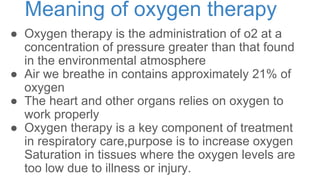
Meaning of oxygen therapy
● Oxygen therapy is the administration of o2 at a
concentration of pressure greater than that found
in the environmental atmosphere
● Air we breathe in contains approximately 21% of
oxygen
● The heart and other organs relies on oxygen to
work properly
● Oxygen therapy is a key component of treatment
in respiratory care,purpose is to increase oxygen
Saturation in tissues where the oxygen levels are
too low due to illness or injury.
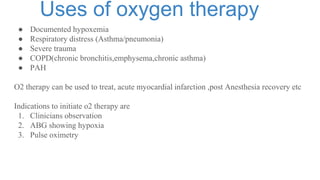
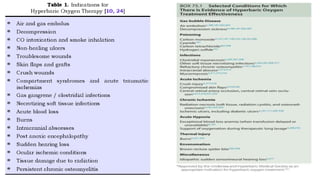
Uses of oxygen therapy
● Documented hypoxemia
● Respiratory distress (Asthma/pneumonia)
● Severe trauma
● COPD(chronic bronchitis,emphysema,chronic asthma)
● PAH
O2 therapy can be used to treat, acute myocardial infarction ,post Anesthesia recovery etc
Indications to initiate o2 therapy are
1. Clinicians observation
2. ABG showing hypoxia
3. Pulse oximetry
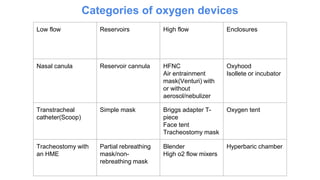
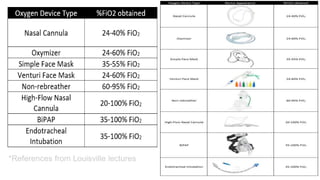
Categories of oxygen devices
Low flow Reservoirs High flow Enclosures
Nasal canula Reservoir cannula HFNC
Air entrainment
mask(Venturi) with
or without
aerosol/nebulizer
Oxyhood
Isollete or incubator
Transtracheal
catheter(Scoop)
Simple mask Briggs adapter T-
piece
Face tent
Tracheostomy mask
Oxygen tent
Tracheostomy with
an HME
Partial rebreathing
mask/non-
rebreathing mask
Blender
High o2 flow mixers
Hyperbaric chamber
Others: Atelectasis
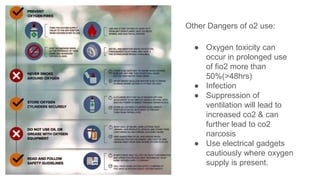
● Oxygen toxicity can
occur in prolonged use
of fio2 more than
50%(>48hrs)
● Infection
● Suppression of
ventilation will lead to
increased co2 & can
further lead to co2
narcosis
● Use electrical gadgets
cautiously where oxygen
supply is present.
Other Dangers of o2 use:
References :
● Millers anaesthesiology 9th edition
● CGA
● Louisville lectures
● Researchgate
● If any references forgotten ,plz forgive.
Thank you
presentation by,
Dr.Mukesh Singh pachahara
Pg-1 resident ,MD-Anaesthesiology
NMC&H

oxygen therapy devices and flow rates.pptx

  • 1.
    Oxygen therapy By Dr.Mukesh Singhpachahara M.D Anaesthesiology NMC&H
  • 2.
    Meaning of oxygentherapy ● Oxygen therapy is the administration of o2 at a concentration of pressure greater than that found in the environmental atmosphere ● Air we breathe in contains approximately 21% of oxygen ● The heart and other organs relies on oxygen to work properly ● Oxygen therapy is a key component of treatment in respiratory care,purpose is to increase oxygen Saturation in tissues where the oxygen levels are too low due to illness or injury.
  • 3.
    Uses of oxygentherapy ● Documented hypoxemia ● Respiratory distress (Asthma/pneumonia) ● Severe trauma ● COPD(chronic bronchitis,emphysema,chronic asthma) ● PAH O2 therapy can be used to treat, acute myocardial infarction ,post Anesthesia recovery etc Indications to initiate o2 therapy are 1. Clinicians observation 2. ABG showing hypoxia 3. Pulse oximetry
  • 4.
    Categories of oxygendevices Low flow Reservoirs High flow Enclosures Nasal canula Reservoir cannula HFNC Air entrainment mask(Venturi) with or without aerosol/nebulizer Oxyhood Isollete or incubator Transtracheal catheter(Scoop) Simple mask Briggs adapter T- piece Face tent Tracheostomy mask Oxygen tent Tracheostomy with an HME Partial rebreathing mask/non- rebreathing mask Blender High o2 flow mixers Hyperbaric chamber
  • 8.
  • 9.
    ● Oxygen toxicitycan occur in prolonged use of fio2 more than 50%(>48hrs) ● Infection ● Suppression of ventilation will lead to increased co2 & can further lead to co2 narcosis ● Use electrical gadgets cautiously where oxygen supply is present. Other Dangers of o2 use:
  • 10.
    References : ● Millersanaesthesiology 9th edition ● CGA ● Louisville lectures ● Researchgate ● If any references forgotten ,plz forgive. Thank you presentation by, Dr.Mukesh Singh pachahara Pg-1 resident ,MD-Anaesthesiology NMC&H