Lecture on Oxygen therapy for
c2 medical student
Dr. Getaye Simachew ACCPM
resident
9/8/2022
Outline
Introduction
Hypoxia and detection of hypoxia
 Oxygen Sources and delivery system
Specific considerations in Pts with Obstructive
lung diseases
9/8/2022
objective
At the end of this lecture
You will explain normal and abnormal value of o2
in human body and the time we intiate treatment
You will know transport mechanism of o2
will understand different type and causes hypoxia
 will know common o2 sources and delivery
system
know the difference for o2 therapy in copd patient
9/8/2022
Brain storming question
when to use o2& and for what disease conditions?
 target for therapy?
How is o2 transported in the body+
the difference between hypoxia and hypoxemia?
List commen o2 delivery system and their
advantages ,disadvantages?
9/8/2022
Introduction
Oxygen is a gas found in air we breath, is
necessary for human life.
some people with breathing disorder can’t get
enough oxygen naturally and develop hypoxia
They may need oxygen supplementation or
therapy to improve energy level, sleep or in
general for better quality of life.
9/8/2022
Oxygen transport
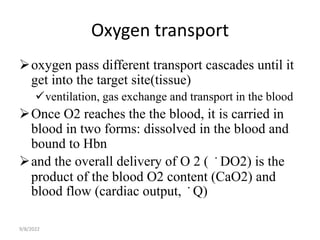
oxygen pass different transport cascades until it
get into the target site(tissue)
ventilation, gas exchange and transport in the blood
Once O2 reaches the the blood, it is carried in
blood in two forms: dissolved in the blood and
bound to Hbn
and the overall delivery of O 2 ( ̇DO2) is the
product of the blood O2 content (CaO2) and
blood flow (cardiac output, ̇Q)
9/8/2022
cont,
The neurocardiopulmonary axis is designed to
optimise global oxygen delivery and carbon
dioxide clearance
the local tissue vascular beds are responsible for
the distribution of blood flow.
cont,
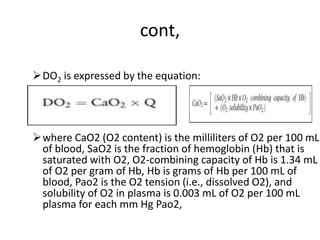
DO2 is expressed by the equation:
where CaO2 (O2 content) is the milliliters of O2 per 100 mL
of blood, SaO2 is the fraction of hemoglobin (Hb) that is
saturated with O2, O2-combining capacity of Hb is 1.34 mL
of O2 per gram of Hb, Hb is grams of Hb per 100 mL of
blood, Pao2 is the O2 tension (i.e., dissolved O2), and
solubility of O2 in plasma is 0.003 mL of O2 per 100 mL
plasma for each mm Hg Pao2,
cont,
9/8/2022
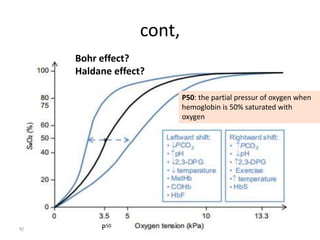
Bohr effect?
Haldane effect?
P50: the partial pressur of oxygen when
hemoglobin is 50% saturated with
oxygen
P50
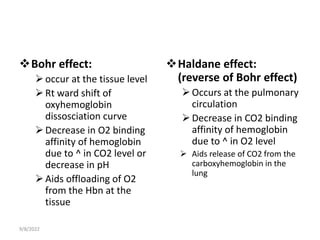
Bohr effect:
occur at the tissue level
Rt ward shift of
oxyhemoglobin
dissosciation curve
Decrease in O2 binding
affinity of hemoglobin
due to ^ in CO2 level or
decrease in pH
Aids offloading of O2
from the Hbn at the
tissue
Haldane effect:
(reverse of Bohr effect)
Occurs at the pulmonary
circulation
Decrease in CO2 binding
affinity of hemoglobin
due to ^ in O2 level
 Aids release of CO2 from the
carboxyhemoglobin in the
lung
9/8/2022
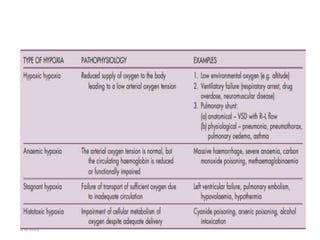
Hypoxia:
Hypoxia occurs when oxygen supplies are
insufficient to meet oxygen demands in a
particular compartment
Tissue hypoxia may be subdivided into four
main Types: hypoxaemic, anaemic, stagnant
or histotoxic.
Oxygen therapy may only correct hypoxia
due to hypoxaemia,
9/8/2022
cont
NORMAL
pao2 is rage 80-100 at room air
Mild hypoxemia when pao2 is bn 60-80mmhg
Crtical hypoxemia pao2 less than 40
pH=7.35-7.45
PaCo2=35-45
HCO3=21-27
SaO2>95%
9/8/2022
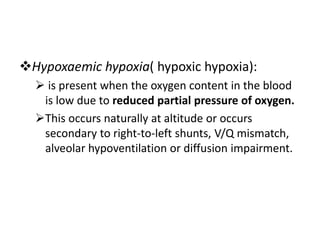
Hypoxaemic hypoxia( hypoxic hypoxia):
 is present when the oxygen content in the blood
is low due to reduced partial pressure of oxygen.
This occurs naturally at altitude or occurs
secondary to right-to-left shunts, V/Q mismatch,
alveolar hypoventilation or diffusion impairment.
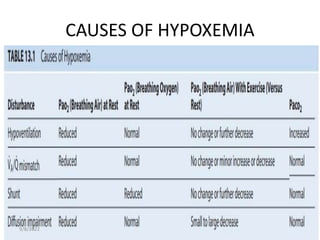
CAUSES OF HYPOXEMIA
9/8/2022
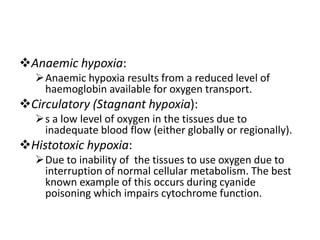
Anaemic hypoxia:
Anaemic hypoxia results from a reduced level of
haemoglobin available for oxygen transport.
Circulatory (Stagnant hypoxia):
s a low level of oxygen in the tissues due to
inadequate blood flow (either globally or regionally).
Histotoxic hypoxia:
Due to inability of the tissues to use oxygen due to
interruption of normal cellular metabolism. The best
known example of this occurs during cyanide
poisoning which impairs cytochrome function.
9/8/2022
Respiratory system control
central
The basic breathing rhythm originates in the
medulla.
Two medullary groups of neurons are generally
recognized:
dorsal respiratory group, which is primarily active during
inspiration,
ventral respiratory group, which is active during
inspiration and expiration.
9/8/2022
cont,
The most important of these sensors are
chemoreceptors that respond to changes in
hydrogen ion concentration
 Central chemoreceptors are thought to lie on the
anterolateral surface of the medulla and respond
primarily to changes in cerebrospinal fluid [H+].
9/8/2022
Cont,
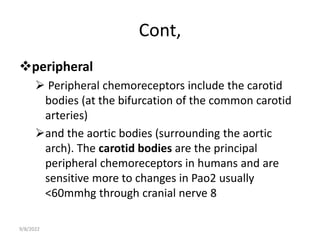
peripheral
 Peripheral chemoreceptors include the carotid
bodies (at the bifurcation of the common carotid
arteries)
and the aortic bodies (surrounding the aortic
arch). The carotid bodies are the principal
peripheral chemoreceptors in humans and are
sensitive more to changes in Pao2 usually
<60mmhg through cranial nerve 8
9/8/2022
Oxygen therapy
 Oxygen therapy, also known as supplemental
oxygen, is the use of oxygen as medical treatment
 Acute indications for therapy includes
hypoxemia (low blood oxygen levels), carbon
monoxide toxicity and cluster headache
 It may also be prophylactically given to maintain
blood oxygen levels during the induction
of anesthesia.
 Oxygen therapy is often useful in chronic hypoxemia
caused by conditions such as sever COPD or cystic
fibrosis.
9/8/2022
cont,
 oxygen is required for normal cellular
metabolism and energy production.
 However, excessively high concentrations can
result in oxygen toxicity leading to lung damage
and respiratory failure
 Higher oxygen concentrations can also increase
the risk of airway fires, particularly while
smoking.
 Oxygen therapy can also dry out the nasal
mucosa without humidification.
9/8/2022
cont,
 In most conditions an oxygen saturation of 94–98%
is adequate, while in those at risk of CO2 retentions
,like COPD pts, saturations of 88–92% are preferred
 Patients with hypoxemic-hypercarbic respiratory
failure use target saturation of 90-93%
 In cases of carbon monoxide toxicity or cardiac
arrest, saturations should be as high as possible.
 Atmospheric air is typically 21% oxygen by volume,
so oxygen therapy can increase O2 content of air up
to 100
9/8/2022
cont
Oxygen is widely used by hospitals, EMS,
and first-aid providers in a variety of conditions
and settings.
Only few indications frequently require high-
flow oxygen:
resuscitation,
major trauma,
anaphylaxsis
major bleeding &shock,
active convulsions and hypothermia.
9/8/2022
Acute condition
In acute hypoxemia, oxygen therapy
should be titrated to a target level based
on pulse oximetry (94–98% in most
patients, or 88–92% in people with
COPD).
This can be performed by increasing
oxygen delivery, fraction of inspired
oxygen.
9/8/2022
cont
 Most study recommended that oxygen therapy
be stopped for saturations greater than 98% and
not started for saturations above 90% .
 This may be due to an association between
excessive oxygenation in the acutely ill Pts and
increased mortality.
 Exceptions to these recommendations
include carbon monoxide poisoning, cluster
headaches, sickle cell crisis, and pneumothorax
9/8/2022
Chronic condition
Common conditions which may require a
baseline of supplementary oxygen
include chronic obstructive pulmonary
disease(COPD)
may also require additional oxygen during acute
exacerbations.
Oxygen may also be prescribed for end-stage
cardiac failure, respiratory failure, advanced
cancer, or neurodegenerative disease in spite
of relatively normal blood oxygen levels.
9/8/2022
Cont,
 Physiologically, it may be indicated in people with arterial
 oxygen partial pressure PaO2 ≤ 55mmHg (7.3kPa) or
arterial oxygen saturation SaO2 ≤ 88%.
 Careful titration of oxygen therapy should be
considered in patients with chronic conditions
predisposing them to carbon dioxide retention (e.g.,
COPD, emphysema).
 In these instances, oxygen therapy may decrease
respiratory drive, leading to accumulation of carbon
dioxide (hypercapnia), acidemia, and increased
mortality secondary to respiratory failure
9/8/2022
Cont,
 Improved outcomes have been observed with
titrated oxygen treatment
 The risks associated with loss of respiratory
drive are far outweighed by the risks of
withholding emergency oxygen,
 so emergency administration of oxygen is never
contraindicated.
9/8/2022
Cont,
Contradication:
there is no absolute contraindication for
oxygen
Oxygen therapy should be limited or be used
cautiously for people with pulmonary,
fibrosis, bleomycin-associated lung damage
or COPD.
also may enhance amiodarone associated
lung injury
9/8/2022
Cont,
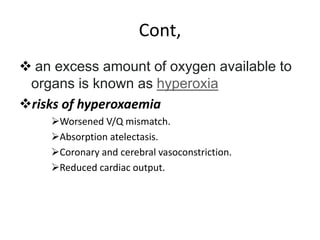
 an excess amount of oxygen available to
organs is known as hyperoxia
risks of hyperoxaemia
Worsened V/Q mismatch.
Absorption atelectasis.
Coronary and cerebral vasoconstriction.
Reduced cardiac output.
Cont,
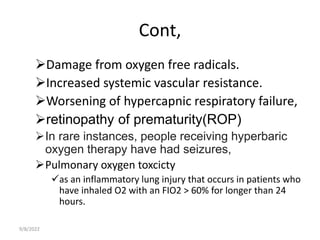
Damage from oxygen free radicals.
Increased systemic vascular resistance.
Worsening of hypercapnic respiratory failure,
retinopathy of prematurity(ROP)
In rare instances, people receiving hyperbaric
oxygen therapy have had seizures,
Pulmonary oxygen toxcicty
as an inflammatory lung injury that occurs in patients who
have inhaled O2 with an FIO2 > 60% for longer than 24
hours.
9/8/2022
O2 sources
Oxygen can be separated by a number of
methods(chemical reaction or fractional
distilation) to enable immediate or future use.
so oxygen we use can be from of the following:
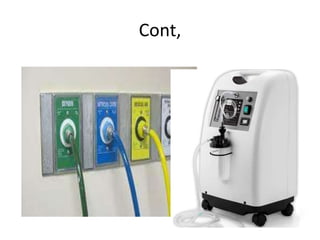
inplanted pipeline source
Compressed gas storage from a cylinder
Via an electrically powered oxygen concentrator
• widely used for home oxygen therapy as portable
personal oxygen.
• One particular advantage includes continuous supply
without need for bulky oxygen cylinders
9/8/2022
Cont,
Cont,
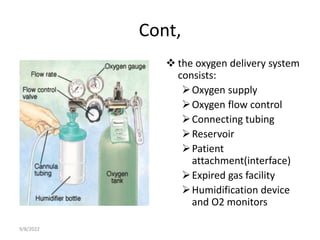
 the oxygen delivery system
consists:
Oxygen supply
Oxygen flow control
Connecting tubing
Reservoir
Patient
attachment(interface)
Expired gas facility
Humidification device
and O2 monitors
9/8/2022
Oxygen delivery system
Various devices are used for oxygen
administration.
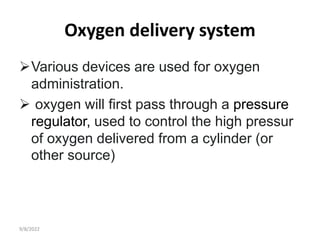
 oxygen will first pass through a pressure
regulator, used to control the high pressur
of oxygen delivered from a cylinder (or
other source)
9/8/2022
cont
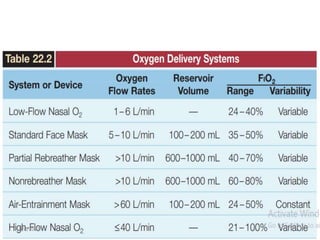
Oxygen delivery systems are classified as low-
flow systems, reservoir systems, and high-flow
systems .
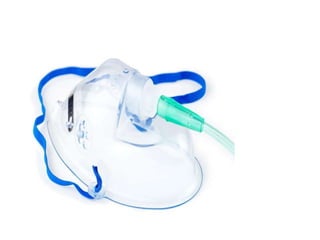
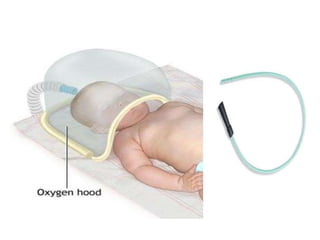
Low-flow systems use standard nasal prongs, nasal
catheter, oxygen tent, face masks
 high-flow systems use air-entrainment masks or
heated, humidified O2 delivered through nasal
prongs.
9/8/2022
Cont,
9/8/2022
9/8/2022
cont
Low-flow oxygen
Many people only require slight increases in
inhaled oxygen, rather than pure or near-pure
oxygen.
These requirements can be met through a
number of devices dependent on situation,
flow requirements, and personal preference.
9/8/2022
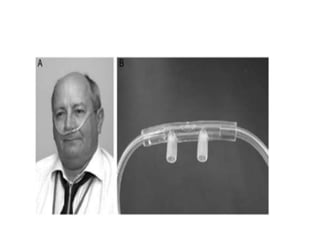
 Nasal cannulae
 Nasal cannulae can be used to deliver low-concentration and
medium-concentration oxygen concentrations
 However, there is wide variation in patients' breathing patterns
so the same flow rate of nasal oxygen may have widely different
effects on the blood oxygen and carbon dioxide levels of
different patients.
 Nasal cannulae at 1–4 L/min can have effects on oxygen
saturation approximately equivalent to those seen with 24–40%
oxygen
 The actual concentration of oxygen delivered (FiO2) cannot be
predicted
 The oxygen concentration continues to rise up to flows above
6 L/min..
Cont,
The upper range of oxygen delivery from nasal
cannulae is a little lower than the output of a
simple face mask, but the lower range goes a lot
lower than a simple face mask which should not
be used below a flow rate of 5 L/min (about 40%
oxygen)
 Another advantage of cannulae over simple face
masks is that they are less likely to be removed
accidentally and they allow the patient to speak
and eat.
Cont,
 Advantages of nasal cannulae compared with simple face masks for
medium-concentration oxygen therapy
 Comfort Adjustable flow gives wide oxygen concentration
range,suitable for variable oxygen therapy and concentration titration.
 Patient preference, No claustrophobic sensation.
 Not taken off to eat or speak and less likely to fall off.
 Less affected by movement of face.
 Less inspiratory resistance than simple face masks.
 No risk of rebreathing of carbon dioxide, Cheaper.
 easy to use, with no risk of CO2 retention
 Disadvantages of nasal cannulae
 May cause nasal irritation or soreness.
 May not work if nose is severely congested or blocked.
 Actual concentration of oxygen (FiO2) cannot be predict
Simple face mask
delivers oxygen concentrations between 40% and 60%
The oxygen supplied to the patient will be of variable
concentration depending on the flow of oxygen and
the patient's breathing pattern.
can be changed by increasing or decreasing the
oxygen flows between 5 and 10 L/min.
Flows of <5 L/min can cause increased resistance to
breathing, and there is a possibility of a build-up of
carbon dioxide within the mask and rebreathing may
occur
This mask is suitable for patients with respiratory
failure without hypercapnia
The mask may deliver a high concentration of
oxygen (>50%)
patients who require medium-concentration
oxygen therapy tend to prefer nasal cannulae to
simple face masks and the cannulae are more
likely to be left in position by the patient and less
likely to fall off
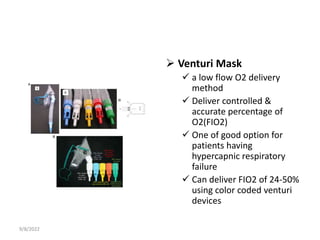
 Venturi Mask
 a low flow O2 delivery
method
 Deliver controlled &
accurate percentage of
O2(FIO2)
 One of good option for
patients having
hypercapnic respiratory
failure
 Can deliver FIO2 of 24-50%
using color coded venturi
devices
9/8/2022
High flow oxygen delivery
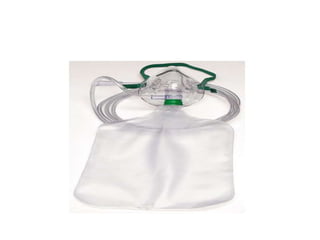
High-concentration reservoir mask (non-
rebreathing mask)
delivers oxygen at concentrations between 60%
and 90% when used at a flow rate of 15 L/min
The delivered oxygen concentration is variable and
will depend on the mask fit and the patient's
breathing pattern.
These masks are most suitable for trauma and
emergency use in patients in whom carbon
dioxide retention is unlikely
 High-flow nasal cannulae
There is increasing use of HFNC as an alternative
delivery device for adults requiring medium-
concentration and high-concentration oxygen therapy
The therapeutic effects are thought to be multifactorial
and include delivery of increased FiO2(upto 100%), a
CPAP effect and greater comfort for the patient when
compared with face masks.
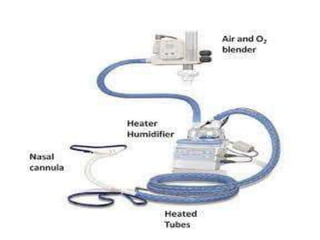
To deliver HFNC, three elements are required: a patient
interface, a gas delivery device and a humidifier.
A flow of at least 60 L/min can be accommodated via
standard dimension prongs on adult nasal cannula.
High-flow nasal oxygen should be considered as
an alternative to reservoir mask treatment in
patients with acute respiratory failure without
hypercapnia.
allows the person to continue to talk, eat, and
drink while still receiving therapy.
cont
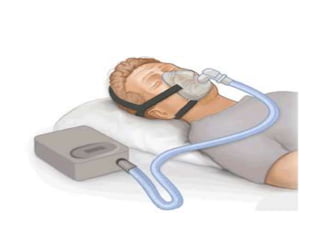
Positive pressure delivery
Patients who are unable to breathe on their
own will require positive pressure to move
oxygen into their lungs for gaseous exchange
to take place.
This can be achieved by:
 non invasively: delivery of positive pressure by
non invasive interface like nasal/facemask or nasal
prong. E.g CPAP/BPAP
Invasively: commonly via MV with endotracheal
intubation or tracheostomy tube
9/8/2022
NIV Can be used as a ventilatory support for Pts with
acute or chronic respiratory failure in ED, ICU or high
dependency unit
CPAP is the application of constant and continous
positive airway pressure during both the inspiratory
and expiratory phase
Commonly used in pts Cardiogenic pulmonary edema
BPAP is use of higher positive airway pressure during
inspiration and lower pressure during expiration
Best used for hypercapnic respiratory failure, COPD,
obesity hypoventilation disorder, drug overdose
9/8/2022
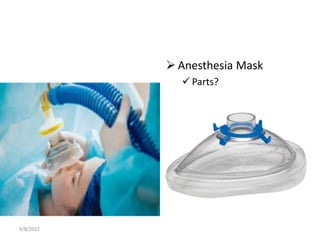
 Anesthesia Mask
 Parts?
9/8/2022
COPD
Oxygen therapy is used to prevent hypoxemia
(i.e., an arterial PO2 < 60 mm Hg or an arterial O2
saturation < 90%) .
The curent recommended target o2 tension in
exacerbated copd is about 60 – 65 0r spo2 88-92
9/8/2022
Reference
Miller text book of aneasthsia 9th edition
Morgan 18th editon
OH’S intensive care manual 8th ed
Marinos icu book
Up-to-date 21
9/8/2022
.
Thank you!
9/8/2022

oxygen therapy.pptx

  • 1.
    Lecture on Oxygentherapy for c2 medical student Dr. Getaye Simachew ACCPM resident 9/8/2022
  • 2.
    Outline Introduction Hypoxia and detectionof hypoxia  Oxygen Sources and delivery system Specific considerations in Pts with Obstructive lung diseases 9/8/2022
  • 3.
    objective At the endof this lecture You will explain normal and abnormal value of o2 in human body and the time we intiate treatment You will know transport mechanism of o2 will understand different type and causes hypoxia  will know common o2 sources and delivery system know the difference for o2 therapy in copd patient 9/8/2022
  • 4.
    Brain storming question whento use o2& and for what disease conditions?  target for therapy? How is o2 transported in the body+ the difference between hypoxia and hypoxemia? List commen o2 delivery system and their advantages ,disadvantages? 9/8/2022
  • 5.
    Introduction Oxygen is agas found in air we breath, is necessary for human life. some people with breathing disorder can’t get enough oxygen naturally and develop hypoxia They may need oxygen supplementation or therapy to improve energy level, sleep or in general for better quality of life. 9/8/2022
  • 6.
    Oxygen transport oxygen passdifferent transport cascades until it get into the target site(tissue) ventilation, gas exchange and transport in the blood Once O2 reaches the the blood, it is carried in blood in two forms: dissolved in the blood and bound to Hbn and the overall delivery of O 2 ( ̇DO2) is the product of the blood O2 content (CaO2) and blood flow (cardiac output, ̇Q) 9/8/2022
  • 7.
    cont, The neurocardiopulmonary axisis designed to optimise global oxygen delivery and carbon dioxide clearance the local tissue vascular beds are responsible for the distribution of blood flow.
  • 8.
    cont, DO2 is expressedby the equation: where CaO2 (O2 content) is the milliliters of O2 per 100 mL of blood, SaO2 is the fraction of hemoglobin (Hb) that is saturated with O2, O2-combining capacity of Hb is 1.34 mL of O2 per gram of Hb, Hb is grams of Hb per 100 mL of blood, Pao2 is the O2 tension (i.e., dissolved O2), and solubility of O2 in plasma is 0.003 mL of O2 per 100 mL plasma for each mm Hg Pao2,
  • 9.
    cont, 9/8/2022 Bohr effect? Haldane effect? P50:the partial pressur of oxygen when hemoglobin is 50% saturated with oxygen P50
  • 10.
    Bohr effect: occur atthe tissue level Rt ward shift of oxyhemoglobin dissosciation curve Decrease in O2 binding affinity of hemoglobin due to ^ in CO2 level or decrease in pH Aids offloading of O2 from the Hbn at the tissue Haldane effect: (reverse of Bohr effect) Occurs at the pulmonary circulation Decrease in CO2 binding affinity of hemoglobin due to ^ in O2 level  Aids release of CO2 from the carboxyhemoglobin in the lung 9/8/2022
  • 11.
    Hypoxia: Hypoxia occurs whenoxygen supplies are insufficient to meet oxygen demands in a particular compartment Tissue hypoxia may be subdivided into four main Types: hypoxaemic, anaemic, stagnant or histotoxic. Oxygen therapy may only correct hypoxia due to hypoxaemia, 9/8/2022
  • 12.
    cont NORMAL pao2 is rage80-100 at room air Mild hypoxemia when pao2 is bn 60-80mmhg Crtical hypoxemia pao2 less than 40 pH=7.35-7.45 PaCo2=35-45 HCO3=21-27 SaO2>95% 9/8/2022
  • 13.
    Hypoxaemic hypoxia( hypoxichypoxia):  is present when the oxygen content in the blood is low due to reduced partial pressure of oxygen. This occurs naturally at altitude or occurs secondary to right-to-left shunts, V/Q mismatch, alveolar hypoventilation or diffusion impairment.
  • 14.
  • 15.
    Anaemic hypoxia: Anaemic hypoxiaresults from a reduced level of haemoglobin available for oxygen transport. Circulatory (Stagnant hypoxia): s a low level of oxygen in the tissues due to inadequate blood flow (either globally or regionally). Histotoxic hypoxia: Due to inability of the tissues to use oxygen due to interruption of normal cellular metabolism. The best known example of this occurs during cyanide poisoning which impairs cytochrome function.
  • 16.
  • 17.
    Respiratory system control central Thebasic breathing rhythm originates in the medulla. Two medullary groups of neurons are generally recognized: dorsal respiratory group, which is primarily active during inspiration, ventral respiratory group, which is active during inspiration and expiration. 9/8/2022
  • 18.
    cont, The most importantof these sensors are chemoreceptors that respond to changes in hydrogen ion concentration  Central chemoreceptors are thought to lie on the anterolateral surface of the medulla and respond primarily to changes in cerebrospinal fluid [H+]. 9/8/2022
  • 19.
    Cont, peripheral  Peripheral chemoreceptorsinclude the carotid bodies (at the bifurcation of the common carotid arteries) and the aortic bodies (surrounding the aortic arch). The carotid bodies are the principal peripheral chemoreceptors in humans and are sensitive more to changes in Pao2 usually <60mmhg through cranial nerve 8 9/8/2022
  • 20.
    Oxygen therapy  Oxygentherapy, also known as supplemental oxygen, is the use of oxygen as medical treatment  Acute indications for therapy includes hypoxemia (low blood oxygen levels), carbon monoxide toxicity and cluster headache  It may also be prophylactically given to maintain blood oxygen levels during the induction of anesthesia.  Oxygen therapy is often useful in chronic hypoxemia caused by conditions such as sever COPD or cystic fibrosis. 9/8/2022
  • 21.
    cont,  oxygen isrequired for normal cellular metabolism and energy production.  However, excessively high concentrations can result in oxygen toxicity leading to lung damage and respiratory failure  Higher oxygen concentrations can also increase the risk of airway fires, particularly while smoking.  Oxygen therapy can also dry out the nasal mucosa without humidification. 9/8/2022
  • 22.
    cont,  In mostconditions an oxygen saturation of 94–98% is adequate, while in those at risk of CO2 retentions ,like COPD pts, saturations of 88–92% are preferred  Patients with hypoxemic-hypercarbic respiratory failure use target saturation of 90-93%  In cases of carbon monoxide toxicity or cardiac arrest, saturations should be as high as possible.  Atmospheric air is typically 21% oxygen by volume, so oxygen therapy can increase O2 content of air up to 100 9/8/2022
  • 23.
    cont Oxygen is widelyused by hospitals, EMS, and first-aid providers in a variety of conditions and settings. Only few indications frequently require high- flow oxygen: resuscitation, major trauma, anaphylaxsis major bleeding &shock, active convulsions and hypothermia. 9/8/2022
  • 24.
    Acute condition In acutehypoxemia, oxygen therapy should be titrated to a target level based on pulse oximetry (94–98% in most patients, or 88–92% in people with COPD). This can be performed by increasing oxygen delivery, fraction of inspired oxygen. 9/8/2022
  • 25.
    cont  Most studyrecommended that oxygen therapy be stopped for saturations greater than 98% and not started for saturations above 90% .  This may be due to an association between excessive oxygenation in the acutely ill Pts and increased mortality.  Exceptions to these recommendations include carbon monoxide poisoning, cluster headaches, sickle cell crisis, and pneumothorax 9/8/2022
  • 26.
    Chronic condition Common conditionswhich may require a baseline of supplementary oxygen include chronic obstructive pulmonary disease(COPD) may also require additional oxygen during acute exacerbations. Oxygen may also be prescribed for end-stage cardiac failure, respiratory failure, advanced cancer, or neurodegenerative disease in spite of relatively normal blood oxygen levels. 9/8/2022
  • 27.
    Cont,  Physiologically, itmay be indicated in people with arterial  oxygen partial pressure PaO2 ≤ 55mmHg (7.3kPa) or arterial oxygen saturation SaO2 ≤ 88%.  Careful titration of oxygen therapy should be considered in patients with chronic conditions predisposing them to carbon dioxide retention (e.g., COPD, emphysema).  In these instances, oxygen therapy may decrease respiratory drive, leading to accumulation of carbon dioxide (hypercapnia), acidemia, and increased mortality secondary to respiratory failure 9/8/2022
  • 28.
    Cont,  Improved outcomeshave been observed with titrated oxygen treatment  The risks associated with loss of respiratory drive are far outweighed by the risks of withholding emergency oxygen,  so emergency administration of oxygen is never contraindicated. 9/8/2022
  • 29.
    Cont, Contradication: there is noabsolute contraindication for oxygen Oxygen therapy should be limited or be used cautiously for people with pulmonary, fibrosis, bleomycin-associated lung damage or COPD. also may enhance amiodarone associated lung injury 9/8/2022
  • 30.
    Cont,  an excessamount of oxygen available to organs is known as hyperoxia risks of hyperoxaemia Worsened V/Q mismatch. Absorption atelectasis. Coronary and cerebral vasoconstriction. Reduced cardiac output.
  • 31.
    Cont, Damage from oxygenfree radicals. Increased systemic vascular resistance. Worsening of hypercapnic respiratory failure, retinopathy of prematurity(ROP) In rare instances, people receiving hyperbaric oxygen therapy have had seizures, Pulmonary oxygen toxcicty as an inflammatory lung injury that occurs in patients who have inhaled O2 with an FIO2 > 60% for longer than 24 hours. 9/8/2022
  • 32.
    O2 sources Oxygen canbe separated by a number of methods(chemical reaction or fractional distilation) to enable immediate or future use. so oxygen we use can be from of the following: inplanted pipeline source Compressed gas storage from a cylinder Via an electrically powered oxygen concentrator • widely used for home oxygen therapy as portable personal oxygen. • One particular advantage includes continuous supply without need for bulky oxygen cylinders 9/8/2022
  • 33.
  • 34.
    Cont,  the oxygendelivery system consists: Oxygen supply Oxygen flow control Connecting tubing Reservoir Patient attachment(interface) Expired gas facility Humidification device and O2 monitors 9/8/2022
  • 35.
    Oxygen delivery system Variousdevices are used for oxygen administration.  oxygen will first pass through a pressure regulator, used to control the high pressur of oxygen delivered from a cylinder (or other source) 9/8/2022
  • 36.
    cont Oxygen delivery systemsare classified as low- flow systems, reservoir systems, and high-flow systems . Low-flow systems use standard nasal prongs, nasal catheter, oxygen tent, face masks  high-flow systems use air-entrainment masks or heated, humidified O2 delivered through nasal prongs. 9/8/2022
  • 37.
  • 38.
  • 39.
    cont Low-flow oxygen Many peopleonly require slight increases in inhaled oxygen, rather than pure or near-pure oxygen. These requirements can be met through a number of devices dependent on situation, flow requirements, and personal preference. 9/8/2022
  • 40.
     Nasal cannulae Nasal cannulae can be used to deliver low-concentration and medium-concentration oxygen concentrations  However, there is wide variation in patients' breathing patterns so the same flow rate of nasal oxygen may have widely different effects on the blood oxygen and carbon dioxide levels of different patients.  Nasal cannulae at 1–4 L/min can have effects on oxygen saturation approximately equivalent to those seen with 24–40% oxygen  The actual concentration of oxygen delivered (FiO2) cannot be predicted  The oxygen concentration continues to rise up to flows above 6 L/min..
  • 41.
    Cont, The upper rangeof oxygen delivery from nasal cannulae is a little lower than the output of a simple face mask, but the lower range goes a lot lower than a simple face mask which should not be used below a flow rate of 5 L/min (about 40% oxygen)  Another advantage of cannulae over simple face masks is that they are less likely to be removed accidentally and they allow the patient to speak and eat.
  • 42.
    Cont,  Advantages ofnasal cannulae compared with simple face masks for medium-concentration oxygen therapy  Comfort Adjustable flow gives wide oxygen concentration range,suitable for variable oxygen therapy and concentration titration.  Patient preference, No claustrophobic sensation.  Not taken off to eat or speak and less likely to fall off.  Less affected by movement of face.  Less inspiratory resistance than simple face masks.  No risk of rebreathing of carbon dioxide, Cheaper.  easy to use, with no risk of CO2 retention  Disadvantages of nasal cannulae  May cause nasal irritation or soreness.  May not work if nose is severely congested or blocked.  Actual concentration of oxygen (FiO2) cannot be predict
  • 44.
    Simple face mask deliversoxygen concentrations between 40% and 60% The oxygen supplied to the patient will be of variable concentration depending on the flow of oxygen and the patient's breathing pattern. can be changed by increasing or decreasing the oxygen flows between 5 and 10 L/min. Flows of <5 L/min can cause increased resistance to breathing, and there is a possibility of a build-up of carbon dioxide within the mask and rebreathing may occur
  • 45.
    This mask issuitable for patients with respiratory failure without hypercapnia The mask may deliver a high concentration of oxygen (>50%) patients who require medium-concentration oxygen therapy tend to prefer nasal cannulae to simple face masks and the cannulae are more likely to be left in position by the patient and less likely to fall off
  • 48.
     Venturi Mask a low flow O2 delivery method  Deliver controlled & accurate percentage of O2(FIO2)  One of good option for patients having hypercapnic respiratory failure  Can deliver FIO2 of 24-50% using color coded venturi devices 9/8/2022
  • 49.
    High flow oxygendelivery High-concentration reservoir mask (non- rebreathing mask) delivers oxygen at concentrations between 60% and 90% when used at a flow rate of 15 L/min The delivered oxygen concentration is variable and will depend on the mask fit and the patient's breathing pattern. These masks are most suitable for trauma and emergency use in patients in whom carbon dioxide retention is unlikely
  • 51.
     High-flow nasalcannulae There is increasing use of HFNC as an alternative delivery device for adults requiring medium- concentration and high-concentration oxygen therapy The therapeutic effects are thought to be multifactorial and include delivery of increased FiO2(upto 100%), a CPAP effect and greater comfort for the patient when compared with face masks. To deliver HFNC, three elements are required: a patient interface, a gas delivery device and a humidifier. A flow of at least 60 L/min can be accommodated via standard dimension prongs on adult nasal cannula.
  • 52.
    High-flow nasal oxygenshould be considered as an alternative to reservoir mask treatment in patients with acute respiratory failure without hypercapnia. allows the person to continue to talk, eat, and drink while still receiving therapy.
  • 54.
    cont Positive pressure delivery Patientswho are unable to breathe on their own will require positive pressure to move oxygen into their lungs for gaseous exchange to take place. This can be achieved by:  non invasively: delivery of positive pressure by non invasive interface like nasal/facemask or nasal prong. E.g CPAP/BPAP Invasively: commonly via MV with endotracheal intubation or tracheostomy tube 9/8/2022
  • 55.
    NIV Can beused as a ventilatory support for Pts with acute or chronic respiratory failure in ED, ICU or high dependency unit CPAP is the application of constant and continous positive airway pressure during both the inspiratory and expiratory phase Commonly used in pts Cardiogenic pulmonary edema BPAP is use of higher positive airway pressure during inspiration and lower pressure during expiration Best used for hypercapnic respiratory failure, COPD, obesity hypoventilation disorder, drug overdose 9/8/2022
  • 57.
     Anesthesia Mask Parts? 9/8/2022
  • 58.
    COPD Oxygen therapy isused to prevent hypoxemia (i.e., an arterial PO2 < 60 mm Hg or an arterial O2 saturation < 90%) . The curent recommended target o2 tension in exacerbated copd is about 60 – 65 0r spo2 88-92 9/8/2022
  • 59.
    Reference Miller text bookof aneasthsia 9th edition Morgan 18th editon OH’S intensive care manual 8th ed Marinos icu book Up-to-date 21 9/8/2022
  • 60.

Editor's Notes

  • #14 HYPOXEMIA AND HYPOXIA: COMMON SYMPTOMS Both hypoxemia and hypoxia can share a list of common symptoms which include:   Changes in skin color, ranging from blue to cherry red  Confusion Cough Fast heart rate Rapid breathing Shortness of breath Slow heart rate Sweating Wheezing
  • #20 reflex control
  • #35 Oxygen supply: oxygen can be delivered from pressurised cylinders, hospital supply from cylinder banks or a vacuum-insulated evaporator, or an oxygen concentrator. 2. Oxygen flow control: oxygen supplied to the device is controlled by some sort of valve, often with an associated flow meter. 3. Connecting tubing: both from the supply to the flow control and from the flow control to the device, the type and size of the tubing are important. Small-bore tubing can limit oxygen flow when high flow is intended. In some systems the connecting tubing can also act as a reservoir (e.g. Ayre’s T-piece). Some devices require specialised tubing with appropriate end attachments, such as the Schräeder valves required for connecting to the wall oxygen supply. 4. Reservoir: all oxygen delivery devices have some sort of reservoir. In a simple oxygen mask, it is the mask itself. Some low-flow CPAP circuits have a balloon reservoir. Nasal cannulae use the nasopharynx as a reservoir. An oxygen tent uses the volume of the tent as a large reservoir. The effectiveness of the reservoir in ‘storing’ oxygen ready for the next inspiratory effort is one of the important factors in governing its ability to deliver the desired oxygen concentration. The oxygen tent is a good example of the effectiveness of a large reservoir because it eliminates air entrainment, whatever the patient’s PIFR. Thus the oxygen flow rate does not have to be high, but just enough to ensure that CO2 re-breathing is abolished. Indeed, it is the retention of CO2 that can be the major problem if gas is expired into the reservoir. 5. Patient attachment: the patient is connected to the oxygen supply and reservoir such that the device delivers oxygen to the airway – either by directly covering the upper airway (e.g. plastic mask/ head box), intranasally or by increasing the oxygen concentration in the wider environment as in an oxygen tent. 6. Expired gas facility: expired gas from the patient needs to be allowed to dissipate into the environment and not be retained in the system to be inspired at the next inspiratory effort. Most masks achieve this by having a small reservoir capacity and holes in the plastic to allow the gas to exit. One-way valves, as in the non-rebreather type reservoir mask, aid in unidirectional flow of gas away from the patient. High-flow T-piece systems like those used in a CPAP system use the high flow to remove the gas down an expiratory limb and into the environment. 7. Humidification: most systems use the physiological humidification properties of the nasopharynx and rachea. However, high-flow systems may overcome this, leading to drying of the airway and secretions, which can be uncomfortable and undesirable. Artificial humidification (and warming) should be employed, using devices such as a water bath or heat and moisture exchanger (HME). 8. Oxygen monitor: some systems have an oxygen monitor incorporated in the apparatus (e.g. a fuel cell). This allows the much more accurate monitoring of FiO2, but this is dependent on where in the system it is placed and also adds bulk and expense to the oxygen delivery method.