JOSEPH ALAO
 Case presentation
 Introduction
 Uses of oxygen
 Signs of oxygen deprivation
 Methods of oxygen
administration
At the end of this presentation, we should
be able to understand;
The meaning of oxygen therapy
The signs of oxygen deprivation
The methods of oxygen
administration and its delivery
devices.
You are treating a 60years old man whose
chief complaint was chest pain that
radiates to the neck. You connected your
12Lead ECG and found out your patient
has anterior-septal wall MI. Vital signs
are BP: 100/60mmHg, PR:66b/m,
RR:24c/m, Temp:37.6°C, SpO2:94%
Does he need oxygen? If yes, how will you
administer? If no, what's your reason?
 Oxygen can be defined as a drug classified under
medical gas category.
 Its a colorless, odorless and tasteless gas that is
highly essential for living.
 Oxygen therapy is the administration of O2 at a
concentration of pressure greater than that found in
the atmosphere.
 The purpose of O2 therapy is to increase O2
saturation in tissues where the saturation levels are
too low due to illness or injury.
Supplemental oxygen is one of the most
commonly prescribed treatments in
medical care. Tissue oxygenation is
dependent on optimal or adequate
delivery of oxygen to the tissues.
Increasing the concentration of inhaled
oxygen is an effective method of
increasing the partial pressure of oxygen
in the blood and correcting hypoxemia.
 Oxygen therapy is a means to provide oxygen
according to target saturation rates to
achieve normal or near normal oxygen
saturation levels for acute and chronically ill
patients.
 Oxygen must be monitored in patients to
keep the saturation levels within the
required target range. Oxygen should be
reduced or discontinued in stable patients
with satisfactory oxygen saturation levels
 The essence of oxygen therapy is to provide
oxygen according to target saturation rates,
and to monitor the saturation rate to keep
it within the target range. The target range
(SpO2) for a normal adult is 95% to 100%.
Why use
oxygen?????
 Oxygen is indicated in any patient with an
oxygen saturation level less than 90% in
healthy humans, no matter their state. In
acutely ill patients, it's indicated when it's
below 92%.
 However, it's very harmful if oxygen drops
below 80% in any healthy human or
patient. Immediate intervention is
required.
 If SpO2 ≥92%, oxygen therapy is not
routinely required.
 If SpO2 is 85-91%, oxygen can be initially
instituted at 2-4 L/min via nasal cannula
or other suitable oxygen delivery method
and titrated to achieve target SpO2.
 In many situations, this range of oxygen
saturation is unlikely to be associated
with risk, although oxygen is commonly
administered.
 If SpO2 is <85%, oxygen can be initiated at 4
L/min via nasal cannula, through a simple face
mask at 5-10 L/min, a 100% non-rebreather
reservoir mask at 15 L/min, or through a
humidified high-flow nasal cannula.
 The choice of the delivery system will depend
on the SpO2 level and titrated to achieve the
target SpO2 as soon as practically possible.
 Several research showed that oxygen can be
administered to the patient to reduce their
level of anxiety and stress but no specific rate
was concluded based on titration to the desired
effect by the healthcare provider following
proper documentation.
1. Asthma
2. COPD
3. COVID 19
4. Cystic Fibrosis
5. Heart failure
6. Pneumonia
7. Trauma
8. Surgery
 Devices used in O2 administration are usually
divided into low flow systems and high flow
systems
This is a low flow system): it can provide 24-40%
of oxygen concentration at 1 6litres/minute.
This is a low-flow system. It can provide 40-60%
oxygen concentration at 6-10 liters/minute.
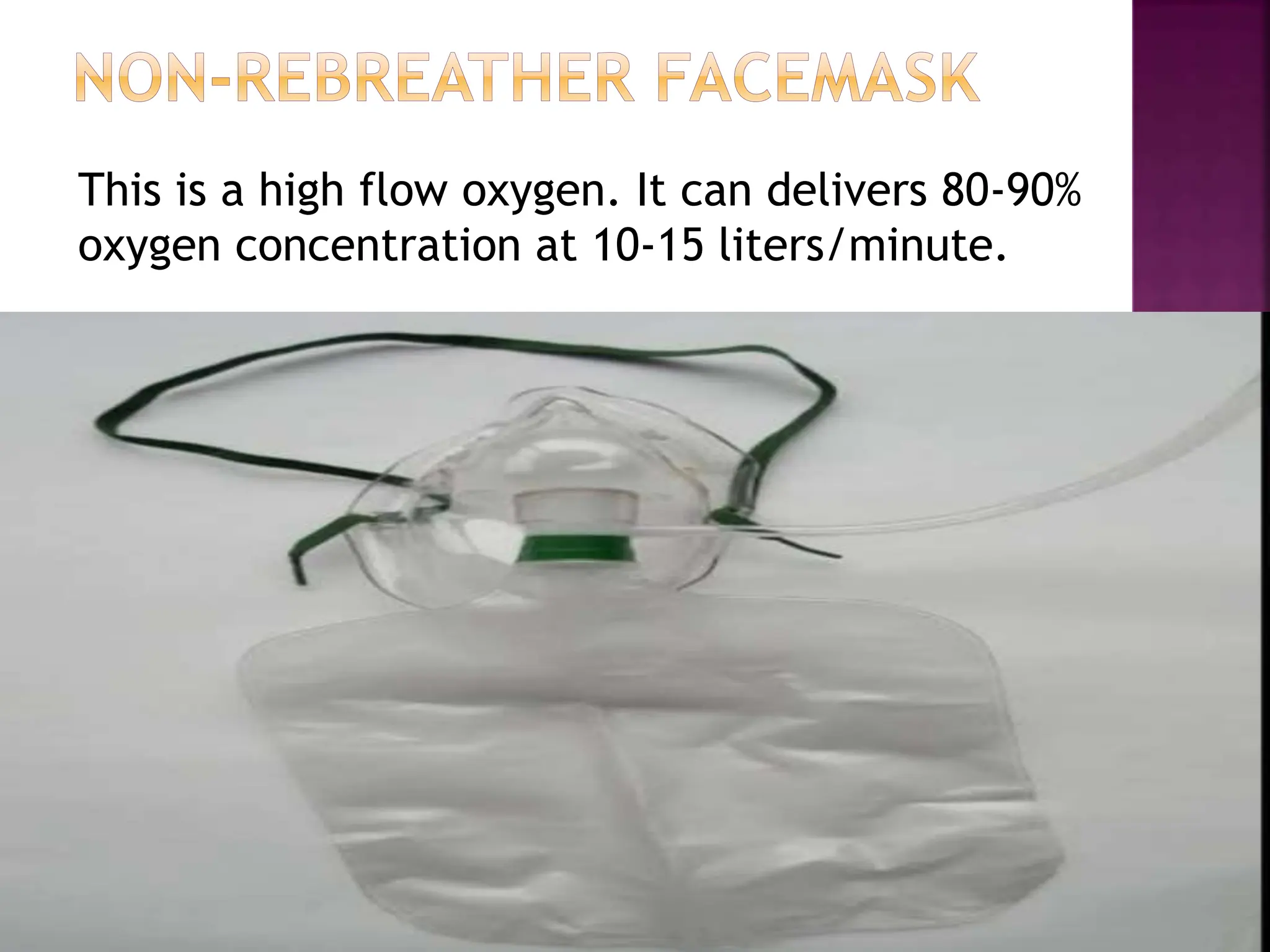
This is a high flow oxygen. It can delivers 80-90%
oxygen concentration at 10-15 liters/minute.
This can deliver up to 15 LPM of oxygen
This is a high flow system. this can provide 24-60%
oxygen at 4 -12 liters/ minute. This delivers a more
precise level of oxygen by controlling the specific
amounts of oxygen delivered to the patient.
 Portable oxygen
cylinder
1. Paraquat poisoning
2. Fire hazard
THANK
YOU!!!!

OXYGEN THERAPY & ADMINISTRATION FOR MEDICSpptx

  • 1.
  • 2.
     Case presentation Introduction  Uses of oxygen  Signs of oxygen deprivation  Methods of oxygen administration
  • 3.
    At the endof this presentation, we should be able to understand; The meaning of oxygen therapy The signs of oxygen deprivation The methods of oxygen administration and its delivery devices.
  • 4.
    You are treatinga 60years old man whose chief complaint was chest pain that radiates to the neck. You connected your 12Lead ECG and found out your patient has anterior-septal wall MI. Vital signs are BP: 100/60mmHg, PR:66b/m, RR:24c/m, Temp:37.6°C, SpO2:94% Does he need oxygen? If yes, how will you administer? If no, what's your reason?
  • 5.
     Oxygen canbe defined as a drug classified under medical gas category.  Its a colorless, odorless and tasteless gas that is highly essential for living.  Oxygen therapy is the administration of O2 at a concentration of pressure greater than that found in the atmosphere.  The purpose of O2 therapy is to increase O2 saturation in tissues where the saturation levels are too low due to illness or injury.
  • 6.
    Supplemental oxygen isone of the most commonly prescribed treatments in medical care. Tissue oxygenation is dependent on optimal or adequate delivery of oxygen to the tissues. Increasing the concentration of inhaled oxygen is an effective method of increasing the partial pressure of oxygen in the blood and correcting hypoxemia.
  • 7.
     Oxygen therapyis a means to provide oxygen according to target saturation rates to achieve normal or near normal oxygen saturation levels for acute and chronically ill patients.  Oxygen must be monitored in patients to keep the saturation levels within the required target range. Oxygen should be reduced or discontinued in stable patients with satisfactory oxygen saturation levels
  • 8.
     The essenceof oxygen therapy is to provide oxygen according to target saturation rates, and to monitor the saturation rate to keep it within the target range. The target range (SpO2) for a normal adult is 95% to 100%.
  • 9.
  • 10.
     Oxygen isindicated in any patient with an oxygen saturation level less than 90% in healthy humans, no matter their state. In acutely ill patients, it's indicated when it's below 92%.  However, it's very harmful if oxygen drops below 80% in any healthy human or patient. Immediate intervention is required.  If SpO2 ≥92%, oxygen therapy is not routinely required.
  • 11.
     If SpO2is 85-91%, oxygen can be initially instituted at 2-4 L/min via nasal cannula or other suitable oxygen delivery method and titrated to achieve target SpO2.  In many situations, this range of oxygen saturation is unlikely to be associated with risk, although oxygen is commonly administered.
  • 12.
     If SpO2is <85%, oxygen can be initiated at 4 L/min via nasal cannula, through a simple face mask at 5-10 L/min, a 100% non-rebreather reservoir mask at 15 L/min, or through a humidified high-flow nasal cannula.  The choice of the delivery system will depend on the SpO2 level and titrated to achieve the target SpO2 as soon as practically possible.  Several research showed that oxygen can be administered to the patient to reduce their level of anxiety and stress but no specific rate was concluded based on titration to the desired effect by the healthcare provider following proper documentation.
  • 13.
    1. Asthma 2. COPD 3.COVID 19 4. Cystic Fibrosis 5. Heart failure 6. Pneumonia 7. Trauma 8. Surgery
  • 15.
     Devices usedin O2 administration are usually divided into low flow systems and high flow systems
  • 16.
    This is alow flow system): it can provide 24-40% of oxygen concentration at 1 6litres/minute.
  • 17.
    This is alow-flow system. It can provide 40-60% oxygen concentration at 6-10 liters/minute.
  • 18.
    This is ahigh flow oxygen. It can delivers 80-90% oxygen concentration at 10-15 liters/minute.
  • 19.
    This can deliverup to 15 LPM of oxygen
  • 20.
    This is ahigh flow system. this can provide 24-60% oxygen at 4 -12 liters/ minute. This delivers a more precise level of oxygen by controlling the specific amounts of oxygen delivered to the patient.
  • 22.
  • 23.
  • 24.