OVERVIEW
LOCAL GOVERNMENT
ADMINISTRATION/
ISSUES & CONCERNS
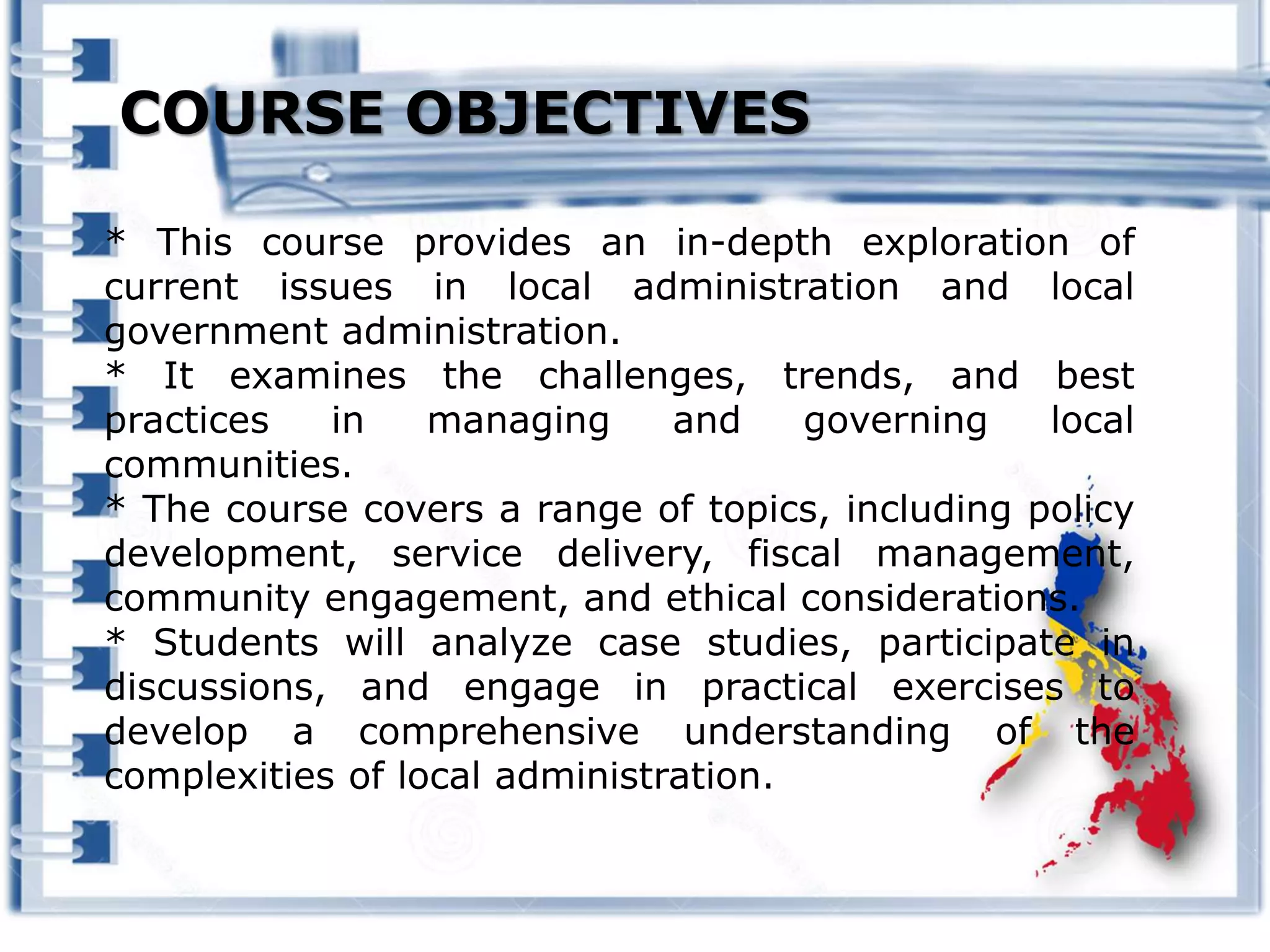
COURSE OBJECTIVES
* This course provides an in-depth exploration of
current issues in local administration and local
government administration.
* It examines the challenges, trends, and best
practices in managing and governing local
communities.
* The course covers a range of topics, including policy
development, service delivery, fiscal management,
community engagement, and ethical considerations.
* Students will analyze case studies, participate in
discussions, and engage in practical exercises to
develop a comprehensive understanding of the
complexities of local administration.
• Rationale
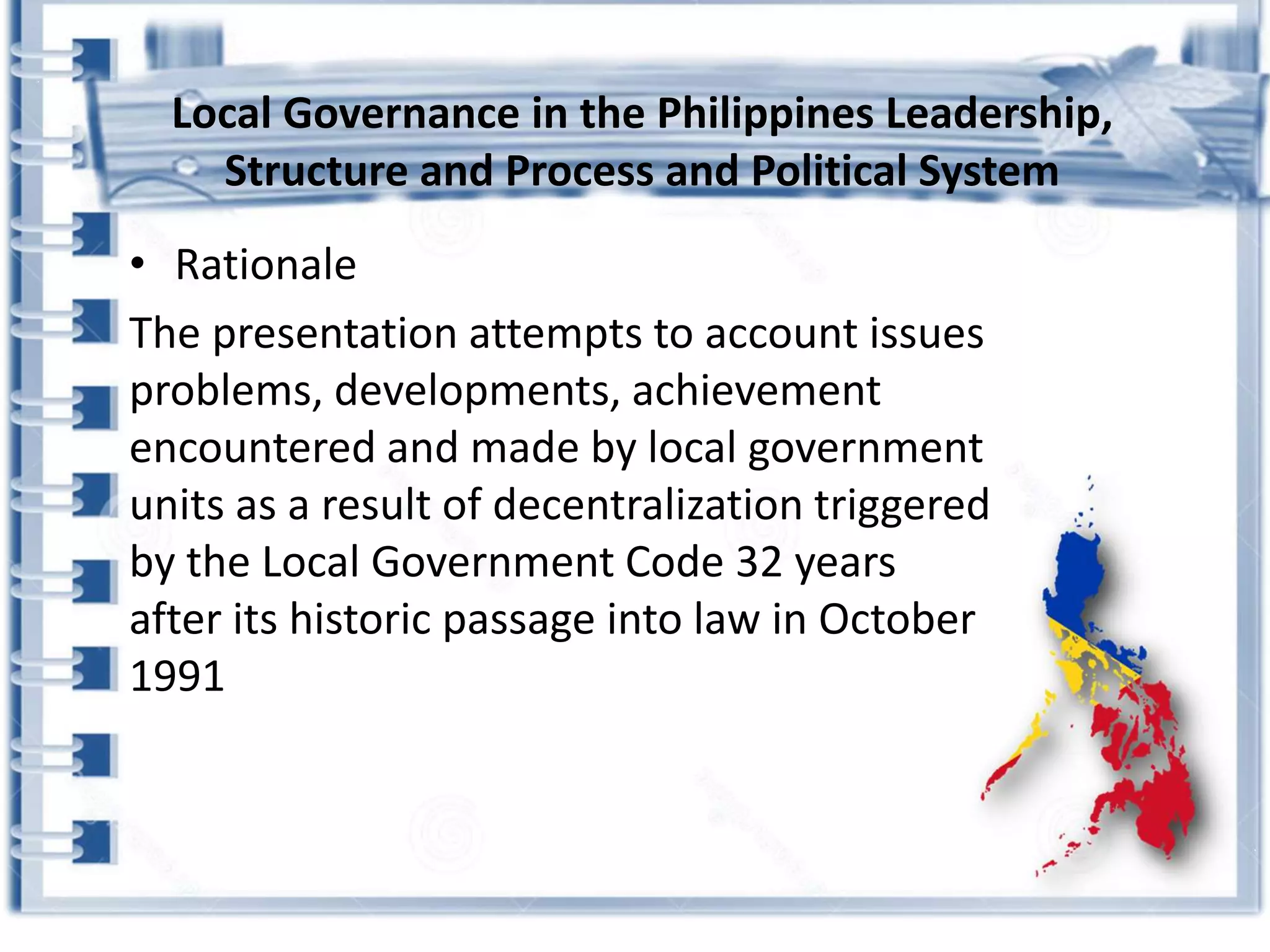
The presentation attempts to account issues
problems, developments, achievement
encountered and made by local government
units as a result of decentralization triggered
by the Local Government Code 32 years
after its historic passage into law in October
1991
Local Governance in the Philippines Leadership,
Structure and Process and Political System
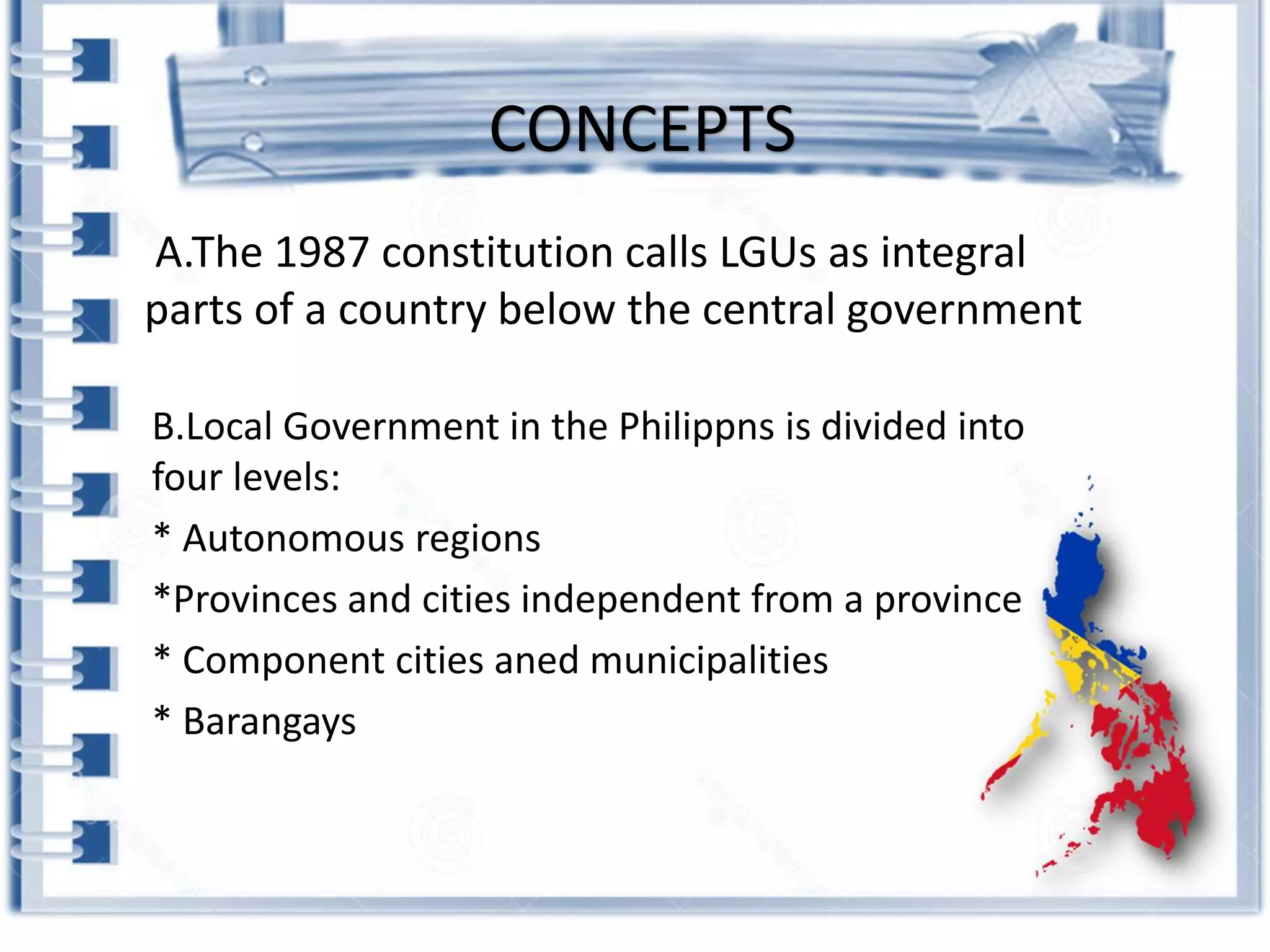
A.The 1987 constitution calls LGUs as integral
parts of a country below the central government
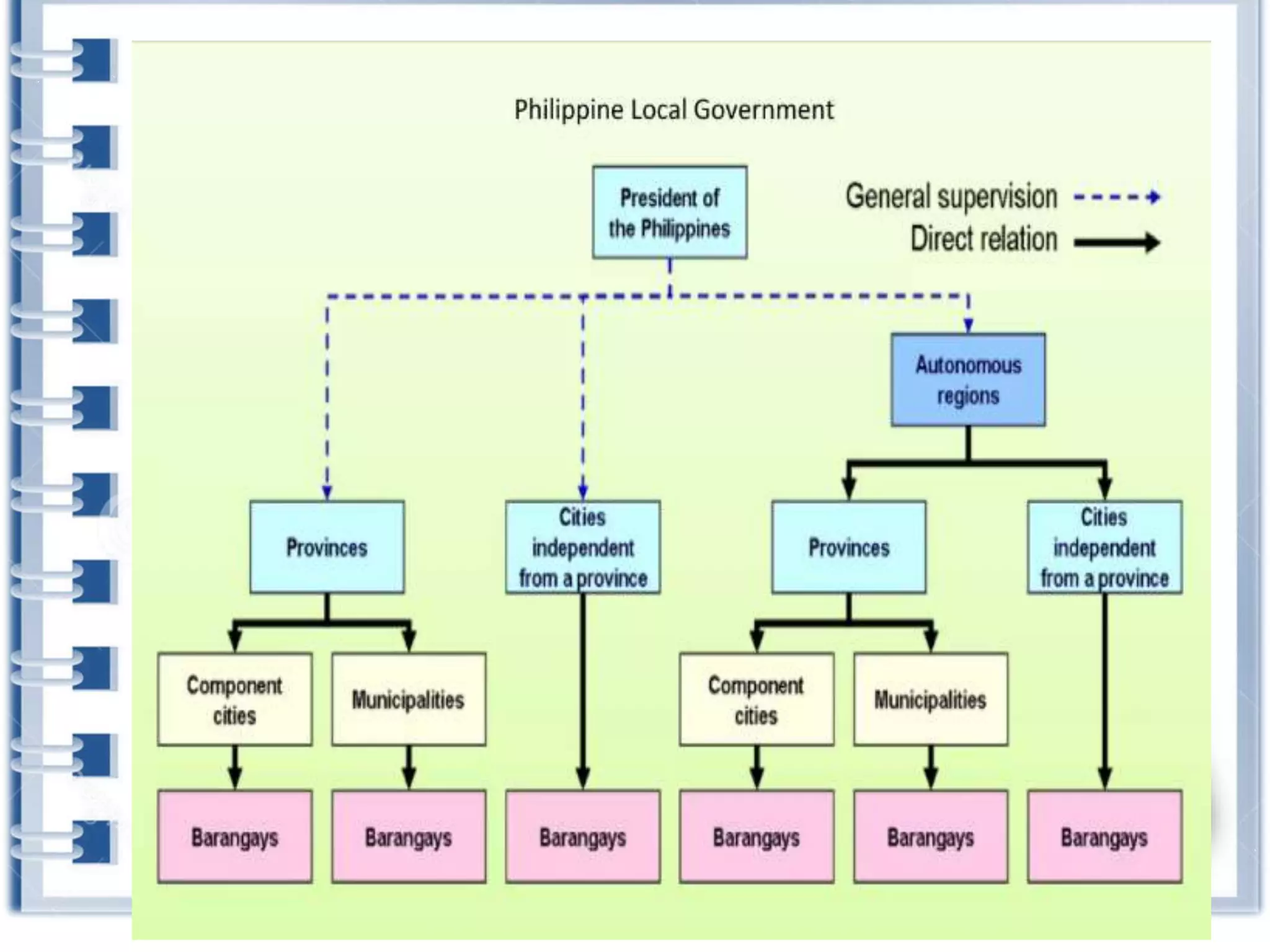
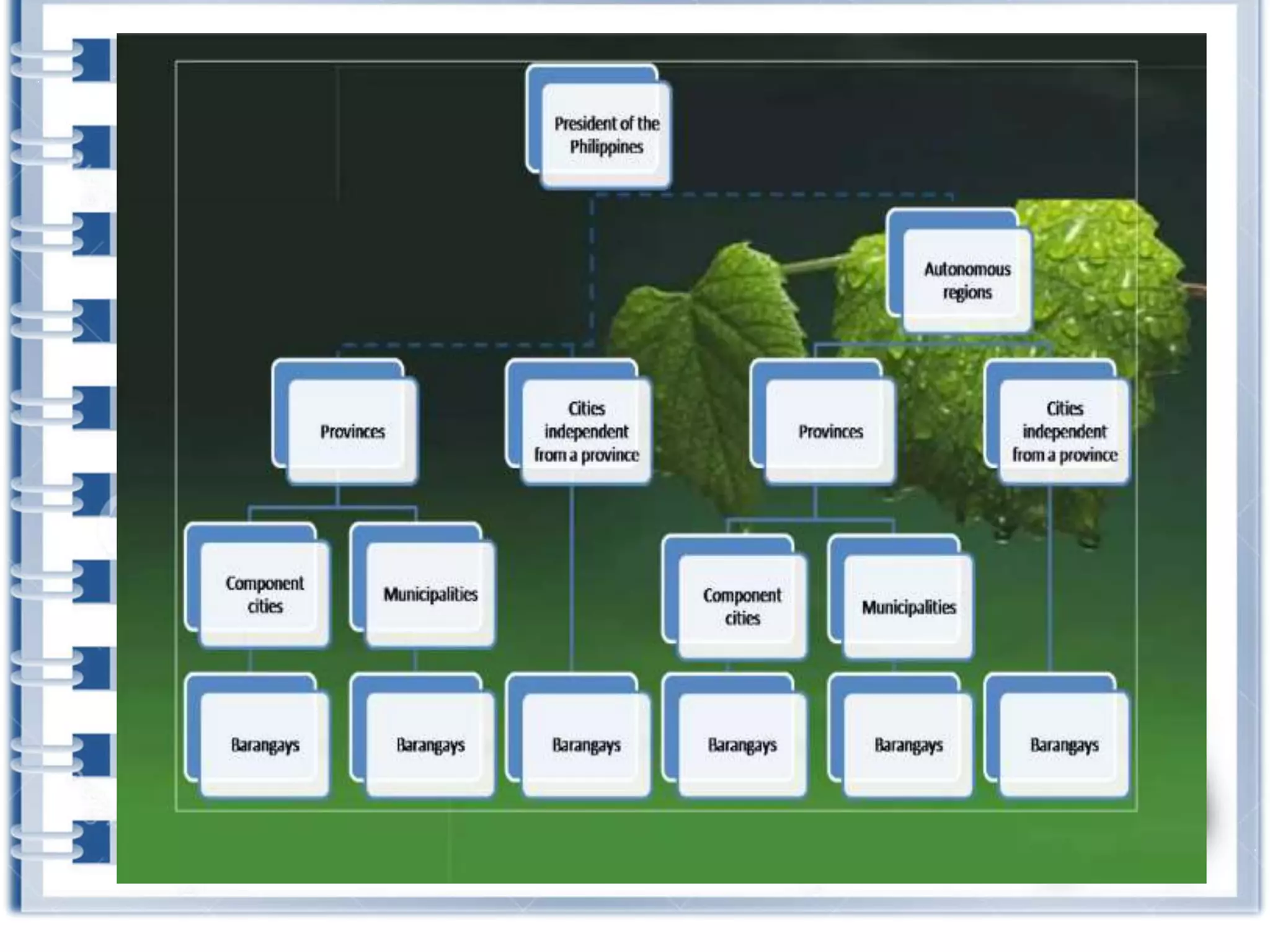
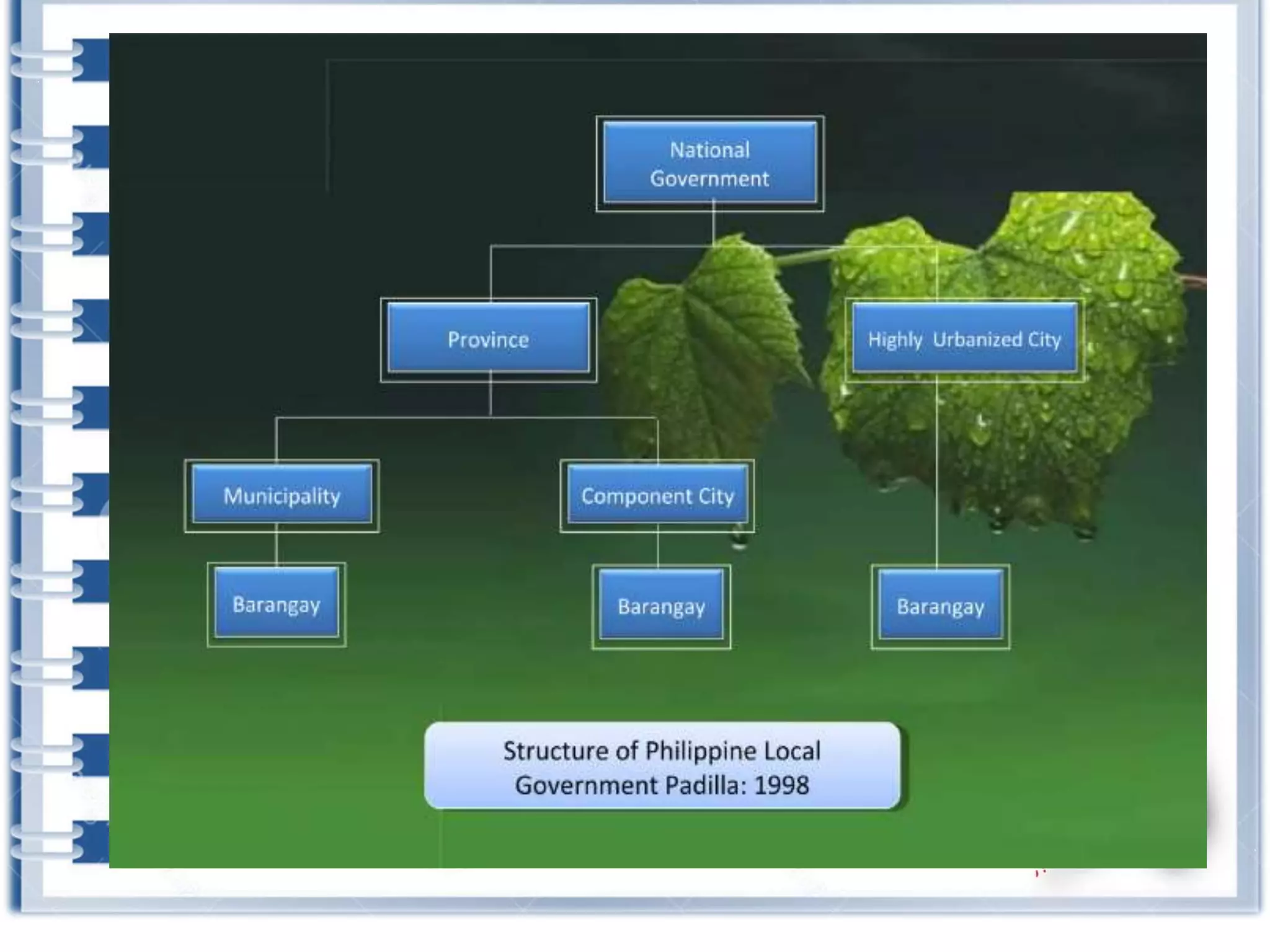
B.Local Government in the Philippns is divided into
four levels:
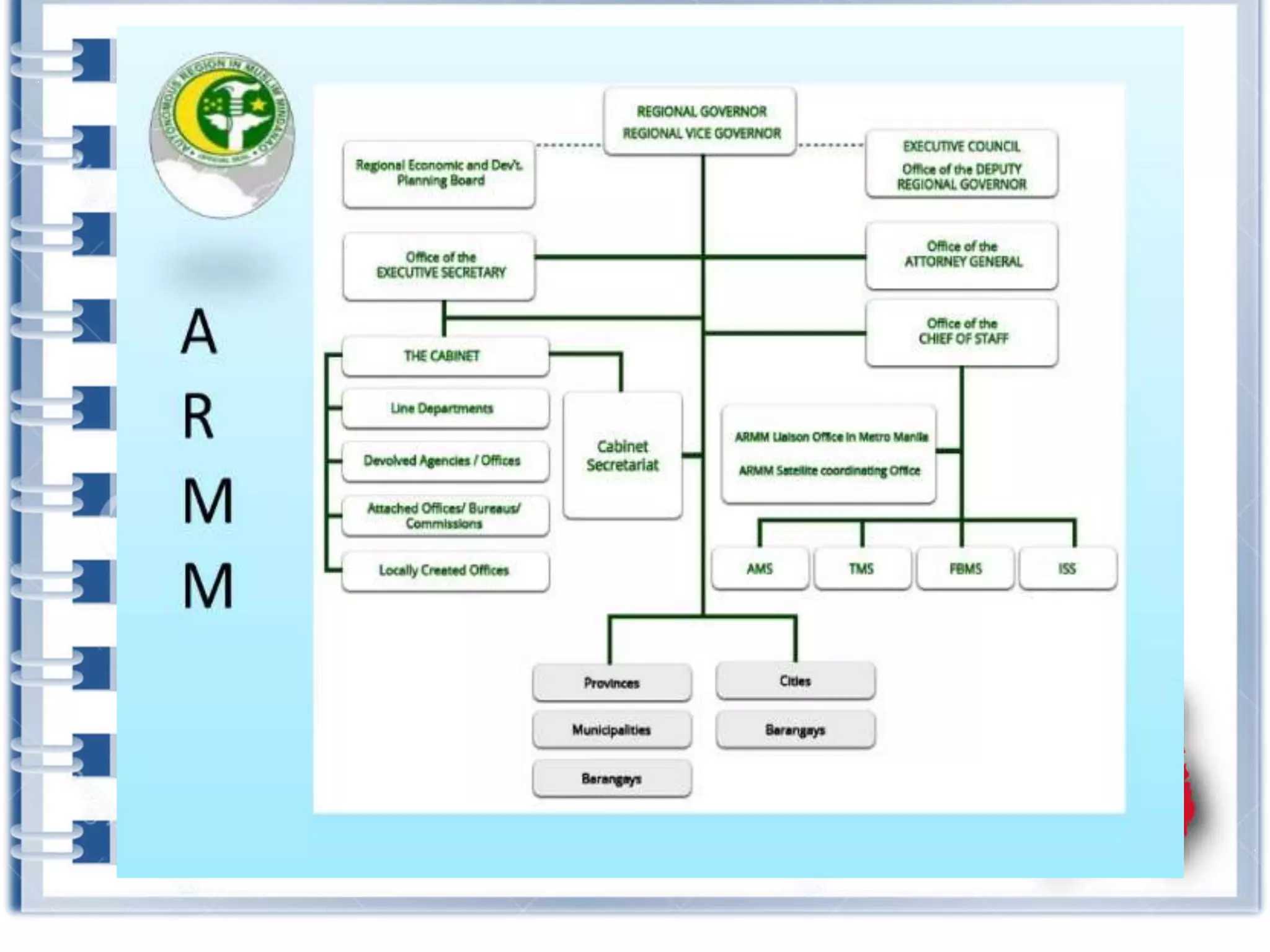
* Autonomous regions
*Provinces and cities independent from a province
* Component cities aned municipalities
* Barangays
CONCEPTS
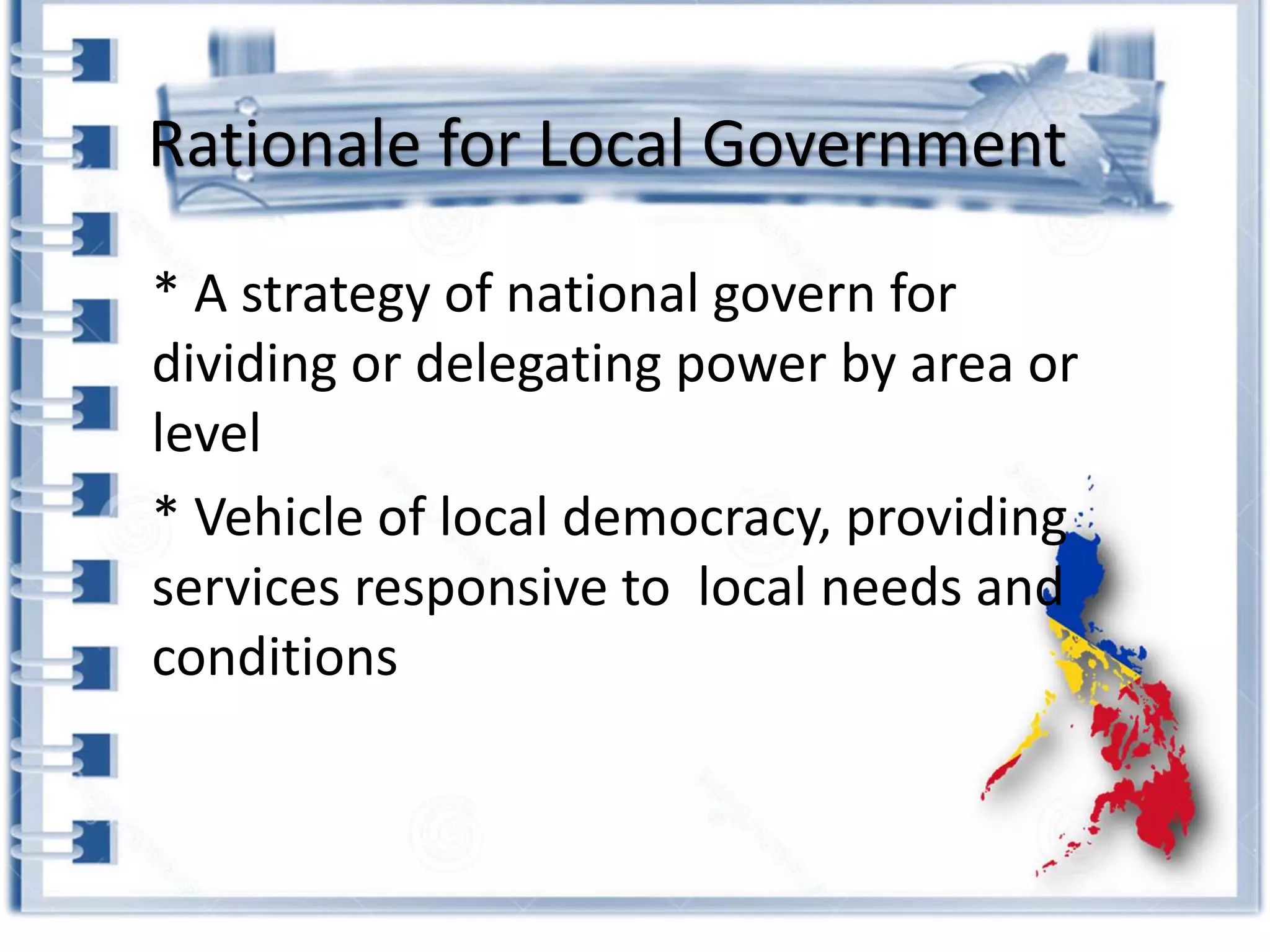
Rationale for Local Government
* A strategy of national govern for
dividing or delegating power by area or
level
* Vehicle of local democracy, providing
services responsive to local needs and
conditions
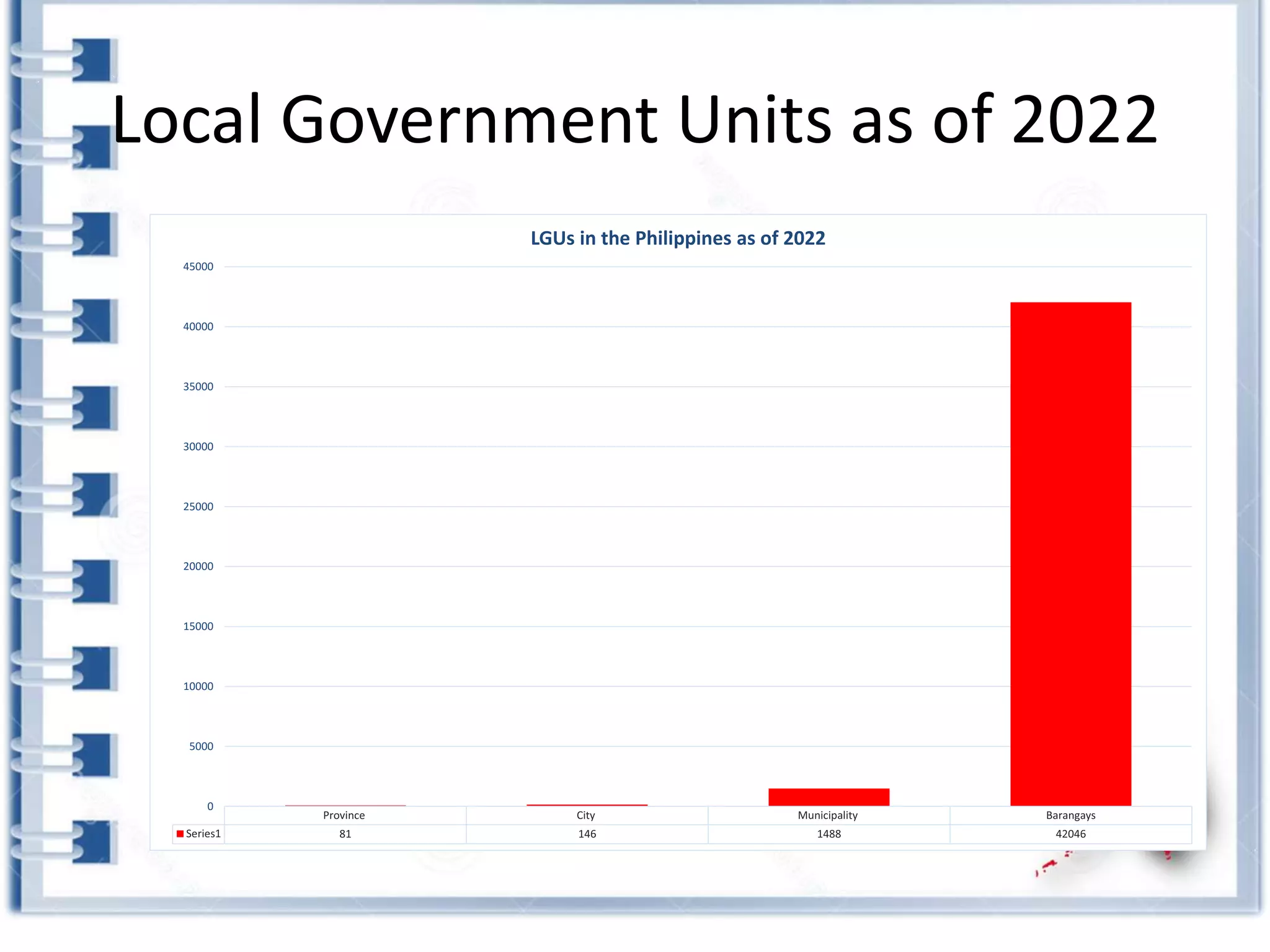
Local Government Units as of 2022
0
5000
10000
15000
20000
25000
30000
35000
40000
45000
LGUs in the Philippines as of 2022
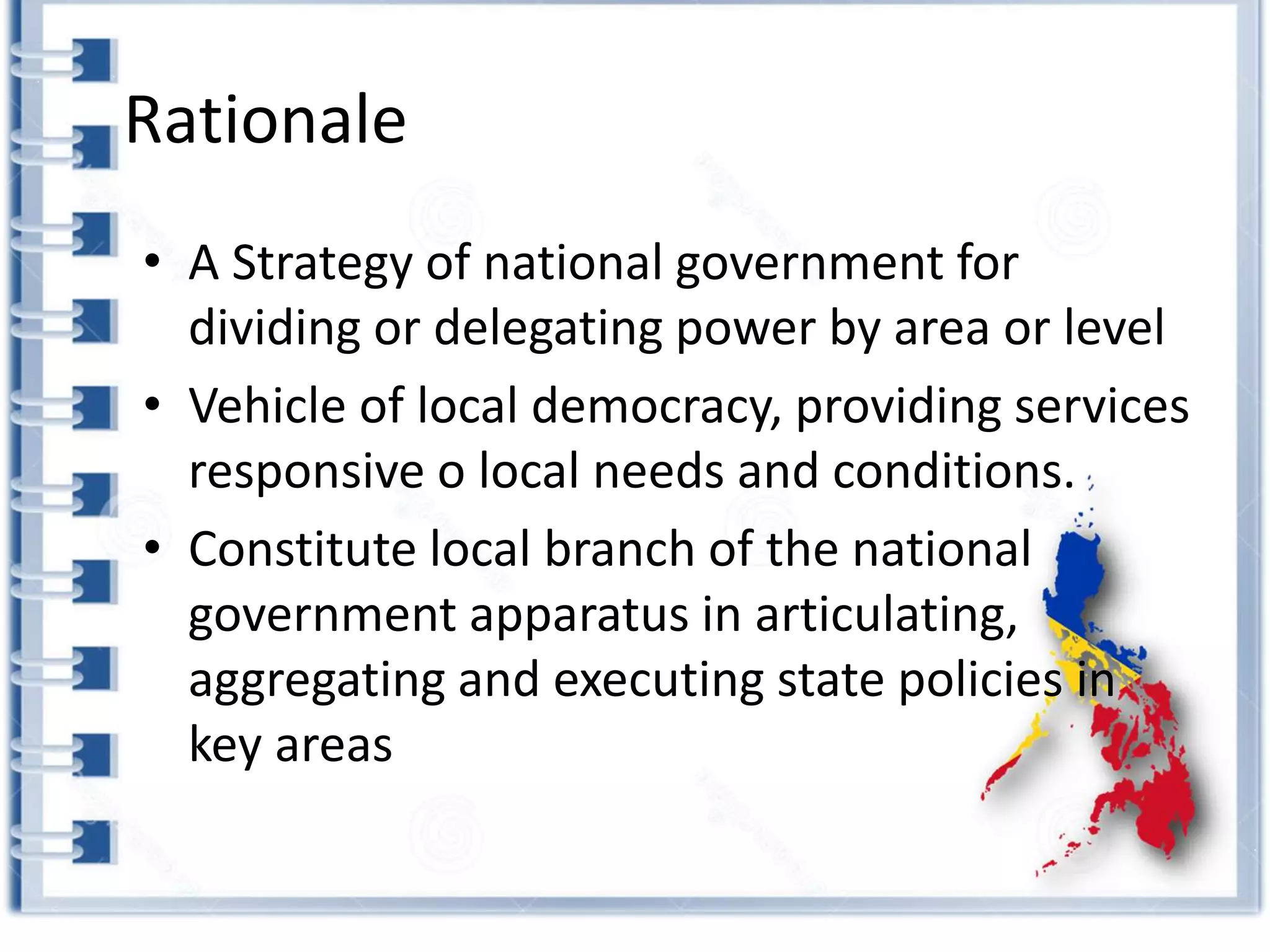
Rationale
• A Strategy of national government for
dividing or delegating power by area or level
• Vehicle of local democracy, providing services
responsive o local needs and conditions.
• Constitute local branch of the national
government apparatus in articulating,
aggregating and executing state policies in
key areas
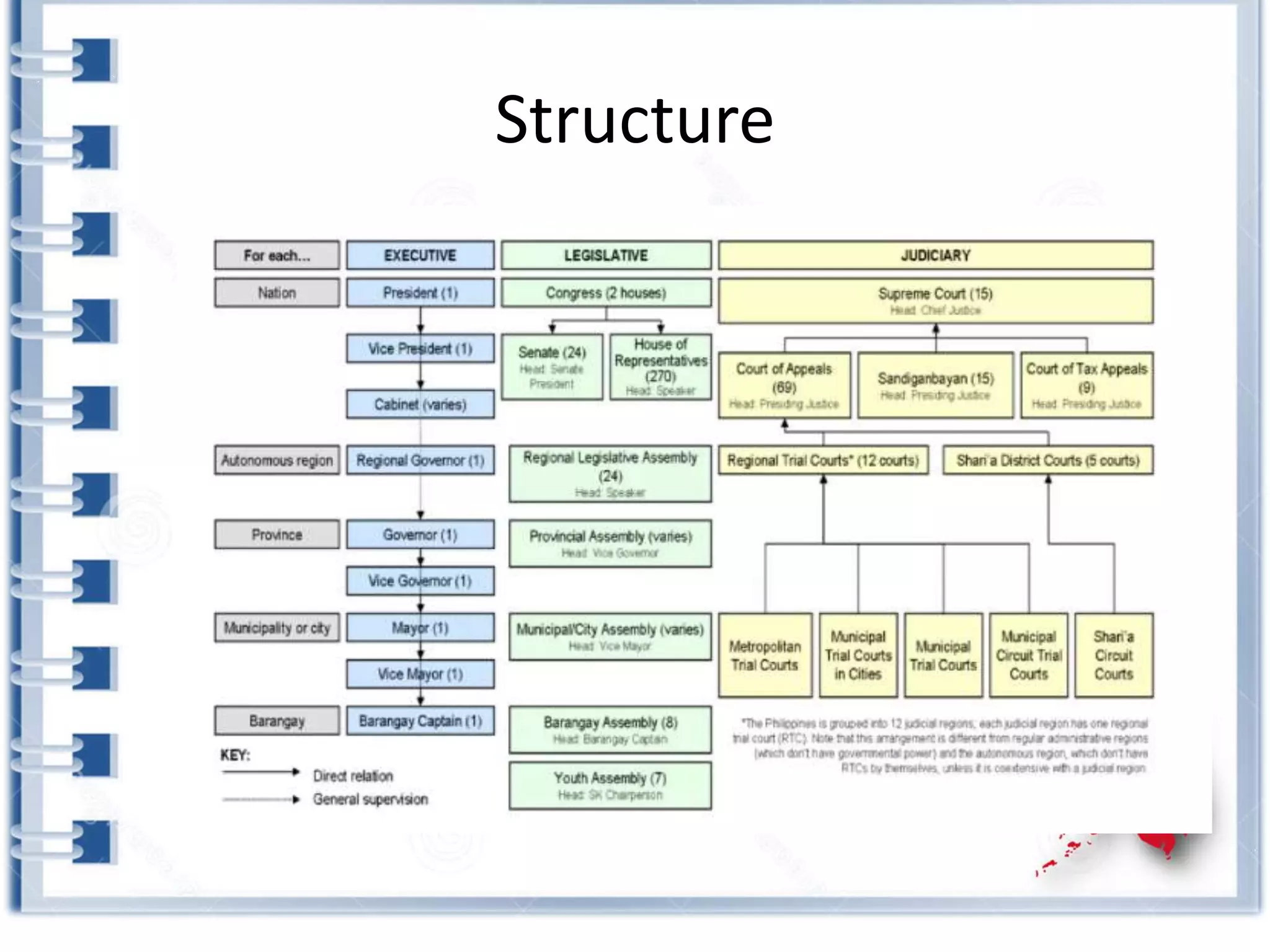
Structure
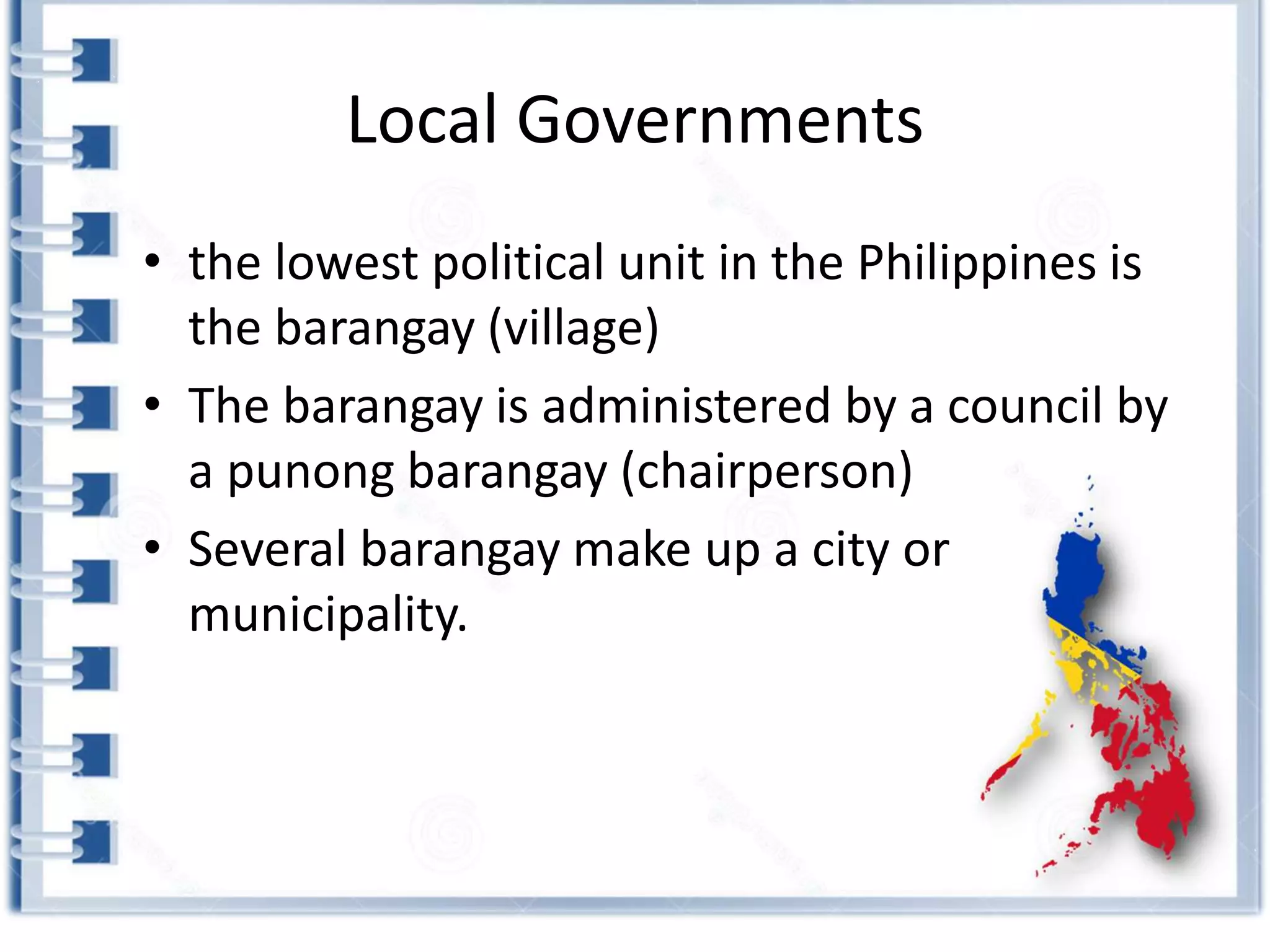
Local Governments
• the lowest political unit in the Philippines is
the barangay (village)
• The barangay is administered by a council by
a punong barangay (chairperson)
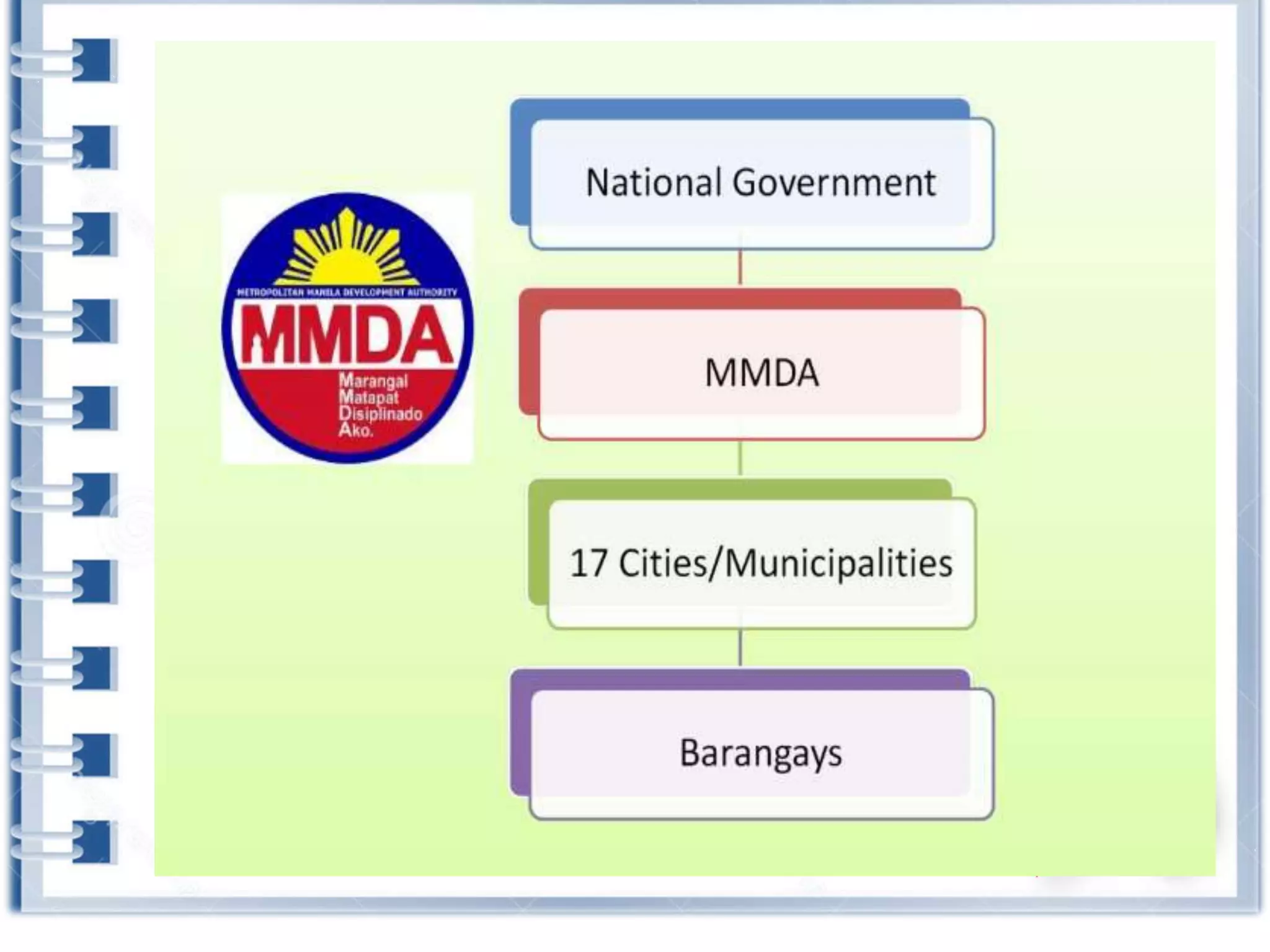
• Several barangay make up a city or
municipality.
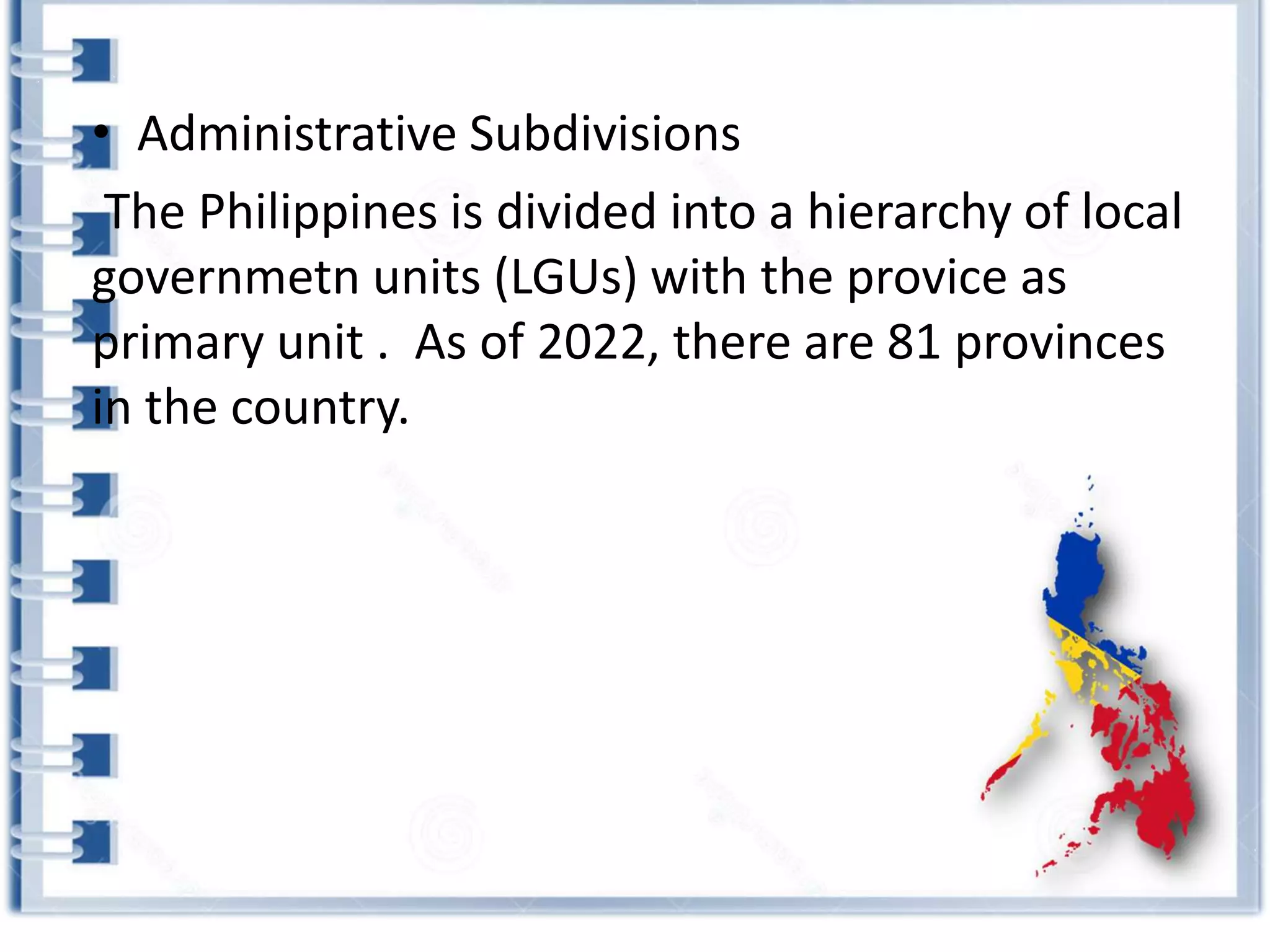
• Administrative Subdivisions
The Philippines is divided into a hierarchy of local
governmetn units (LGUs) with the provice as
primary unit . As of 2022, there are 81 provinces
in the country.
The Philippine Administrative System
The administrative system of the Republic of
the Philippines is comprised of a central
government and its territorial and political
subdivisions, which enjoy local autonomy: the
provinces, cities, municipalities and barangay.
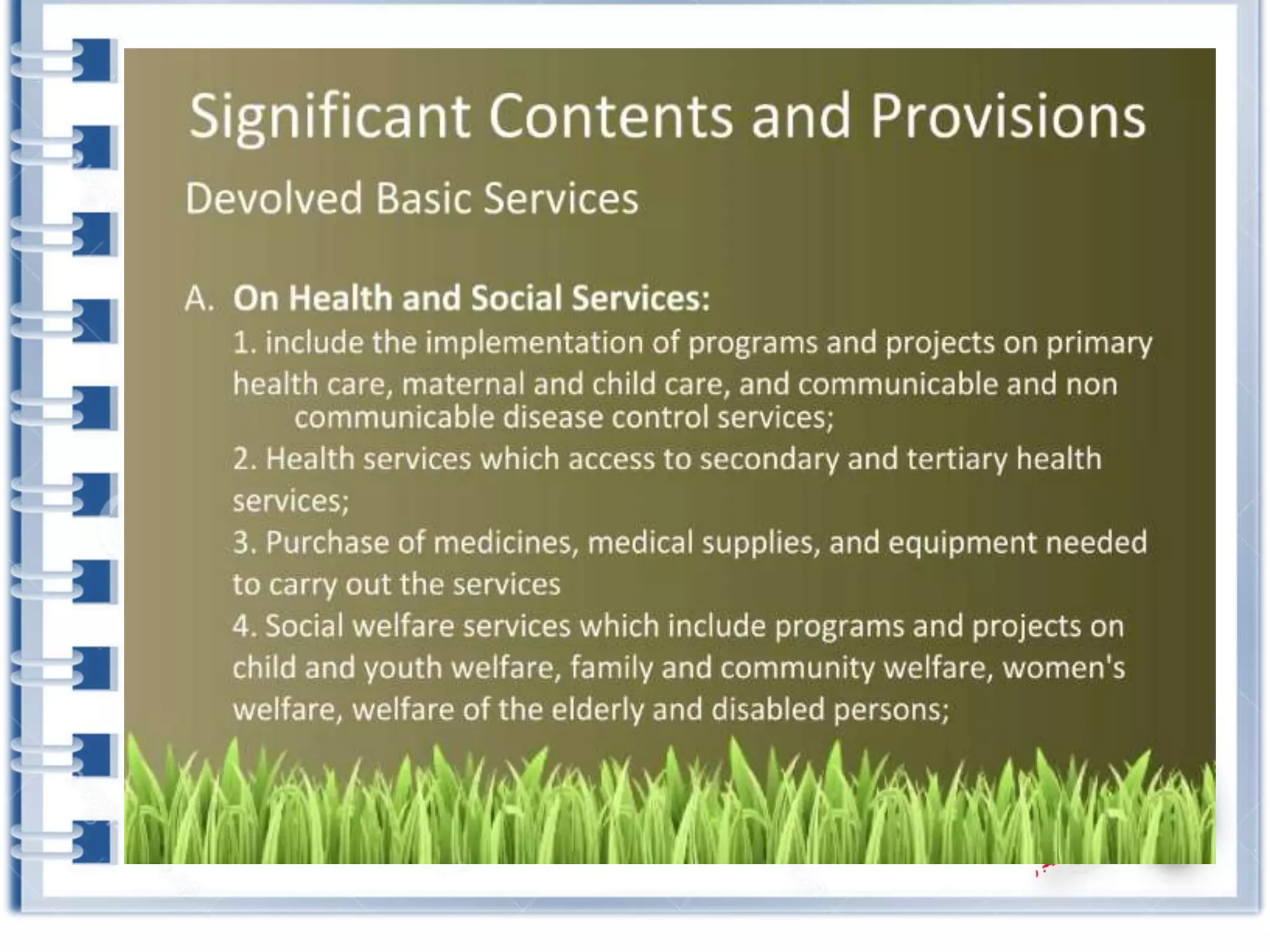
• Limited resources: LGUs often struggle with
limited financial and human resources to
address the needs and demands of their
constituents (e.g. education, healthcare,
infrastructure, & social welfare programs).
• Governance and corruption: Corruption and
poor governance practices can undermine the
effectiveness and efficiency of LGUs. (graft &
corrupt practices, nepotism, favoritism, lack of
transparency).
ISSUES & CONCERNS
• Service delivery: LGUs are responsible for
delivering basic services to their constituents,
such as water supply, sanitation, waste
management, and transportation.
• Disaster preparedness and response: The
Philippines is prone to natural disasters such
typhoons, earthquakes, and floods.
ISSUES & CONCERNS
• Poverty and inequality” LGUs often grapple with
addressing poverty and inequality within their
jurisdictions. Socioeconomic disparities can be
significant, and LGUs must work towards
inclusive development by implementing poverty
reduction programs, improving access to
education, healthcare, and livelihood
opportunities.
ISSUES & CONCERNS
• Environmental sustainability: LGUs plaa crucial
role in environmental protection and sustainable
development. However, issues such as
deforestation, pollution, inadequate waste
management, and improper urban planning can
theaten the environment and affect the overall
well-being of communities.
ISSUES & CONCERNS
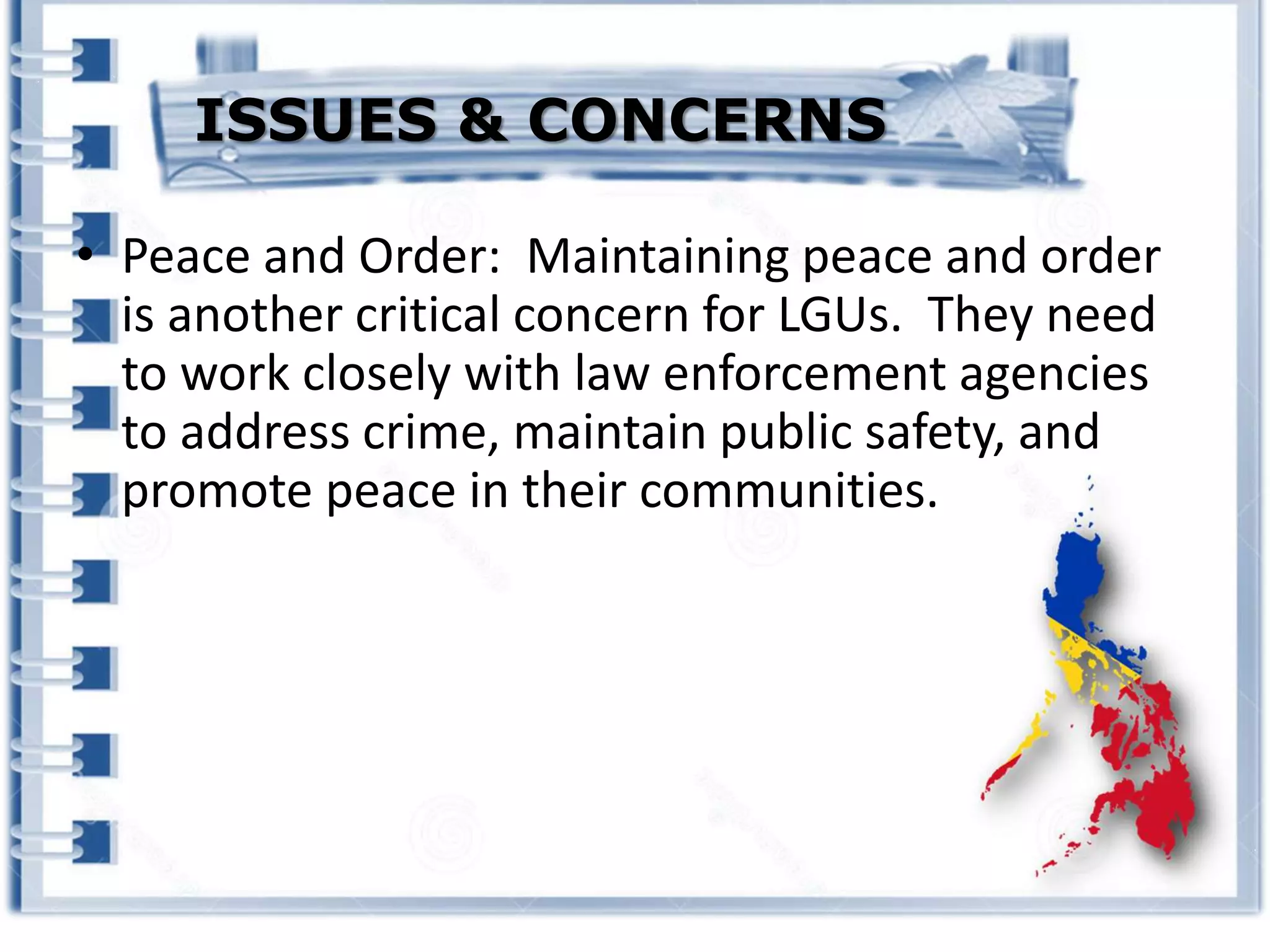
• Peace and Order: Maintaining peace and order
is another critical concern for LGUs. They need
to work closely with law enforcement agencies
to address crime, maintain public safety, and
promote peace in their communities.
ISSUES & CONCERNS
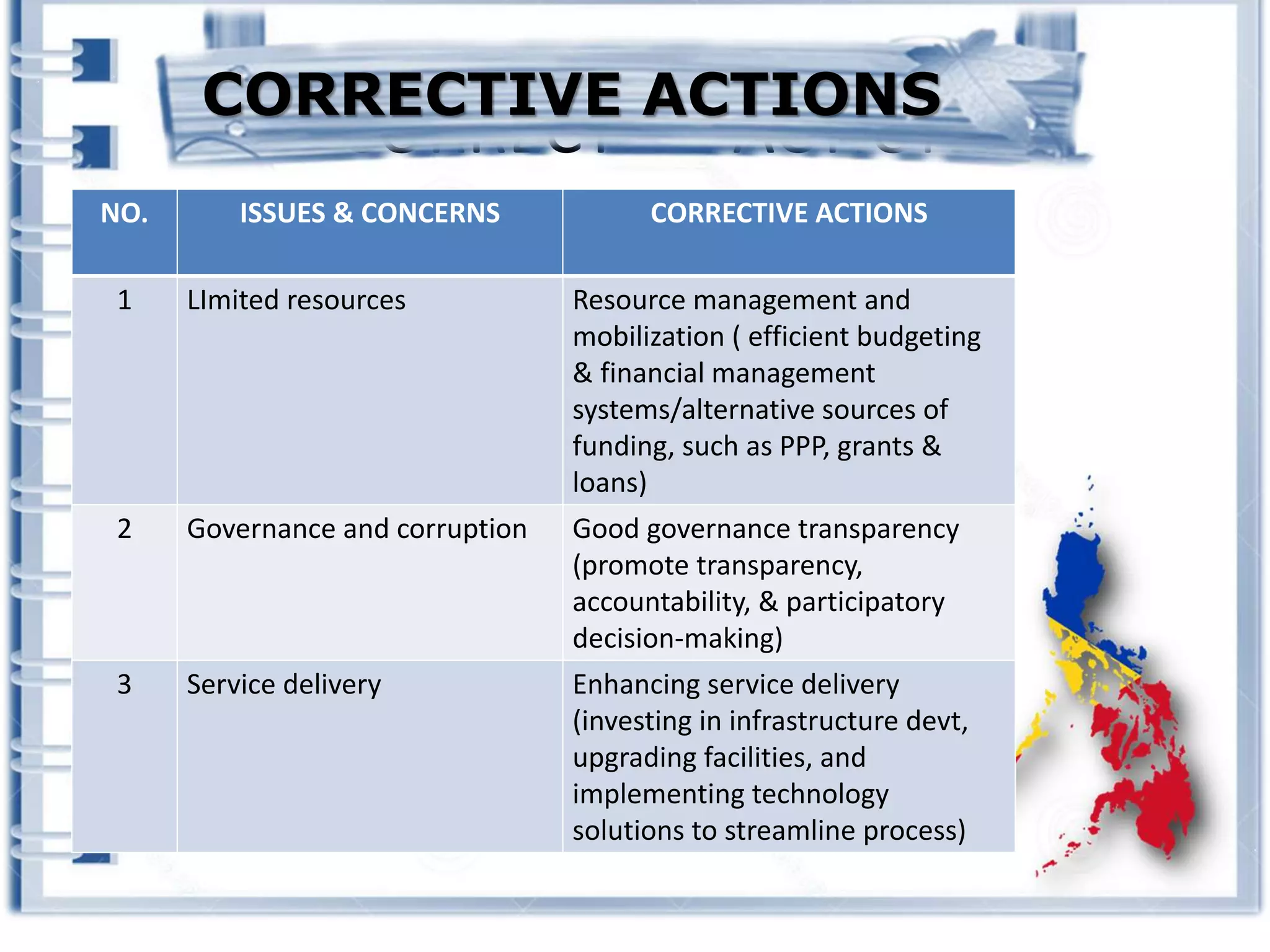
CORRECTIVE ACTIONS
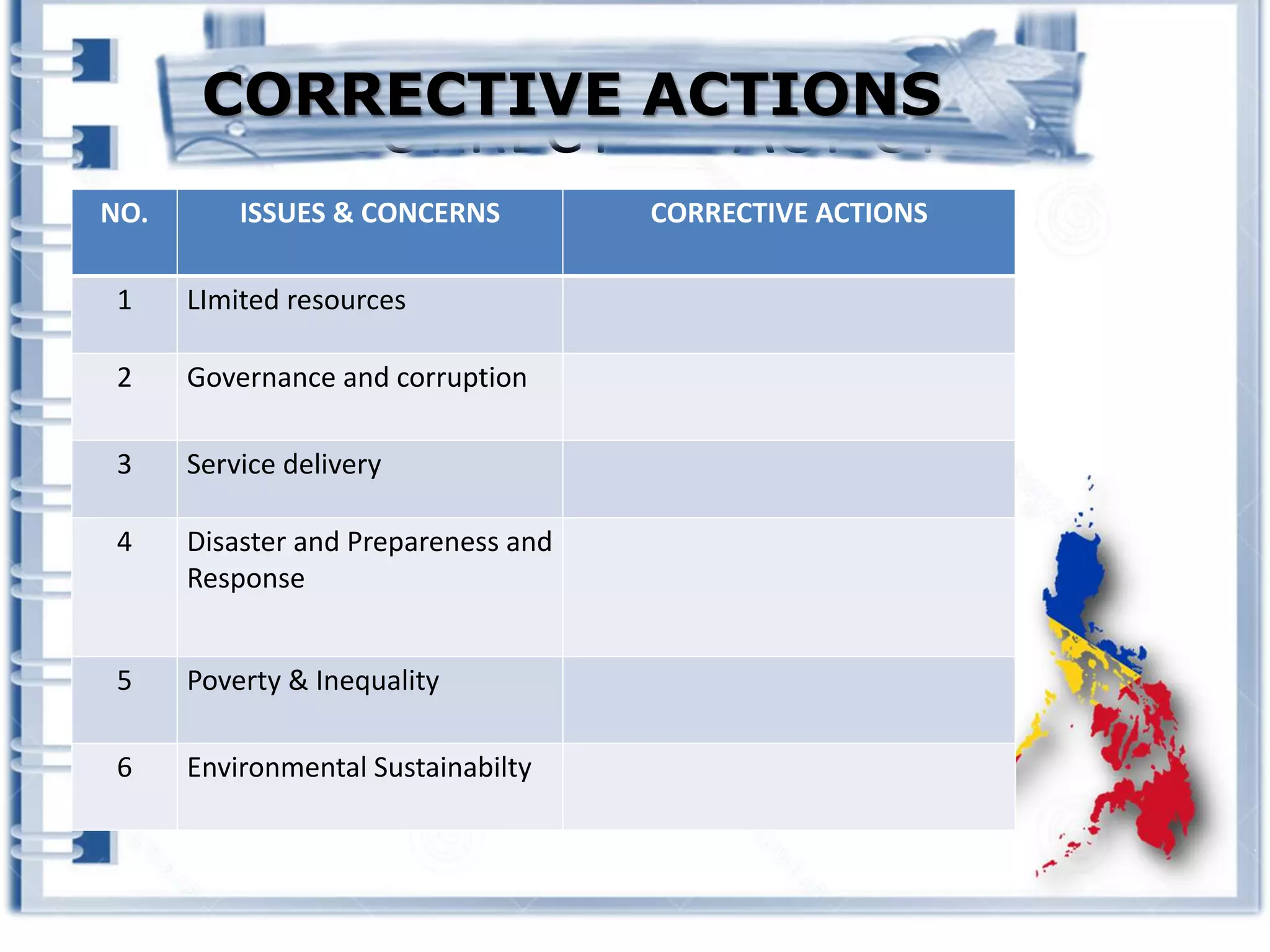
NO. ISSUES & CONCERNS CORRECTIVE ACTIONS
1 LImited resources
2 Governance and corruption
3 Service delivery
4 Disaster and Prepareness and
Response
5 Poverty & Inequality
6 Environmental Sustainabilty
CORRECTIVE ACTIONS
CORRECTIVE ACTIONS
NO. ISSUES & CONCERNS CORRECTIVE ACTIONS
1 LImited resources Resource management and
mobilization ( efficient budgeting
& financial management
systems/alternative sources of
funding, such as PPP, grants &
loans)
2 Governance and corruption Good governance transparency
(promote transparency,
accountability, & participatory
decision-making)
3 Service delivery Enhancing service delivery
(investing in infrastructure devt,
upgrading facilities, and
implementing technology
solutions to streamline process)
CORRECTIVE ACTIONS
CORRECTIVE ACTIONS
NO. ISSUES & CONCERNS CORRECTIVE ACTIONS
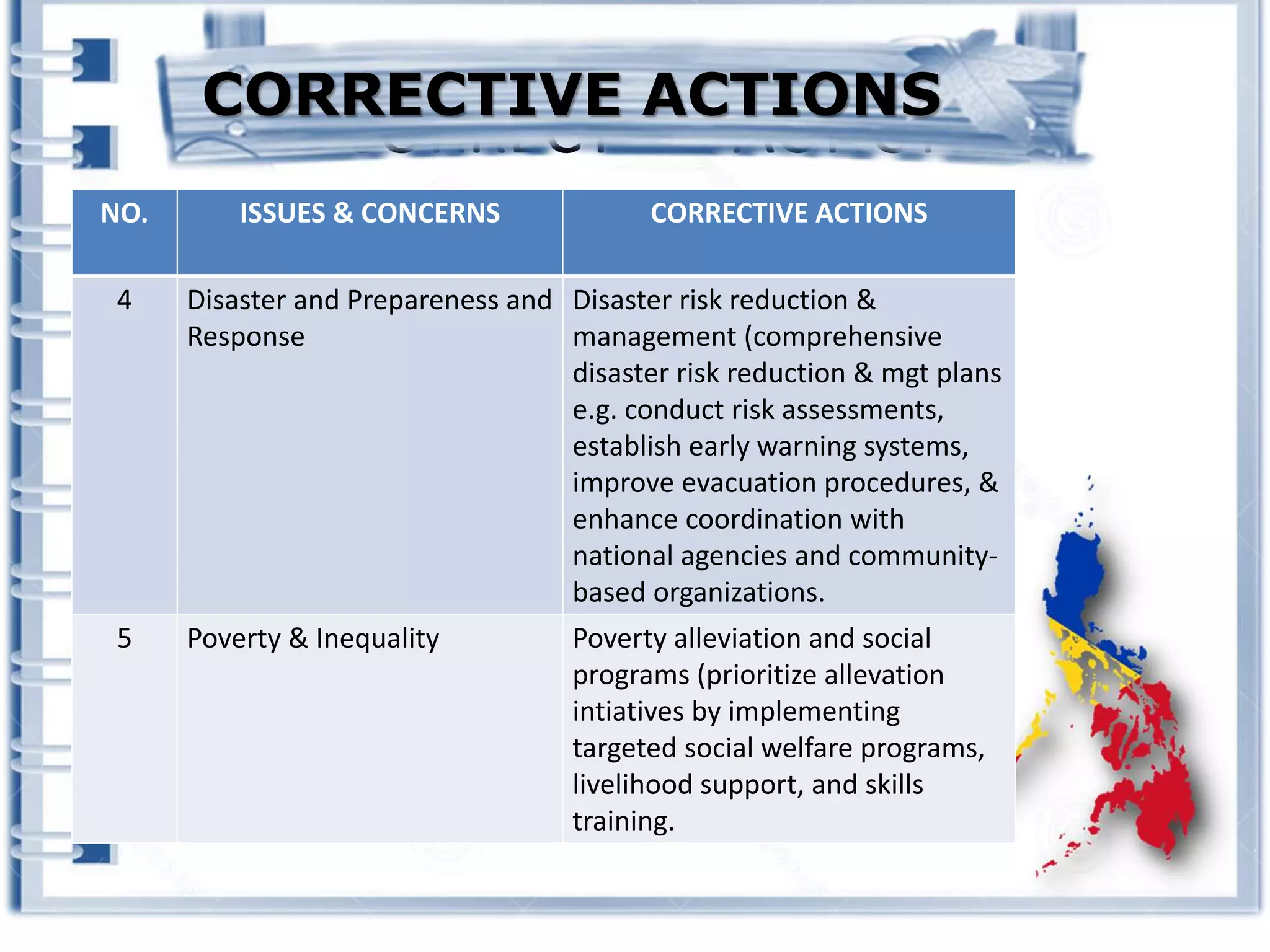
4 Disaster and Prepareness and
Response
Disaster risk reduction &
management (comprehensive
disaster risk reduction & mgt plans
e.g. conduct risk assessments,
establish early warning systems,
improve evacuation procedures, &
enhance coordination with
national agencies and community-
based organizations.
5 Poverty & Inequality Poverty alleviation and social
programs (prioritize allevation
intiatives by implementing
targeted social welfare programs,
livelihood support, and skills
training.
CORRECTIVE ACTIONS
CORRECTIVE ACTIONS
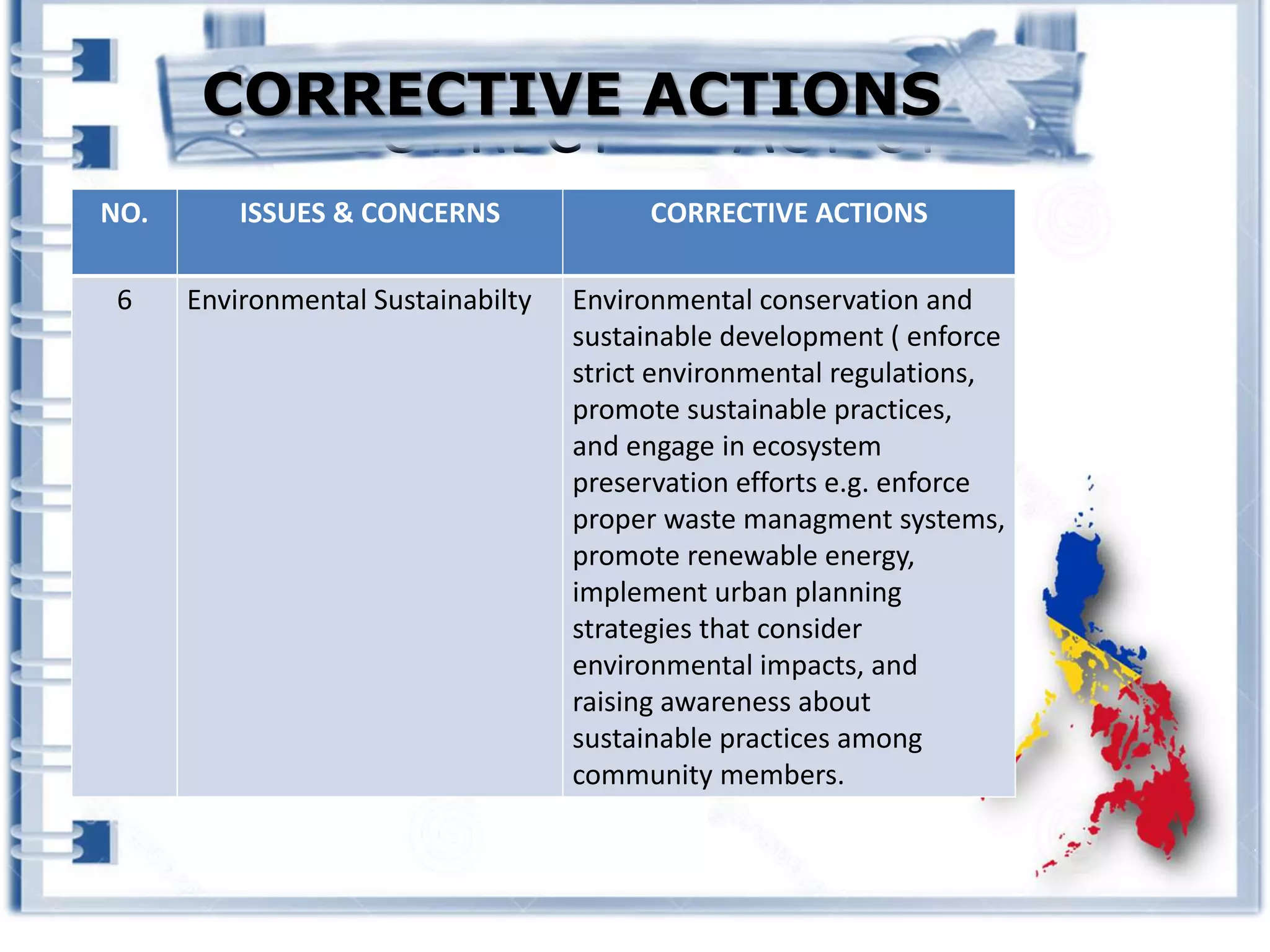
NO. ISSUES & CONCERNS CORRECTIVE ACTIONS
6 Environmental Sustainabilty Environmental conservation and
sustainable development ( enforce
strict environmental regulations,
promote sustainable practices,
and engage in ecosystem
preservation efforts e.g. enforce
proper waste managment systems,
promote renewable energy,
implement urban planning
strategies that consider
environmental impacts, and
raising awareness about
sustainable practices among
community members.
CORRECTIVE ACTIONS
CORRECTIVE ACTIONS
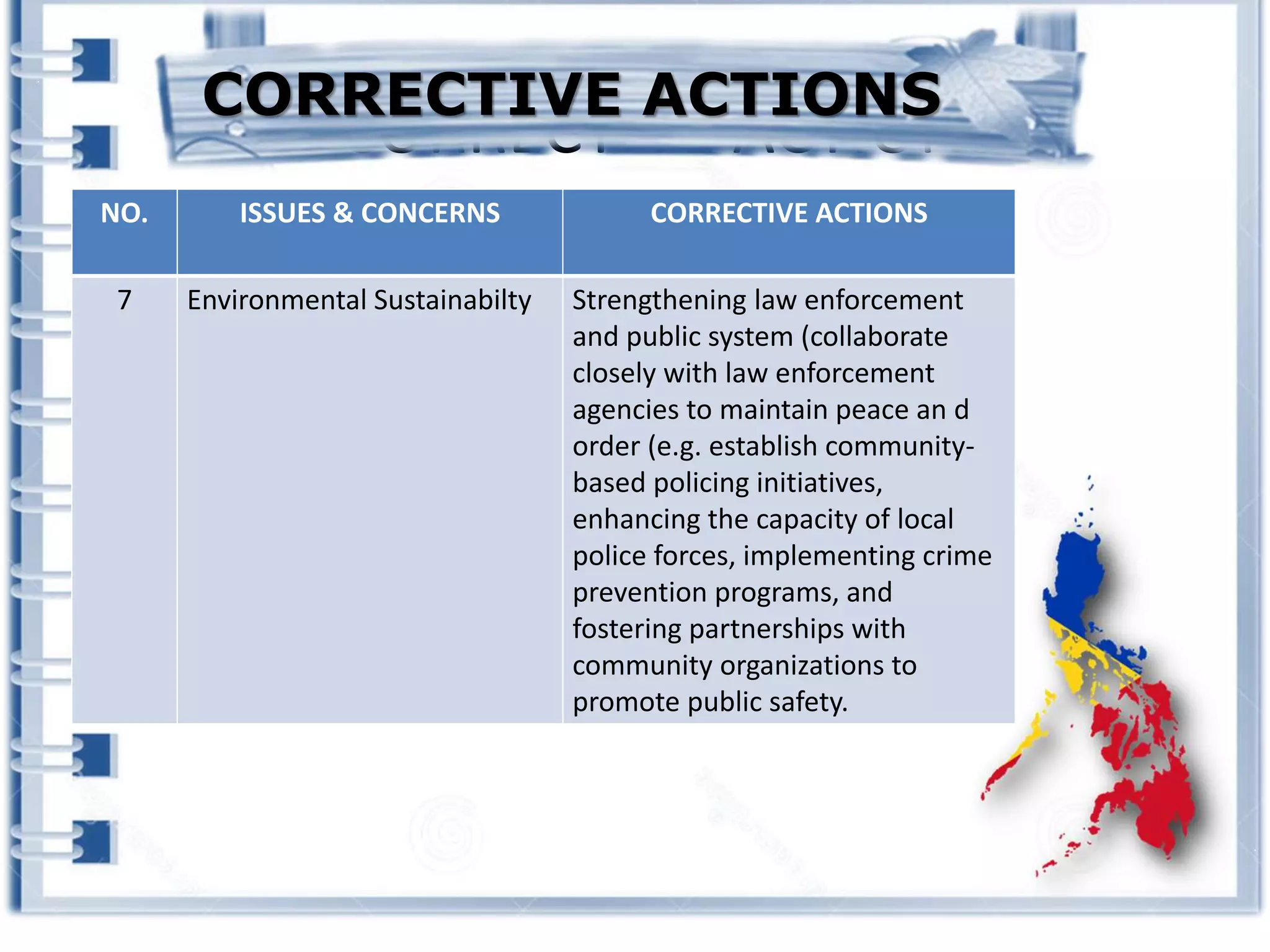
NO. ISSUES & CONCERNS CORRECTIVE ACTIONS
7 Environmental Sustainabilty Strengthening law enforcement
and public system (collaborate
closely with law enforcement
agencies to maintain peace an d
order (e.g. establish community-
based policing initiatives,
enhancing the capacity of local
police forces, implementing crime
prevention programs, and
fostering partnerships with
community organizations to
promote public safety.
CORRECTIVE ACTIONS
COURSE
OUTLINE/SYLLABUS
COURSE
OUTLINE/SYLLABUS
COURSE
OUTLINE/SYLLABUS
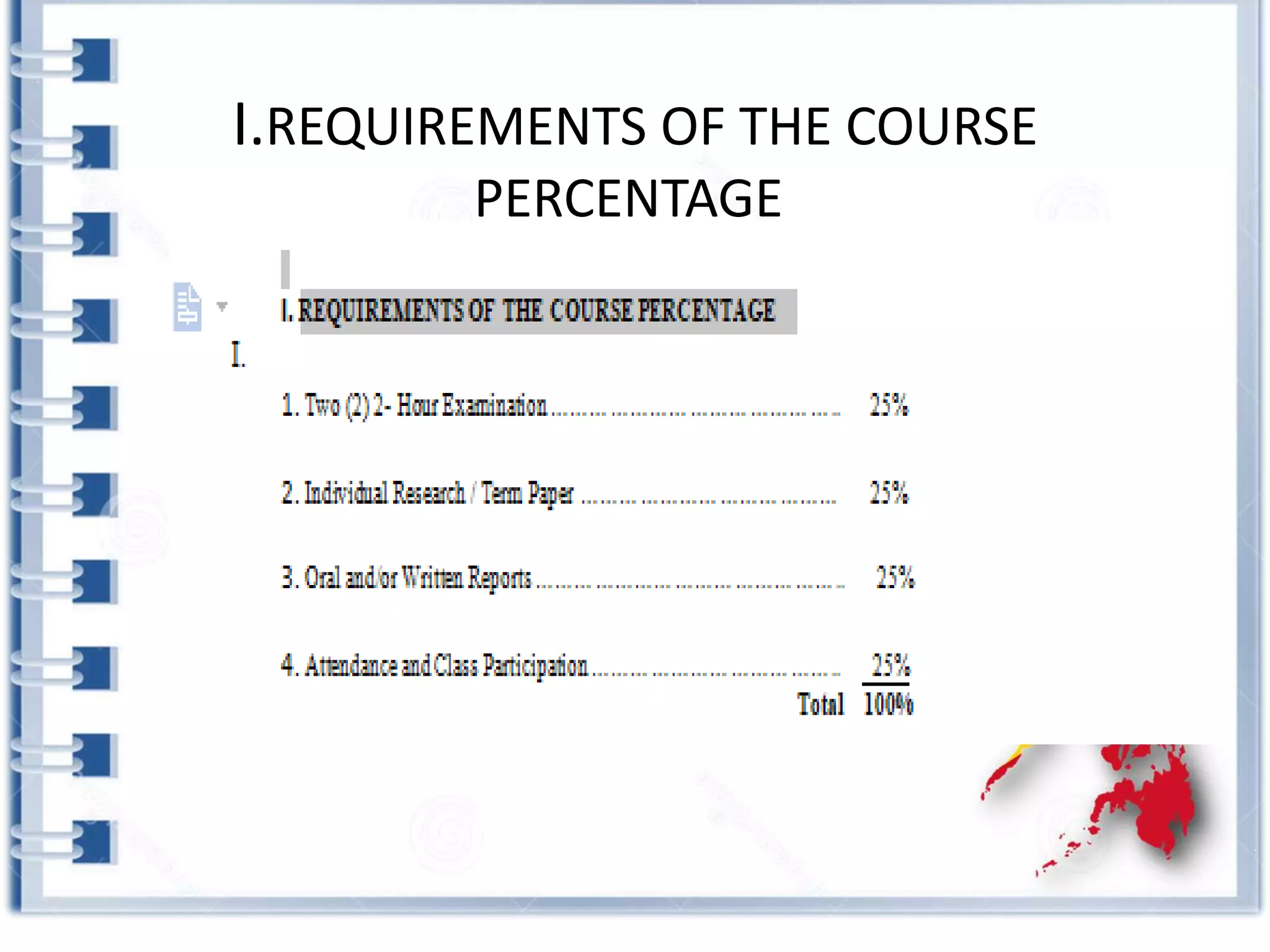
I.REQUIREMENTS OF THE COURSE
PERCENTAGE
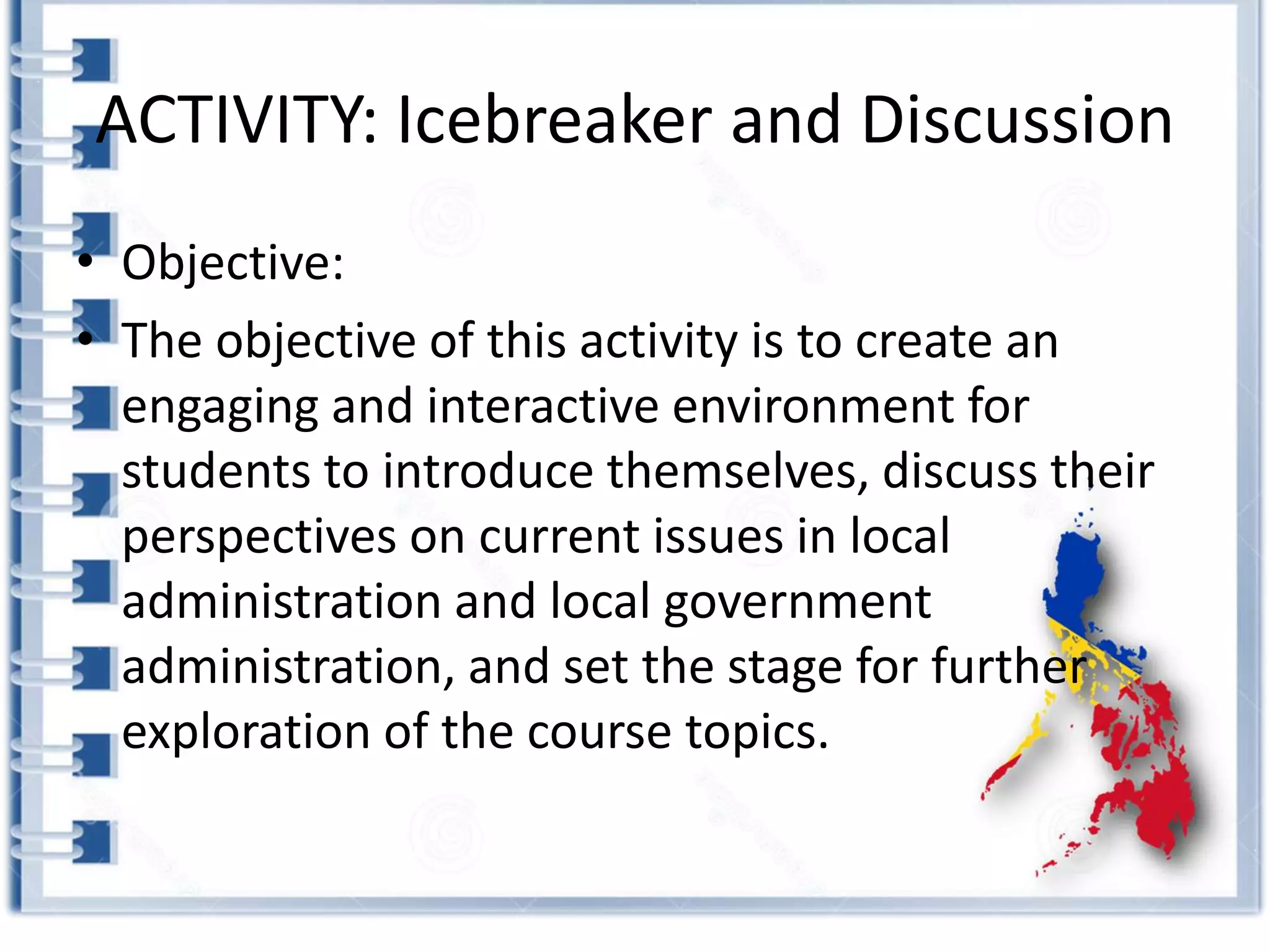
ACTIVITY: Icebreaker and Discussion
• Objective:
• The objective of this activity is to create an
engaging and interactive environment for
students to introduce themselves, discuss their
perspectives on current issues in local
administration and local government
administration, and set the stage for further
exploration of the course topics.
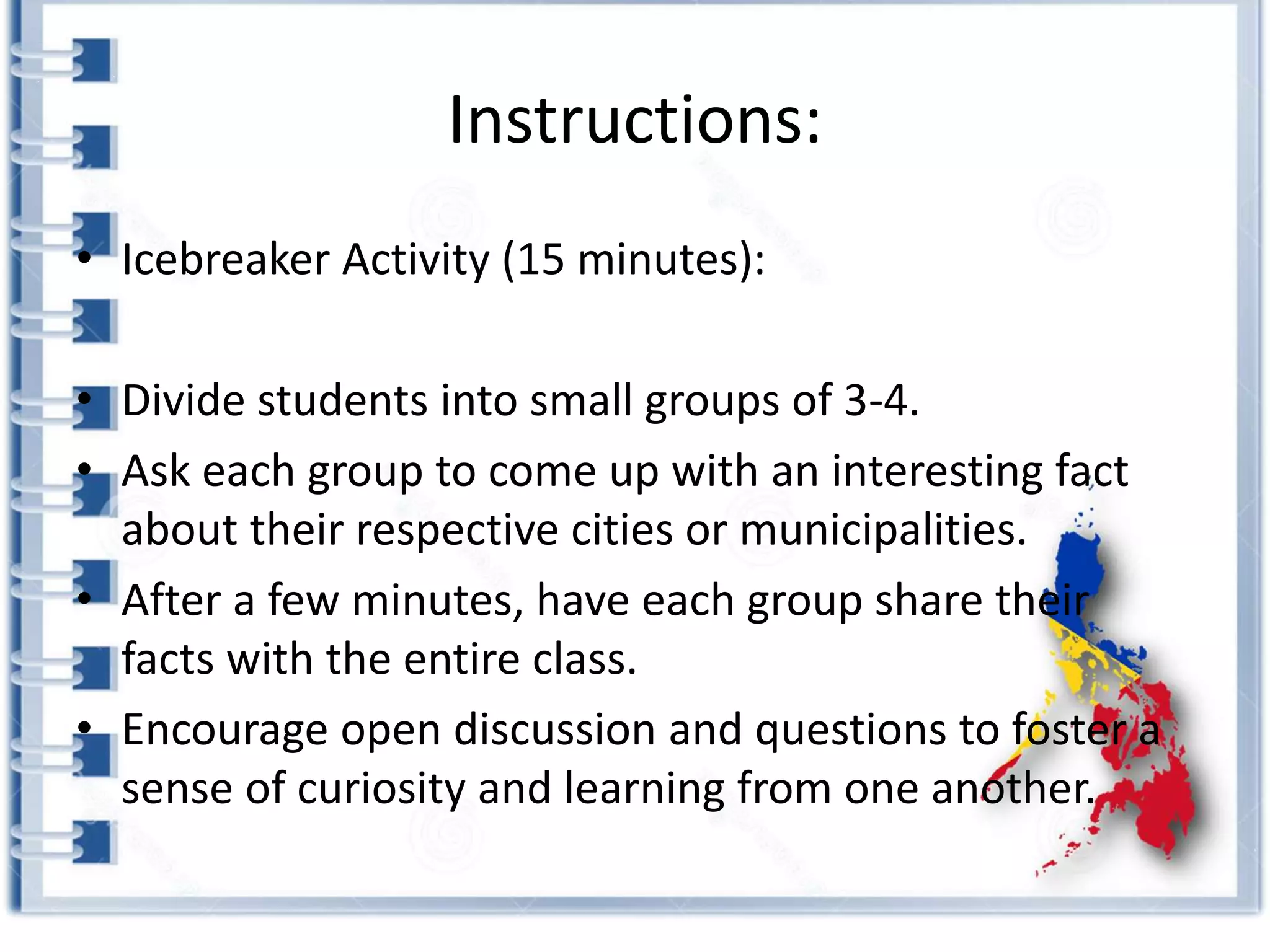
Instructions:
• Icebreaker Activity (15 minutes):
• Divide students into small groups of 3-4.
• Ask each group to come up with an interesting fact
about their respective cities or municipalities.
• After a few minutes, have each group share their
facts with the entire class.
• Encourage open discussion and questions to foster a
sense of curiosity and learning from one another.
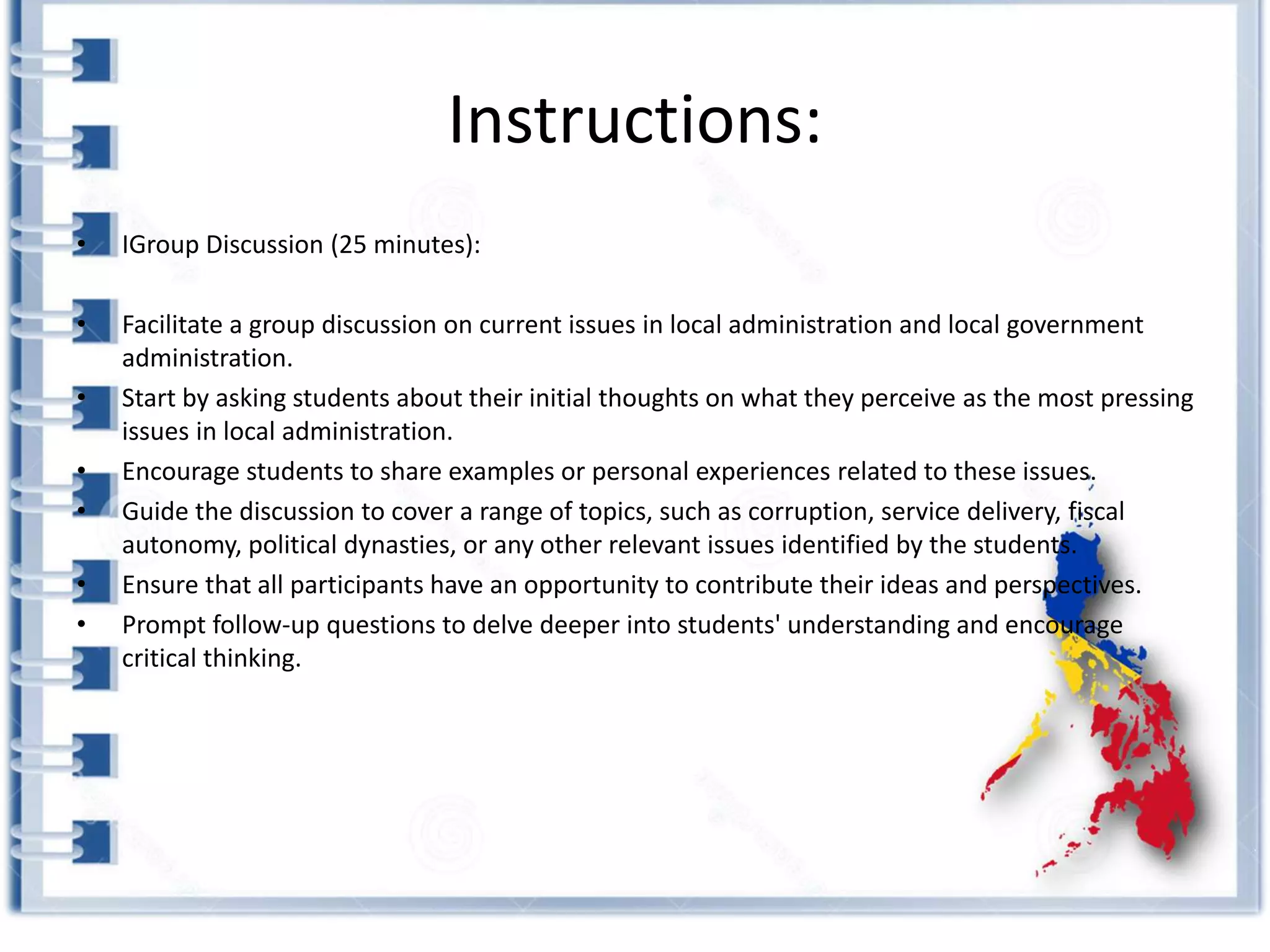
Instructions:
• IGroup Discussion (25 minutes):
• Facilitate a group discussion on current issues in local administration and local government
administration.
• Start by asking students about their initial thoughts on what they perceive as the most pressing
issues in local administration.
• Encourage students to share examples or personal experiences related to these issues.
• Guide the discussion to cover a range of topics, such as corruption, service delivery, fiscal
autonomy, political dynasties, or any other relevant issues identified by the students.
• Ensure that all participants have an opportunity to contribute their ideas and perspectives.
• Prompt follow-up questions to delve deeper into students' understanding and encourage
critical thinking.
Instructions:
• Recap and Summary (10 minutes):
• Summarize the key points discussed during the
activity.
• Emphasize the interconnectedness between current
issues and local government administration.
• Highlight the importance of the course in addressing
these issues and exploring potential solutions.
• Briefly introduce the upcoming topics and learning
objectives of the course.
Instructions:
• Course Expectations and Logistics (5 minutes):
• Provide a brief overview of the course structure,
assessment methods, and expectations for
student participation and engagement.
• Share the syllabus or course outline with the
students.
• Allow time for questions or clarification
regarding the course logistics.
Overview_local governance adm_ppt.pptx

Overview_local governance adm_ppt.pptx

  • 1.
  • 2.
    COURSE OBJECTIVES * Thiscourse provides an in-depth exploration of current issues in local administration and local government administration. * It examines the challenges, trends, and best practices in managing and governing local communities. * The course covers a range of topics, including policy development, service delivery, fiscal management, community engagement, and ethical considerations. * Students will analyze case studies, participate in discussions, and engage in practical exercises to develop a comprehensive understanding of the complexities of local administration.
  • 3.
    • Rationale The presentationattempts to account issues problems, developments, achievement encountered and made by local government units as a result of decentralization triggered by the Local Government Code 32 years after its historic passage into law in October 1991 Local Governance in the Philippines Leadership, Structure and Process and Political System
  • 4.
    A.The 1987 constitutioncalls LGUs as integral parts of a country below the central government B.Local Government in the Philippns is divided into four levels: * Autonomous regions *Provinces and cities independent from a province * Component cities aned municipalities * Barangays CONCEPTS
  • 5.
    Rationale for LocalGovernment * A strategy of national govern for dividing or delegating power by area or level * Vehicle of local democracy, providing services responsive to local needs and conditions
  • 6.
    Local Government Unitsas of 2022 0 5000 10000 15000 20000 25000 30000 35000 40000 45000 LGUs in the Philippines as of 2022
  • 7.
    Rationale • A Strategyof national government for dividing or delegating power by area or level • Vehicle of local democracy, providing services responsive o local needs and conditions. • Constitute local branch of the national government apparatus in articulating, aggregating and executing state policies in key areas
  • 8.
  • 9.
    Local Governments • thelowest political unit in the Philippines is the barangay (village) • The barangay is administered by a council by a punong barangay (chairperson) • Several barangay make up a city or municipality.
  • 10.
    • Administrative Subdivisions ThePhilippines is divided into a hierarchy of local governmetn units (LGUs) with the provice as primary unit . As of 2022, there are 81 provinces in the country.
  • 11.
    The Philippine AdministrativeSystem The administrative system of the Republic of the Philippines is comprised of a central government and its territorial and political subdivisions, which enjoy local autonomy: the provinces, cities, municipalities and barangay.
  • 33.
    • Limited resources:LGUs often struggle with limited financial and human resources to address the needs and demands of their constituents (e.g. education, healthcare, infrastructure, & social welfare programs). • Governance and corruption: Corruption and poor governance practices can undermine the effectiveness and efficiency of LGUs. (graft & corrupt practices, nepotism, favoritism, lack of transparency). ISSUES & CONCERNS
  • 34.
    • Service delivery:LGUs are responsible for delivering basic services to their constituents, such as water supply, sanitation, waste management, and transportation. • Disaster preparedness and response: The Philippines is prone to natural disasters such typhoons, earthquakes, and floods. ISSUES & CONCERNS
  • 35.
    • Poverty andinequality” LGUs often grapple with addressing poverty and inequality within their jurisdictions. Socioeconomic disparities can be significant, and LGUs must work towards inclusive development by implementing poverty reduction programs, improving access to education, healthcare, and livelihood opportunities. ISSUES & CONCERNS
  • 36.
    • Environmental sustainability:LGUs plaa crucial role in environmental protection and sustainable development. However, issues such as deforestation, pollution, inadequate waste management, and improper urban planning can theaten the environment and affect the overall well-being of communities. ISSUES & CONCERNS
  • 37.
    • Peace andOrder: Maintaining peace and order is another critical concern for LGUs. They need to work closely with law enforcement agencies to address crime, maintain public safety, and promote peace in their communities. ISSUES & CONCERNS
  • 38.
    CORRECTIVE ACTIONS NO. ISSUES& CONCERNS CORRECTIVE ACTIONS 1 LImited resources 2 Governance and corruption 3 Service delivery 4 Disaster and Prepareness and Response 5 Poverty & Inequality 6 Environmental Sustainabilty CORRECTIVE ACTIONS
  • 39.
    CORRECTIVE ACTIONS NO. ISSUES& CONCERNS CORRECTIVE ACTIONS 1 LImited resources Resource management and mobilization ( efficient budgeting & financial management systems/alternative sources of funding, such as PPP, grants & loans) 2 Governance and corruption Good governance transparency (promote transparency, accountability, & participatory decision-making) 3 Service delivery Enhancing service delivery (investing in infrastructure devt, upgrading facilities, and implementing technology solutions to streamline process) CORRECTIVE ACTIONS
  • 40.
    CORRECTIVE ACTIONS NO. ISSUES& CONCERNS CORRECTIVE ACTIONS 4 Disaster and Prepareness and Response Disaster risk reduction & management (comprehensive disaster risk reduction & mgt plans e.g. conduct risk assessments, establish early warning systems, improve evacuation procedures, & enhance coordination with national agencies and community- based organizations. 5 Poverty & Inequality Poverty alleviation and social programs (prioritize allevation intiatives by implementing targeted social welfare programs, livelihood support, and skills training. CORRECTIVE ACTIONS
  • 41.
    CORRECTIVE ACTIONS NO. ISSUES& CONCERNS CORRECTIVE ACTIONS 6 Environmental Sustainabilty Environmental conservation and sustainable development ( enforce strict environmental regulations, promote sustainable practices, and engage in ecosystem preservation efforts e.g. enforce proper waste managment systems, promote renewable energy, implement urban planning strategies that consider environmental impacts, and raising awareness about sustainable practices among community members. CORRECTIVE ACTIONS
  • 42.
    CORRECTIVE ACTIONS NO. ISSUES& CONCERNS CORRECTIVE ACTIONS 7 Environmental Sustainabilty Strengthening law enforcement and public system (collaborate closely with law enforcement agencies to maintain peace an d order (e.g. establish community- based policing initiatives, enhancing the capacity of local police forces, implementing crime prevention programs, and fostering partnerships with community organizations to promote public safety. CORRECTIVE ACTIONS
  • 44.
  • 45.
  • 46.
  • 47.
    I.REQUIREMENTS OF THECOURSE PERCENTAGE
  • 48.
    ACTIVITY: Icebreaker andDiscussion • Objective: • The objective of this activity is to create an engaging and interactive environment for students to introduce themselves, discuss their perspectives on current issues in local administration and local government administration, and set the stage for further exploration of the course topics.
  • 49.
    Instructions: • Icebreaker Activity(15 minutes): • Divide students into small groups of 3-4. • Ask each group to come up with an interesting fact about their respective cities or municipalities. • After a few minutes, have each group share their facts with the entire class. • Encourage open discussion and questions to foster a sense of curiosity and learning from one another.
  • 50.
    Instructions: • IGroup Discussion(25 minutes): • Facilitate a group discussion on current issues in local administration and local government administration. • Start by asking students about their initial thoughts on what they perceive as the most pressing issues in local administration. • Encourage students to share examples or personal experiences related to these issues. • Guide the discussion to cover a range of topics, such as corruption, service delivery, fiscal autonomy, political dynasties, or any other relevant issues identified by the students. • Ensure that all participants have an opportunity to contribute their ideas and perspectives. • Prompt follow-up questions to delve deeper into students' understanding and encourage critical thinking.
  • 51.
    Instructions: • Recap andSummary (10 minutes): • Summarize the key points discussed during the activity. • Emphasize the interconnectedness between current issues and local government administration. • Highlight the importance of the course in addressing these issues and exploring potential solutions. • Briefly introduce the upcoming topics and learning objectives of the course.
  • 52.
    Instructions: • Course Expectationsand Logistics (5 minutes): • Provide a brief overview of the course structure, assessment methods, and expectations for student participation and engagement. • Share the syllabus or course outline with the students. • Allow time for questions or clarification regarding the course logistics.