Overview of Popular  New Media Tools Nicolé Mandel, AETC National Resource Center Jayson Jaynes, AETC National Resource Center <nod><thanks>Jennie Anderson, AIDS.gov
What are ... Blogs Twitter  Wikis Texting Podcasts Delicious, digg... Social Networking Facebook MySpace LinkedIn Media Sharing YouTube SlideShare Flikr, Picassa ?
Why would you use them? Communication Interaction Community Networking Advocacy Entertainment Education Promotion
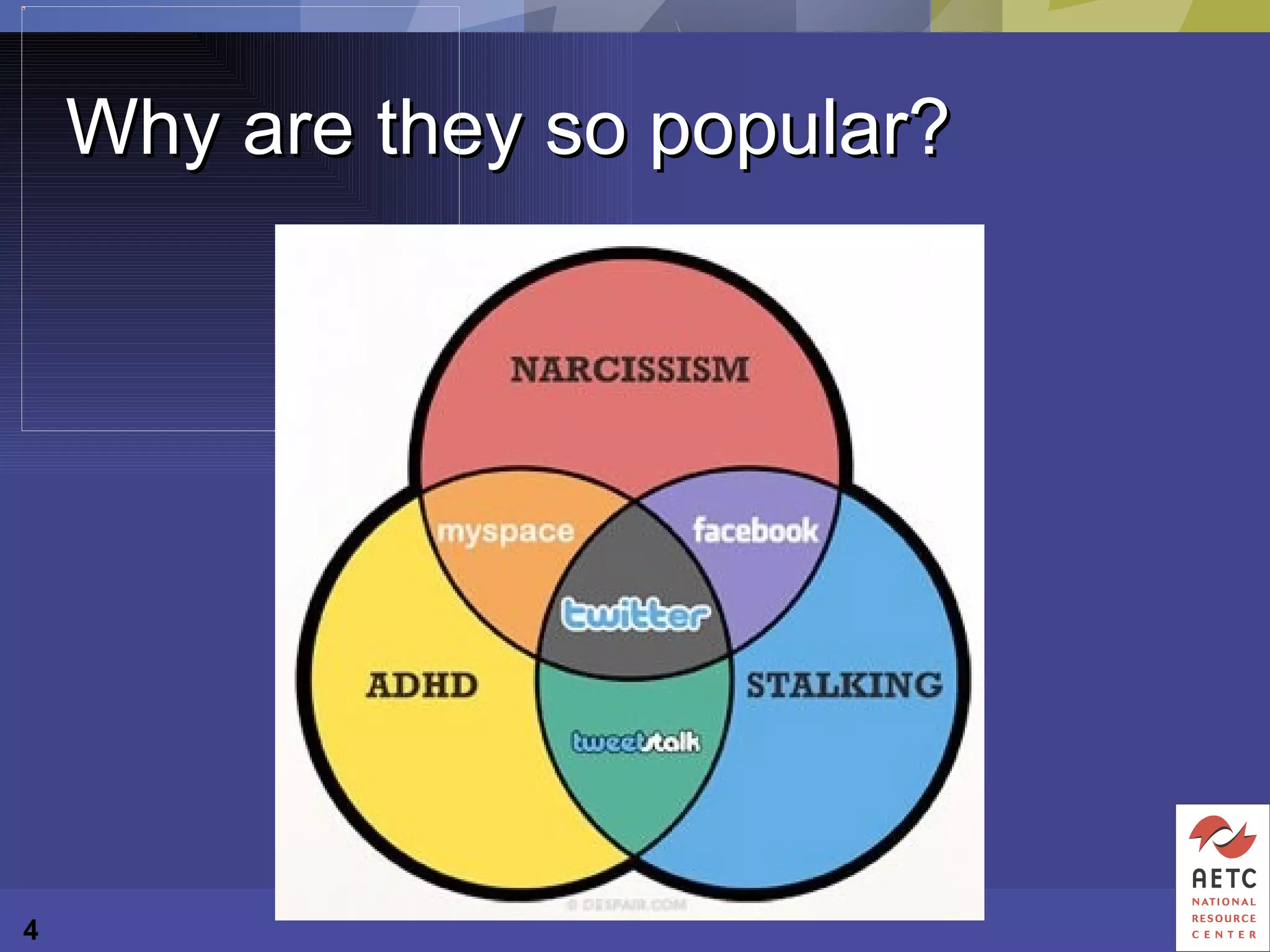
Why are they so popular?
Why are they so popular? Web-based  Free or low-cost User-friendly for the non-tech Fun: manage an active social life, be creative Powerful: lots and lots of features (tools!) Helpful: take on goals not previously feasible
Blogs: What are they? “ Blog” is a contraction of “web log.”  Blogs are the most common form of online  self-publishing. Many are personal journals or diaries. Many blogging sites provide sophisticated tools allowing users to design and manage their blogs.  FREE services include: Blogger, Wordpress, Xanga.
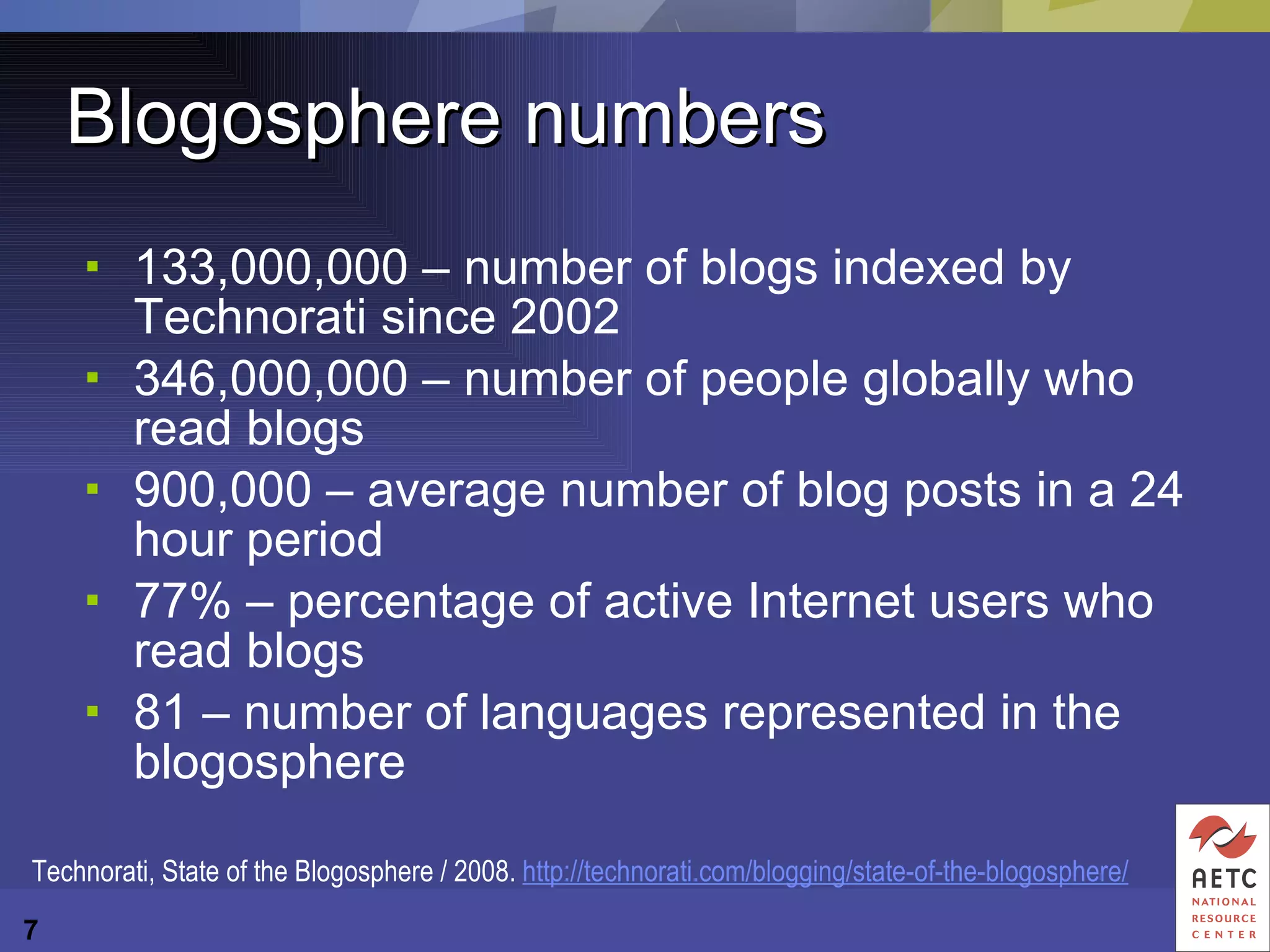
Blogosphere numbers 133,000,000 – number of blogs indexed by Technorati since 2002 346,000,000 – number of people globally who read blogs  900,000 – average number of blog posts in a 24 hour period 77% – percentage of active Internet users who read blogs 81 – number of languages represented in the blogosphere Technorati, State of the Blogosphere / 2008.  http://technorati.com/blogging/state-of-the-blogosphere/
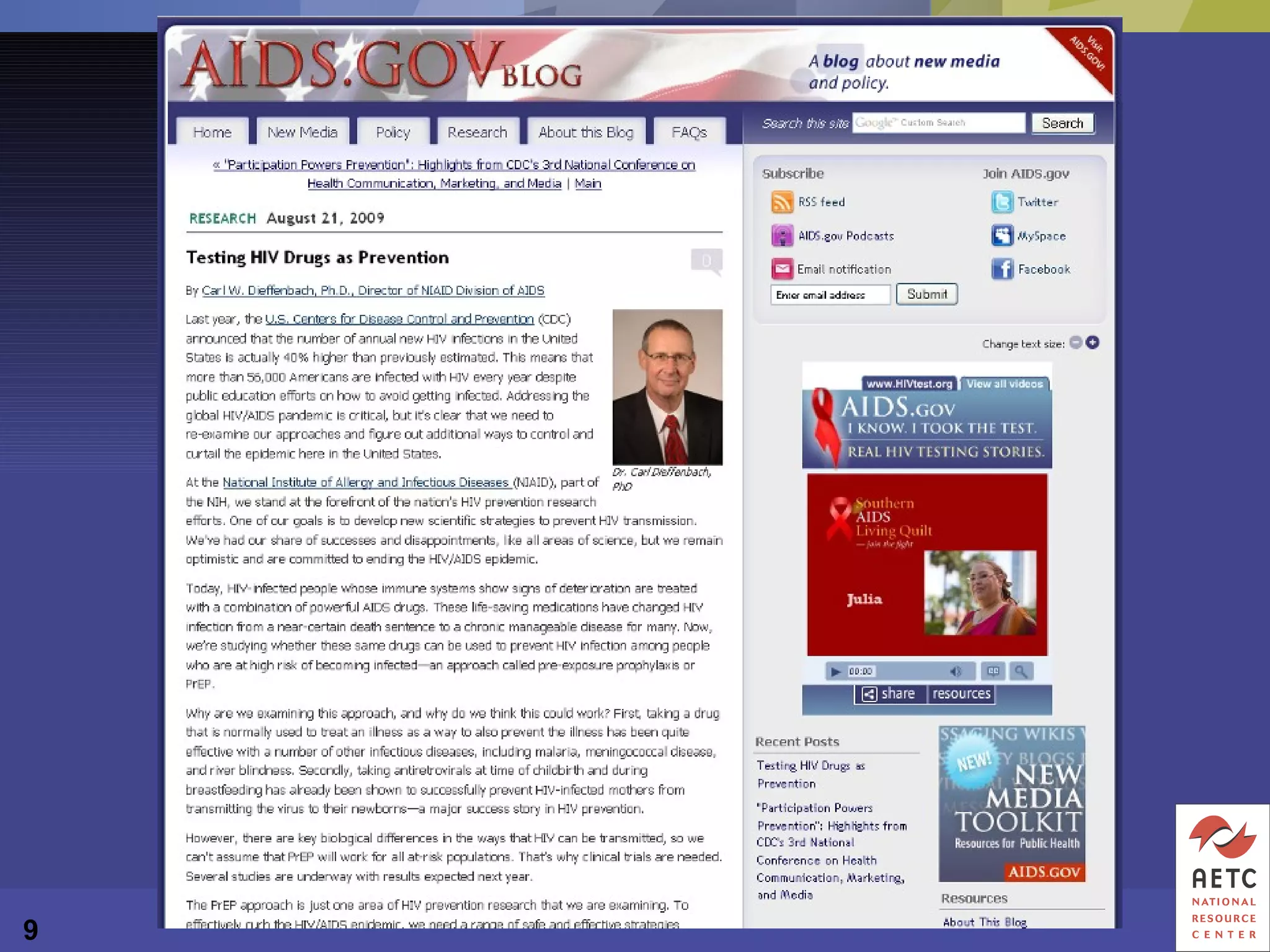
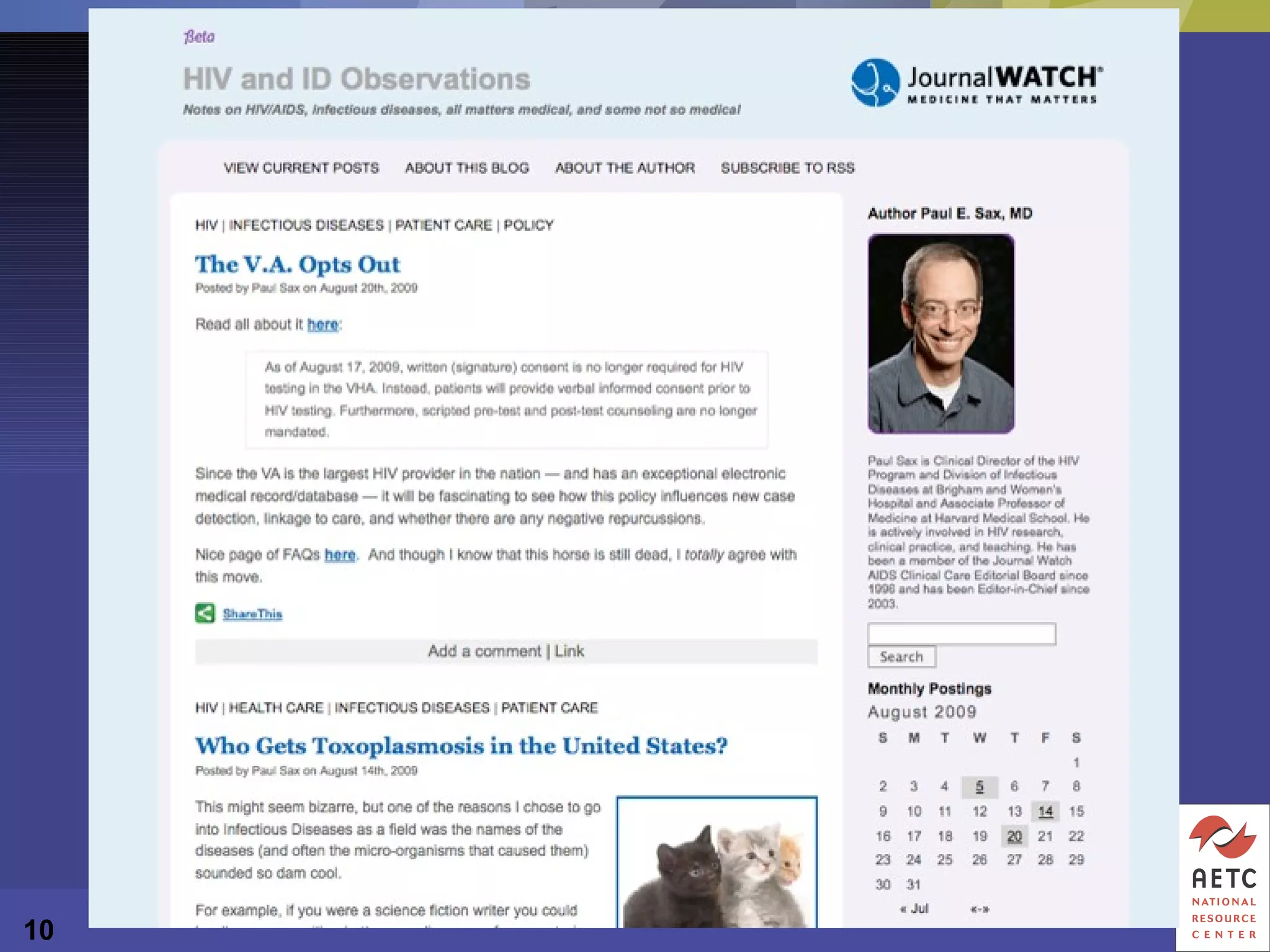
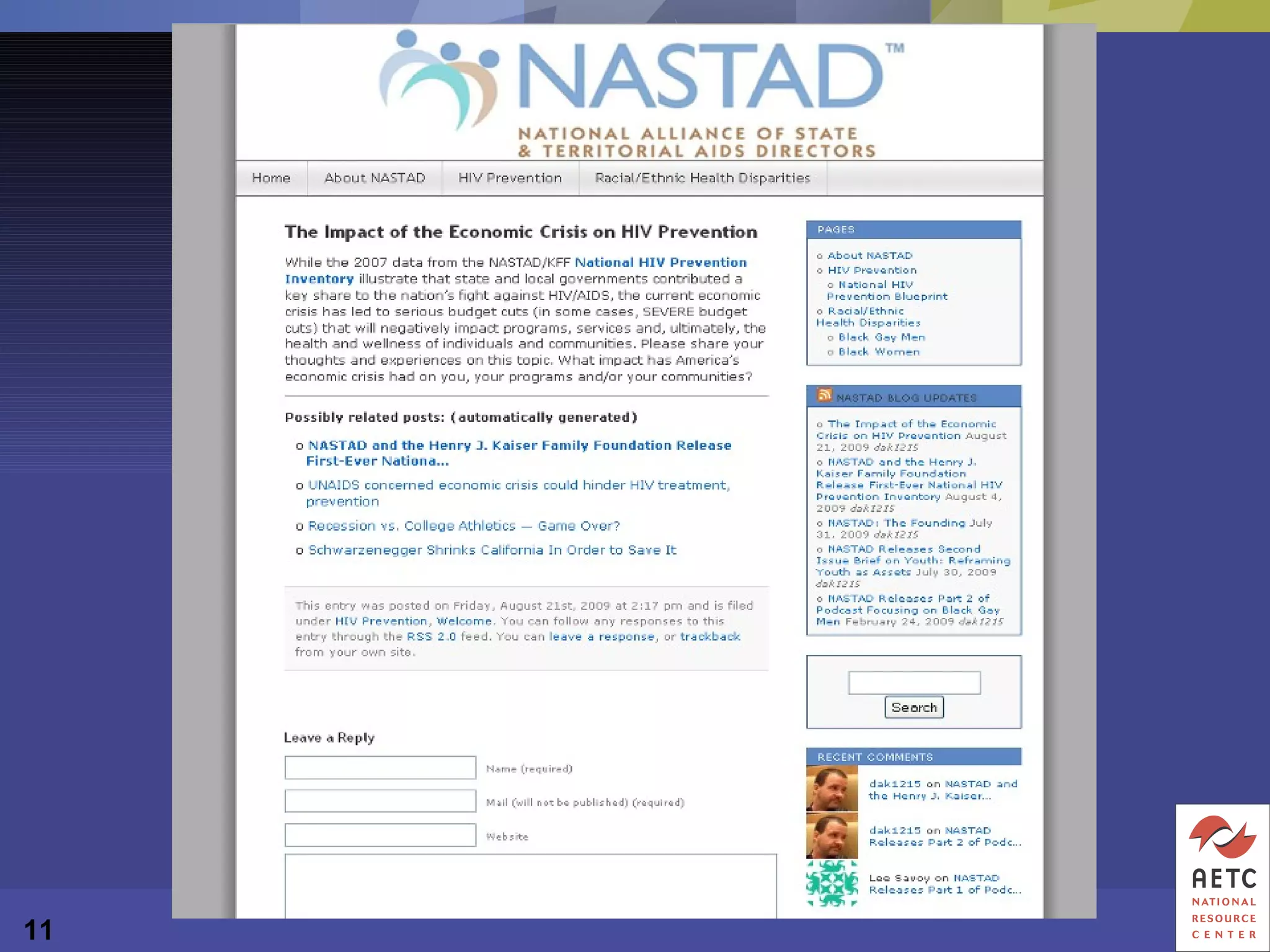
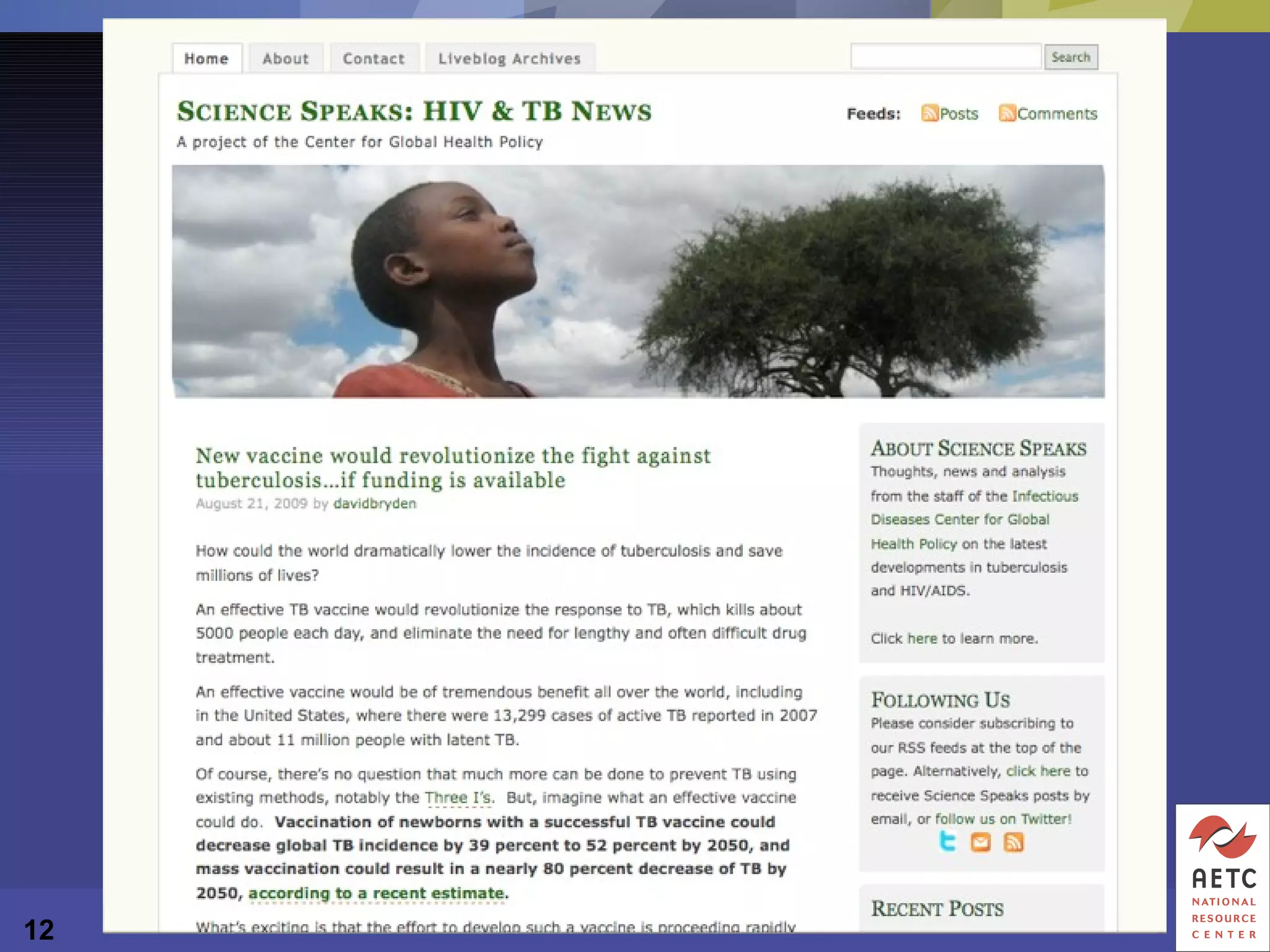
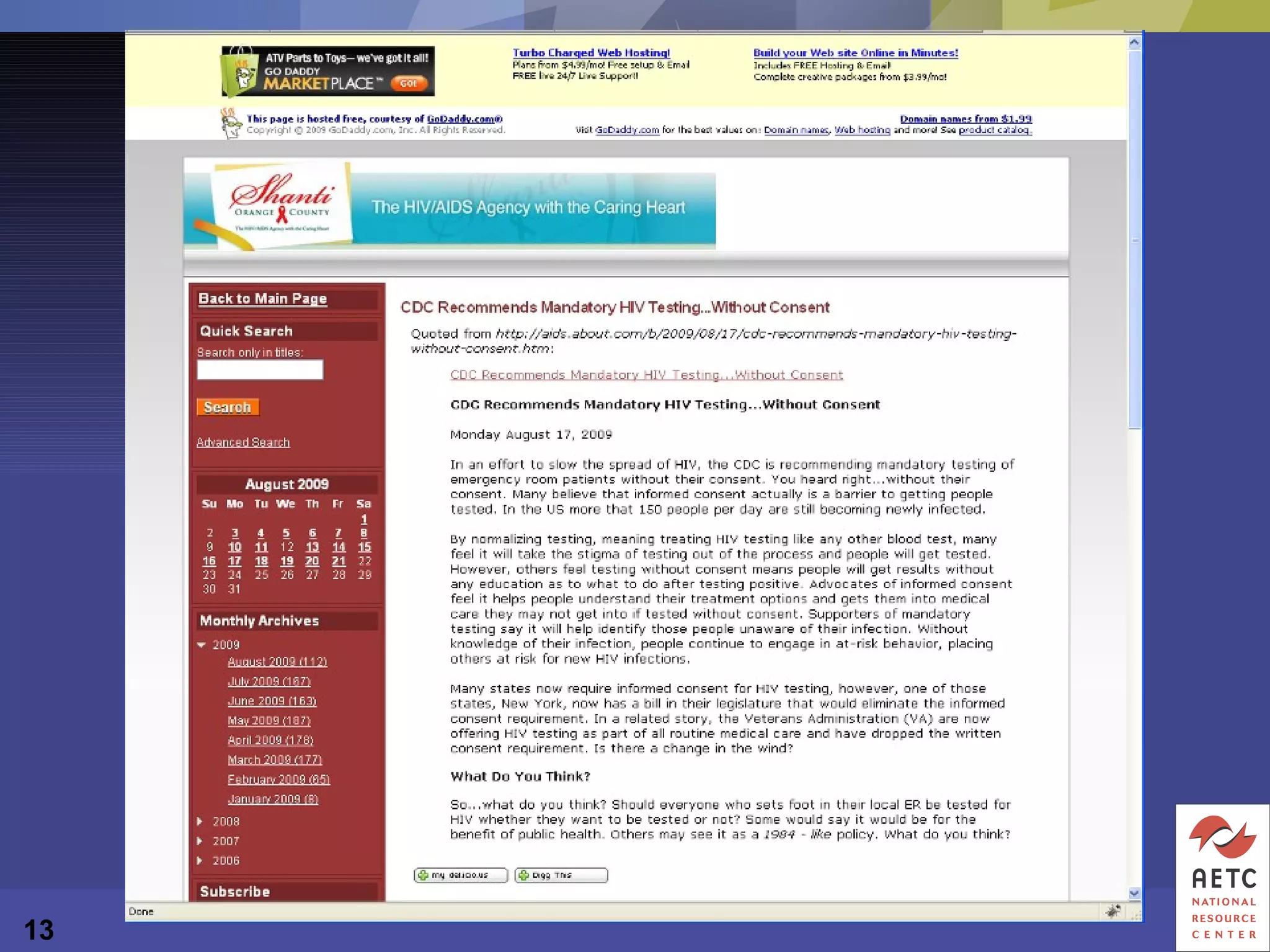
Who is blogging? AIDS.gov:  http://blog.aids.gov/ Paul Sax (NE AETC) - HIV and ID Observations: http://blogs.jwatch.org/hiv-id-observations/ NASTAD:  http://nastad.wordpress.com / Center for Global Health Policy (IDSA):  http://sciencespeaks.wordpress.com /


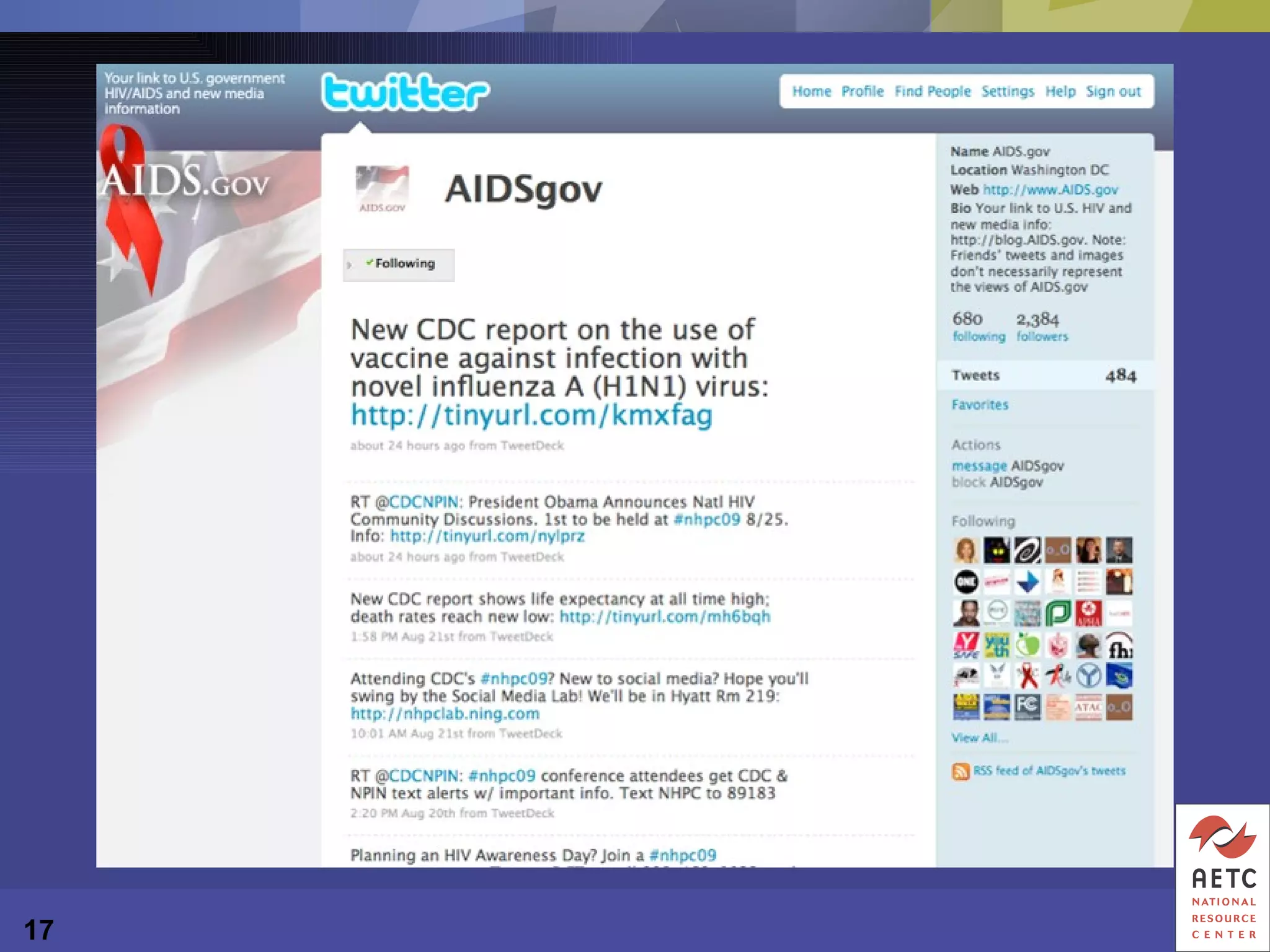
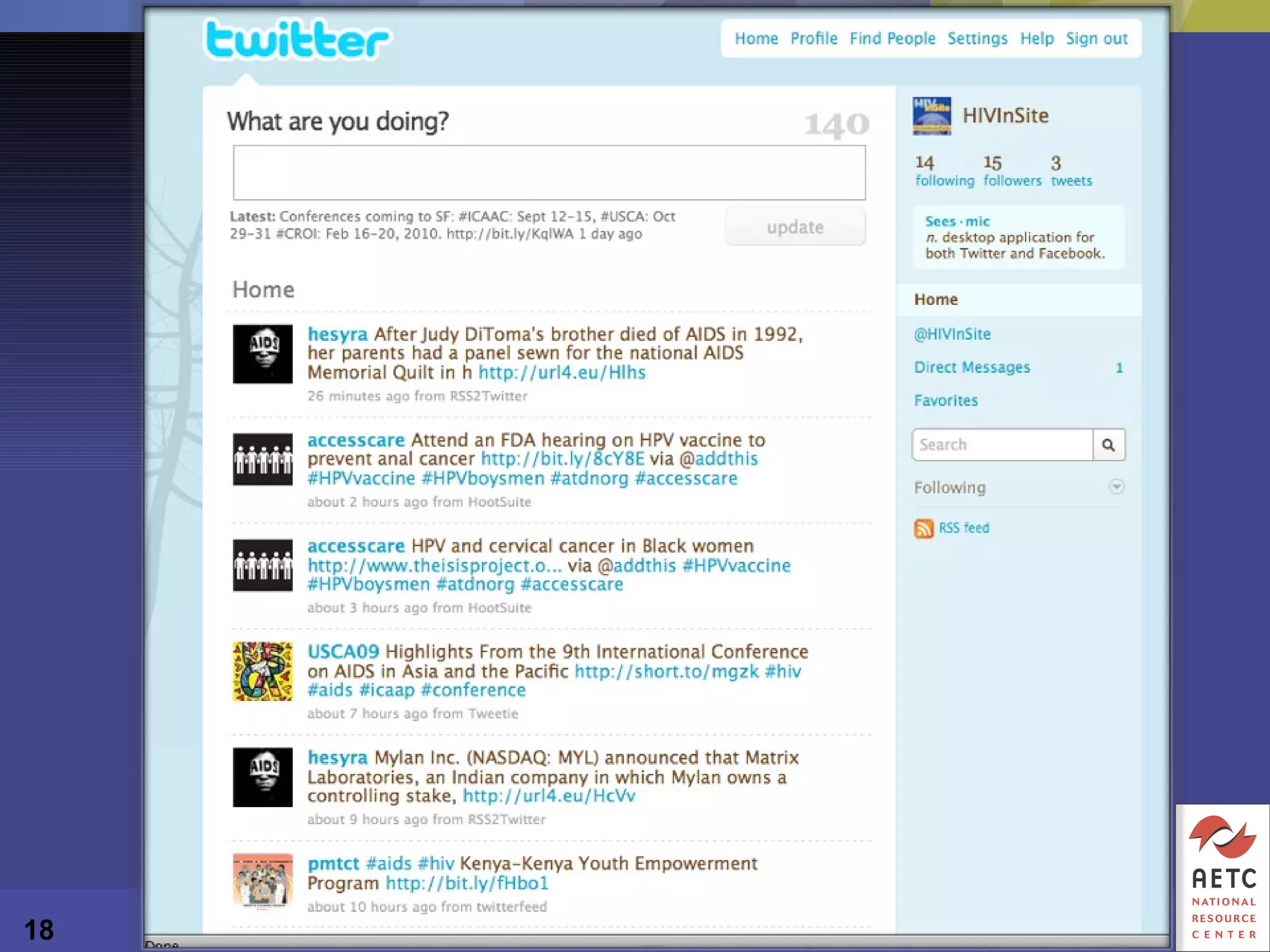
Twitter: What is it? Short messages - no more than 140 characters, also called “micro-blogging”  Send or receive “tweets” from your computer or phone “ Follow” people or organizations and be followed Tag message keywords with hash tags (#), attach images, links Search the twitter universe for keywords using # Differs from IM or texting in that it’s usually more  of a broadcast than a private message
Twitter: Who is tweeting? LOTS of people: 3,500,000,000+ tweets ever and a current pace of 20,000,000 tweets/day  ( http:// popacular.com/gigatweet / ) Community organizations, conference attendees, fundraisers, public health depts., politicians, marketers Anyone wanting to create buzz Technorati, State of the Blogosphere / 2008.  http://technorati.com/blogging/state-of-the-blogosphere/
 
 
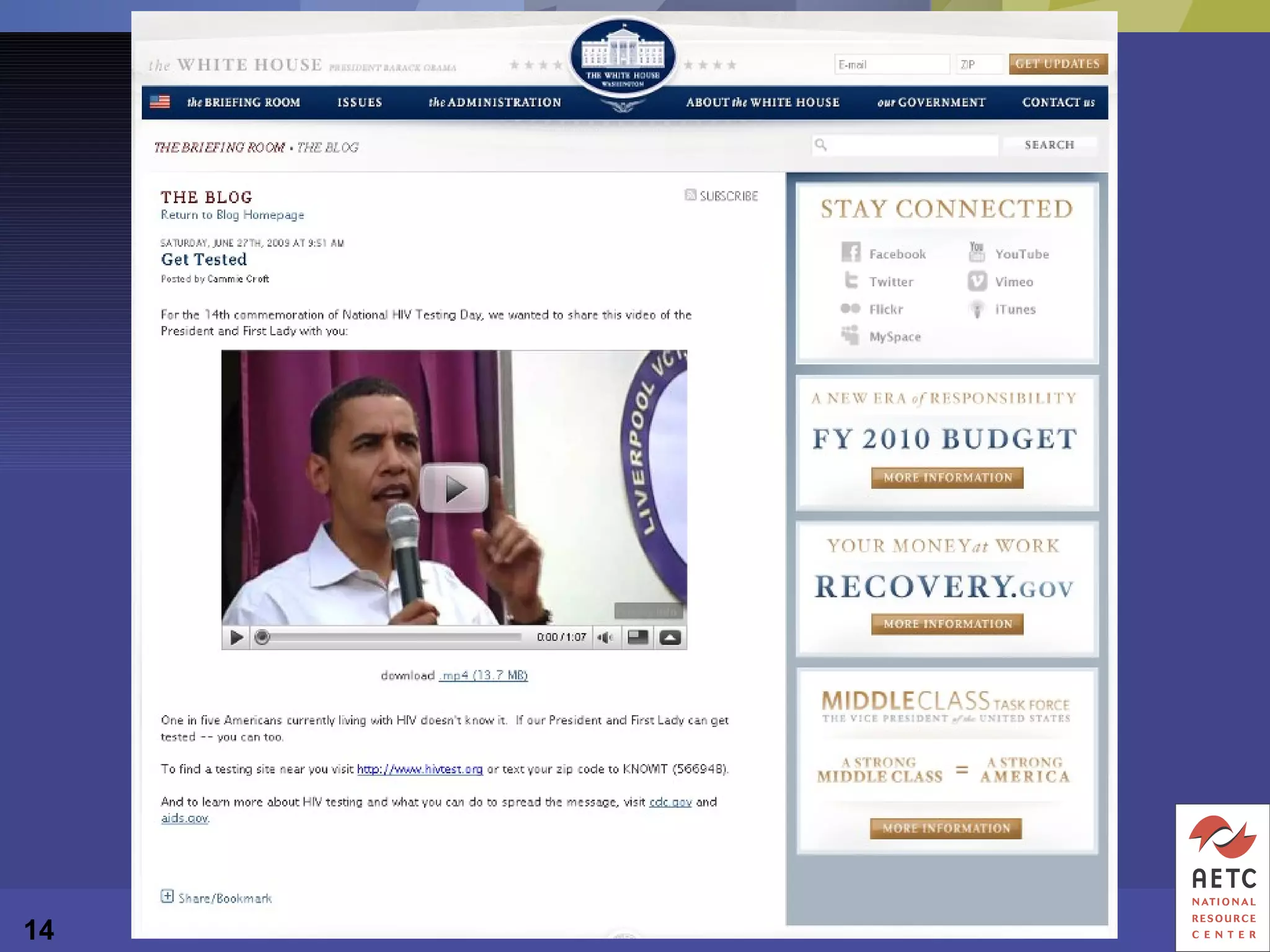
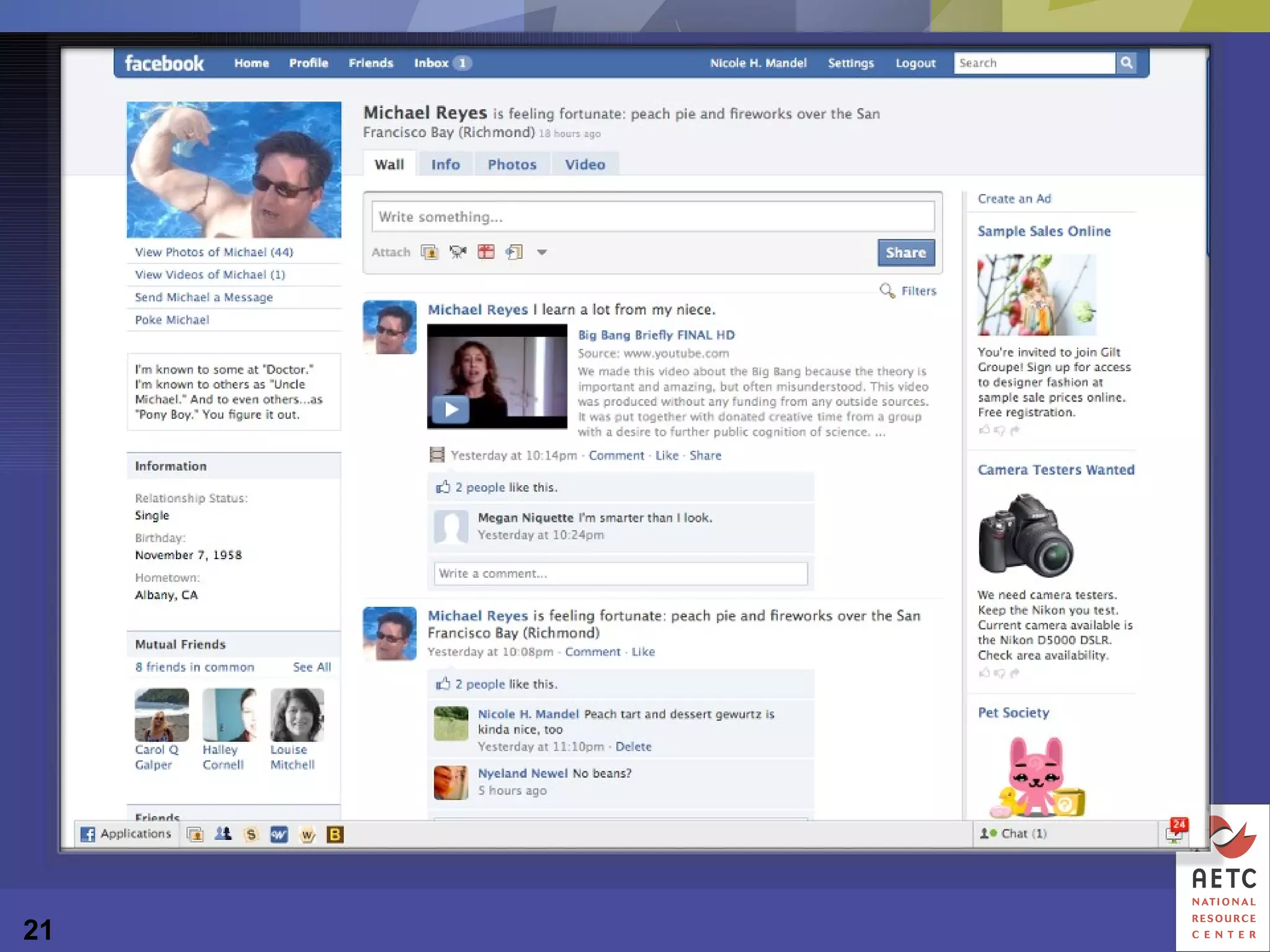
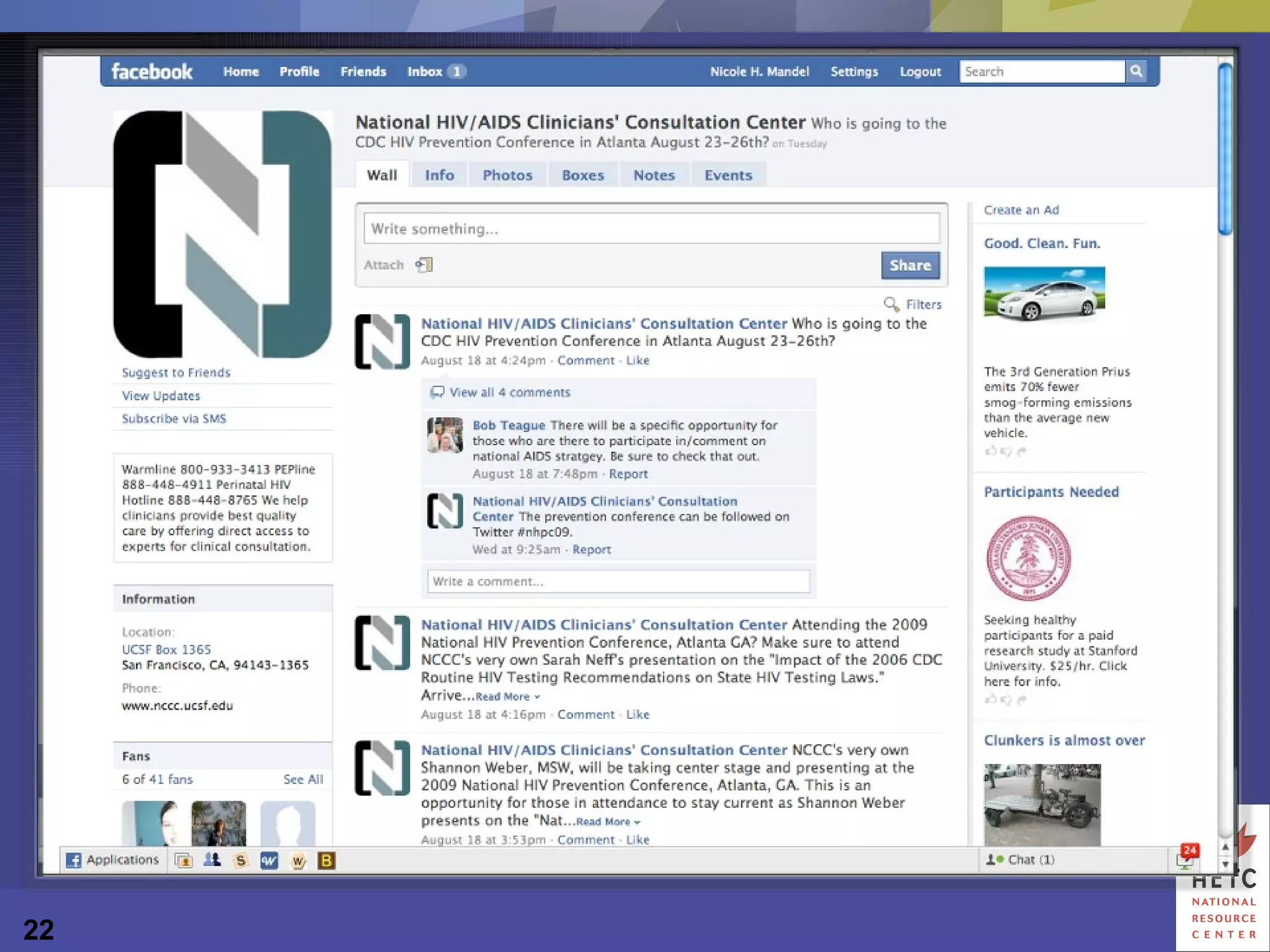
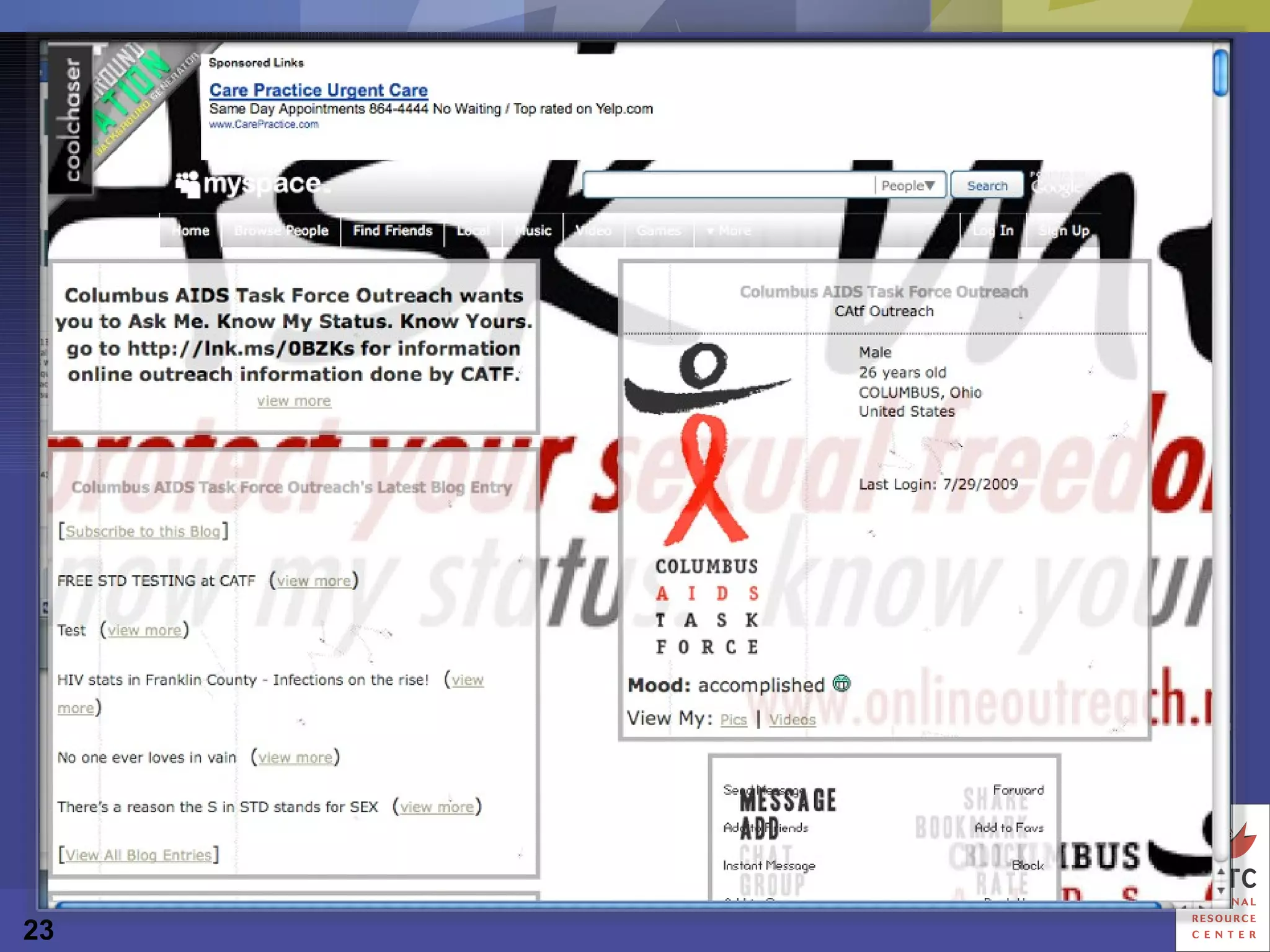
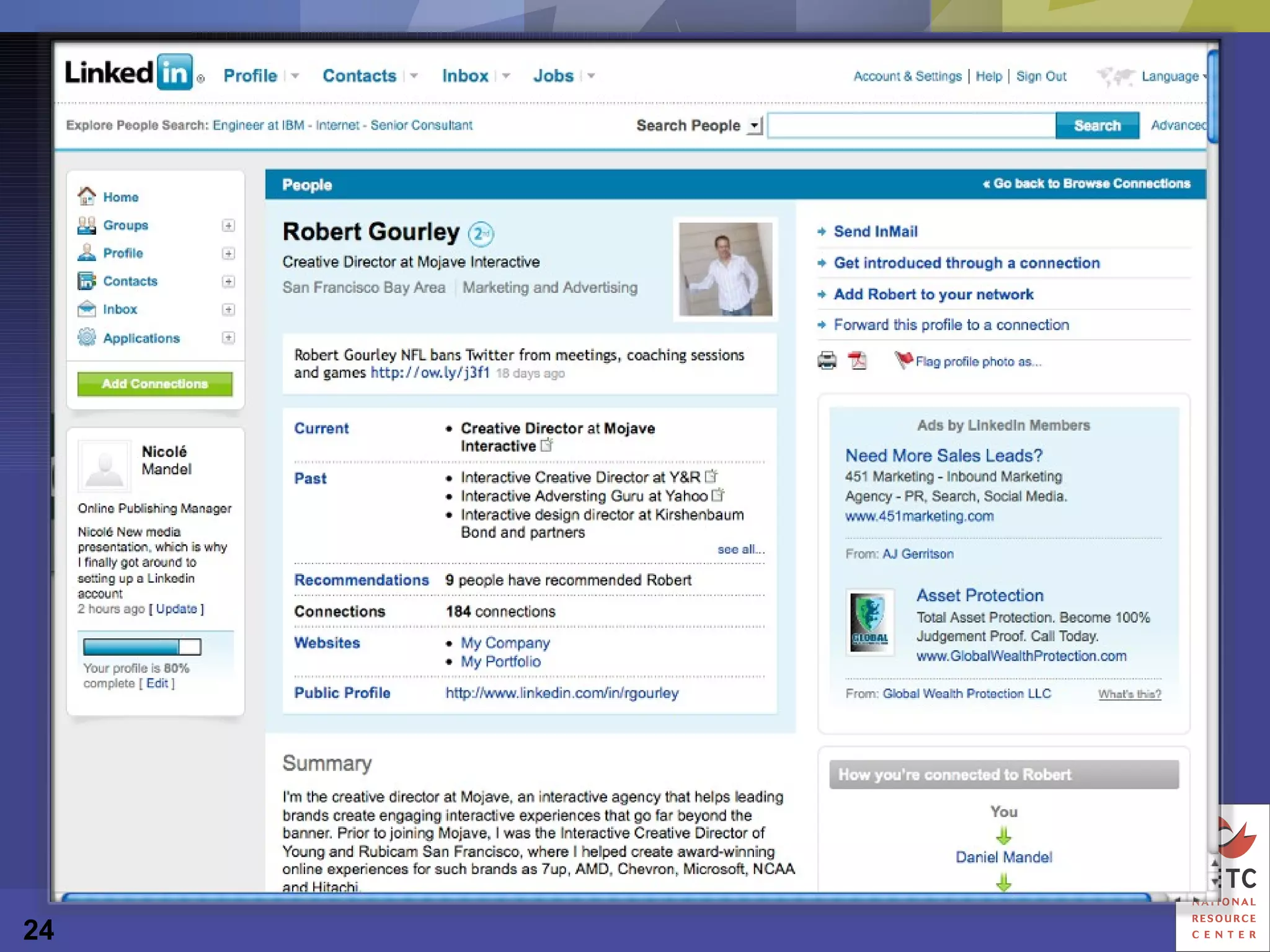
Social Networking: What is it? Facebook, MySpace, LinkedIn (& others) The sites provide tools to create a network and interact with it, such as games, quizzes, text updates, photo galleries, recommendations, affinity groups Organizations a growing part of the picture  NCCC is the first AETC on Facebook. Become a fan!
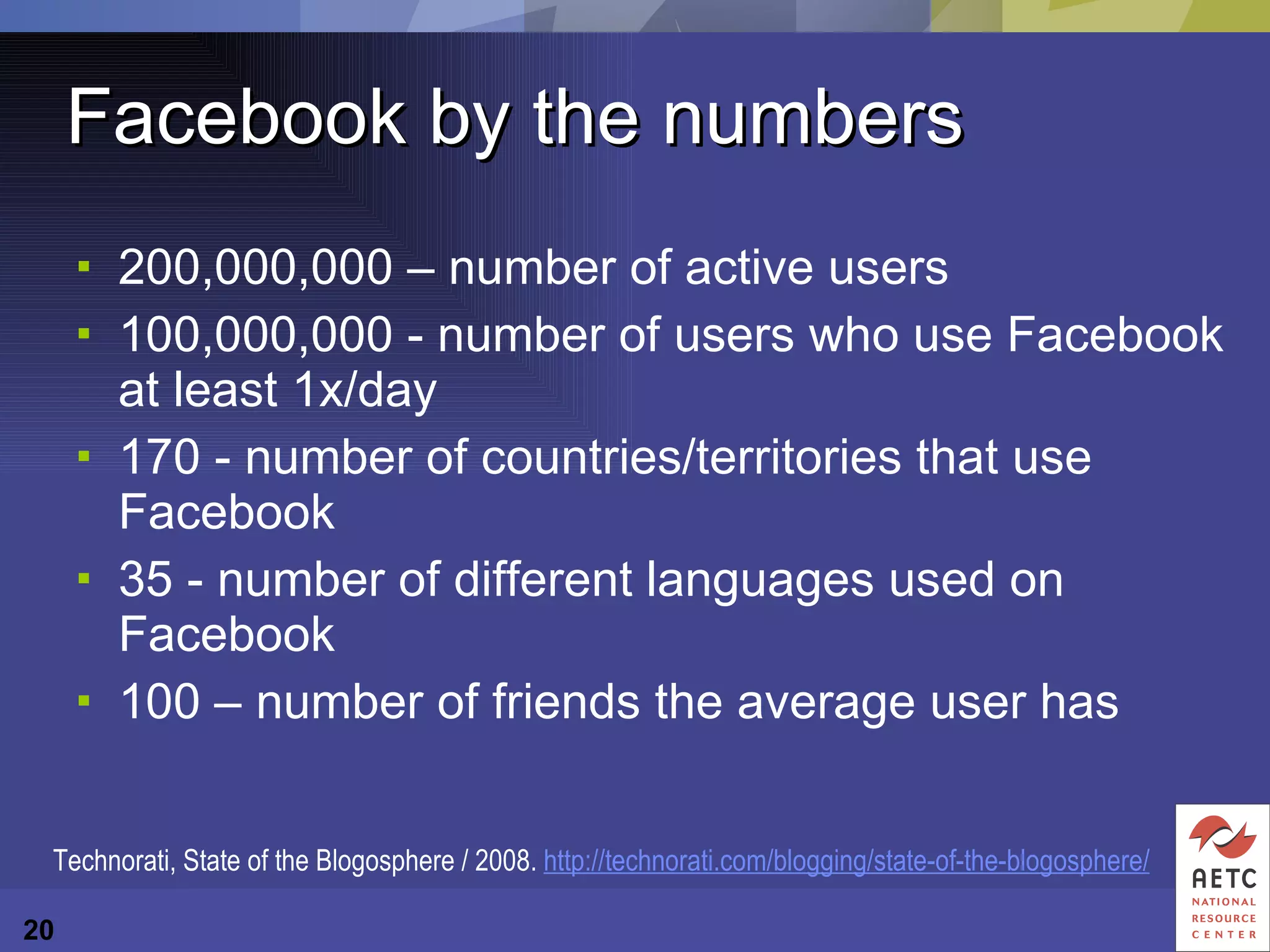
Facebook by the numbers 200,000,000 – number of active users 100,000,000 - number of users who use Facebook at least 1x/day 170 - number of countries/territories that use Facebook 35 - number of different languages used on Facebook 100 – number of friends the average user has Technorati, State of the Blogosphere / 2008.  http://technorati.com/blogging/state-of-the-blogosphere/


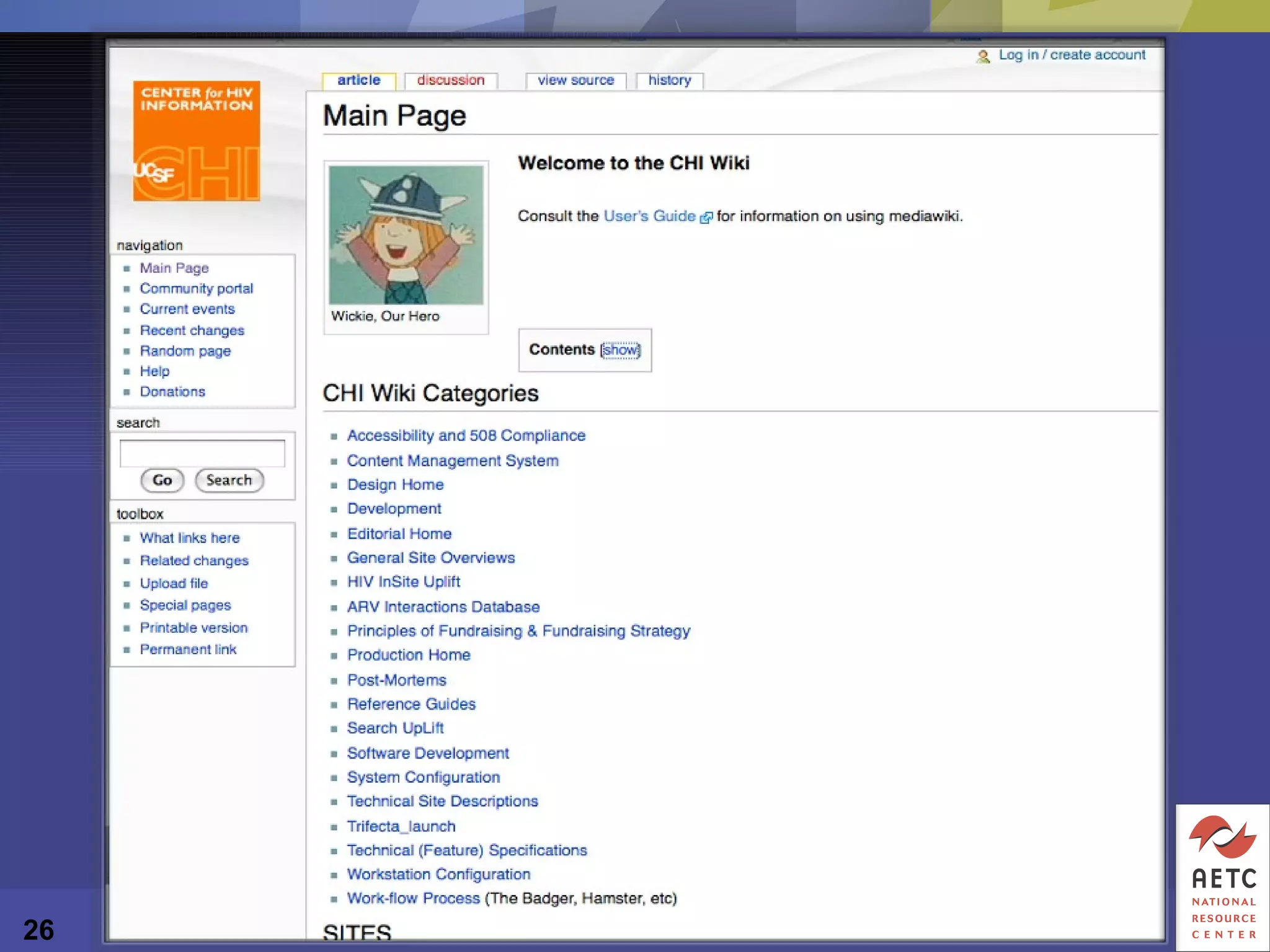
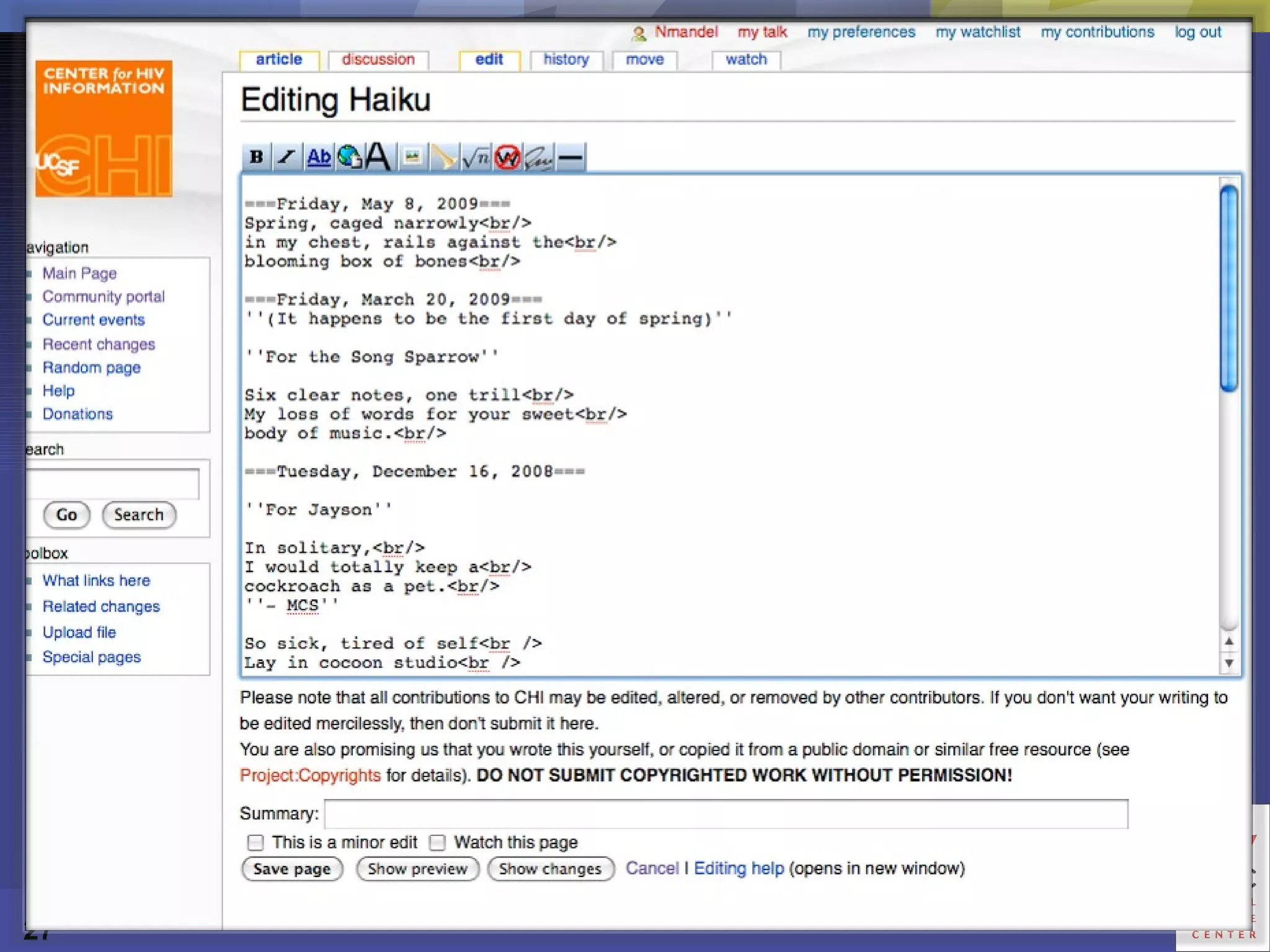
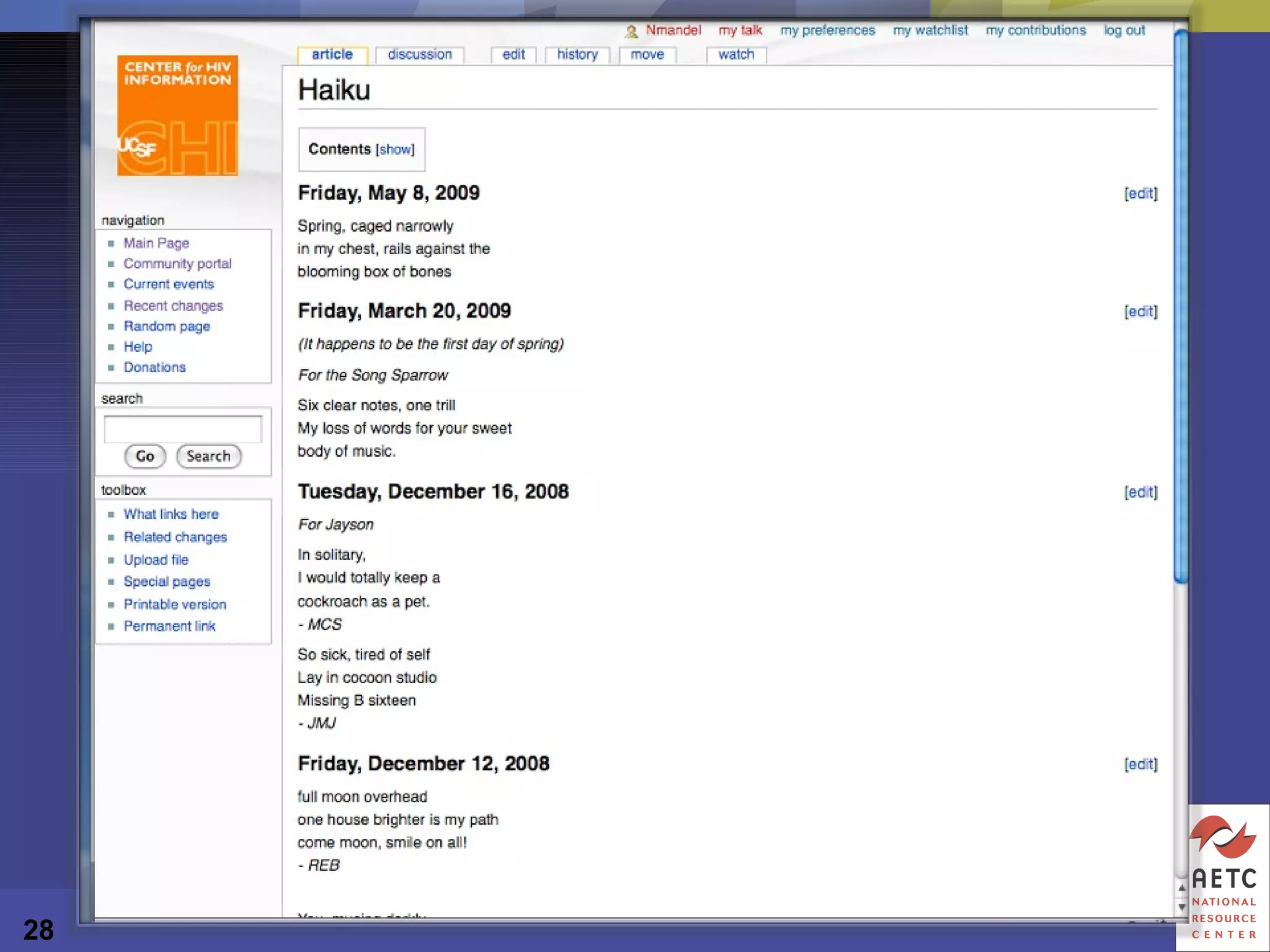
Wikis: What are they? Wiki technology allows you to edit text online, using your browser. Wikipedia is the biggest Wiki.  People use Wikis for collaborative writing projects such as grant applications, curricula, fact sheets. There are free and subscription Wiki sites online or your web host may offer a Wiki package.


Media Sharing: What is it? Post, tag, organize, imbed media files Become your own broadcaster! YouTube – Videos Slideshare – Slides Flikr, Picassa – Photos/images
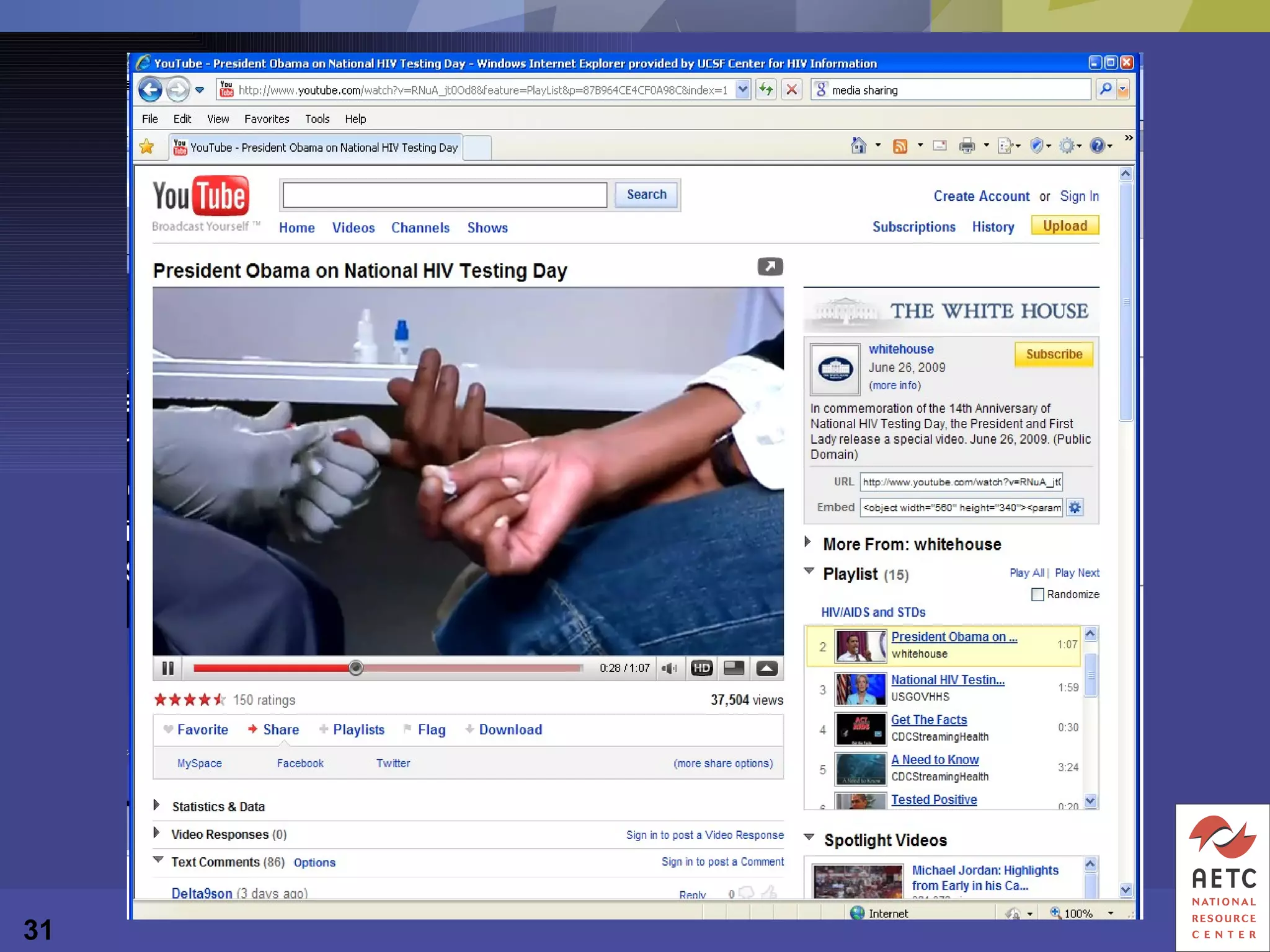
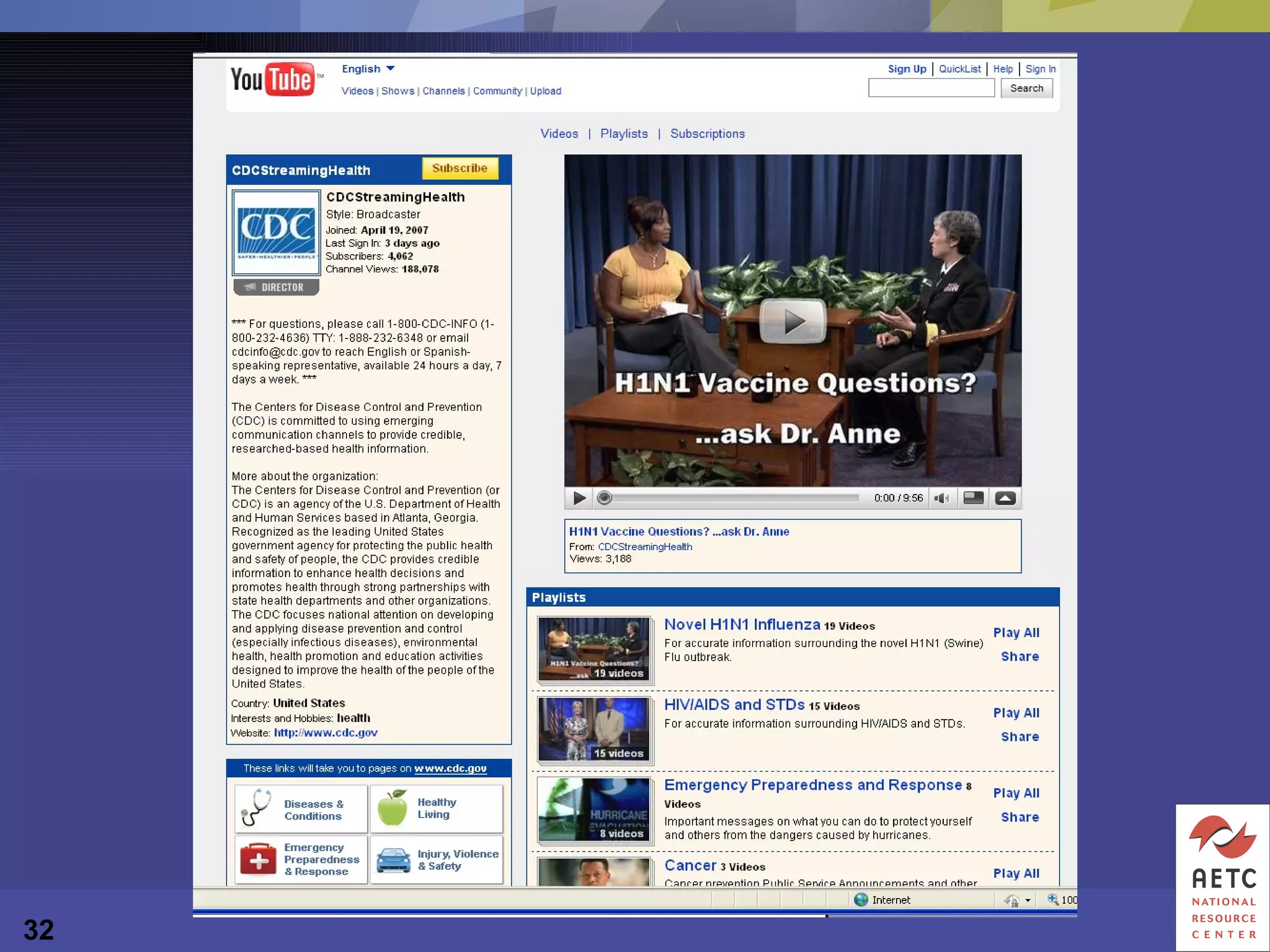
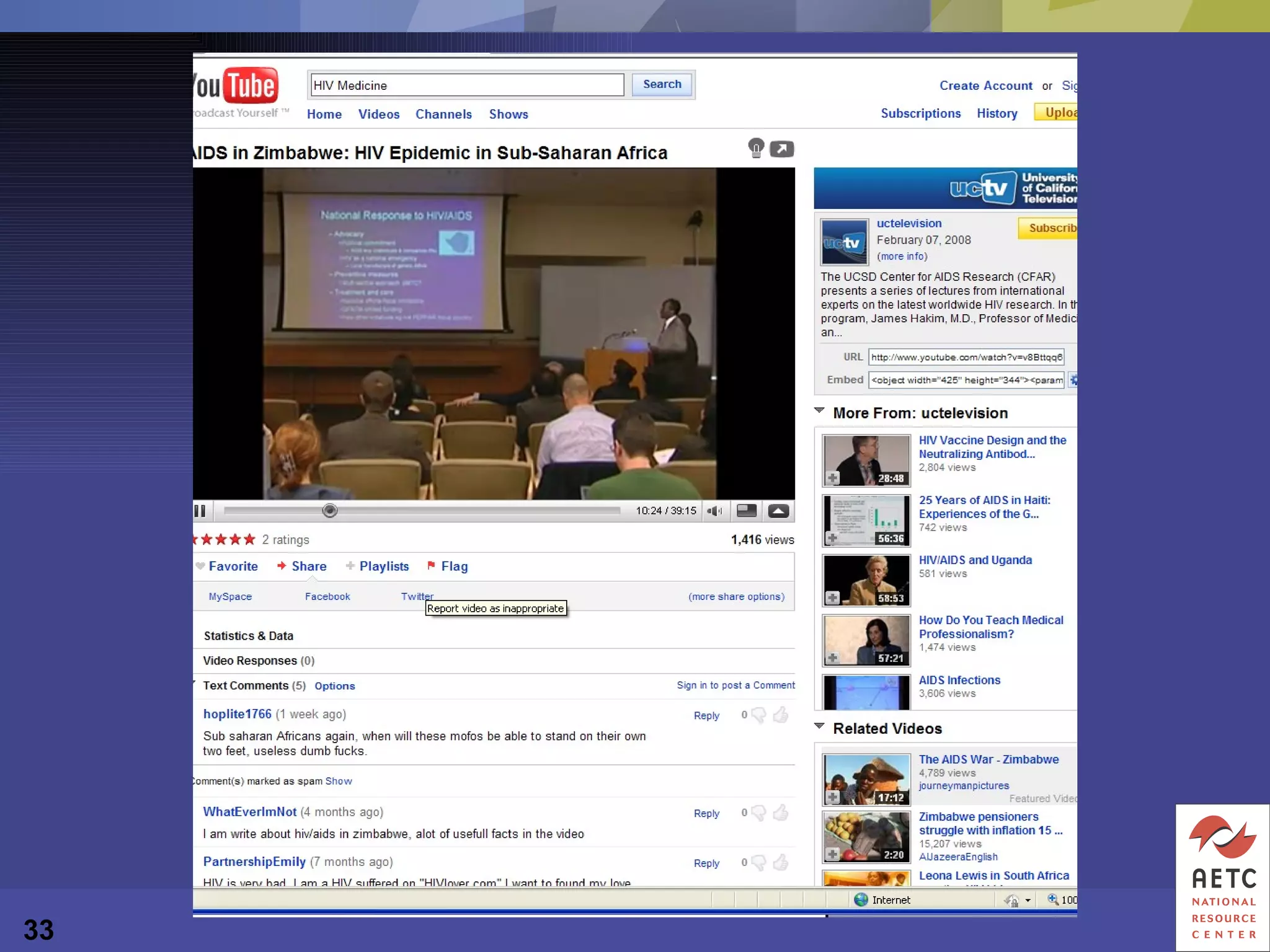
You Tube Videos! Converts from multiple formats into Flash Uploading is easier and easier Create your own channel Embed videos into your blog or Facebook Let viewers comment


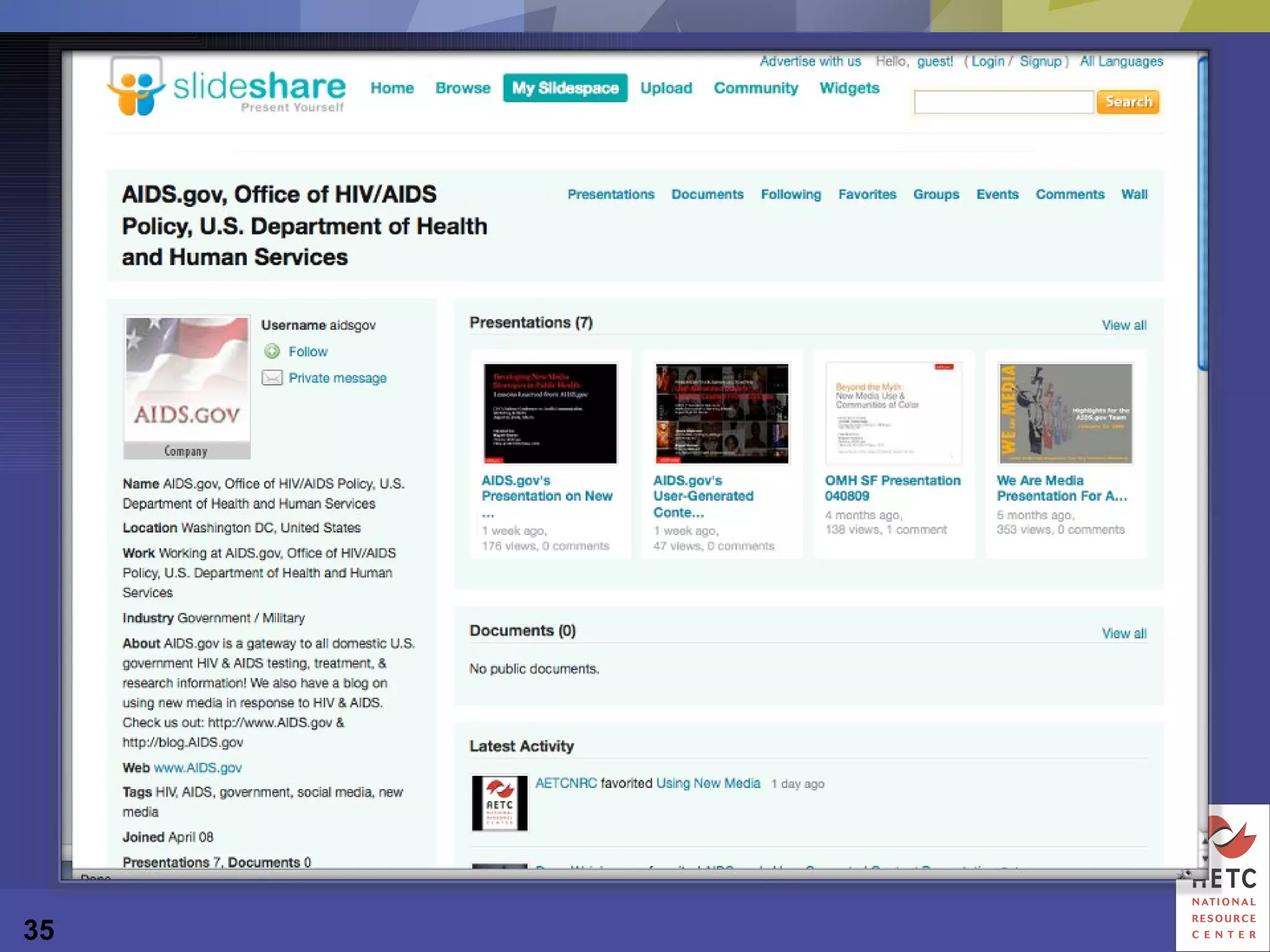
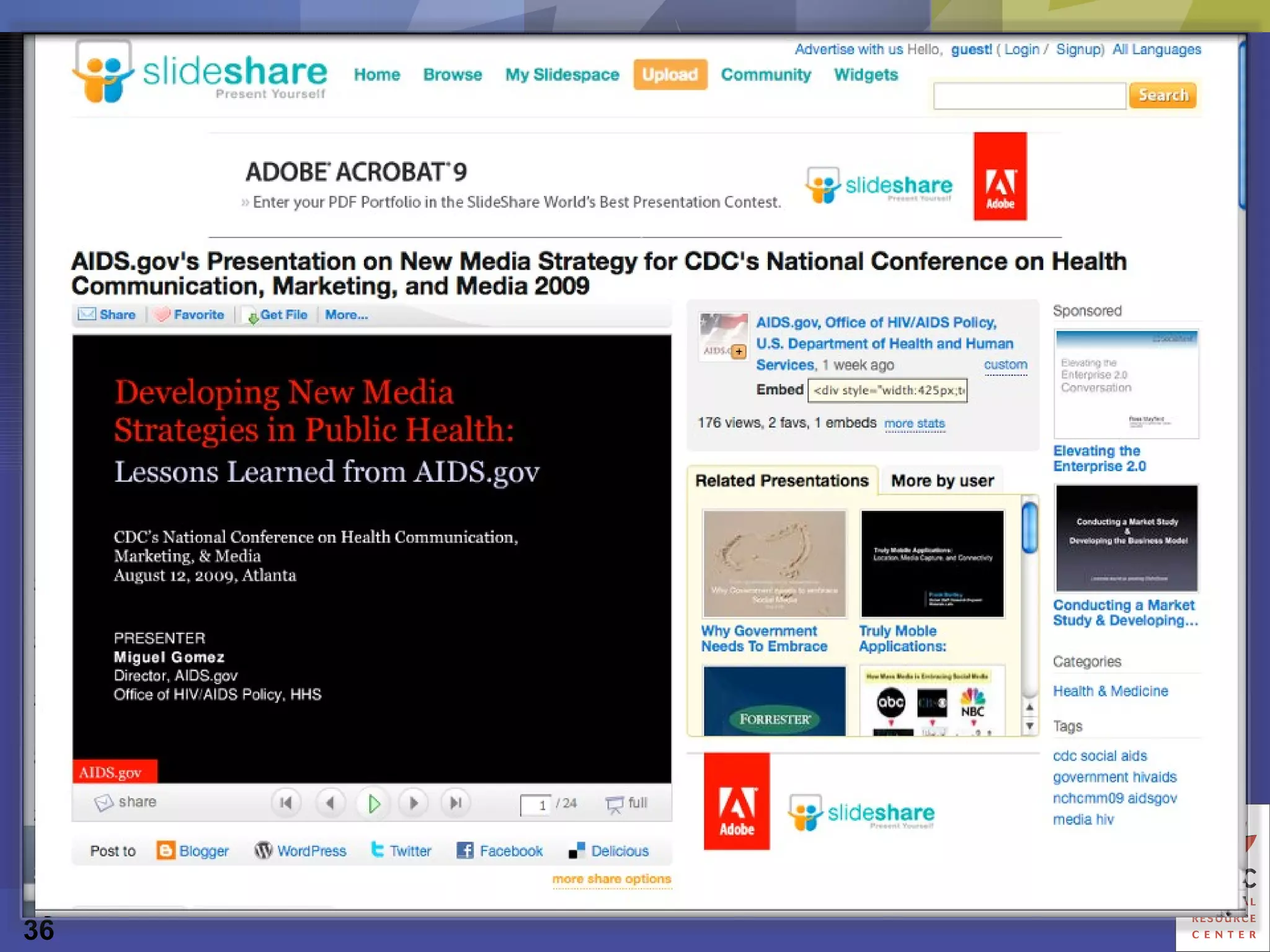
Slide Share YouTube for slides Can post and organize your slides and search for slides by keyword People can comment, favorite, or link to your slides
 
 
Photo Sharing Flikr (Yahoo)  http://www.flickr.com/ Picasa (Google)  http://picasaweb.google.com/home?hl=en&tab=wq Provide wide or limited access to others Link to/from your blog or Facebook
What else is out there? Delicious : organize, store and share bookmarks online Texting : send short messages/images from phone to phone Appointment/medication reminders Uses different technology than web-based communication so can be used in places w/o Internet Podcasts : audio or video files that you can watch/listen to online or download to your PDA CDC has lots, popular PSA format

Overview of Popular New Media Tools

  • 1.
    Overview of Popular New Media Tools Nicolé Mandel, AETC National Resource Center Jayson Jaynes, AETC National Resource Center <nod><thanks>Jennie Anderson, AIDS.gov
  • 2.
    What are ...Blogs Twitter Wikis Texting Podcasts Delicious, digg... Social Networking Facebook MySpace LinkedIn Media Sharing YouTube SlideShare Flikr, Picassa ?
  • 3.
    Why would youuse them? Communication Interaction Community Networking Advocacy Entertainment Education Promotion
  • 4.
    Why are theyso popular?
  • 5.
    Why are theyso popular? Web-based Free or low-cost User-friendly for the non-tech Fun: manage an active social life, be creative Powerful: lots and lots of features (tools!) Helpful: take on goals not previously feasible
  • 6.
    Blogs: What arethey? “ Blog” is a contraction of “web log.” Blogs are the most common form of online self-publishing. Many are personal journals or diaries. Many blogging sites provide sophisticated tools allowing users to design and manage their blogs. FREE services include: Blogger, Wordpress, Xanga.
  • 7.
    Blogosphere numbers 133,000,000– number of blogs indexed by Technorati since 2002 346,000,000 – number of people globally who read blogs 900,000 – average number of blog posts in a 24 hour period 77% – percentage of active Internet users who read blogs 81 – number of languages represented in the blogosphere Technorati, State of the Blogosphere / 2008. http://technorati.com/blogging/state-of-the-blogosphere/
  • 8.
    Who is blogging?AIDS.gov: http://blog.aids.gov/ Paul Sax (NE AETC) - HIV and ID Observations: http://blogs.jwatch.org/hiv-id-observations/ NASTAD: http://nastad.wordpress.com / Center for Global Health Policy (IDSA): http://sciencespeaks.wordpress.com /
  • 9.
  • 10.
  • 11.
  • 12.
  • 13.
  • 14.
  • 15.
    Twitter: What isit? Short messages - no more than 140 characters, also called “micro-blogging” Send or receive “tweets” from your computer or phone “ Follow” people or organizations and be followed Tag message keywords with hash tags (#), attach images, links Search the twitter universe for keywords using # Differs from IM or texting in that it’s usually more of a broadcast than a private message
  • 16.
    Twitter: Who istweeting? LOTS of people: 3,500,000,000+ tweets ever and a current pace of 20,000,000 tweets/day ( http:// popacular.com/gigatweet / ) Community organizations, conference attendees, fundraisers, public health depts., politicians, marketers Anyone wanting to create buzz Technorati, State of the Blogosphere / 2008. http://technorati.com/blogging/state-of-the-blogosphere/
  • 17.
  • 18.
  • 19.
    Social Networking: Whatis it? Facebook, MySpace, LinkedIn (& others) The sites provide tools to create a network and interact with it, such as games, quizzes, text updates, photo galleries, recommendations, affinity groups Organizations a growing part of the picture NCCC is the first AETC on Facebook. Become a fan!
  • 20.
    Facebook by thenumbers 200,000,000 – number of active users 100,000,000 - number of users who use Facebook at least 1x/day 170 - number of countries/territories that use Facebook 35 - number of different languages used on Facebook 100 – number of friends the average user has Technorati, State of the Blogosphere / 2008. http://technorati.com/blogging/state-of-the-blogosphere/
  • 21.
  • 22.
  • 23.
  • 24.
  • 25.
    Wikis: What arethey? Wiki technology allows you to edit text online, using your browser. Wikipedia is the biggest Wiki. People use Wikis for collaborative writing projects such as grant applications, curricula, fact sheets. There are free and subscription Wiki sites online or your web host may offer a Wiki package.
  • 26.
  • 27.
  • 28.
  • 29.
    Media Sharing: Whatis it? Post, tag, organize, imbed media files Become your own broadcaster! YouTube – Videos Slideshare – Slides Flikr, Picassa – Photos/images
  • 30.
    You Tube Videos!Converts from multiple formats into Flash Uploading is easier and easier Create your own channel Embed videos into your blog or Facebook Let viewers comment
  • 31.
  • 32.
  • 33.
  • 34.
    Slide Share YouTubefor slides Can post and organize your slides and search for slides by keyword People can comment, favorite, or link to your slides
  • 35.
  • 36.
  • 37.
    Photo Sharing Flikr(Yahoo) http://www.flickr.com/ Picasa (Google) http://picasaweb.google.com/home?hl=en&tab=wq Provide wide or limited access to others Link to/from your blog or Facebook
  • 38.
    What else isout there? Delicious : organize, store and share bookmarks online Texting : send short messages/images from phone to phone Appointment/medication reminders Uses different technology than web-based communication so can be used in places w/o Internet Podcasts : audio or video files that you can watch/listen to online or download to your PDA CDC has lots, popular PSA format

Editor's Notes

  • #8 http://thefuturebuzz.com/2009/01/12/social-media-web-20-internet-numbers-stats/
  • #17 http://thefuturebuzz.com/2009/01/12/social-media-web-20-internet-numbers-stats/
  • #20 Also dating sites, patientslikeme, Flickr, even consumer-oriented sites like Amazon where you can comment about and rate products and post your lists
  • #21 http://thefuturebuzz.com/2009/01/12/social-media-web-20-internet-numbers-stats/
  • #26 Google Docs uses Wiki-like technology. Features include limiting access, tracking document history, commenting on documents
  • #35 Slideshare.net