Overview of
Hospital Information Systems

Nawanan Theera-Ampornpunt, M.D., Ph.D.
Department of Community Medicine
Faculty of Medicine Ramathibodi Hospital
March 3, 2014
SlideShare.net/Nawanan
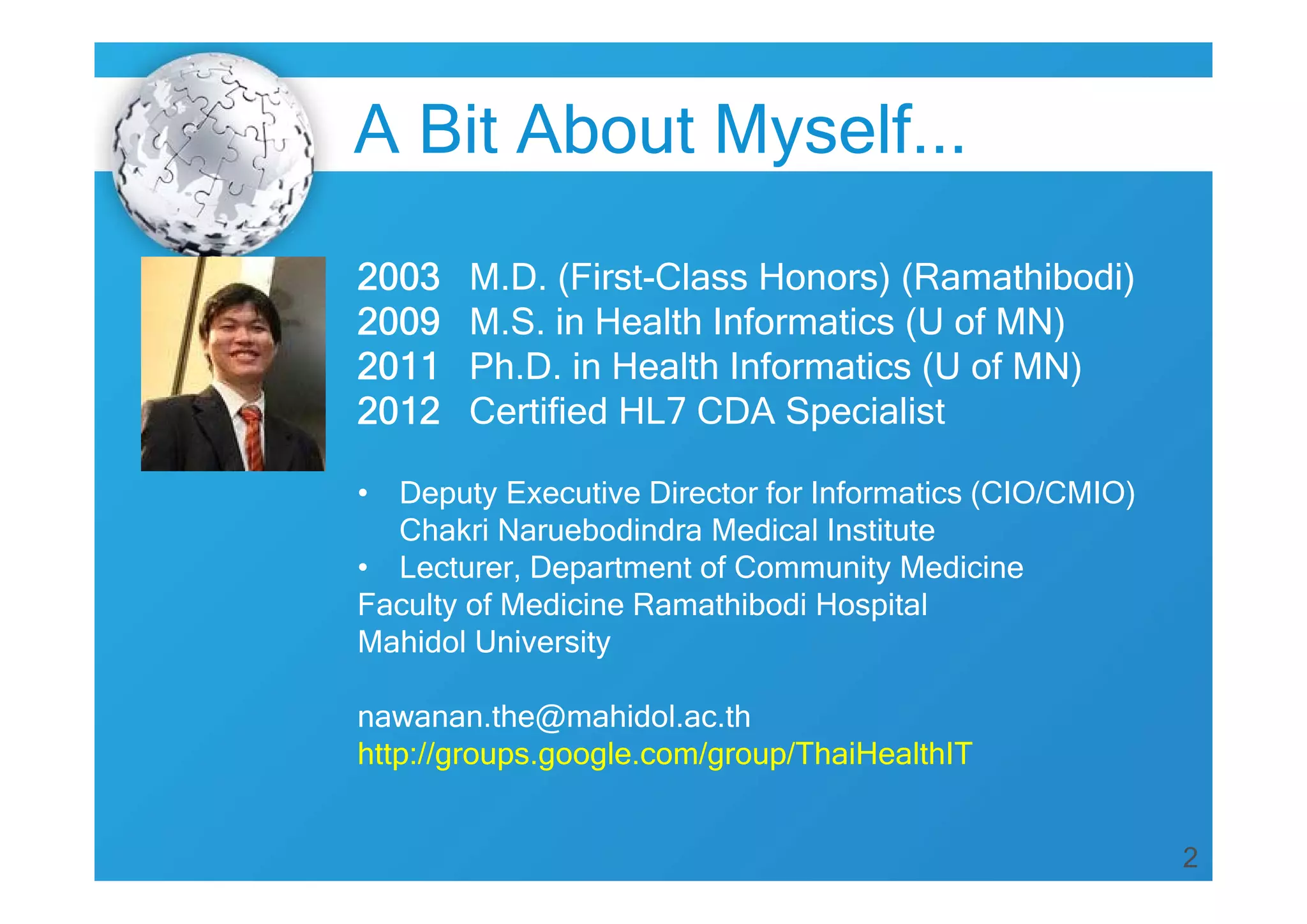
A Bit About Myself...
2003
2009
2011
2012

M.D. (First-Class Honors) (Ramathibodi)
M.S. in Health Informatics (U of MN)
Ph.D. in Health Informatics (U of MN)
Certified HL7 CDA Specialist

Deputy Executive Director for Informatics (CIO/CMIO)
Chakri Naruebodindra Medical Institute
• Lecturer, Department of Community Medicine
Faculty of Medicine Ramathibodi Hospital
Mahidol University
•

nawanan.the@mahidol.ac.th
http://groups.google.com/group/ThaiHealthIT
2
Outline
•
•
•
•
•
•

Healthcare & Information
Why We Need ICT in Healthcare
Health IT
Hospital Information Systems
Health Information Exchange
Q&A

3
Let’s start with
something simple...

4
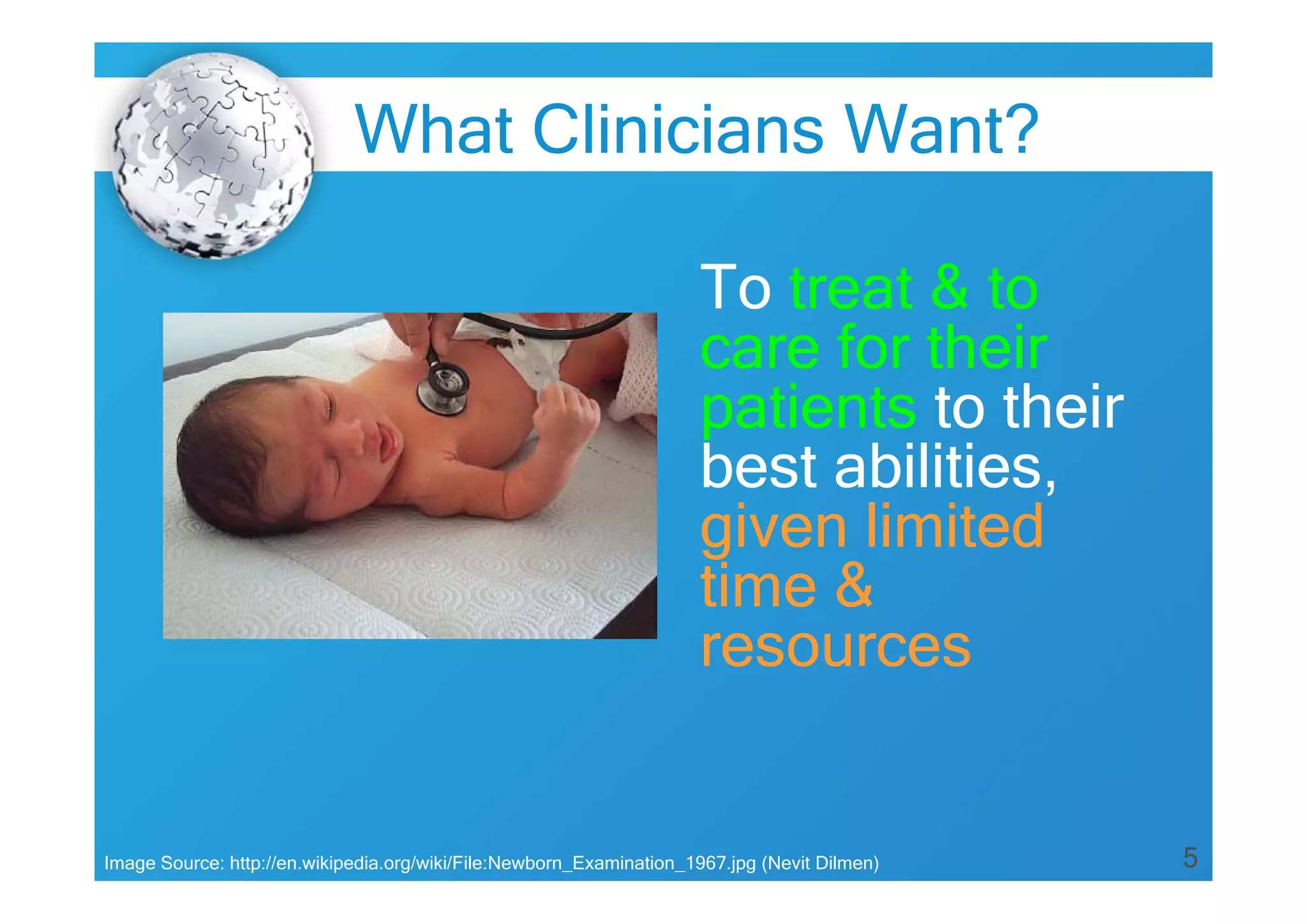
What Clinicians Want?
To treat & to
care for their
patients to their
best abilities,
given limited
time &
resources

Image Source: http://en.wikipedia.org/wiki/File:Newborn_Examination_1967.jpg (Nevit Dilmen)

5
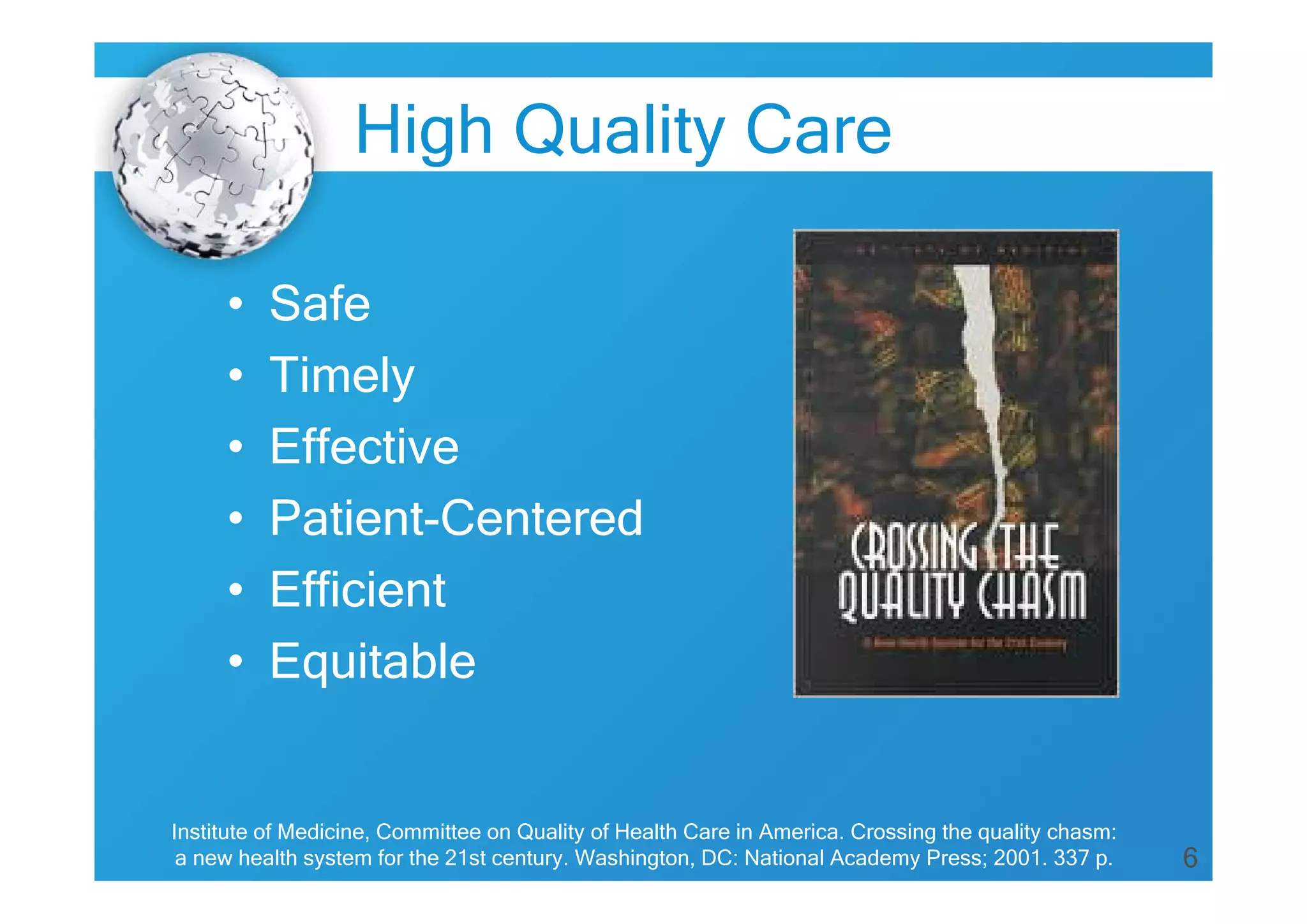
High Quality Care
•
•
•
•
•
•

Safe
Timely
Effective
Patient-Centered
Efficient
Equitable

Institute of Medicine, Committee on Quality of Health Care in America. Crossing the quality chasm:
a new health system for the 21st century. Washington, DC: National Academy Press; 2001. 337 p.

6
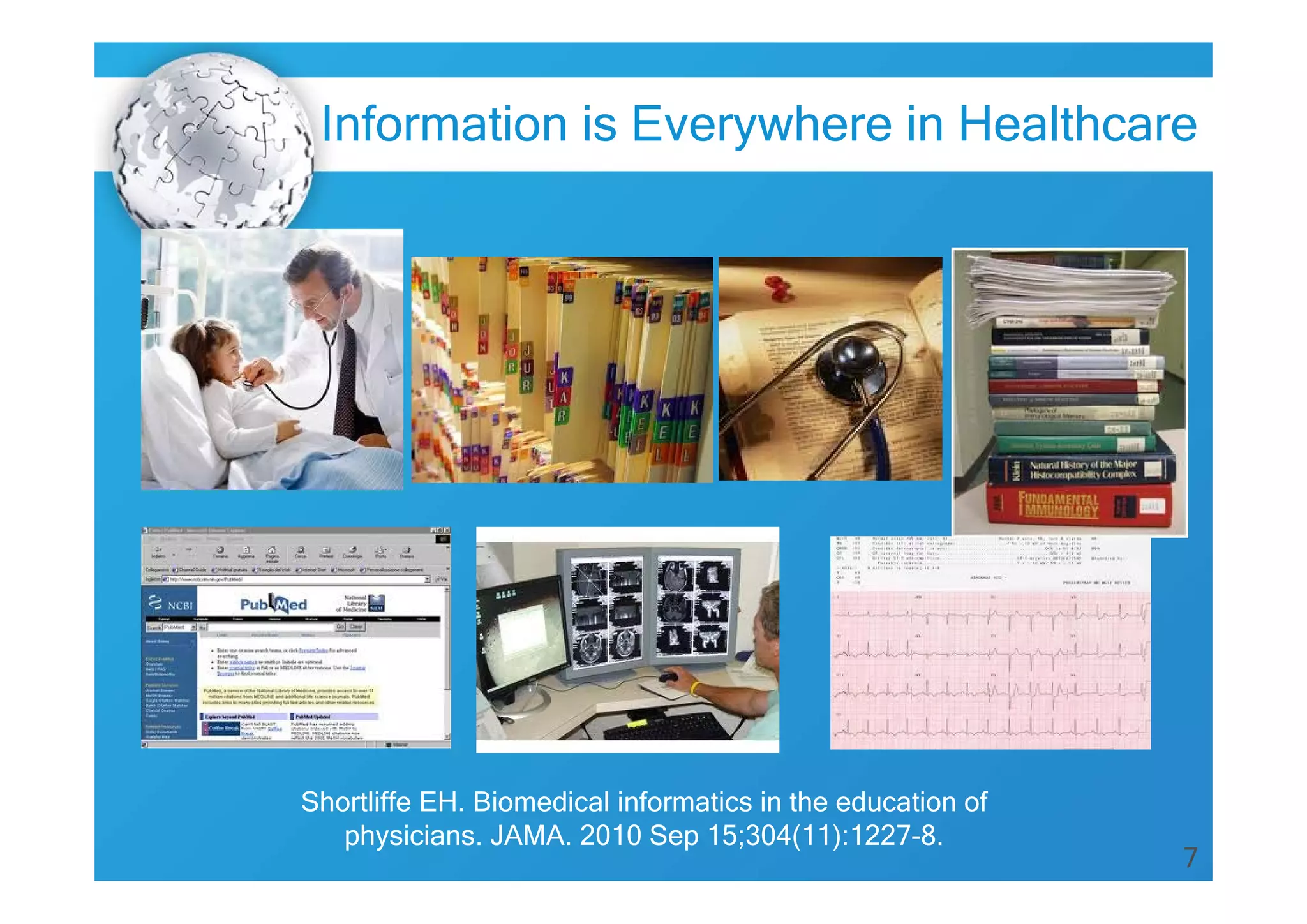
Information is Everywhere in Healthcare

Shortliffe EH. Biomedical informatics in the education of
physicians. JAMA. 2010 Sep 15;304(11):1227-8.

7
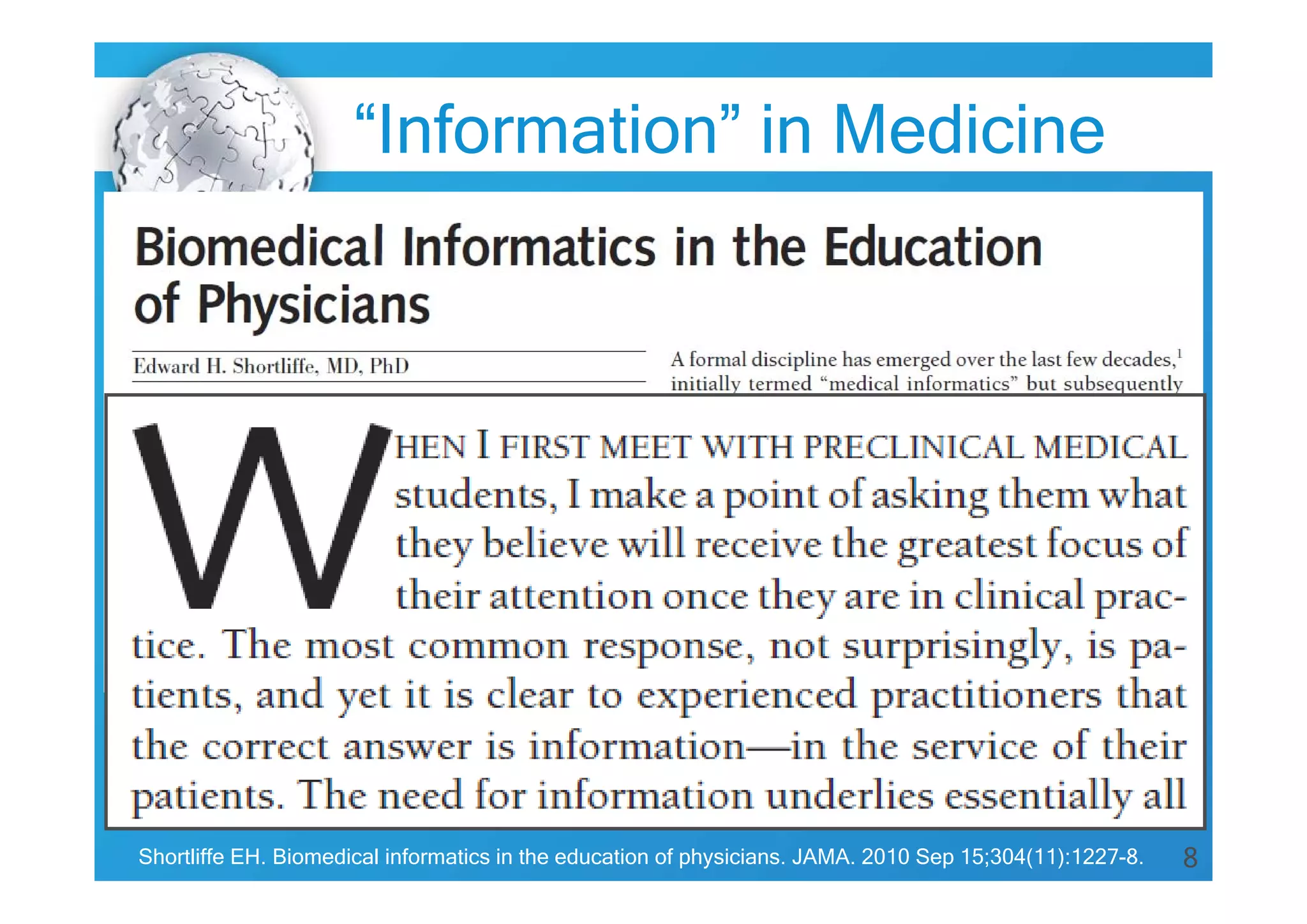
“Information” in Medicine

Shortliffe EH. Biomedical informatics in the education of physicians. JAMA. 2010 Sep 15;304(11):1227-8.

8
Why We Need ICT
in Healthcare?
#1: Because information is
everywhere in healthcare
9
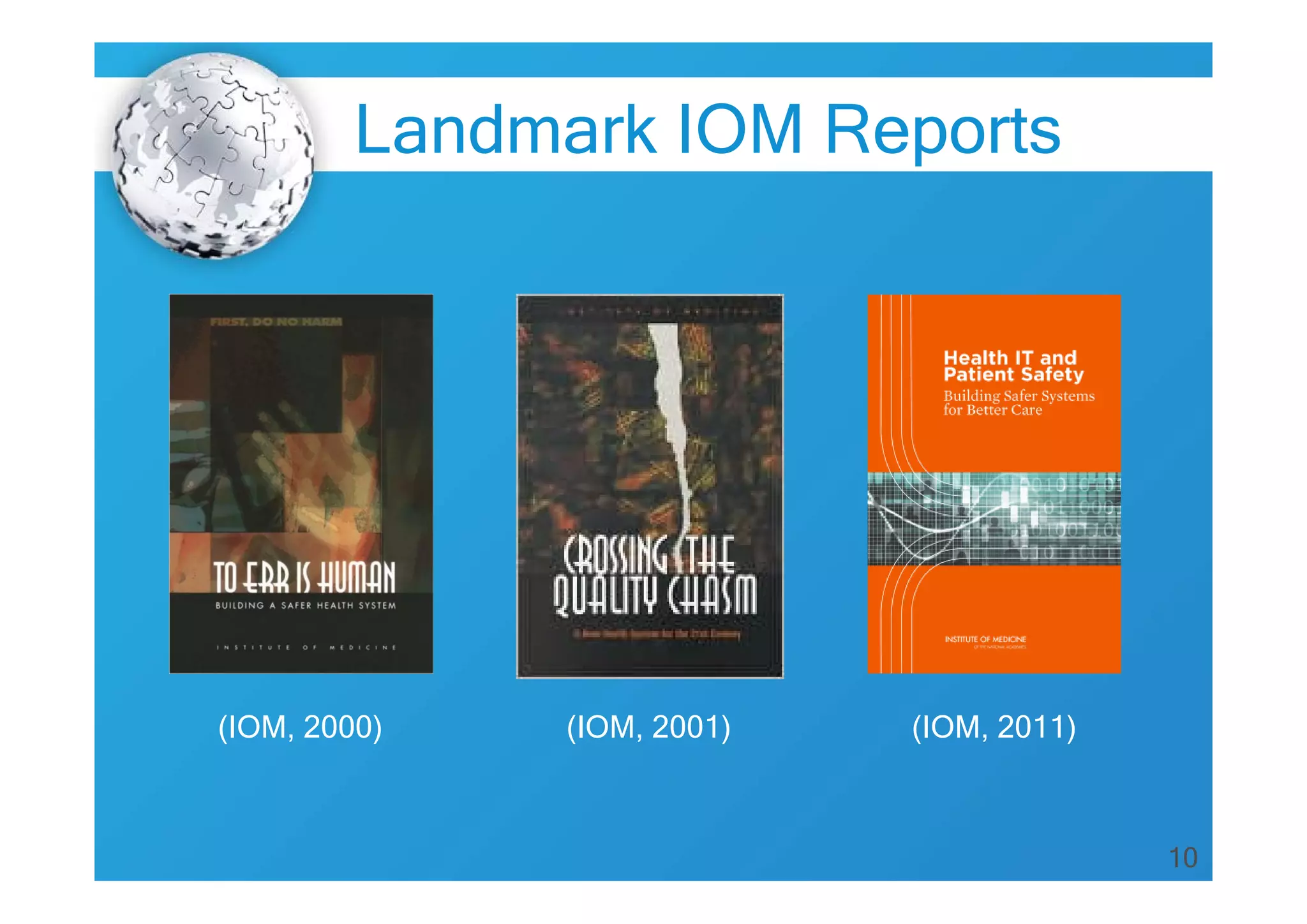
Landmark IOM Reports

(IOM, 2000)

(IOM, 2001)

(IOM, 2011)

10
Patient Safety
• To Err is Human (IOM, 2000) reported
that:
– 44,000 to 98,000 people die in U.S.
hospitals each year as a result of
preventable medical mistakes
– Mistakes cost U.S. hospitals $17 billion to
$29 billion yearly
– Individual errors are not the main problem
– Faulty systems, processes, and other
conditions lead to preventable errors
Health IT Workforce Curriculum Version
3.0/Spring 2012

Introduction to Healthcare and Public Health in the US: Regulating Healthcare - Lecture d

11
IOM Reports Summary
• Humans are not perfect and are bound to
make errors
• Highlight problems in U.S. health care
system that systematically contributes to
medical errors and poor quality
• Recommends reform
• Health IT plays a role in improving patient
safety
12
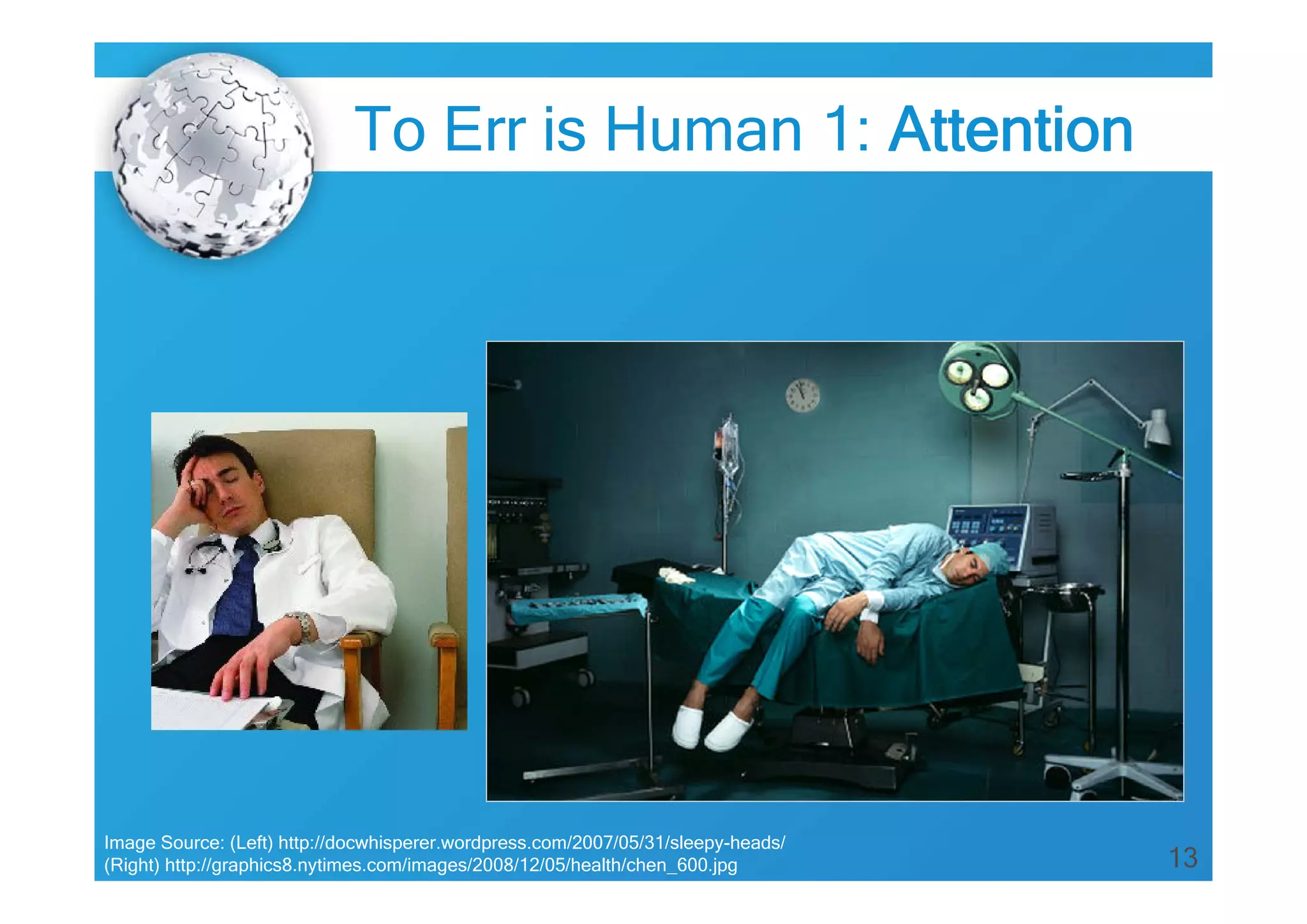
To Err is Human 1: Attention

Image Source: (Left) http://docwhisperer.wordpress.com/2007/05/31/sleepy-heads/
(Right) http://graphics8.nytimes.com/images/2008/12/05/health/chen_600.jpg

13
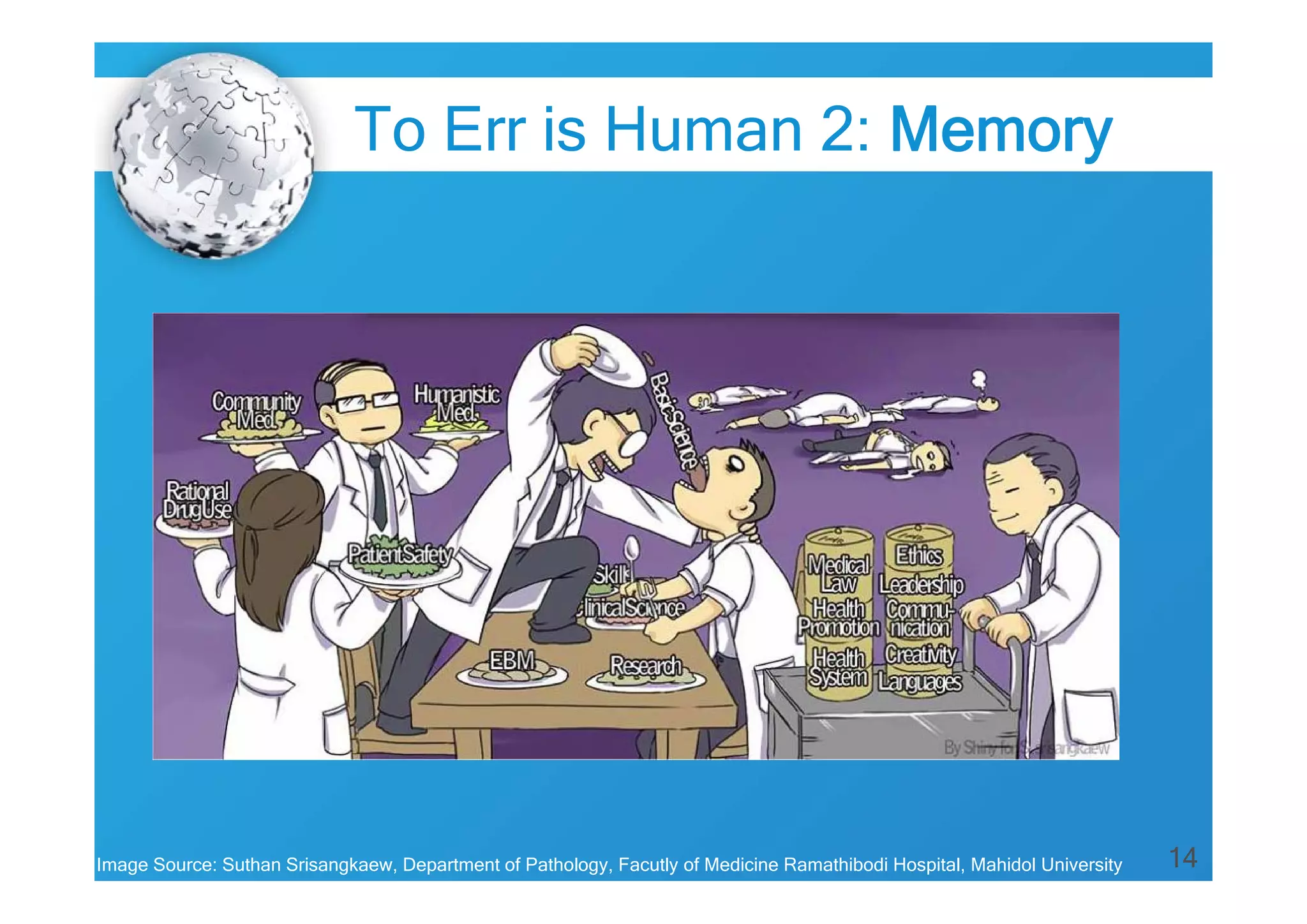
To Err is Human 2: Memory

Image Source: Suthan Srisangkaew, Department of Pathology, Facutly of Medicine Ramathibodi Hospital, Mahidol University

14
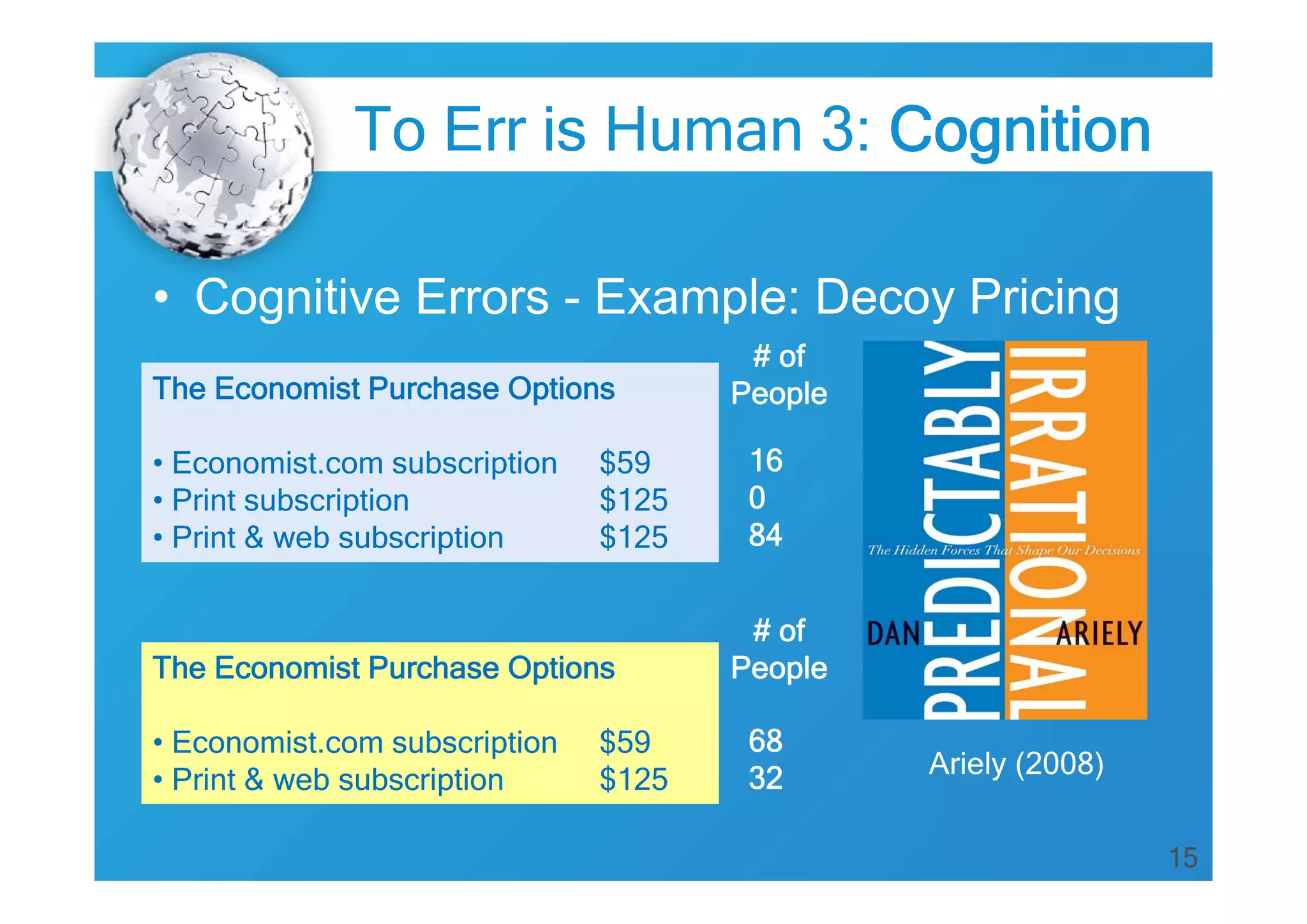
To Err is Human 3: Cognition
• Cognitive Errors - Example: Decoy Pricing
The Economist Purchase Options
• Economist.com subscription
• Print subscription
• Print & web subscription

$59
$125
$125

The Economist Purchase Options
• Economist.com subscription
• Print & web subscription

$59
$125

# of
People
16
0
84
# of
People
68
32

Ariely (2008)
15
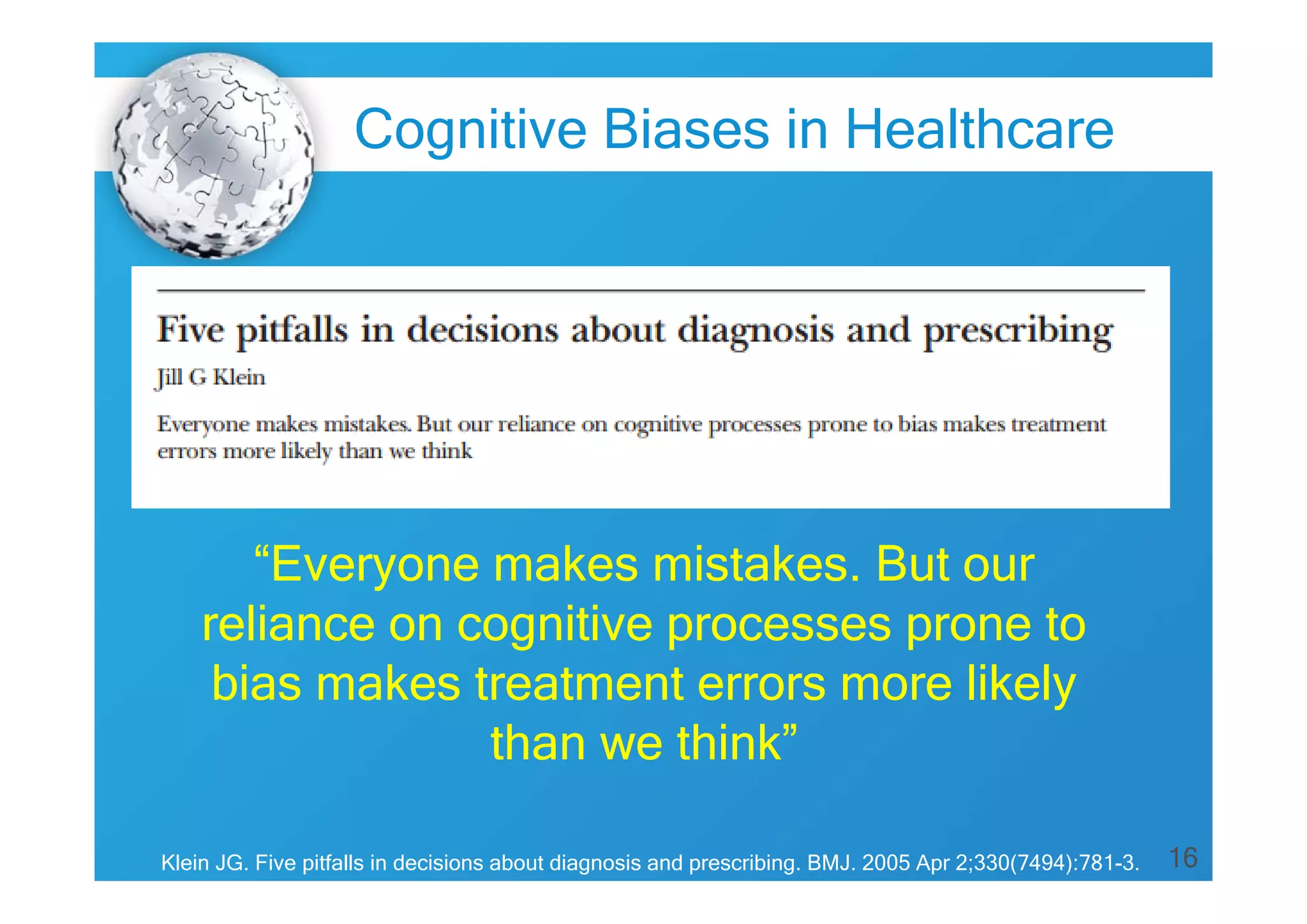
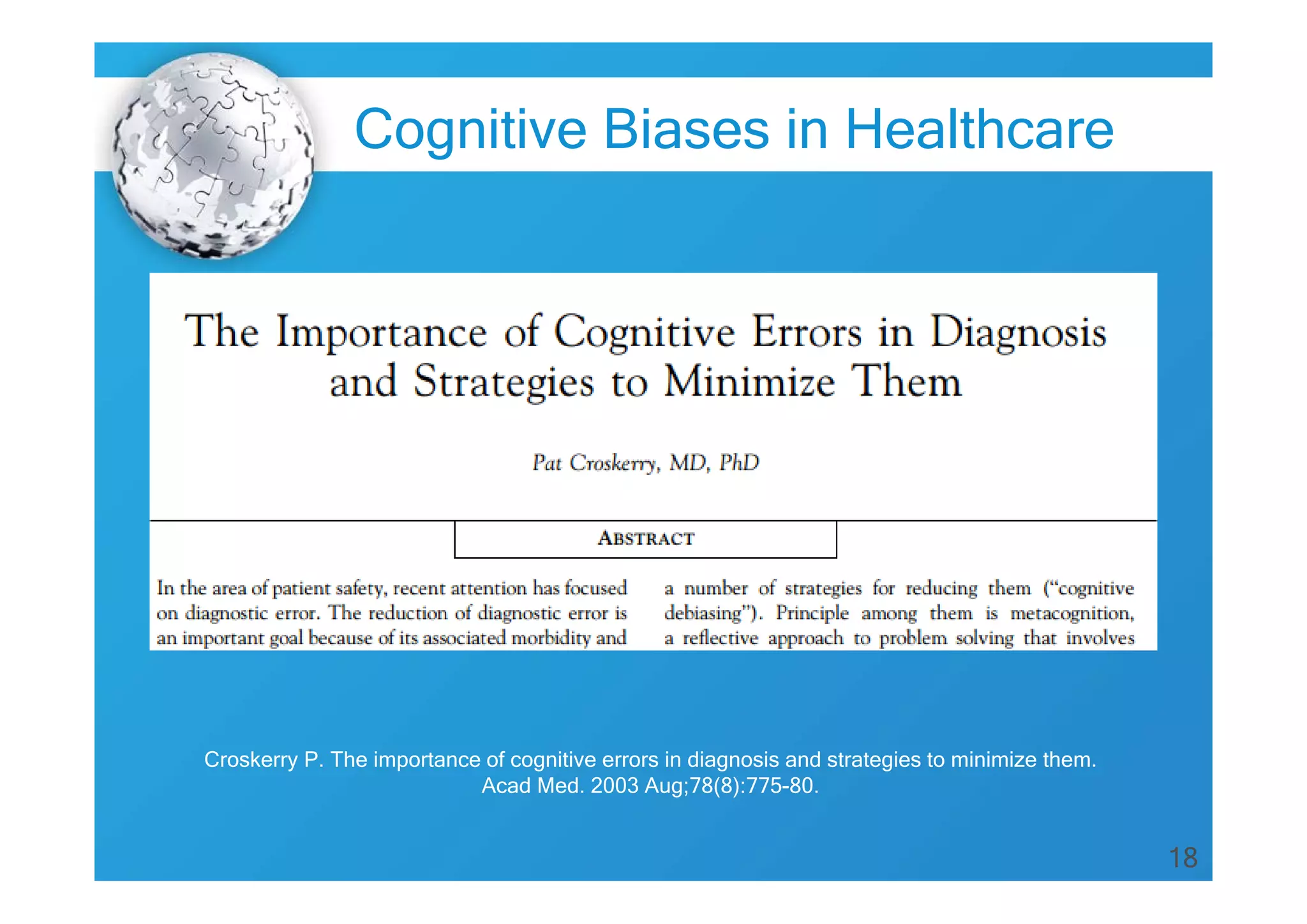
Cognitive Biases in Healthcare

“Everyone makes mistakes. But our
reliance on cognitive processes prone to
bias makes treatment errors more likely
than we think”
Klein JG. Five pitfalls in decisions about diagnosis and prescribing. BMJ. 2005 Apr 2;330(7494):781-3.

16
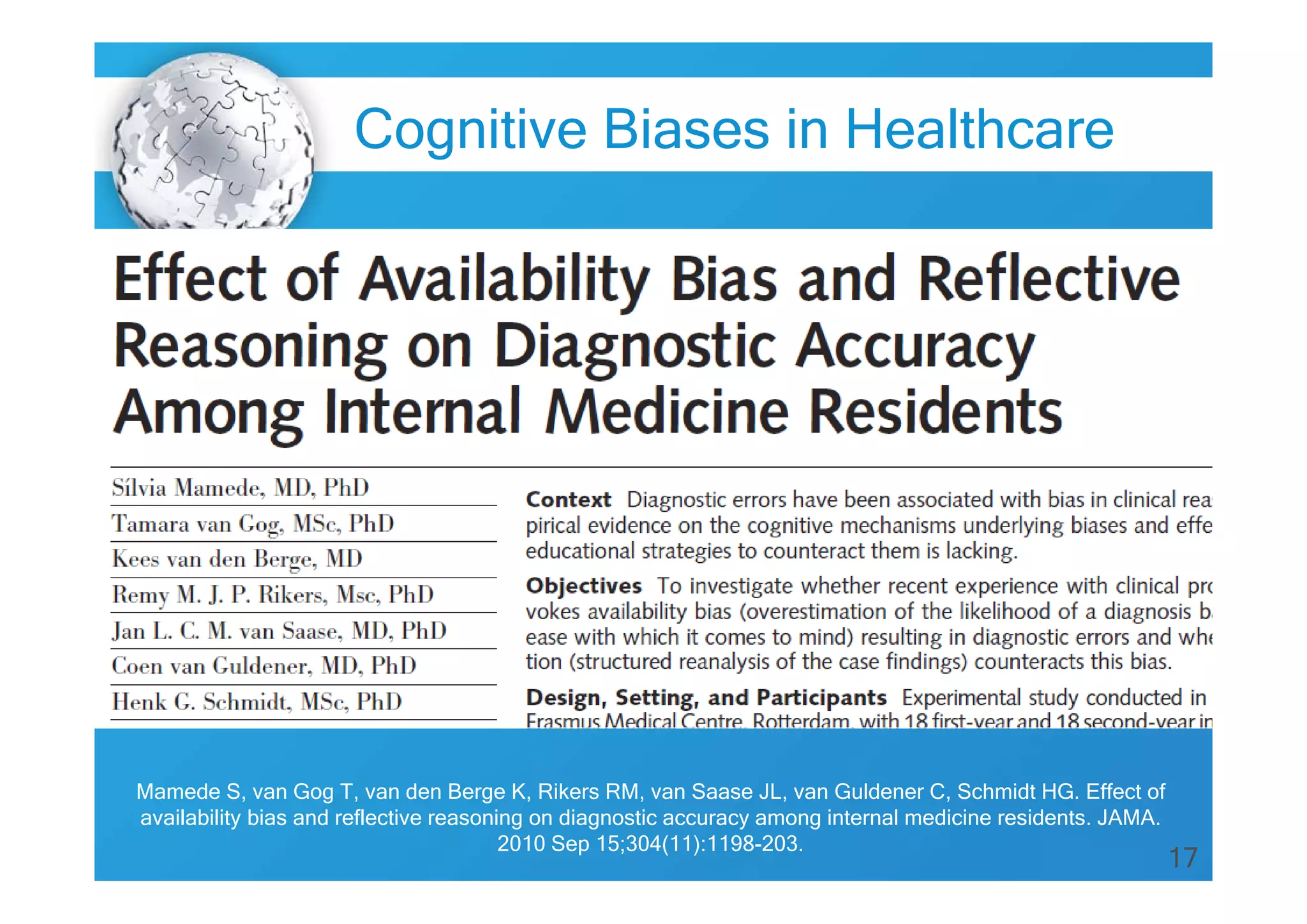
Cognitive Biases in Healthcare

Mamede S, van Gog T, van den Berge K, Rikers RM, van Saase JL, van Guldener C, Schmidt HG. Effect of
availability bias and reflective reasoning on diagnostic accuracy among internal medicine residents. JAMA.
2010 Sep 15;304(11):1198-203.

17
Cognitive Biases in Healthcare

Croskerry P. The importance of cognitive errors in diagnosis and strategies to minimize them.
Acad Med. 2003 Aug;78(8):775-80.

18
Common Errors
• Medication Errors
– Drug Allergies
– Drug Interactions
• Ineffective or inappropriate treatment
• Redundant orders
• Failure to follow clinical practice guidelines
19
Why We Need ICT
in Healthcare?
#2: Because healthcare is
error-prone and technology
can help
20
Why We Need ICT
in Healthcare?
#3: Because access to
high-quality patient
information improves care
21
Health IT
Use of information and communications
technology (ICT) in health & healthcare
settings
Source: The Health Resources and Services Administration, Department of
Health and Human Service, USA

Slide adapted from: Boonchai Kijsanayotin

22
Health IT: What’s in a Word?

Health
Information
Technology

Goal
Value-Add

Tools
23
“Health” in “Health IT”

• Patient’s Health
• Population’s Health
• Organization’s Health
(Quality, Reputation & Finance)

24
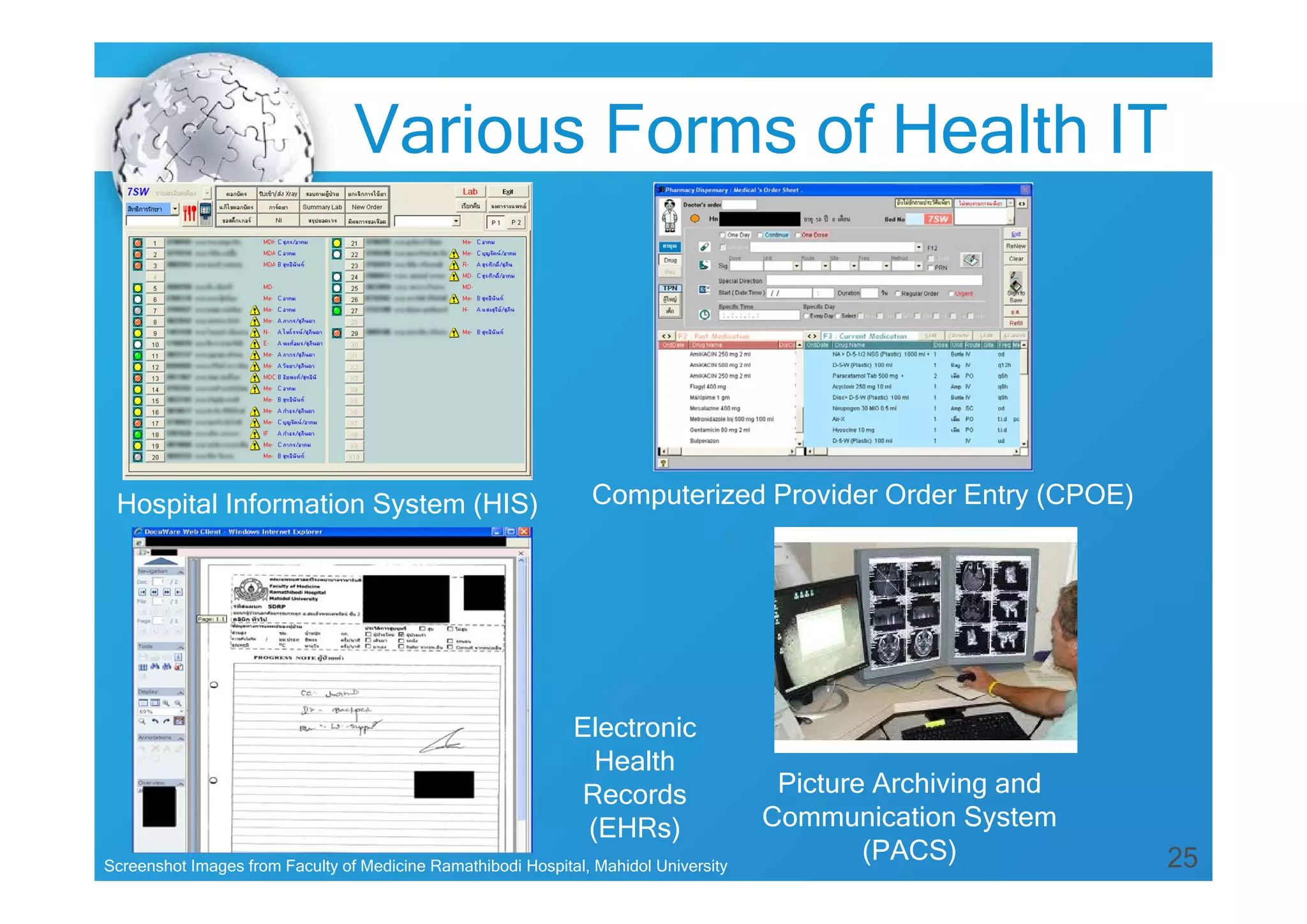
Various Forms of Health IT

Hospital Information System (HIS)

Computerized Provider Order Entry (CPOE)

Electronic
Health
Records
(EHRs)
Screenshot Images from Faculty of Medicine Ramathibodi Hospital, Mahidol University

Picture Archiving and
Communication System
(PACS)

25
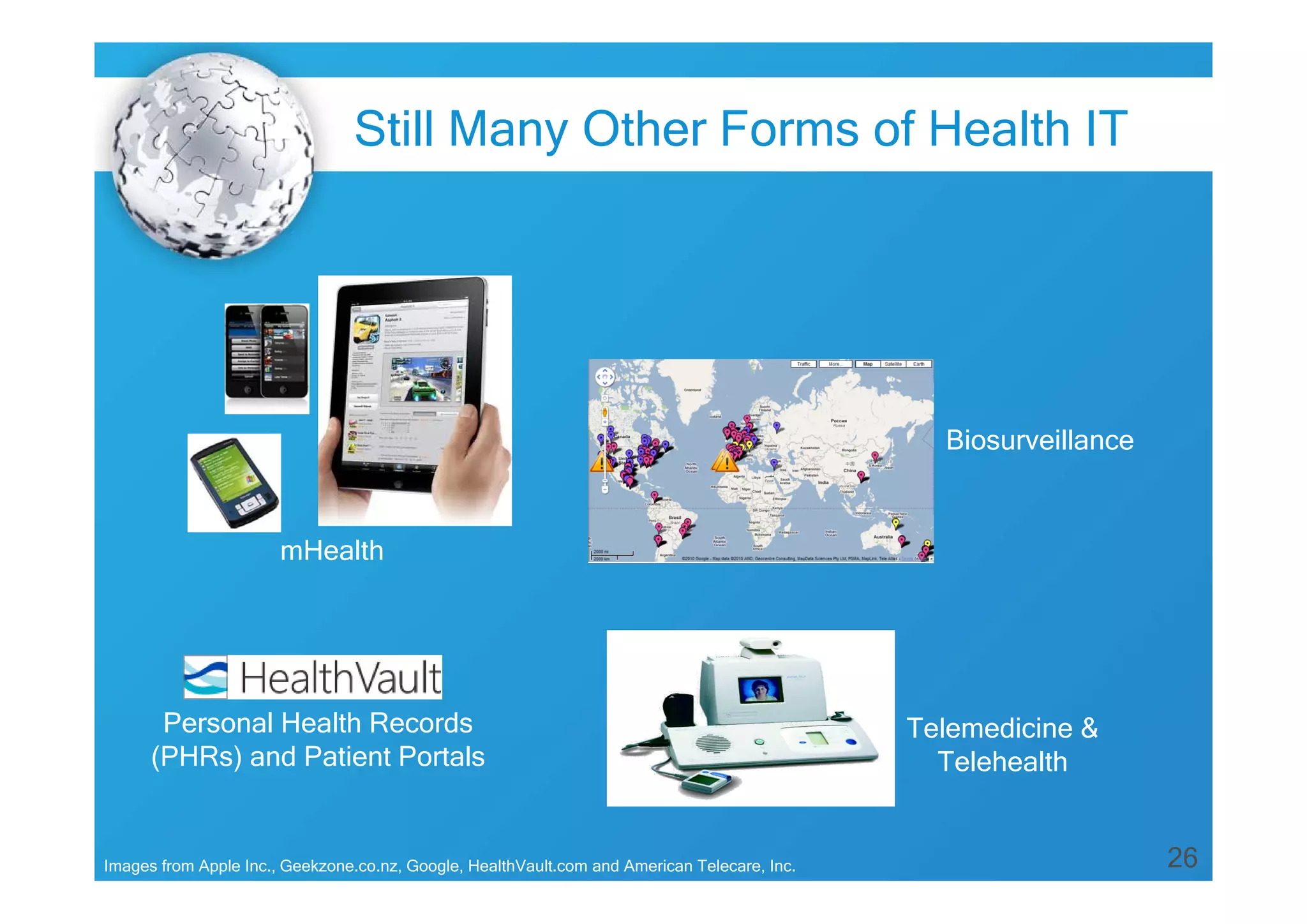
Still Many Other Forms of Health IT

Biosurveillance

mHealth

Personal Health Records
(PHRs) and Patient Portals

Images from Apple Inc., Geekzone.co.nz, Google, HealthVault.com and American Telecare, Inc.

Telemedicine &
Telehealth
26
Values of Health IT
• Guideline adherence
• Better documentation
• Practitioner decision making or
process of care
• Medication safety
• Patient surveillance & monitoring
• Patient education/reminder
27
Enterprise-wide Hospital IT
•
•
•
•
•
•

Master Patient Index (MPI)
Admit-Discharge-Transfer (ADT)
Electronic Health Records (EHRs)
Computerized Physician Order Entry (CPOE)
Clinical Decision Support Systems (CDS)
Picture Archiving and Communication System
(PACS)
• Nursing applications
• Enterprise Resource Planning (ERP) - Finance,
Materials Management, Human Resources
28
Departmental IT in Hospitals
• Pharmacy applications
• Laboratory Information System (LIS)
• Radiology Information System (RIS)
• Specialized applications (ER, OR, LR,
Anesthesia, Critical Care, Dietary
Services, Blood Bank)
• Incident management & reporting system
29
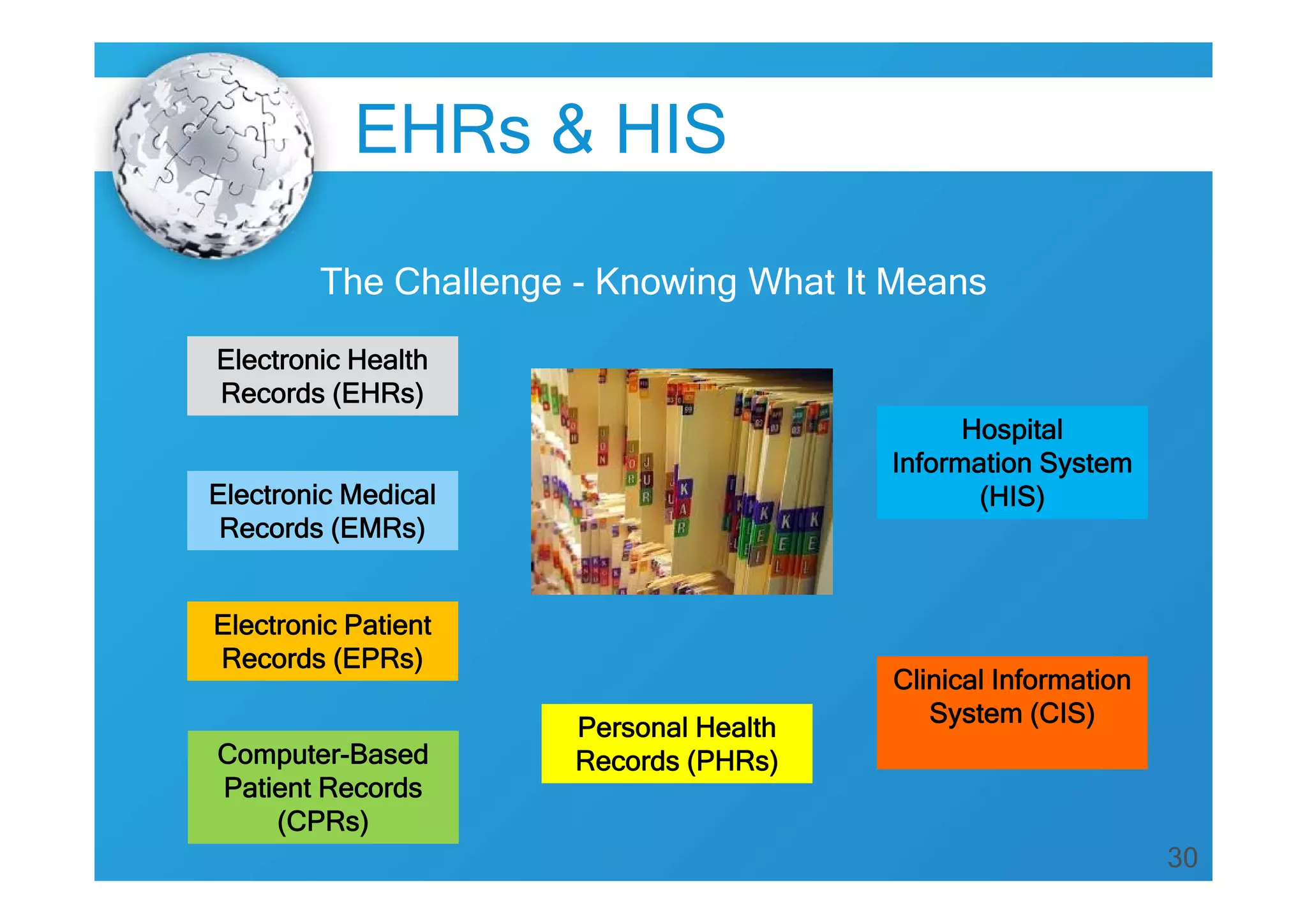
EHRs & HIS
The Challenge - Knowing What It Means
Electronic Health
Records (EHRs)
Hospital
Information System
(HIS)

Electronic Medical
Records (EMRs)
Electronic Patient
Records (EPRs)
Computer-Based
Patient Records
(CPRs)

Personal Health
Records (PHRs)

Clinical Information
System (CIS)

30
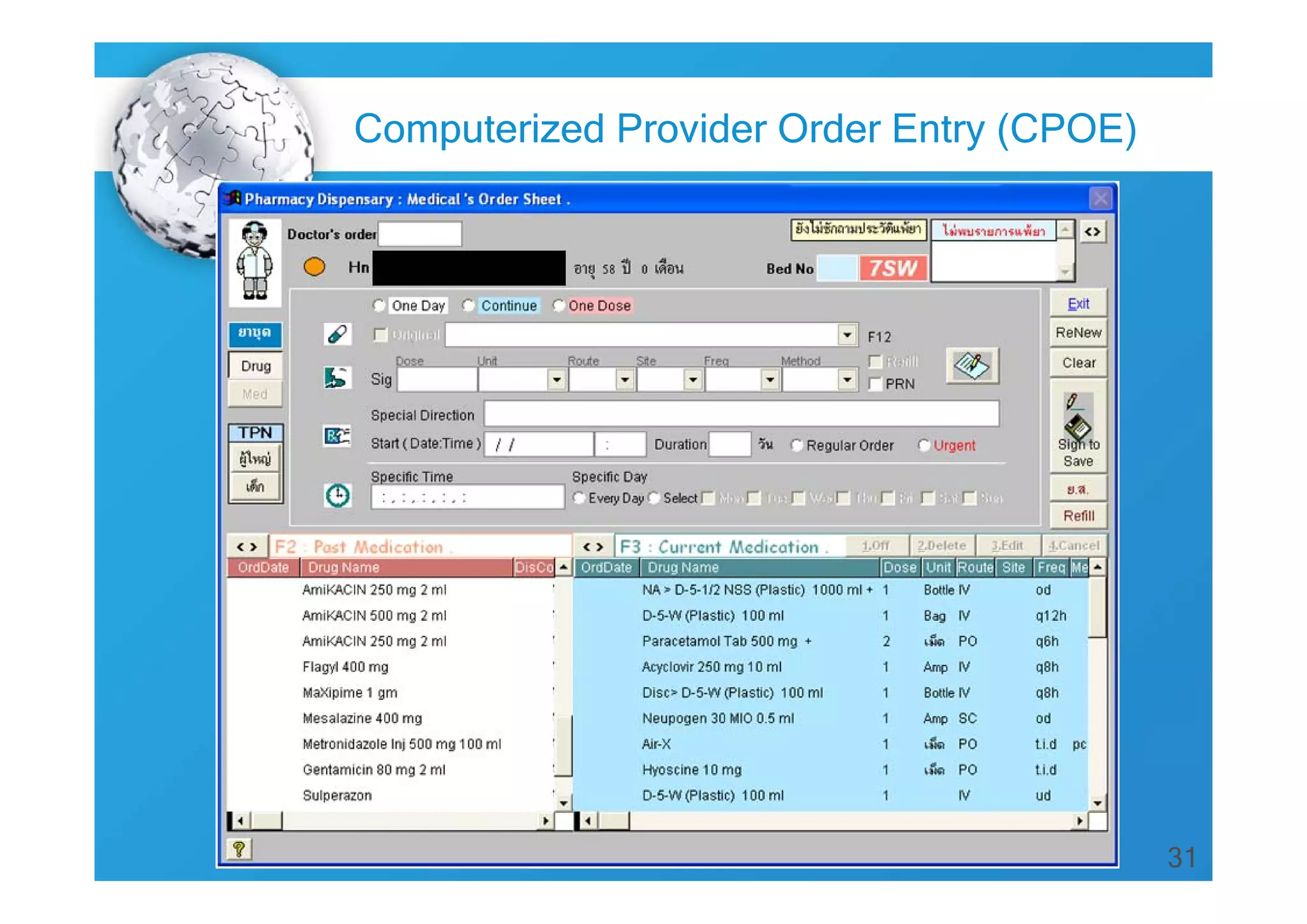
Computerized Provider Order Entry (CPOE)

31
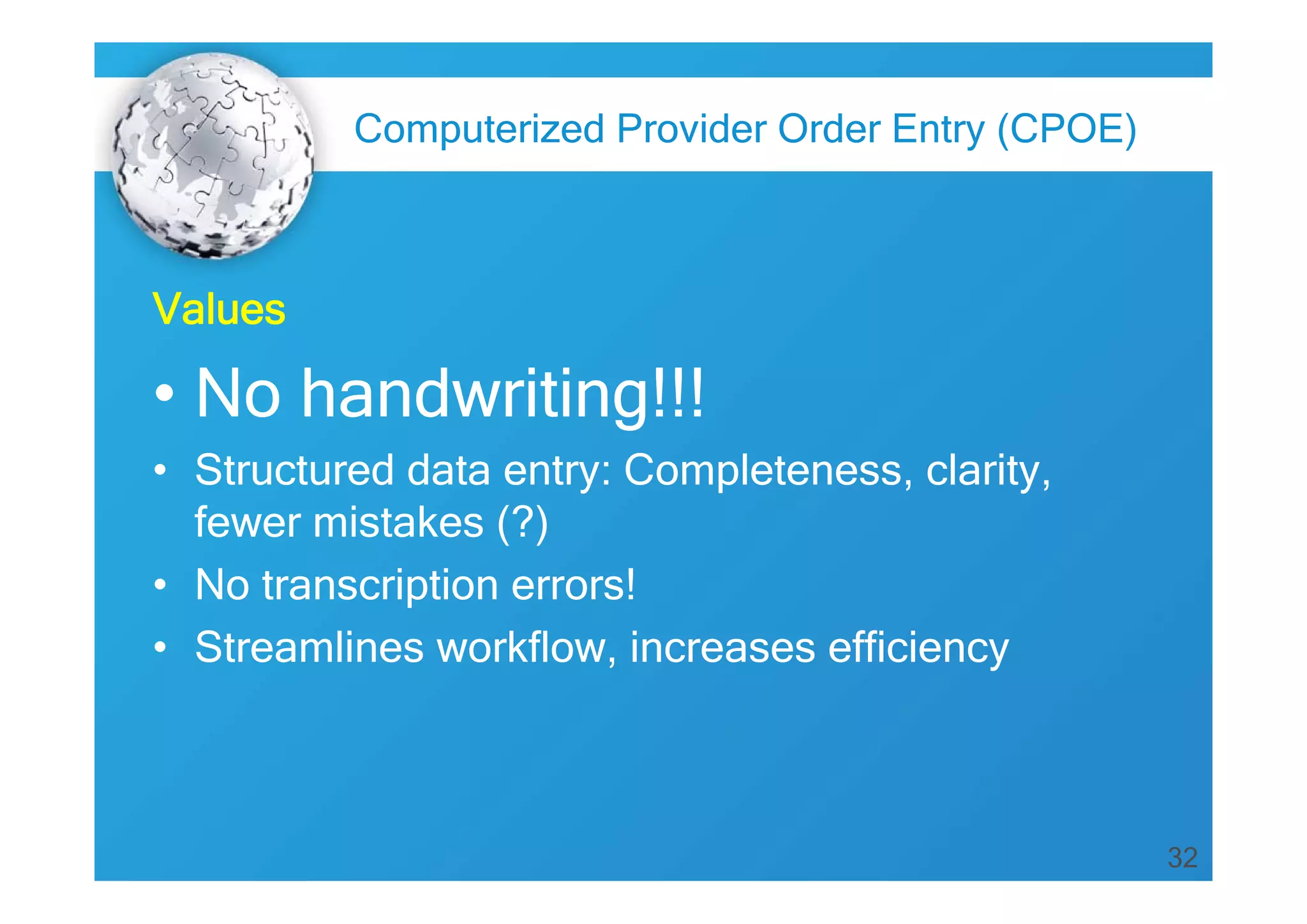
Computerized Provider Order Entry (CPOE)

Values

• No handwriting!!!
• Structured data entry: Completeness, clarity,
fewer mistakes (?)
• No transcription errors!
• Streamlines workflow, increases efficiency

32
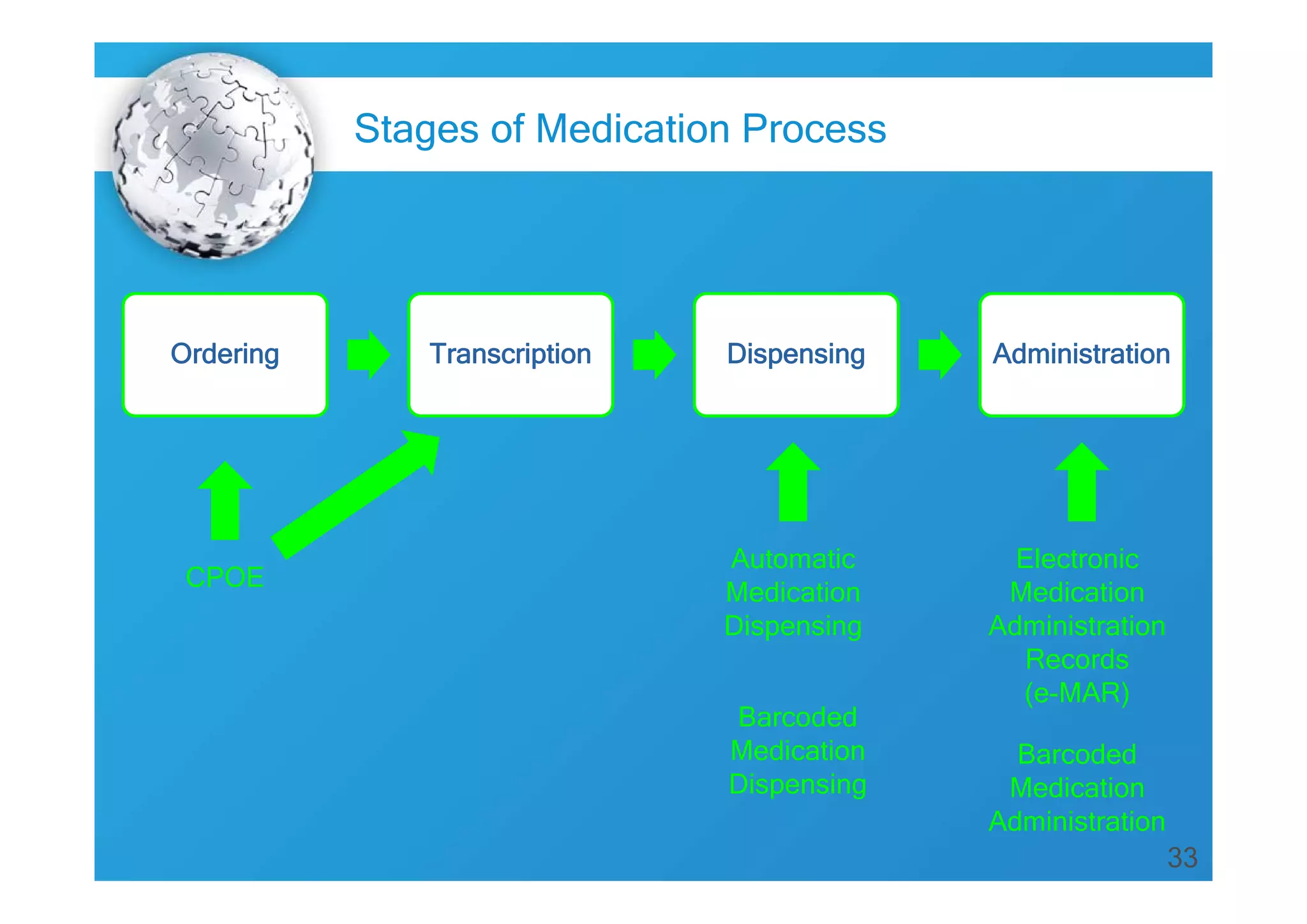
Stages of Medication Process

Ordering

CPOE

Transcription

Dispensing

Administration

Automatic
Medication
Dispensing

Electronic
Medication
Administration
Records
(e-MAR)

Barcoded
Medication
Dispensing

Barcoded
Medication
Administration
33
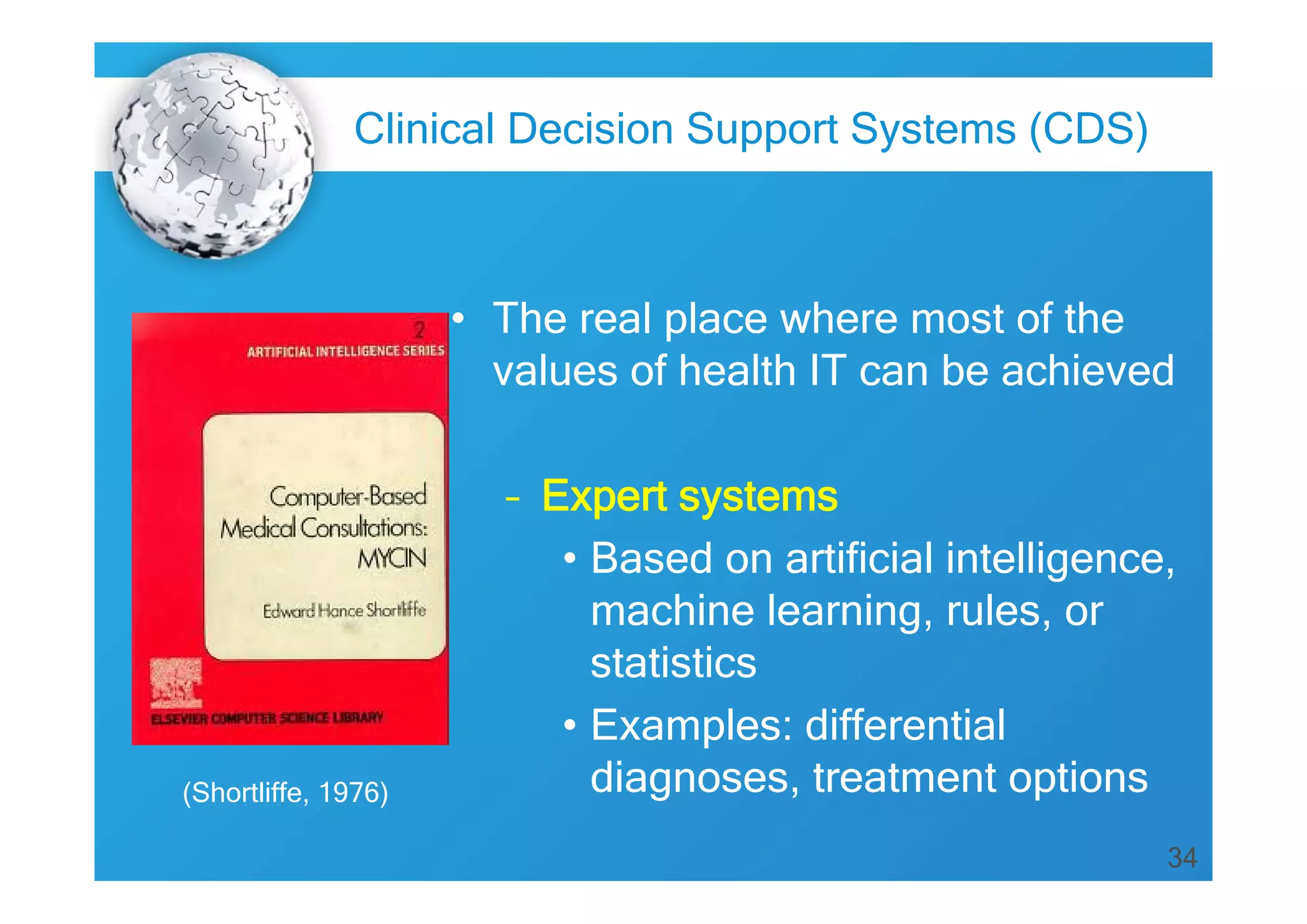
Clinical Decision Support Systems (CDS)

• The real place where most of the
values of health IT can be achieved

(Shortliffe, 1976)

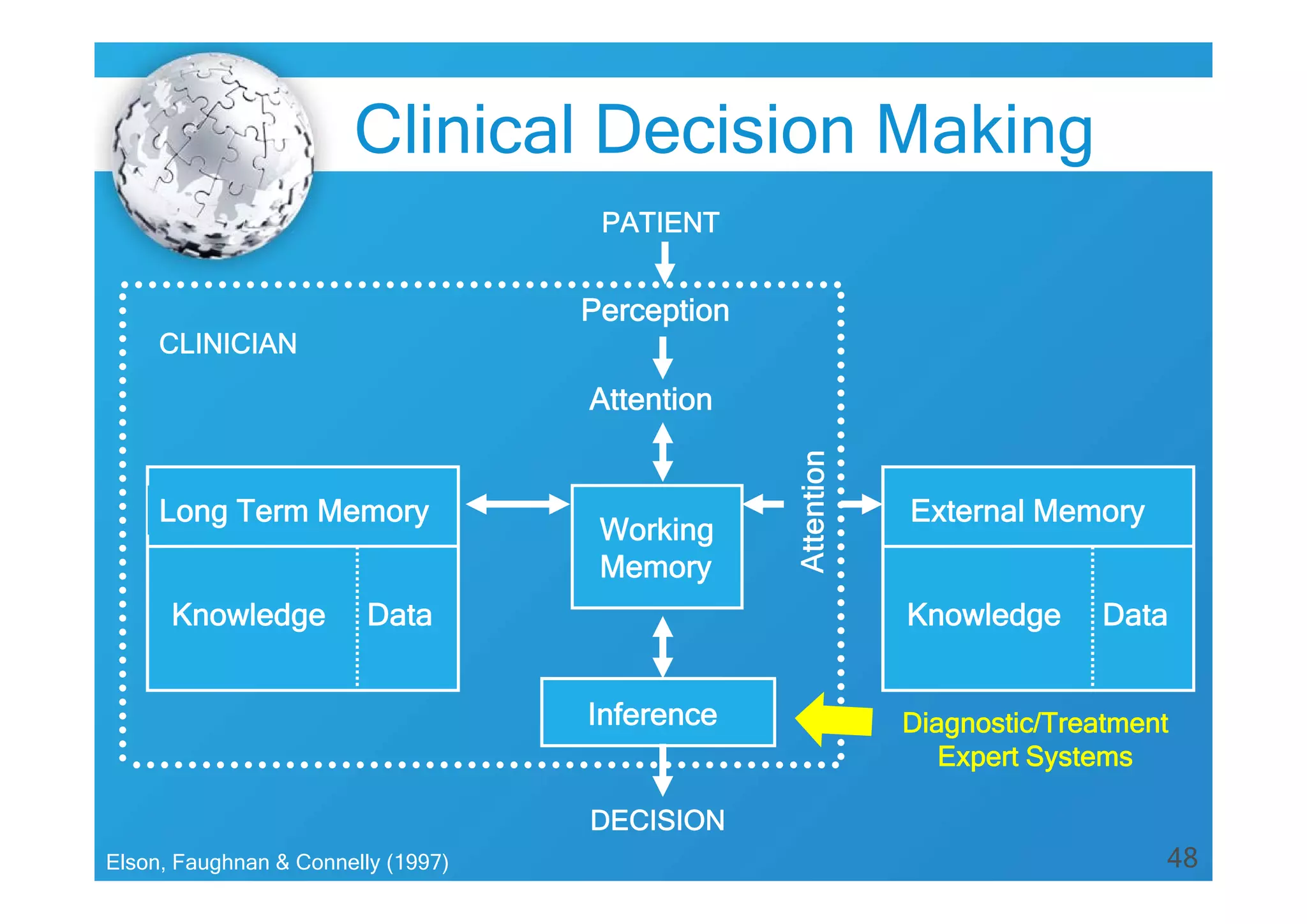
– Expert systems
• Based on artificial intelligence,
machine learning, rules, or
statistics
• Examples: differential
diagnoses, treatment options
34
Clinical Decision Support Systems (CDS)

– Alerts & reminders
• Based on specified logical conditions
• Examples:
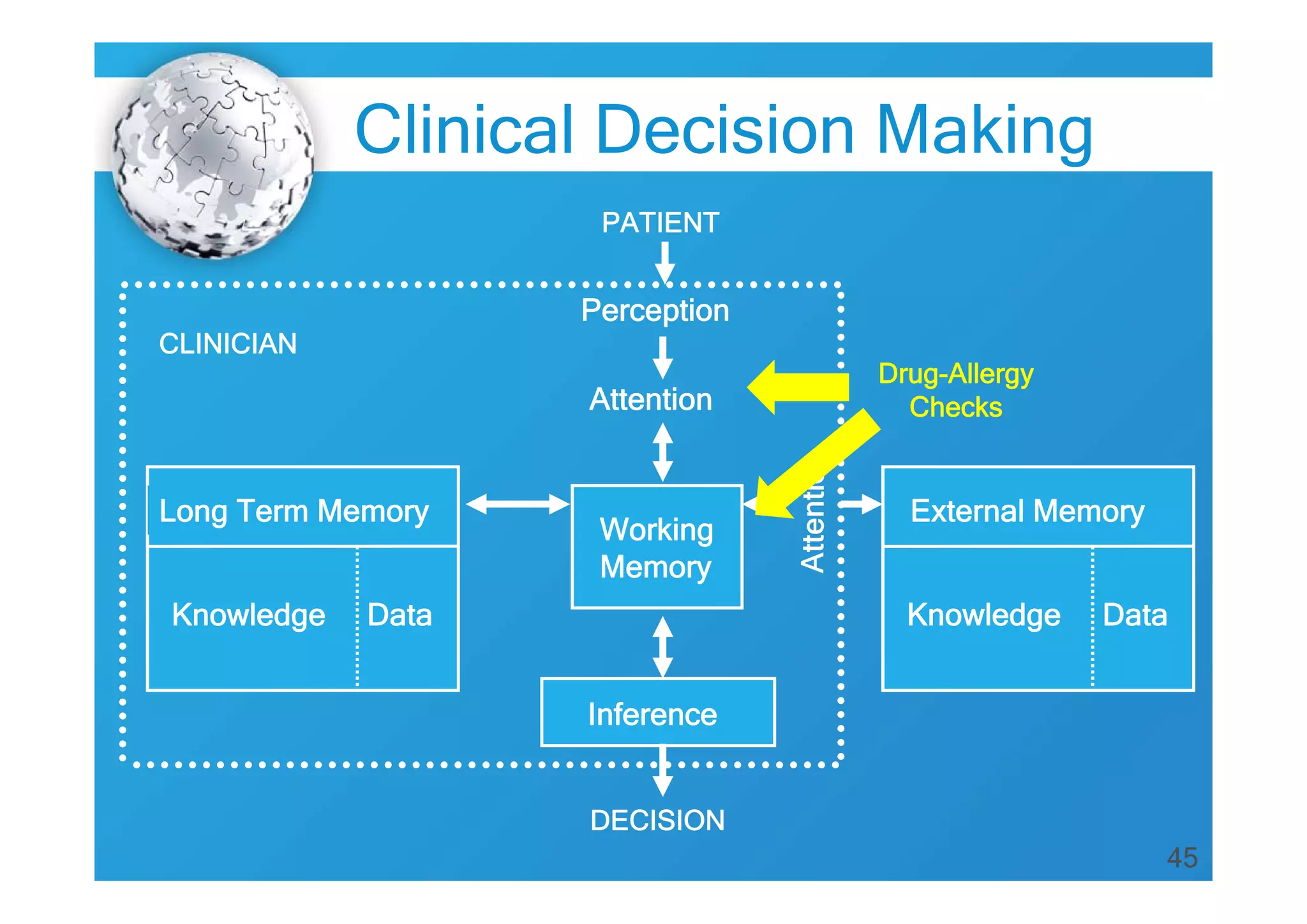
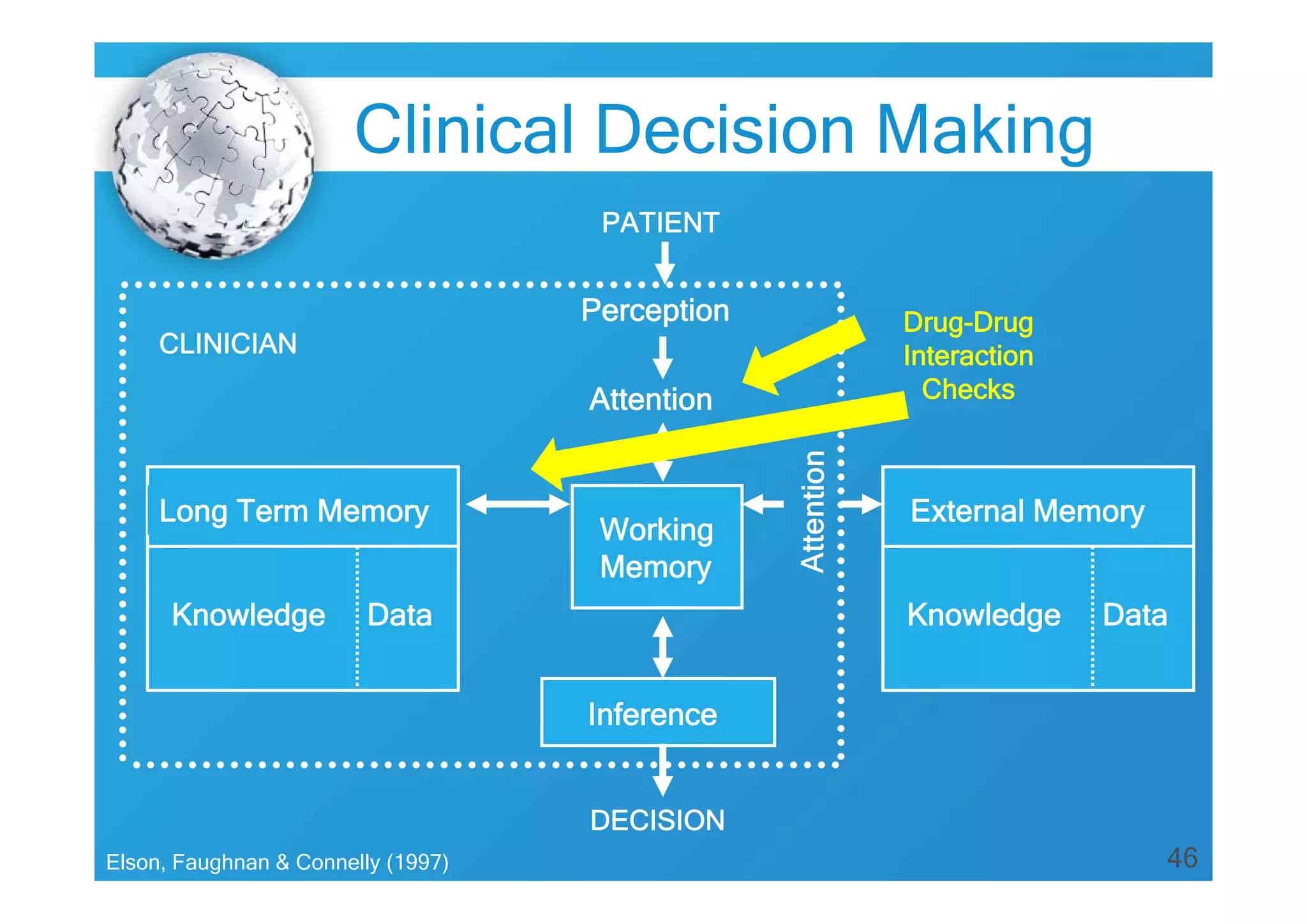
– Drug-allergy checks
– Drug-drug interaction checks
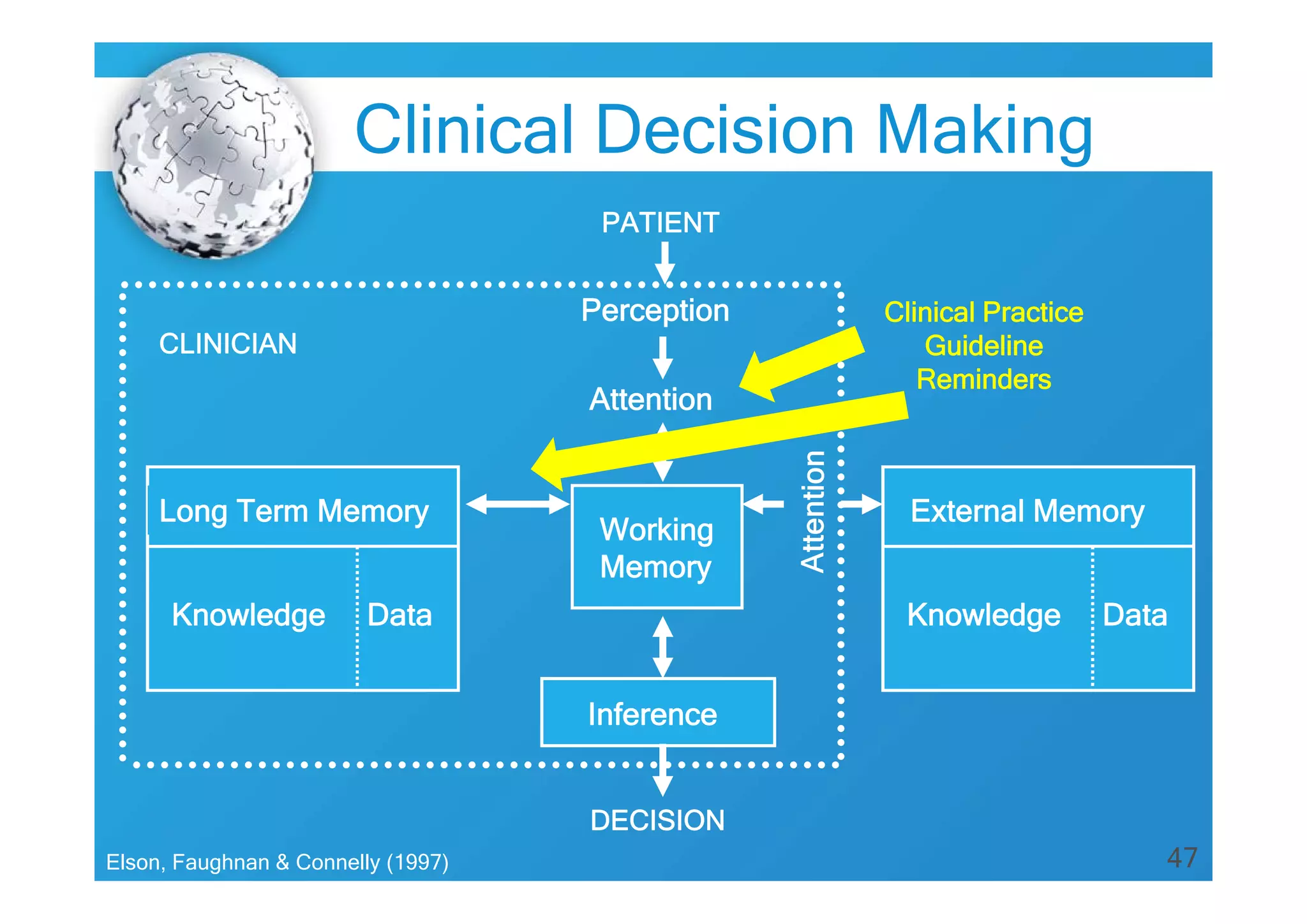
– Reminders for preventive services
– Clinical practice guideline integration

35
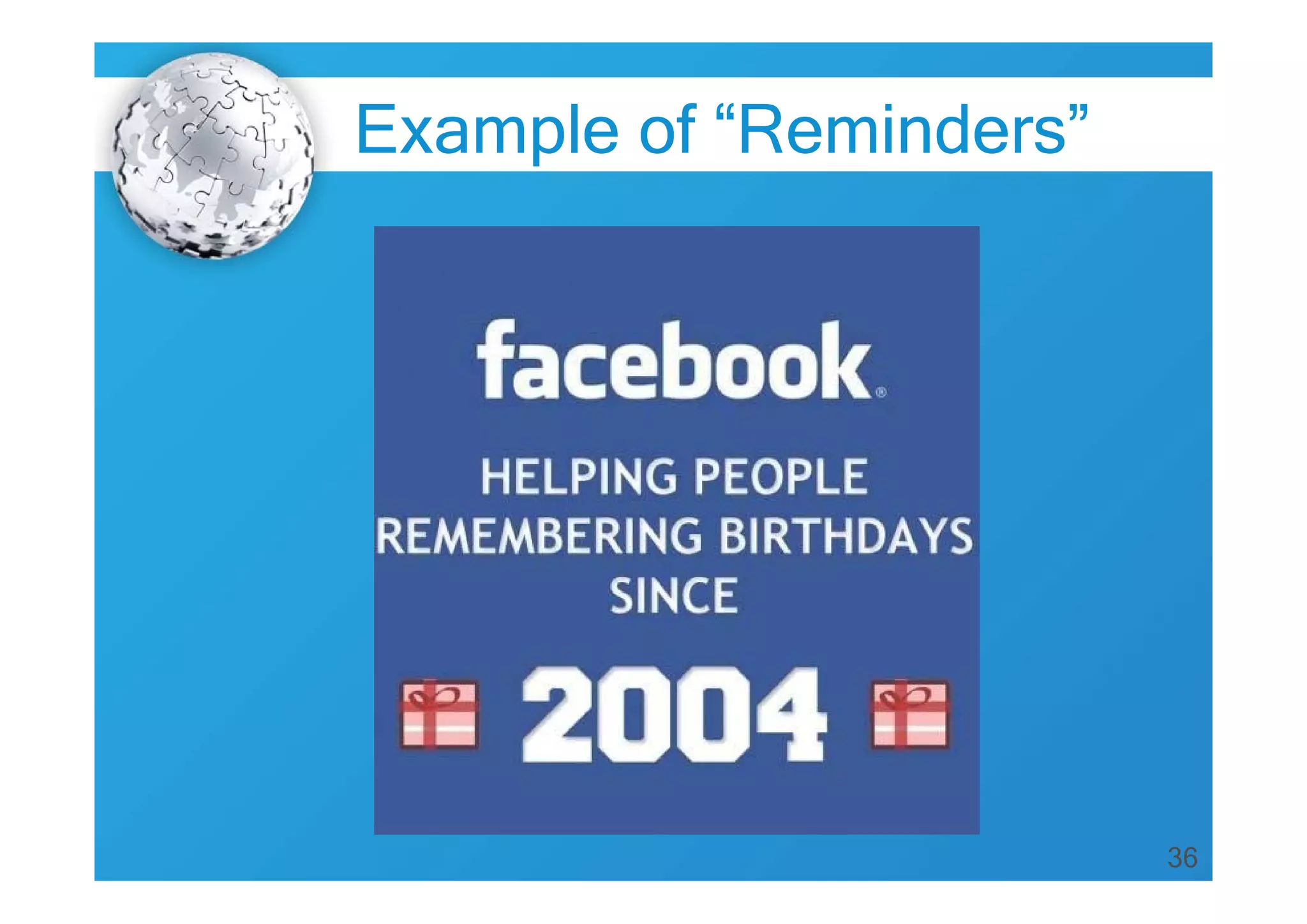
Example of “Reminders”

36
More CDS Examples
• Reference information or evidencebased knowledge sources
–
–
–
–

Drug reference databases
Textbooks & journals
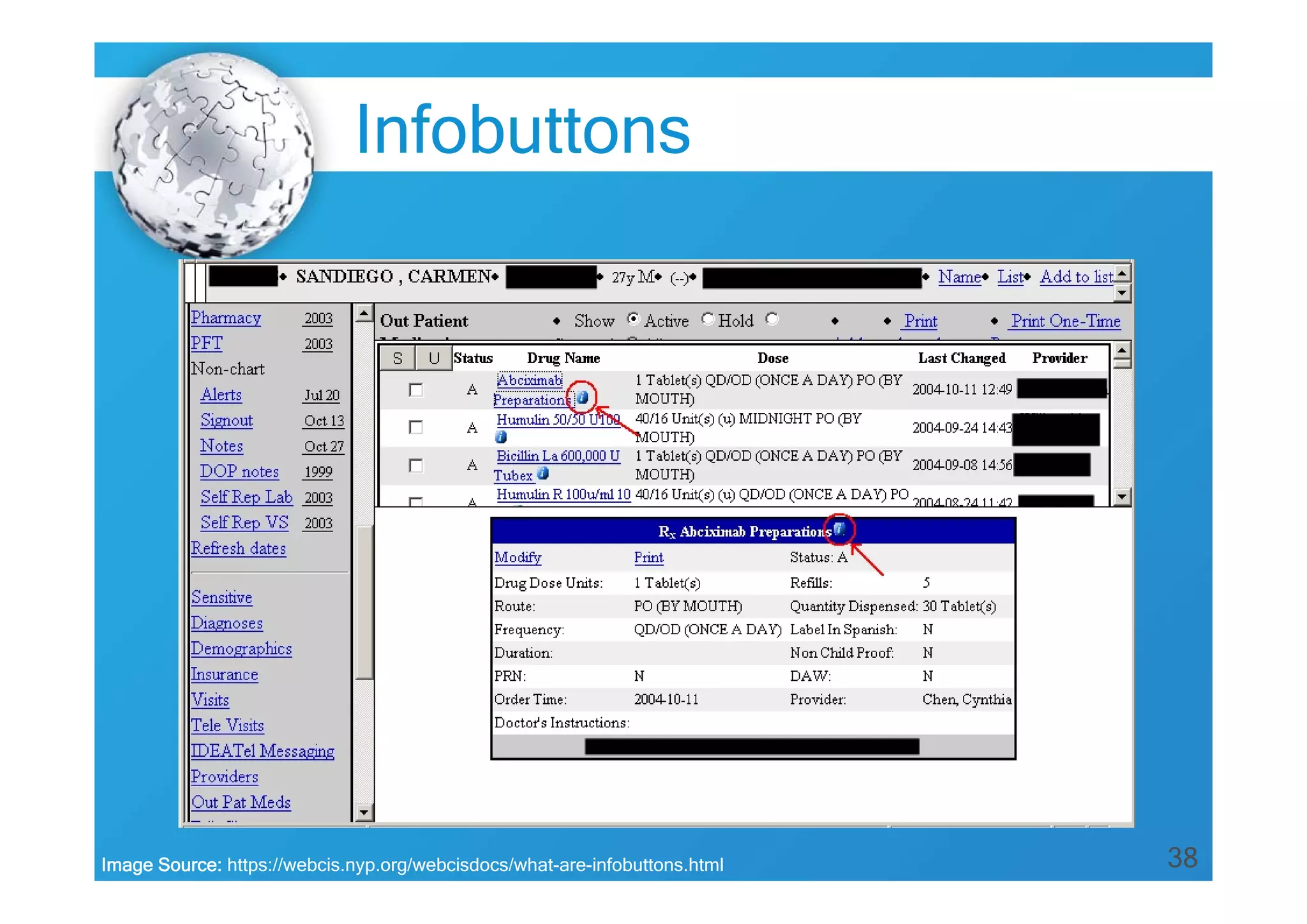
Online literature (e.g. PubMed)
Tools that help users easily access
references (e.g. Infobuttons)
37
Infobuttons

Image Source: https://webcis.nyp.org/webcisdocs/what-are-infobuttons.html

38
Other CDS Examples
• Pre-defined documents
–
–
–
–

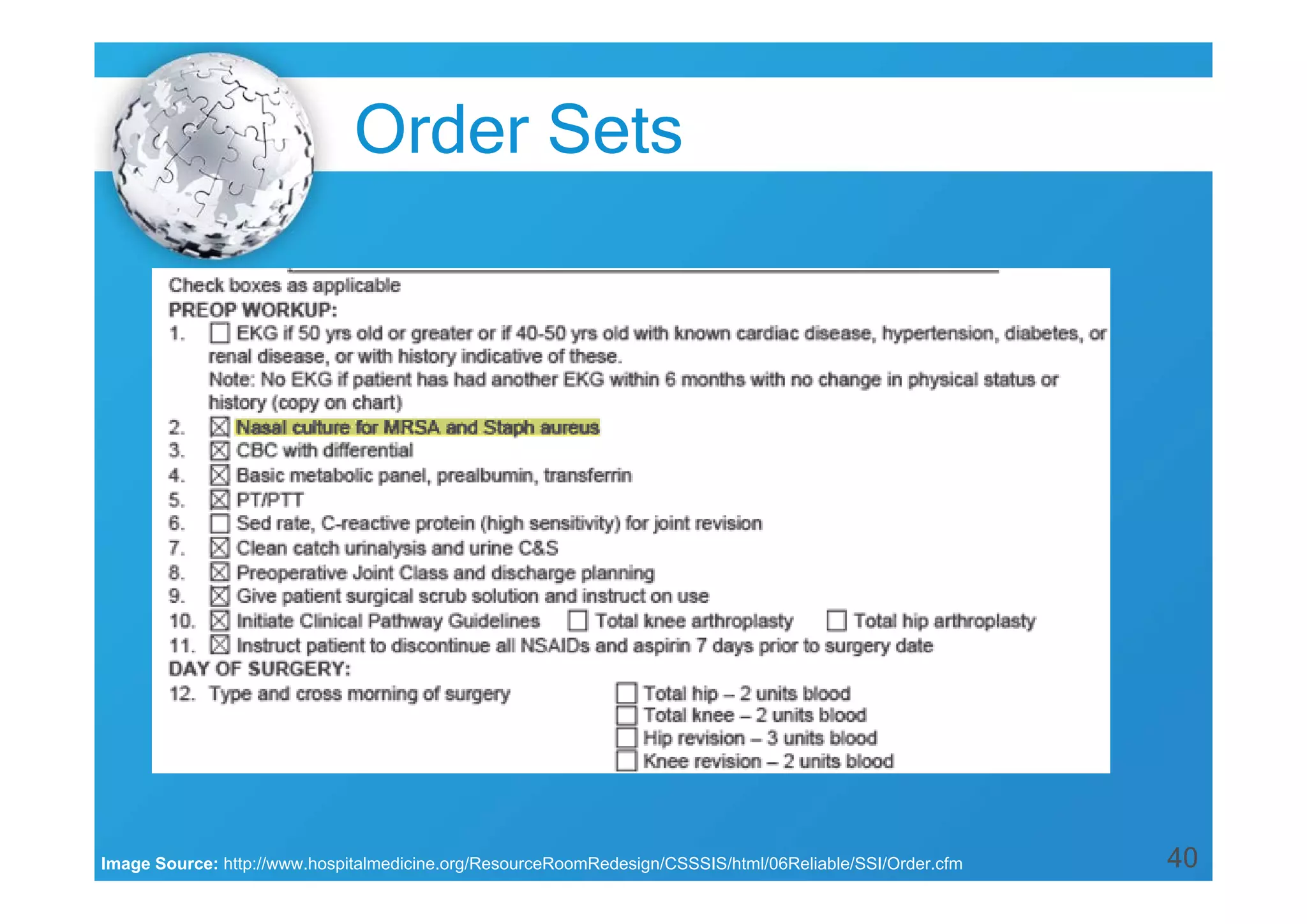
Order sets, personalized “favorites”
Templates for clinical notes
Checklists
Forms

• Can be either computer-based or
paper-based
39
Order Sets

Image Source: http://www.hospitalmedicine.org/ResourceRoomRedesign/CSSSIS/html/06Reliable/SSI/Order.cfm

40
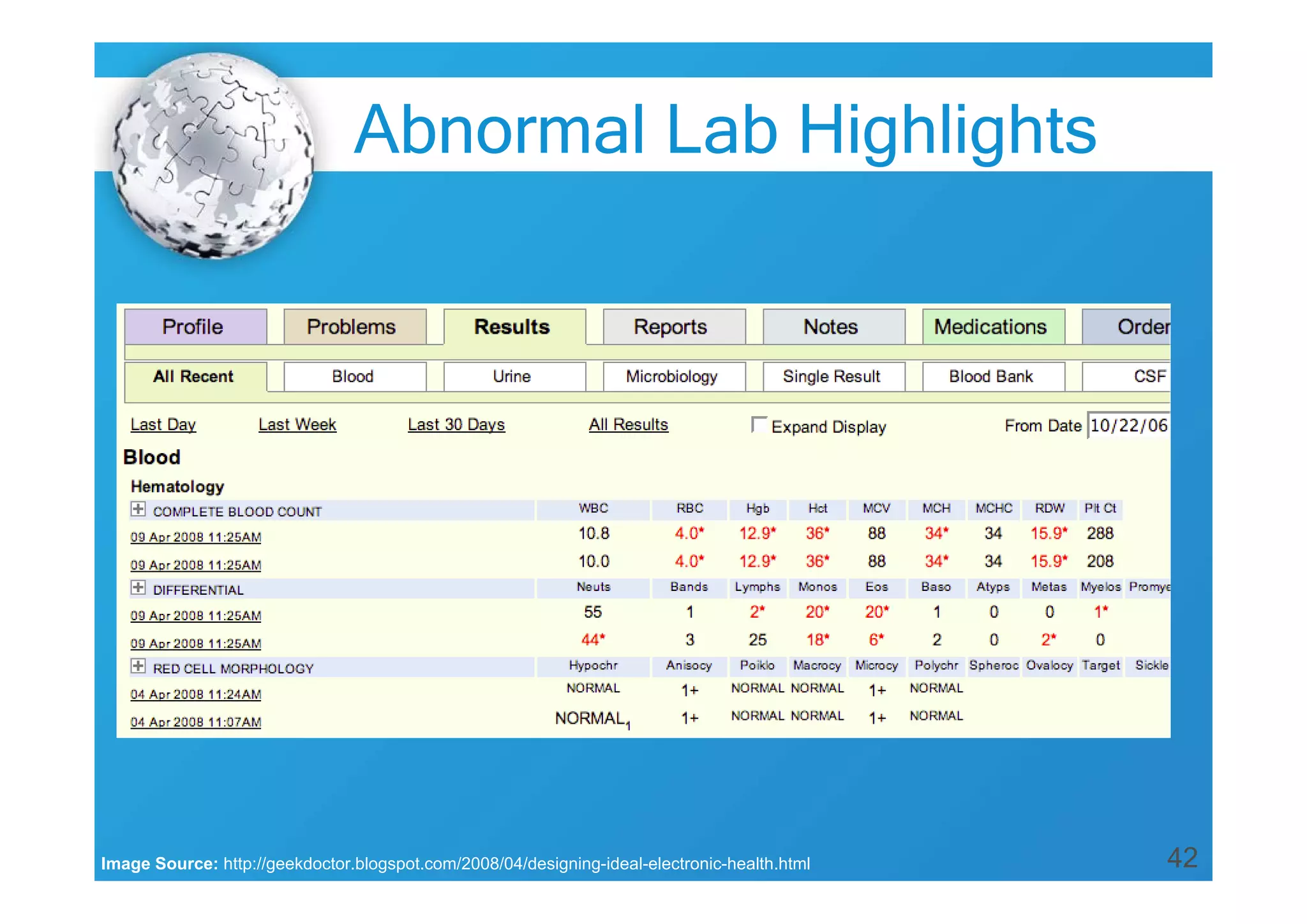
Other CDS Examples
• Simple UI designed to help clinical
decision making
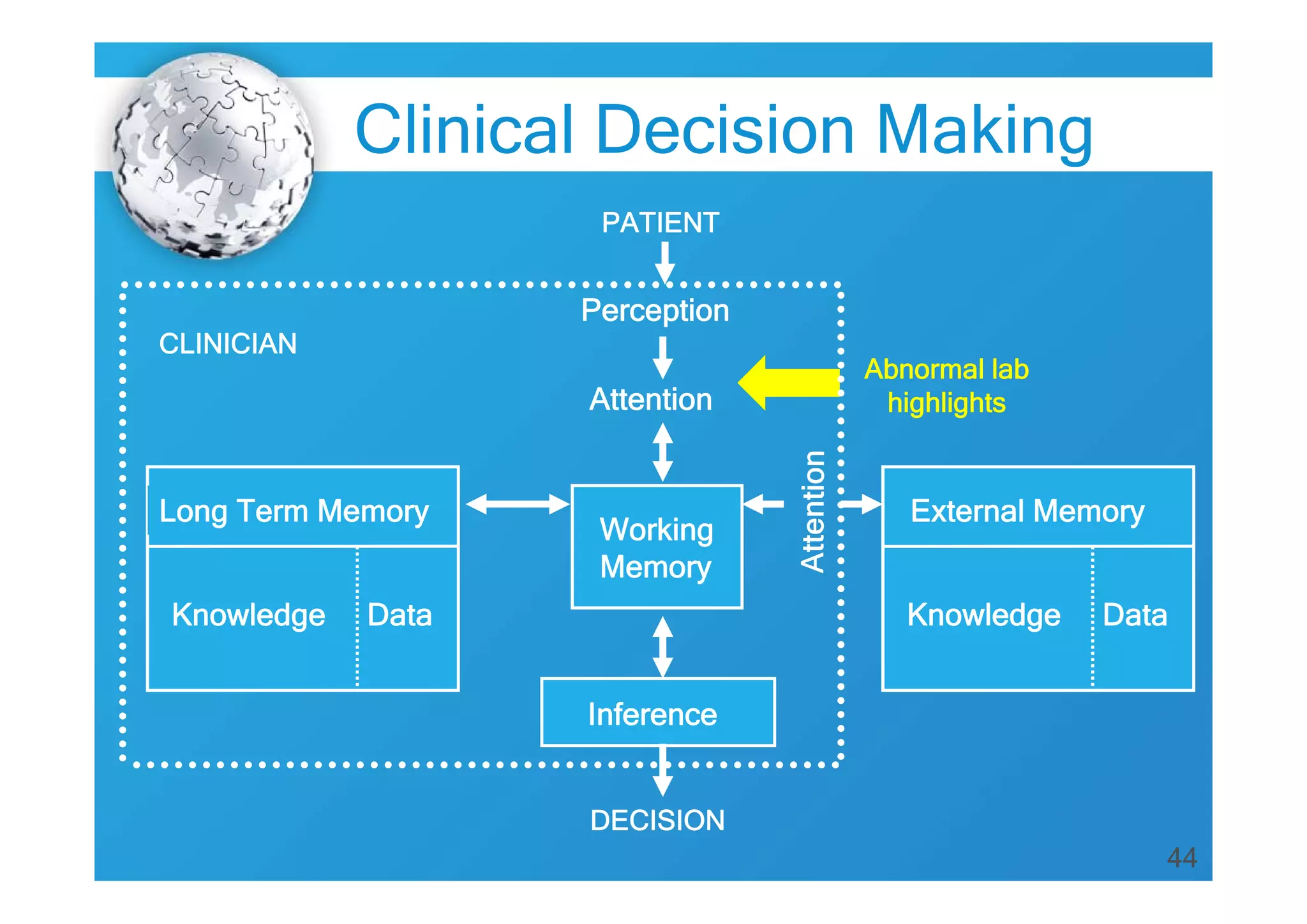
– Abnormal lab highlights
– Graphs/visualizations for lab results
– Filters & sorting functions

41
Abnormal Lab Highlights

Image Source: http://geekdoctor.blogspot.com/2008/04/designing-ideal-electronic-health.html

42
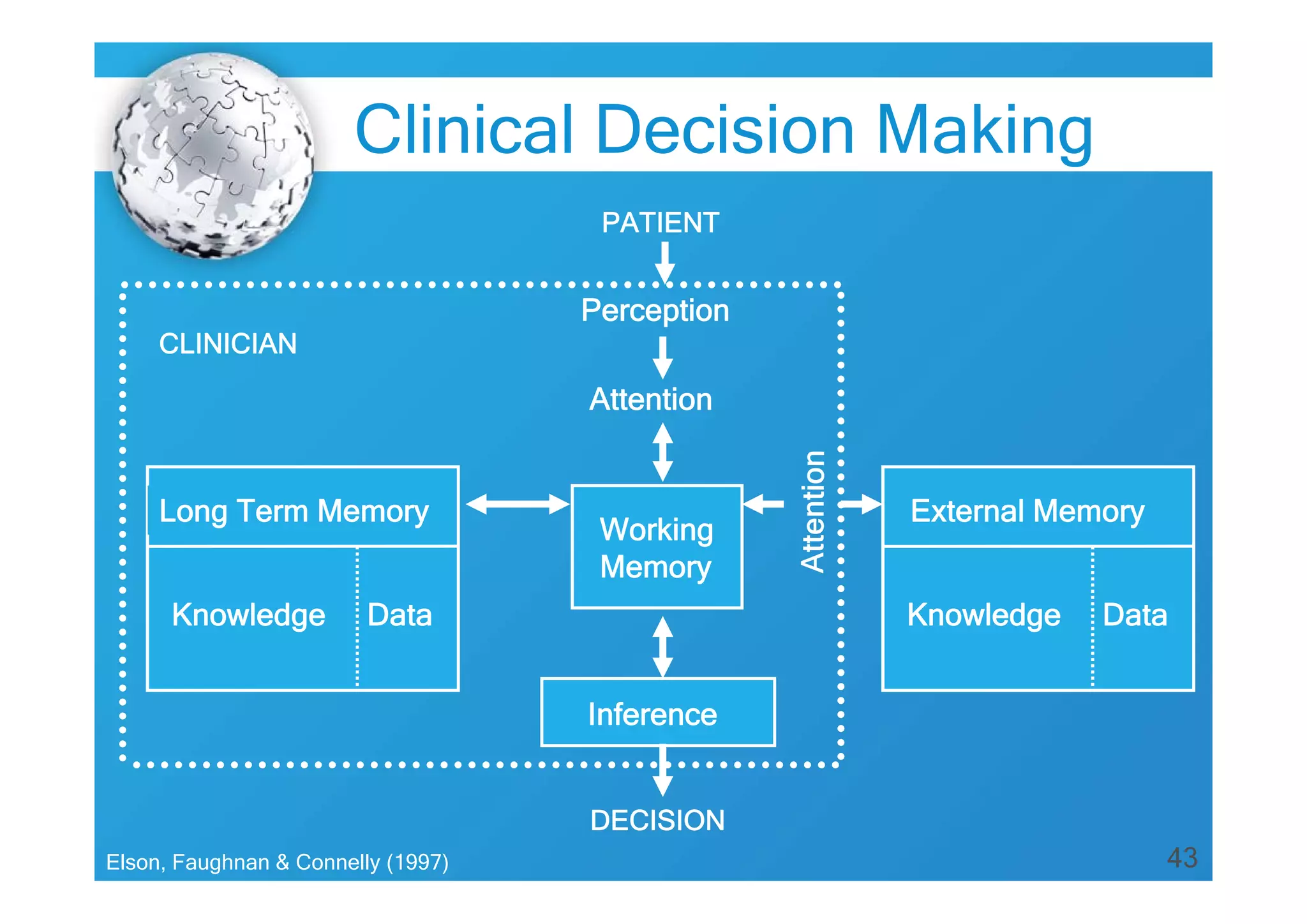
Clinical Decision Making
PATIENT

Perception
CLINICIAN

Attention
Long Term Memory
Knowledge

Working
Memory

Data

External Memory
Knowledge

Data

Inference
DECISION
Elson, Faughnan & Connelly (1997)

43
Clinical Decision Making
PATIENT

Perception
CLINICIAN

Attention
Long Term Memory
Knowledge

Working
Memory

Data

Abnormal lab
highlights

External Memory
Knowledge

Data

Inference
DECISION
44
Clinical Decision Making
PATIENT

Perception
CLINICIAN

Attention
Long Term Memory
Knowledge

Working
Memory

Data

Drug-Allergy
Checks

External Memory
Knowledge

Data

Inference
DECISION
45
Clinical Decision Making
PATIENT

Perception
CLINICIAN

Attention
Long Term Memory
Knowledge

Working
Memory

Data

Drug-Drug
Interaction
Checks

External Memory
Knowledge

Data

Inference
DECISION
Elson, Faughnan & Connelly (1997)

46
Clinical Decision Making
PATIENT

Perception
CLINICIAN

Attention
Long Term Memory
Knowledge

Working
Memory

Data

Clinical Practice
Guideline
Reminders

External Memory
Knowledge

Data

Inference
DECISION
Elson, Faughnan & Connelly (1997)

47
Clinical Decision Making
PATIENT

Perception
CLINICIAN

Attention
Long Term Memory
Knowledge

Working
Memory

Data

External Memory
Knowledge

Inference

Data

Diagnostic/Treatment
Expert Systems

DECISION
Elson, Faughnan & Connelly (1997)

48
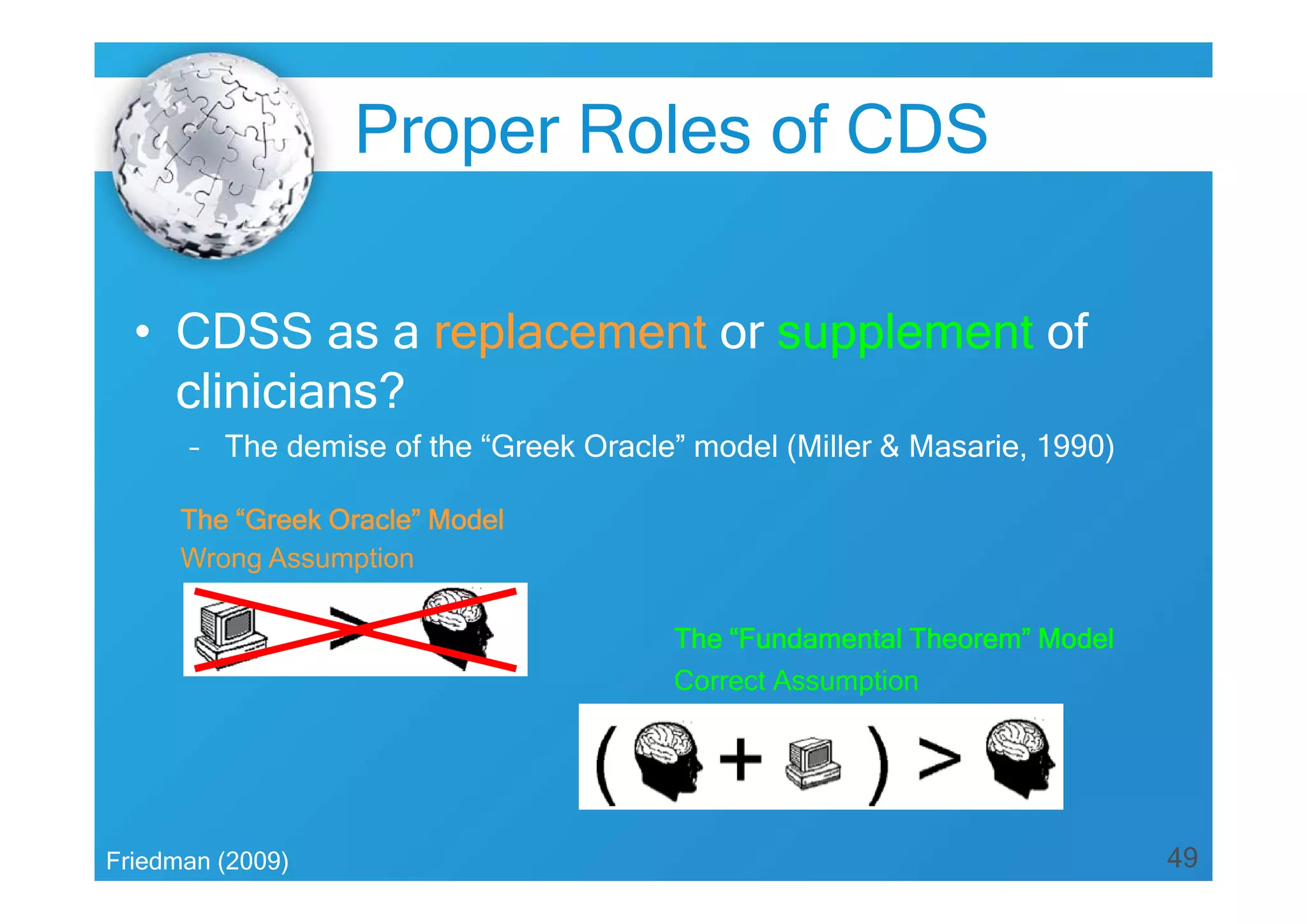
Proper Roles of CDS
• CDSS as a replacement or supplement of
clinicians?
– The demise of the “Greek Oracle” model (Miller & Masarie, 1990)
The “Greek Oracle” Model
Wrong Assumption
The “Fundamental Theorem” Model
Correct Assumption

Friedman (2009)

49
Unintended Consequences of Health IT

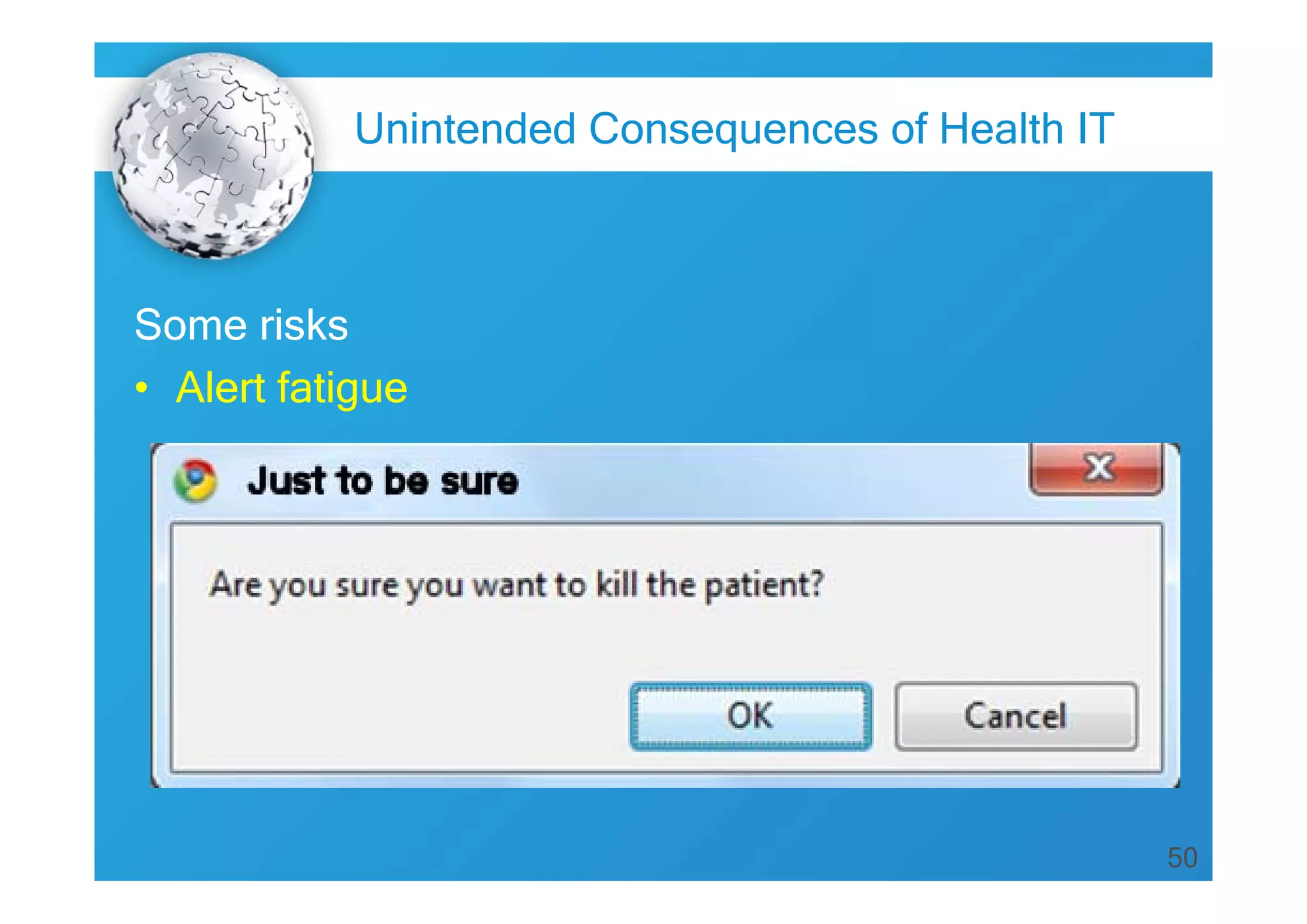
Some risks
• Alert fatigue

50
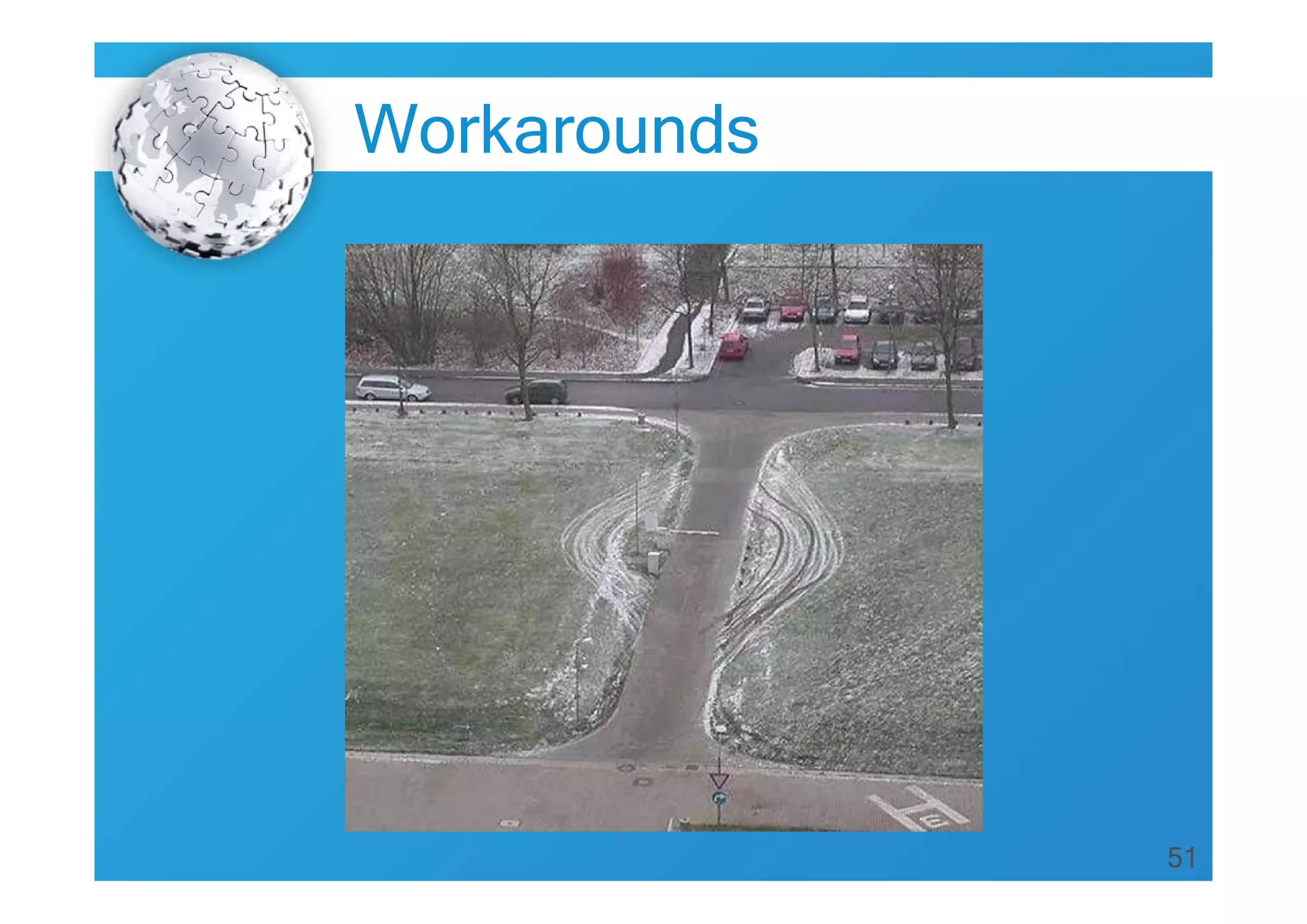
Workarounds

51
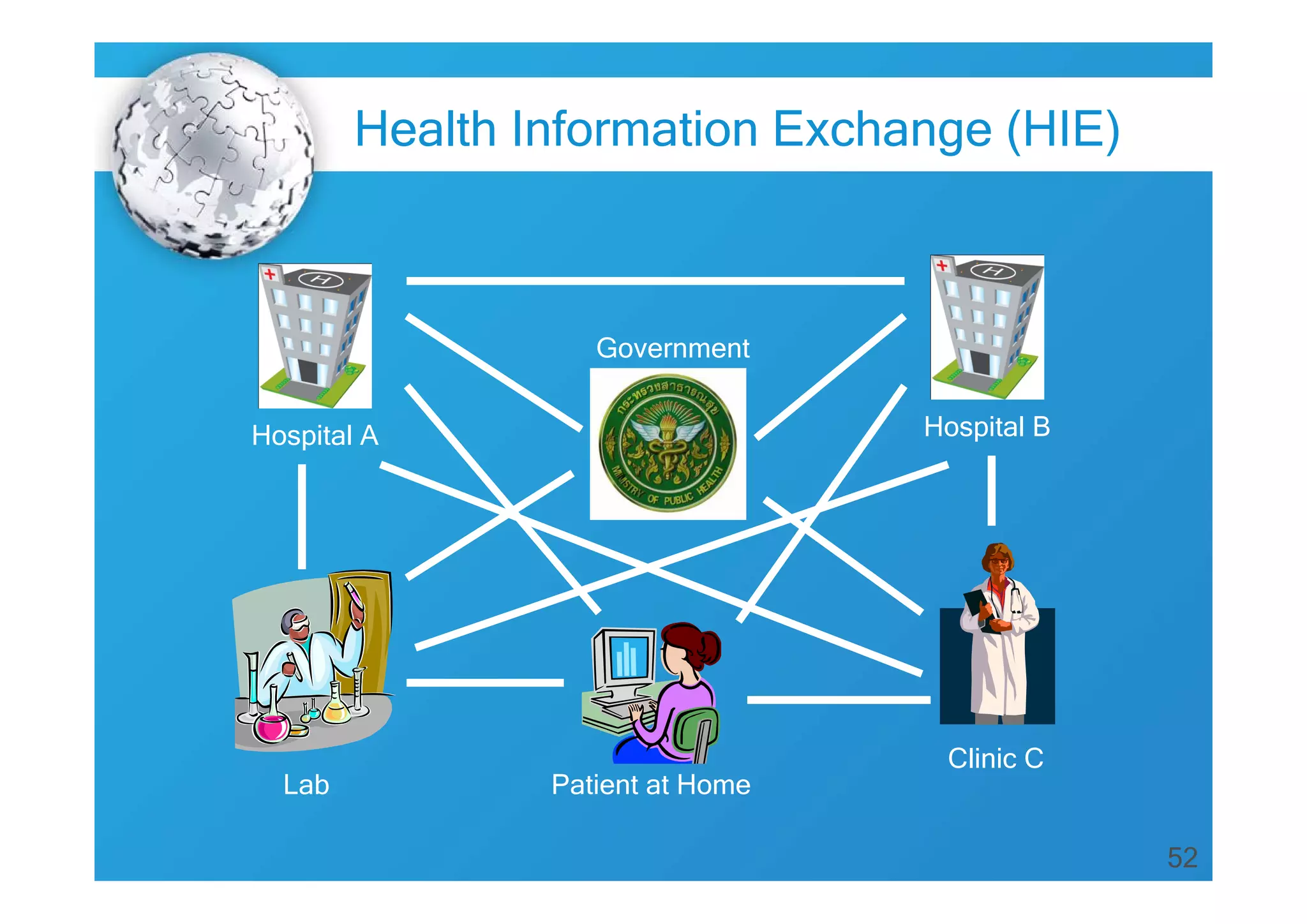
Health Information Exchange (HIE)

Government
Hospital B

Hospital A

Lab

Patient at Home

Clinic C
52
Outline
Healthcare & Information
Why We Need ICT in Healthcare
Health IT
Hospital Information Systems
Health Information Exchange
• Q&A

53
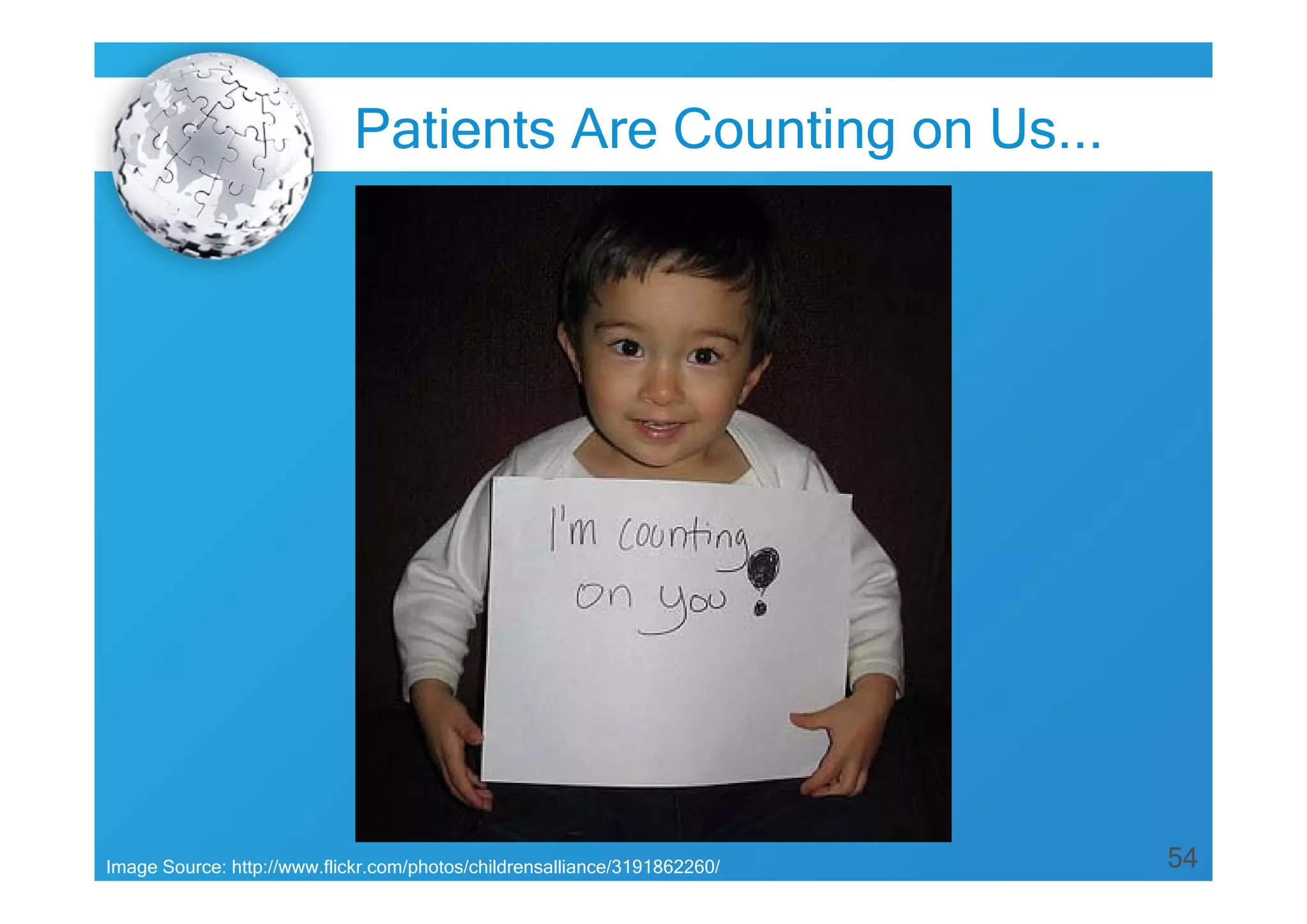
Patients Are Counting on Us...

Image Source: http://www.flickr.com/photos/childrensalliance/3191862260/

54
More Resources
• American Medical Informatics Association (AMIA)
www.amia.org
• International Medical Informatics Association (IMIA)
www.imia.org
• Thai Medical Informatics Association (TMI)
www.tmi.or.th
• Asia eHealth Information Network (AeHIN)
www.aehin.org
• ThaiHealthIT Google Groups Mailing List
http://groups.google.com/group/ThaiHealthIT
• Thai Health Informatics Academy
55

Overview of Hospital Information Systems

  • 1.
    Overview of Hospital InformationSystems Nawanan Theera-Ampornpunt, M.D., Ph.D. Department of Community Medicine Faculty of Medicine Ramathibodi Hospital March 3, 2014 SlideShare.net/Nawanan
  • 2.
    A Bit AboutMyself... 2003 2009 2011 2012 M.D. (First-Class Honors) (Ramathibodi) M.S. in Health Informatics (U of MN) Ph.D. in Health Informatics (U of MN) Certified HL7 CDA Specialist Deputy Executive Director for Informatics (CIO/CMIO) Chakri Naruebodindra Medical Institute • Lecturer, Department of Community Medicine Faculty of Medicine Ramathibodi Hospital Mahidol University • nawanan.the@mahidol.ac.th http://groups.google.com/group/ThaiHealthIT 2
  • 3.
    Outline • • • • • • Healthcare & Information WhyWe Need ICT in Healthcare Health IT Hospital Information Systems Health Information Exchange Q&A 3
  • 4.
  • 5.
    What Clinicians Want? Totreat & to care for their patients to their best abilities, given limited time & resources Image Source: http://en.wikipedia.org/wiki/File:Newborn_Examination_1967.jpg (Nevit Dilmen) 5
  • 6.
    High Quality Care • • • • • • Safe Timely Effective Patient-Centered Efficient Equitable Instituteof Medicine, Committee on Quality of Health Care in America. Crossing the quality chasm: a new health system for the 21st century. Washington, DC: National Academy Press; 2001. 337 p. 6
  • 7.
    Information is Everywherein Healthcare Shortliffe EH. Biomedical informatics in the education of physicians. JAMA. 2010 Sep 15;304(11):1227-8. 7
  • 8.
    “Information” in Medicine ShortliffeEH. Biomedical informatics in the education of physicians. JAMA. 2010 Sep 15;304(11):1227-8. 8
  • 9.
    Why We NeedICT in Healthcare? #1: Because information is everywhere in healthcare 9
  • 10.
    Landmark IOM Reports (IOM,2000) (IOM, 2001) (IOM, 2011) 10
  • 11.
    Patient Safety • ToErr is Human (IOM, 2000) reported that: – 44,000 to 98,000 people die in U.S. hospitals each year as a result of preventable medical mistakes – Mistakes cost U.S. hospitals $17 billion to $29 billion yearly – Individual errors are not the main problem – Faulty systems, processes, and other conditions lead to preventable errors Health IT Workforce Curriculum Version 3.0/Spring 2012 Introduction to Healthcare and Public Health in the US: Regulating Healthcare - Lecture d 11
  • 12.
    IOM Reports Summary •Humans are not perfect and are bound to make errors • Highlight problems in U.S. health care system that systematically contributes to medical errors and poor quality • Recommends reform • Health IT plays a role in improving patient safety 12
  • 13.
    To Err isHuman 1: Attention Image Source: (Left) http://docwhisperer.wordpress.com/2007/05/31/sleepy-heads/ (Right) http://graphics8.nytimes.com/images/2008/12/05/health/chen_600.jpg 13
  • 14.
    To Err isHuman 2: Memory Image Source: Suthan Srisangkaew, Department of Pathology, Facutly of Medicine Ramathibodi Hospital, Mahidol University 14
  • 15.
    To Err isHuman 3: Cognition • Cognitive Errors - Example: Decoy Pricing The Economist Purchase Options • Economist.com subscription • Print subscription • Print & web subscription $59 $125 $125 The Economist Purchase Options • Economist.com subscription • Print & web subscription $59 $125 # of People 16 0 84 # of People 68 32 Ariely (2008) 15
  • 16.
    Cognitive Biases inHealthcare “Everyone makes mistakes. But our reliance on cognitive processes prone to bias makes treatment errors more likely than we think” Klein JG. Five pitfalls in decisions about diagnosis and prescribing. BMJ. 2005 Apr 2;330(7494):781-3. 16
  • 17.
    Cognitive Biases inHealthcare Mamede S, van Gog T, van den Berge K, Rikers RM, van Saase JL, van Guldener C, Schmidt HG. Effect of availability bias and reflective reasoning on diagnostic accuracy among internal medicine residents. JAMA. 2010 Sep 15;304(11):1198-203. 17
  • 18.
    Cognitive Biases inHealthcare Croskerry P. The importance of cognitive errors in diagnosis and strategies to minimize them. Acad Med. 2003 Aug;78(8):775-80. 18
  • 19.
    Common Errors • MedicationErrors – Drug Allergies – Drug Interactions • Ineffective or inappropriate treatment • Redundant orders • Failure to follow clinical practice guidelines 19
  • 20.
    Why We NeedICT in Healthcare? #2: Because healthcare is error-prone and technology can help 20
  • 21.
    Why We NeedICT in Healthcare? #3: Because access to high-quality patient information improves care 21
  • 22.
    Health IT Use ofinformation and communications technology (ICT) in health & healthcare settings Source: The Health Resources and Services Administration, Department of Health and Human Service, USA Slide adapted from: Boonchai Kijsanayotin 22
  • 23.
    Health IT: What’sin a Word? Health Information Technology Goal Value-Add Tools 23
  • 24.
    “Health” in “HealthIT” • Patient’s Health • Population’s Health • Organization’s Health (Quality, Reputation & Finance) 24
  • 25.
    Various Forms ofHealth IT Hospital Information System (HIS) Computerized Provider Order Entry (CPOE) Electronic Health Records (EHRs) Screenshot Images from Faculty of Medicine Ramathibodi Hospital, Mahidol University Picture Archiving and Communication System (PACS) 25
  • 26.
    Still Many OtherForms of Health IT Biosurveillance mHealth Personal Health Records (PHRs) and Patient Portals Images from Apple Inc., Geekzone.co.nz, Google, HealthVault.com and American Telecare, Inc. Telemedicine & Telehealth 26
  • 27.
    Values of HealthIT • Guideline adherence • Better documentation • Practitioner decision making or process of care • Medication safety • Patient surveillance & monitoring • Patient education/reminder 27
  • 28.
    Enterprise-wide Hospital IT • • • • • • MasterPatient Index (MPI) Admit-Discharge-Transfer (ADT) Electronic Health Records (EHRs) Computerized Physician Order Entry (CPOE) Clinical Decision Support Systems (CDS) Picture Archiving and Communication System (PACS) • Nursing applications • Enterprise Resource Planning (ERP) - Finance, Materials Management, Human Resources 28
  • 29.
    Departmental IT inHospitals • Pharmacy applications • Laboratory Information System (LIS) • Radiology Information System (RIS) • Specialized applications (ER, OR, LR, Anesthesia, Critical Care, Dietary Services, Blood Bank) • Incident management & reporting system 29
  • 30.
    EHRs & HIS TheChallenge - Knowing What It Means Electronic Health Records (EHRs) Hospital Information System (HIS) Electronic Medical Records (EMRs) Electronic Patient Records (EPRs) Computer-Based Patient Records (CPRs) Personal Health Records (PHRs) Clinical Information System (CIS) 30
  • 31.
  • 32.
    Computerized Provider OrderEntry (CPOE) Values • No handwriting!!! • Structured data entry: Completeness, clarity, fewer mistakes (?) • No transcription errors! • Streamlines workflow, increases efficiency 32
  • 33.
    Stages of MedicationProcess Ordering CPOE Transcription Dispensing Administration Automatic Medication Dispensing Electronic Medication Administration Records (e-MAR) Barcoded Medication Dispensing Barcoded Medication Administration 33
  • 34.
    Clinical Decision SupportSystems (CDS) • The real place where most of the values of health IT can be achieved (Shortliffe, 1976) – Expert systems • Based on artificial intelligence, machine learning, rules, or statistics • Examples: differential diagnoses, treatment options 34
  • 35.
    Clinical Decision SupportSystems (CDS) – Alerts & reminders • Based on specified logical conditions • Examples: – Drug-allergy checks – Drug-drug interaction checks – Reminders for preventive services – Clinical practice guideline integration 35
  • 36.
  • 37.
    More CDS Examples •Reference information or evidencebased knowledge sources – – – – Drug reference databases Textbooks & journals Online literature (e.g. PubMed) Tools that help users easily access references (e.g. Infobuttons) 37
  • 38.
  • 39.
    Other CDS Examples •Pre-defined documents – – – – Order sets, personalized “favorites” Templates for clinical notes Checklists Forms • Can be either computer-based or paper-based 39
  • 40.
    Order Sets Image Source:http://www.hospitalmedicine.org/ResourceRoomRedesign/CSSSIS/html/06Reliable/SSI/Order.cfm 40
  • 41.
    Other CDS Examples •Simple UI designed to help clinical decision making – Abnormal lab highlights – Graphs/visualizations for lab results – Filters & sorting functions 41
  • 42.
    Abnormal Lab Highlights ImageSource: http://geekdoctor.blogspot.com/2008/04/designing-ideal-electronic-health.html 42
  • 43.
    Clinical Decision Making PATIENT Perception CLINICIAN Attention LongTerm Memory Knowledge Working Memory Data External Memory Knowledge Data Inference DECISION Elson, Faughnan & Connelly (1997) 43
  • 44.
    Clinical Decision Making PATIENT Perception CLINICIAN Attention LongTerm Memory Knowledge Working Memory Data Abnormal lab highlights External Memory Knowledge Data Inference DECISION 44
  • 45.
    Clinical Decision Making PATIENT Perception CLINICIAN Attention LongTerm Memory Knowledge Working Memory Data Drug-Allergy Checks External Memory Knowledge Data Inference DECISION 45
  • 46.
    Clinical Decision Making PATIENT Perception CLINICIAN Attention LongTerm Memory Knowledge Working Memory Data Drug-Drug Interaction Checks External Memory Knowledge Data Inference DECISION Elson, Faughnan & Connelly (1997) 46
  • 47.
    Clinical Decision Making PATIENT Perception CLINICIAN Attention LongTerm Memory Knowledge Working Memory Data Clinical Practice Guideline Reminders External Memory Knowledge Data Inference DECISION Elson, Faughnan & Connelly (1997) 47
  • 48.
    Clinical Decision Making PATIENT Perception CLINICIAN Attention LongTerm Memory Knowledge Working Memory Data External Memory Knowledge Inference Data Diagnostic/Treatment Expert Systems DECISION Elson, Faughnan & Connelly (1997) 48
  • 49.
    Proper Roles ofCDS • CDSS as a replacement or supplement of clinicians? – The demise of the “Greek Oracle” model (Miller & Masarie, 1990) The “Greek Oracle” Model Wrong Assumption The “Fundamental Theorem” Model Correct Assumption Friedman (2009) 49
  • 50.
    Unintended Consequences ofHealth IT Some risks • Alert fatigue 50
  • 51.
  • 52.
    Health Information Exchange(HIE) Government Hospital B Hospital A Lab Patient at Home Clinic C 52
  • 53.
    Outline Healthcare & Information WhyWe Need ICT in Healthcare Health IT Hospital Information Systems Health Information Exchange • Q&A 53
  • 54.
    Patients Are Countingon Us... Image Source: http://www.flickr.com/photos/childrensalliance/3191862260/ 54
  • 55.
    More Resources • AmericanMedical Informatics Association (AMIA) www.amia.org • International Medical Informatics Association (IMIA) www.imia.org • Thai Medical Informatics Association (TMI) www.tmi.or.th • Asia eHealth Information Network (AeHIN) www.aehin.org • ThaiHealthIT Google Groups Mailing List http://groups.google.com/group/ThaiHealthIT • Thai Health Informatics Academy 55