OVERTHINKING
ISURAJITROY.COM/BLOG
BY SURAJIT ROY
Overthinking leads to worry and stress,
which can have negative consequences.
1 | What is Overthinking?
2 | Causes of Overthinking.
3 | How to Stop Overthinking?
INSIDE | OVERTHINKING
4 | Managing Stress and Anxiety.
J A N 2 0 2 3
5 | Developing Mental Resilience.
6 | Living in the Present Moment.
7 | Practicing Mindfulness.
www.isurajitroy.com
8 | Finding Ways to Distract Yourself.
9 | Conclusion.
INTRODUCTION
In this eBook, we will be exploring
the topic of overthinking. We will
discuss what overthinking is, its
causes, and how to stop overthinking.
We will also delve into topics such as
managing stress and anxiety,
developing mental resilience, living in
the present moment, practicing
mindfulness, and finding ways to
distract yourself. By the end of this
eBook, you should have a better
understanding of overthinking and
how to manage it.
www.isurajitroy.com
WHAT IS
OVERTHINKING?
CHAPTER 1
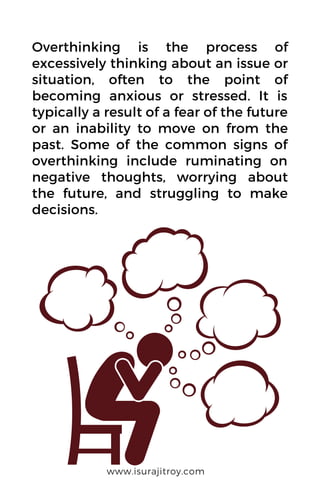
Overthinking is the process of
excessively thinking about an issue or
situation, often to the point of
becoming anxious or stressed. It is
typically a result of a fear of the future
or an inability to move on from the
past. Some of the common signs of
overthinking include ruminating on
negative thoughts, worrying about
the future, and struggling to make
decisions.
www.isurajitroy.com
CAUSES OF
OVERTHINKING.
CHAPTER 2
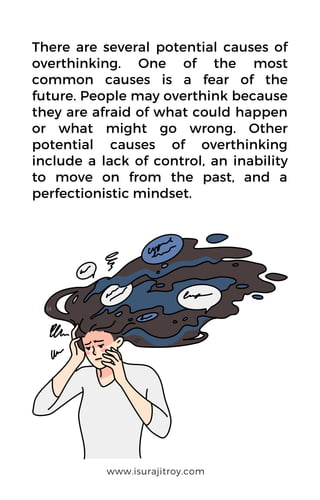
There are several potential causes of
overthinking. One of the most
common causes is a fear of the
future. People may overthink because
they are afraid of what could happen
or what might go wrong. Other
potential causes of overthinking
include a lack of control, an inability
to move on from the past, and a
perfectionistic mindset.
www.isurajitroy.com
HOW TO STOP
OVERTHINKING.
CHAPTER 3
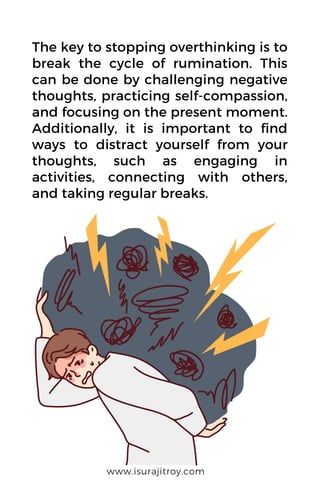
The key to stopping overthinking is to
break the cycle of rumination. This
can be done by challenging negative
thoughts, practicing self-compassion,
and focusing on the present moment.
Additionally, it is important to find
ways to distract yourself from your
thoughts, such as engaging in
activities, connecting with others,
and taking regular breaks.
www.isurajitroy.com
MANAGING
STRESS AND
ANXIETY.
CHAPTER 4
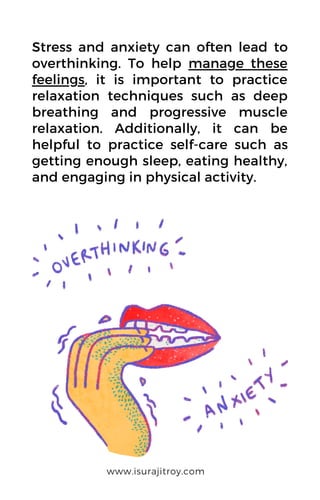
Stress and anxiety can often lead to
overthinking. To help manage these
feelings, it is important to practice
relaxation techniques such as deep
breathing and progressive muscle
relaxation. Additionally, it can be
helpful to practice self-care such as
getting enough sleep, eating healthy,
and engaging in physical activity.
www.isurajitroy.com
DEVELOPING
MENTAL
RESILIENCE.
CHAPTER 5
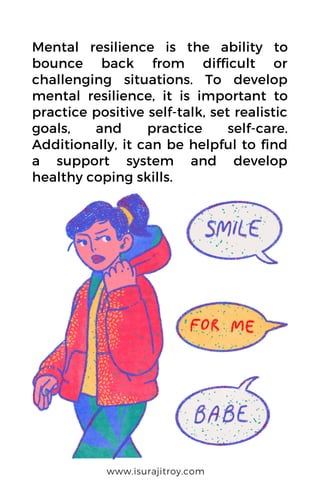
Mental resilience is the ability to
bounce back from difficult or
challenging situations. To develop
mental resilience, it is important to
practice positive self-talk, set realistic
goals, and practice self-care.
Additionally, it can be helpful to find
a support system and develop
healthy coping skills.
www.isurajitroy.com
LIVING IN THE
PRESENT
MOMENT.
CHAPTER 6
Living in the present moment is an
effective way to reduce overthinking.
It involves focusing on the here and
now and being mindful of your
thoughts and feelings. It can be
helpful to practice activities such as
journaling, meditation, and yoga to
help stay in the present moment.
www.isurajitroy.com
PRACTICING
MINDFULNESS.
CHAPTER 7
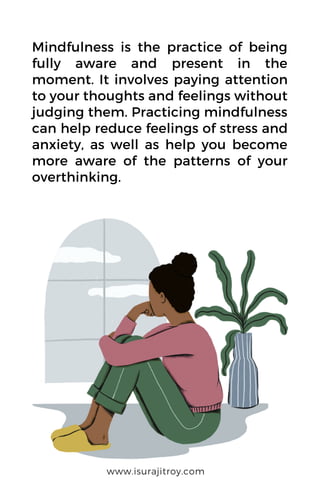
Mindfulness is the practice of being
fully aware and present in the
moment. It involves paying attention
to your thoughts and feelings without
judging them. Practicing mindfulness
can help reduce feelings of stress and
anxiety, as well as help you become
more aware of the patterns of your
overthinking.
www.isurajitroy.com
FINDING WAYS
TO DISTRACT
YOURSELF.
CHAPTER 8
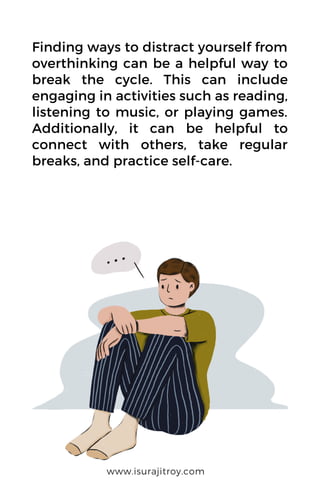
Finding ways to distract yourself from
overthinking can be a helpful way to
break the cycle. This can include
engaging in activities such as reading,
listening to music, or playing games.
Additionally, it can be helpful to
connect with others, take regular
breaks, and practice self-care.
www.isurajitroy.com
CONCLUSION
Overthinking can be a
difficult issue to manage,
but with the right
strategies and techniques,
it is possible to reduce your
overthinking. In this eBook,
we have explored topics
such as the causes of
overthinking, how to stop
overthinking, managing
stress and anxiety,
developing mental
resilience, living in the
present moment,
practicing mindfulness,
and finding ways to
distract yourself. By
following the strategies
discussed in this eBook,
you should be able to
reduce your overthinking
and live a happier,
healthier life.
Overthinking - eBook

Overthinking - eBook

  • 1.
    OVERTHINKING ISURAJITROY.COM/BLOG BY SURAJIT ROY Overthinkingleads to worry and stress, which can have negative consequences.
  • 2.
    1 | Whatis Overthinking? 2 | Causes of Overthinking. 3 | How to Stop Overthinking? INSIDE | OVERTHINKING 4 | Managing Stress and Anxiety. J A N 2 0 2 3 5 | Developing Mental Resilience. 6 | Living in the Present Moment. 7 | Practicing Mindfulness. www.isurajitroy.com 8 | Finding Ways to Distract Yourself. 9 | Conclusion.
  • 3.
  • 4.
    In this eBook,we will be exploring the topic of overthinking. We will discuss what overthinking is, its causes, and how to stop overthinking. We will also delve into topics such as managing stress and anxiety, developing mental resilience, living in the present moment, practicing mindfulness, and finding ways to distract yourself. By the end of this eBook, you should have a better understanding of overthinking and how to manage it. www.isurajitroy.com
  • 5.
  • 6.
    Overthinking is theprocess of excessively thinking about an issue or situation, often to the point of becoming anxious or stressed. It is typically a result of a fear of the future or an inability to move on from the past. Some of the common signs of overthinking include ruminating on negative thoughts, worrying about the future, and struggling to make decisions. www.isurajitroy.com
  • 7.
  • 8.
    There are severalpotential causes of overthinking. One of the most common causes is a fear of the future. People may overthink because they are afraid of what could happen or what might go wrong. Other potential causes of overthinking include a lack of control, an inability to move on from the past, and a perfectionistic mindset. www.isurajitroy.com
  • 9.
  • 10.
    The key tostopping overthinking is to break the cycle of rumination. This can be done by challenging negative thoughts, practicing self-compassion, and focusing on the present moment. Additionally, it is important to find ways to distract yourself from your thoughts, such as engaging in activities, connecting with others, and taking regular breaks. www.isurajitroy.com
  • 11.
  • 12.
    Stress and anxietycan often lead to overthinking. To help manage these feelings, it is important to practice relaxation techniques such as deep breathing and progressive muscle relaxation. Additionally, it can be helpful to practice self-care such as getting enough sleep, eating healthy, and engaging in physical activity. www.isurajitroy.com
  • 13.
  • 14.
    Mental resilience isthe ability to bounce back from difficult or challenging situations. To develop mental resilience, it is important to practice positive self-talk, set realistic goals, and practice self-care. Additionally, it can be helpful to find a support system and develop healthy coping skills. www.isurajitroy.com
  • 15.
  • 16.
    Living in thepresent moment is an effective way to reduce overthinking. It involves focusing on the here and now and being mindful of your thoughts and feelings. It can be helpful to practice activities such as journaling, meditation, and yoga to help stay in the present moment. www.isurajitroy.com
  • 17.
  • 18.
    Mindfulness is thepractice of being fully aware and present in the moment. It involves paying attention to your thoughts and feelings without judging them. Practicing mindfulness can help reduce feelings of stress and anxiety, as well as help you become more aware of the patterns of your overthinking. www.isurajitroy.com
  • 19.
  • 20.
    Finding ways todistract yourself from overthinking can be a helpful way to break the cycle. This can include engaging in activities such as reading, listening to music, or playing games. Additionally, it can be helpful to connect with others, take regular breaks, and practice self-care. www.isurajitroy.com
  • 21.
    CONCLUSION Overthinking can bea difficult issue to manage, but with the right strategies and techniques, it is possible to reduce your overthinking. In this eBook, we have explored topics such as the causes of overthinking, how to stop overthinking, managing stress and anxiety, developing mental resilience, living in the present moment, practicing mindfulness, and finding ways to distract yourself. By following the strategies discussed in this eBook, you should be able to reduce your overthinking and live a happier, healthier life.