Principle and
diagnosis of knee
joint osteoarthritis
PBL GROUP 1
ABDULRAHMAN ALARFAJ
ABDULLAH ALHAMAD
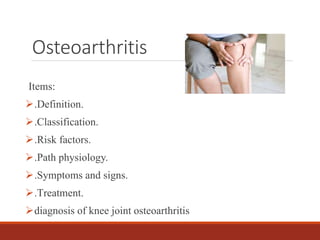
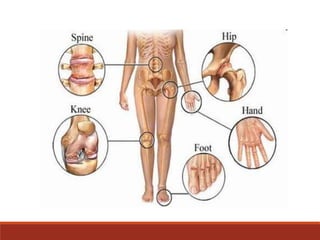
Osteoarthritis
Items:
.Definition.
.Classification.
.Risk factors.
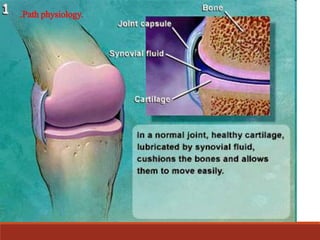
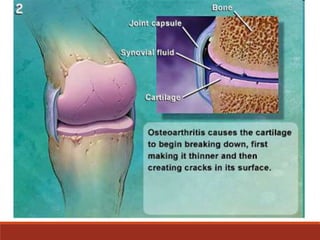
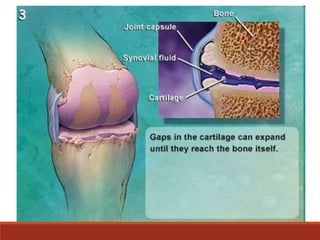
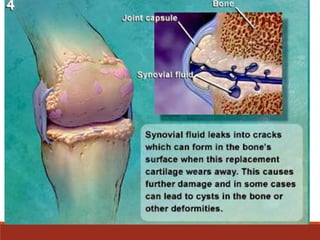
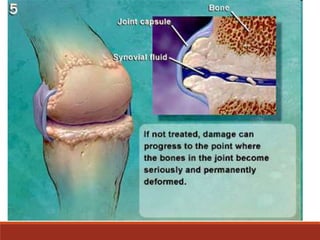
.Path physiology.
.Symptoms and signs.
.Treatment.
diagnosis of knee joint osteoarthritis
Definition:
Osteoarthritis (OA), :
is a progressive disorder of the joints caused by gradual
loss of cartilage and resulting in the development of
bony spurs and cysts at the margins of the joints.
Classification:
1.primary: unkown cause, with aging, on normal joint.
2.secondary: other disease(trauma,etc), any age, on
diseased joint.
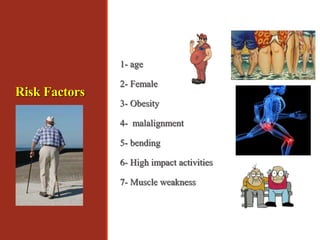
Risk Factors
1- age
2- Female
3- Obesity
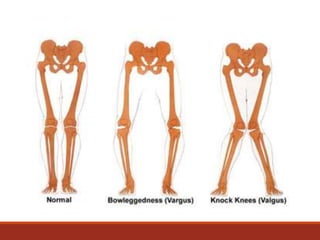
4- malalignment
5- bending
6- High impact activities
7- Muscle weakness
.Path physiology.
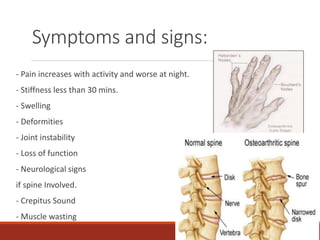
Symptoms and signs:
- Pain increases with activity and worse at night.
- Stiffness less than 30 mins.
- Swelling
- Deformities
- Joint instability
- Loss of function
- Neurological signs
if spine Involved.
- Crepitus Sound
- Muscle wasting
Treatment:
1. Non-pharmacological:
-To increase movement to prevent muscle wasting.
- physiotherapy/exercise programmed,
- non -weight bearing exercise to strengthen muscle strength (cycling,
swimming etc).
- To reduce load on the joint
Use of walking stick to distribute the load
Avoid unnecessary stress,
eg jogging,climbing stairs.
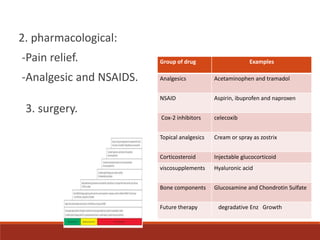
2. pharmacological:
-Pain relief.
-Analgesic and NSAIDS.
3. surgery.
ExamplesGroup of drug
Acetaminophen and tramadolAnalgesics
Aspirin, ibuprofen and naproxenNSAID
celecoxibCox-2 inhibitors
Cream or spray as zostrixTopical analgesics
Injectable glucocorticoidCorticosteroid
Hyaluronic acidviscosupplements
Glucosamine and Chondrotin SulfateBone components
degradative Enz GrowthFuture therapy
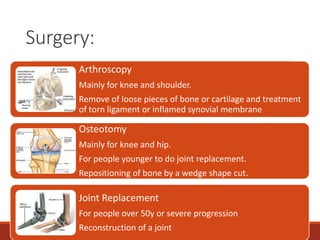
Surgery:
Arthroscopy
Mainly for knee and shoulder.
Remove of loose pieces of bone or cartilage and treatment
of torn ligament or inflamed synovial membrane
Osteotomy
Mainly for knee and hip.
For people younger to do joint replacement.
Repositioning of bone by a wedge shape cut.
Joint Replacement
For people over 50y or severe progression
Reconstruction of a joint
DIAGNOSIS OF KNEE
OSTEOARTHURITIS
In general the doctor will start with collecting information from the
patient, family and medical history, the he will start the examination
and ask for some diagnostic tests.
1- HEALTH HISTORY AND
SYMPTOMS
o description of the symptoms
oDetails about the when and how the pain and other symptoms began
oDetails about other medical problems
oLocation of the pain, stiffness or other symptoms
oHow symptoms affect the daily activates
oList of current medications
oFamily history with osteoarthritis
2- PHYSICAL EXAMINATION
During the examination the doctor will test the
o look for areas that are tender, swollen, as well as signs and
symptoms of knee damage
o Range of motion of the knee
oLook for the arrangement and alignment of the knee, neck,
and spine
3- DIAGNOSTIC TESTS
Last step in the knee joint osteoarthritis diagnosis is the diagnostic
tests
Blood test isn’t helpful in this case. However, there are some
diagnostic tests that can help
o joint aspiration
oX-ray
oMRI
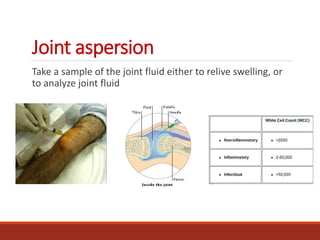
Joint aspersion
Take a sample of the joint fluid either to relive swelling, or
to analyze joint fluid
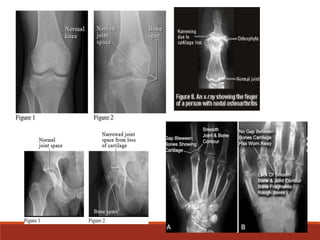
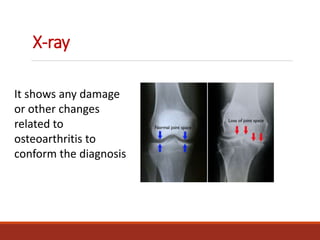
X-ray
It shows any damage
or other changes
related to
osteoarthritis to
conform the diagnosis
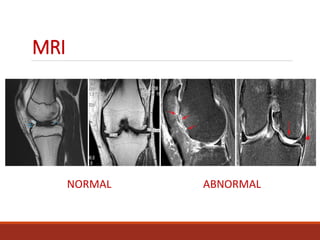
MRI
NORMAL ABNORMAL
Any questions ?
Thank you for your attention

Osteoarthritis

  • 1.
    Principle and diagnosis ofknee joint osteoarthritis PBL GROUP 1 ABDULRAHMAN ALARFAJ ABDULLAH ALHAMAD
  • 2.
  • 3.
    Definition: Osteoarthritis (OA), : isa progressive disorder of the joints caused by gradual loss of cartilage and resulting in the development of bony spurs and cysts at the margins of the joints. Classification: 1.primary: unkown cause, with aging, on normal joint. 2.secondary: other disease(trauma,etc), any age, on diseased joint.
  • 4.
    Risk Factors 1- age 2-Female 3- Obesity 4- malalignment 5- bending 6- High impact activities 7- Muscle weakness
  • 6.
  • 11.
    Symptoms and signs: -Pain increases with activity and worse at night. - Stiffness less than 30 mins. - Swelling - Deformities - Joint instability - Loss of function - Neurological signs if spine Involved. - Crepitus Sound - Muscle wasting
  • 14.
    Treatment: 1. Non-pharmacological: -To increasemovement to prevent muscle wasting. - physiotherapy/exercise programmed, - non -weight bearing exercise to strengthen muscle strength (cycling, swimming etc). - To reduce load on the joint Use of walking stick to distribute the load Avoid unnecessary stress, eg jogging,climbing stairs.
  • 15.
    2. pharmacological: -Pain relief. -Analgesicand NSAIDS. 3. surgery. ExamplesGroup of drug Acetaminophen and tramadolAnalgesics Aspirin, ibuprofen and naproxenNSAID celecoxibCox-2 inhibitors Cream or spray as zostrixTopical analgesics Injectable glucocorticoidCorticosteroid Hyaluronic acidviscosupplements Glucosamine and Chondrotin SulfateBone components degradative Enz GrowthFuture therapy
  • 16.
    Surgery: Arthroscopy Mainly for kneeand shoulder. Remove of loose pieces of bone or cartilage and treatment of torn ligament or inflamed synovial membrane Osteotomy Mainly for knee and hip. For people younger to do joint replacement. Repositioning of bone by a wedge shape cut. Joint Replacement For people over 50y or severe progression Reconstruction of a joint
  • 17.
    DIAGNOSIS OF KNEE OSTEOARTHURITIS Ingeneral the doctor will start with collecting information from the patient, family and medical history, the he will start the examination and ask for some diagnostic tests.
  • 18.
    1- HEALTH HISTORYAND SYMPTOMS o description of the symptoms oDetails about the when and how the pain and other symptoms began oDetails about other medical problems oLocation of the pain, stiffness or other symptoms oHow symptoms affect the daily activates oList of current medications oFamily history with osteoarthritis
  • 19.
    2- PHYSICAL EXAMINATION Duringthe examination the doctor will test the o look for areas that are tender, swollen, as well as signs and symptoms of knee damage o Range of motion of the knee oLook for the arrangement and alignment of the knee, neck, and spine
  • 20.
    3- DIAGNOSTIC TESTS Laststep in the knee joint osteoarthritis diagnosis is the diagnostic tests Blood test isn’t helpful in this case. However, there are some diagnostic tests that can help o joint aspiration oX-ray oMRI
  • 21.
    Joint aspersion Take asample of the joint fluid either to relive swelling, or to analyze joint fluid
  • 22.
    X-ray It shows anydamage or other changes related to osteoarthritis to conform the diagnosis
  • 23.
  • 24.
  • 25.
    Thank you foryour attention