TUBERCULOSIS OF BONES AND
JOINTS
Dr. Deepak Tyagi , junior resident,
Dept of orthopaedics
MGIMS,SEVAGRAM
.Tuberculosis is still a common infection in developing
countries . After lung and lymph nodes ,bone and
joint is the next common site of tuberculosis .
.It constitutes about 1-4 percent of the total number
of cases of tuberculosis.
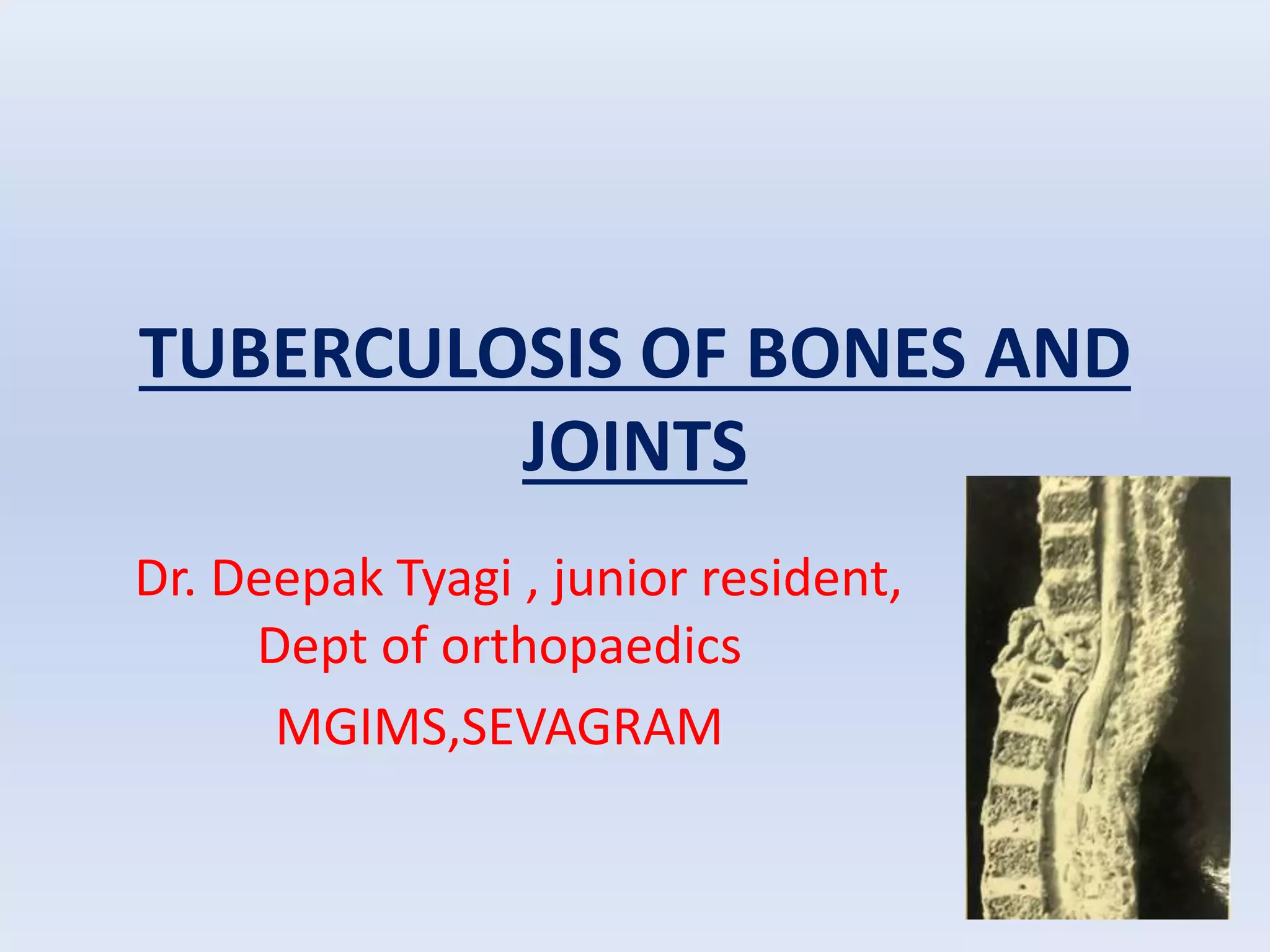
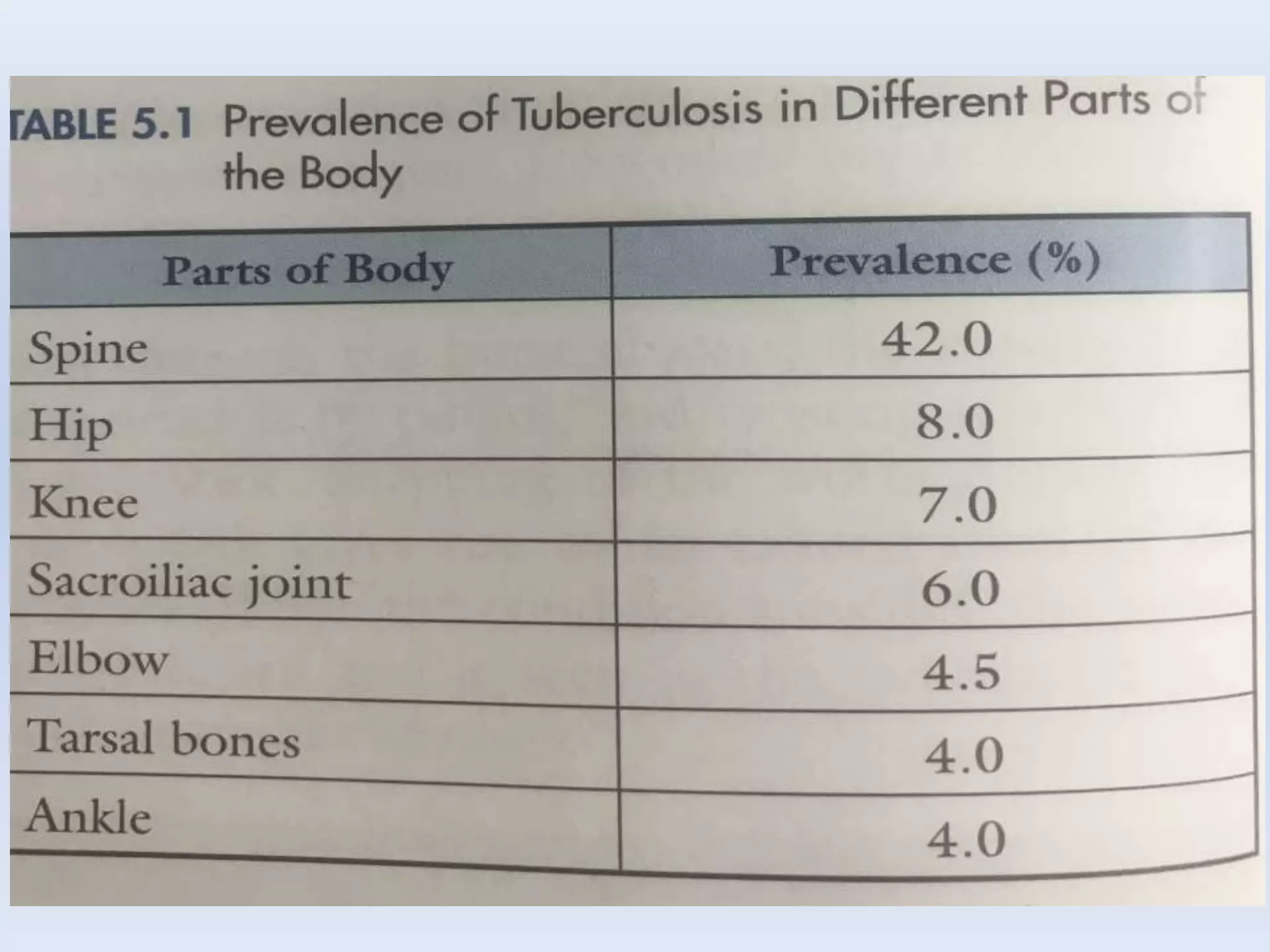
.The spine is the commonest site of bone and joint
tuberculosis ,consisting about 50 % of the total
number of cases .
Etiopathogenesis:
• Common causative organism is
Mycobacterium tuberculosis.
• Skipped lesion
• Disseminated skeletal tuberculosis
• Types- caseative exudative and granular
• Atypical mycobacterial tuberculosis( M.
Kansasi)– synovial sheath.
Implant tuberculosis
• Healing
• Drug resistant tuberculosis
Site of involvement
Spine>hip
>knee>elbow
Investigations:
• Roentgenogram and X ray
chest
• Blood
• Sputum examination
• Synovial fluid analysis
• Mantoux test/ Tuberculin
test
• Guinea pig inoculation
• Smear and culture
• Isotope Scintigraphy
• Serological investigation/
interferon
• Modern imaging technique
( ultrasonography,CT,MRI)
Clinical features :
• Constitutional Symptoms :
• Localised symptoms and
signs:
• High index of suspicion
• Fallacious H/O trauma
Management :
• General treatment
• Care of the affected part
• Role of steroids
• Chemotherapy/ prophylaxis
• Middle path regime
• Local treatment and role of surgery
• Operative intervention :
Operative intervention :
• Biopsy
• Treatment of cold abscess
• Curettage of the lesion
• Joint debridement
• Synovectomy
• Salvage operation
• Arthrodesis
• Joint replacement
• Decompression
• Osteotomy
• Amputation
• Ray resection
• excision
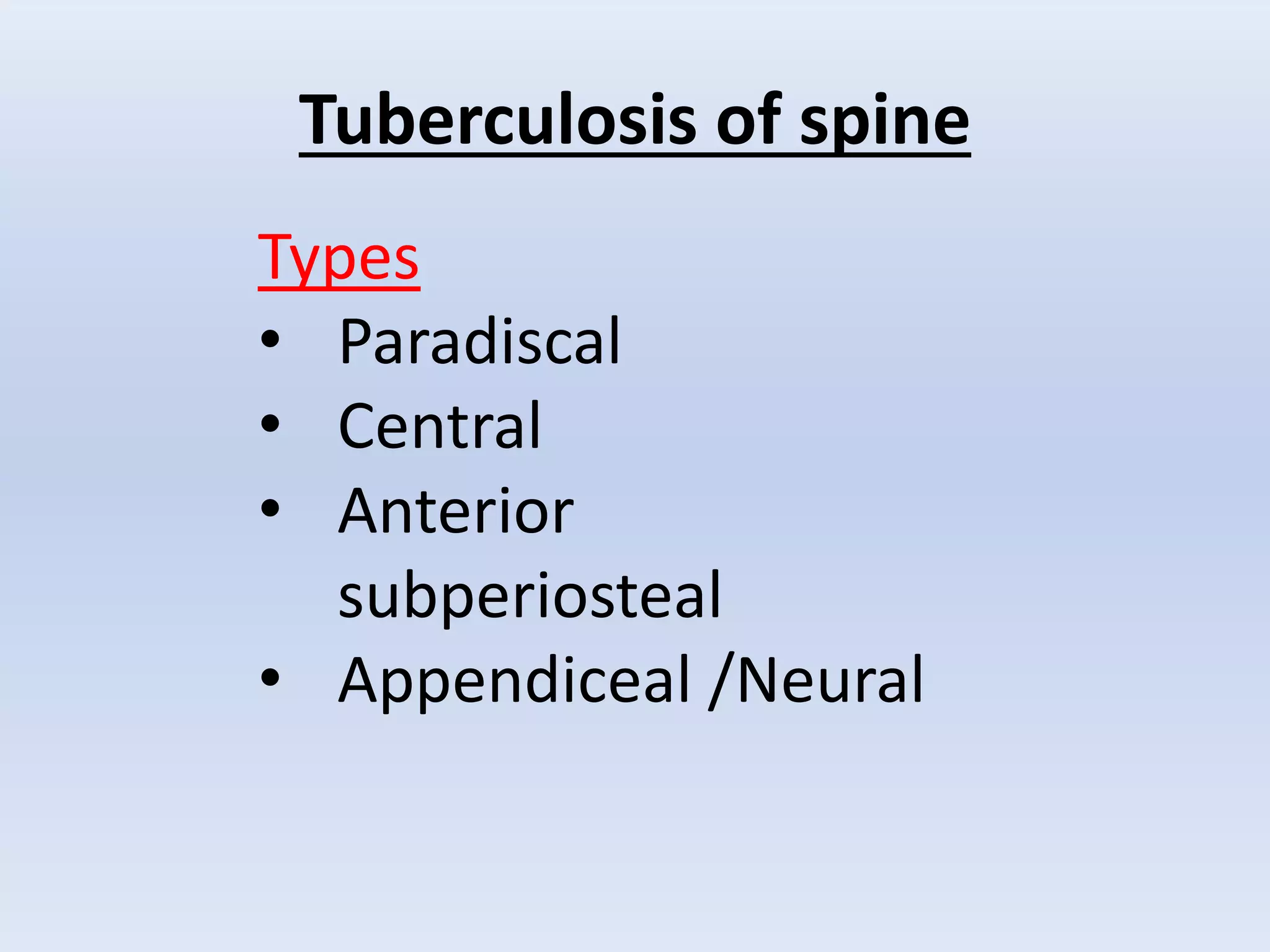
Tuberculosis of spine
Types
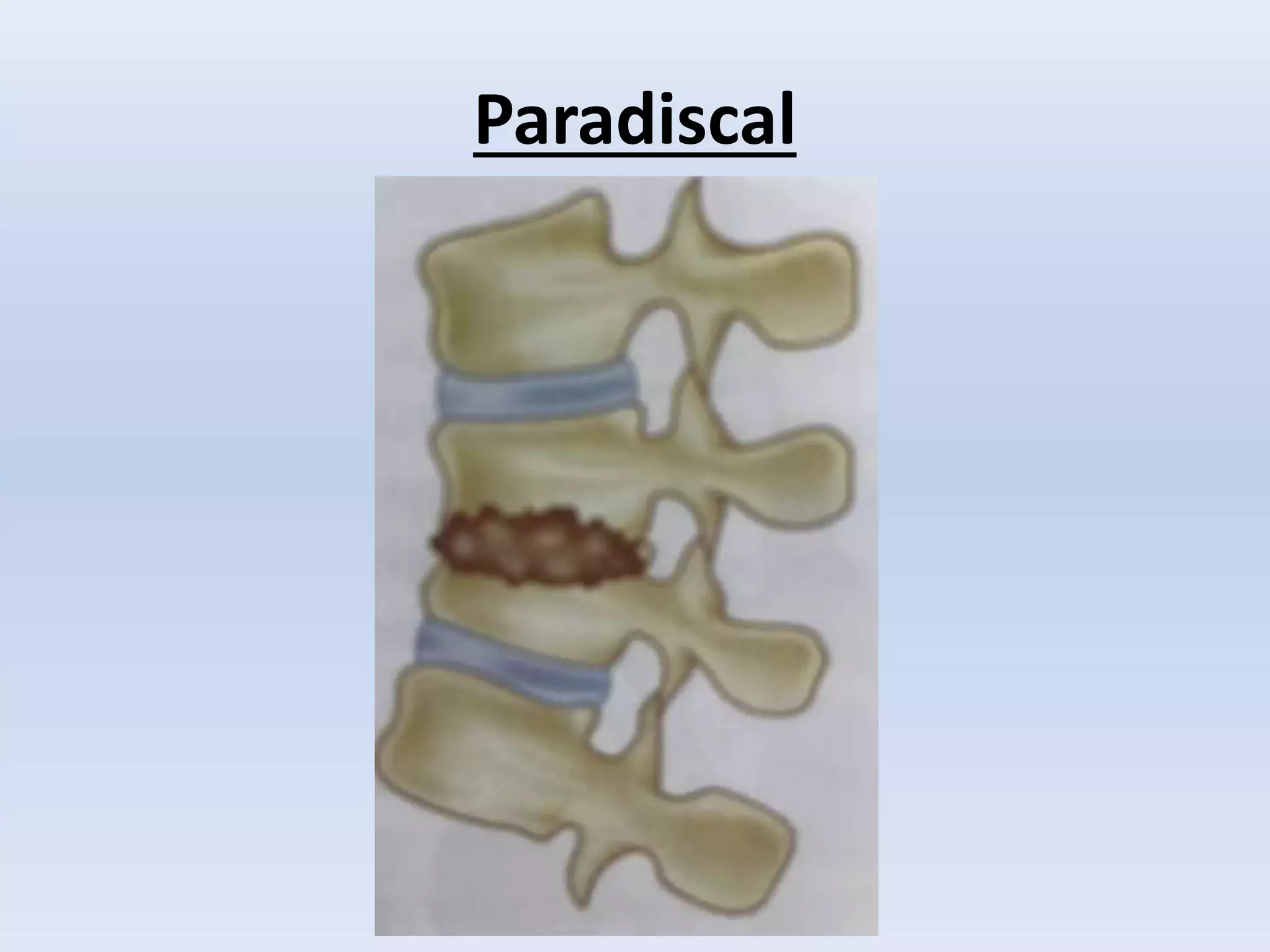
• Paradiscal
• Central
• Anterior
subperiosteal
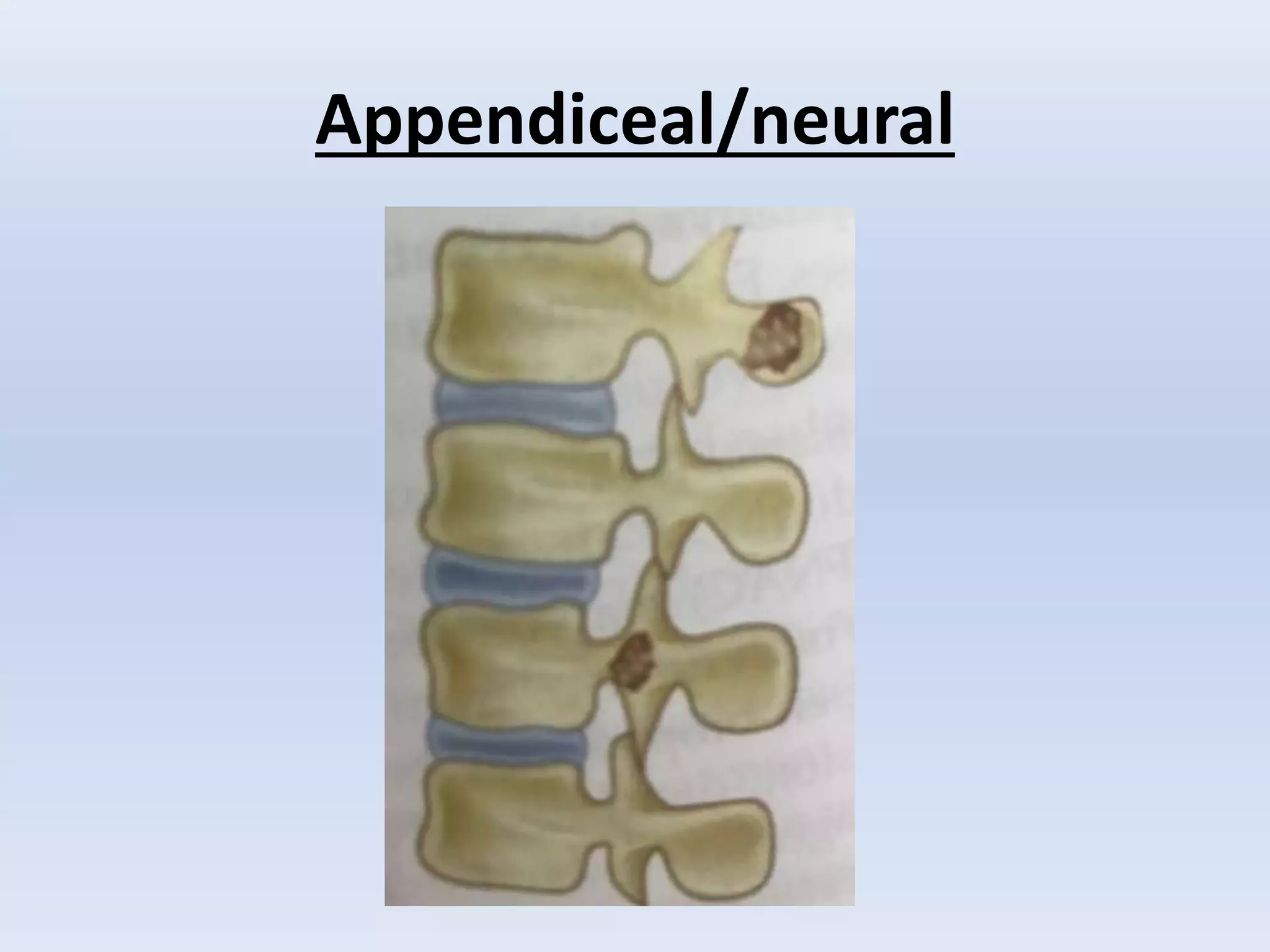
• Appendiceal /Neural
Paradiscal
Central
Anterior/subperiosteal
Appendiceal/neural
Clinical features
• Pain
• Stiffness
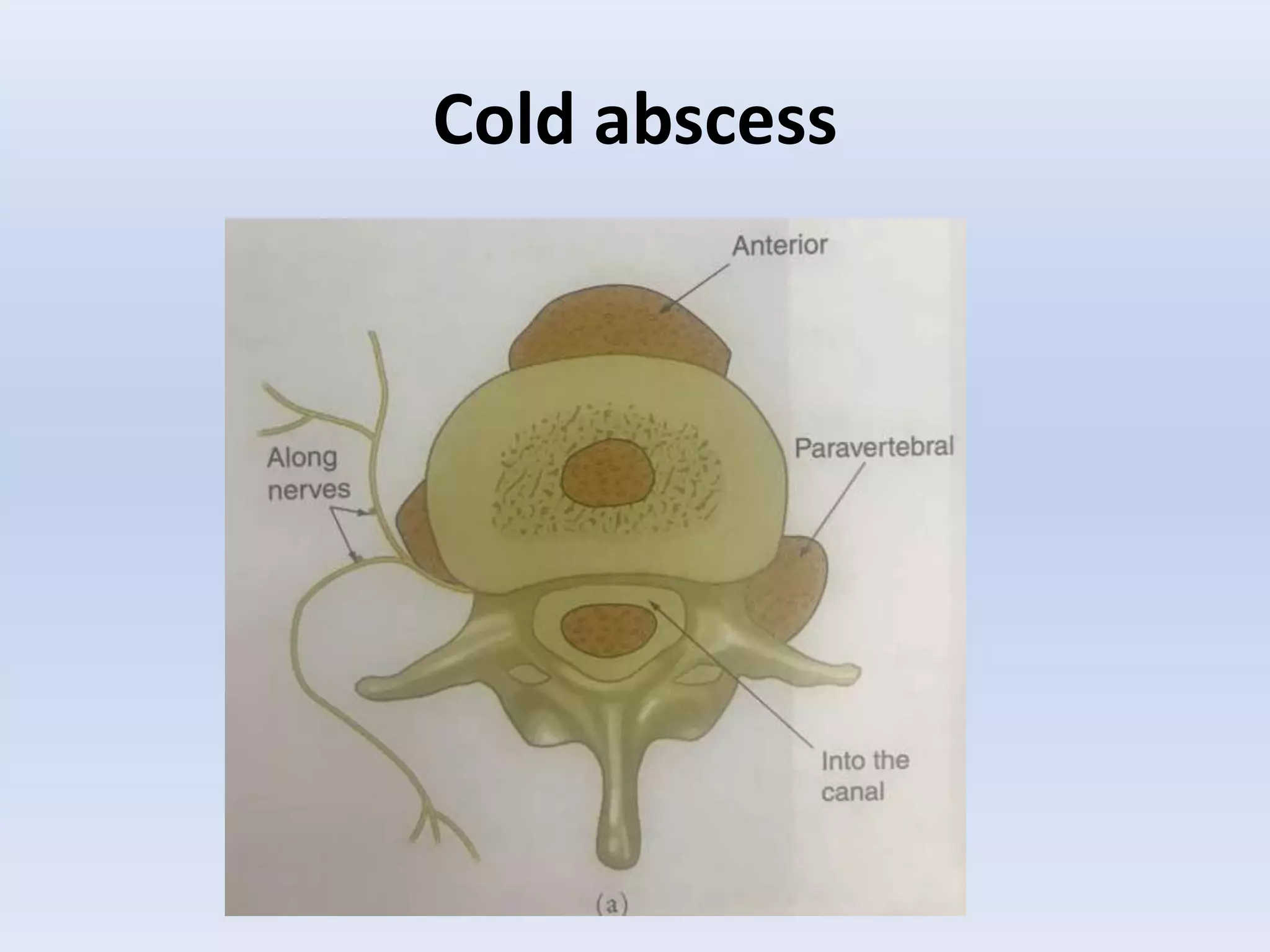
• Cold abscess
• Paraplegia
• Deformity
Deformity
Cold abscess
Retropharyngeal abscess
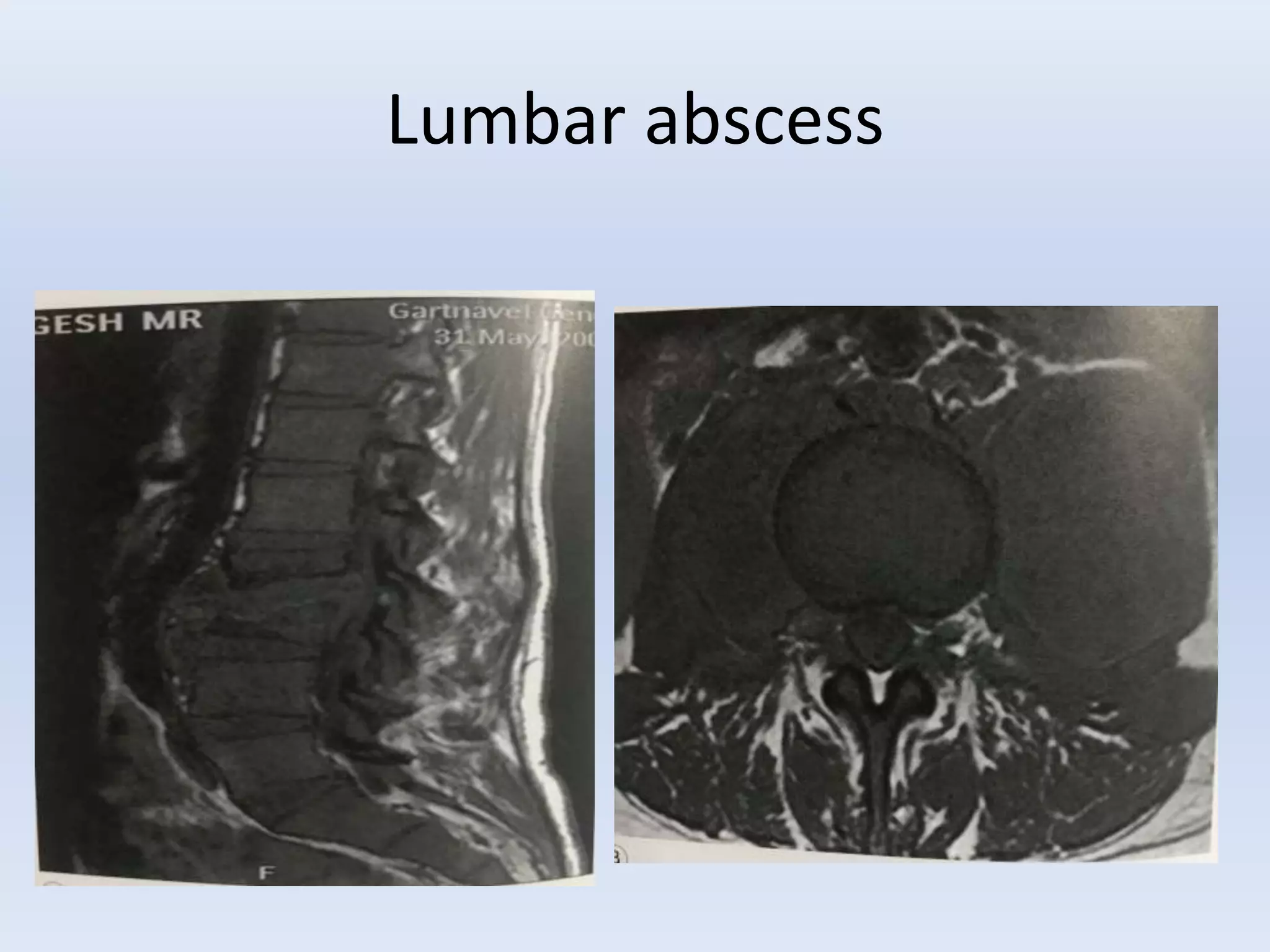
Lumbar abscess
Thoracic abscess (bird nest
appearance) fusiform type
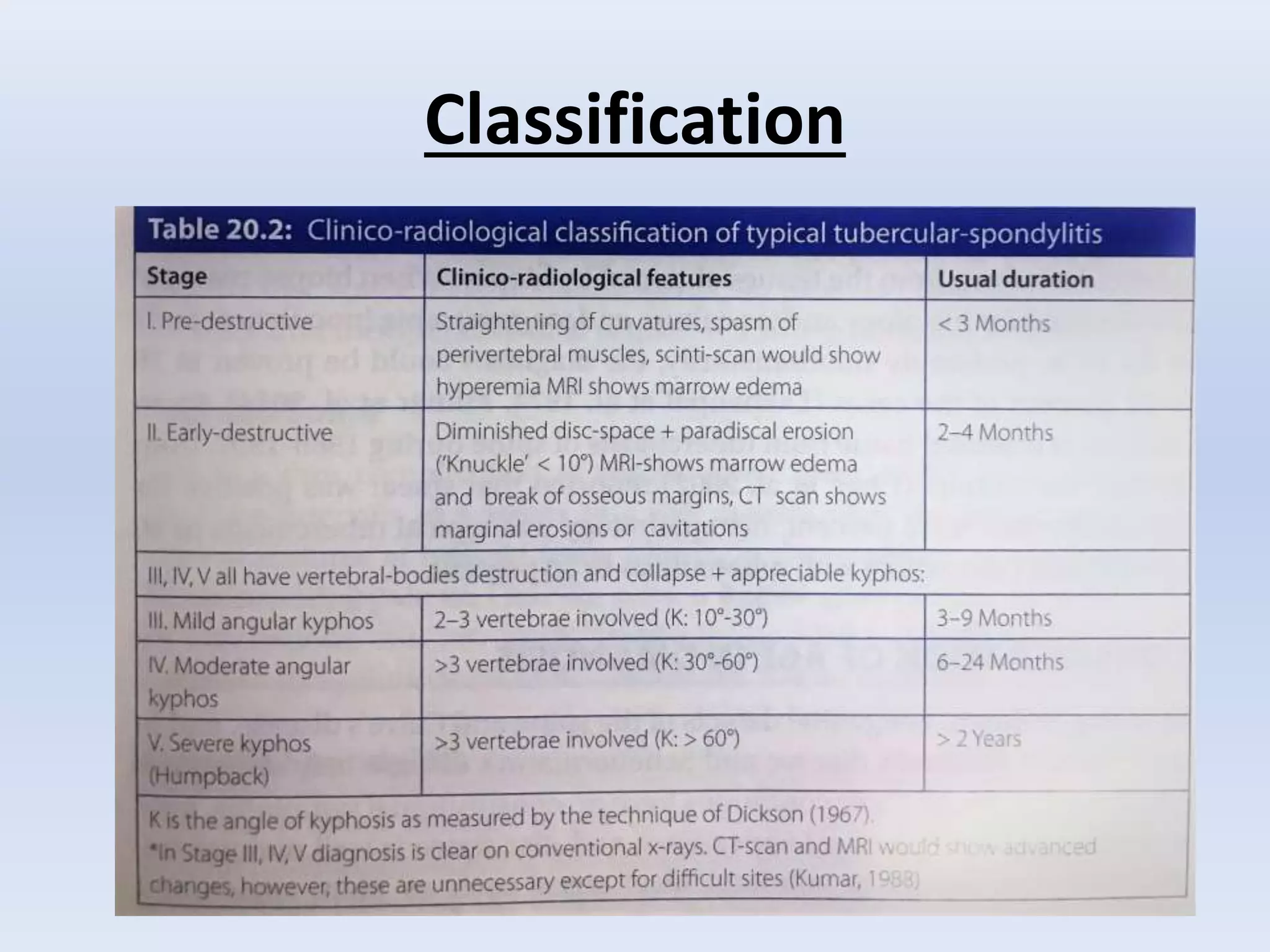
Classification
Causes of paraplegia in TB of the
spine
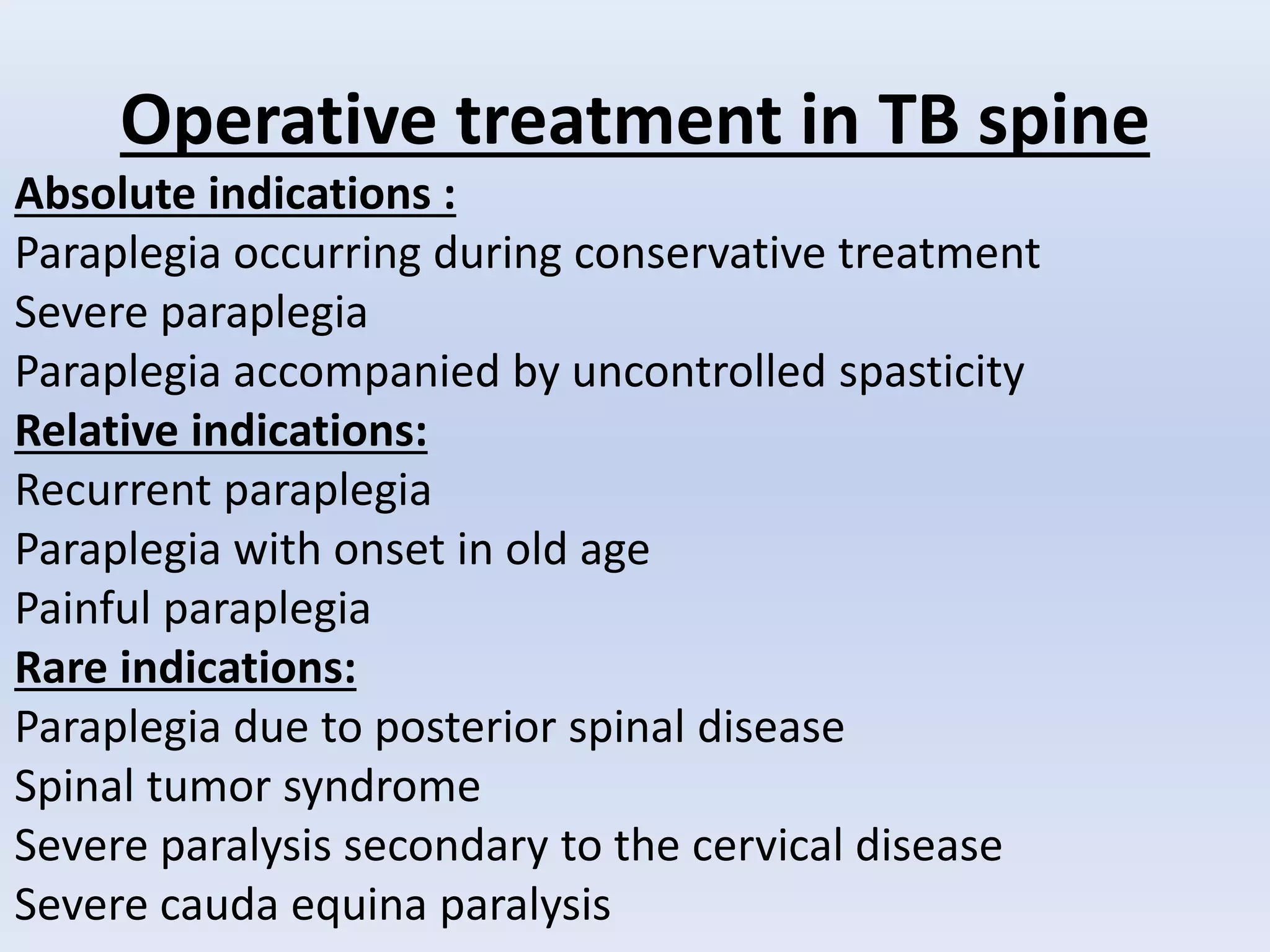
Operative treatment in TB spine
Absolute indications :
Paraplegia occurring during conservative treatment
Severe paraplegia
Paraplegia accompanied by uncontrolled spasticity
Relative indications:
Recurrent paraplegia
Paraplegia with onset in old age
Painful paraplegia
Rare indications:
Paraplegia due to posterior spinal disease
Spinal tumor syndrome
Severe paralysis secondary to the cervical disease
Severe cauda equina paralysis
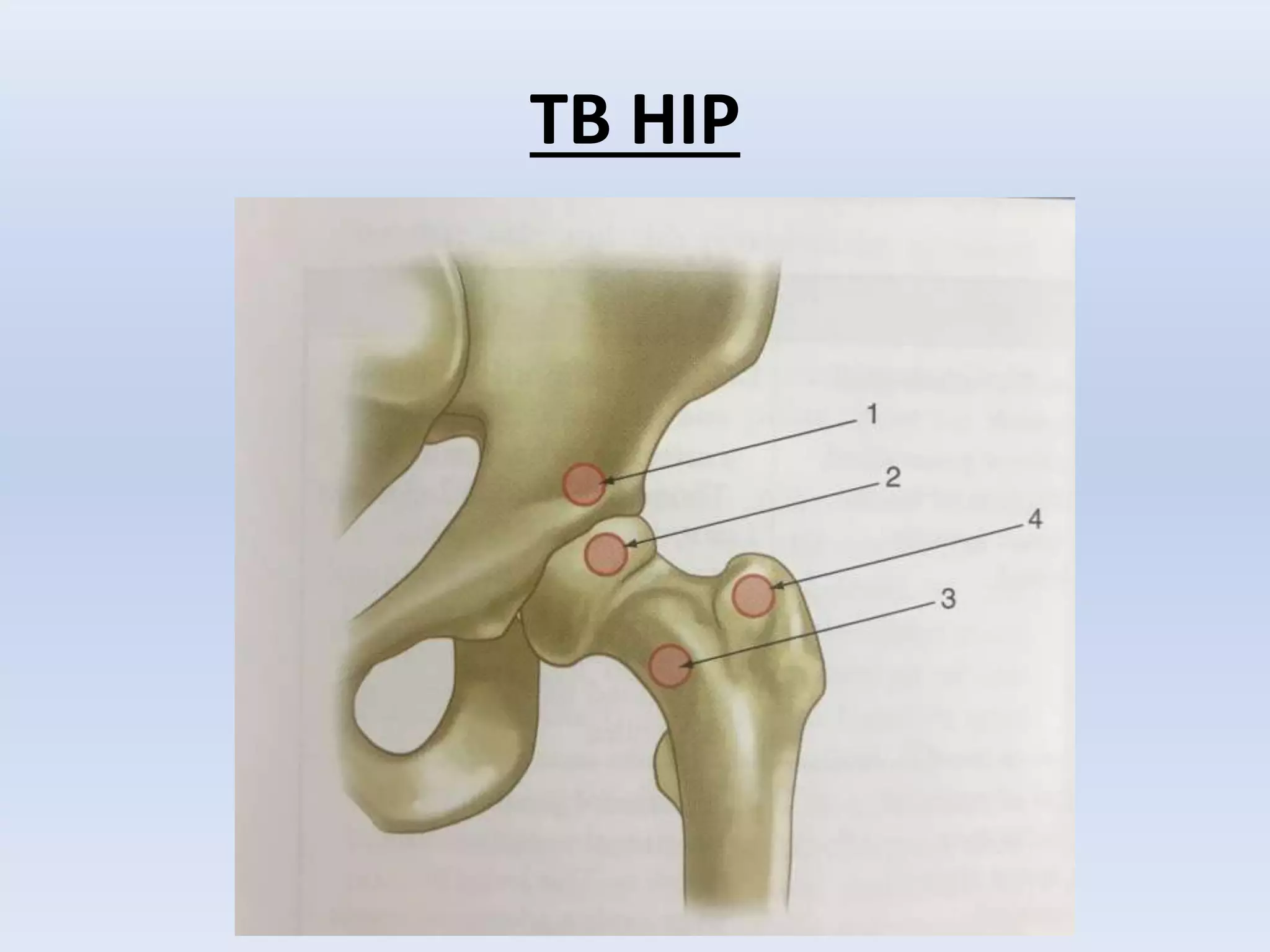
TB HIP
Classification
Radiological features of TB hip
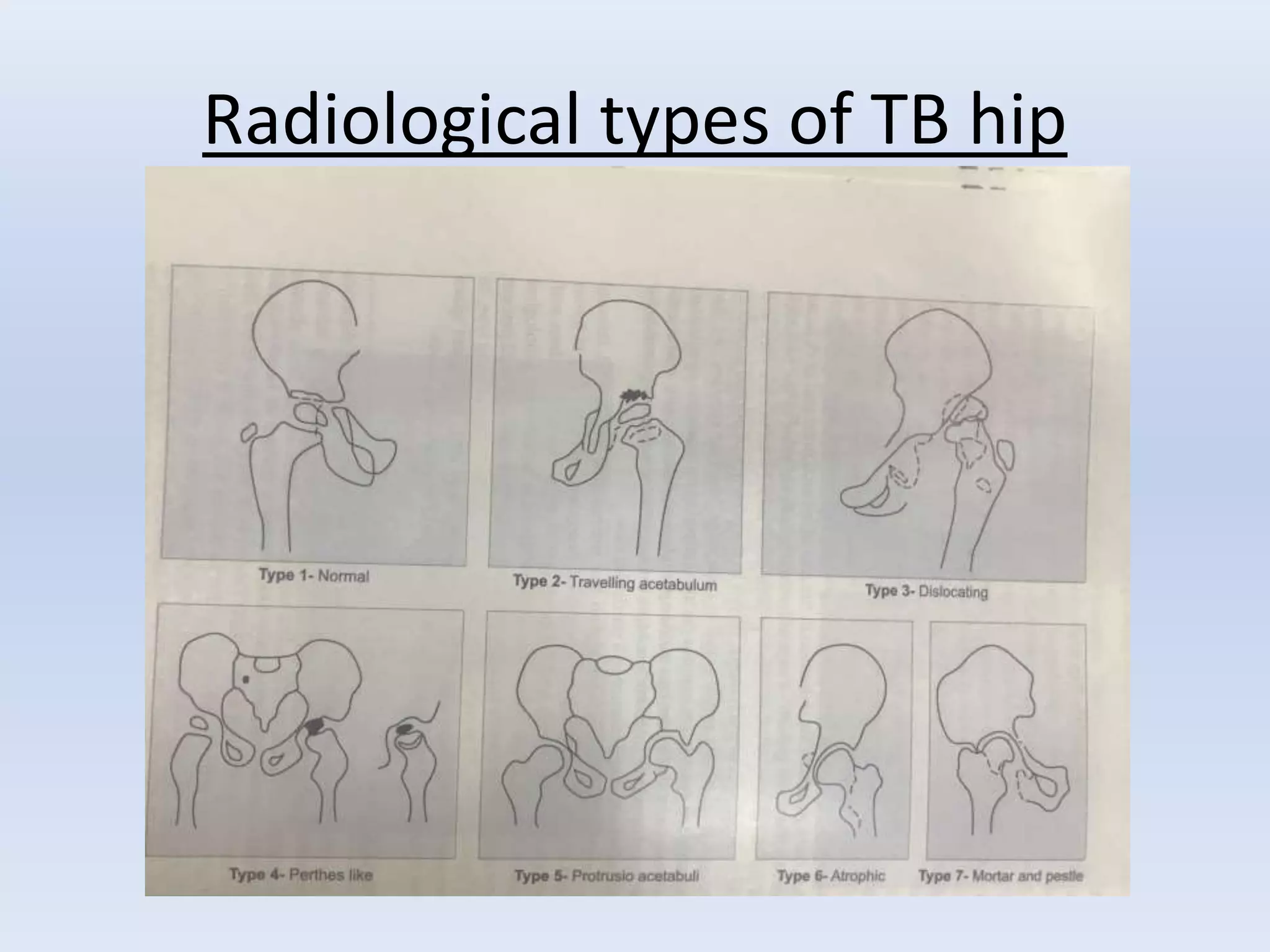
Radiological types of TB hip
Treatment-excisional arthroplasty
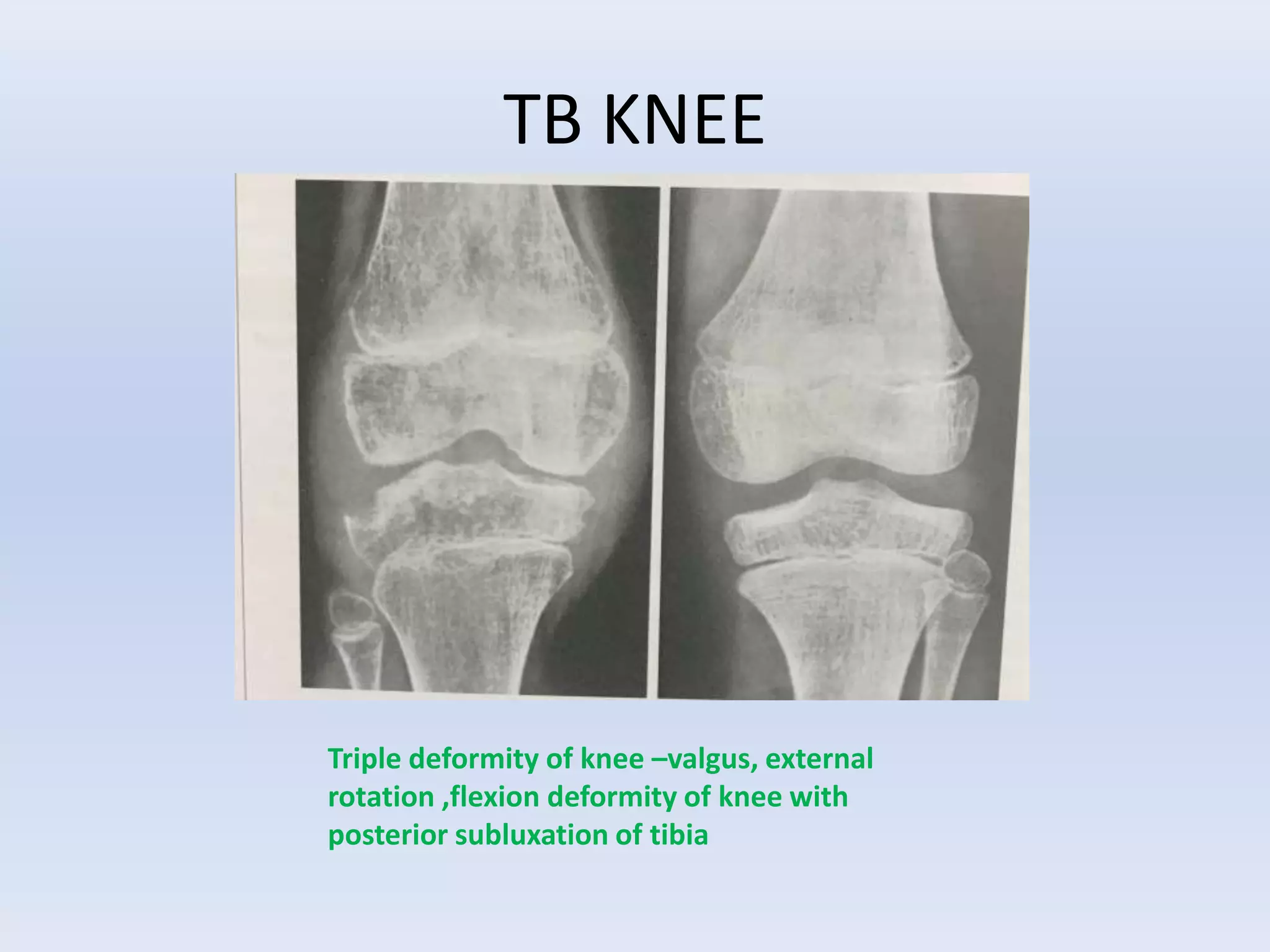
TB KNEE
Triple deformity of knee –valgus, external
rotation ,flexion deformity of knee with
posterior subluxation of tibia
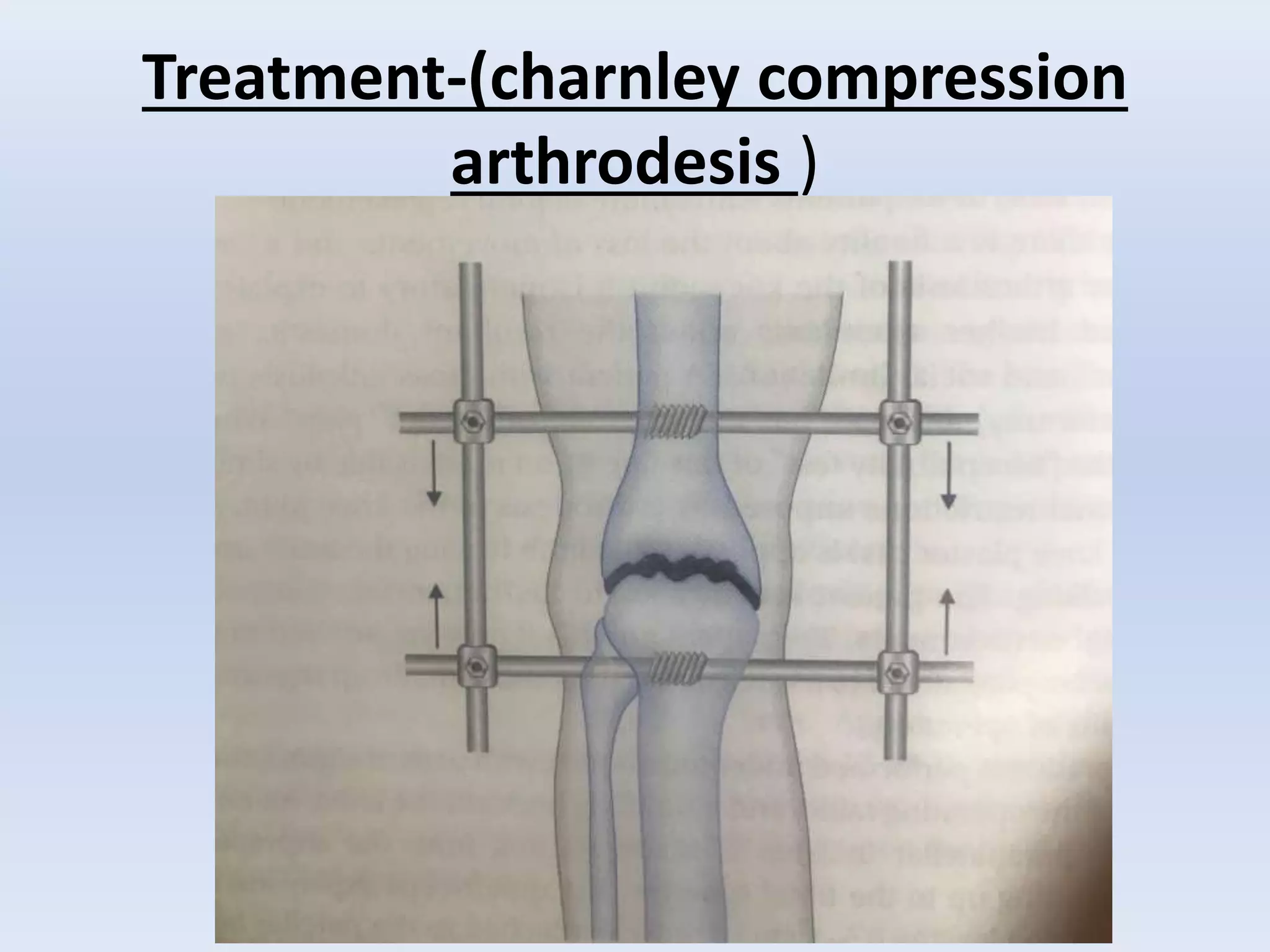
Treatment-(charnley compression
arthrodesis )
TB ELBOW
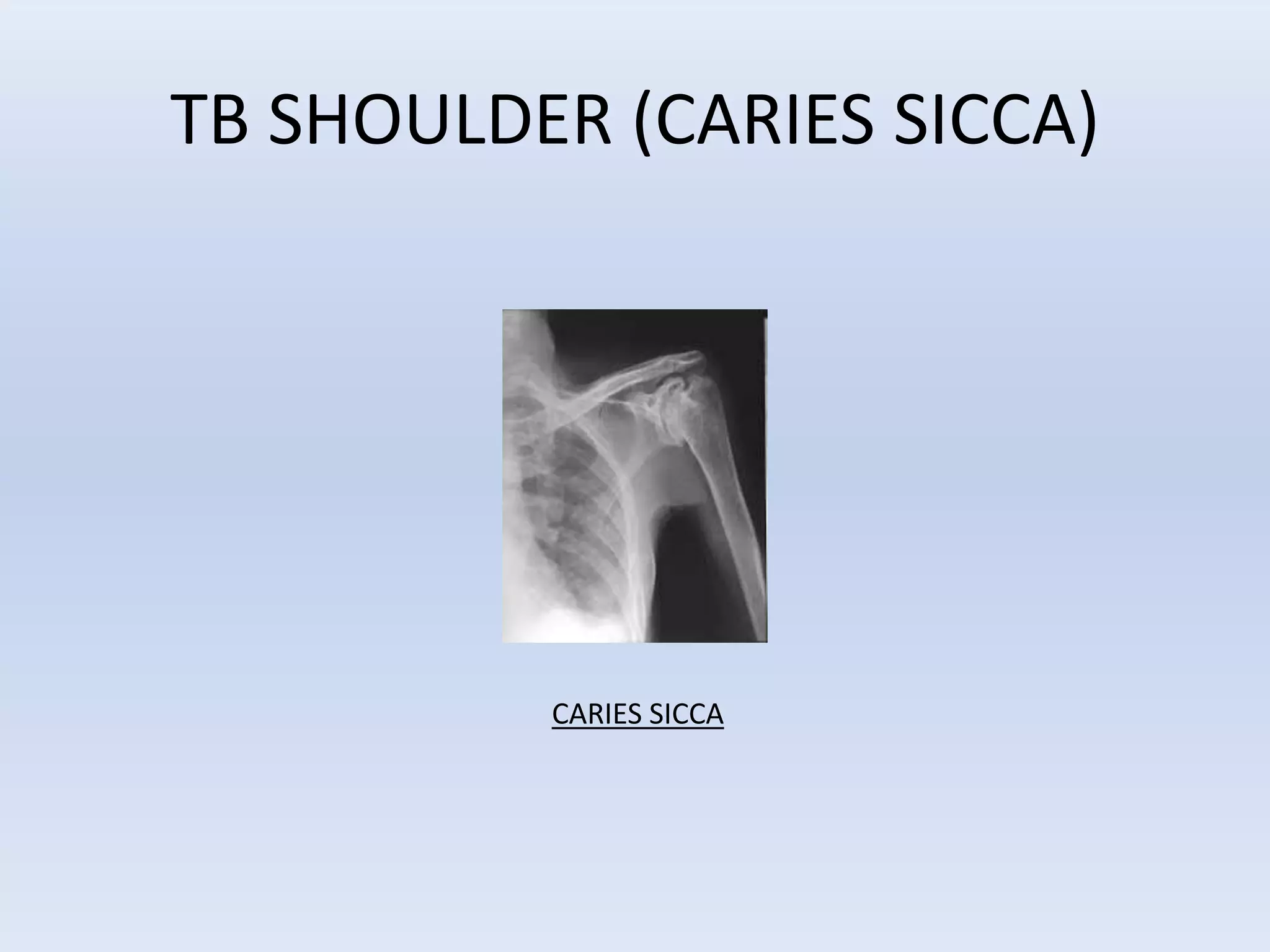
TB SHOULDER (CARIES SICCA)
CARIES SICCA
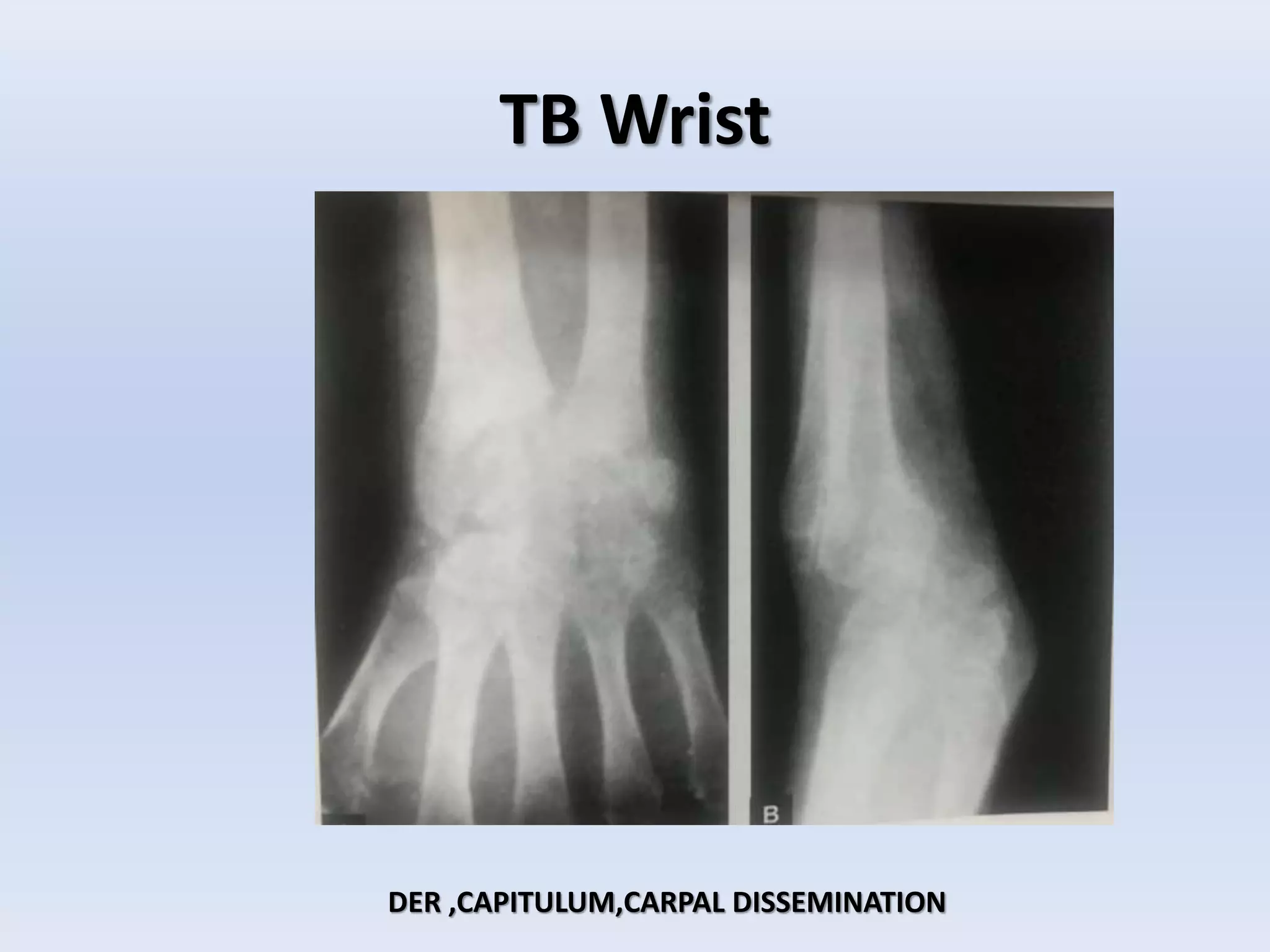
TB Wrist
DER ,CAPITULUM,CARPAL DISSEMINATION
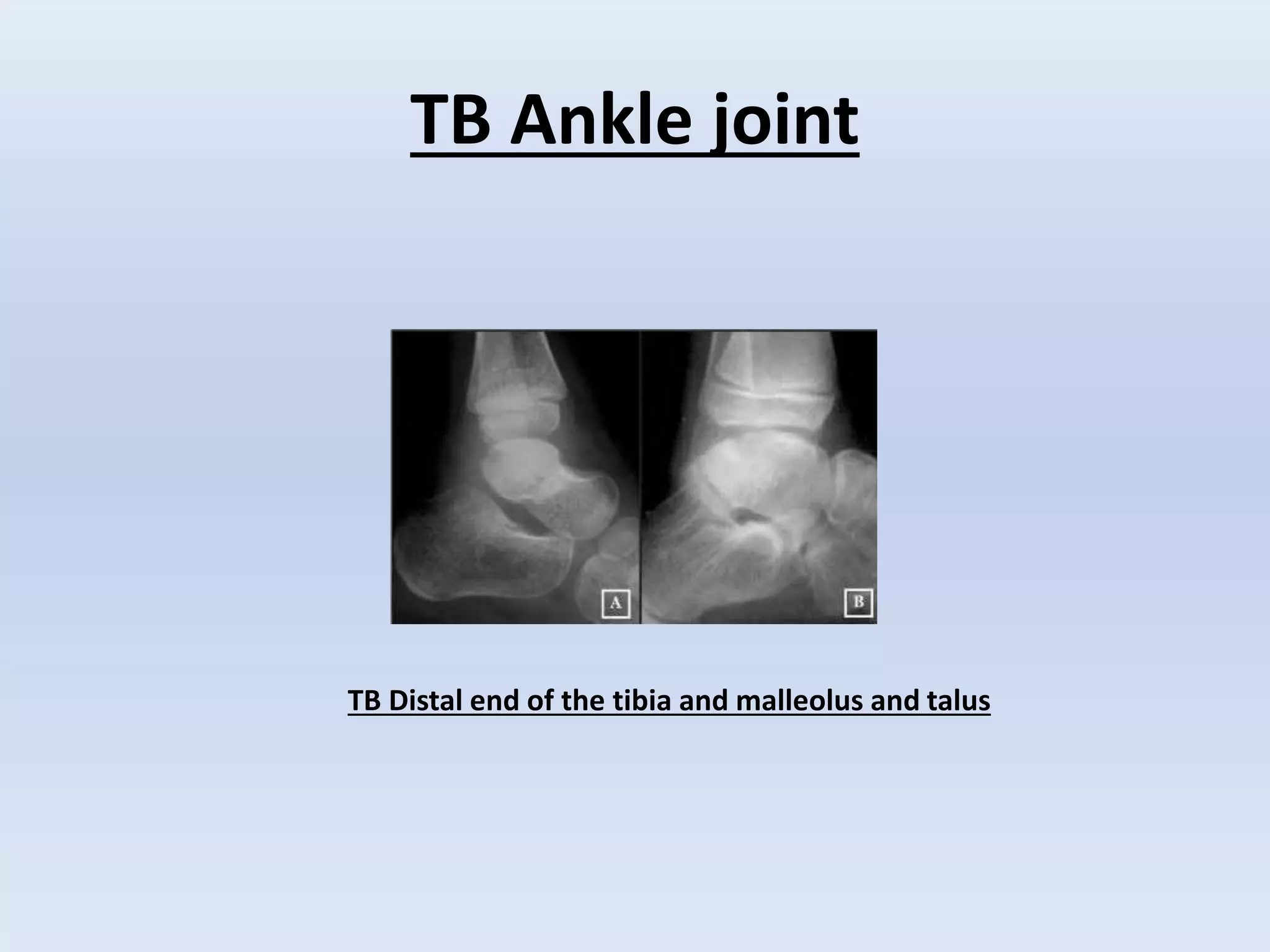
TB Ankle joint
TB Distal end of the tibia and malleolus and talus
TB Foot calcaneum ,subtalar ,
midtarsal and metatarsal
TB calcaneum TB metatarsal
TB of tarsals
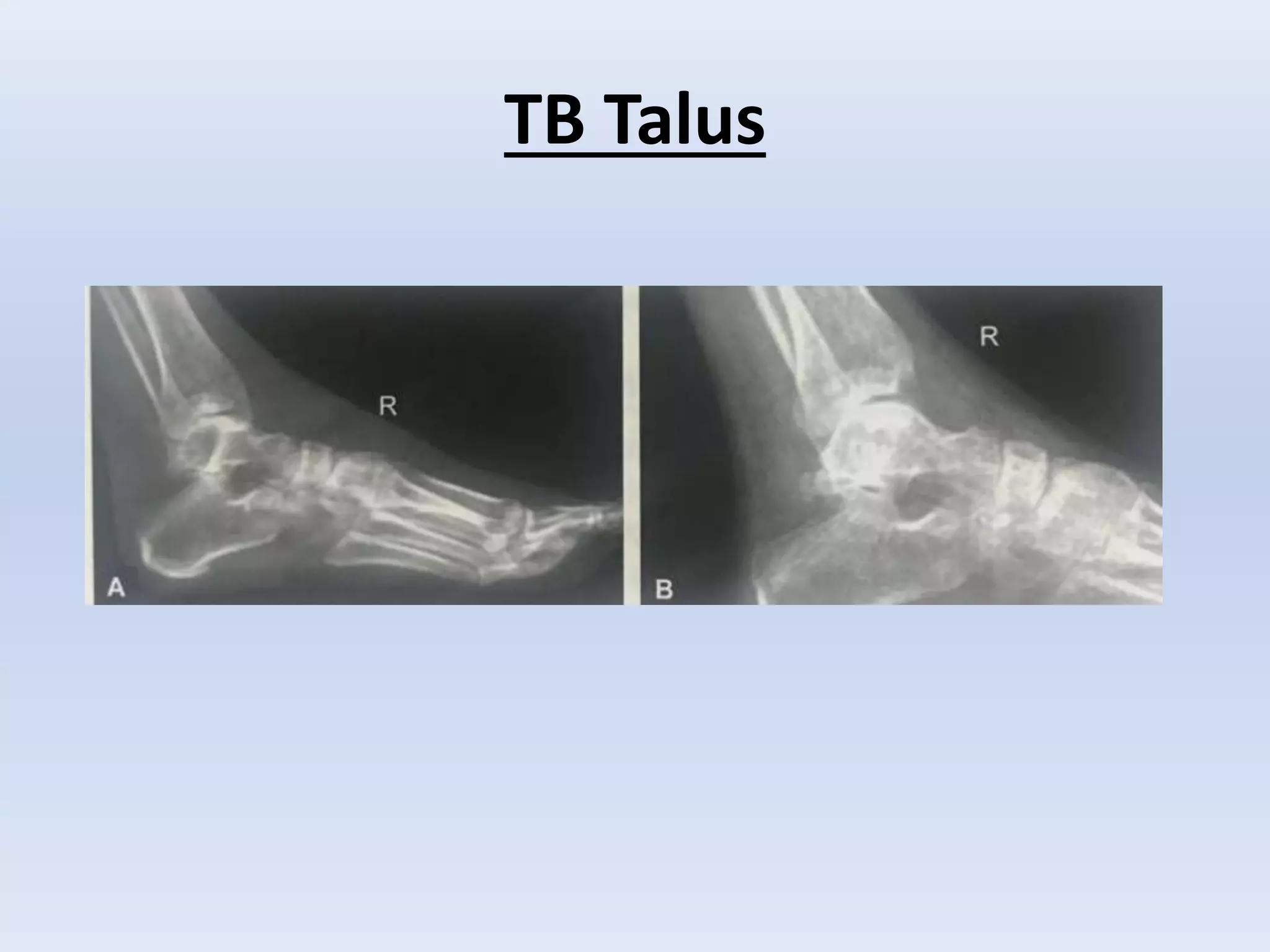
TB Talus
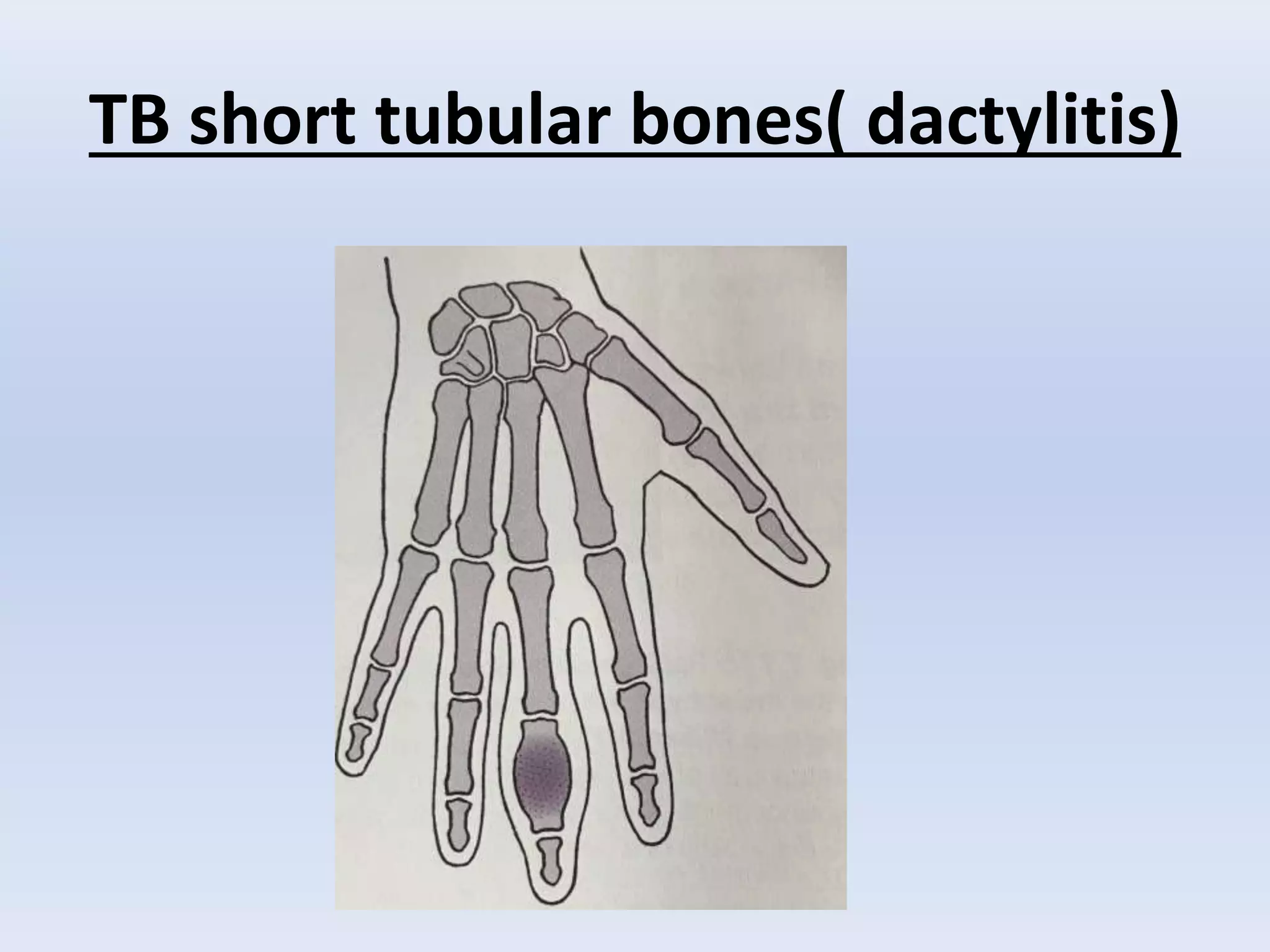
TB short tubular bones( dactylitis)
TB Metacarpal
Tuberculosis of sacroiliac joint and
sacrum
TB of rare sites ,Girdle and flat bones
• Sternoclavicular joint
• Acromio-clavicular joint
• Clavicle
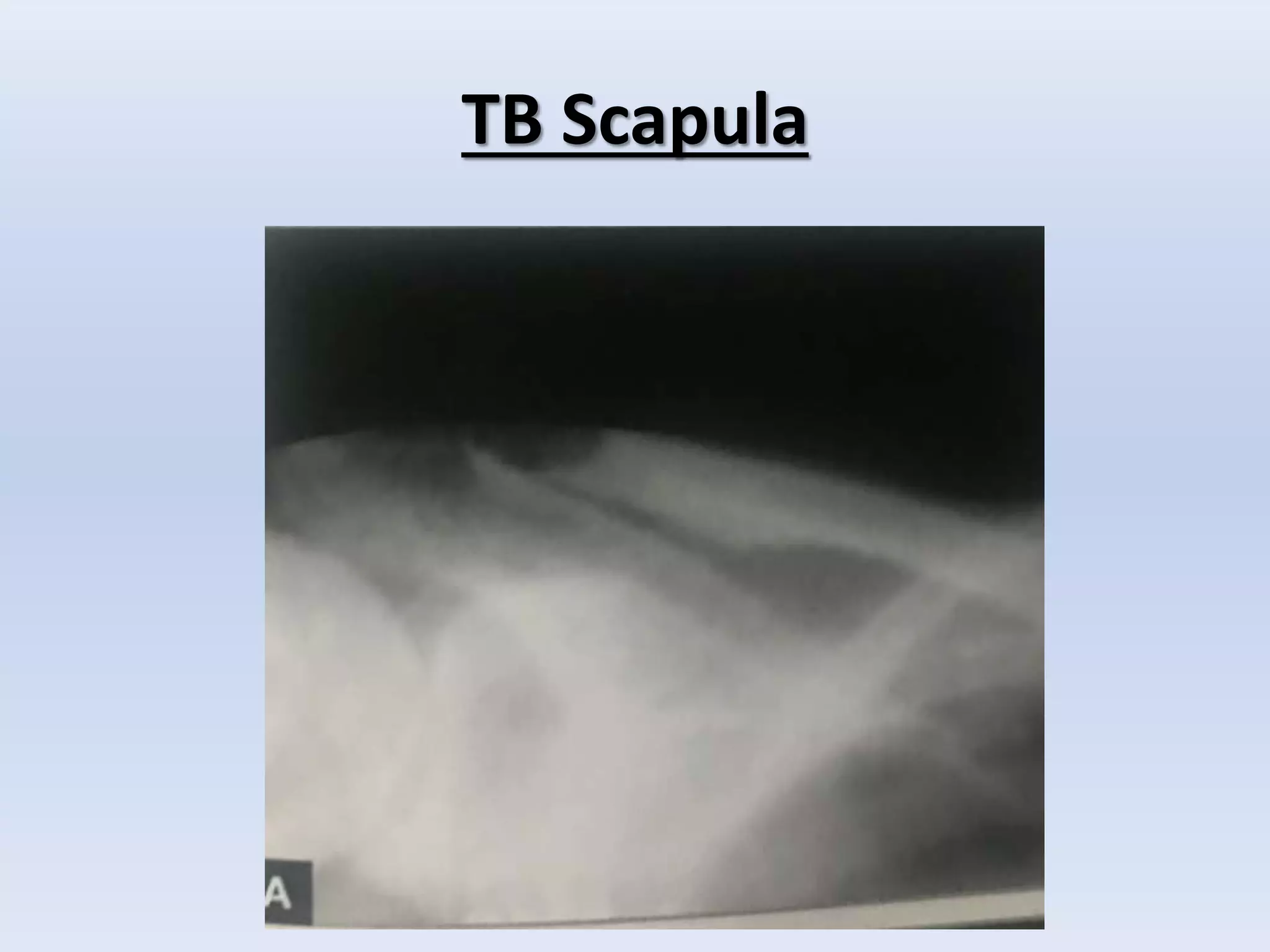
• Scapula
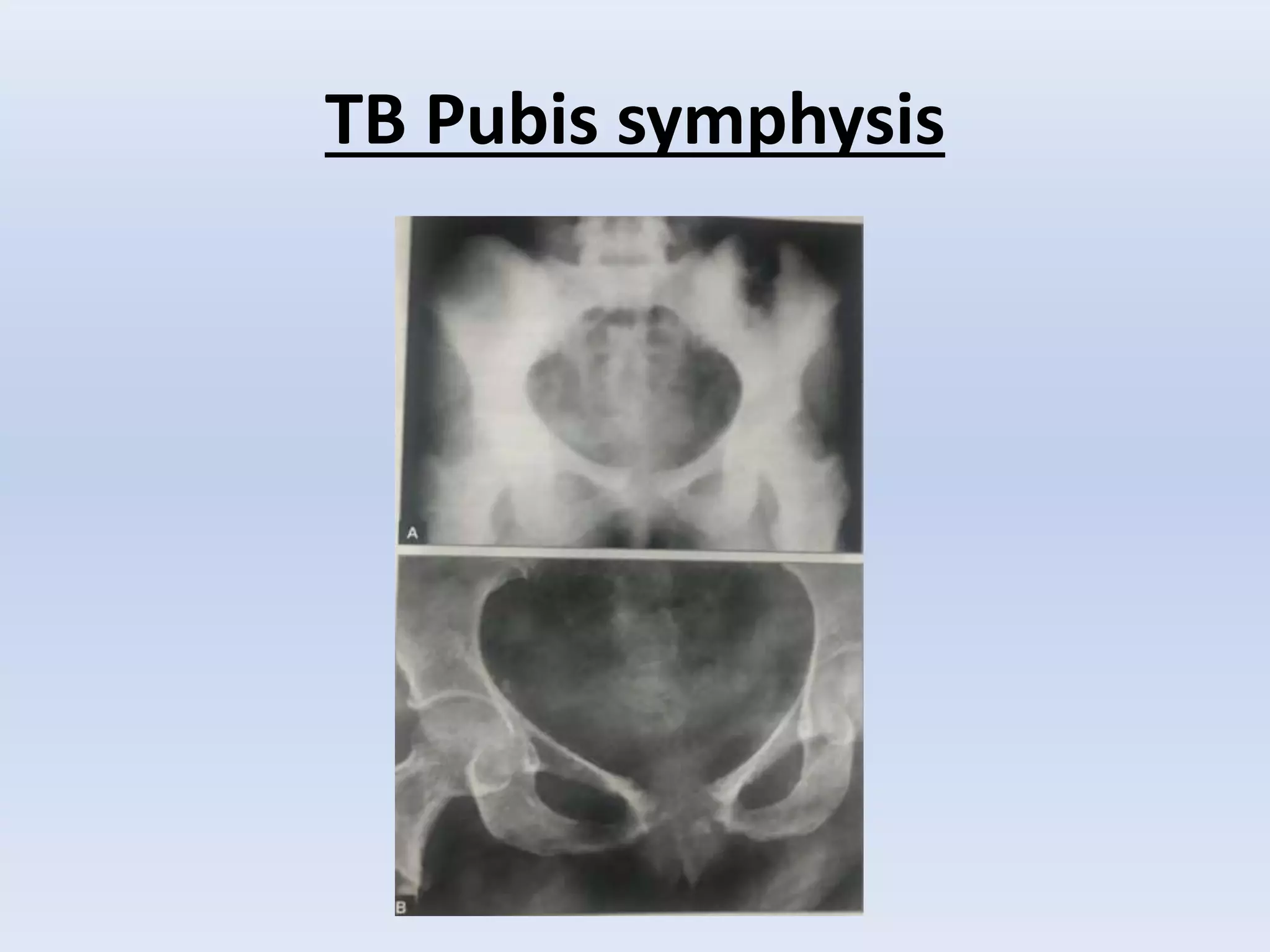
• Symphysis pubis
TB Scapula
TB Clavicle
TB Pubis symphysis
TB Sternum and Ribs
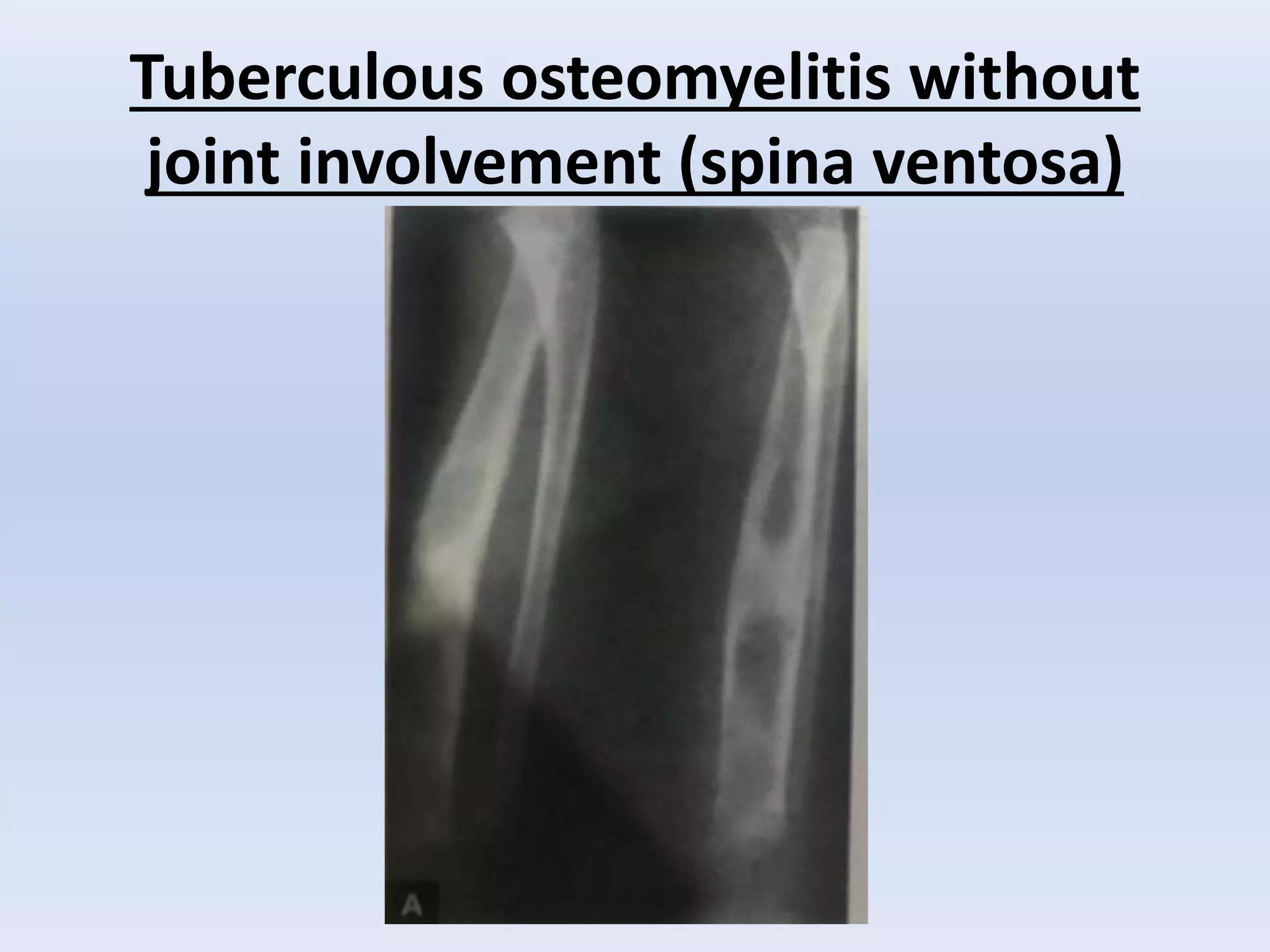
Tuberculous osteomyelitis without
joint involvement (spina ventosa)
Cystic tuberculosis of fibula
Tuberculosis of tendon sheath and
bursae
Tuberculosis of greater trochanter(
bursa)
Tuberculosis of facial and skull bones
• Not our domain
Take home message
TB infection of the bone and joint causes chronic
pain ,deformity, disability and life threatening
especially in tuberculosis of cervical spine, hence
the diagnosis should be made early by keeping the
high suspicion index so that early treatment can be
started with the aim of healing of the disease and
getting good functional outcome by chemotherapy
alone or along with the surgical intervention
.Regular follow up is mandatory to achieve good
result

Tuberculosis of bone and joints