Kimberly Carter
Mentors: Dr. Gireesh Rajashekara and Dr. Issmat Kassem
Food Animal Health Research Program
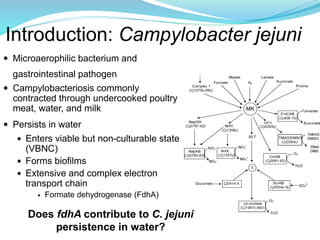
Introduction: Campylobacter jejuni
 Microaerophilic bacterium and
gastrointestinal pathogen
 Campylobacteriosis commonly
contracted through undercooked poultry
meat, water, and milk
 Persists in water
 Enters viable but non-culturable state
(VBNC)
 Forms biofilms
 Extensive and complex electron
transport chain
 Formate dehydrogenase (FdhA)
Does fdhA contribute to C. jejuni
persistence in water?
Objectives and Hypothesis
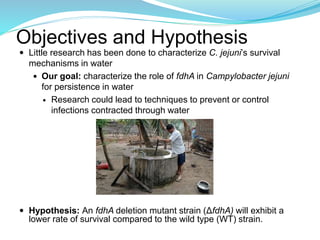
 Little research has been done to characterize C. jejuni’s survival
mechanisms in water
 Our goal: characterize the role of fdhA in Campylobacter jejuni
for persistence in water
 Research could lead to techniques to prevent or control
infections contracted through water
 Hypothesis: An fdhA deletion mutant strain (ΔfdhA) will exhibit a
lower rate of survival compared to the wild type (WT) strain.
Materials and Methods
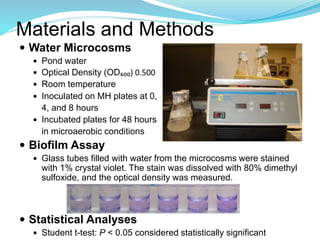
 Water Microcosms
 Pond water
 Optical Density (OD₆₀₀) 0.500
 Room temperature
 Inoculated on MH plates at 0,
4, and 8 hours
 Incubated plates for 48 hours
in microaerobic conditions
 Biofilm Assay
 Glass tubes filled with water from the microcosms were stained
with 1% crystal violet. The stain was dissolved with 80% dimethyl
sulfoxide, and the optical density was measured.
 Statistical Analyses
 Student t-test: P < 0.05 considered statistically significant
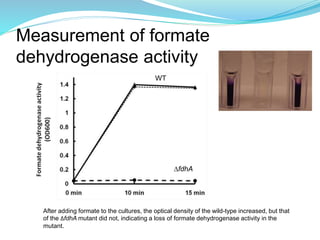
Measurement of formate
dehydrogenase activity
After adding formate to the cultures, the optical density of the wild-type increased, but that
of the ∆fdhA mutant did not, indicating a loss of formate dehydrogenase activity in the
mutant.
WT
∆fdhA
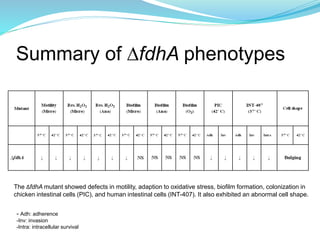
Summary of ∆fdhA phenotypes
The ∆fdhA mutant showed defects in motility, adaption to oxidative stress, biofilm formation, colonization in
chicken intestinal cells (PIC), and human intestinal cells (INT-407). It also exhibited an abnormal cell shape.
- Adh: adherence
-Inv: invasion
-Intra: intracellular survival
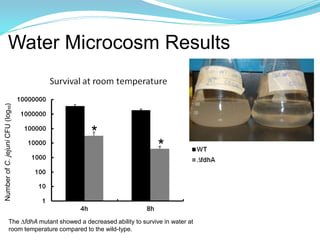
Water Microcosm Results
The ∆fdhA mutant showed a decreased ability to survive in water at
room temperature compared to the wild-type.
*
*
NumberofC.jejuniCFU(log₁₀)
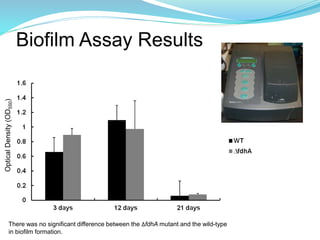
Biofilm Assay Results
There was no significant difference between the ∆fdhA mutant and the wild-type
in biofilm formation.
OpticalDensity(OD550)
Conclusions and Future Directions
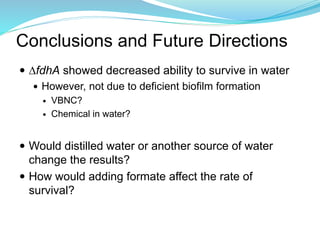
 ∆fdhA showed decreased ability to survive in water
 However, not due to deficient biofilm formation
 VBNC?
 Chemical in water?
 Would distilled water or another source of water
change the results?
 How would adding formate affect the rate of
survival?
References
Baffone, W., Casaroli, A., Citterio, B., Pierfelici, L., Campana, R., Vittoria, E., Guaglianone, E. and G.
Donelli. 2005. Campylobacter jejuni loss of culturability in aqueous microcosms and ability to
resuscitate in a mouse model. IJ Food Micro 107:83-91.
Hitchcock, A., Hall, S., Myers, J., Mulholland, F., Jones, M. and D. Kelly. 2010. Roles of the twin-arginine
translocase and associated chaperones in the biogenesis of electron transport chains of the
human pathogen Campylobacter jejuni. Microbiology 156:2994-3010.
Jackson, N., Davis, B., Tirado, S., Duggal, M., van Frankenhuyzen, J., Deaville, D., Wijesinghe, M.,
Tessaro, M. and J. Trevors. 2009. Survival mechanisms and culturability of Campylobacter
jejuni under stress conditions. Antonie van Leeuwenkoek. 96:377-394.
Kassem, I., Zhang, Q., and G. Rajashekara. 2011. The twin-arginine translocation system: contributions to
the pathobiology of Campylobacter jejuni. Future Microbiol. 6(11):1-13.
Liu, X., Gao, B., Novik, V. and Galán, J. 2012. Quantitative proteomics of intracellular Campylobacter
jejuni reveals metabolic reprogramming. PLoS Pathog 8(3):1-12.
Rajashekara, G., Drozd, M., Gangaiah, D., Jeon, B., Liu, Z. and Q. Zhang. 2009. Functional
characterization of the twin-arginine translocation system in Campylobacter jejuni. Foodborne
Path Disease 6(8):935-945.
Weerakoon, D., Borden, N., Goodson, C., Grimes, J. and J. Olson. 2009. The role of respiratory donor
enzymes in Campylobacter jejuni host colonization and physiology. Micro Pathogenesis
47(1):8-15.
Wingender, J. and H. Flemming. 2011. Biofilms in drinking water and their role as reservoir for pathogens.
IJ Hygiene Environ Health 214:417-423.
Acknowledgements
 Dr. Grewal and all who make ORIP possible
 Dr. Gireesh Rajashekara
 Dr. Issmat Kassem
 All personnel in Dr. Rajashekara’s labs
 All personnel in the Food Animal Health Research
Program
ORIP Presentation 2012

ORIP Presentation 2012

  • 1.
    Kimberly Carter Mentors: Dr.Gireesh Rajashekara and Dr. Issmat Kassem Food Animal Health Research Program
  • 2.
    Introduction: Campylobacter jejuni Microaerophilic bacterium and gastrointestinal pathogen  Campylobacteriosis commonly contracted through undercooked poultry meat, water, and milk  Persists in water  Enters viable but non-culturable state (VBNC)  Forms biofilms  Extensive and complex electron transport chain  Formate dehydrogenase (FdhA) Does fdhA contribute to C. jejuni persistence in water?
  • 3.
    Objectives and Hypothesis Little research has been done to characterize C. jejuni’s survival mechanisms in water  Our goal: characterize the role of fdhA in Campylobacter jejuni for persistence in water  Research could lead to techniques to prevent or control infections contracted through water  Hypothesis: An fdhA deletion mutant strain (ΔfdhA) will exhibit a lower rate of survival compared to the wild type (WT) strain.
  • 4.
    Materials and Methods Water Microcosms  Pond water  Optical Density (OD₆₀₀) 0.500  Room temperature  Inoculated on MH plates at 0, 4, and 8 hours  Incubated plates for 48 hours in microaerobic conditions  Biofilm Assay  Glass tubes filled with water from the microcosms were stained with 1% crystal violet. The stain was dissolved with 80% dimethyl sulfoxide, and the optical density was measured.  Statistical Analyses  Student t-test: P < 0.05 considered statistically significant
  • 5.
    Measurement of formate dehydrogenaseactivity After adding formate to the cultures, the optical density of the wild-type increased, but that of the ∆fdhA mutant did not, indicating a loss of formate dehydrogenase activity in the mutant. WT ∆fdhA
  • 6.
    Summary of ∆fdhAphenotypes The ∆fdhA mutant showed defects in motility, adaption to oxidative stress, biofilm formation, colonization in chicken intestinal cells (PIC), and human intestinal cells (INT-407). It also exhibited an abnormal cell shape. - Adh: adherence -Inv: invasion -Intra: intracellular survival
  • 7.
    Water Microcosm Results The∆fdhA mutant showed a decreased ability to survive in water at room temperature compared to the wild-type. * * NumberofC.jejuniCFU(log₁₀)
  • 8.
    Biofilm Assay Results Therewas no significant difference between the ∆fdhA mutant and the wild-type in biofilm formation. OpticalDensity(OD550)
  • 9.
    Conclusions and FutureDirections  ∆fdhA showed decreased ability to survive in water  However, not due to deficient biofilm formation  VBNC?  Chemical in water?  Would distilled water or another source of water change the results?  How would adding formate affect the rate of survival?
  • 10.
    References Baffone, W., Casaroli,A., Citterio, B., Pierfelici, L., Campana, R., Vittoria, E., Guaglianone, E. and G. Donelli. 2005. Campylobacter jejuni loss of culturability in aqueous microcosms and ability to resuscitate in a mouse model. IJ Food Micro 107:83-91. Hitchcock, A., Hall, S., Myers, J., Mulholland, F., Jones, M. and D. Kelly. 2010. Roles of the twin-arginine translocase and associated chaperones in the biogenesis of electron transport chains of the human pathogen Campylobacter jejuni. Microbiology 156:2994-3010. Jackson, N., Davis, B., Tirado, S., Duggal, M., van Frankenhuyzen, J., Deaville, D., Wijesinghe, M., Tessaro, M. and J. Trevors. 2009. Survival mechanisms and culturability of Campylobacter jejuni under stress conditions. Antonie van Leeuwenkoek. 96:377-394. Kassem, I., Zhang, Q., and G. Rajashekara. 2011. The twin-arginine translocation system: contributions to the pathobiology of Campylobacter jejuni. Future Microbiol. 6(11):1-13. Liu, X., Gao, B., Novik, V. and Galán, J. 2012. Quantitative proteomics of intracellular Campylobacter jejuni reveals metabolic reprogramming. PLoS Pathog 8(3):1-12. Rajashekara, G., Drozd, M., Gangaiah, D., Jeon, B., Liu, Z. and Q. Zhang. 2009. Functional characterization of the twin-arginine translocation system in Campylobacter jejuni. Foodborne Path Disease 6(8):935-945. Weerakoon, D., Borden, N., Goodson, C., Grimes, J. and J. Olson. 2009. The role of respiratory donor enzymes in Campylobacter jejuni host colonization and physiology. Micro Pathogenesis 47(1):8-15. Wingender, J. and H. Flemming. 2011. Biofilms in drinking water and their role as reservoir for pathogens. IJ Hygiene Environ Health 214:417-423.
  • 11.
    Acknowledgements  Dr. Grewaland all who make ORIP possible  Dr. Gireesh Rajashekara  Dr. Issmat Kassem  All personnel in Dr. Rajashekara’s labs  All personnel in the Food Animal Health Research Program

Editor's Notes

  • #3 Twin-arginine translocase system helps transfer folded respiratory proteins across cytoplasmic membrane. FdhA is a Tat-dependent protein; oxidizes formate Utilizes amino acids and organic acids to obtain carbon