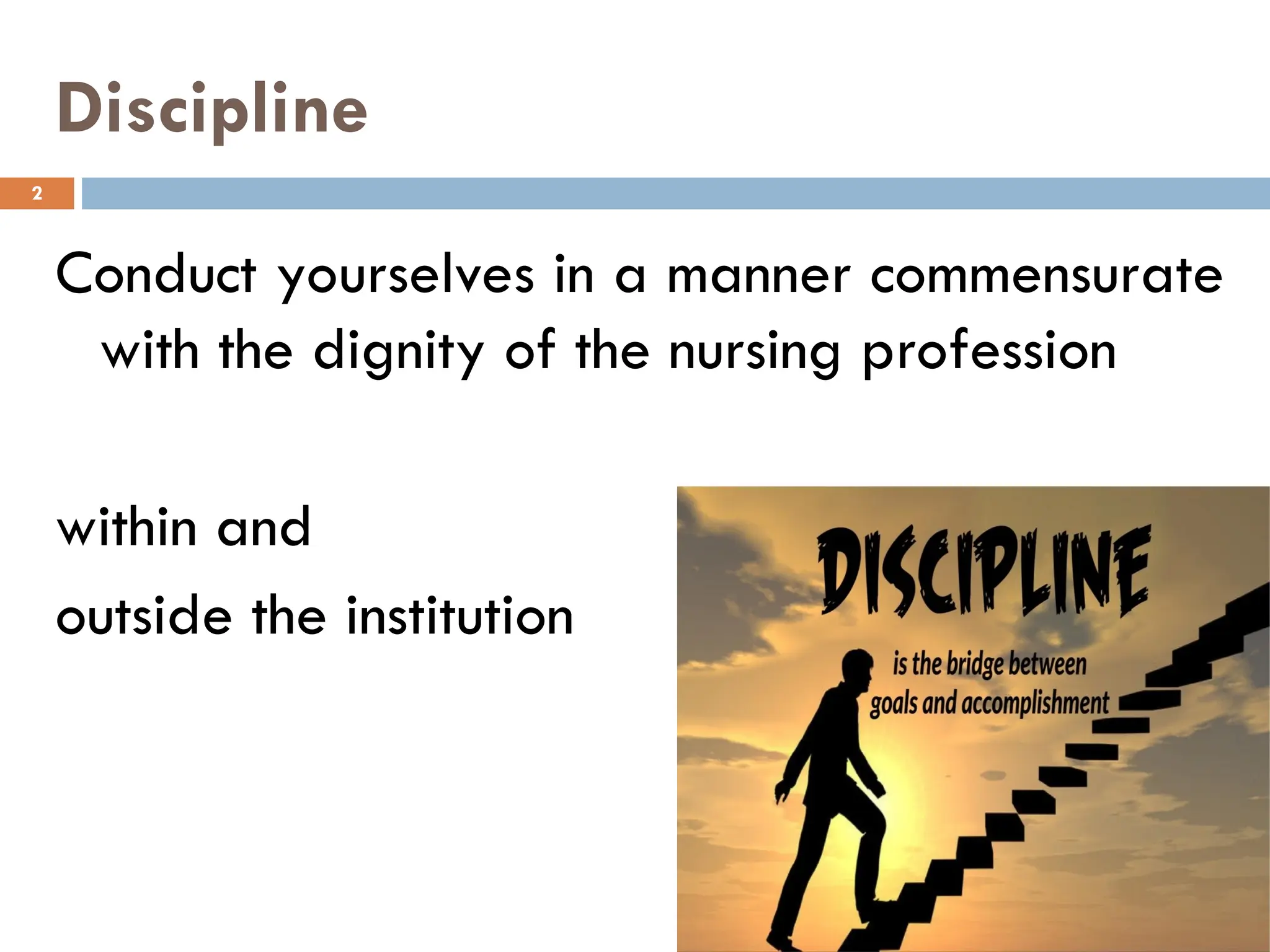
Discipline
Conduct yourselves in a manner commensurate
with the dignity of the nursing profession
within and
outside the institution
2
Discipline and Self-Discipline
 All students
 Violation of rules - several disciplinary actions
Special attention is drawn to the following
points…..
3
Good Wishes
“Good Morning” or
“Good afternoon”
How do you do?
How are you?
Teachers
Seniors
Co-workers
Clients
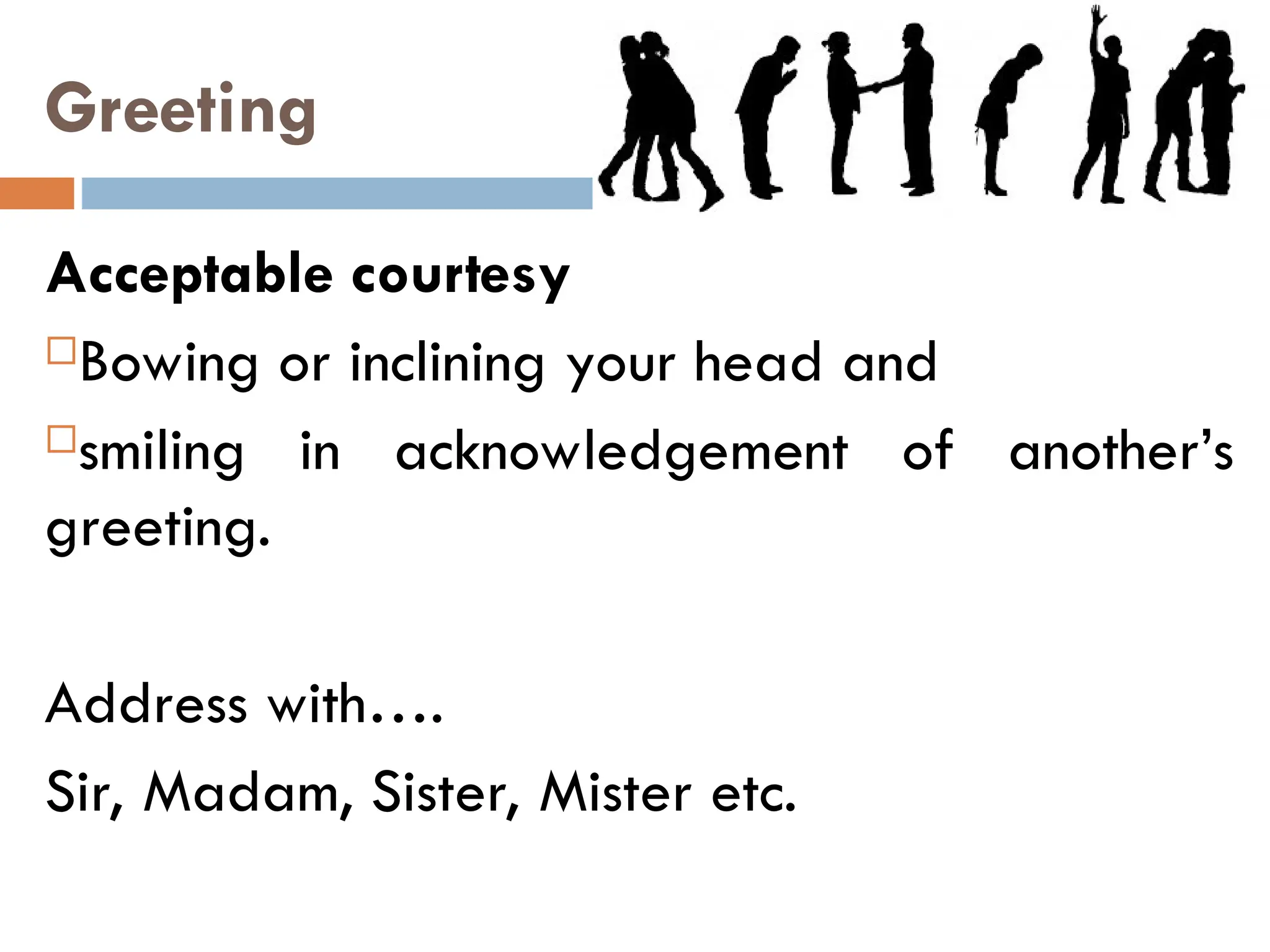
Greeting
Acceptable courtesy
Bowing or inclining your head and
smiling in acknowledgement of another’s
greeting.
Address with….
Sir, Madam, Sister, Mister etc.
Punctuality
 Classes
 Demonstrations
 College events
 Meetings and
 Appointments
If you are late
If you are unable - inform the organizer or the CC &
apology
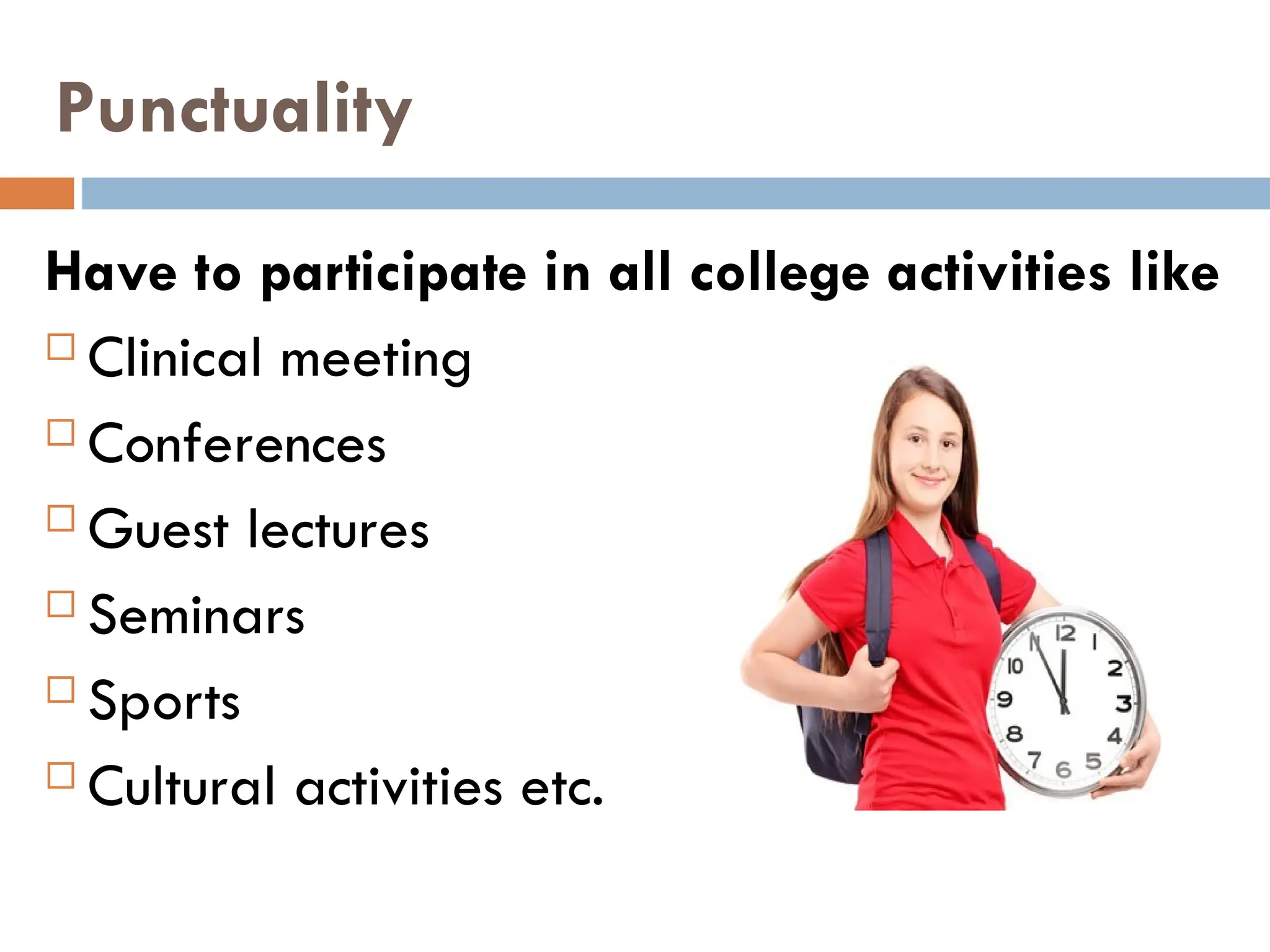
Punctuality
Have to participate in all college activities like
 Clinical meeting
 Conferences
 Guest lectures
 Seminars
 Sports
 Cultural activities etc.
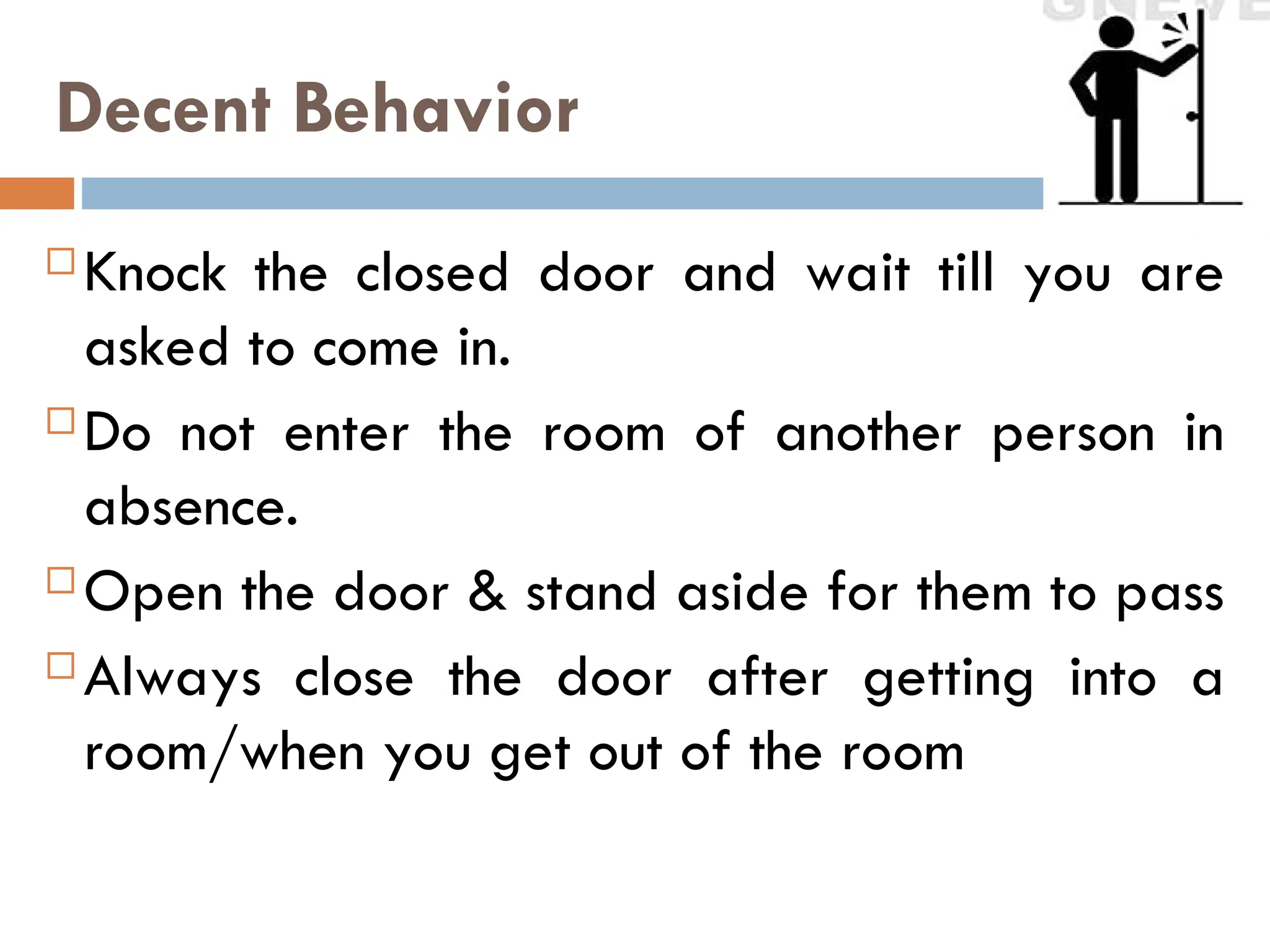
Decent Behavior
 Knock the closed door and wait till you are
asked to come in.
 Do not enter the room of another person in
absence.
 Open the door & stand aside for them to pass
 Always close the door after getting into a
room/when you get out of the room
Decent Behavior
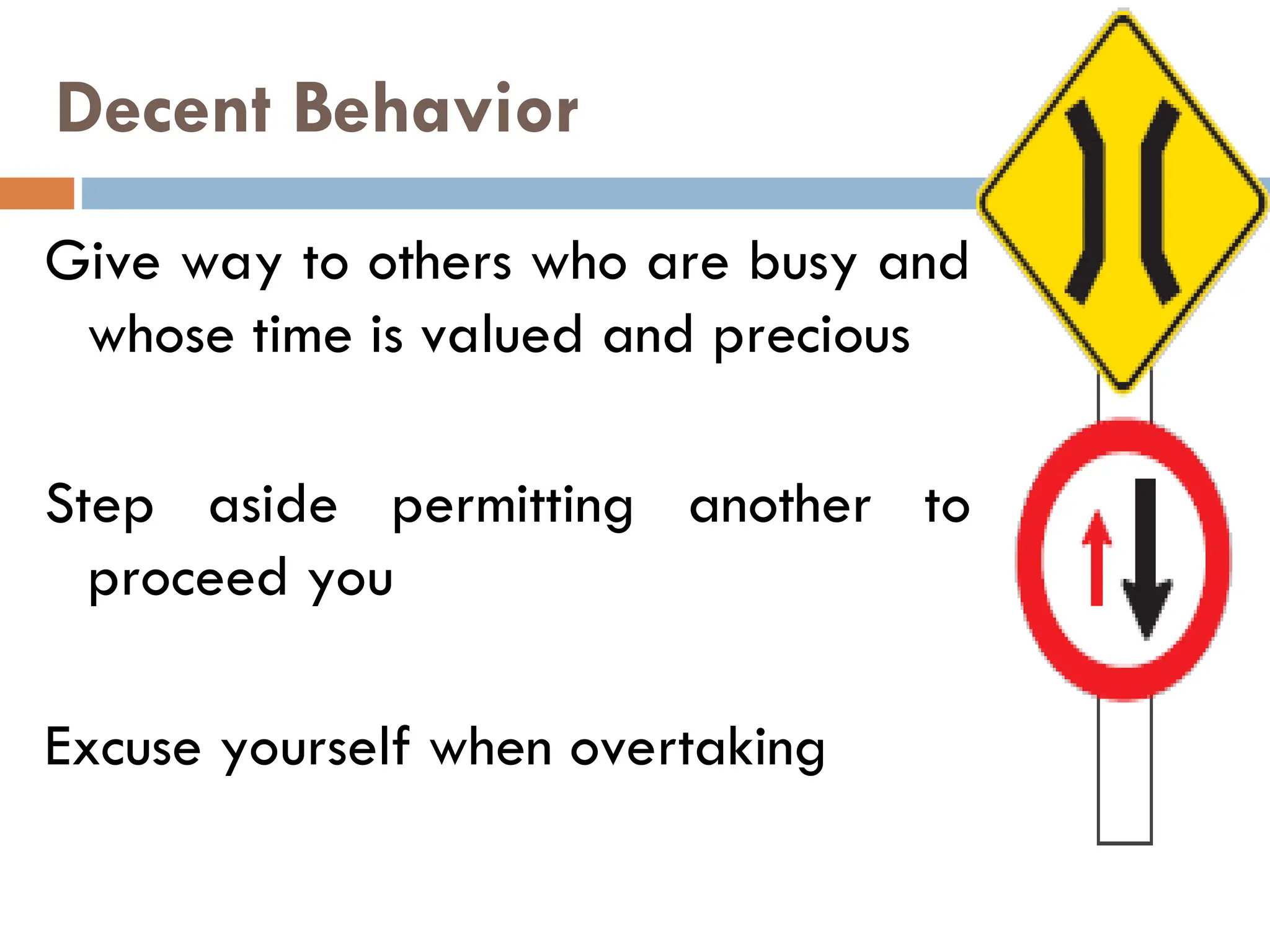
Give way to others who are busy and
whose time is valued and precious
Step aside permitting another to
proceed you
Excuse yourself when overtaking
Decent Behavior
 Obey and Don’t argue
 Help to carry a heavy load
 Get prior permission from in-charge before you
take any article
 In an assembly – let the seniors take the seat first
Dressing & Grooming
 Neat & tidy dress
 Clothing - clean and professionally styled
 Not allowed - shorts, T-shirts, dhotis,
sleeveless, tights, low waist pants, etc.
Classes or any college function
Dressing & Grooming
 Avoid expensive clothing & exaggerated fashions
 Shirt should be properly buttoned
 Dress properly for classes & clinical
 Wear - Name badges, identity card
Dressing & Grooming
 Personal hygiene - all times
 Hair - neat and clean, put up long hair
 Boys - short hair cut always
 Clean shave
 Keep jewellery at a minimum (Class & Clinical)
 Fingernails - clean and short
 Shoes/foot wear - polished, neat, clean
 No sandals
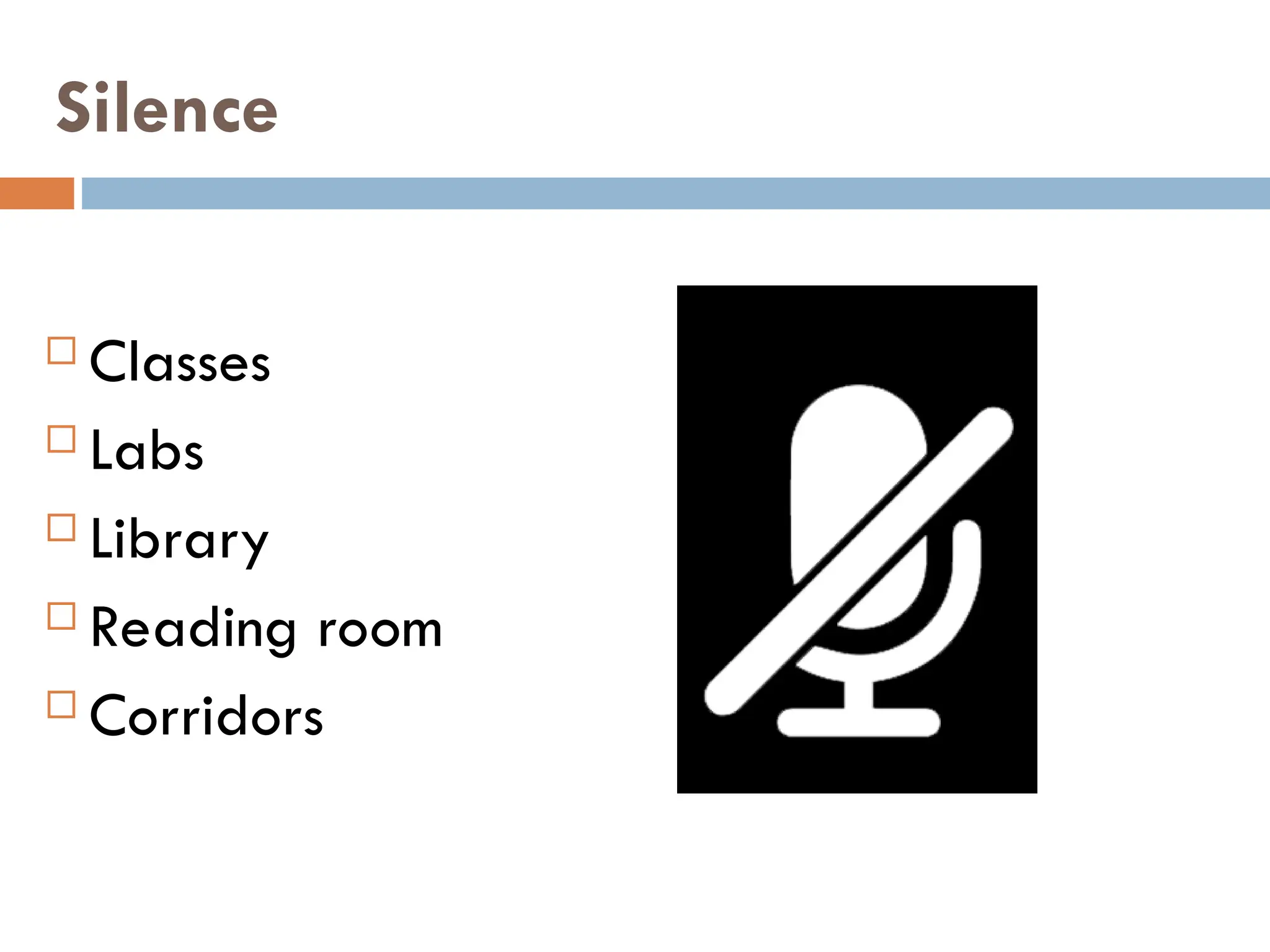
Silence
 Classes
 Labs
 Library
 Reading room
 Corridors
Develop the ability and the art of
being an interested, appreciative
Speaker/listener
Communication
Conversation Do’s
 Look at the person you are talking to
 If you haven’t met before, introduce yourself
and ask their name
 Ask questions (‘Pardon’) when you don’t
understand something
 Stick to the subject
 Say nice things and praise those who deserve it
Communication
Conversation Don’ts
 Don’t look elsewhere, or wander off
 Don’t listen in on conversations you aren’t part
of
 Don’t interrupt when someone else is talking
 Don’t whine, tattletale about others
 Don’t point or stare
 Don’t argue about things that aren’t important
Gratitude
When any help is given to you,
When someone corrects you
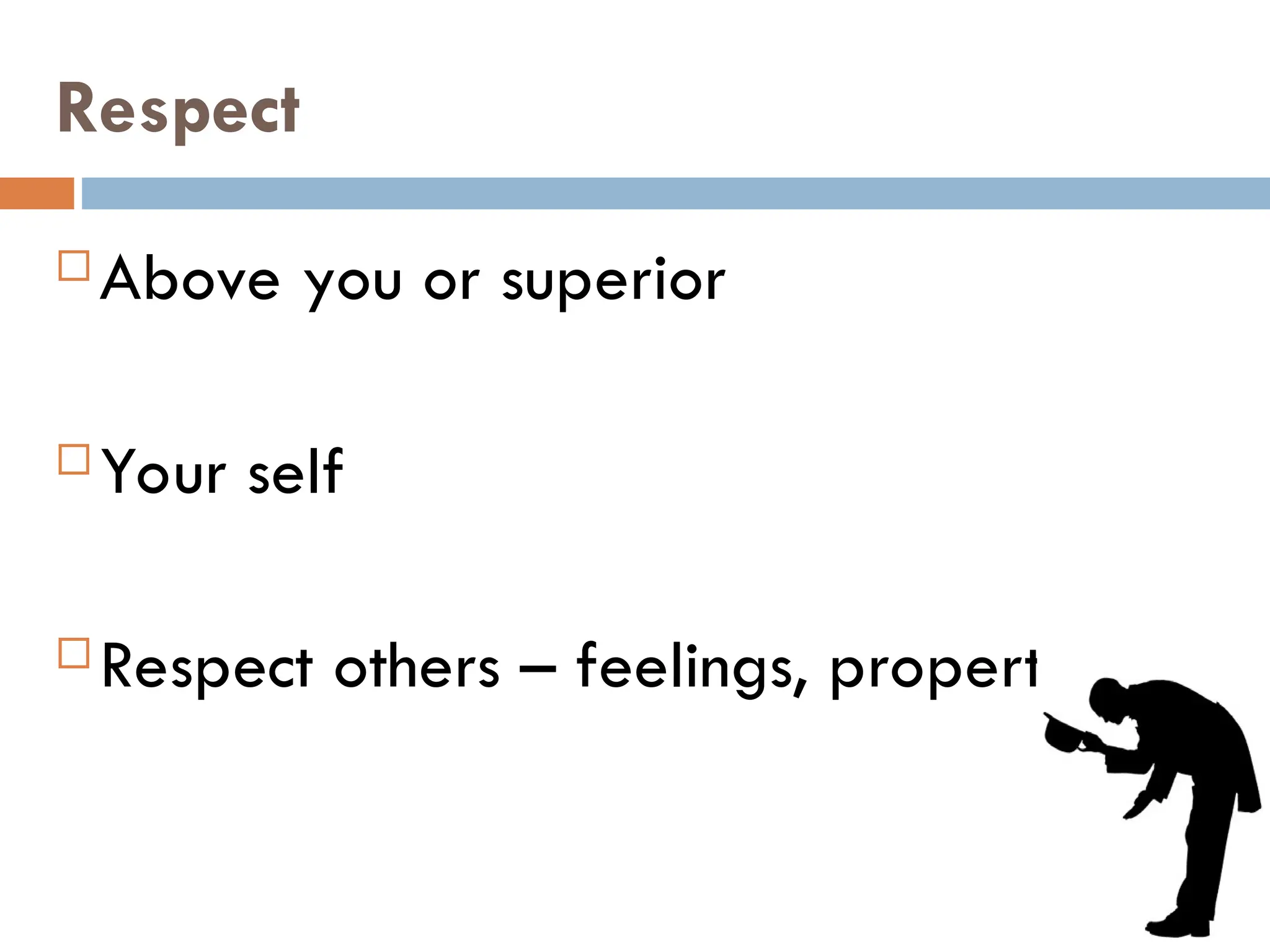
Respect
 Above you or superior
 Your self
 Respect others – feelings, property
Respect
Rise
Person of authority who approaches you
and speaks
When someone of respect enters a room.
You remain standing until you are
acknowledged.
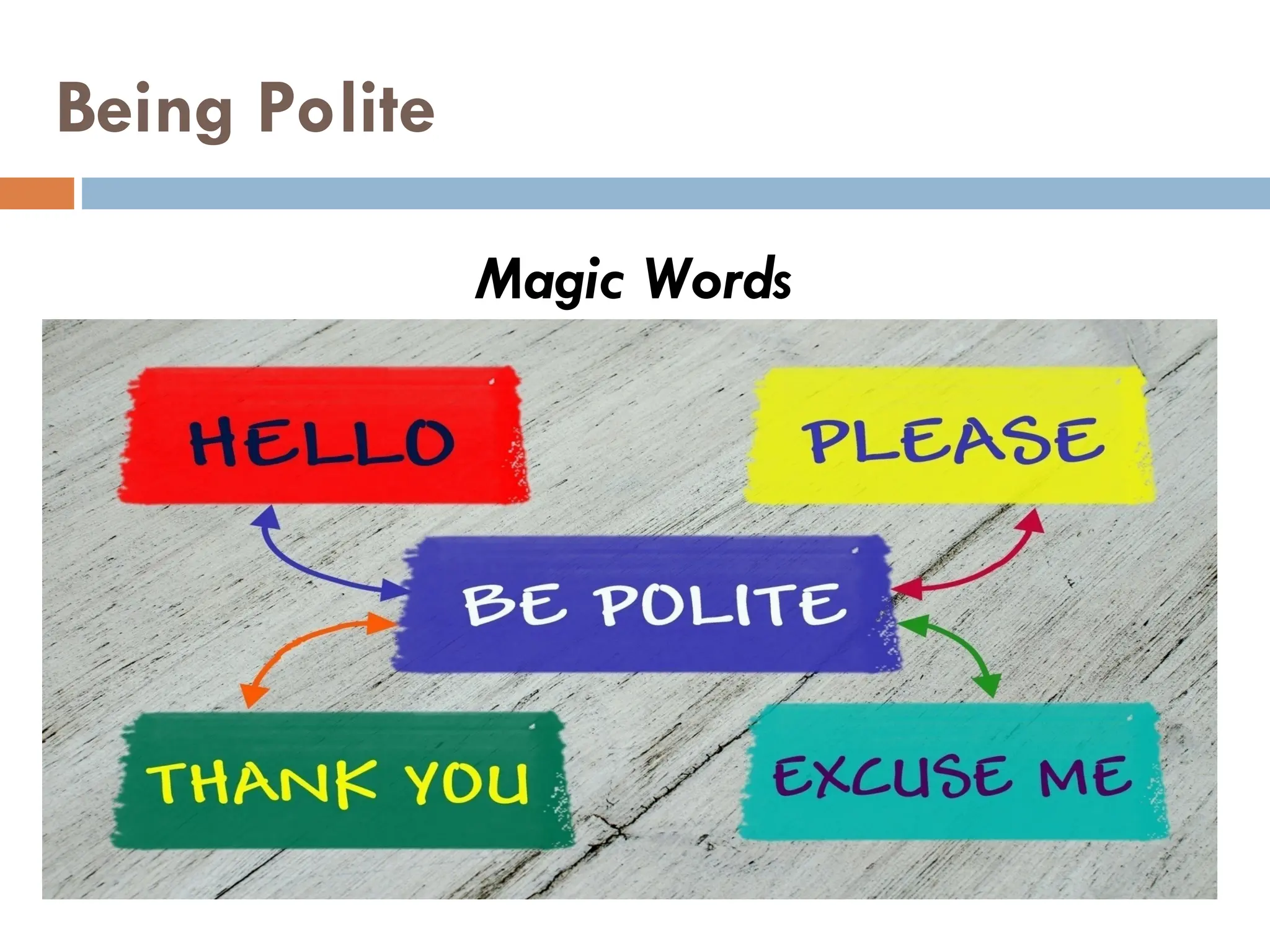
Being Polite
Magic Words
 Class room - belongs to YOU, It is your duty
to keep it Clean
 Maintain cleanliness – Your Responsibility
 Be present in the classroom 5 minutes earlier
 Class representative – Check, duster, chalks,
OHP, LCD projector etc.
 Writing on walls, pillars, furniture, black
boards - strictly prohibited.
 Use dustbin
 Silence
 Going out and coming in between lectures - avoided
strictly.
 Go out of the classroom after teacher exit
 Boys and girls - sit separately in classes and in the
library
 Furniture - should not be moved or displaced.
 Switch off fans and lights, when you leave the class
rooms.
 Chatting unnecessarily in the corridors should be avoided
 Eating snacks / taking lunch inside the class rooms or
along corridors are not permitted.
 Proper handling & safe custody of any
apparatus/equipment that you are using
 Take care of the college and hospital property
 Willful damage - treated as breach of
discipline
 Stand up when answering questions
 Don not delay the answer
 Avoid thumb sucking, nail biting, shaking legs
Other important rules
 Not allowed to conduct any meetings
 All decisions taken by the principal are final
 Parents/guardians are advised to meet the
principal as and when called for.
 Rules are subject to change from time to time
28
Use of telephone in clinical setting
Making a call:
 Greet
 Introduce - ‘This is Miss Padma calling’.
 Ask for the person with whom you want to speak
“may I speak to Mrs Rao”.
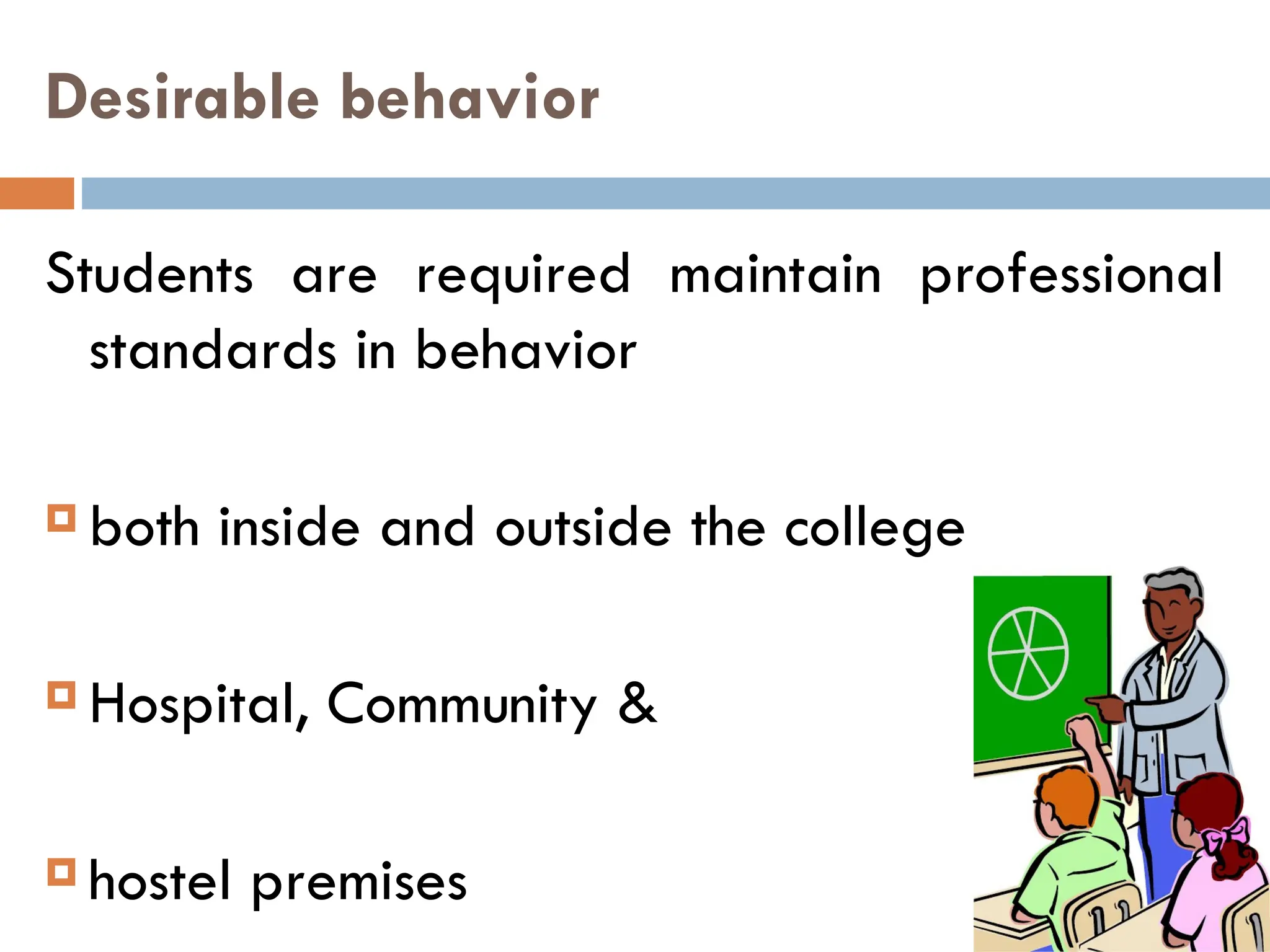
Desirable behavior
Students are required maintain professional
standards in behavior
 both inside and outside the college
 Hospital, Community &
 hostel premises
BE
Polite
Enthusiastic
Honest
Responsible
Positive
31
32

Orientation to Discipline Rules Regulations Final_2022_23.ppt

  • 2.
    Discipline Conduct yourselves ina manner commensurate with the dignity of the nursing profession within and outside the institution 2
  • 3.
    Discipline and Self-Discipline All students  Violation of rules - several disciplinary actions Special attention is drawn to the following points….. 3
  • 4.
    Good Wishes “Good Morning”or “Good afternoon” How do you do? How are you? Teachers Seniors Co-workers Clients
  • 5.
    Greeting Acceptable courtesy Bowing orinclining your head and smiling in acknowledgement of another’s greeting. Address with…. Sir, Madam, Sister, Mister etc.
  • 6.
    Punctuality  Classes  Demonstrations College events  Meetings and  Appointments If you are late If you are unable - inform the organizer or the CC & apology
  • 7.
    Punctuality Have to participatein all college activities like  Clinical meeting  Conferences  Guest lectures  Seminars  Sports  Cultural activities etc.
  • 8.
    Decent Behavior  Knockthe closed door and wait till you are asked to come in.  Do not enter the room of another person in absence.  Open the door & stand aside for them to pass  Always close the door after getting into a room/when you get out of the room
  • 9.
    Decent Behavior Give wayto others who are busy and whose time is valued and precious Step aside permitting another to proceed you Excuse yourself when overtaking
  • 10.
    Decent Behavior  Obeyand Don’t argue  Help to carry a heavy load  Get prior permission from in-charge before you take any article  In an assembly – let the seniors take the seat first
  • 11.
    Dressing & Grooming Neat & tidy dress  Clothing - clean and professionally styled  Not allowed - shorts, T-shirts, dhotis, sleeveless, tights, low waist pants, etc. Classes or any college function
  • 12.
    Dressing & Grooming Avoid expensive clothing & exaggerated fashions  Shirt should be properly buttoned  Dress properly for classes & clinical  Wear - Name badges, identity card
  • 13.
    Dressing & Grooming Personal hygiene - all times  Hair - neat and clean, put up long hair  Boys - short hair cut always  Clean shave  Keep jewellery at a minimum (Class & Clinical)  Fingernails - clean and short  Shoes/foot wear - polished, neat, clean  No sandals
  • 14.
    Silence  Classes  Labs Library  Reading room  Corridors
  • 15.
    Develop the abilityand the art of being an interested, appreciative Speaker/listener
  • 16.
    Communication Conversation Do’s  Lookat the person you are talking to  If you haven’t met before, introduce yourself and ask their name  Ask questions (‘Pardon’) when you don’t understand something  Stick to the subject  Say nice things and praise those who deserve it
  • 17.
    Communication Conversation Don’ts  Don’tlook elsewhere, or wander off  Don’t listen in on conversations you aren’t part of  Don’t interrupt when someone else is talking  Don’t whine, tattletale about others  Don’t point or stare  Don’t argue about things that aren’t important
  • 18.
    Gratitude When any helpis given to you, When someone corrects you
  • 19.
    Respect  Above youor superior  Your self  Respect others – feelings, property
  • 20.
    Respect Rise Person of authoritywho approaches you and speaks When someone of respect enters a room. You remain standing until you are acknowledged.
  • 21.
  • 22.
     Class room- belongs to YOU, It is your duty to keep it Clean  Maintain cleanliness – Your Responsibility  Be present in the classroom 5 minutes earlier
  • 23.
     Class representative– Check, duster, chalks, OHP, LCD projector etc.  Writing on walls, pillars, furniture, black boards - strictly prohibited.  Use dustbin
  • 24.
     Silence  Goingout and coming in between lectures - avoided strictly.  Go out of the classroom after teacher exit  Boys and girls - sit separately in classes and in the library
  • 25.
     Furniture -should not be moved or displaced.  Switch off fans and lights, when you leave the class rooms.  Chatting unnecessarily in the corridors should be avoided  Eating snacks / taking lunch inside the class rooms or along corridors are not permitted.
  • 26.
     Proper handling& safe custody of any apparatus/equipment that you are using  Take care of the college and hospital property  Willful damage - treated as breach of discipline
  • 27.
     Stand upwhen answering questions  Don not delay the answer  Avoid thumb sucking, nail biting, shaking legs
  • 28.
    Other important rules Not allowed to conduct any meetings  All decisions taken by the principal are final  Parents/guardians are advised to meet the principal as and when called for.  Rules are subject to change from time to time 28
  • 29.
    Use of telephonein clinical setting Making a call:  Greet  Introduce - ‘This is Miss Padma calling’.  Ask for the person with whom you want to speak “may I speak to Mrs Rao”.
  • 30.
    Desirable behavior Students arerequired maintain professional standards in behavior  both inside and outside the college  Hospital, Community &  hostel premises
  • 31.
  • 32.