Organizational
Agility
What promotes the agility
of your organization?
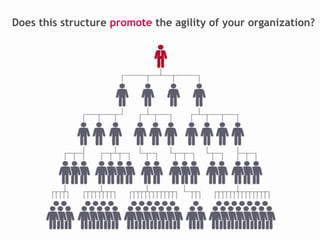
Does this structure promote the agility of your organization?
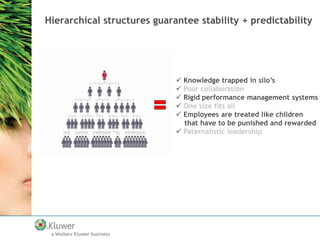
Hierarchical structures guarantee stability + predictability

Knowledge trapped in silo’s
Poor collaboration
Rigid performance management systems
One size fits all
Employees are treated like children
that have to be punished and rewarded
 Paternalistic leadership





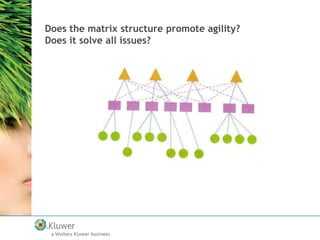
Does the matrix structure promote agility?
Does it solve all issues?
What will the organization of
the future look like?
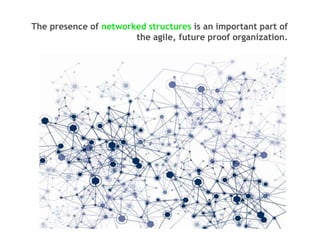
The presence of networked structures is an important part of
the agile, future proof organization.
Agile organizations
 Agile organizations encourage their employees to be part of networks.
 These networks go beyond the boundaries of
— their business unit
— their own organization
 Agile organizations collaborate intensely with clients and temporary workers
 crowd sourcing / open innovation
 diversified workforce
Is this about anarchy and chao
The agile organization might have to
allow a certain amount of chaos.
Working in networked structures is one of the key elements
for organizations to be agile.
It will be important for all types of organizations.
NOT just the technology companies.

You need the right culture to be
able to work in networked
structures.
Question 1
What triggered the insufficiency of hierarchy?
Why are hierarchical structures not sufficient anymore?
Question 1
What triggered the insufficiency of hierarchy?
Why are hierarchical structures not sufficient anymore?
Let me highlight 3 elements.
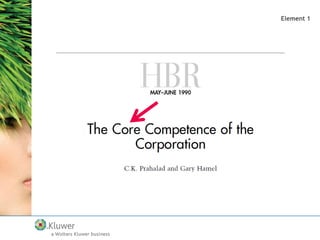
Element 1
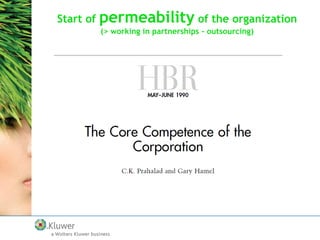
Start of

permeability of the organization
(> working in partnerships - outsourcing)
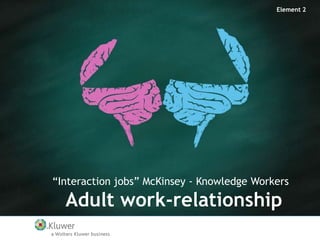
Element 2

“Interaction jobs” McKinsey - Knowledge Workers

Adult work-relationship
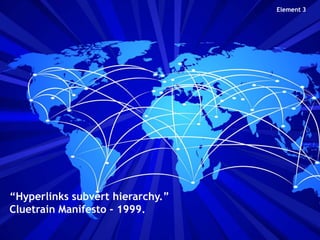
Element 3

Technology changed our world fundamentally.
We live in a hyper-connected world.
Information is fluid.
Element 3

“Hyperlinks subvert hierarchy.”
Cluetrain Manifesto - 1999.
Element 3

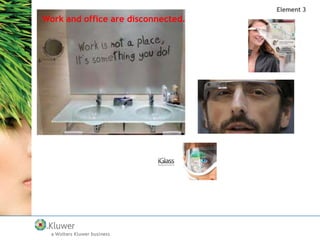
Work and office are disconnected.
Question 2
How do organizations react to these fundamental
changes?
Question 2
How do organizations react to these fundamental
changes?
3 examples
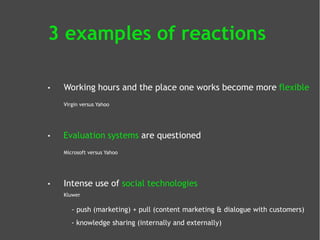
3 examples of reactions
•

Working hours and the place one works become more flexible
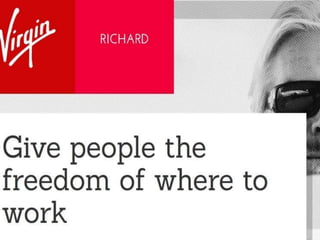
Virgin versus Yahoo

•

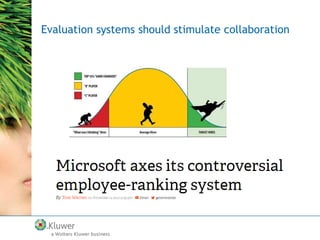
Evaluation systems are questioned
Microsoft versus Yahoo

•

Intense use of social technologies
Kluwer

- push (marketing) + pull (content marketing & dialogue with customers)
- knowledge sharing (internally and externally)
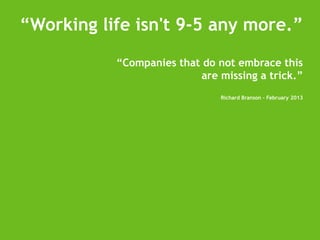
“Working life isn't 9-5 any more.”
“Companies that do not embrace this
are missing a trick.”
Richard Branson - February 2013
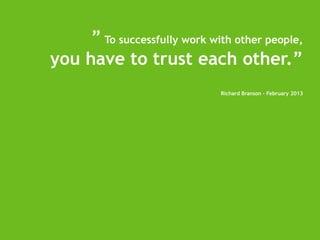
” To successfully work with other people,
you have to trust each other.”
Richard Branson - February 2013
Evaluation systems should stimulate collaboration
Its
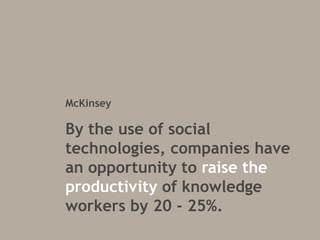
McKinsey

By the use of social
technologies, companies have
an opportunity to raise the
productivity of knowledge
workers by 20 - 25%.
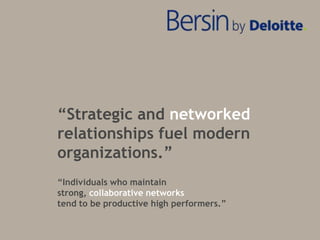
“Strategic and networked
relationships fuel modern
organizations.”
“Individuals who maintain
strong, collaborative networks
tend to be productive high performers.”
31
Question 3
In which circumstances do networks work?
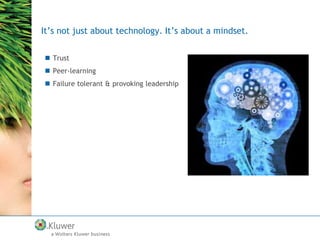
It’s not just about technology. It’s about a mindset.
 Trust
 Peer-learning
 Failure tolerant & provoking leadership
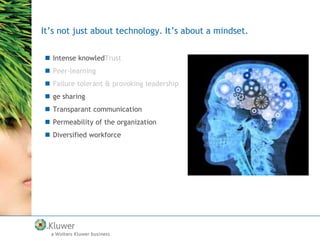
It’s not just about technology. It’s about a mindset.
 Intense knowledTrust
 Peer-learning
 Failure tolerant & provoking leadership
 ge sharing
 Transparant communication

 Permeability of the organization
 Diversified workforce
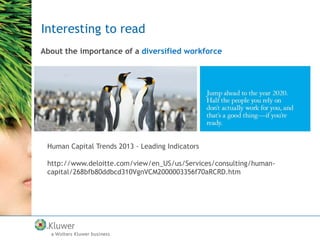
Interesting to read
About the importance of a diversified workforce


Human Capital Trends 2013 - Leading Indicators
http://www.deloitte.com/view/en_US/us/Services/consulting/humancapital/268bfb80ddbcd310VgnVCM2000003356f70aRCRD.htm
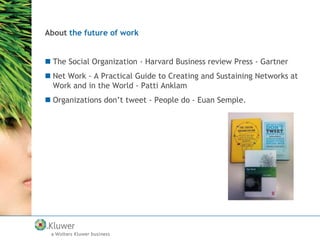
About the future of work
 The Social Organization - Harvard Business review Press - Gartner
 Net Work - A Practical Guide to Creating and Sustaining Networks at
Work and in the World - Patti Anklam
 Organizations don’t tweet - People do - Euan Semple.
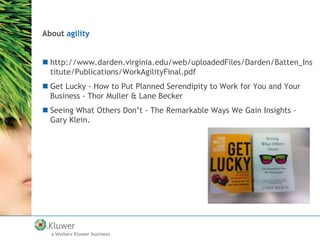
About agility
 http://www.darden.virginia.edu/web/uploadedFiles/Darden/Batten_Ins
titute/Publications/WorkAgilityFinal.pdf
 Get Lucky - How to Put Planned Serendipity to Work for You and Your
Business - Thor Muller & Lane Becker
 Seeing What Others Don’t - The Remarkable Ways We Gain Insights Gary Klein.
Do you want to know more?

isabel.declercq@kluwer.be
00 32 477 87 24 68
@KluwerLearning on Twitter

Organizational agility

  • 1.
  • 2.
    What promotes theagility of your organization?
  • 3.
    Does this structurepromote the agility of your organization?
  • 4.
    Hierarchical structures guaranteestability + predictability Knowledge trapped in silo’s Poor collaboration Rigid performance management systems One size fits all Employees are treated like children that have to be punished and rewarded  Paternalistic leadership     
  • 5.
    Does the matrixstructure promote agility? Does it solve all issues?
  • 6.
    What will theorganization of the future look like?
  • 7.
    The presence ofnetworked structures is an important part of the agile, future proof organization.
  • 8.
    Agile organizations  Agileorganizations encourage their employees to be part of networks.  These networks go beyond the boundaries of — their business unit — their own organization  Agile organizations collaborate intensely with clients and temporary workers  crowd sourcing / open innovation  diversified workforce
  • 9.
    Is this aboutanarchy and chao The agile organization might have to allow a certain amount of chaos.
  • 10.
    Working in networkedstructures is one of the key elements for organizations to be agile. It will be important for all types of organizations. NOT just the technology companies. You need the right culture to be able to work in networked structures.
  • 11.
    Question 1 What triggeredthe insufficiency of hierarchy? Why are hierarchical structures not sufficient anymore?
  • 12.
    Question 1 What triggeredthe insufficiency of hierarchy? Why are hierarchical structures not sufficient anymore? Let me highlight 3 elements.
  • 13.
  • 14.
    Start of permeability ofthe organization (> working in partnerships - outsourcing)
  • 15.
    Element 2 “Interaction jobs”McKinsey - Knowledge Workers Adult work-relationship
  • 16.
    Element 3 Technology changedour world fundamentally. We live in a hyper-connected world. Information is fluid.
  • 17.
    Element 3 “Hyperlinks subverthierarchy.” Cluetrain Manifesto - 1999.
  • 18.
    Element 3 Work andoffice are disconnected.
  • 19.
    Question 2 How doorganizations react to these fundamental changes?
  • 20.
    Question 2 How doorganizations react to these fundamental changes? 3 examples
  • 21.
    3 examples ofreactions • Working hours and the place one works become more flexible Virgin versus Yahoo • Evaluation systems are questioned Microsoft versus Yahoo • Intense use of social technologies Kluwer - push (marketing) + pull (content marketing & dialogue with customers) - knowledge sharing (internally and externally)
  • 23.
    “Working life isn't9-5 any more.” “Companies that do not embrace this are missing a trick.” Richard Branson - February 2013
  • 24.
    ” To successfullywork with other people, you have to trust each other.” Richard Branson - February 2013
  • 25.
    Evaluation systems shouldstimulate collaboration
  • 27.
  • 29.
    McKinsey By the useof social technologies, companies have an opportunity to raise the productivity of knowledge workers by 20 - 25%.
  • 30.
    “Strategic and networked relationshipsfuel modern organizations.” “Individuals who maintain strong, collaborative networks tend to be productive high performers.”
  • 31.
  • 32.
    Question 3 In whichcircumstances do networks work?
  • 33.
    It’s not justabout technology. It’s about a mindset.  Trust  Peer-learning  Failure tolerant & provoking leadership
  • 34.
    It’s not justabout technology. It’s about a mindset.  Intense knowledTrust  Peer-learning  Failure tolerant & provoking leadership  ge sharing  Transparant communication  Permeability of the organization  Diversified workforce
  • 35.
    Interesting to read Aboutthe importance of a diversified workforce  Human Capital Trends 2013 - Leading Indicators http://www.deloitte.com/view/en_US/us/Services/consulting/humancapital/268bfb80ddbcd310VgnVCM2000003356f70aRCRD.htm
  • 36.
    About the futureof work  The Social Organization - Harvard Business review Press - Gartner  Net Work - A Practical Guide to Creating and Sustaining Networks at Work and in the World - Patti Anklam  Organizations don’t tweet - People do - Euan Semple.
  • 37.
    About agility  http://www.darden.virginia.edu/web/uploadedFiles/Darden/Batten_Ins titute/Publications/WorkAgilityFinal.pdf Get Lucky - How to Put Planned Serendipity to Work for You and Your Business - Thor Muller & Lane Becker  Seeing What Others Don’t - The Remarkable Ways We Gain Insights Gary Klein.
  • 38.
    Do you wantto know more? isabel.declercq@kluwer.be 00 32 477 87 24 68 @KluwerLearning on Twitter

Editor's Notes

  • #3 Organisatiestructuren zoals we die tot hier toe kenden voldoen niet meer. Te traag - terigide - teweinig collaboration.Organisaties die klaar willen zijn voor toekomst - netwerkstructuren - mindset - trust & peer-learning & failure tolerant leadership.
  • #5 TECHNOLOGIE - CHAOS
  • #14 TECHNOLOGIE - CHAOS