Organizational Design,
Structure, Size &
technology
Organizational Design
According to Sargent & McConnell, ”Organisational Design can be defined as
a process for improving the probability that an organization will be successful by
assessing and reshaping structure and position to better meet (Business) goals”.
According to Richard M. Burton, ”Organizational design is the body of
knowledge and techniques that seeks to offer useful advice to organizations
about their structures (and other aspects) needed to attain their goals.”
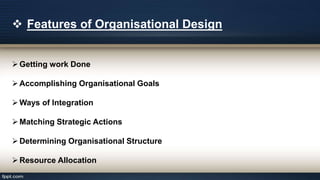
 Features of Organisational Design
Getting work Done
Accomplishing Organisational Goals
Ways of Integration
Matching Strategic Actions
Determining Organisational Structure
Resource Allocation
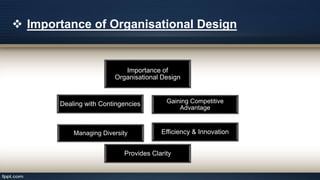
 Importance of Organisational Design
Managing Diversity
Importance of
Organisational Design
Dealing with Contingencies Gaining Competitive
Advantage
Provides Clarity
Efficiency & Innovation
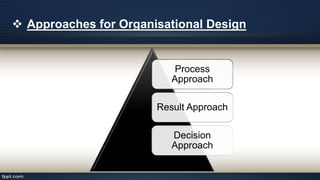
 Approaches for Organisational Design
Process
Approach
Result Approach
Decision
Approach
 Organisational Structure
According to Koontz and Donnel, “Organisation structure is the
establishments of authority relationships with provision for coordination
between them, both vertically and Horizontally in the enterprise structure.
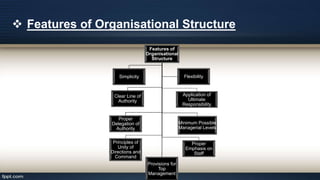
 Features of Organisational Structure
Features of
Organisational
Structure
Clear Line of
Authority
Simplicity
Application of
Ultimate
Responsibility
Proper
Delegation of
Authority
Principles of
Unity of
Directions and
Command
Minimum Possible
Managerial Levels
Proper
Emphasis on
Staff
Provisions for
Top
Management
Flexibility
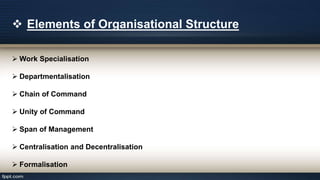
 Elements of Organisational Structure
 Work Specialisation
 Departmentalisation
 Chain of Command
 Unity of Command
 Span of Management
 Centralisation and Decentralisation
 Formalisation
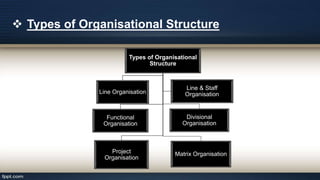
 Types of Organisational Structure
Types of Organisational
Structure
Functional
Organisation
Line Organisation
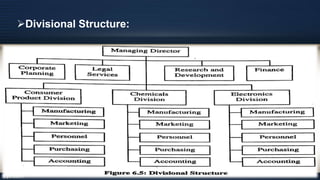
Divisional
Organisation
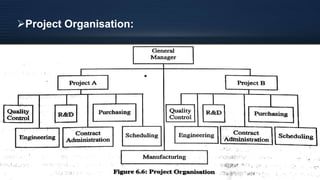
Project
Organisation
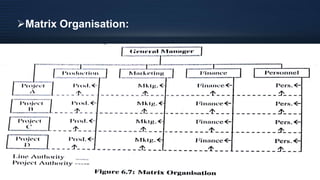
Matrix Organisation
Line & Staff
Organisation
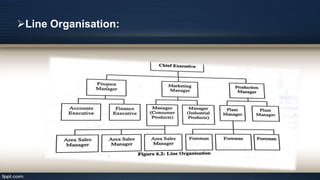
Line Organisation:
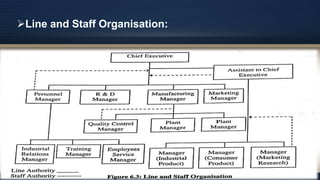
Line and Staff Organisation:
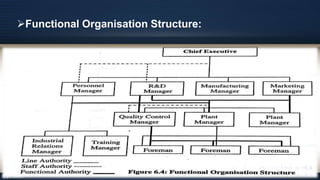
Functional Organisation Structure:
Divisional Structure:
Project Organisation:
Matrix Organisation:
 Organisational Structure & It’s Impact on
Organisational Behavior
• When the Organisational structure is not properly designed, the basic effects
on Organisation & Employees are as follows:-
 Low Motivation and Morale
 Poor Response to New Opportunities and External Change
 Decision Making is Delayed or Lacking in Quality
 Too much conflict is evident
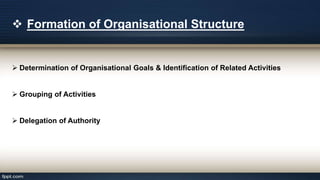
 Formation of Organisational Structure
 Determination of Organisational Goals & Identification of Related Activities
 Grouping of Activities
 Delegation of Authority
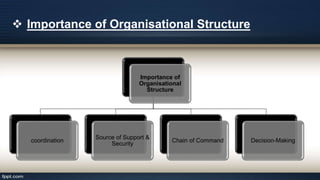
 Importance of Organisational Structure
Importance of
Organisational
Structure
coordination
Source of Support &
Security
Chain of Command Decision-Making
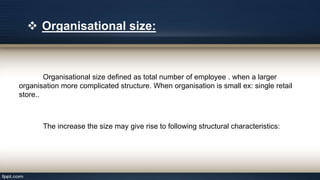
Organisational size defined as total number of employee . when a larger
organisation more complicated structure. When organisation is small ex: single retail
store..
The increase the size may give rise to following structural characteristics:
 Organisational size:
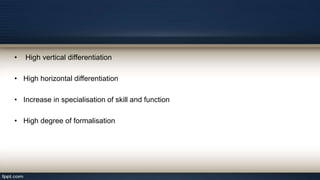
• High vertical differentiation
• High horizontal differentiation
• Increase in specialisation of skill and function
• High degree of formalisation
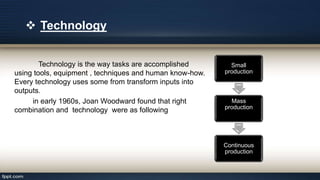
Technology is the way tasks are accomplished
using tools, equipment , techniques and human know-how.
Every technology uses some from transform inputs into
outputs.
in early 1960s, Joan Woodward found that right
combination and technology were as following
 Technology
Small
production
Mass
production
Continuous
production
Organisational Design structure, size and technology.

Organisational Design structure, size and technology.

  • 1.
  • 2.
    Organizational Design According toSargent & McConnell, ”Organisational Design can be defined as a process for improving the probability that an organization will be successful by assessing and reshaping structure and position to better meet (Business) goals”. According to Richard M. Burton, ”Organizational design is the body of knowledge and techniques that seeks to offer useful advice to organizations about their structures (and other aspects) needed to attain their goals.”
  • 3.
     Features ofOrganisational Design Getting work Done Accomplishing Organisational Goals Ways of Integration Matching Strategic Actions Determining Organisational Structure Resource Allocation
  • 4.
     Importance ofOrganisational Design Managing Diversity Importance of Organisational Design Dealing with Contingencies Gaining Competitive Advantage Provides Clarity Efficiency & Innovation
  • 5.
     Approaches forOrganisational Design Process Approach Result Approach Decision Approach
  • 6.
     Organisational Structure Accordingto Koontz and Donnel, “Organisation structure is the establishments of authority relationships with provision for coordination between them, both vertically and Horizontally in the enterprise structure.
  • 7.
     Features ofOrganisational Structure Features of Organisational Structure Clear Line of Authority Simplicity Application of Ultimate Responsibility Proper Delegation of Authority Principles of Unity of Directions and Command Minimum Possible Managerial Levels Proper Emphasis on Staff Provisions for Top Management Flexibility
  • 8.
     Elements ofOrganisational Structure  Work Specialisation  Departmentalisation  Chain of Command  Unity of Command  Span of Management  Centralisation and Decentralisation  Formalisation
  • 9.
     Types ofOrganisational Structure Types of Organisational Structure Functional Organisation Line Organisation Divisional Organisation Project Organisation Matrix Organisation Line & Staff Organisation
  • 10.
  • 11.
    Line and StaffOrganisation:
  • 12.
  • 13.
  • 14.
  • 15.
  • 16.
     Organisational Structure& It’s Impact on Organisational Behavior • When the Organisational structure is not properly designed, the basic effects on Organisation & Employees are as follows:-  Low Motivation and Morale  Poor Response to New Opportunities and External Change  Decision Making is Delayed or Lacking in Quality  Too much conflict is evident
  • 17.
     Formation ofOrganisational Structure  Determination of Organisational Goals & Identification of Related Activities  Grouping of Activities  Delegation of Authority
  • 18.
     Importance ofOrganisational Structure Importance of Organisational Structure coordination Source of Support & Security Chain of Command Decision-Making
  • 19.
    Organisational size definedas total number of employee . when a larger organisation more complicated structure. When organisation is small ex: single retail store.. The increase the size may give rise to following structural characteristics:  Organisational size:
  • 20.
    • High verticaldifferentiation • High horizontal differentiation • Increase in specialisation of skill and function • High degree of formalisation
  • 21.
    Technology is theway tasks are accomplished using tools, equipment , techniques and human know-how. Every technology uses some from transform inputs into outputs. in early 1960s, Joan Woodward found that right combination and technology were as following  Technology Small production Mass production Continuous production