Opioid Overdose
Overview
● Opioids - all natural, synthetic, and semisynthetic agents with morphine-like
actions.
● Opiates- naturally occurring opioids.
● Opium (Gk) juice in reference to poppy juice from opium poppy (Papaver sp
● Morphine (prototype)-isolated by Serturner in 1803 and named it after Morpheus
Profound analgesia, sedation and euphoria
● Endorphin- endogenous opioid peptides -endomorphins, dynorphins, enkephalin
● Narcotic-refers to any agent that induces sleep(nonspecific)
‫ﺧﺸﺨﺎش‬
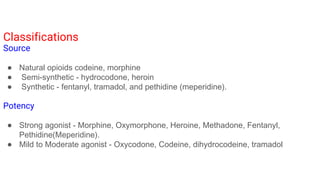
Classifications
Source
● Natural opioids codeine, morphine
● Semi-synthetic - hydrocodone, heroin
● Synthetic - fentanyl, tramadol, and pethidine (meperidine).
Potency
● Strong agonist - Morphine, Oxymorphone, Heroine, Methadone, Fentanyl,
Pethidine(Meperidine).
● Mild to Moderate agonist - Oxycodone, Codeine, dihydrocodeine, tramadol
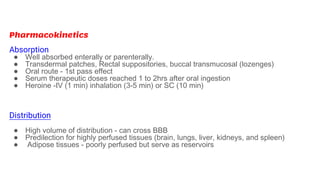
Pharmacokinetics
Absorption
● Well absorbed enterally or parenterally.
● Transdermal patches, Rectal suppositories, buccal transmucosal (lozenges)
● Oral route - 1st pass effect
● Serum therapeutic doses reached 1 to 2hrs after oral ingestion
● Heroine -IV (1 min) inhalation (3-5 min) or SC (10 min)
Distribution
● High volume of distribution - can cross BBB
● Predilection for highly perfused tissues (brain, lungs, liver, kidneys, and spleen)
● Adipose tissues - poorly perfused but serve as reservoirs
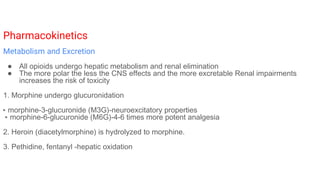
Pharmacokinetics
Metabolism and Excretion
● All opioids undergo hepatic metabolism and renal elimination
● The more polar the less the CNS effects and the more excretable Renal impairments
increases the risk of toxicity
1. Morphine undergo glucuronidation
▸ morphine-3-glucuronide (M3G)-neuroexcitatory properties
▸ morphine-6-glucuronide (M6G)-4-6 times more potent analgesia
2. Heroin (diacetylmorphine) is hydrolyzed to morphine.
3. Pethidine, fentanyl -hepatic oxidation
Pharmacokinetics
Cytochrome P450 enzyme
● Codeine and Tramadol (met by CYP2D6) Morphine & O-desmethyltramadol resp
● oxycodone (met by CYP2D6) - less active metabolites
● Fentanyl (CYP3A5)-inert metabolites
● Polymorphism of receptor genes and Cytochrome P450 enzyme
● Interindividual variability and drug interactions
Pharmacodynamics
● 3 types of opioid receptors-mu-(u), kappa-(0) and delta -(5)
● CNS - Dorsal horn of spinal cord, areas of nociception, resp centre and euphoria.
● Systemic-Sensory nerves, GIT, Endothelial of CVS, Immune cells.
Cellular effects on neurons
1.close voltage-gated Ca2+ channels on presynaptic nerve to reduce transmitter
release.
★Nociceptive nerve-glutamate, acetylcholine, norepinephrine, serotonin, and substance
P
2. Hyperpolarize postsynaptic neurons by opening K+ channels
● Activation of descending inhibitory pathways that inhibit pain transmission neurons.
Clinical Application
● Analgesia - MI, renal colic, cancer patient, obstetrics
● Antidiarrheal effects - loperamide, lomotil
● Antitussives - codeine in cough mixtures Anti-Shivering - pethidine
● Main anaesthetic medication
● Anaesthesia - pre-medicant due the sedative, anxiolytic, and analgesic effects.
● Adjunct with other agents intra-operatively
● Regional anaesthesia-epidural or subarachnoid space
Epidemiology
★United Nations Office on Drug and Come./NORC
● The global prevalence of opiate (heroin, morphine, and opium) -0,4% of the populat
● 40 million pills of counterfeit tramadol were seized at the port of Cotonou, Benin in
2016 -INCB
● • Benin Nigeria, Togo, Sierra Leone....... tramadolion aged 15-64 years The global
number of opiate users increased from 17.7 million in 2015 to 19.4 million in 2016
70.000-100,000 people die from opioid overdose each year
● 40 million pills of counterfeit tramadol were seized at the port of Cotonou, Benin in
2016 -INCB
• Benin Nigeria, Togo, Sierra Leone....... tramadol
● CDC in the US in 2010
● enough opioid analgesics were sold to medicate every American adult with a typical
dose of 5 mg ofhydrocodone every 4 hours for 1 month
Street Names
● Morphine - M, Miss Emma Monkey China Girl, Murder-8 etc
● Heroine - The Dragon Snowball Tar White White Nurse
● Tramadol - Chill pill, Tramal Lite, Trammies,
● Super Tramadol-X 200 brand are known in Cameroon as 'tomatoes’
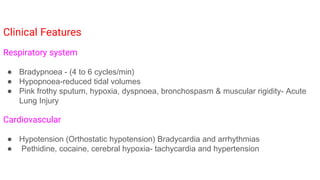
Clinical Features
Respiratory system
● Bradypnoea - (4 to 6 cycles/min)
● Hypopnoea-reduced tidal volumes
● Pink frothy sputum, hypoxia, dyspnoea, bronchospasm & muscular rigidity- Acute
Lung Injury
Cardiovascular
● Hypotension (Orthostatic hypotension) Bradycardia and arrhythmias
● Pethidine, cocaine, cerebral hypoxia- tachycardia and hypertension
Diagnostic Strategies - History
People at risk of opioid overdose
1. People with opioid dependence
•Reduced tolerance (after incarceration or rehab)
1. People on prescribed opioids
2. Combined with other sedatives
3. . Other co-morbidities- lung disease, liver or renal impairment
4. Household members of people in possession of strong opioids (children)
Diagnostic Strategies - History
People likely to witness an overdose (Source of history)
1. People at risk of an opioid overdose, their friends and families
2. people whose work brings them into contact with people who overdose
● health care workers and the police,
● Emergency service workers,
● People providing accommodation to people who use drugs
● Peer education and outreach workers
3. Time of ingestion, quantity, and co-ingestants.
4. Pill bottles, drug paraphernalia, or eyewitness accounts may assist in the diagnosis
Clinical Features
● Opioid Toxidrome --- CNS depression. Resp depression, and Pupillary
miosis
● Needle track are sometimes evident
● Skin-popping (SC) and Mainlining (IV) Powdery substances may be seen on
around the nose.
● Pruritus, flushed skin, and urticaria
● Febrile - (co-infections OR co-ingestants-cocaine OR adulterants - scopolamine)
● Physical injuries
Clinical Features
Respiratory system
▸ Bradypnoea-(4 to 6 cycles/min)
Hypopnoea-reduced tidal volumes Pink frothy sputum, hypoxia, dyspnoea,
bronchospasm & muscular rigidity- Acute Lung Injury
Cardiovascular
▸ Hypotension (Orthostatic hypotension)
▸ Bradycardia and arrhythmias
► Pethidine, cocaine, cerebral hypoxia- tachycardia and hypertension
Clinical Features
Gastrointestinal
● Nausea & Vomiting
● Constipation and in severe cases paralytic ileus (absent bowel sounds)
Kidneys and urinary tract
● urinary retention from urethral sphincter spasm and decreased detrusor tone
● Heroine nephropathy
Clinical Features
Nervous system
● Reduced GCS, Euphoria, analgesia and reduced mentation (drowsiness)
● Seizures-pethidine, proposyphene, tramadol
● Acute psychosis anxiety, agitation and dysphoria-less frequent
● Miosis in overdose (sometimes a red eye) Mydriasis -Morphine, pethidine,
diphenoxylate/atropine (Lomat), propoxyphene and CNS hypoxia
● Hearing loss Hypertonicity, myoclonus, and seizures-pethidine and
propoxyphene
Special CNS Features
Parkinsonian symptoms - Bradykinesia, rest tremors, rigidity, and postural instability
● Pethidine produced in street labs - MPTP metabolites
● Focal lesions in Substantia nigra.
Heroine Associated Spongiform leukoencephalopathy (HASL)
● psychomotor retardation, dysarthria, ataxia, tremor etc
● Chasing the dragon
Serotonin Syndrome
● Caused by ingesting 2 or more serotonergic drugs (MAOL, SSRI, TCA etc)
● Pethidine, Tramadol, fentanyl, oxycodone, hydrocodone.
Diagnostic Strategies - Investigations
● Biochemistries: RBS, BUE and Cr
● SPO2 monitoring Arterial blood gases
● A 12-lead ECG - propoxyphene or methadone
● QRS widening, QT prolongation or torsades de pointes
● Chest X-ray - hypoxemia and coarse crackles (rales)
● Abdominal X-rays - Body packers/mule.
● Urine toxicology screen - positive for days after last use
● Serum acetaminophen and salicylate concentrations
Differential Diagnosis
● Benzodiazepines and Barbiturates toxicity
● Hypoglycaemia
● Gamma-hydroxybutyrate - liquid ecstasy, liquid x etc
● Clonidine toxicity
● Alcohol toxicity
● Cannabinoid poisoning Meningitis
Supportive Treatment
● Supplemental Oxygen - Bag and mask, Endotracheal tube
● Correction of dehydration and/or electrolyte imbalance - IV RL or NS
● Correction of Hypoglycaemia
● Abortion of any seizures - Diazepam
● GIT Decontamination
● Body packer, multi-drug ingestion or opioid combination products
● whole-bowel irrigation and activated charcoal
● Continuous cardio-resp monitoring
Dialysis cannot clear opioids
Treatment: Antidote
Antidote - Naloxone, Nalmefene
‣ Indicated in case of significant cns and resp depression
Naloxone
● ▸ Onset (1-2)min; Maximal effect (5-10)min; Duration of action (1 to 2hrs) ▸ IV
Naloxone (0.4 to 2 mg) for adults
● ➤ IV Naloxone (0.1 mg/kg in the children < 5yrs) OR (0.1-2mg/dose in children
>Syrs)
● ‣ 0.1-0.4 mg of IV aliquots every 1-2 minute until ventilation is adequate Chronic
users -0,04 to 0.2 mg and then slowly titrated up gradually (avoids acute
withdrawal)
● IM Naloxone-2mg stat
● Intranasal spray (Narcan Nasal Spray) -0.4mg/spray.
● Reconsider the diagnosis if the patient fails to respond after 10 mg.
Admission and Discharge Criteria
● Asymptomatic adults - observed for at least 4hrs
● Asymptomatic children - at least 24hrs
● Adults with resp depression-admitted for 12-24hrs
● Length of detention-dependent on opioid half life.
● Diphenoxylate-atropine (Lomotil) - has long T1/2
● Asymptomatic Body packers-discharged after passing out all packets
● Psychiatric evaluation or drug abuse counseling
● Discharge to a stable social setting
Complications
● Acute Lung Injury
● Cellulitis
● Osteomyelitis
● Horner syndrome
● Endocarditis
● Heroine Associated Spongiform leukoencephalopathy
● Heroine Nephropathy
● Parkinsonian disorder
● ▸ Withdrawal symptoms
Withdrawal
● CNS excitation, (Restlessness, agitation, anxiety and mydriasis).
● ▸ Cognition and mental status are unaffected. Dysphoria and drug craving may be
severe and prolonged
● Nausea, vomiting, diarrhea, and abdominal cramps
● High BP and pulse, tachypnea
● Onset depends on drug meperidine (8-12 hrs) and methadone (2-4 days)
Treatment is symptomatic
● Symptoms peak between 36 and 48 hours and subside after 72 hours
● Clonidine

المحاضرة الثالثة .pdfلدنب تبذتلتطتبطلذنلذنلذنلذن

  • 1.
  • 2.
    Overview ● Opioids -all natural, synthetic, and semisynthetic agents with morphine-like actions. ● Opiates- naturally occurring opioids. ● Opium (Gk) juice in reference to poppy juice from opium poppy (Papaver sp ● Morphine (prototype)-isolated by Serturner in 1803 and named it after Morpheus Profound analgesia, sedation and euphoria ● Endorphin- endogenous opioid peptides -endomorphins, dynorphins, enkephalin ● Narcotic-refers to any agent that induces sleep(nonspecific) ‫ﺧﺸﺨﺎش‬
  • 3.
    Classifications Source ● Natural opioidscodeine, morphine ● Semi-synthetic - hydrocodone, heroin ● Synthetic - fentanyl, tramadol, and pethidine (meperidine). Potency ● Strong agonist - Morphine, Oxymorphone, Heroine, Methadone, Fentanyl, Pethidine(Meperidine). ● Mild to Moderate agonist - Oxycodone, Codeine, dihydrocodeine, tramadol
  • 4.
    Pharmacokinetics Absorption ● Well absorbedenterally or parenterally. ● Transdermal patches, Rectal suppositories, buccal transmucosal (lozenges) ● Oral route - 1st pass effect ● Serum therapeutic doses reached 1 to 2hrs after oral ingestion ● Heroine -IV (1 min) inhalation (3-5 min) or SC (10 min) Distribution ● High volume of distribution - can cross BBB ● Predilection for highly perfused tissues (brain, lungs, liver, kidneys, and spleen) ● Adipose tissues - poorly perfused but serve as reservoirs
  • 5.
    Pharmacokinetics Metabolism and Excretion ●All opioids undergo hepatic metabolism and renal elimination ● The more polar the less the CNS effects and the more excretable Renal impairments increases the risk of toxicity 1. Morphine undergo glucuronidation ▸ morphine-3-glucuronide (M3G)-neuroexcitatory properties ▸ morphine-6-glucuronide (M6G)-4-6 times more potent analgesia 2. Heroin (diacetylmorphine) is hydrolyzed to morphine. 3. Pethidine, fentanyl -hepatic oxidation
  • 6.
    Pharmacokinetics Cytochrome P450 enzyme ●Codeine and Tramadol (met by CYP2D6) Morphine & O-desmethyltramadol resp ● oxycodone (met by CYP2D6) - less active metabolites ● Fentanyl (CYP3A5)-inert metabolites ● Polymorphism of receptor genes and Cytochrome P450 enzyme ● Interindividual variability and drug interactions
  • 7.
    Pharmacodynamics ● 3 typesof opioid receptors-mu-(u), kappa-(0) and delta -(5) ● CNS - Dorsal horn of spinal cord, areas of nociception, resp centre and euphoria. ● Systemic-Sensory nerves, GIT, Endothelial of CVS, Immune cells. Cellular effects on neurons 1.close voltage-gated Ca2+ channels on presynaptic nerve to reduce transmitter release. ★Nociceptive nerve-glutamate, acetylcholine, norepinephrine, serotonin, and substance P 2. Hyperpolarize postsynaptic neurons by opening K+ channels ● Activation of descending inhibitory pathways that inhibit pain transmission neurons.
  • 8.
    Clinical Application ● Analgesia- MI, renal colic, cancer patient, obstetrics ● Antidiarrheal effects - loperamide, lomotil ● Antitussives - codeine in cough mixtures Anti-Shivering - pethidine ● Main anaesthetic medication ● Anaesthesia - pre-medicant due the sedative, anxiolytic, and analgesic effects. ● Adjunct with other agents intra-operatively ● Regional anaesthesia-epidural or subarachnoid space
  • 9.
    Epidemiology ★United Nations Officeon Drug and Come./NORC ● The global prevalence of opiate (heroin, morphine, and opium) -0,4% of the populat ● 40 million pills of counterfeit tramadol were seized at the port of Cotonou, Benin in 2016 -INCB ● • Benin Nigeria, Togo, Sierra Leone....... tramadolion aged 15-64 years The global number of opiate users increased from 17.7 million in 2015 to 19.4 million in 2016 70.000-100,000 people die from opioid overdose each year ● 40 million pills of counterfeit tramadol were seized at the port of Cotonou, Benin in 2016 -INCB • Benin Nigeria, Togo, Sierra Leone....... tramadol ● CDC in the US in 2010 ● enough opioid analgesics were sold to medicate every American adult with a typical dose of 5 mg ofhydrocodone every 4 hours for 1 month
  • 10.
    Street Names ● Morphine- M, Miss Emma Monkey China Girl, Murder-8 etc ● Heroine - The Dragon Snowball Tar White White Nurse ● Tramadol - Chill pill, Tramal Lite, Trammies, ● Super Tramadol-X 200 brand are known in Cameroon as 'tomatoes’
  • 11.
    Clinical Features Respiratory system ●Bradypnoea - (4 to 6 cycles/min) ● Hypopnoea-reduced tidal volumes ● Pink frothy sputum, hypoxia, dyspnoea, bronchospasm & muscular rigidity- Acute Lung Injury Cardiovascular ● Hypotension (Orthostatic hypotension) Bradycardia and arrhythmias ● Pethidine, cocaine, cerebral hypoxia- tachycardia and hypertension
  • 13.
    Diagnostic Strategies -History People at risk of opioid overdose 1. People with opioid dependence •Reduced tolerance (after incarceration or rehab) 1. People on prescribed opioids 2. Combined with other sedatives 3. . Other co-morbidities- lung disease, liver or renal impairment 4. Household members of people in possession of strong opioids (children)
  • 14.
    Diagnostic Strategies -History People likely to witness an overdose (Source of history) 1. People at risk of an opioid overdose, their friends and families 2. people whose work brings them into contact with people who overdose ● health care workers and the police, ● Emergency service workers, ● People providing accommodation to people who use drugs ● Peer education and outreach workers 3. Time of ingestion, quantity, and co-ingestants. 4. Pill bottles, drug paraphernalia, or eyewitness accounts may assist in the diagnosis
  • 15.
    Clinical Features ● OpioidToxidrome --- CNS depression. Resp depression, and Pupillary miosis ● Needle track are sometimes evident ● Skin-popping (SC) and Mainlining (IV) Powdery substances may be seen on around the nose. ● Pruritus, flushed skin, and urticaria ● Febrile - (co-infections OR co-ingestants-cocaine OR adulterants - scopolamine) ● Physical injuries
  • 17.
    Clinical Features Respiratory system ▸Bradypnoea-(4 to 6 cycles/min) Hypopnoea-reduced tidal volumes Pink frothy sputum, hypoxia, dyspnoea, bronchospasm & muscular rigidity- Acute Lung Injury Cardiovascular ▸ Hypotension (Orthostatic hypotension) ▸ Bradycardia and arrhythmias ► Pethidine, cocaine, cerebral hypoxia- tachycardia and hypertension
  • 18.
    Clinical Features Gastrointestinal ● Nausea& Vomiting ● Constipation and in severe cases paralytic ileus (absent bowel sounds) Kidneys and urinary tract ● urinary retention from urethral sphincter spasm and decreased detrusor tone ● Heroine nephropathy
  • 19.
    Clinical Features Nervous system ●Reduced GCS, Euphoria, analgesia and reduced mentation (drowsiness) ● Seizures-pethidine, proposyphene, tramadol ● Acute psychosis anxiety, agitation and dysphoria-less frequent ● Miosis in overdose (sometimes a red eye) Mydriasis -Morphine, pethidine, diphenoxylate/atropine (Lomat), propoxyphene and CNS hypoxia ● Hearing loss Hypertonicity, myoclonus, and seizures-pethidine and propoxyphene
  • 20.
    Special CNS Features Parkinsoniansymptoms - Bradykinesia, rest tremors, rigidity, and postural instability ● Pethidine produced in street labs - MPTP metabolites ● Focal lesions in Substantia nigra. Heroine Associated Spongiform leukoencephalopathy (HASL) ● psychomotor retardation, dysarthria, ataxia, tremor etc ● Chasing the dragon Serotonin Syndrome ● Caused by ingesting 2 or more serotonergic drugs (MAOL, SSRI, TCA etc) ● Pethidine, Tramadol, fentanyl, oxycodone, hydrocodone.
  • 21.
    Diagnostic Strategies -Investigations ● Biochemistries: RBS, BUE and Cr ● SPO2 monitoring Arterial blood gases ● A 12-lead ECG - propoxyphene or methadone ● QRS widening, QT prolongation or torsades de pointes ● Chest X-ray - hypoxemia and coarse crackles (rales) ● Abdominal X-rays - Body packers/mule. ● Urine toxicology screen - positive for days after last use ● Serum acetaminophen and salicylate concentrations
  • 22.
    Differential Diagnosis ● Benzodiazepinesand Barbiturates toxicity ● Hypoglycaemia ● Gamma-hydroxybutyrate - liquid ecstasy, liquid x etc ● Clonidine toxicity ● Alcohol toxicity ● Cannabinoid poisoning Meningitis
  • 23.
    Supportive Treatment ● SupplementalOxygen - Bag and mask, Endotracheal tube ● Correction of dehydration and/or electrolyte imbalance - IV RL or NS ● Correction of Hypoglycaemia ● Abortion of any seizures - Diazepam ● GIT Decontamination ● Body packer, multi-drug ingestion or opioid combination products ● whole-bowel irrigation and activated charcoal ● Continuous cardio-resp monitoring Dialysis cannot clear opioids
  • 24.
    Treatment: Antidote Antidote -Naloxone, Nalmefene ‣ Indicated in case of significant cns and resp depression Naloxone ● ▸ Onset (1-2)min; Maximal effect (5-10)min; Duration of action (1 to 2hrs) ▸ IV Naloxone (0.4 to 2 mg) for adults ● ➤ IV Naloxone (0.1 mg/kg in the children < 5yrs) OR (0.1-2mg/dose in children >Syrs) ● ‣ 0.1-0.4 mg of IV aliquots every 1-2 minute until ventilation is adequate Chronic users -0,04 to 0.2 mg and then slowly titrated up gradually (avoids acute withdrawal) ● IM Naloxone-2mg stat ● Intranasal spray (Narcan Nasal Spray) -0.4mg/spray. ● Reconsider the diagnosis if the patient fails to respond after 10 mg.
  • 26.
    Admission and DischargeCriteria ● Asymptomatic adults - observed for at least 4hrs ● Asymptomatic children - at least 24hrs ● Adults with resp depression-admitted for 12-24hrs ● Length of detention-dependent on opioid half life. ● Diphenoxylate-atropine (Lomotil) - has long T1/2 ● Asymptomatic Body packers-discharged after passing out all packets ● Psychiatric evaluation or drug abuse counseling ● Discharge to a stable social setting
  • 27.
    Complications ● Acute LungInjury ● Cellulitis ● Osteomyelitis ● Horner syndrome ● Endocarditis ● Heroine Associated Spongiform leukoencephalopathy ● Heroine Nephropathy ● Parkinsonian disorder ● ▸ Withdrawal symptoms
  • 29.
    Withdrawal ● CNS excitation,(Restlessness, agitation, anxiety and mydriasis). ● ▸ Cognition and mental status are unaffected. Dysphoria and drug craving may be severe and prolonged ● Nausea, vomiting, diarrhea, and abdominal cramps ● High BP and pulse, tachypnea ● Onset depends on drug meperidine (8-12 hrs) and methadone (2-4 days) Treatment is symptomatic ● Symptoms peak between 36 and 48 hours and subside after 72 hours ● Clonidine