Operating System
Security
O Rachel Jeewa
O www.twitter.com/RachelJeewa

1
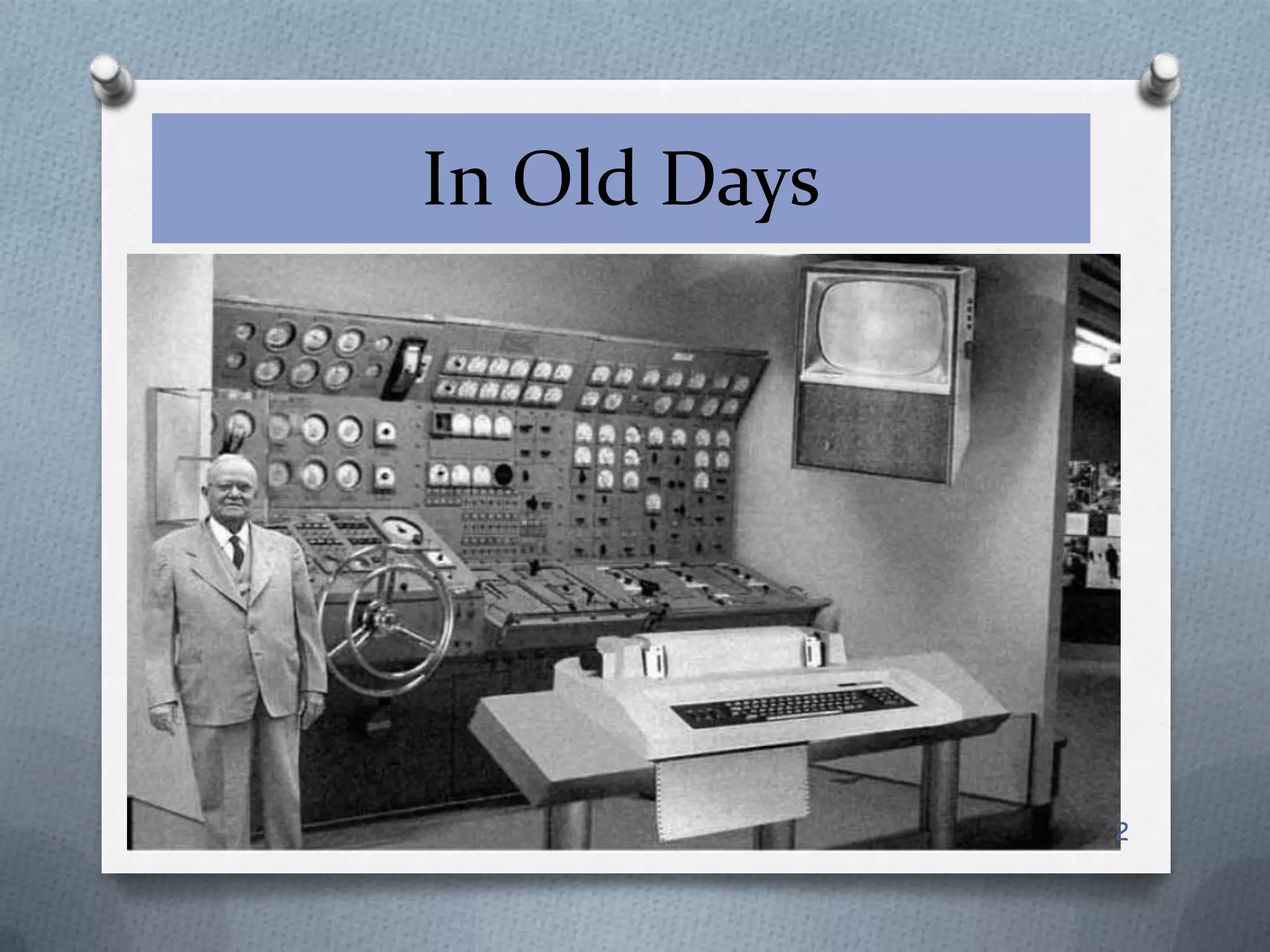
In Old Days

2
Objective
O Nowadays,

as systems grow powerful , attacks on
system grow more sophisticated.

O Therefore, it is important that the system

users secure the computer from threats.

3
Threats to System Security
O Virus

A virus is a program that replicates by
copying itself to other programs, system
boot sectors or documents or applications.
Some viruses can damage to your files by
deleting or corrupting them. Some may
display rude or strange message on the
screen. Some can allow other people to
access and control your computer.
4
Trojan
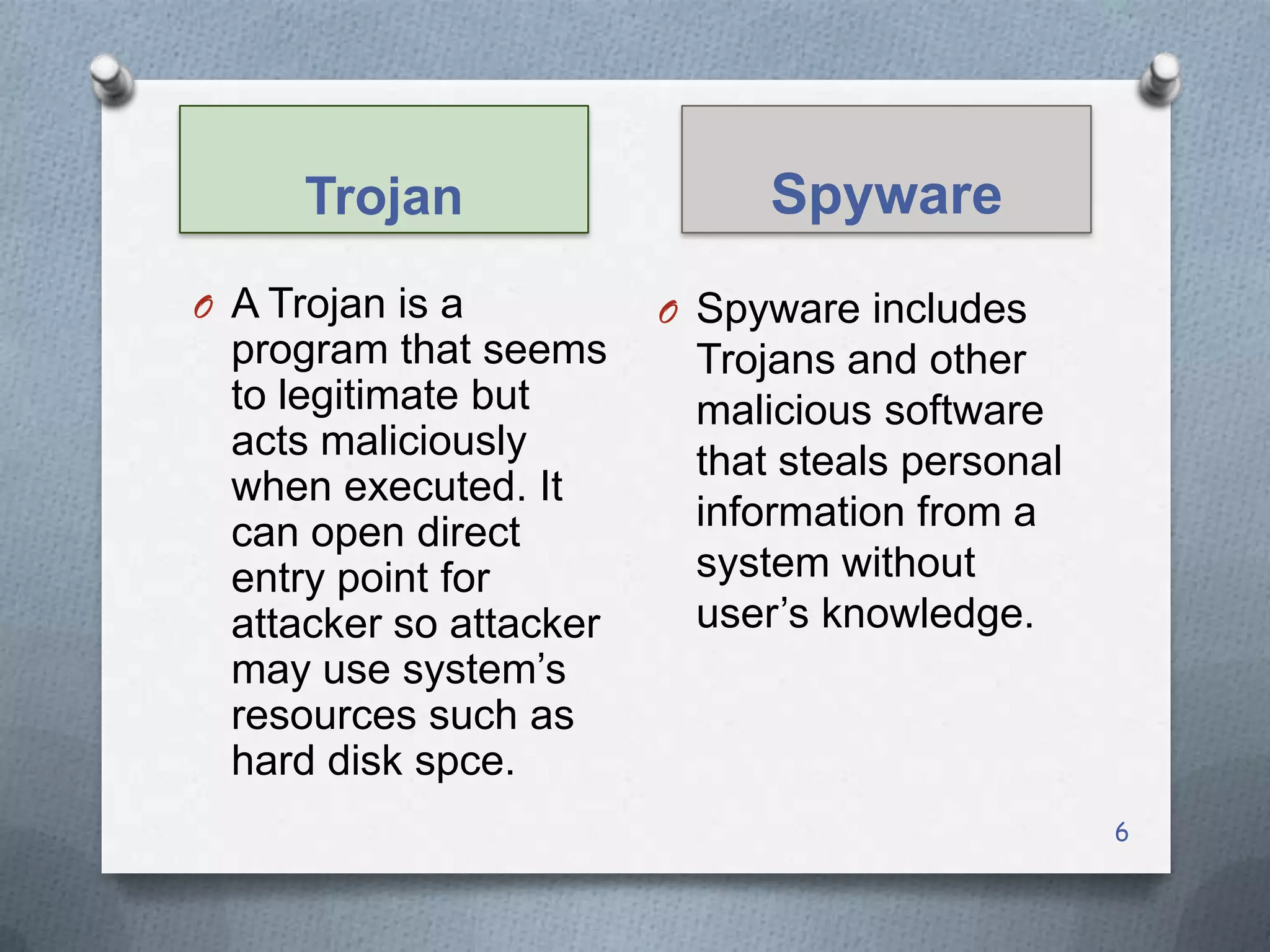
O A Trojan is a

program that seems
to legitimate but
acts maliciously
when executed. It
can open direct
entry point for
attacker so attacker
may use system’s
resources such as
hard disk spce.

Spyware
O Spyware includes

Trojans and other
malicious software
that steals personal
information from a
system without
user’s knowledge.

6
Log-in Password Cracking
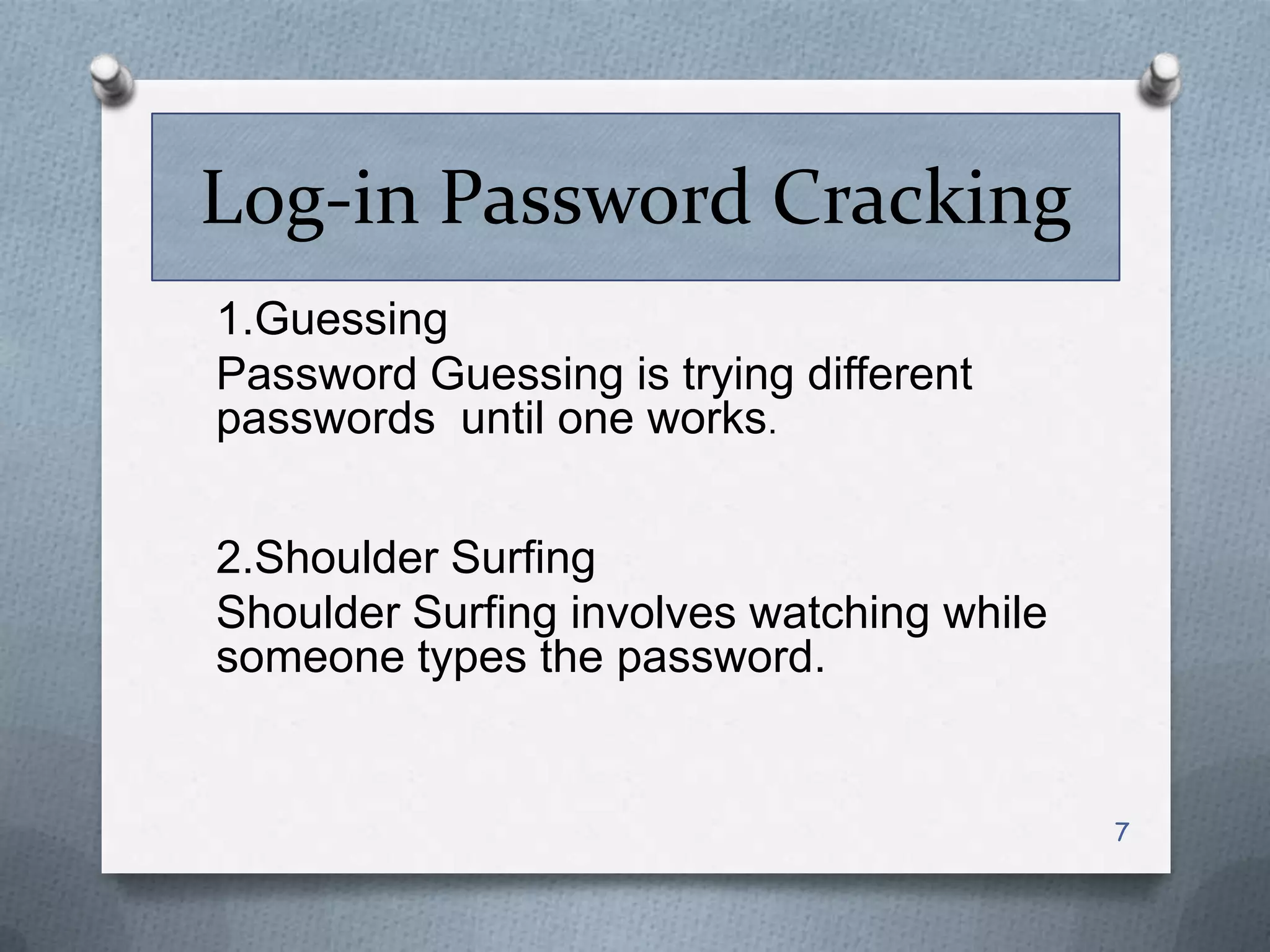
1.Guessing
Password Guessing is trying different
passwords until one works.
2.Shoulder Surfing
Shoulder Surfing involves watching while
someone types the password.

7
Log-in Password Cracking
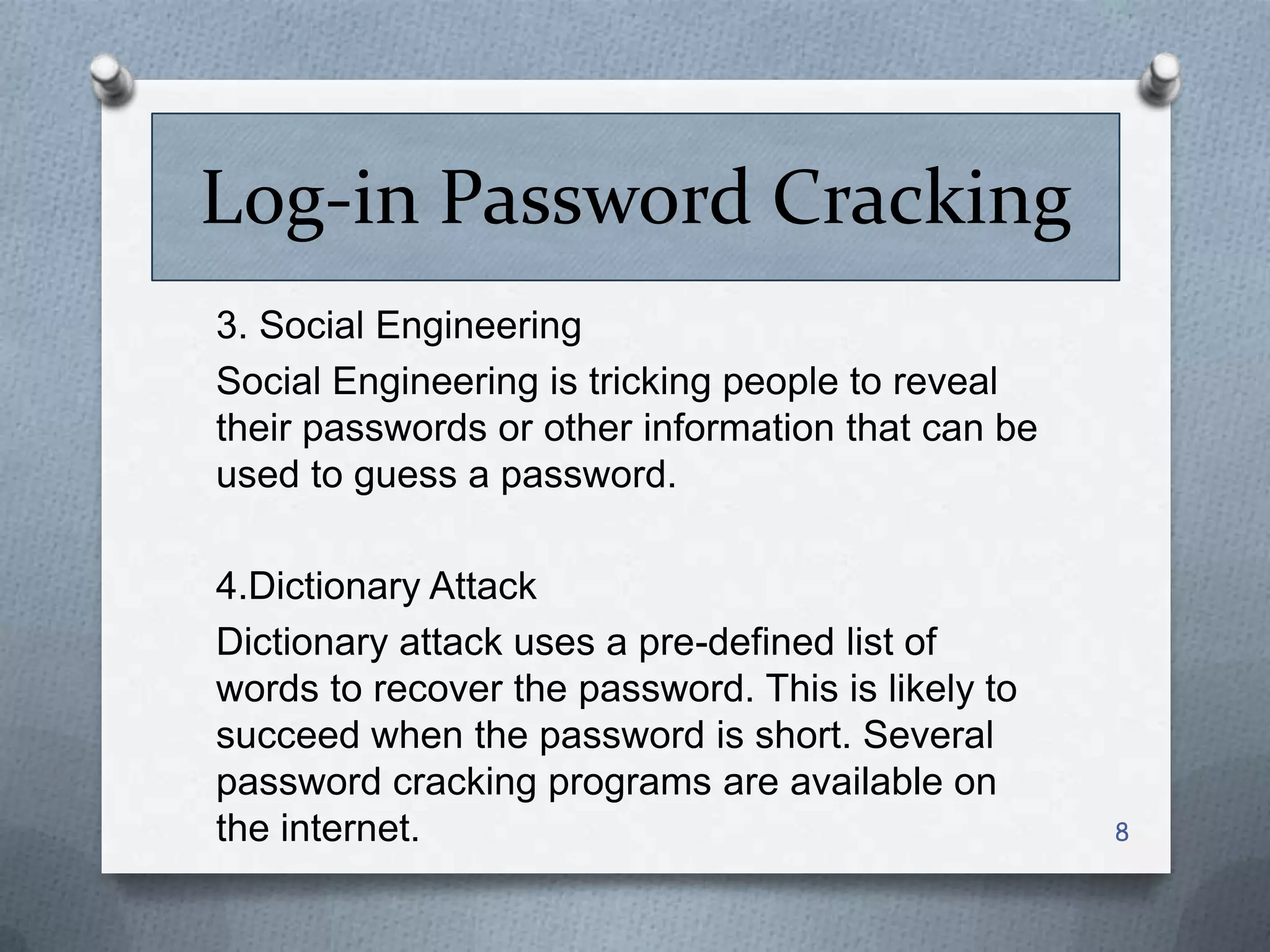
3. Social Engineering
Social Engineering is tricking people to reveal
their passwords or other information that can be
used to guess a password.
4.Dictionary Attack
Dictionary attack uses a pre-defined list of
words to recover the password. This is likely to
succeed when the password is short. Several
password cracking programs are available on
the internet.

8
Guidelines for Windows OS
Security
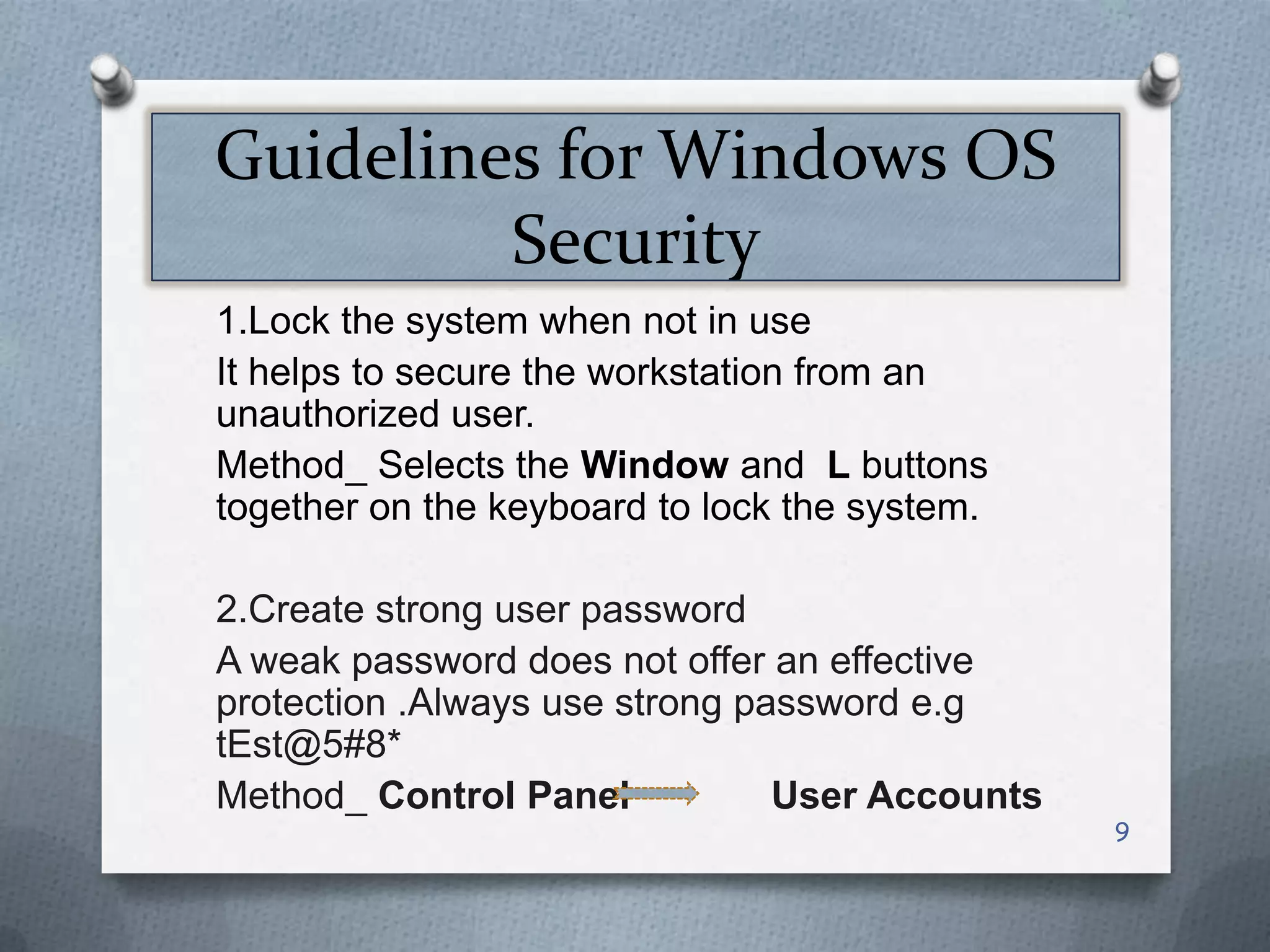
1.Lock the system when not in use
It helps to secure the workstation from an
unauthorized user.
Method_ Selects the Window and L buttons
together on the keyboard to lock the system.
2.Create strong user password
A weak password does not offer an effective
protection .Always use strong password e.g
tEst@5#8*
Method_ Control Panel
User Accounts

9
Guidelines for Windows OS
Security
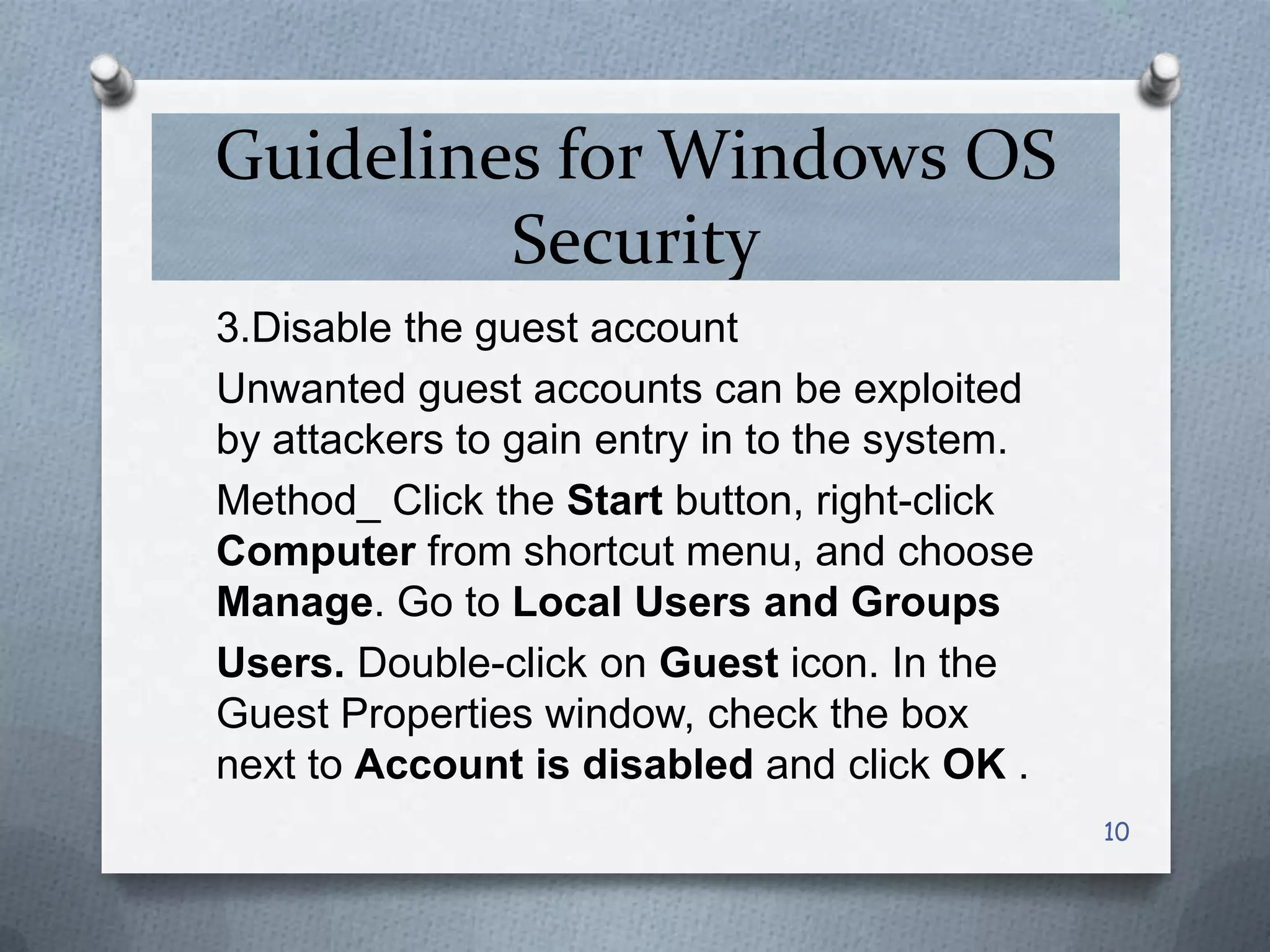
3.Disable the guest account
Unwanted guest accounts can be exploited
by attackers to gain entry in to the system.
Method_ Click the Start button, right-click
Computer from shortcut menu, and choose
Manage. Go to Local Users and Groups
Users. Double-click on Guest icon. In the
Guest Properties window, check the box
next to Account is disabled and click OK .
10
Guidelines for Windows OS
Security
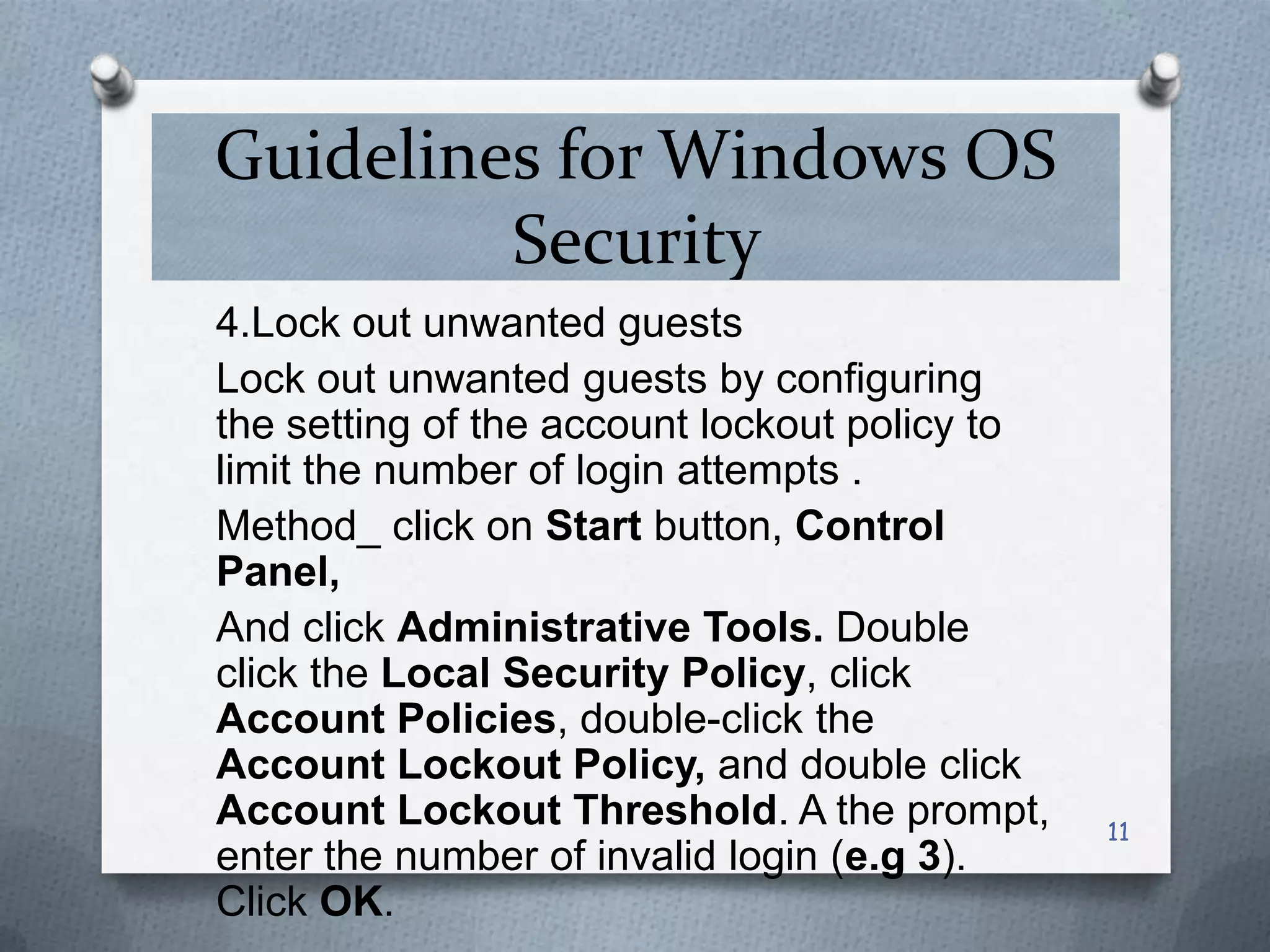
4.Lock out unwanted guests
Lock out unwanted guests by configuring
the setting of the account lockout policy to
limit the number of login attempts .
Method_ click on Start button, Control
Panel,
And click Administrative Tools. Double
click the Local Security Policy, click
Account Policies, double-click the
Account Lockout Policy, and double click
Account Lockout Threshold. A the prompt,
enter the number of invalid login (e.g 3).
Click OK.

11
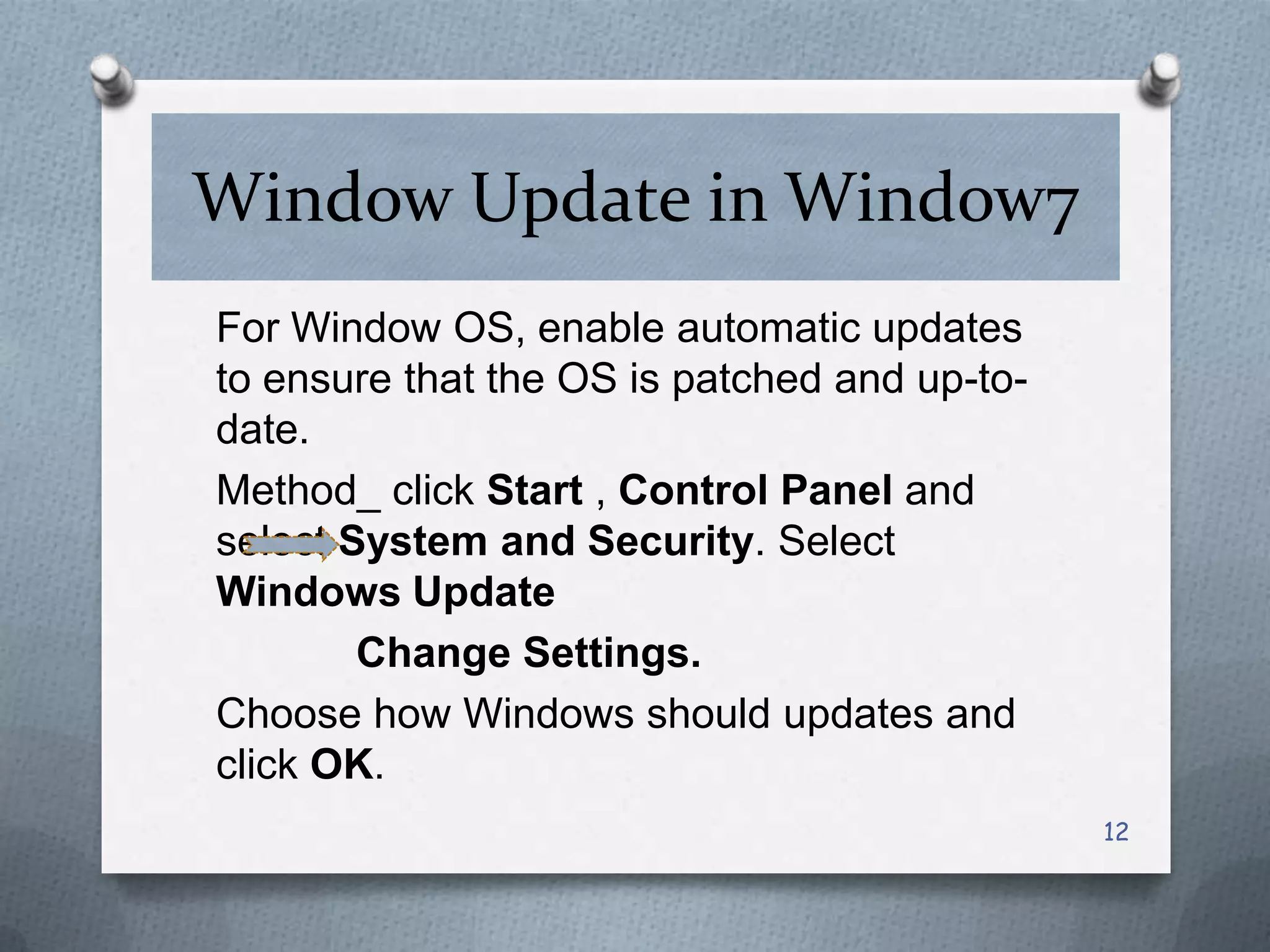
Window Update in Window7
For Window OS, enable automatic updates
to ensure that the OS is patched and up-todate.
Method_ click Start , Control Panel and
select System and Security. Select
Windows Update
Change Settings.
Choose how Windows should updates and
click OK.
12
Pointers for Updates
O Always patch the OS and applications to
O
O
O
O

the latest patch levels.
Ensure that patches are downloaded only
from vendor site.
Use patch management tools for easier
updating . Several free tools are available.
Do not send patches through email.
Choose to be notified by the vendor about
vulnerability announcements.
13
Window Firewall
O A firewall is software that guards the

system from unwarranted traffic when
connected to a network. Hackers can try
to take advantage of programs running on
the system and try to execute malicious
code. Hacking tools such as Trojan can
send information from the victim’s
computer to the attacker’s computer. A
firewall can detect this attack and block
certain traffic .
14
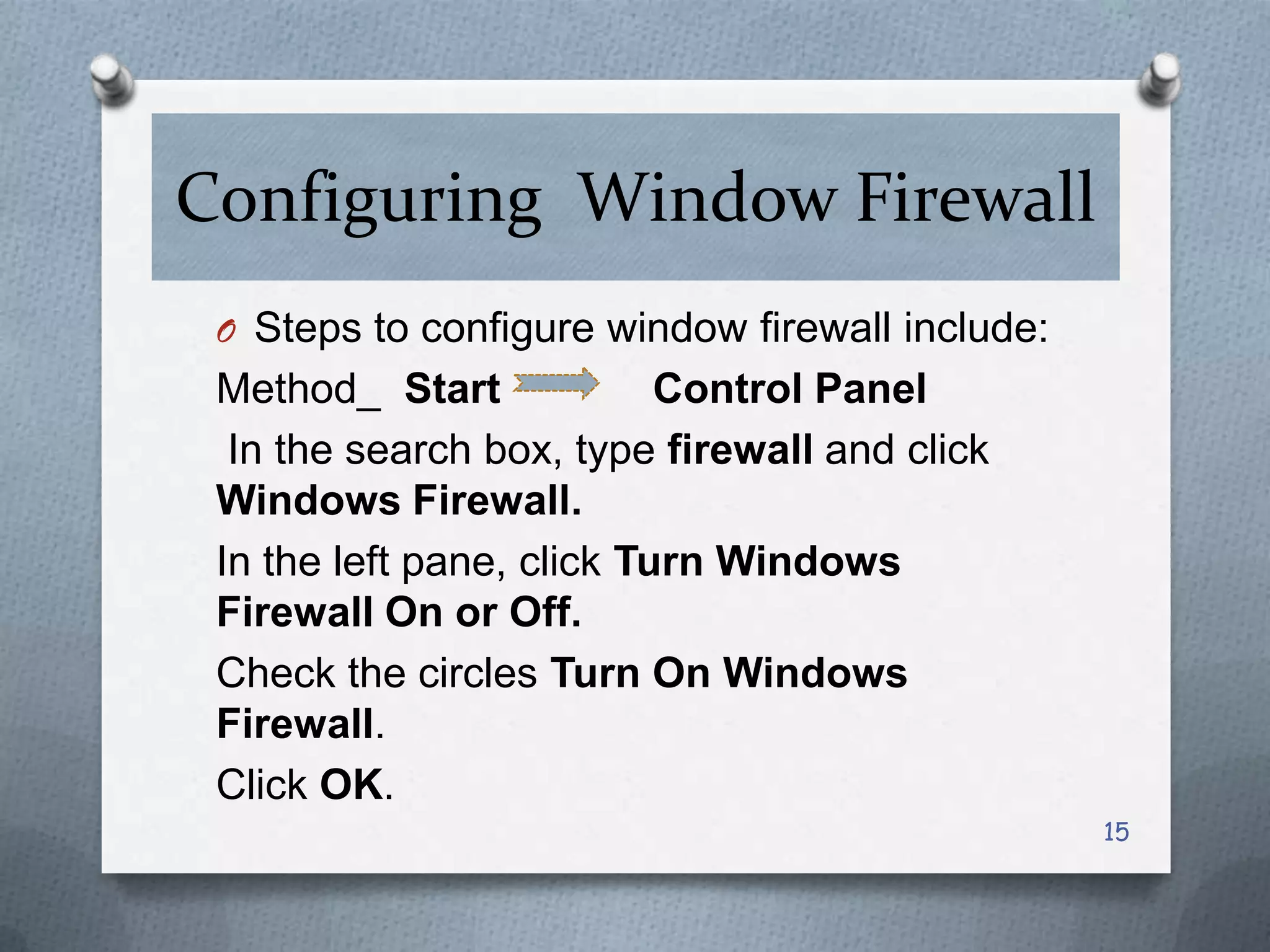
Configuring Window Firewall
O Steps to configure window firewall include:

Method_ Start
Control Panel
In the search box, type firewall and click
Windows Firewall.
In the left pane, click Turn Windows
Firewall On or Off.
Check the circles Turn On Windows
Firewall.
Click OK.
15
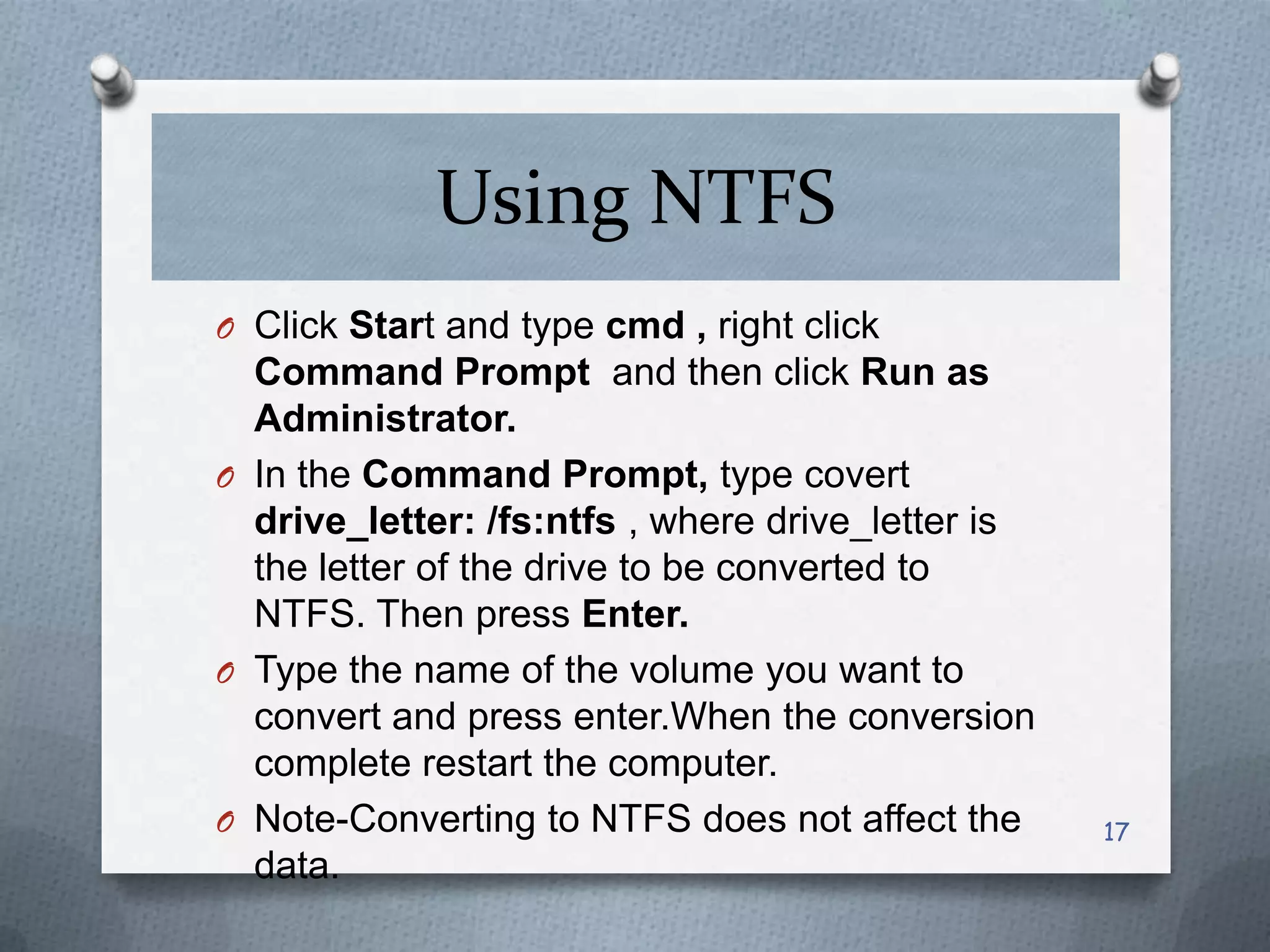
Using NTFS
O The NTFS file system provides better

performance and security for data on hard
disks and partitions than FAT file system.
You can convert earlier FAT or FAT32 file
system to NTFS by using the covert
command.

16
Using NTFS
O Click Start and type cmd , right click

Command Prompt and then click Run as
Administrator.
O In the Command Prompt, type covert
drive_letter: /fs:ntfs , where drive_letter is
the letter of the drive to be converted to
NTFS. Then press Enter.
O Type the name of the volume you want to
convert and press enter.When the conversion
complete restart the computer.
O Note-Converting to NTFS does not affect the
data.

17
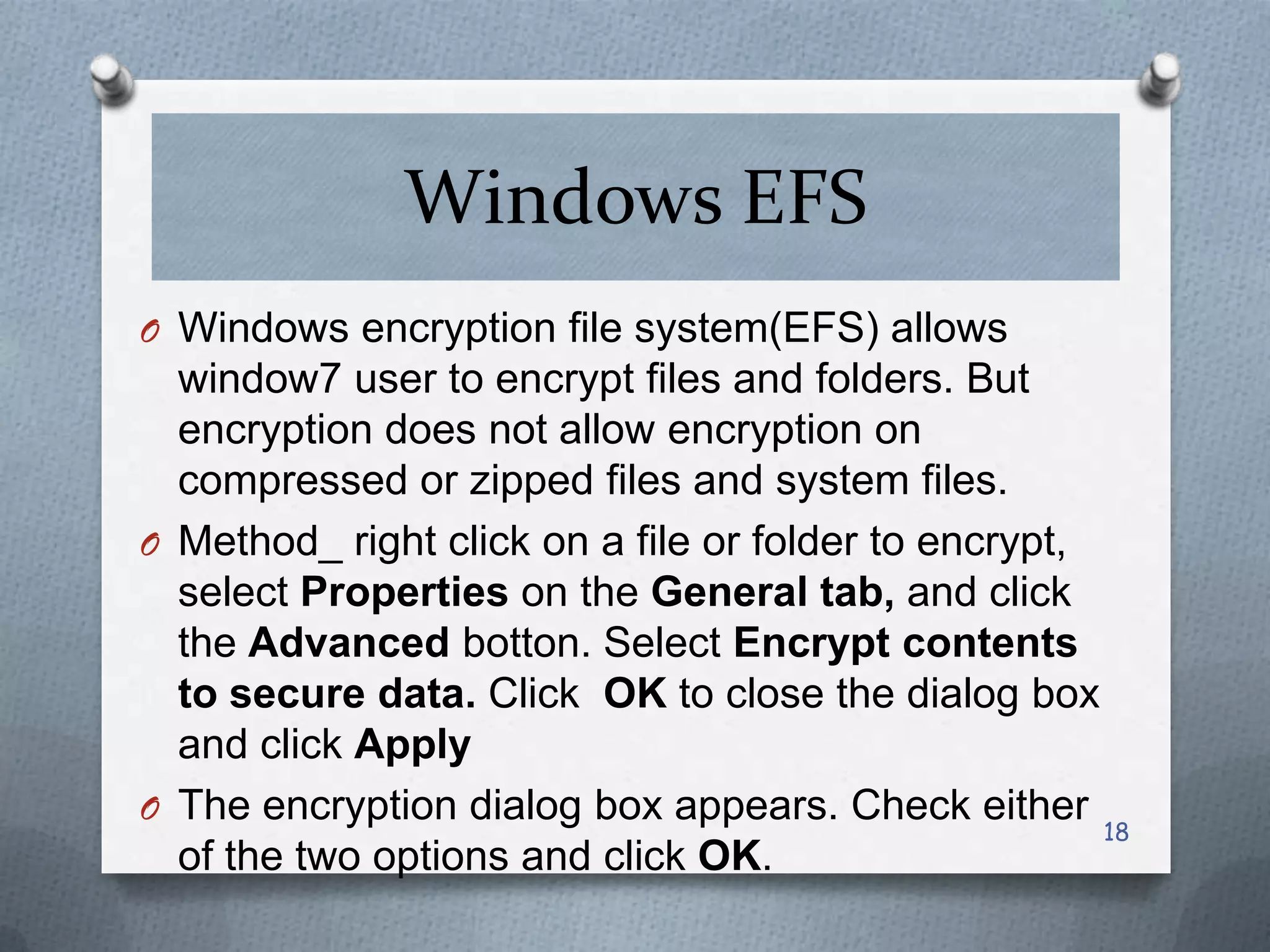
Windows EFS
O Windows encryption file system(EFS) allows

window7 user to encrypt files and folders. But
encryption does not allow encryption on
compressed or zipped files and system files.
O Method_ right click on a file or folder to encrypt,
select Properties on the General tab, and click
the Advanced botton. Select Encrypt contents
to secure data. Click OK to close the dialog box
and click Apply
O The encryption dialog box appears. Check either
18
of the two options and click OK.
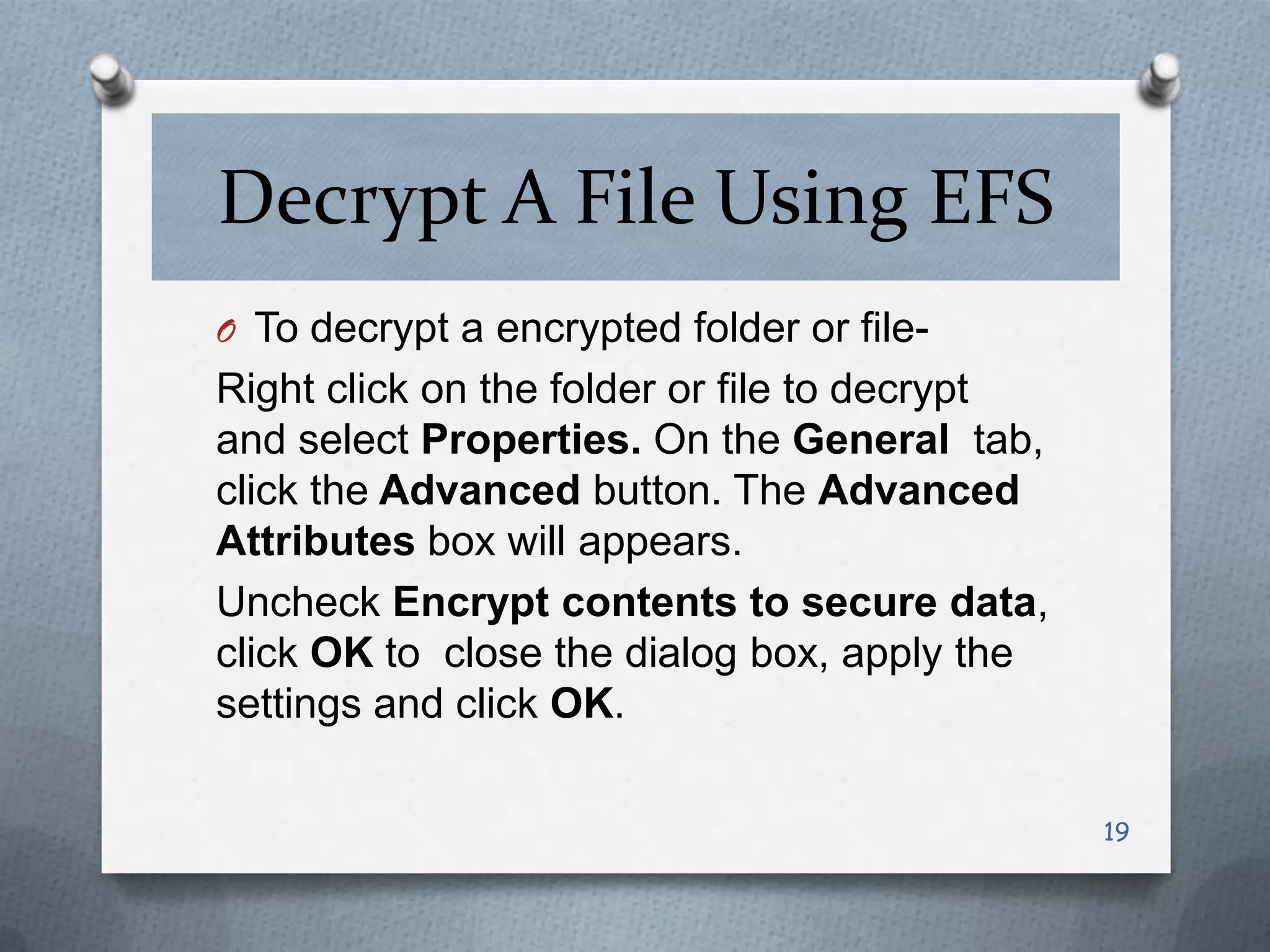
Decrypt A File Using EFS
O To decrypt a encrypted folder or file-

Right click on the folder or file to decrypt
and select Properties. On the General tab,
click the Advanced button. The Advanced
Attributes box will appears.
Uncheck Encrypt contents to secure data,
click OK to close the dialog box, apply the
settings and click OK.
19
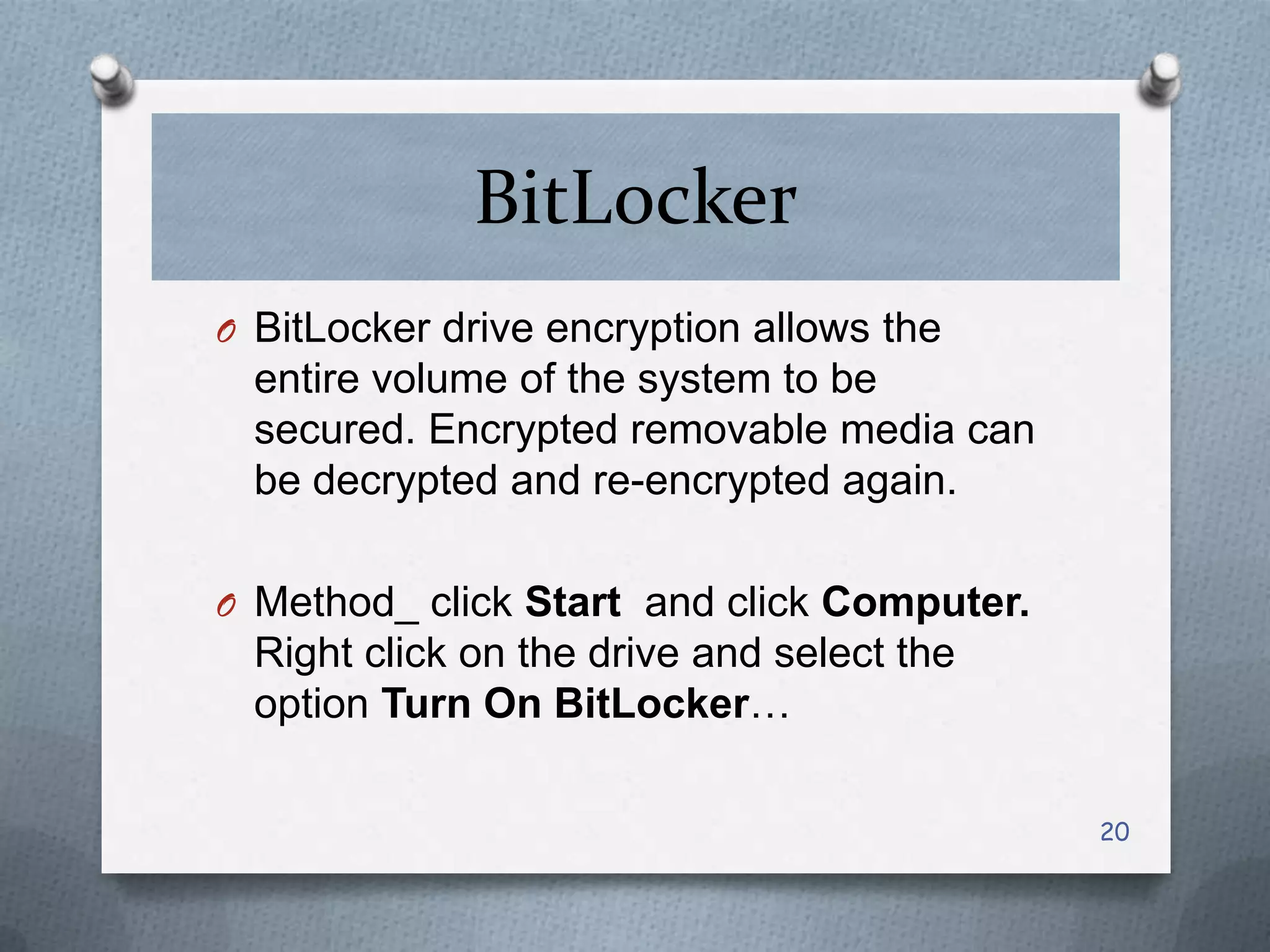
BitLocker
O BitLocker drive encryption allows the

entire volume of the system to be
secured. Encrypted removable media can
be decrypted and re-encrypted again.
O Method_ click Start and click Computer.

Right click on the drive and select the
option Turn On BitLocker…
20
Windows Security Tools
1.Microsoft Security Essentials
http://www.microsoft.com
2.Keepass Password Safe Portable
http://www.portableapps.com
3.Registry Mechanic
http://www.pctools.com
21
Thank You!

22

Operating system security

  • 1.
    Operating System Security O RachelJeewa O www.twitter.com/RachelJeewa 1
  • 2.
  • 3.
    Objective O Nowadays, as systemsgrow powerful , attacks on system grow more sophisticated. O Therefore, it is important that the system users secure the computer from threats. 3
  • 4.
    Threats to SystemSecurity O Virus A virus is a program that replicates by copying itself to other programs, system boot sectors or documents or applications. Some viruses can damage to your files by deleting or corrupting them. Some may display rude or strange message on the screen. Some can allow other people to access and control your computer. 4
  • 6.
    Trojan O A Trojanis a program that seems to legitimate but acts maliciously when executed. It can open direct entry point for attacker so attacker may use system’s resources such as hard disk spce. Spyware O Spyware includes Trojans and other malicious software that steals personal information from a system without user’s knowledge. 6
  • 7.
    Log-in Password Cracking 1.Guessing PasswordGuessing is trying different passwords until one works. 2.Shoulder Surfing Shoulder Surfing involves watching while someone types the password. 7
  • 8.
    Log-in Password Cracking 3.Social Engineering Social Engineering is tricking people to reveal their passwords or other information that can be used to guess a password. 4.Dictionary Attack Dictionary attack uses a pre-defined list of words to recover the password. This is likely to succeed when the password is short. Several password cracking programs are available on the internet. 8
  • 9.
    Guidelines for WindowsOS Security 1.Lock the system when not in use It helps to secure the workstation from an unauthorized user. Method_ Selects the Window and L buttons together on the keyboard to lock the system. 2.Create strong user password A weak password does not offer an effective protection .Always use strong password e.g tEst@5#8* Method_ Control Panel User Accounts 9
  • 10.
    Guidelines for WindowsOS Security 3.Disable the guest account Unwanted guest accounts can be exploited by attackers to gain entry in to the system. Method_ Click the Start button, right-click Computer from shortcut menu, and choose Manage. Go to Local Users and Groups Users. Double-click on Guest icon. In the Guest Properties window, check the box next to Account is disabled and click OK . 10
  • 11.
    Guidelines for WindowsOS Security 4.Lock out unwanted guests Lock out unwanted guests by configuring the setting of the account lockout policy to limit the number of login attempts . Method_ click on Start button, Control Panel, And click Administrative Tools. Double click the Local Security Policy, click Account Policies, double-click the Account Lockout Policy, and double click Account Lockout Threshold. A the prompt, enter the number of invalid login (e.g 3). Click OK. 11
  • 12.
    Window Update inWindow7 For Window OS, enable automatic updates to ensure that the OS is patched and up-todate. Method_ click Start , Control Panel and select System and Security. Select Windows Update Change Settings. Choose how Windows should updates and click OK. 12
  • 13.
    Pointers for Updates OAlways patch the OS and applications to O O O O the latest patch levels. Ensure that patches are downloaded only from vendor site. Use patch management tools for easier updating . Several free tools are available. Do not send patches through email. Choose to be notified by the vendor about vulnerability announcements. 13
  • 14.
    Window Firewall O Afirewall is software that guards the system from unwarranted traffic when connected to a network. Hackers can try to take advantage of programs running on the system and try to execute malicious code. Hacking tools such as Trojan can send information from the victim’s computer to the attacker’s computer. A firewall can detect this attack and block certain traffic . 14
  • 15.
    Configuring Window Firewall OSteps to configure window firewall include: Method_ Start Control Panel In the search box, type firewall and click Windows Firewall. In the left pane, click Turn Windows Firewall On or Off. Check the circles Turn On Windows Firewall. Click OK. 15
  • 16.
    Using NTFS O TheNTFS file system provides better performance and security for data on hard disks and partitions than FAT file system. You can convert earlier FAT or FAT32 file system to NTFS by using the covert command. 16
  • 17.
    Using NTFS O ClickStart and type cmd , right click Command Prompt and then click Run as Administrator. O In the Command Prompt, type covert drive_letter: /fs:ntfs , where drive_letter is the letter of the drive to be converted to NTFS. Then press Enter. O Type the name of the volume you want to convert and press enter.When the conversion complete restart the computer. O Note-Converting to NTFS does not affect the data. 17
  • 18.
    Windows EFS O Windowsencryption file system(EFS) allows window7 user to encrypt files and folders. But encryption does not allow encryption on compressed or zipped files and system files. O Method_ right click on a file or folder to encrypt, select Properties on the General tab, and click the Advanced botton. Select Encrypt contents to secure data. Click OK to close the dialog box and click Apply O The encryption dialog box appears. Check either 18 of the two options and click OK.
  • 19.
    Decrypt A FileUsing EFS O To decrypt a encrypted folder or file- Right click on the folder or file to decrypt and select Properties. On the General tab, click the Advanced button. The Advanced Attributes box will appears. Uncheck Encrypt contents to secure data, click OK to close the dialog box, apply the settings and click OK. 19
  • 20.
    BitLocker O BitLocker driveencryption allows the entire volume of the system to be secured. Encrypted removable media can be decrypted and re-encrypted again. O Method_ click Start and click Computer. Right click on the drive and select the option Turn On BitLocker… 20
  • 21.
    Windows Security Tools 1.MicrosoftSecurity Essentials http://www.microsoft.com 2.Keepass Password Safe Portable http://www.portableapps.com 3.Registry Mechanic http://www.pctools.com 21
  • 22.