What is an Opera?
An opera is a drama told through acting,
singing and instrumental music. The
dialogue (conversation) in an
opera is usually sung.
In most operas an orchestra accompanies
the singers. Sometimes there is music for
the orchestra alone
Dancing is also an important part of many
operas.
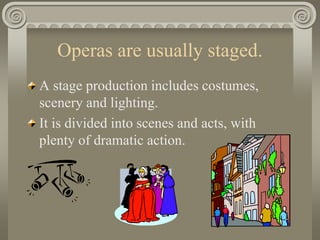
Operas are usually staged.
A stage production includes costumes,
scenery and lighting.
It is divided into scenes and acts, with
plenty of dramatic action.
Two types of Operas
Comic Opera:
Example
Act I: Boy meets girl.
Act II: Boy and girl fall in love.
Act III: Boy and girl are separated
Act IV: They find each other and everyone
lives happily ever after.
Tragic Opera:
Example
Act I: Boy meets girl.
Act II: Boy and girl fall in love.
Act III: Boy and girl are separated
Act IV: They never find each other and
everyone dies!
3 Forms of Singing in Opera
The Aria: This is a solo, usually sung by a lead
character. It expresses the character’s feelings and
personality.
The Ensemble: This is when two or more
characters sing together. (duet, trio and so on)
The Recitative: This is a form of “talking” on
several pitches. The main purpose is to keep the
storyline moving by telling the audience
something important about the characters or plot.
Who is involved in writing an
opera?
The Librettist: This is the person who writes
the libretto, which is the words of the story.
The Composer: This is the person who
writes the music.
Many changes may be necessary in both the
libretto and the music before they fit together!
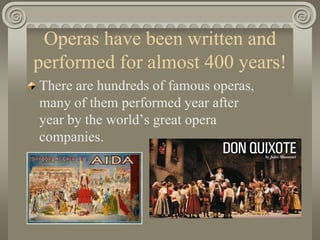
Operas have been written and
performed for almost 400 years!
There are hundreds of famous operas,
many of them performed year after
year by the world’s great opera
companies.
Let’s see what you remember.
What is an operatic solo?
What is the result when two or more
characters sing together?
What is an ensemble for four singers called?
What type of singing is like “talking” on
different pitches?
Who writes the words of the story?
Who writes the music of the production?
There are SO MANY parts that
make up an opera! Opera is one
of the most extensive and
expensive art forms today.
WHAT ARE THE PARTS OF
THE OPERA???
THE LIBRETTO and
LIBRETTIST
The Libretto is the
story.
The Librettist writes
the words to the story.
THE COMPOSER
• The composer
writes the actual
music, based on
the libretto.
THE SINGERS
The actors and actresses who use
their voices to sing the music the
composer writes based on the
libretto.
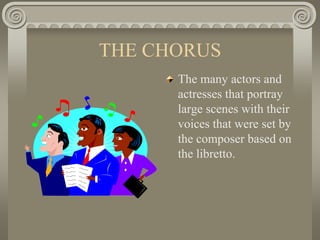
THE CHORUS
The many actors and
actresses that portray
large scenes with their
voices that were set by
the composer based on
the libretto.
THE ORCHESTRA
A group of musicians
that play the music
that the composer
wrote based on the
libretto. Orchestral
players sit in the pit in
front of the stage.
THE CONDUCTOR
He or she tells
everybody when they
sing and play. They
have to watch the
action on the stage and
coordinate it all!
THE CHOREOGRAPHER
The person who
teaches the performers
the dances in the
show.
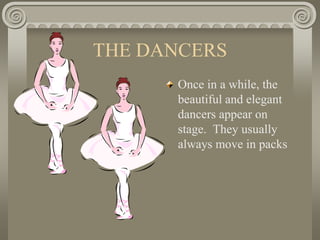
THE DANCERS
Once in a while, the
beautiful and elegant
dancers appear on
stage. They usually
always move in packs
THE STAGE DIRECTOR
This is truly the person
who runs the show.
Their job is to tell
EVERYONE what to
do and to worry that it
will all come together
after much practice!
THE SCENERY
The artists that make the
scenery spend months on it.
They have to paint and build
and design and decorate and
make it look real.
THE COSTUMES
Costumes are made by
professional sewers. First,
they draw a picture of
what they want, then they
pick out fabric and cut it
to fit on a mannequin.
Then they call in the
singers for a try-on.
Costumes come in all
shapes and sizes! They
can be modern or old
fashioned.
An example of costumes for the
opera. This one is “I Pagliacci”.
This opera
is “Gianni
Schicchi”.
This opera is “La
Boheme”.
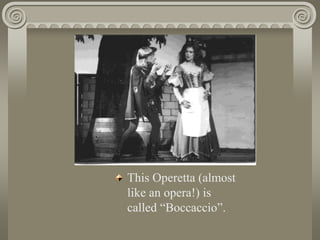
This Operetta (almost
like an opera!) is
called “Boccaccio”.
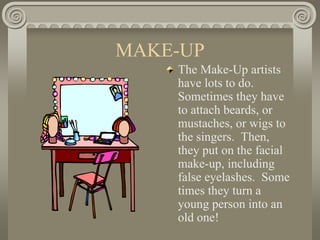
MAKE-UP
The Make-Up artists
have lots to do.
Sometimes they have
to attach beards, or
mustaches, or wigs to
the singers. Then,
they put on the facial
make-up, including
false eyelashes. Some
times they turn a
young person into an
old one!
PROPS
In the prop room there
are rows and rows and
rows of THINGS!
Swords, cups, trays,
guns, ropes, balls,
fireworks – YOU
NAME IT.
The props are the items
the singers use to make
the play look more real.
LIGHTING
The lighting people
make sure that the
audience can see the
action.
CREW
The backstage crew makes
sure that sets get moved
on and off and that the
props are in the correct
place. The whole show
would fail if they weren’t
there!
PUBLICITY
These are the people
who get the word out
about the upcoming
production. They also
make the program
including the synopsis
(plot) and the cast.
Opera Terms
Opera: a large play set to music in
which all parts are sung.
Overture: music played before the
opera begins.
Aria: a vocal solo.
Acts: how the opera is broken up.
Duet: musical passage for 2.
Trio: musical passage for 3.
Quartet: musical passage for 4.
Ensemble: a small group.
Ballet: a story told in dance.
Kinds of Voices
Soprano, the highest
female. Usually the lead
character.
Mezzo Soprano, the middle
female. The lead’s best
friend or rival.
Alto, the lowest female.
The older characters or
the villainess.
Tenor, the highest
male. Usually the lead
character.
Baritone, the middle
male. Usually the
villain.
Bass, the lowest male.
Older and powerful
characters.

Opera powerpoint

  • 2.
    What is anOpera? An opera is a drama told through acting, singing and instrumental music. The dialogue (conversation) in an opera is usually sung. In most operas an orchestra accompanies the singers. Sometimes there is music for the orchestra alone Dancing is also an important part of many operas.
  • 3.
    Operas are usuallystaged. A stage production includes costumes, scenery and lighting. It is divided into scenes and acts, with plenty of dramatic action.
  • 4.
    Two types ofOperas Comic Opera: Example Act I: Boy meets girl. Act II: Boy and girl fall in love. Act III: Boy and girl are separated Act IV: They find each other and everyone lives happily ever after.
  • 5.
    Tragic Opera: Example Act I:Boy meets girl. Act II: Boy and girl fall in love. Act III: Boy and girl are separated Act IV: They never find each other and everyone dies!
  • 6.
    3 Forms ofSinging in Opera The Aria: This is a solo, usually sung by a lead character. It expresses the character’s feelings and personality. The Ensemble: This is when two or more characters sing together. (duet, trio and so on) The Recitative: This is a form of “talking” on several pitches. The main purpose is to keep the storyline moving by telling the audience something important about the characters or plot.
  • 7.
    Who is involvedin writing an opera? The Librettist: This is the person who writes the libretto, which is the words of the story. The Composer: This is the person who writes the music. Many changes may be necessary in both the libretto and the music before they fit together!
  • 8.
    Operas have beenwritten and performed for almost 400 years! There are hundreds of famous operas, many of them performed year after year by the world’s great opera companies.
  • 9.
    Let’s see whatyou remember. What is an operatic solo? What is the result when two or more characters sing together? What is an ensemble for four singers called? What type of singing is like “talking” on different pitches? Who writes the words of the story? Who writes the music of the production?
  • 10.
    There are SOMANY parts that make up an opera! Opera is one of the most extensive and expensive art forms today.
  • 11.
    WHAT ARE THEPARTS OF THE OPERA???
  • 12.
    THE LIBRETTO and LIBRETTIST TheLibretto is the story. The Librettist writes the words to the story.
  • 13.
    THE COMPOSER • Thecomposer writes the actual music, based on the libretto.
  • 14.
    THE SINGERS The actorsand actresses who use their voices to sing the music the composer writes based on the libretto.
  • 15.
    THE CHORUS The manyactors and actresses that portray large scenes with their voices that were set by the composer based on the libretto.
  • 16.
    THE ORCHESTRA A groupof musicians that play the music that the composer wrote based on the libretto. Orchestral players sit in the pit in front of the stage.
  • 17.
    THE CONDUCTOR He orshe tells everybody when they sing and play. They have to watch the action on the stage and coordinate it all!
  • 18.
    THE CHOREOGRAPHER The personwho teaches the performers the dances in the show.
  • 19.
    THE DANCERS Once ina while, the beautiful and elegant dancers appear on stage. They usually always move in packs
  • 20.
    THE STAGE DIRECTOR Thisis truly the person who runs the show. Their job is to tell EVERYONE what to do and to worry that it will all come together after much practice!
  • 21.
    THE SCENERY The artiststhat make the scenery spend months on it. They have to paint and build and design and decorate and make it look real.
  • 22.
    THE COSTUMES Costumes aremade by professional sewers. First, they draw a picture of what they want, then they pick out fabric and cut it to fit on a mannequin. Then they call in the singers for a try-on. Costumes come in all shapes and sizes! They can be modern or old fashioned.
  • 23.
    An example ofcostumes for the opera. This one is “I Pagliacci”.
  • 24.
  • 25.
    This opera is“La Boheme”.
  • 26.
    This Operetta (almost likean opera!) is called “Boccaccio”.
  • 27.
    MAKE-UP The Make-Up artists havelots to do. Sometimes they have to attach beards, or mustaches, or wigs to the singers. Then, they put on the facial make-up, including false eyelashes. Some times they turn a young person into an old one!
  • 28.
    PROPS In the proproom there are rows and rows and rows of THINGS! Swords, cups, trays, guns, ropes, balls, fireworks – YOU NAME IT. The props are the items the singers use to make the play look more real.
  • 29.
    LIGHTING The lighting people makesure that the audience can see the action.
  • 30.
    CREW The backstage crewmakes sure that sets get moved on and off and that the props are in the correct place. The whole show would fail if they weren’t there!
  • 31.
    PUBLICITY These are thepeople who get the word out about the upcoming production. They also make the program including the synopsis (plot) and the cast.
  • 32.
    Opera Terms Opera: alarge play set to music in which all parts are sung. Overture: music played before the opera begins. Aria: a vocal solo. Acts: how the opera is broken up.
  • 33.
    Duet: musical passagefor 2. Trio: musical passage for 3. Quartet: musical passage for 4. Ensemble: a small group. Ballet: a story told in dance.
  • 34.
    Kinds of Voices Soprano,the highest female. Usually the lead character. Mezzo Soprano, the middle female. The lead’s best friend or rival. Alto, the lowest female. The older characters or the villainess. Tenor, the highest male. Usually the lead character. Baritone, the middle male. Usually the villain. Bass, the lowest male. Older and powerful characters.