
![Approach | Web 2.0
OpenFreeCloud Social Collaboration
Distributed technologies Web 2.0 Social network: a The result is a flourishing
[web & mobile] built to social structure made up of nonmarket sector of
integrate, that collectively individualsorganizations information, knowledge, and
transform mass participation (nodes, which are connected cultural production, based in
into valuable outcomes. by one or more specific the networked environment,
types of interdependency: and applied to anything that
Ross Dawson.
friendship, common interest, the many individuals
Future Exploration Network
financial exchange... or connected to it can imagine.
relationships of beliefs, Yochai Benkler
knowledge or prestige. The Wealth of Networks
Wikipedia
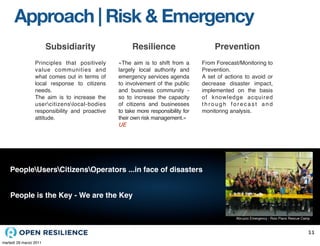
People is the Key - We are the Key
12
martedì 29 marzo 2011](https://image.slidesharecdn.com/pres1oreng-110302160904-phpapp01/85/Open-Resilience-12-320.jpg)
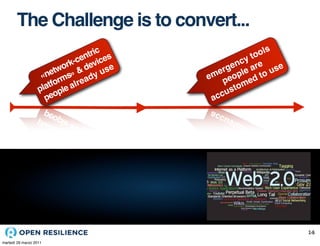
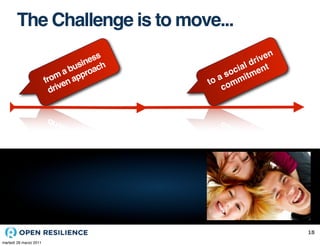
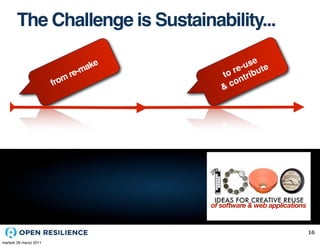
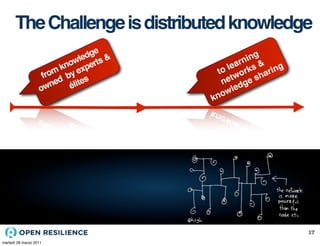
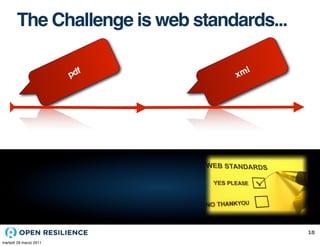
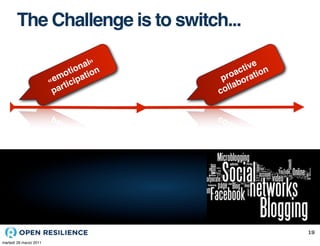
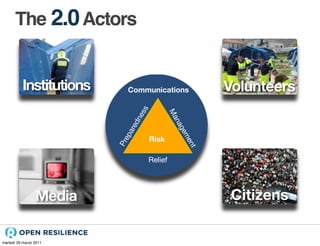
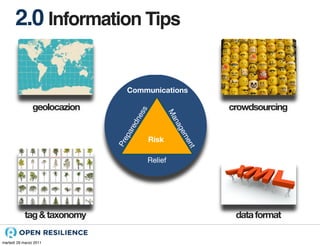
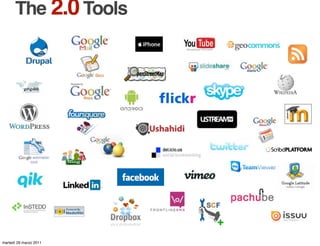
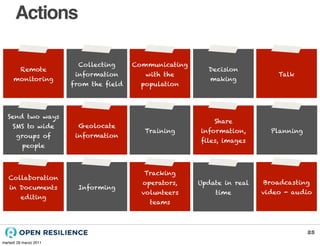
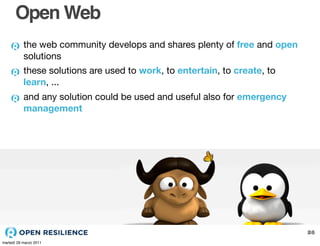
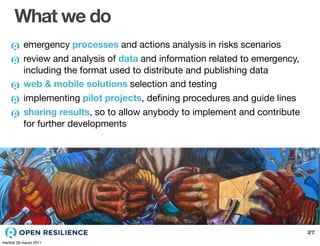

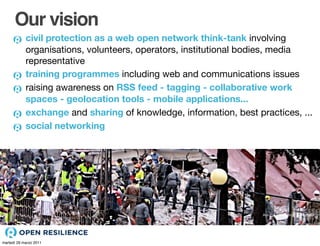

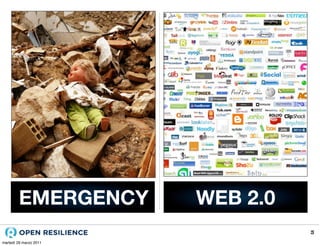
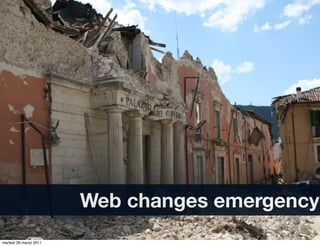
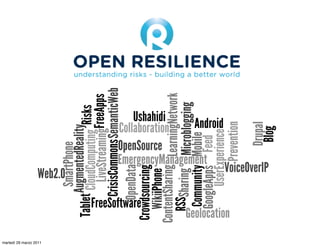
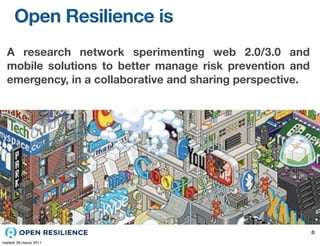
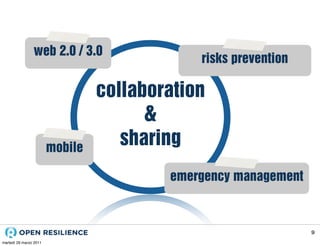
The document discusses how web technologies like social media can change how emergency communications and risk management are handled. It argues that web 2.0 allows for more open, collaborative approaches involving citizens and local organizations. The goal is to move from a top-down model to one with more distributed knowledge and responsibility for prevention and response. Key aspects discussed include using social networks, crowdsourcing, tagging, and mobile apps to better share information in real time during emergencies.


![Building Civil Protection 2.0 [updated]](https://cdn.slidesharecdn.com/ss_thumbnails/1601erapisardi3-100117153246-phpapp02-thumbnail.jpg?width=640&height=640&fit=bounds)


