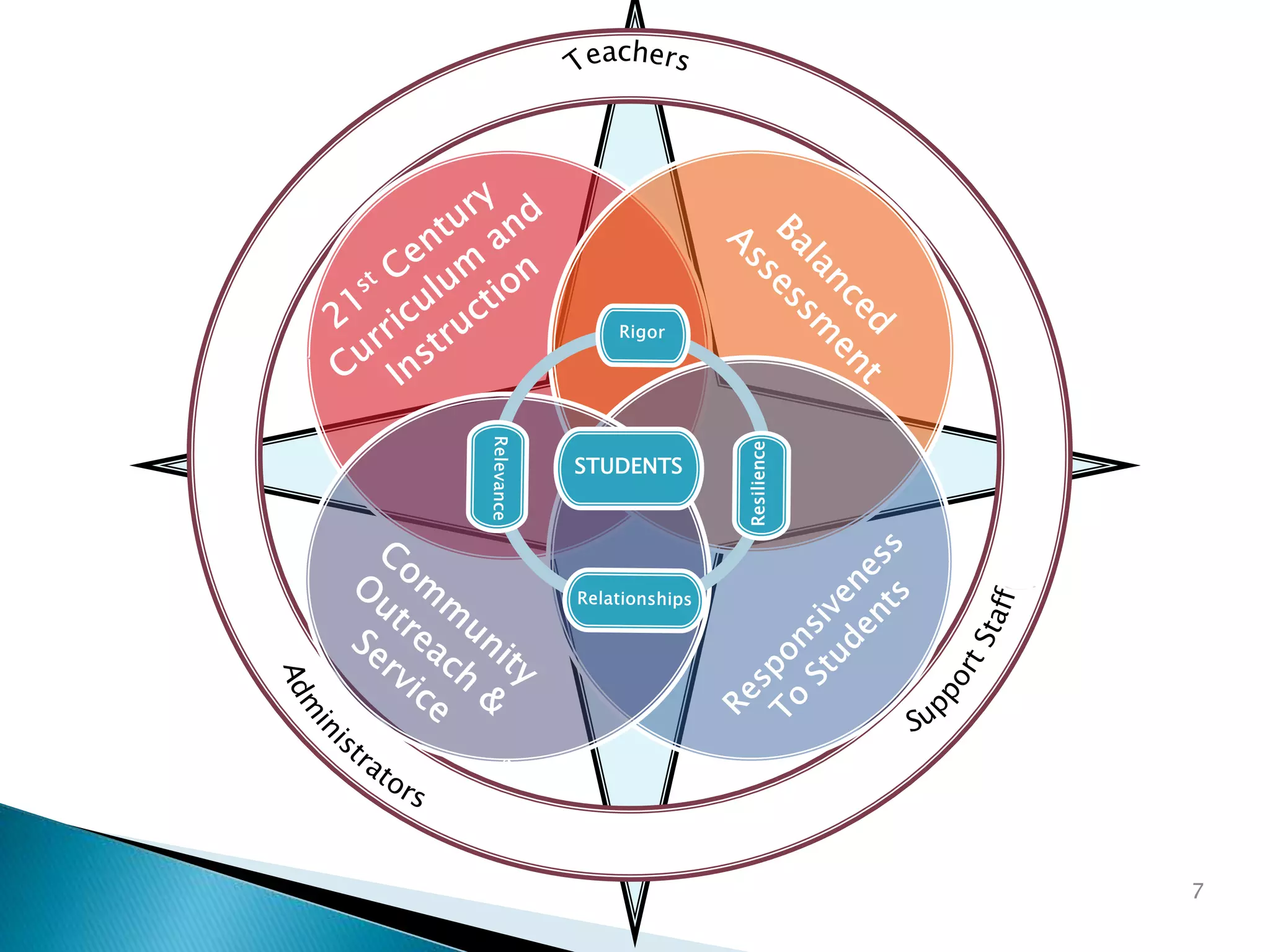
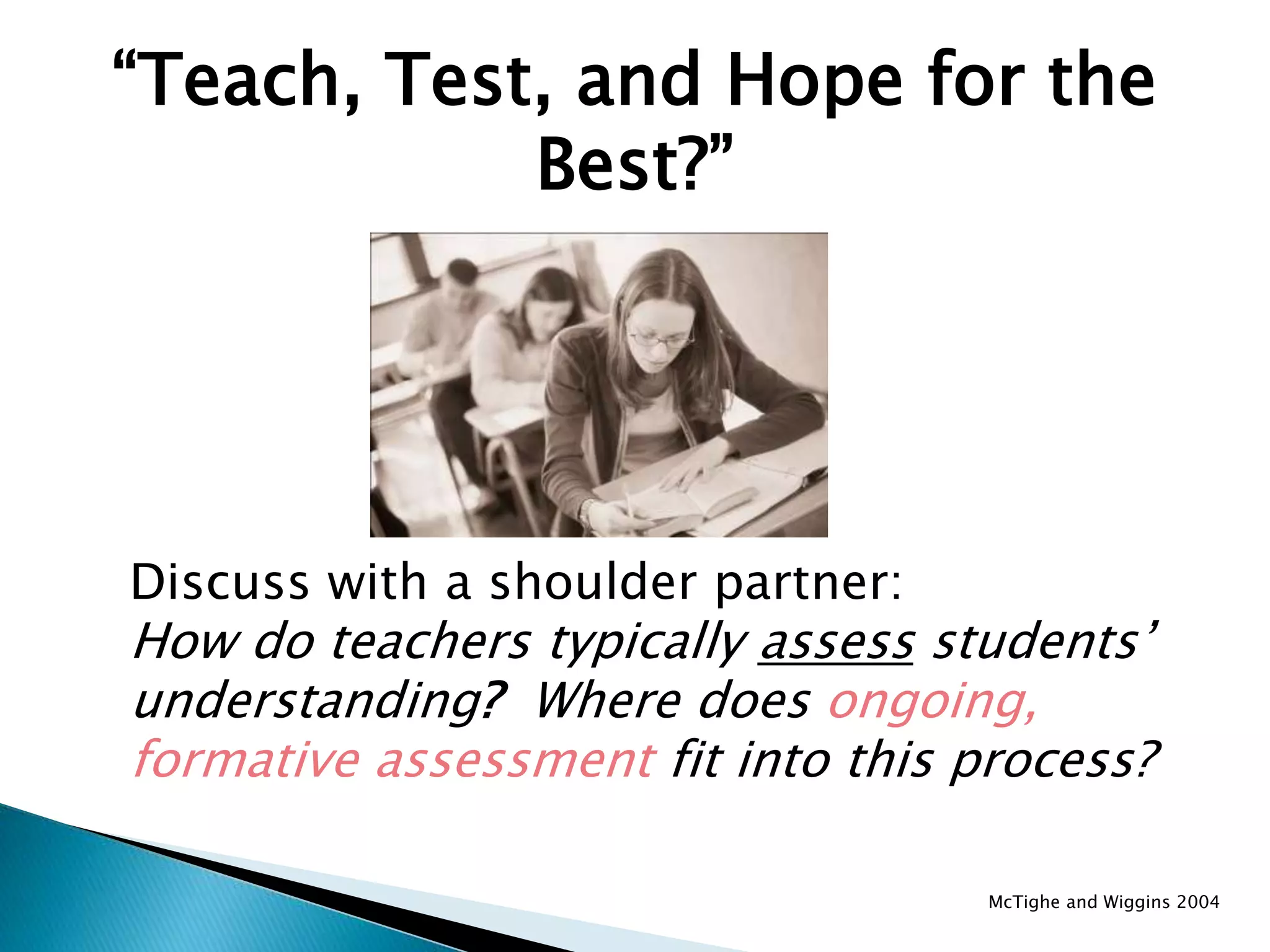
This document discusses the importance of formative assessment in informing instruction. It provides examples of formative assessment strategies like observations, questioning, peer review, and exit tickets. Formative assessment improves teaching and learning by allowing teachers to modify instruction based on evidence of student understanding. When used strategically, formative assessment helps both students and teachers recognize gaps and take actions to improve. An effective balanced assessment system utilizes ongoing formative assessment to anchor units, guide instruction, and differentiate for student needs.