Establishing and Managing
Institution-Wide
Online Course Development
Anthony Piña, Ed.D.
Illinois State University
Susan Wegmann, Ph.D.
Southern Illinois University
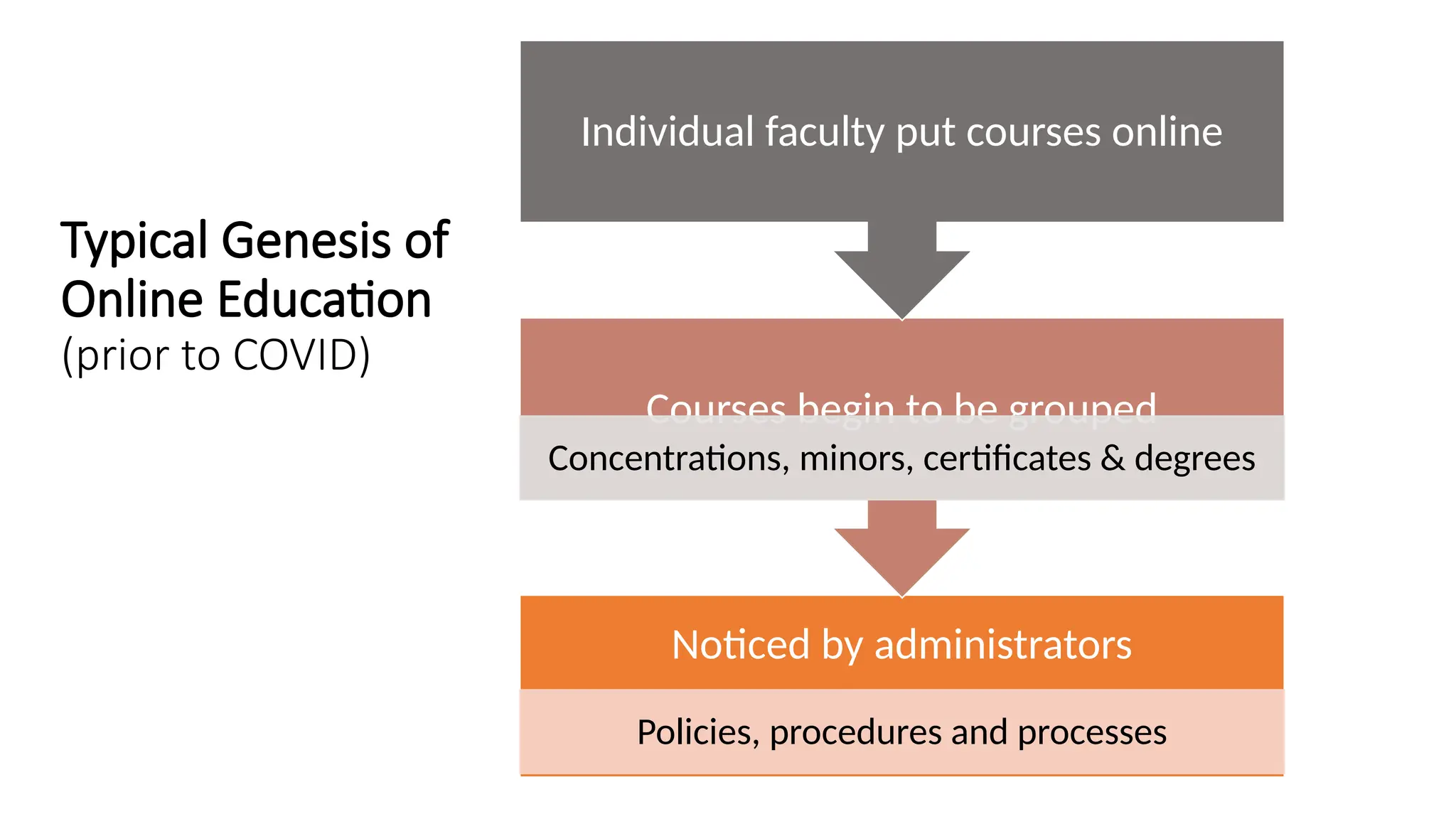
Typical Genesis of
Online Education
(prior to COVID)
Noticed by administrators
Policies, procedures and processes
Courses begin to be grouped
Concentrations, minors, certificates & degrees
Individual faculty put courses online
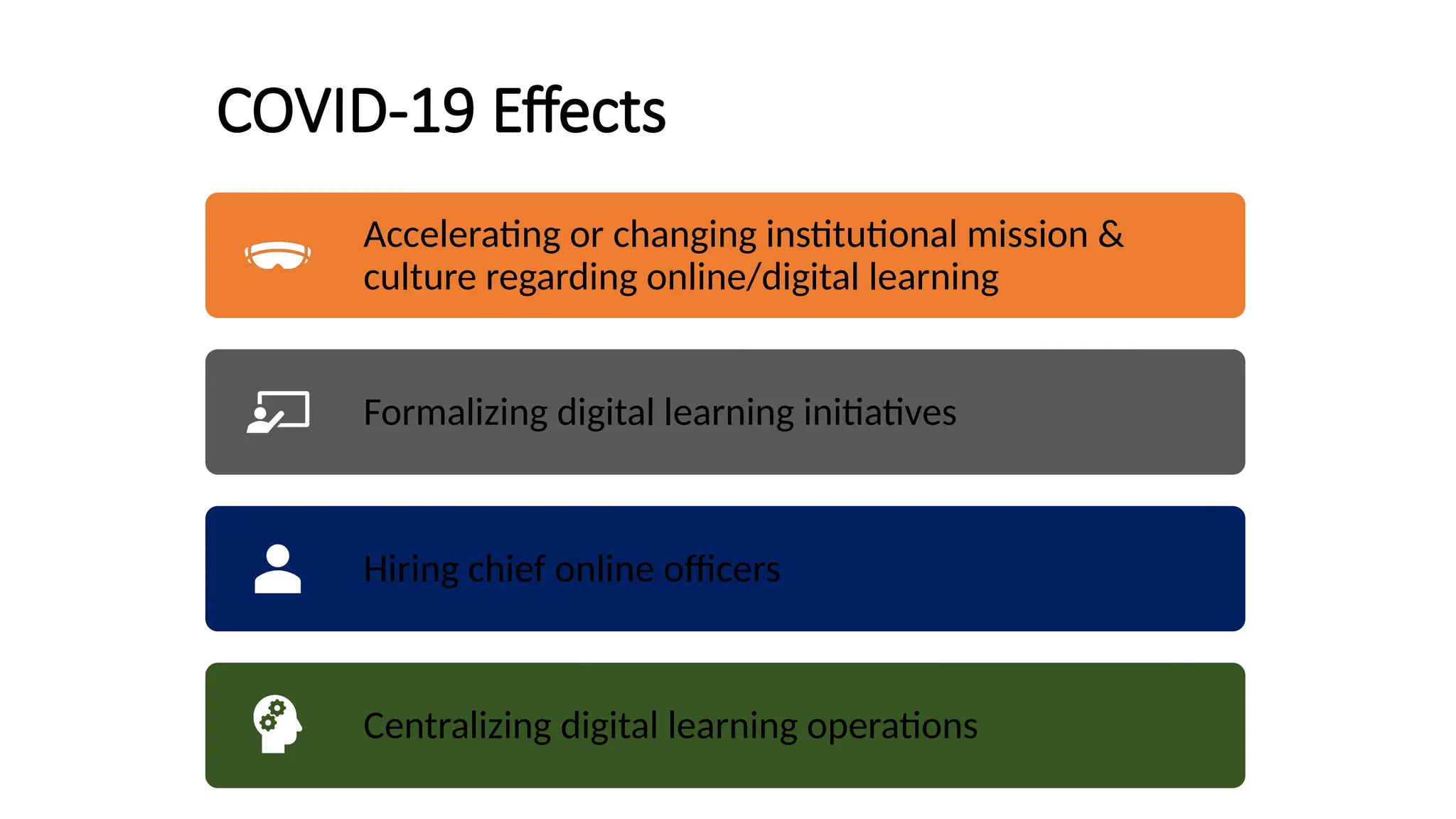
COVID-19 Effects
Accelerating or changing institutional mission &
culture regarding online/digital learning
Formalizing digital learning initiatives
Hiring chief online officers
Centralizing digital learning operations
Managing
Online
Development
Process
• Allows the institution to:
• Scale the development of online courses
• Better align individual courses to
program-level learning outcomes
• Contain development costs
• Eliminate redundancies in the curriculum
• Create a more consistent experience for
online learners
One size does not fit all
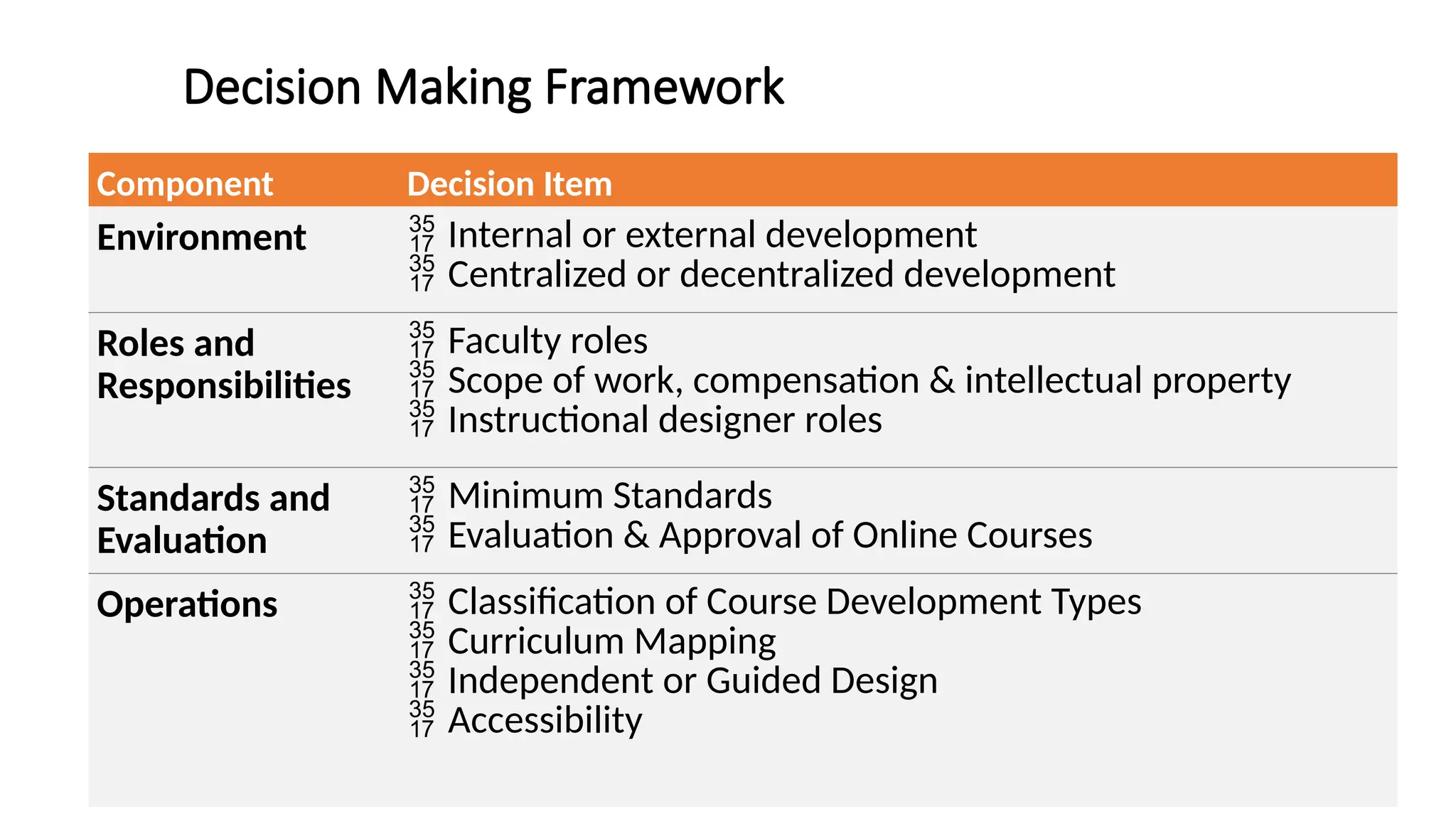
Decision Making Framework
Component Decision Item
Environment  Internal or external development
 Centralized or decentralized development
Roles and
Responsibilities
 Faculty roles
 Scope of work, compensation & intellectual property
 Instructional designer roles
Standards and
Evaluation
 Minimum Standards
 Evaluation & Approval of Online Courses
Operations  Classification of Course Development Types
 Curriculum Mapping
 Independent or Guided Design
 Accessibility
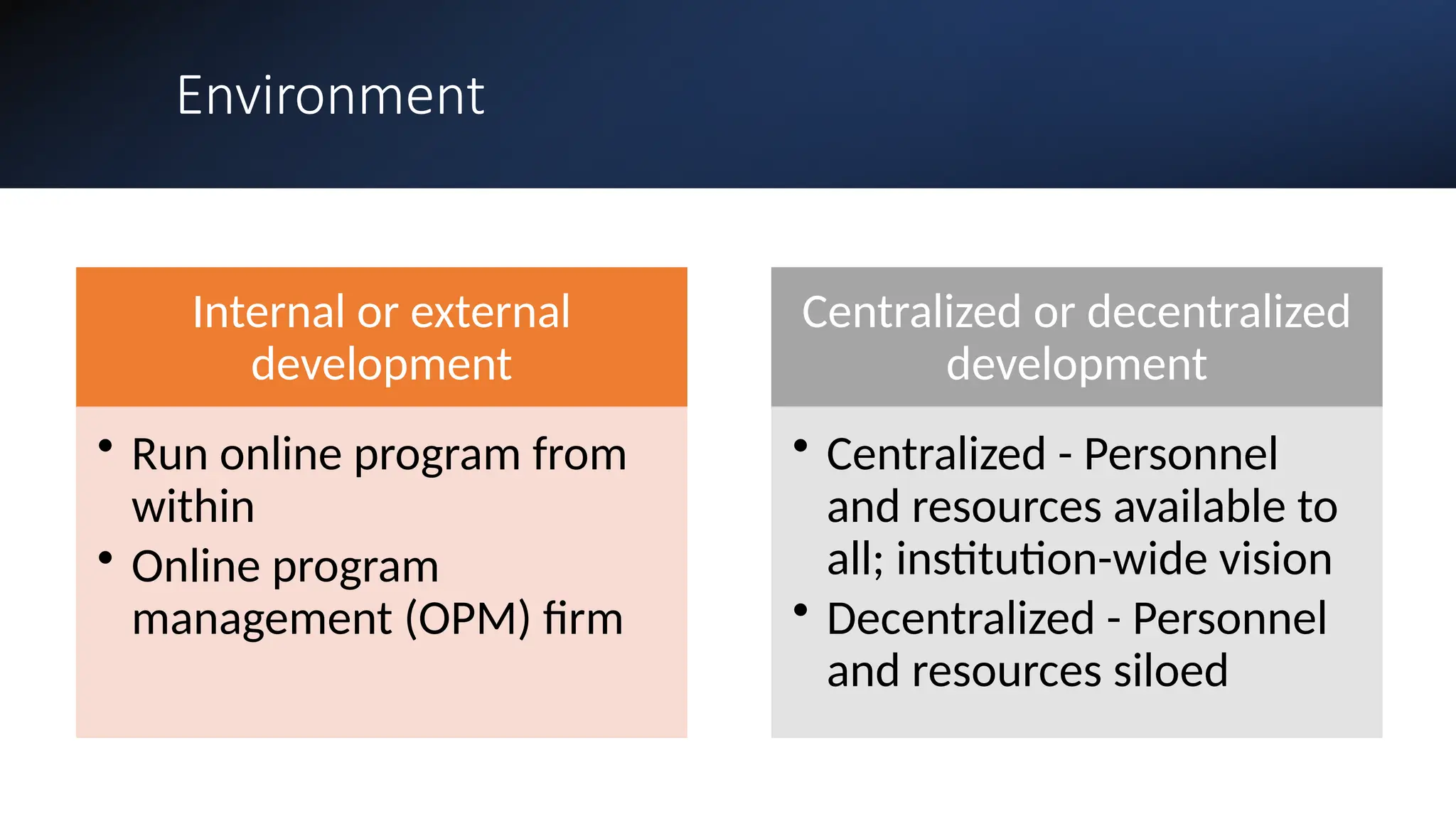
Environment
Internal or external
development
• Run online program from
within
• Online program
management (OPM) firm
Centralized or decentralized
development
• Centralized - Personnel
and resources available to
all; institution-wide vision
• Decentralized - Personnel
and resources siloed
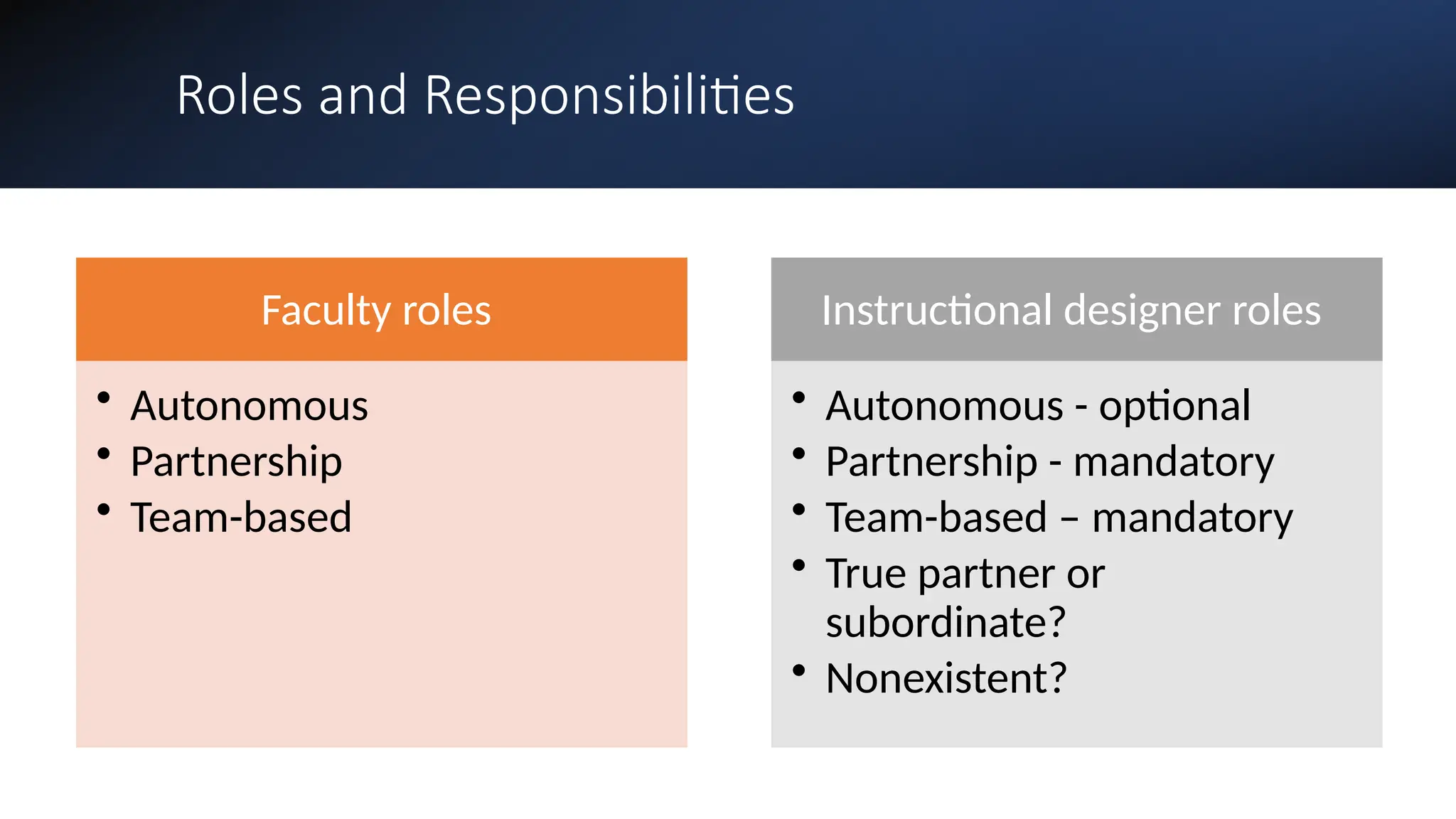
Roles and Responsibilities
Faculty roles
• Autonomous
• Partnership
• Team-based
Instructional designer roles
• Autonomous - optional
• Partnership - mandatory
• Team-based – mandatory
• True partner or
subordinate?
• Nonexistent?
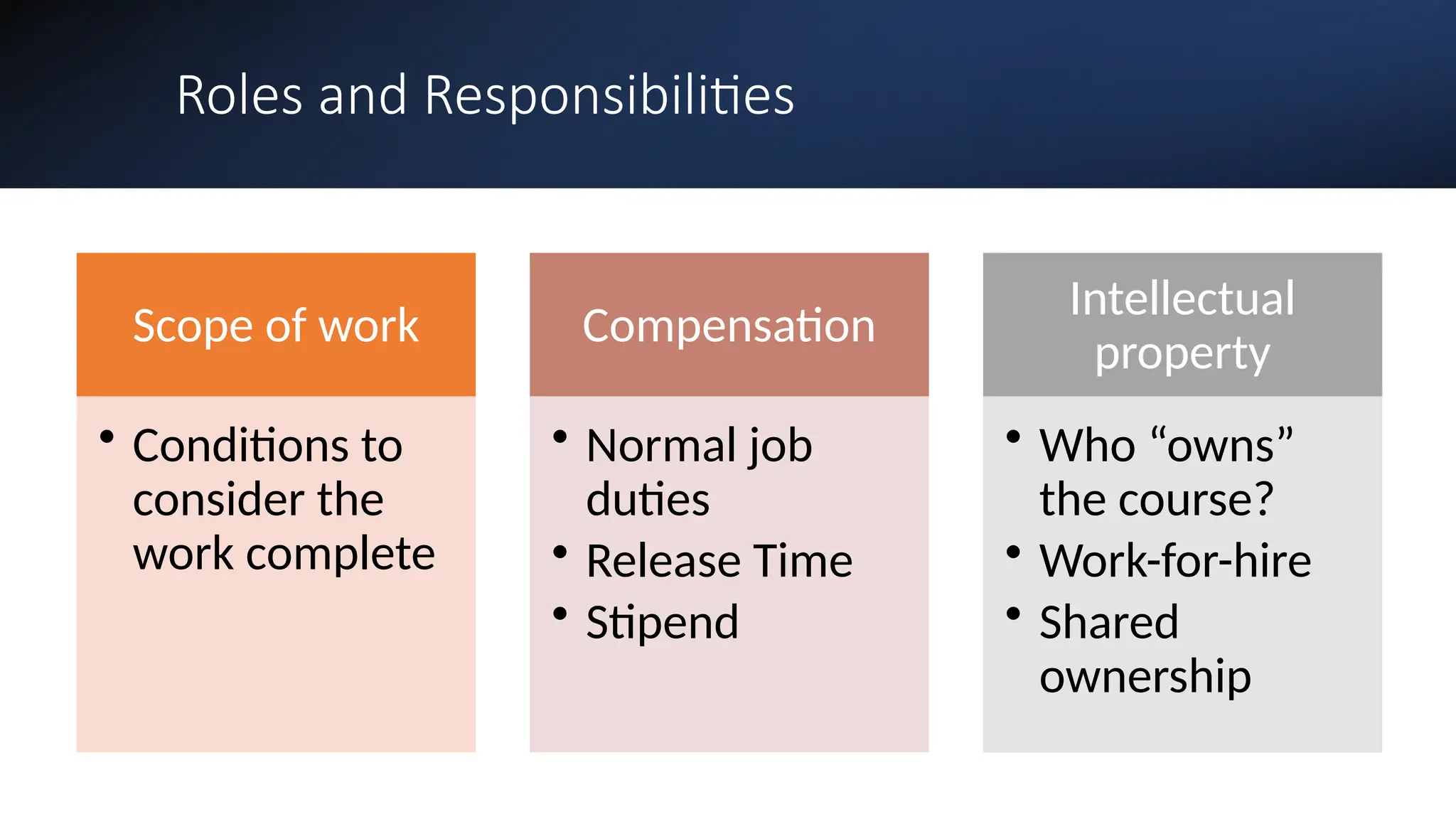
Roles and Responsibilities
Scope of work
• Conditions to
consider the
work complete
Compensation
• Normal job
duties
• Release Time
• Stipend
Intellectual
property
• Who “owns”
the course?
• Work-for-hire
• Shared
ownership
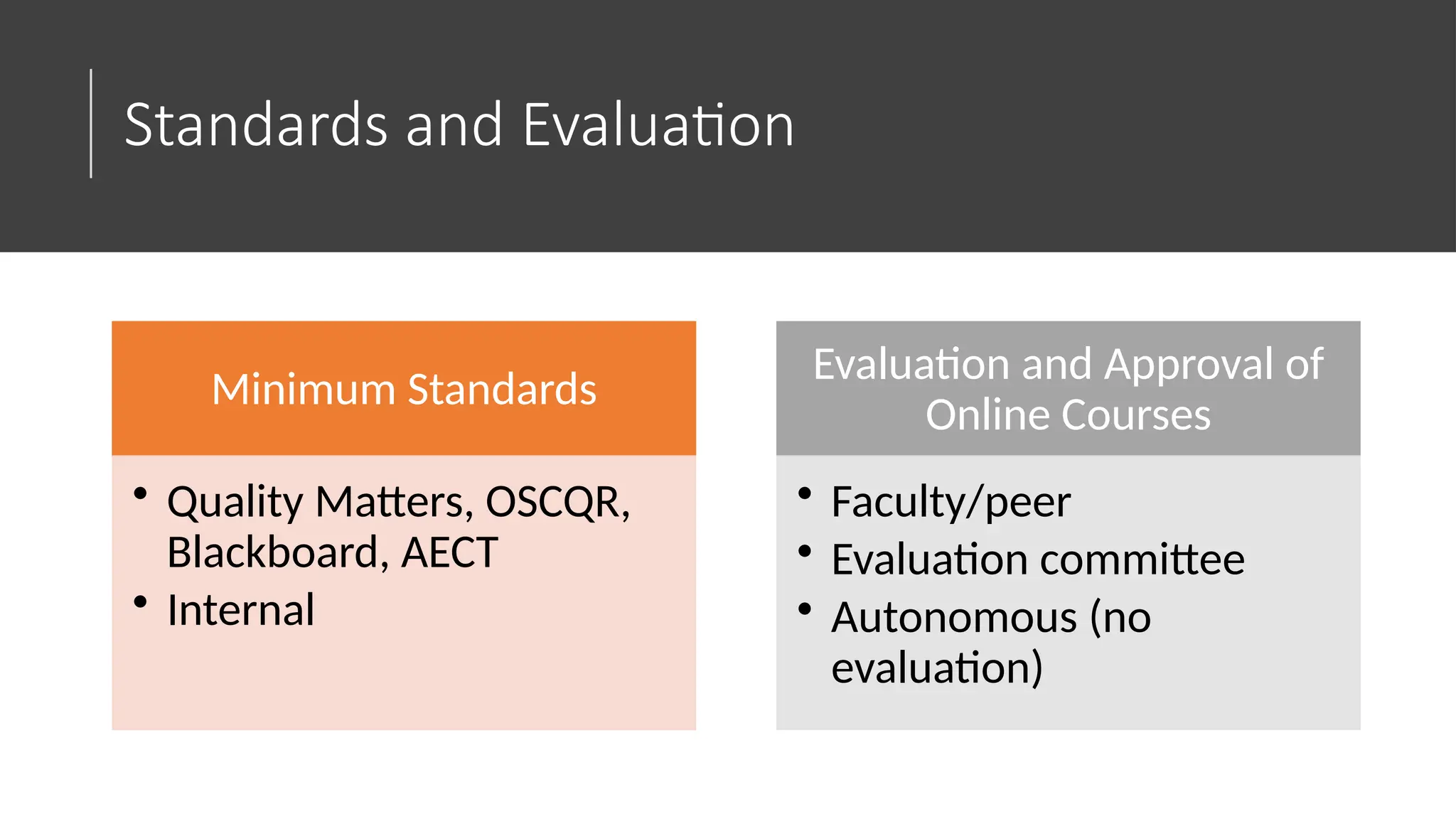
Standards and Evaluation
Minimum Standards
• Quality Matters, OSCQR,
Blackboard, AECT
• Internal
Evaluation and Approval of
Online Courses
• Faculty/peer
• Evaluation committee
• Autonomous (no
evaluation)
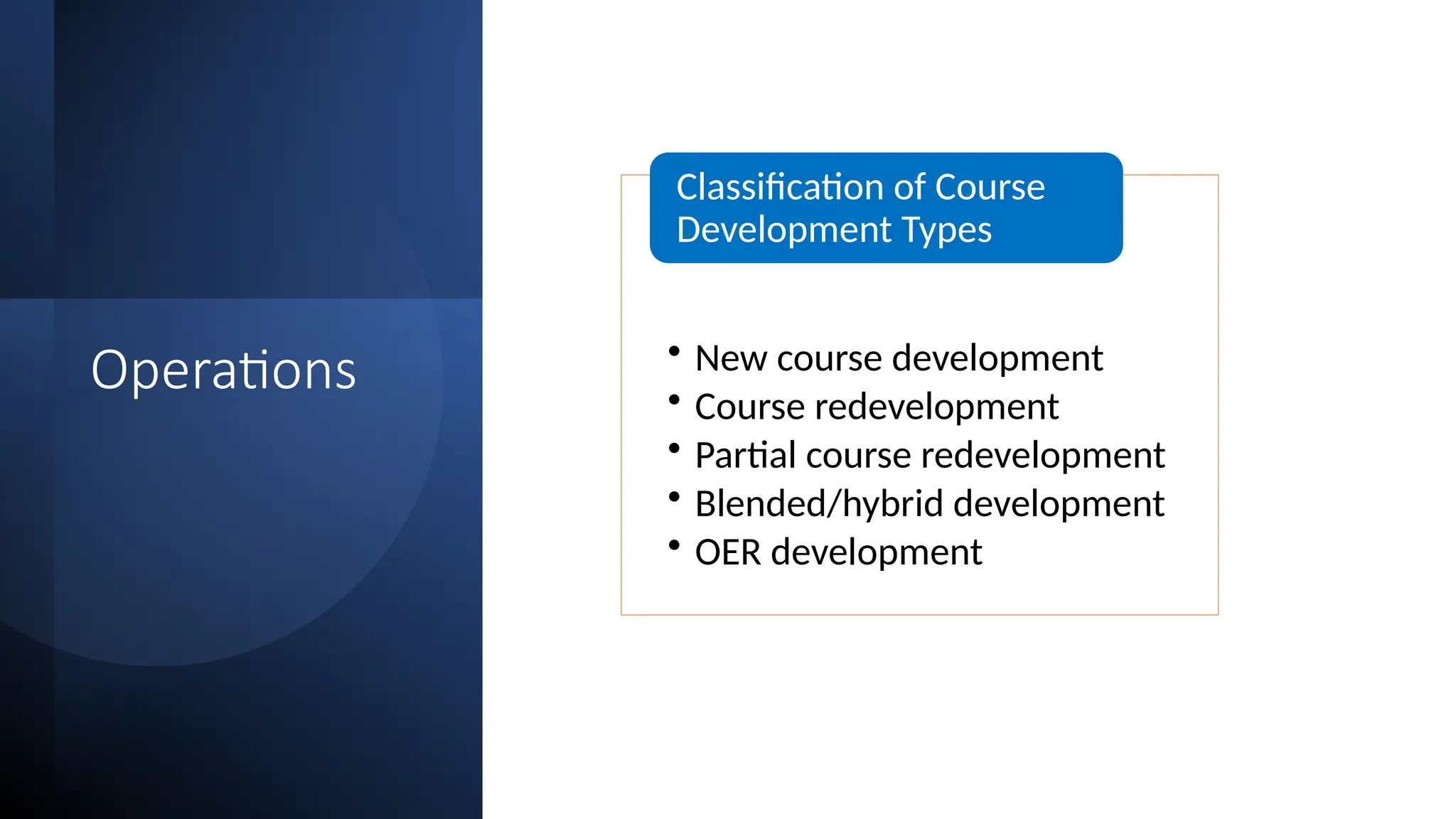
Operations • New course development
• Course redevelopment
• Partial course redevelopment
• Blended/hybrid development
• OER development
Classification of Course
Development Types
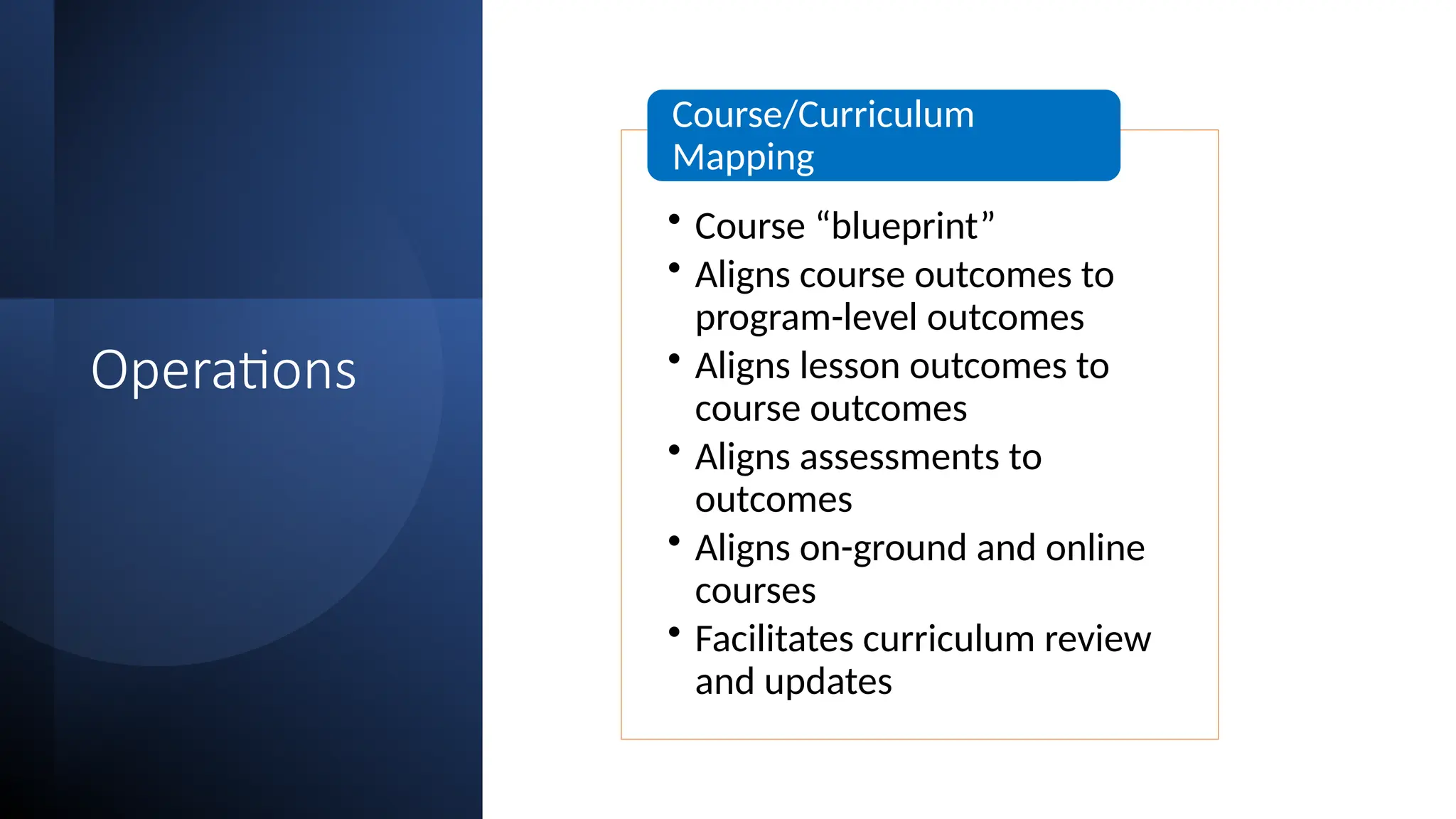
Operations
• Course “blueprint”
• Aligns course outcomes to
program-level outcomes
• Aligns lesson outcomes to
course outcomes
• Aligns assessments to
outcomes
• Aligns on-ground and online
courses
• Facilitates curriculum review
and updates
Course/Curriculum
Mapping
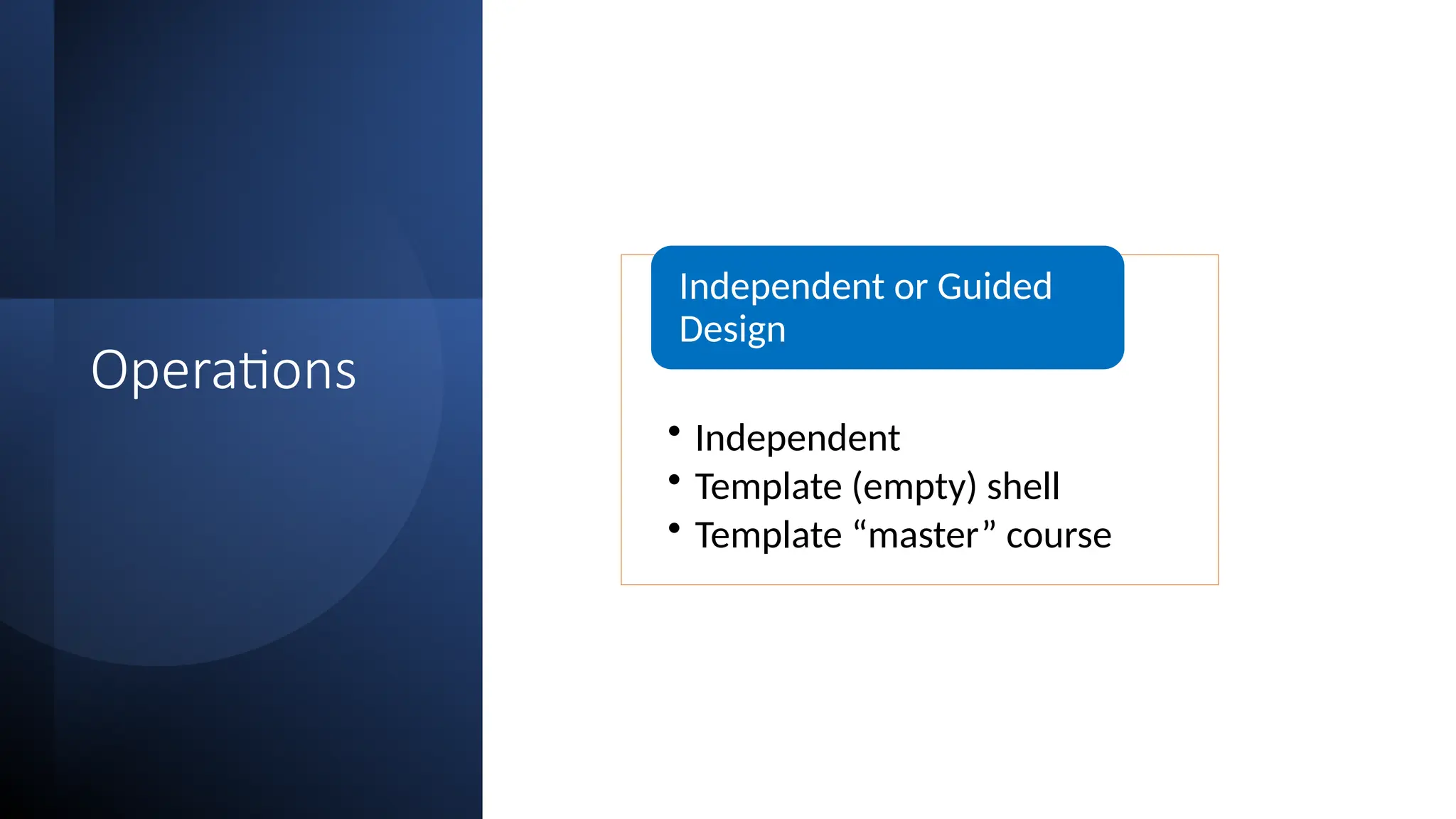
Operations
• Independent
• Template (empty) shell
• Template “master” course
Independent or Guided
Design
Operations
• Federal Title II regulations &
guidelines
• Universal Design for Learning
• Advocacy groups have
successfully pursued legal
action against higher ed
institutions
Accessibility
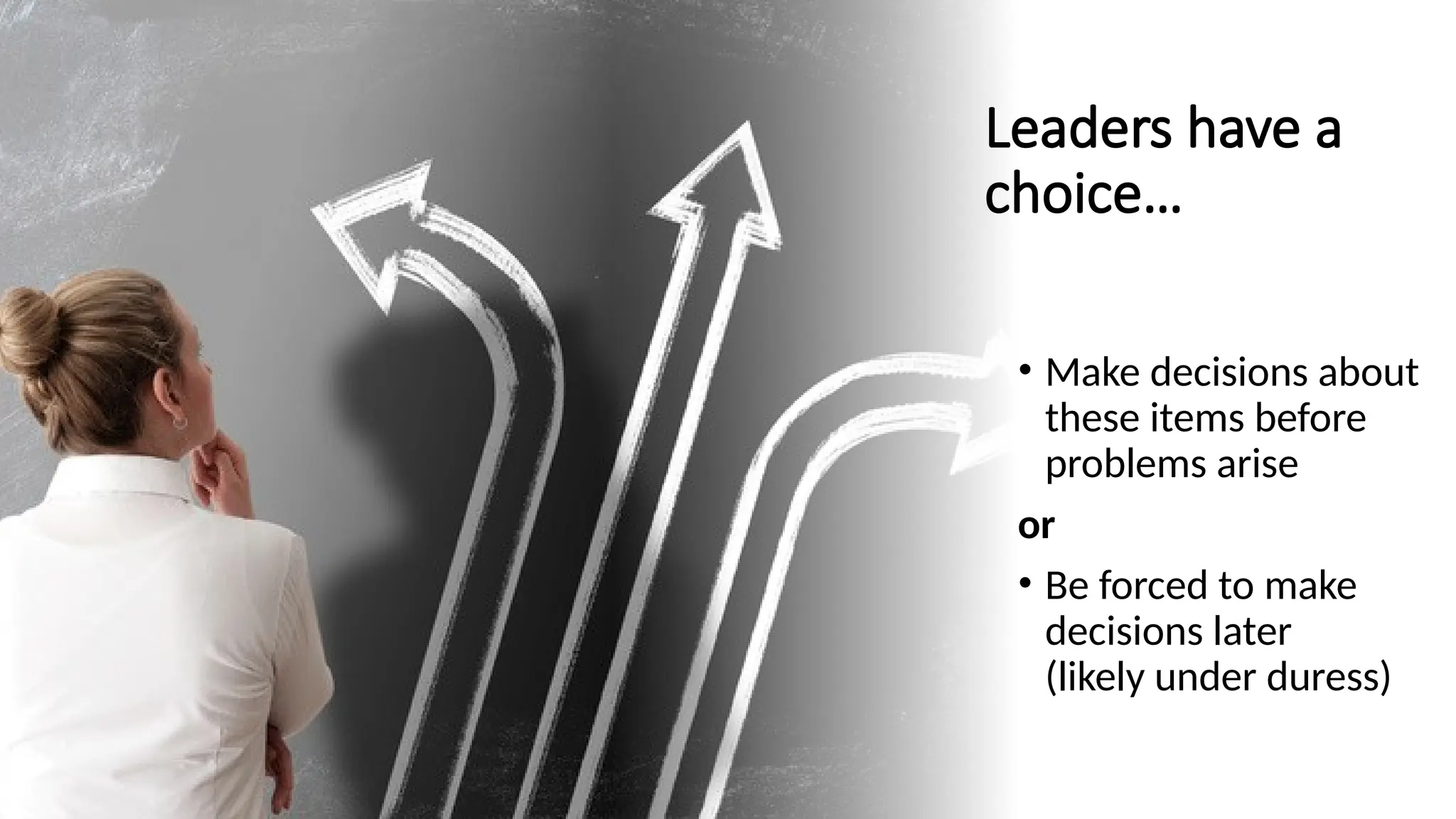
Leaders have a
choice…
• Make decisions about
these items before
problems arise
or
• Be forced to make
decisions later
(likely under duress)
Questions?
Anthony Piña
aapina@ilstu.edu
Susan Wegmann
susan.wegmann@siu.edu

OLC24 Conference Managing Course Development

  • 1.
    Establishing and Managing Institution-Wide OnlineCourse Development Anthony Piña, Ed.D. Illinois State University Susan Wegmann, Ph.D. Southern Illinois University
  • 2.
    Typical Genesis of OnlineEducation (prior to COVID) Noticed by administrators Policies, procedures and processes Courses begin to be grouped Concentrations, minors, certificates & degrees Individual faculty put courses online
  • 3.
    COVID-19 Effects Accelerating orchanging institutional mission & culture regarding online/digital learning Formalizing digital learning initiatives Hiring chief online officers Centralizing digital learning operations
  • 4.
    Managing Online Development Process • Allows theinstitution to: • Scale the development of online courses • Better align individual courses to program-level learning outcomes • Contain development costs • Eliminate redundancies in the curriculum • Create a more consistent experience for online learners
  • 5.
    One size doesnot fit all
  • 6.
    Decision Making Framework ComponentDecision Item Environment  Internal or external development  Centralized or decentralized development Roles and Responsibilities  Faculty roles  Scope of work, compensation & intellectual property  Instructional designer roles Standards and Evaluation  Minimum Standards  Evaluation & Approval of Online Courses Operations  Classification of Course Development Types  Curriculum Mapping  Independent or Guided Design  Accessibility
  • 7.
    Environment Internal or external development •Run online program from within • Online program management (OPM) firm Centralized or decentralized development • Centralized - Personnel and resources available to all; institution-wide vision • Decentralized - Personnel and resources siloed
  • 8.
    Roles and Responsibilities Facultyroles • Autonomous • Partnership • Team-based Instructional designer roles • Autonomous - optional • Partnership - mandatory • Team-based – mandatory • True partner or subordinate? • Nonexistent?
  • 9.
    Roles and Responsibilities Scopeof work • Conditions to consider the work complete Compensation • Normal job duties • Release Time • Stipend Intellectual property • Who “owns” the course? • Work-for-hire • Shared ownership
  • 10.
    Standards and Evaluation MinimumStandards • Quality Matters, OSCQR, Blackboard, AECT • Internal Evaluation and Approval of Online Courses • Faculty/peer • Evaluation committee • Autonomous (no evaluation)
  • 11.
    Operations • Newcourse development • Course redevelopment • Partial course redevelopment • Blended/hybrid development • OER development Classification of Course Development Types
  • 12.
    Operations • Course “blueprint” •Aligns course outcomes to program-level outcomes • Aligns lesson outcomes to course outcomes • Aligns assessments to outcomes • Aligns on-ground and online courses • Facilitates curriculum review and updates Course/Curriculum Mapping
  • 13.
    Operations • Independent • Template(empty) shell • Template “master” course Independent or Guided Design
  • 14.
    Operations • Federal TitleII regulations & guidelines • Universal Design for Learning • Advocacy groups have successfully pursued legal action against higher ed institutions Accessibility
  • 15.
    Leaders have a choice… •Make decisions about these items before problems arise or • Be forced to make decisions later (likely under duress)
  • 16.