



New Directions in
      IVF

Dr Louise Hull
Senior Lecturer and
Fertility Consultant
The IVF story
The
Untold
Story
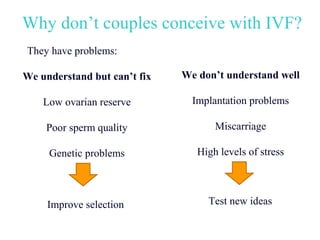
Why don’t couples conceive with IVF?
They have problems:

We understand but can’t fix   We don’t understand well

    Low ovarian reserve         Implantation problems

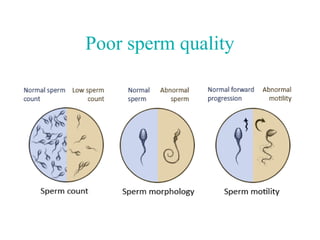
    Poor sperm quality               Miscarriage

     Genetic problems            High levels of stress


     Improve selection             Test new ideas
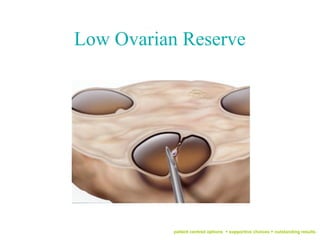
Low Ovarian Reserve


           patient centred options + supportive choices + outstanding results
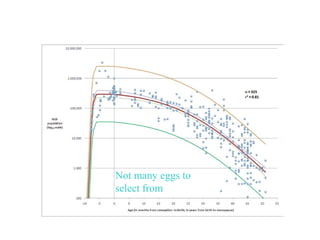
25


           The march of
     32    the eggs


          38


                  42


                          45
Not many eggs to
select from
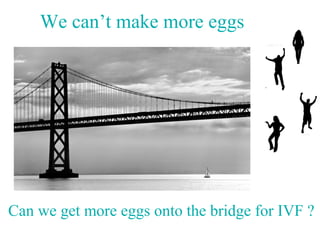
We can’t make more eggs


Can we get more eggs onto the bridge for IVF ?
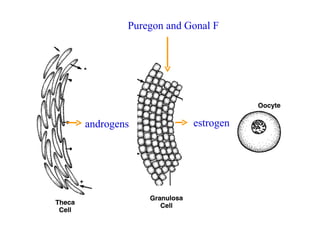
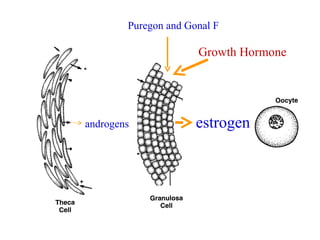
Higher levels of estrogen in the
follicle may entice eggs onto the
             bridge


  Growth hormone can increase
  estrogen levels in the follicle
Puregon and Gonal F


androgens            estrogen
Puregon and Gonal F

                      Growth Hormone


androgens             estrogen
Does Growth hormone work?
• We’re not sure:

• Growth Hormone made no difference for all
  women undertaking IVF

• In women with low ovarian reserve there
  was a trend to improved outcomes.
The Light Study (74 recruits)
Women under 41 with low ovarian reserve

Randomised trial to see if Growth hormone:
1.increases the numbers of eggs
2.Improves pregnancy outcomes

At FertilitySA
50% pregnancy rate on the trial
But we don’t know who had growth hormone
Poor sperm quality
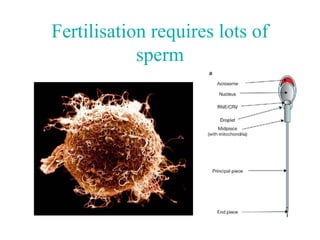
Fertilisation requires lots of
            sperm
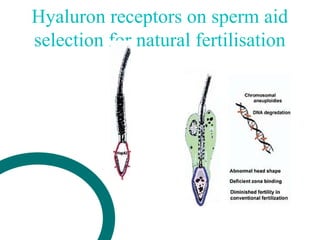
Hyaluron receptors on sperm aid
selection for natural fertilisation
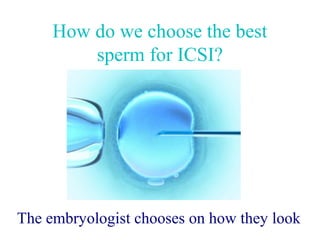
How do we choose the best
         sperm for ICSI?


The embryologist chooses on how they look
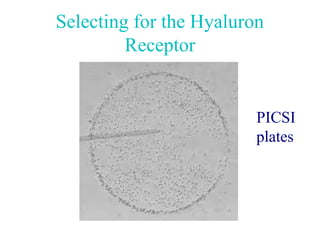
Selecting for the Hyaluron
         Receptor


                         PICSI
                         plates
At FertilitySA
More than 20 PICSI pregnancies last 7 months
–first approx 30 weeks gestation now

Clear benefit in fertilisation and embryo development
for some couples

      No benefit :
           very poor samples
           very good samples
           Surgical sperm
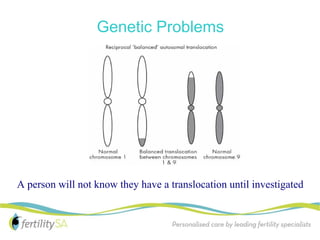
Genetic Problems


A person will not know they have a translocation until investigated
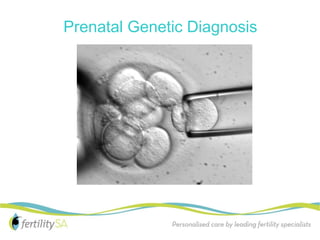
Prenatal Genetic Diagnosis
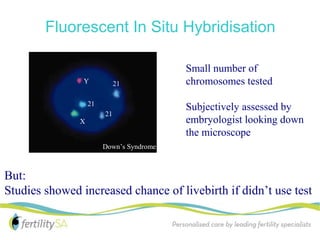
Fluorescent In Situ Hybridisation

                                          Small number of
                Y            21           chromosomes tested

                   21
                                          Subjectively assessed by
                        21
               X                          embryologist looking down
                                          the microscope
                        Down’s Syndrome


But:
Studies showed increased chance of livebirth if didn’t use test
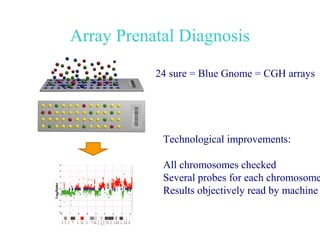
Array Prenatal Diagnosis

           24 sure = Blue Gnome = CGH arrays


            Technological improvements:

            All chromosomes checked
            Several probes for each chromosome
            Results objectively read by machine
Are the outcomes better?
Initial studies are very promising but large studies
over time not done.
Melbourne IVF has the most experience in Australia

FertilitySA
Small numbers of cycles and good results
Performing the biopsy in our lab
Sending the cells to Melbourne IVF for Array testing
Replacing genetically competent embryos in Adelaide
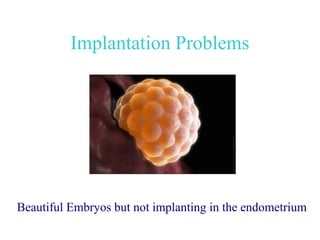
Implantation Problems


Beautiful Embryos but not implanting in the endometrium
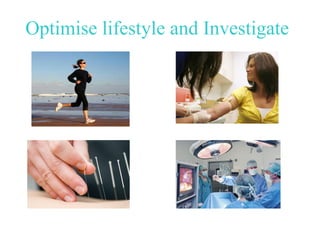
Optimise lifestyle and Investigate
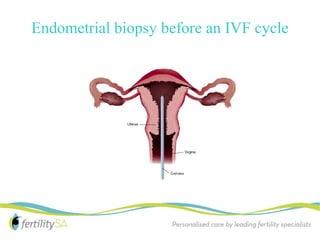
Endometrial biopsy before an IVF cycle
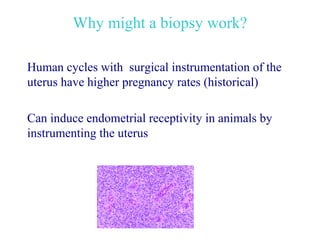
Why might a biopsy work?

Human cycles with surgical instrumentation of the
uterus have higher pregnancy rates (historical)

Can induce endometrial receptivity in animals by
instrumenting the uterus
Does it work?
Cochrane Database Syst Rev. 2012;7: (last week)
Review of all randomised control trials (294 +297
women)
  – Higher clinical pregnancy rate and live birth rate
  – Benefit when biopsy 1 week prior to an IVF cycle


How does it work?
? Induces a repair process similar to implantation
? Releases factors that help implantation
? Promotes stem cell activity to facilitate implantation
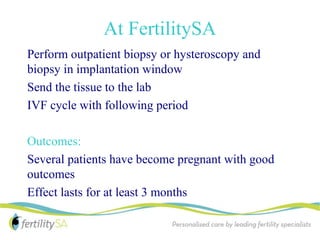
At FertilitySA
Perform outpatient biopsy or hysteroscopy and
biopsy in implantation window
Send the tissue to the lab
IVF cycle with following period

Outcomes:
Several patients have become pregnant with good
outcomes
Effect lasts for at least 3 months
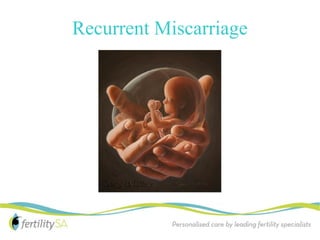
Recurrent Miscarriage
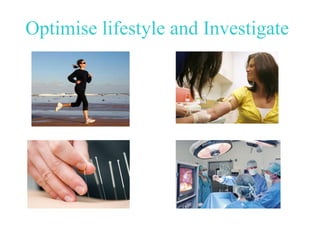
Optimise lifestyle and Investigate
Embryogen

• IVF media with GMCSF growth factor

• In Adelaide, laboratory and animal studies
  showed that culture media with this growth
  factor was associated with:
  – better embryos
  – better pregnancy outcomes
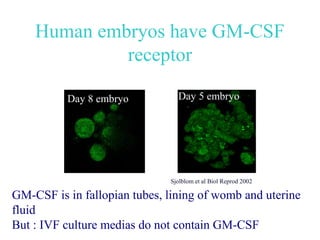
Human embryos have GM-CSF
             receptor
                   21

          Day 8 embryo          Day 5 embryo


                              Sjolblom et al Biol Reprod 2002

GM-CSF is in fallopian tubes, lining of womb and uterine
fluid
But : IVF culture medias do not contain GM-CSF
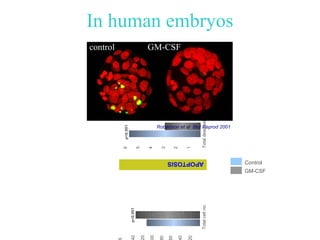
In human embryos
control                               GM-CSF


                                                             Total dead cells
              p<0.001                     Robertson et al Biol Reprod 2001

                                  5
              6


                                      4

                                           3

                                                   2

                                                       1
                                               APOPTOSIS                            Control
                                                                                    GM-CSF
                                                                                %


                                                             Total cell no.
                        p<0.001
          0

                        0

                                  0

                                      0


                                                   0
                                               0


                                                       0
                                           0
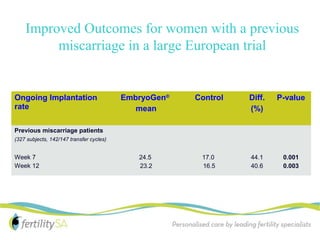
Improved Outcomes for women with a previous
          miscarriage in a large European trial


Ongoing Implantation                                EmbryoGen®                          Control                    Diff.         P-value
rate                                                   mean                                                        (%)

Previous miscarriage patients
(327 subjects, 142/147 transfer cycles)


Week 7                                                       24.5                           17.0                    44.1            0.001
Week 12                                                      23.2                           16.5                    40.6            0.003


* During the course of the study the concentration of human serum albumin (HSA) was increased in EmbryoGen ® as well as in EmbryoAssist™.
This was done to improve the overall performance and robustness of EmbryoAssist™


                                                                                                                                            36
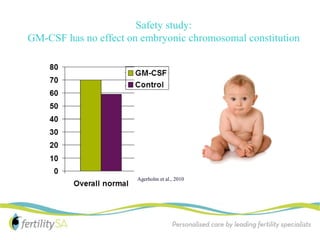
Safety study:
GM-CSF has no effect on embryonic chromosomal constitution
Embryos (%)


                       Agerholm et al., 2010
At FertilitySA
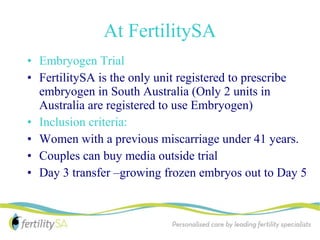
• Embryogen Trial
• FertilitySA is the only unit registered to prescribe
  embryogen in South Australia (Only 2 units in
  Australia are registered to use Embryogen)
• Inclusion criteria:
• Women with a previous miscarriage under 41 years.
• Couples can buy media outside trial
• Day 3 transfer –growing frozen embryos out to Day 5
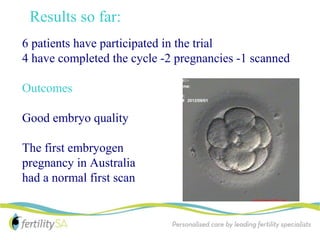
Results so far:
6 patients have participated in the trial
4 have completed the cycle -2 pregnancies -1 scanned

Outcomes

Good embryo quality

The first embryogen
pregnancy in Australia
had a normal first scan
Stress
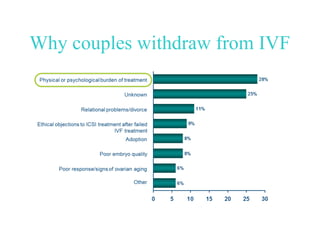
Why couples withdraw from IVF
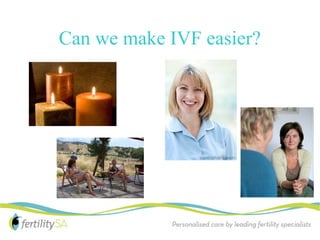
Can we make IVF easier?
Reducing the number of
      injections
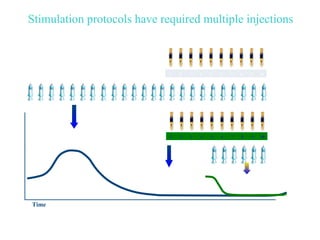
Stimulation protocols have required multiple injections


                                                                                                                 Long GnRH
                                                               1    2    3    4    5    6   7    8    9    10    agonist
                                                                                                                 protocol


                                                                                                                 GnRH
             Flare-up
                                                                1   2    3    4    5    6    7    8    9    10   antagonist
                                                                                                                 protocol


                                                  Pituitary downregulation
LH                                                                                              Direct
                                                                                            gonadotrophin
                                                                                             suppression


     Time
            Figure adapted from de Greef R et al., 2010,1 The European Orgalutran Study Group, 20002 and Hodgen GD,1990.3
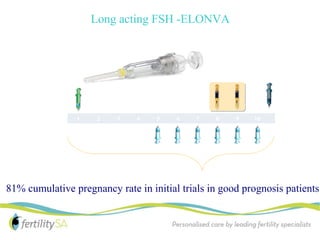
Long acting FSH -ELONVA


                                                                                rFSH            hCG
                   Corifollitropin alfa


                              1        2        3       4   5   6   7       8          9   10


                         Before use                                     After use


81% cumulative pregnancy rate in initial trials in good prognosis patients


References: 1. Elonva Product Information, July 2010.
The Create Trial
Inclusion Criteria:
Women on an antagonist cycle
<90kg
At low risk of hyperstimulation syndrome
Women in study use either Elonva or traditional injections

Participation:
Answer 2 surveys regarding the ease and stress of IVF cycle
Monitor outcomes during the cycle
Research and Education is important
Benefits to our patients

Our doctors stay up to date with the improvements in IVF

Care can be individualised if its well understood

We continually try to improve our treatment for every
couple under our care

Some couples will become pregnant that wouldn’t have
otherwise

Everything we learn will help someone
Thank -You

Staff and patients at FertilitySA

Prof Sarah Robertson –University of Adelaide

Dr Michael Henman –Origio

Dr Brett Johnson -MSD
patient centred options + supportive choices + outstanding results

Free Information Session 5th September 2012: Recent Breakthroughs in IVF

  • 1.
    New Directions in IVF Dr Louise Hull Senior Lecturer and Fertility Consultant
  • 2.
  • 3.
  • 4.
    Why don’t couplesconceive with IVF? They have problems: We understand but can’t fix We don’t understand well Low ovarian reserve Implantation problems Poor sperm quality Miscarriage Genetic problems High levels of stress Improve selection Test new ideas
  • 5.
    Low Ovarian Reserve patient centred options + supportive choices + outstanding results
  • 6.
    25 The march of 32 the eggs 38 42 45
  • 7.
    Not many eggsto select from
  • 8.
    We can’t makemore eggs Can we get more eggs onto the bridge for IVF ?
  • 9.
    Higher levels ofestrogen in the follicle may entice eggs onto the bridge Growth hormone can increase estrogen levels in the follicle
  • 10.
    Puregon and GonalF androgens estrogen
  • 11.
    Puregon and GonalF Growth Hormone androgens estrogen
  • 12.
    Does Growth hormonework? • We’re not sure: • Growth Hormone made no difference for all women undertaking IVF • In women with low ovarian reserve there was a trend to improved outcomes.
  • 13.
    The Light Study(74 recruits) Women under 41 with low ovarian reserve Randomised trial to see if Growth hormone: 1.increases the numbers of eggs 2.Improves pregnancy outcomes At FertilitySA 50% pregnancy rate on the trial But we don’t know who had growth hormone
  • 14.
  • 15.
  • 16.
    Hyaluron receptors onsperm aid selection for natural fertilisation
  • 17.
    How do wechoose the best sperm for ICSI? The embryologist chooses on how they look
  • 18.
    Selecting for theHyaluron Receptor PICSI plates
  • 19.
    At FertilitySA More than20 PICSI pregnancies last 7 months –first approx 30 weeks gestation now Clear benefit in fertilisation and embryo development for some couples No benefit : very poor samples very good samples Surgical sperm
  • 20.
    Genetic Problems A personwill not know they have a translocation until investigated
  • 21.
  • 22.
    Fluorescent In SituHybridisation Small number of Y 21 chromosomes tested 21 Subjectively assessed by 21 X embryologist looking down the microscope Down’s Syndrome But: Studies showed increased chance of livebirth if didn’t use test
  • 23.
    Array Prenatal Diagnosis 24 sure = Blue Gnome = CGH arrays Technological improvements: All chromosomes checked Several probes for each chromosome Results objectively read by machine
  • 24.
    Are the outcomesbetter? Initial studies are very promising but large studies over time not done. Melbourne IVF has the most experience in Australia FertilitySA Small numbers of cycles and good results Performing the biopsy in our lab Sending the cells to Melbourne IVF for Array testing Replacing genetically competent embryos in Adelaide
  • 25.
    Implantation Problems Beautiful Embryosbut not implanting in the endometrium
  • 26.
  • 27.
  • 28.
    Why might abiopsy work? Human cycles with surgical instrumentation of the uterus have higher pregnancy rates (historical) Can induce endometrial receptivity in animals by instrumenting the uterus
  • 29.
    Does it work? CochraneDatabase Syst Rev. 2012;7: (last week) Review of all randomised control trials (294 +297 women) – Higher clinical pregnancy rate and live birth rate – Benefit when biopsy 1 week prior to an IVF cycle How does it work? ? Induces a repair process similar to implantation ? Releases factors that help implantation ? Promotes stem cell activity to facilitate implantation
  • 30.
    At FertilitySA Perform outpatientbiopsy or hysteroscopy and biopsy in implantation window Send the tissue to the lab IVF cycle with following period Outcomes: Several patients have become pregnant with good outcomes Effect lasts for at least 3 months
  • 31.
  • 32.
  • 33.
    Embryogen • IVF mediawith GMCSF growth factor • In Adelaide, laboratory and animal studies showed that culture media with this growth factor was associated with: – better embryos – better pregnancy outcomes
  • 34.
    Human embryos haveGM-CSF receptor 21 Day 8 embryo Day 5 embryo Sjolblom et al Biol Reprod 2002 GM-CSF is in fallopian tubes, lining of womb and uterine fluid But : IVF culture medias do not contain GM-CSF
  • 35.
    In human embryos control GM-CSF Total dead cells p<0.001 Robertson et al Biol Reprod 2001 5 6 4 3 2 1 APOPTOSIS Control GM-CSF % Total cell no. p<0.001 0 0 0 0 0 0 0 0
  • 36.
    Improved Outcomes forwomen with a previous miscarriage in a large European trial Ongoing Implantation EmbryoGen® Control Diff. P-value rate mean (%) Previous miscarriage patients (327 subjects, 142/147 transfer cycles) Week 7 24.5 17.0 44.1 0.001 Week 12 23.2 16.5 40.6 0.003 * During the course of the study the concentration of human serum albumin (HSA) was increased in EmbryoGen ® as well as in EmbryoAssist™. This was done to improve the overall performance and robustness of EmbryoAssist™ 36
  • 37.
    Safety study: GM-CSF hasno effect on embryonic chromosomal constitution Embryos (%) Agerholm et al., 2010
  • 38.
    At FertilitySA • EmbryogenTrial • FertilitySA is the only unit registered to prescribe embryogen in South Australia (Only 2 units in Australia are registered to use Embryogen) • Inclusion criteria: • Women with a previous miscarriage under 41 years. • Couples can buy media outside trial • Day 3 transfer –growing frozen embryos out to Day 5
  • 39.
    Results so far: 6patients have participated in the trial 4 have completed the cycle -2 pregnancies -1 scanned Outcomes Good embryo quality The first embryogen pregnancy in Australia had a normal first scan
  • 40.
  • 41.
  • 42.
    Can we makeIVF easier?
  • 43.
    Reducing the numberof injections
  • 44.
    Stimulation protocols haverequired multiple injections Long GnRH 1 2 3 4 5 6 7 8 9 10 agonist protocol GnRH Flare-up 1 2 3 4 5 6 7 8 9 10 antagonist protocol Pituitary downregulation LH Direct gonadotrophin suppression Time Figure adapted from de Greef R et al., 2010,1 The European Orgalutran Study Group, 20002 and Hodgen GD,1990.3
  • 45.
    Long acting FSH-ELONVA rFSH hCG Corifollitropin alfa 1 2 3 4 5 6 7 8 9 10 Before use After use 81% cumulative pregnancy rate in initial trials in good prognosis patients References: 1. Elonva Product Information, July 2010.
  • 46.
    The Create Trial InclusionCriteria: Women on an antagonist cycle <90kg At low risk of hyperstimulation syndrome Women in study use either Elonva or traditional injections Participation: Answer 2 surveys regarding the ease and stress of IVF cycle Monitor outcomes during the cycle
  • 47.
    Research and Educationis important Benefits to our patients Our doctors stay up to date with the improvements in IVF Care can be individualised if its well understood We continually try to improve our treatment for every couple under our care Some couples will become pregnant that wouldn’t have otherwise Everything we learn will help someone
  • 48.
    Thank -You Staff andpatients at FertilitySA Prof Sarah Robertson –University of Adelaide Dr Michael Henman –Origio Dr Brett Johnson -MSD
  • 49.
    patient centred options+ supportive choices + outstanding results

Editor's Notes

  • #45 Current treatments for COS are still complex. The long GnRH agonist protocol involves treatment for several weeks before the start of stimulation and requires many injections. There are usually 14 additional injections required in a long GnRH agonist protocol compared with GnRH antagonist protocols. † † Where only injectable formulations are used The GnRH antagonist protocol (developed in the early 2000s) has reduced the impact of COS on patient treatment burden by reducing the required number of injections, but still involves daily gonadotrophin administration for follicular development.
  • #46 Formulation of non-pf and pf corifollitropin alfa drug product, respectively: Sucrose: 50 vs 70 mg/mL (Puregon 50 mg/mL) Sodium citrate: 14.7 vs 7.35 mg/mL (Puregon 14.7 mg/mL) L-methionine: none vs 0.5 mg/mL (Puregon 0.5 mg/mL) Polysorbate 20: 0.2 mg/mL vs 0.2 mg/mL (Puregon 0.2 mg/mL) The passive safety system means that you do not need to take or perform any additional action when using the device to activate it (at the end of a full stroke / injection).